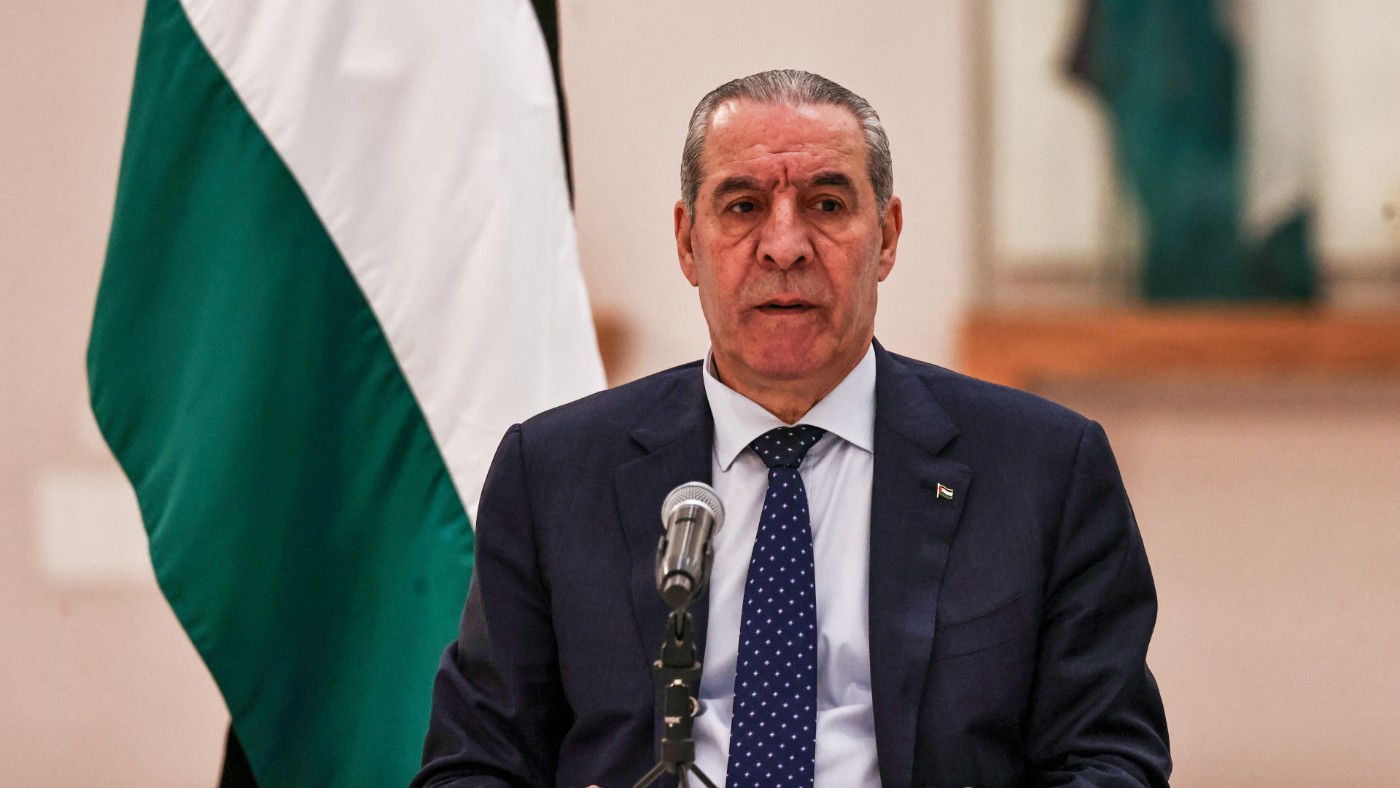
While a fragile ceasefire between the United States and Iran has paused open military hostilities, the fragile peace has done little to mend deep, often painful divisions that have torn through the Iranian-American diaspora community. What outsiders see as explosive clashes on social media and competing street protests—one side cheering US-Israeli airstrikes on Iran, the other condemning them—masks the most wrenching friction that plays out far from public view: inside family homes, across dinner tables, where differing visions for Iran’s future have pitted loved ones against one another.
作者: admin
-

Trump’s face to feature on commemorative US passports
The White House has officially confirmed a controversial new commemorative initiative: a limited run of United States passports featuring a portrait of sitting President Donald Trump, timed to coincide with the 250th anniversary of the signing of the Declaration of Independence this July. The plan was first broken by Fox News, before administration representatives verified details to multiple major international outlets.
According to a senior anonymous administration official speaking to the BBC, the special design will be offered to any American citizen who submits a new passport application once the rollout begins. The limited-edition documents will only be issued through the Washington Passport Agency, and will remain available only while stock lasts. A pre-release rendering published by the US State Department shows Trump’s portrait framed by the full text of the Declaration of Independence and imagery of the American flag, with the president’s signature rendered in gold ink on the document.
A White House spokesperson framed the new passport design as a contribution to national semiquincentennial celebrations, saying: “President Trump’s new patriotic passport design provides yet another great way Americans can join in the spectacular celebrations for America’s 250th birthday. Between the UFC250 Fight, the Great American State Fair, Freedom250 Grand Prix, and this new passport celebrating our freedom, President Trump continues to proudly lead a renewal of national pride and patriotism during our historic semiquincentennial celebration.”
Standard-issue US passports currently feature curated depictions of key national historical moments, such as the 1969 Apollo Moon landing, alongside iconic American symbols like the Statue of Liberty. As of press time, it remains unclear whether applicants will have the option to request a standard non-commemorative passport instead of the special edition when applying through the Washington agency.
This commemorative passport is the latest in a series of administration moves to tie Trump’s name and likeness to official government assets and national anniversary initiatives. The US Mint recently unveiled plans for a 250th anniversary commemorative gold coin that also features Trump’s image, and the president is on track to make history as the first sitting US president to have his signature added to official American banknotes.
Other recent high-profile changes have drawn significant public and political backlash. In a move that drew condemnation from the Kennedy family, the board of the Kennedy Center for the Performing Arts voted to rebrand the venue the Trump-Kennedy Center to honor the current sitting president. Earlier in April, the White House revealed plans for a gold-accented 76-meter monumental arch in downtown Washington DC, dubbed the “Arc de Trump”. A federal oversight panel granted preliminary approval for the structure despite overwhelming negative public comment and fierce opposition from historic preservation groups.
Trump has also altered the iconic White House itself, ordering the demolition of the building’s original East Wing to make way for a new presidential ballroom as part of a major renovation project. The National Trust for Historic Preservation has since filed a lawsuit against the White House over the project, alleging that construction work commenced before the administration submitted formal plans for review to the National Capital Planning Commission, violating federal historic preservation rules.
-

A record-breaking semi-final – the antidote to modern football?
The world of football rarely serves up a contest that redefines why millions fall in love with the beautiful game, but Paris Saint-Germain and Bayern Munich delivered exactly that in a record-breaking 5-4 Champions League semi-final first leg at Parc des Princes that will be talked about for generations.
This nine-goal spectacle marked the highest-scoring Champions League semi-final since Eintracht Frankfurt’s 6-3 win over Rangers in the 1959-60 European Cup, and made history as the first major European semi-final where both sides hit the back of the net at least four times. It is also only the second Champions League knockout match ever to see such a glut of goals, following Chelsea and Liverpool’s iconic 4-4 quarter-final draw in 2008-09. Even more remarkably, this clash pitted the two highest-scoring teams of the 2025-26 campaign against each other, with both having already notched more than 40 goals across the tournament before kick-off – a first in the competition’s history.
Even before the first whistle blew, the stage was set for something special. Both sets of supporters unveiled towering pre-match tifos: PSG’s carried the bold slogan “the conquest of Europe”, while Bayern’s banner urged their players to “give everything” – a promise both teams delivered on in chaotic, thrilling fashion. In a breathless first half that left pundits and fans stunned, the two sides traded goals blow for blow, putting five on the scoreboard by the break. Harry Kane opened the scoring from the penalty spot, only for Khvicha Kvaratskhelia to level with a clinical finish. Joao Neves’ glancing header put Bayern ahead once more, before a moment of individual magic from Michael Olise restored parity. A controversial late first-half penalty, awarded after Alphonso Davies was judged to have handled an Ousmane Dembele cross, saw Dembele convert calmly to put PSG 3-2 up at half-time. Though the decision was widely debated, it was ultimately overshadowed by what former England captain Alan Shearer called one of the greatest halves of football he had ever witnessed. “I can’t stop smiling at how open and bonkers this game is,” Shearer said on Amazon Prime. “It’s one of the greatest games I’ve ever been to. Two teams that believe in their own ability to outscore their opponent.”
The chaos did not let up after the restart. Kvaratskhelia and Dembele both found the net again to push PSG to a seemingly unassailable 5-2 lead, leaving many to assume the tie was all but settled ahead of next week’s return leg in Munich. But Bayern Munich, champions of Germany and hungry for their first Champions League title since 2020, refused to crumble. A late fightback led by goals from Dayot Upamecano and Brahim Diaz cut PSG’s lead to a single goal, silencing the home crowd and keeping the tie very much alive. The final result leaves PSG with a slim advantage heading to the Allianz Arena next week, but Bayern’s comeback has set up a tense decider for a place in the Budapest final.
For PSG manager Luis Enrique, the match was the most exciting of his 15-year coaching career. “It was amazing. I think it was the best match I have ever managed as a coach,” he said post-match. “It had amazing rhythm, trying to play offensive football, trying to show our quality. I think everybody had fun watching the match. I’m happy because we won. OK, we are not happy as a coach when you concede four goals, but I’m happy because we won.”
Bayern boss Vincent Kompany acknowledged his side’s defensive fragility but praised their attacking courage, saying: “We suffered but we were dangerous. Five goals away from home in the Champions League normally means you’re out but the chances we had, made us believe. I’ve seen a lot of good defending today but the game is such fine margins, you either go full into the battles, or retreat fully. The in-between doesn’t work against that level of players.”
The result has sparked debate among pundits over the quality of defending on show. While Kane praised his side’s defensive effort despite Bayern conceding five goals – the first time they have done that in the Champions League since 1994-95 – former England forward Wayne Rooney pushed back on that claim. “I love Harry Kane but there is no way he can be praising his defenders. The defending from both teams was really bad, I think he is being modest there.”
Beyond the immediate drama, the match served as a refreshing counterpoint to a Champions League campaign that has seen set-piece goals, deep defensive blocks and pragmatic low-scoring football dominate. Where most 2025-26 ties have prioritized defensive organization over attacking adventure, PSG and Bayern threw that playbook out to deliver the kind of end-to-end attacking football that captivates neutral fans. It is a style that is unlikely to be replicated in the week’s second semi-final between Arsenal and Atletico Madrid, however. Both sides have built their campaigns on defensive resilience, with Arsenal racking up a league-leading number of clean sheets this season. Former AC Milan and Real Madrid midfielder Clarence Seedorf noted that the London side’s solid defensive foundation could be the key to their progression. “If there is a team that could bring it home, it could be them,” he said.
Fans can catch full highlights of this historic clash from 22:00 Wednesday on BBC iPlayer, the BBC Sport website and app, with a special Champions League Match of the Day airing on BBC One from 22:40 to 00:00 Wednesday.
-

‘Nightmare situation’: Rebel Wilson denies making up narrative to divide young actor and producer after alleged complaint, defamation trial told
Hollywood star Rebel Wilson has pushed back against allegations that she manufactured a false sexual harassment narrative to create conflict, describing the ongoing defamation lawsuit against her as an unforeseen ‘nightmare situation’ that derailed preparations for her first directorial project. The Pitch Perfect and Bridesmaids actor took the witness stand for a second consecutive day on Wednesday at Sydney’s Federal Court, where she is being sued by Charlotte MacInnes, a co-star in Wilson’s upcoming coming-of-age female-led comedy *The Deb*.
At the heart of the legal dispute are a series of social media posts Wilson published that MacInnes argues falsely implied the young performer had initially made a sexual harassment complaint against the film’s producer, Lauren Ghost, then withdrew the claim to advance her career. The incident in question centers on a September 2023 shared bath at Ghost’s Bondi penthouse, where both Ghost and MacInnes wore swimsuits while warming up after Ghost experienced a medical episode during a sunset swim at Bondi Beach. MacInnes has repeatedly denied ever making any formal or informal sexual harassment complaint connected to the incident.
During cross-examination from MacInnes’ barrister Sue Chrysanthou SC, Wilson was accused of creating the chaotic ‘nightmare situation’ through a sequence of deliberate lies, just five weeks before *The Deb* was scheduled to begin principal photography. The actor forcefully rejected this characterization, calling the claim completely nonsensical. She told the court that when she was first allegedly told about the incident, it came as a devastating shock that dropped into her lap at the worst possible moment.
As a first-time director who spent years developing *The Deb* as a project rooted in female empowerment, Wilson stated it would never have served her own interests to invent a sexual harassment allegation involving two key production team and cast members. She told the court: ‘This is an absolute nightmare situation for me, who’s a first time director, making a movie that is essentially a girl power movie. It would not at all be in my interest to make up a sexual harassment complaint between those two very important people.’
Wilson also pushed back against claims that she mistreated female cast and crew during the production of the film, reaffirming that she has long viewed herself as a champion for women in the entertainment industry. Entering the Sydney courthouse Wednesday morning, the actor publicly thanked the cast and crew of *The Deb* for their ongoing support throughout the legal process, noting that she could not discuss the details of the ongoing trial out of respect for the Australian legal system. The blockbuster defamation trial is ongoing, with further testimony and developments expected in the coming days.
-

A faraway conflict threatens livelihoods in India’s glass hub
Half an hour’s drive from the world-famous Taj Mahal in India’s northern Uttar Pradesh Pradesh, Firozabad has built its identity around glass. Known nationally as India’s “glass city”, this industrial hub accounts for 70% of the country’s total glass output, with most production spread across hundreds of small and medium-sized family-run factories. The sector sustains nearly 150,000 daily-wage workers, whose incomes hover between 500 and 1,000 rupees ($5.29 to £3.91) a day – earnings that leave almost no buffer against sudden cost increases or production disruptions. Today, that vulnerability has been laid bare by escalating tensions in the Middle East, whose ripple effects have reached deep into Firozabad’s workshops and left thousands of livelihoods hanging in the balance.
Glass manufacturing is an energy-intensive process: furnaces must maintain extremely high, consistent temperatures around the clock to keep production running safely. If a furnace cools completely, it can suffer irreversible damage, and restarting it requires massive time and capital investments most small factory owners cannot afford. This means the entire industry relies entirely on a stable, affordable supply of natural gas – and that supply has been thrown into chaos by Middle East conflict.
Nearly half of India’s total natural gas imports pass through the Strait of Hormuz, the narrow strategic Gulf shipping route that has been heavily disrupted by ongoing regional tensions. While some shipments have resumed in recent weeks, factory owners across Firozabad report they have yet to see any relief from the shortage. To cope with the national supply squeeze, the Indian government implemented a 20% cut to commercial gas allocations, forcing producers to adapt their operations to ration fuel.
Sanjay Jain, who has operated a glass bangle manufacturing unit in Firozabad for four decades, told BBC reporters his production has plummeted sharply since the cuts went into effect. To keep his furnaces from cooling beyond repair, Jain has lowered operating temperatures and paused production for three to four days at a time – a stopgap measure that has cut his output drastically but kept his business from total collapse.
The crisis in Firozabad exposes India’s broader systemic vulnerability to global energy shocks. The country relies heavily on imported natural gas across all sectors, from transportation to residential use, leaving industrial hubs built around gas-dependent manufacturing uniquely exposed. Firozabad’s 400-plus small manufacturing clusters produce a vast range of glass goods, from bangles and home decor to car headlamp covers and luxury chandeliers, feeding a domestic glass market valued at more than $200 million. Many small factory owners report losses ranging from 25% to 40% since the Middle East conflict escalated, with no clear path forward if supply instability continues.
Natural gas shortages are not the only pressure weighing on the industry. Mukesh Bansal, a representative of the All India Glass Manufacturers’ Federation, explained that the conflict has driven up costs across the entire supply chain. Many key chemical components used to melt glass are imported from the Middle East, so trade disruptions have pushed raw material prices sharply higher. On top of that, global shipping cost increases have priced many Indian exporters out of international markets, particularly the large U.S. market for decorative glass goods. Bansal noted his own business has suffered losses exceeding 45% since the conflict began, saying “the combination of gas shortages and rising input costs has made this situation almost unmanageable.”
The strain is hitting low-wage workers the hardest. Umesh Babu, a 35-year-old bangle maker who works 10-hour days in an uninsulated open-air workshop just meters from a 1,000C furnace, has already seen his work week drop from six days to four. To cut household expenses, he has pulled his children out of school. “This is the only skill I have,” he said. “If the factories stop hiring, I don’t know where I’ll turn to feed my family.”
The Indian federal government has acknowledged the urgency of the crisis, stating it “recognises the need for uninterrupted furnace operations” and is implementing emergency measures to stabilize energy supplies. Federal ministries have held regular coordination briefings, and the petroleum ministry has prioritized energy allocations for critical sectors including pharmaceuticals, steel, automobiles and agriculture. Uttar Pradesh’s state government also announced a temporary wage increase after thousands of northern Indian factory workers held protests earlier this month that turned violent in parts of the state, where demonstrators demanded living wages and better working conditions. Workers say the temporary increase still falls far short of what they need to keep up with soaring inflation.
Economists warn that without long-term intervention, many of Firozabad’s small and micro manufacturing units will not survive. Economist Arun Kumar noted that most of these labor-intensive small operations operate on extremely limited working capital, leaving them no financial buffer to withstand extended shortages. “If this situation continues, many units will either shut down permanently or operate at severely curtailed capacity for the foreseeable future,” he said.
Damage to energy infrastructure across the Middle East from recent fighting between March and early April could take months to repair, meaning supply disruptions will persist even after the Strait of Hormuz returns to full operation. “The situation won’t go back to normal for months even after the route reopens,” Kumar explained.
A recent UN Development Programme report warns that the ongoing conflict could push as many as 2.5 million additional people in India into extreme poverty. For Firozabad’s glass sector, which sits at the heart of India’s small and medium enterprise ecosystem – a segment that contributes 30% of India’s national GDP and employs hundreds of millions of people – this crisis is more than a local problem: it is a warning of how global geopolitical instability can quickly unravel livelihoods for low-income workers across the world.
-

UK ambassador to US says only special relationship US has is ‘probably’ with Israel
Leaked private comments from Britain’s top envoy to the United States have upended diplomatic niceties between the two historic allies, just as King Charles III’s state visit to Washington was getting underway, throwing into sharp relief existing frictions over Middle East policy and domestic political controversy in London.
Sir Christian Turner, who took up the ambassadorship earlier in 2024 following the forced exit of his predecessor Peter Mandelson over ties to convicted sex offender Jeffrey Epstein, made the unguarded remarks during a February Q&A session with a group of British sixth-form students visiting the U.S. capital. The comments were first published by the *Financial Times* on Tuesday, the second day of King Charles’ scheduled visit to the U.S.
Turner’s most explosive claim upended the long-standing diplomatic framing of UK-US relations: he argued that the iconic phrase “special relationship” – a term used for decades to describe the tight bond between London and Washington – is little more than a nostalgic, backward-looking concept weighed down by outdated historical baggage. Instead, he asserted that if any country truly holds a special relationship with the United States today, that country is Israel.
The revelation has already sparked significant embarrassment for Keir Starmer’s British government, coming at a moment when UK-US relations are already frayed over London’s initial reluctance to join the U.S.-Israeli military campaign against Iran. Despite ultimately granting Washington access to British bases for strikes on Iranian missile facilities and operations to reopen the Strait of Hormuz, Starmer has faced relentless public criticism and mockery from former President Donald Trump over the delayed approval.
Tensions escalated further last week when the Trump administration threatened punitive measures against NATO allies it accused of failing to back the Iran war, including a provocative suggestion that Trump could recognize Argentine sovereignty over the Falkland Islands – a territory long claimed and controlled by the United Kingdom.
Just this week, UK Minister of State for Europe and North America Stephen Doughty reiterated London’s break with Washington’s policy, confirming that Britain does not support the U.S. blockade of Iranian ports and insists on unimpeded, free passage for global maritime traffic without arbitrary tolls or unnecessary security risks.
Beyond foreign policy, Turner also opened a new domestic political firestorm in his comments, questioning the lack of accountability for high-profile U.S. figures tied to the Epstein scandal. He noted it was “extraordinary” that the convicted sex offender’s sprawling network of connections had not led to consequences for prominent American politicians, business leaders and public figures – including Microsoft co-founder Bill Gates, who has been linked to Epstein in public reporting. By contrast, Turner pointed out that senior British figures, including his own predecessor Mandelson, have already been forced out of office over their ties to Epstein.
Turner went so far as to suggest that Starmer himself could be forced out of office over his 2024 appointment of Mandelson as ambassador, ahead of upcoming UK local elections on May 7. He described the prime minister as “on the ropes” politically over the controversy, and acknowledged that Starmer is a “stubborn guy” while noting that senior figures in the ruling Labour Party could move to remove him after the local polls close.
In the aftermath of the leak, the UK Foreign Office moved quickly to distance the government from Turner’s remarks, emphasizing that the comments were made in a private, informal setting for visiting students and do not represent the official position of the British government. Turner did acknowledge in his comments that the UK and U.S. retain deep historical and cultural ties, particularly in the defense and security sectors, where the two countries remain deeply intertwined. He added that rather than leaning on the nostalgic framing of the special relationship, Britain should proactively work to redefine its partnership with the U.S. and move away from over-reliance on an American security umbrella.
-

DOJ cites Washington dinner shooting in lawsuit over White House ballroom
A high-stakes legal battle over former President Donald Trump’s $400 million White House ballroom project has escalated sharply, after the U.S. Department of Justice formally asked a federal judge to lift a pause on above-ground construction — arguing the recent shooting at the White House Correspondent’s Dinner proves the urgent need for a secure on-site presidential event space. The dispute dates back months, when preservation group the National Trust for Historic Preservation filed a lawsuit to block the project, which required the full demolition of the 1902 East Wing, a change that deviated from Trump’s original promise that the existing structure would remain untouched. The legal challenge argues that Trump lacks the legal authority to redevelop the federally owned property without formal approval from Congress and relevant federal agencies, a claim the Trump administration has rejected. Last week, Judge Richard Leon, a Bush-era appointee, sided with the preservationists temporarily and ordered all above-ground work halted, even as construction crews continued off-site and underground work. In a court filing submitted late Monday, acting Attorney General Todd Blanche and other senior administration officials made an urgent plea to reverse that order, leaning heavily on the chaotic shooting incident that unfolded at the Washington Hilton over the weekend. The incident saw an armed suspect attempt to breach the venue hosting the annual press dinner, forcing the emergency evacuation of Trump, 2,300 attendees including cabinet members, members of Congress, and senior government officials. Attendees scrambled to take cover as shots were fired, highlighting the vulnerability of large off-site presidential gatherings, administration officials argue. “Presidents need a secure space for large events that currently does not exist in Washington,” the filing reads. “This court’s injunction stalling this project cannot defensibly continue, for the sake of President Trump, future presidents and their families, Cabinets and staff.” Strikingly, the filing adopts language straight from Trump’s own social media rhetoric, attacking the preservation group as being driven by partisan animosity. It accuses the organization of suffering from “Trump Derangement Syndrome” — a catchphrase coined by Trump and his allies to dismiss critics of the president. “Because it is DONALD J. TRUMP, a highly successful real estate developer, who has abilities that others don’t, especially those who assume the Office of President, this frivolous and meritless lawsuit was filed,” the filing adds. Legal analysts who have followed the case say the DOJ’s last-minute appeal is unlikely to change Judge Leon’s mind, given his earlier ruling to pause construction. For their part, the National Trust for Historic Preservation shows no signs of backing down: in a public statement released Monday, group president and CEO Carol Quillen reaffirmed the organization has no intention of dropping the lawsuit, noting the legal challenge simply asks the administration to follow existing federal law and “endangers no one.” Trump has seized on the weekend shooting to repeatedly defend his project, framing it as a critical public safety measure. Speaking to CBS just one day after the incident, Trump argued the new ballroom would eliminate the risk of attacks at off-site events. “I’m building a safe ballroom, and one of the reasons I’m building it is exactly what happened last night,” he said. “And that ballroom is being built on the safest piece of property in this country, probably one of the safest pieces of land in the world.” Many observers have pointed out that the Correspondent’s Dinner is an independent, off-site event hosted by a private press organization, so it remains unclear how an on-site White House ballroom would have prevented or altered the outcome of Saturday’s attack. As the legal process moves forward, work on the project continues below ground, leaving the fate of the high-profile construction effort in the hands of the federal court.
-

Watch: Elderly woman rescued by robot from Ukraine’s frontline
In a striking display of how modern technology is reshaping wartime humanitarian operations, an elderly woman has been pulled to safety from a frontline area in Ukraine by an unmanned rescue robot, after military drones first spotted her trapped near active combat zones. The woman had been stuck in her heavily damaged village, which has been ravaged by months of ongoing fighting, and was attempting to flee the dangerous area when the Ukrainian military’s surveillance system detected her location.
Rather than risking the lives of human rescue personnel to reach the vulnerable civilian in the active conflict zone, military command made the decision to deploy the specialized robotic rescue platform to complete the extraction mission. The operation marks one of the first publicly documented instances of an autonomous robotic system being used for frontline civilian rescue in the ongoing Russia-Ukraine conflict, highlighting how armed forces are increasingly integrating unmanned technology into humanitarian missions alongside combat operations to reduce risks to both rescuers and civilians.
Footage of the mission, which has been shared by Ukrainian military sources, shows the robot navigating the rubble-strewn streets of the abandoned village to reach the woman, before guiding her to a safe extraction point where she could be moved away from the frontline. Local military officials have noted that many elderly civilians remain trapped in frontline settlements, unwilling or unable to leave their homes even as intense fighting continues around them, creating complex risks for rescue teams that unmanned systems can help mitigate.
-

Ex-FBI chief Comey charged with threatening Trump’s life in Instagram post
On Tuesday, U.S. law enforcement officials announced a new criminal indictment against former FBI Director James Comey, who is now facing accusations of willfully threatening the life of sitting President Donald Trump. This legal action marks the second time Comey has been charged in recent months, coming five months after a separate federal case against him was thrown out by a judge on procedural grounds.
The current charges stem from an Instagram post Comey shared in May last year, where he published an image of seashells arranged to spell out the numbers “86 47”. In comments on the post at the time, Trump, who claims to be the 47th U.S. president, argued that “86” is widely recognized slang for assassinate or kill, framing the image as a deliberate threat against his life. The grand jury indictment returned by a North Carolina jury echoes this framing, stating that the numerical sequence constituted a “serious expression of an intent to harm the President of the United States.”
Acting U.S. Attorney General Todd Blanche, a former personal lawyer to the president who was appointed to the role earlier this month following the ousting of previous Attorney General Pam Bondi, detailed the charges Tuesday. Comey faces two counts: one count of willful threat against the president’s life and bodily integrity, and a second count of transmitting an interstate threat. Each offense carries a maximum statutory penalty of 10 years in federal prison.
“I think it’s fair to say that threatening the life of anybody is dangerous and potentially a crime,” Blanche said in a statement following the indictment. “Threatening the life of the president of the United States will never be tolerated by the Department of Justice.” Blanche pushed back against claims of political motivation, noting that while many of the current department investigations target people the president has clashed with, pursuing such cases is a legitimate presidential duty.
Comey has long pushed back on the accusation, issuing an apology immediately after sharing the post. He claimed that he was unaware of the violent association some groups attach to the number 86, and that he opposes all forms of political violence. He removed the post from his Instagram account hours after it was published, he has confirmed.
This indictment arrives against a tense backdrop of escalating political violence: just three days prior, authorities arrested a suspect accused of attempting to assassinate Trump at a Washington D.C. dinner hosted by the White House Correspondents’ Association. It also coincides with a court ruling that allows Comey’s daughter, former federal prosecutor Maurene Comey, to move forward with a wrongful termination lawsuit claiming she was fired from her role for political reasons related to her father’s conflicts with Trump.
The first case against Comey, brought in September, charged him with making false statements to Congress and obstructing a congressional investigation. Critics widely characterized that prosecution as political retribution by Trump against a high-profile political opponent. In November, a federal judge dismissed the entire case, ruling that the Trump-appointed U.S. attorney who brought the charges had been unlawfully appointed to the role. That same ruling also threw out a separate case against another top Trump critic, New York Attorney General Letitia James. Another former Trump administration official and outspoken critic, ex-national security advisor John Bolton, has also been indicted in recent months on charges related to alleged mishandling of classified information.
Democratic lawmakers have been quick to denounce the new indictment, framing it as another example of the president weaponizing the Department of Justice to target political opponents. Senate Democratic Whip Dick Durbin called the charges “baseless” and dismissed the action as “petty retribution.” “This is another case of a weaponized Justice Department lashing out on behalf of a vengeful president,” Durbin said in an official statement.
Comey’s long-running conflict with Trump dates back to 2017, when Trump fired Comey from his role as FBI director amid the agency’s investigation into alleged collusion between the 2016 Trump presidential campaign and Russian government actors seeking to influence the election outcome. Comey was originally appointed to lead the FBI by former Democratic President Barack Obama in 2013.
The September charges against Comey came just days after Trump publicly pressured then-Attorney General Pam Bondi to pursue legal action against Comey and other perceived political opponents, a break from longstanding norms that bar White House interference in Justice Department casework. Bondi was fired from her post earlier this month, with multiple reports indicating that her failure to secure indictments against Trump’s political critics was a key factor in her dismissal.
Since taking office for his second term, Trump has implemented a series of punitive measures against individuals and institutions he views as disloyal or hostile. These actions have included purging dissident government officials, targeting law firms that have represented opponents in legal cases against him, and pulling federal research and education funding from universities that have drawn his criticism.
-

Watch key moments from the King’s address to US Congress
On a watershed day for transatlantic diplomatic relations, King Charles III became only the second sitting British monarch in modern history to stand before a joint meeting of the U.S. Congress, marking a rare moment of cross-Atlantic ceremony that came more than three decades after his mother’s last address to the chamber.
The 1991 address delivered by the late Queen Elizabeth II remains a fixed point in the longstanding diplomatic history between the United Kingdom and the United States, and Charles’s appearance this week has already been framed by historians as a significant update to that shared legacy. While the content of the king’s speech has focused on shared democratic values, ongoing cooperation on global challenges ranging from climate action to collective security, and the deep cultural and historical ties that bind the two nations, audiences across both countries have zeroed in on the key, standout moments from the historic address.
Diplomatic analysts note that this rare address from a British head of state underscores the enduring strength of the U.S.-UK special relationship, even amid shifting global political dynamics. Unlike routine diplomatic visits, an address to the full Congress is an honor rarely extended to foreign leaders, making the moment all the more notable for both nations. Viewers and lawmakers alike have highlighted moving references to Queen Elizabeth II’s 1991 visit, nods to shared sacrifices over decades of global conflict, and calls for continued collaboration on pressing 21st-century issues as the most memorable takeaways from the event, cementing its place as a key moment in modern transatlantic diplomacy.