作者: admin

  • ADNOC Distribution launches one of world’s largest superfast EV charging hubs

    ADNOC Distribution launches one of world’s largest superfast EV charging hubs

    ABU DHABI – In a landmark move for sustainable transportation, ADNOC Distribution has inaugurated the world’s sixth largest superfast electric vehicle charging facility while revealing comprehensive plans to electrify the United Arab Emirates’ entire highway network by 2027.

    The strategic unveiling precedes Abu Dhabi Sustainability Week (ADSW), where international leaders are gathering to deliberate on future energy and infrastructure solutions. This development exemplifies ADNOC Group’s expanded dedication to crafting intelligent sustainable energy systems that generate substantial positive environmental impact.

    Strategically positioned at Saih Shuaib along the critical E11 corridor connecting Abu Dhabi and Dubai, the EV Mega hub boasts 60 high-capacity charging stations capable of replenishing most electric vehicles from zero to 80% capacity in roughly 20 minutes. As the largest such facility across the Middle East, Africa, and Turkey, this hub represents the cornerstone of an ambitious national infrastructure initiative.

    According to the detailed roadmap, ADNOC Distribution will establish 20 EV charging hubs by December 2027, with 15 locations anticipated to become operational by late 2026. This infrastructure expansion will ensure comprehensive charging coverage along all major UAE national highways, effectively enabling seamless long-distance electric travel and supporting the nation’s transition toward smarter, more sustainable mobility ecosystems.

    Eng. Sharif Al Olama, Under-Secretary for Energy and Petroleum Affairs at the Ministry of Energy and Infrastructure, emphasized: “This EV Megahub inauguration marks a crucial advancement in implementing the UAE’s National Electric Vehicles Policy. Its strategic placement along the vital E11 corridor provides integrated services for intercity commuters while accelerating our transformational ‘Global EV Market’ initiative targeting 50% electric vehicle penetration by 2050.”

    Eng. Bader Saeed Al Lamki, CEO of ADNOC Distribution, noted: “Building on our legacy of powering journeys since 1973, we’re now constructing the future of mobility through the UAE’s premier superfast charging facility. As consumer adoption of electric vehicles accelerates, we’re redefining convenience standards to ensure confident nationwide travel through our expanding E2GO network.”

    The newly launched facility also introduces the first Highway-focused “The Hub by ADNOC” concept, featuring a footprint triple the size of conventional service stations. This innovative space combines traditional fuel services with EV charging, culinary offerings, lifestyle amenities, and notably incorporates a dedicated coworking space—addressing the evolving needs of commuters traveling between the nation’s two largest urban centers.

    ADNOC Distribution’s E2GO network, already comprising over 400 charging points with plans to reach 750 by 2028, positions the company as a leading charge point operator supporting the UAE’s ambitious target of 50% electric vehicle adoption by 2050. With the country’s largest service station network exceeding 560 locations, ADNOC Distribution possesses unique capabilities to scale EV infrastructure efficiently while advancing national sustainability objectives.
  • Sri Lanka unveils a rare purple star sapphire claimed to be the biggest of its kind

    Sri Lanka unveils a rare purple star sapphire claimed to be the biggest of its kind

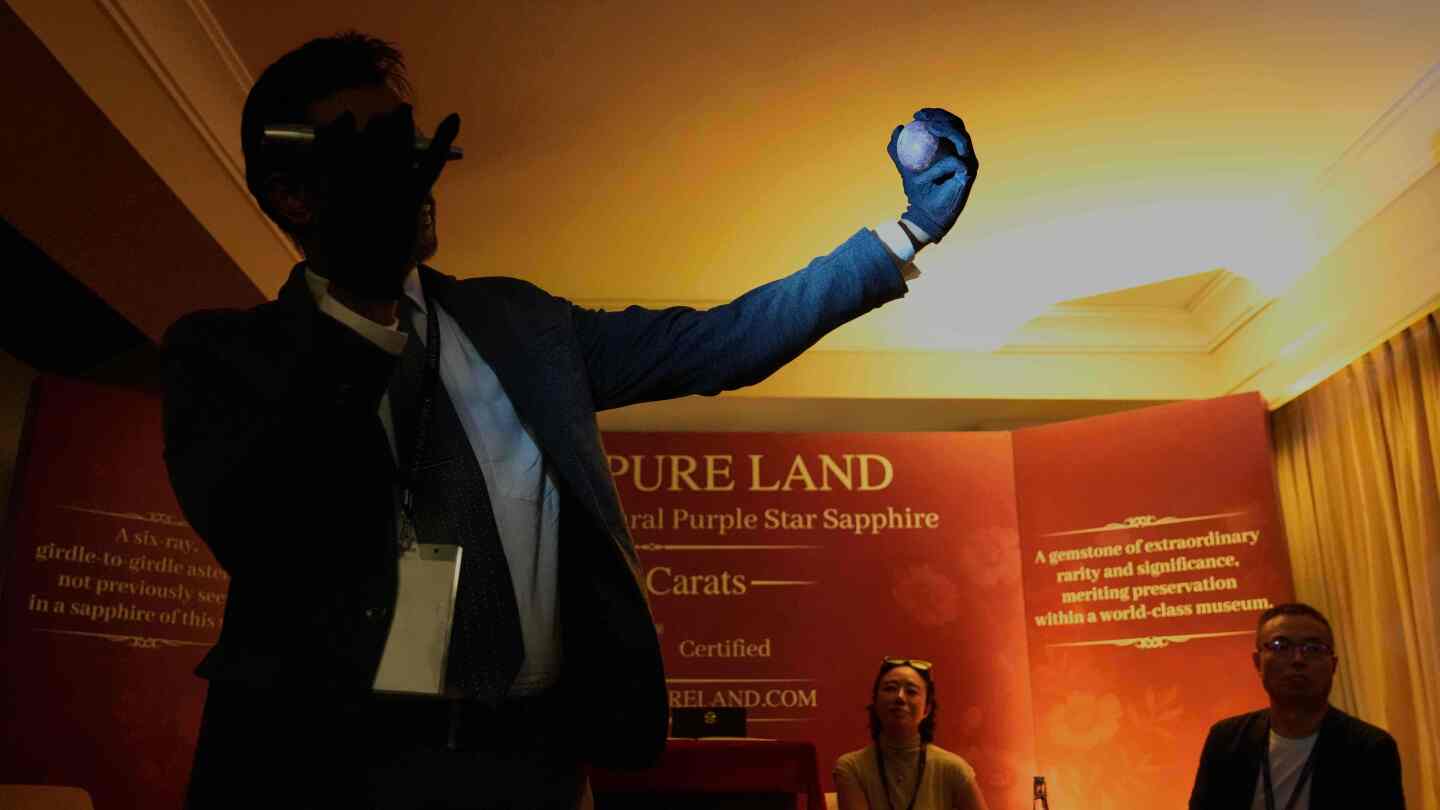
    COLOMBO, Sri Lanka — A monumental discovery in gemology was revealed to the world on Saturday as a colossal Purple Star Sapphire, weighing an unprecedented 3,563 carats, was presented in the Sri Lankan capital. Dubbed the ‘Star of Pure Land,’ this polished, round-shaped gemstone is now officially recognized as the largest documented natural purple star sapphire in existence, with international valuers estimating its worth between $300 million and $400 million.

    The gem’s unveiling was managed by consultant gemologist Ashan Amarasinghe, who detailed its exceptional characteristics to the media. ‘This specimen exhibits a perfectly defined six-ray asterism—a star-like pattern that is exceptionally rare and pronounced, setting it apart from all other known stones of its kind,’ Amarasinghe stated. The asterism effect, a phenomenon caused by light reflecting from needle-like inclusions within the stone, is particularly well-defined in this sapphire, enhancing its value and visual appeal.

    The current proprietors, operating under the collective name ‘Star of Pure Land Team,’ have chosen to remain anonymous due to the immense security concerns associated with such a valuable asset. According to one representative, the gem was originally unearthed in 2023 from a gem pit near Rathnapura, a remote town in Sri Lanka historically celebrated as the ‘city of gems.’ Initially acquired as part of a larger lot of gems, its true significance was not immediately apparent. After two years of possession, the owners recognized its unique qualities and subsequently procured official certification from two independent gemological laboratories to authenticate its rarity and value.

    Sri Lankan sapphires have long been esteemed in global markets for their distinctive color saturation, exceptional clarity, and unique shimmer. The discovery and certification of the ‘Star of Pure Land’ not only reinforce the island nation’s status as a premier source of high-quality gemstones but also set a new benchmark in the world of rare gem collections. The owners have expressed their intention to sell this priceless natural treasure, anticipating interest from elite collectors, museums, and private institutions worldwide.

  • Large crowds expected for ‘Hands off Greenland’ protests

    Large crowds expected for ‘Hands off Greenland’ protests

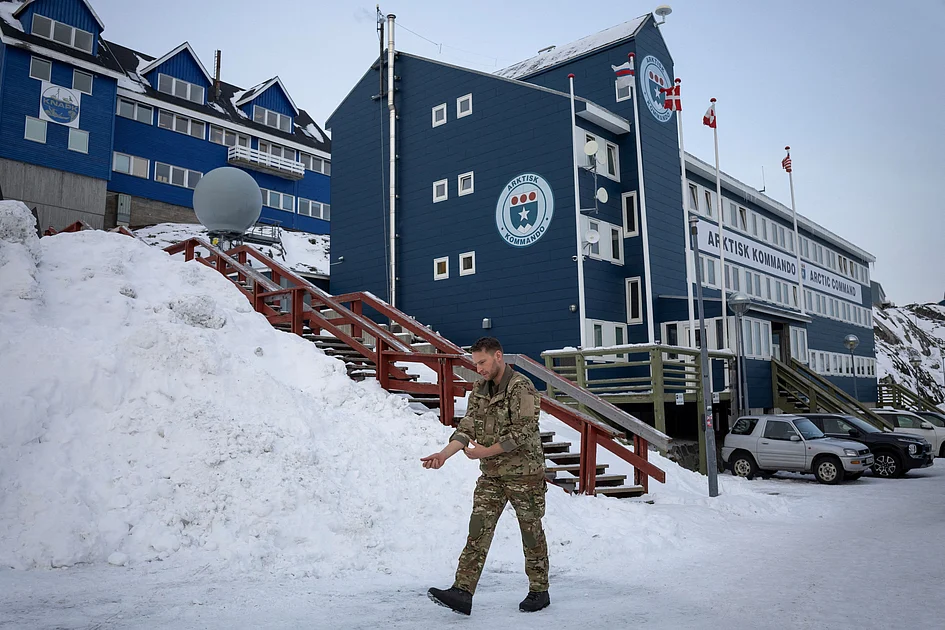
    Mass demonstrations organized under the banner ‘Hands Off Greenland’ swept through Denmark and Greenland on Saturday, representing a powerful grassroots response to U.S. President Donald Trump’s controversial statements regarding potential acquisition of the autonomous Danish territory. The protests, coordinated by Greenlandic associations including Uagut and the Inuit umbrella organization, drew thousands of participants across multiple cities including Copenhagen, Aarhus, Aalborg, Odense, and the Greenlandic capital of Nuuk.

    The mobilization follows Trump’s January 16th warning that he “may put a tariff” on nations opposing his territorial ambitions toward Greenland. This economic threat has ignited widespread condemnation among Greenlanders, with recent polls indicating 85% of the territory’s population opposes joining the United States, while only 6% support such a move.

    In Nuuk, demonstrators gathered at 4:00 PM local time to march toward the U.S. consulate carrying Greenlandic flags, explicitly protesting what organizers termed “the United States’ illegal plans to take control of Greenland.” Simultaneously, in Copenhagen, protesters assembled at noon outside the U.S. embassy, creating a visible symbol of resistance during a visit by a bipartisan delegation of U.S. lawmakers.

    Julie Rademacher, chairwoman of Uagut, emphasized the need for unity, stating recent events have placed “Greenlanders in both Greenland and Denmark under pressure.” Organizers Kristian Johansen and Avijaja Rosing-Olsen articulated clear demands for “respect for our country’s right to self-determination” and adherence to “international law and international legal principles,” framing the struggle as having global significance beyond Greenland’s 57,000 inhabitants.

    The protests represent a remarkable show of democratic engagement in the Arctic territory, with social media indications suggesting participation numbers that would represent a substantial portion of Greenland’s total population.

  • EU advises airlines to avoid Iranian airspace after threat of US strikes

    EU advises airlines to avoid Iranian airspace after threat of US strikes

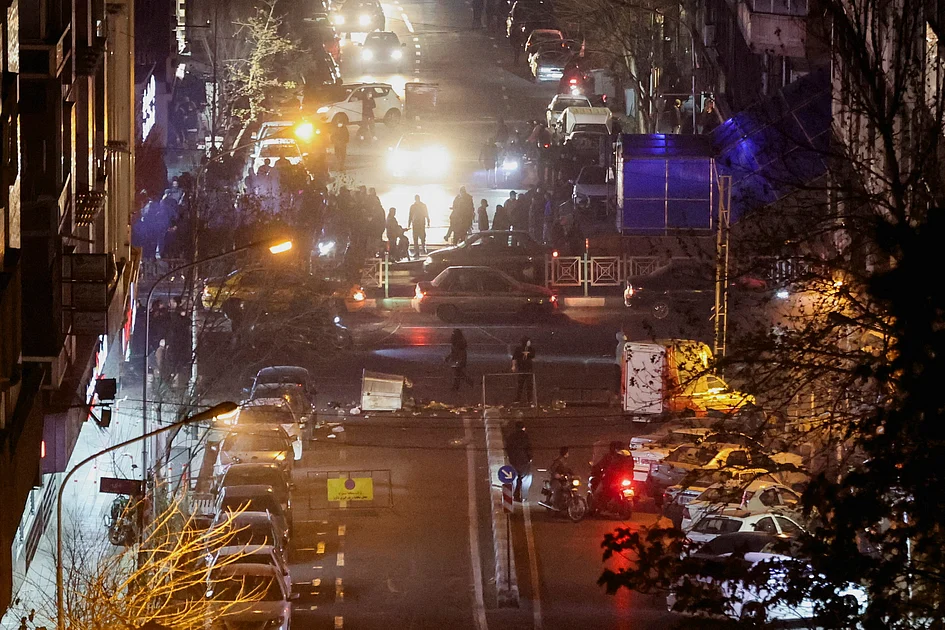
    The European Union Aviation Safety Agency (EASA) has issued a formal advisory urging all commercial airlines to avoid Iranian airspace due to escalating military tensions and heightened alert status of Iranian defense systems. This precautionary measure follows heightened security concerns stemming from recent U.S. military threats against Iran.

    The aviation regulator specifically cited increased risks of misidentification and accidental engagement with civilian aircraft due to Iran’s activated air defense systems. EASA’s warning emphasized that the combination of advanced weapon systems, unpredictable state responses, and potential activation of surface-to-air missile (SAM) systems creates substantial danger to civil aviation operations at all altitudes.

    This security alert originates from recent civil unrest in Iran that began on December 28, initially triggered by economic protests that evolved into one of the most significant challenges to Iran’s clerical leadership since the 1979 revolution. According to Norway-based Iran Human Rights, the conflict has resulted in at least 3,428 protester fatalities and over 10,000 arrests, though these figures represent conservative estimates.

    The international tension peaked when the United States threatened military intervention if Iran proceeded with planned executions of arrested protesters. Although Washington has subsequently moderated its stance following warnings from Gulf allies about potential regional escalation, U.S. officials maintained that “all options remain on the table” as of Thursday.

    In a notable development, U.S. President Donald Trump acknowledged Iran’s decision to cancel scheduled executions, thanking Tehran for heeding warnings about “serious consequences” should the crackdown on protesters continue. This diplomatic exchange suggests ongoing behind-the-scenes negotiations despite public posturing from both nations.

  • Martyn was given ’50/50′ chance of survival

    Martyn was given ’50/50′ chance of survival

    Former Australian cricket star Damien Martyn has revealed he was given only a 50% chance of survival after contracting a severe case of meningitis that required an eight-day induced coma in late December 2025. The 54-year-old Test veteran shared his harrowing health ordeal through a public statement accompanied by a beachside recovery photo.

    Martyn described how his life was suddenly ‘taken out of my hands’ on December 27th when meningitis aggressively attacked his brain. Medical professionals at Gold Coast University Hospital made the critical decision to place him in a paralyzed coma to combat what he termed ‘this awful disease.’ Against statistical predictions, Martyn emerged from the coma after eight days, initially unable to walk or speak.

    In what he characterizes as a remarkable recovery, the cricketer-turned-survivor regained both mobility and speech within just four days of waking, astonishing his medical team. His discharge from hospital marked the beginning of an ongoing rehabilitation journey that now includes symbolic moments of gratitude, such as walking on the beach near his home.

    Meningitis, the infection responsible for Martyn’s critical condition, attacks the protective membranes surrounding the brain and spinal cord. The disease can prove fatal within hours if not treated promptly, making Martyn’s recovery particularly notable.

    The cricket legend expressed profound appreciation for the emergency responders from Mermaid Waters Ambulance, hospital staff, and countless supporters who reached out during his ordeal. ‘This experience has reminded me of how fragile life is,’ Martyn reflected, emphasizing the preciousness of time and the generosity of strangers.

    Martyn’s distinguished cricket career included 67 Test matches between 1992-2006, during which he accumulated 4,406 runs including 13 centuries. His international achievements encompassed two ODI World Cup victories, notably his courageous 88 not out in the 2003 final played with a broken finger against India.

  • Ugandan leader to extend 40-year rule after being declared winner of contested poll

    Ugandan leader to extend 40-year rule after being declared winner of contested poll

    Ugandan President Yoweri Museveni has secured a seventh electoral victory, extending his four-decade rule for another five-year term following Thursday’s contentious presidential election. According to official results from Uganda’s electoral commission, the 81-year-old incumbent captured 72% of the vote, while his primary challenger, former pop star turned opposition leader Bobi Wine, garnered 25%.

    Wine, whose legal name is Robert Kyagulanyi, immediately denounced the outcome as fraudulent, urging citizens to engage in peaceful demonstrations against what he characterized as ‘fabricated results.’ The 43-year-old opposition leader reported that at least 21 fatalities had occurred during electoral violence, though authorities have only confirmed seven deaths.

    The election process was overshadowed by an unprecedented nationwide internet shutdown implemented since Tuesday, severely hampering information verification capabilities. Government officials defended the digital blackout as a necessary measure to combat misinformation, electoral fraud, and potential incitement to violence. However, the United Nations human rights office condemned the internet suspension as ‘deeply concerning,’ while Wine demanded immediate restoration of digital connectivity.

    Museveni first assumed power in 1986 as a rebel leader and has since maintained control through a series of electoral victories that opposition groups and international observers have frequently questioned. The latest electoral process has drawn heightened scrutiny due to the combination of violence allegations, communication restrictions, and disputed results that characterize Uganda’s political landscape.

  • Saudi Arabia clarifies viral video on murder ‘not true’

    Saudi Arabia clarifies viral video on murder ‘not true’

    Saudi Arabian authorities have officially discredited a widely circulated video alleging a murder occurred in Hafar Al Batin, labeling the footage as entirely fabricated. The nation’s Ministry of Interior issued a formal clarification through social media channels, with the official media spokesperson for the Eastern Region Police confirming the viral content’s inaccuracy.

    According to the government statement, the incident referenced in the video actually stemmed from previously resolved family disputes. The authorities emphasized that all necessary legal procedures had been properly administered regarding the actual domestic matter, which differed significantly from the violent narrative portrayed in the viral content.

    The individual responsible for recording and disseminating the misleading video has been detained under Saudi Arabia’s stringent Anti-Cybercrime Law. This legislation empowers judicial authorities to impose severe penalties on violators, including imprisonment for up to five years and financial penalties reaching 3 million Saudi Riyals (approximately $800,000).

    This incident highlights Saudi Arabia’s ongoing efforts to combat misinformation and maintain social stability through robust digital governance frameworks. The prompt response demonstrates the government’s commitment to addressing both domestic disputes and the spread of false information through official channels.

  • Egypt: 5 siblings suffocate to death after gas leak at home

    Egypt: 5 siblings suffocate to death after gas leak at home

    The rural community of Mit Asim in Egypt’s Qalyubia governorate is reeling from a devastating household accident that resulted in the tragic suffocation of five young siblings. The incident occurred during the early hours of Friday when a catastrophic gas leak filled the family home with toxic fumes.

    Victims of the tragedy included four sisters and one brother, whose ages spanned from eight to eighteen years old. Emergency responders arrived at the scene with multiple fire trucks and ambulances, but despite their rapid deployment, the siblings had already succumbed to gas inhalation before rescue teams could intervene.

    Local authorities, including the head of Banha’s Criminal Investigation Branch and the Banha Police Station Investigation Unit, immediately secured the premises. Preliminary examinations confirmed that the concentrated gas dispersion throughout the residential structure caused the fatal asphyxiation.

    Following standard procedural protocols, the victims’ remains were transported to medical facilities under official supervision. Forensic specialists completed postmortem examinations, after which the Public Prosecutor’s Office authorized burial proceedings while simultaneously initiating a comprehensive investigation into the circumstances surrounding the gas leak.

  • Horses leap through flames and pets go to church in Spanish animal rituals honoring St. Anthony

    Horses leap through flames and pets go to church in Spanish animal rituals honoring St. Anthony

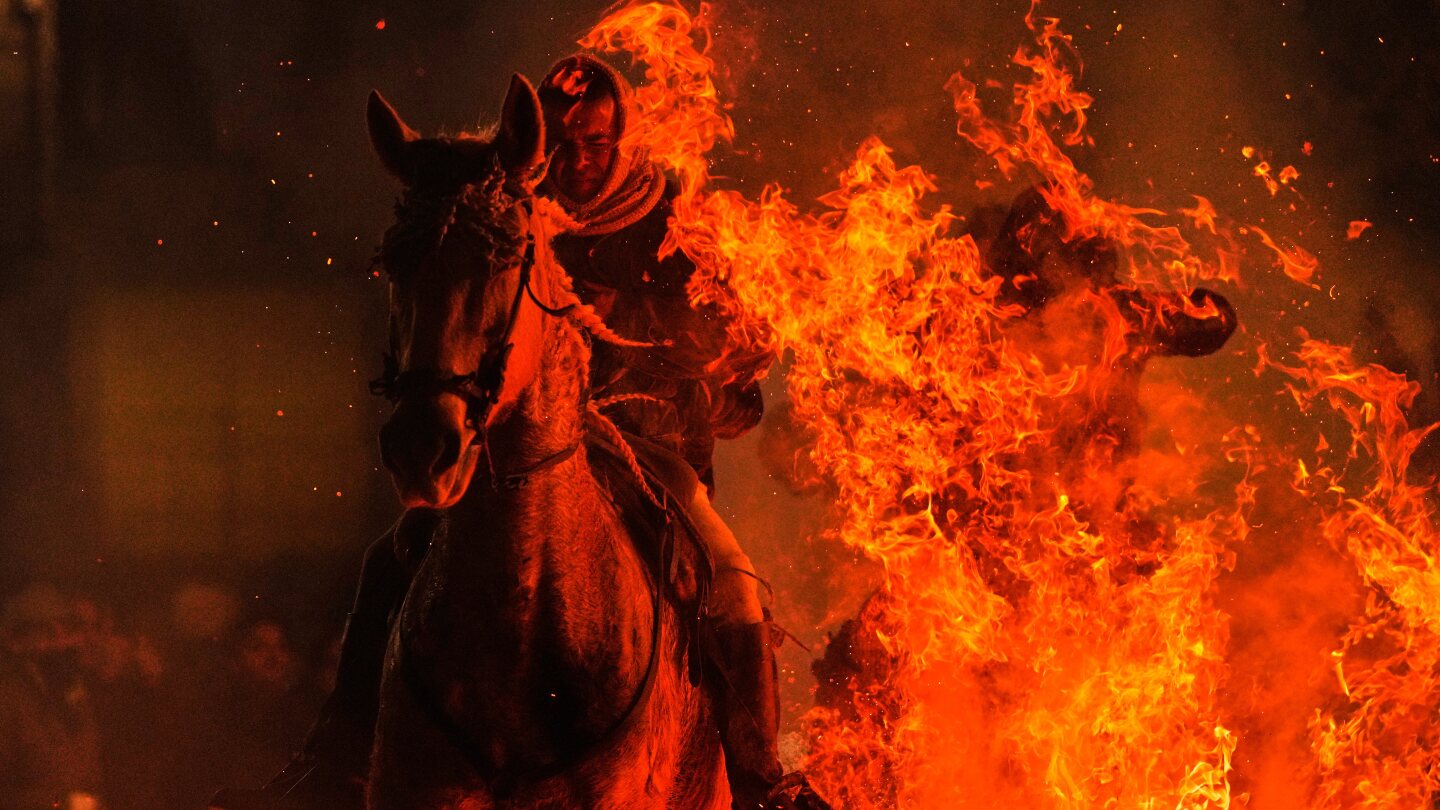
    In the small Spanish village of San Bartolome de Pinares, an extraordinary centuries-old tradition unfolded as riders guided horses through roaring bonfires during the annual Las Luminarias festival. Meanwhile, in Madrid, pet owners gathered with their dogs and cats for a more tranquil blessing ceremony at St. Anthony’s Church. Both events honor St. Anthony the Abbott, patron saint of domestic animals, occurring every January in contrasting yet parallel celebrations.

    The fiery spectacle in the rural village (population approximately 500), located 100 kilometers from Madrid, involves riders preparing their horses with fire-resistant tape on tails and protective glazes on manes before navigating through strategically placed bonfires. Local attendees like 62-year-old Antonio Patricio explain the historical context: “This tradition originated from the belief that smoke and branches could bless and heal farm animals, preventing illness and ensuring their continued fieldwork capacity.”

    Despite ongoing criticism from animal rights organizations, festival participants maintain that injuries to horses are exceptionally rare. The event begins with community gatherings featuring shared wine, beer, and sweets before the dramatic fire-jumping ceremony that continues into the early hours.

    Conversely, Madrid’s urban celebration involves priests sprinkling holy water on pets brought by owners seeking annual blessings for their animals’ health and protection. The visibly calmer ceremony featured dogs in winter vests and somewhat bewildered-looking cats, with attendees like Rosa Gomez expressing appreciation for the tradition while holding her adopted dog Kia.

    These rituals reflect Spain’s deep cultural connections to animal husbandry traditions, particularly in rural areas experiencing population decline. The smoke purification practice reportedly originated centuries ago when a mysterious illness affected village animals, leading to the belief in smoke’s healing properties. Today, the tradition serves not only as spiritual practice but also as cultural preservation, bringing families and visitors together in Spain’s gradually emptying countryside.

  • UAE: Female-led travel grows by 18% as momcations, solo trips rise

    UAE: Female-led travel grows by 18% as momcations, solo trips rise

    The United Arab Emirates is experiencing a significant transformation in its travel sector, with female-led tourism expanding by 18% as innovative travel concepts gain popularity. Industry analysts report substantial growth in women-only excursions and specially curated tour packages, reflecting evolving travel preferences among Emirati women.

    Travel industry executives attribute this remarkable growth to increasing female workforce participation and greater financial independence. Rashida Zahid, Vice President of Operations at musafir.com, noted that these socioeconomic factors have empowered women to travel with heightened confidence for both professional and leisure purposes.

    Market analysis reveals distinct patterns within this expansion. While solo female travel represents less than 10% of the overall growth, women-only group travel has emerged as the fastest-growing segment, particularly among millennial and Gen Z demographics. The trend demonstrates a preference for socially connected yet independent travel experiences.

    Emerging travel patterns show women increasingly selecting thoughtfully designed journeys that emphasize meaningful experiences. Wellness and self-care oriented travel has gained substantial traction, alongside growing demand for ‘quiet luxury’ destinations that prioritize comfort, safety, and tranquil environments over crowded tourist itineraries.

    Innovative travel concepts such as ‘momcations’ have gained significant popularity. These specialized breaks enable mothers to vacation with their children while enjoying personal downtime, spa treatments, and wellness activities without extended family separation. Additionally, ‘bleisure’ travel—extending business trips for leisure purposes—has become increasingly common among female professionals.

    Destination preferences reveal that safety, cultural richness, and wellness opportunities significantly influence female travel decisions. Japan ranks highly for solo travelers due to its exceptional safety standards, reliable public transportation, and low crime rates. Other Asian destinations including Thailand, Indonesia (particularly Bali), South Korea, and Vietnam continue growing in popularity due to their affordable cultural experiences.

    European destinations remain favored for their walkability, reliable public transport, and cultural offerings, with Italy, France, Spain, Switzerland, and Greece receiving particular attention. Nordic countries including Finland, Denmark, and Norway attract travelers seeking safety, sustainability, nature-based experiences, and solo-friendly environments.

    The UAE itself, along with Saudi Arabia and Oman, has become an increasingly popular destination for international female travelers, recognized for exceptional safety standards and hospitality offerings. Growing interest in heritage tourism, wellness retreats, and evolving tourism ecosystems specifically designed for women has contributed to this trend.

    The travel industry has responded proactively to these changing demographics. Hotels, tour operators, and destinations increasingly develop products specifically catering to solo female travelers. Enhanced offerings include female tour guides, local hosts, security-enhanced accommodation options, and women-focused amenities. Experience providers now design specialized wellness retreats, cultural tours, and lifestyle-driven itineraries that balance independence with guided support, ensuring travelers enjoy freedom without feeling overwhelmed.