作者: admin

  • New Zealand, Slovakia temporarily close embassies in Iran; diplomatic staff leaves Tehran

    New Zealand, Slovakia temporarily close embassies in Iran; diplomatic staff leaves Tehran

    In a coordinated response to escalating security concerns, New Zealand and Slovakia have initiated the temporary closure of their embassies in Tehran and evacuated all diplomatic personnel from Iran. The decision, announced on Friday, January 16, 2026, comes amid what both nations describe as a rapidly deteriorating security environment and heightened risks of military escalation in the region.

    New Zealand’s Foreign Ministry confirmed that its diplomatic staff safely departed Iran via commercial flights overnight, with embassy operations subsequently relocated to Ankara, Turkey. This strategic move ensures continuity of diplomatic functions while removing personnel from immediate danger.

    Slovak Foreign Minister Juraj Blanar characterized the security situation as significantly degraded, citing a ‘real threat of an escalation of the military conflict’ as the primary motivation for the evacuation. He confirmed that all Slovak diplomats and embassy employees have been successfully extracted from Tehran and are currently out of harm’s way.

    Concurrently, New Zealand has issued a stark travel advisory against all travel to Iran and urgently recommended that any New Zealand citizens currently in the country depart immediately. The government emphasized that its capacity to provide consular assistance is now ‘extremely limited’ due to the closure. Additionally, officials noted severe communications challenges within Iran, advising citizens to contact relatives whenever possible given the difficulties in maintaining reliable contact.

    The diplomatic withdrawals occur against the backdrop of New Zealand’s strong condemnation of Iran’s internal security measures. Foreign Minister Winston Peters stated that New Zealand remains ‘appalled’ by Tehran’s violent response to recent anti-government protests, explicitly condemning ‘the brutal crackdown being carried out by Iran’s security forces, including the killing of protesters.’ Peters emphasized that Iranians possess the right to peaceful protest, freedom of expression, and access to information—rights he asserts are currently being ‘brutally repressed.’

    New Zealand has formally communicated these serious concerns to the Iranian embassy in Wellington and intends to maintain diplomatic pressure through appropriate channels despite the physical withdrawal of its mission.
  • Syrian army says takes over Kurdish-held town east of Aleppo

    Syrian army says takes over Kurdish-held town east of Aleppo

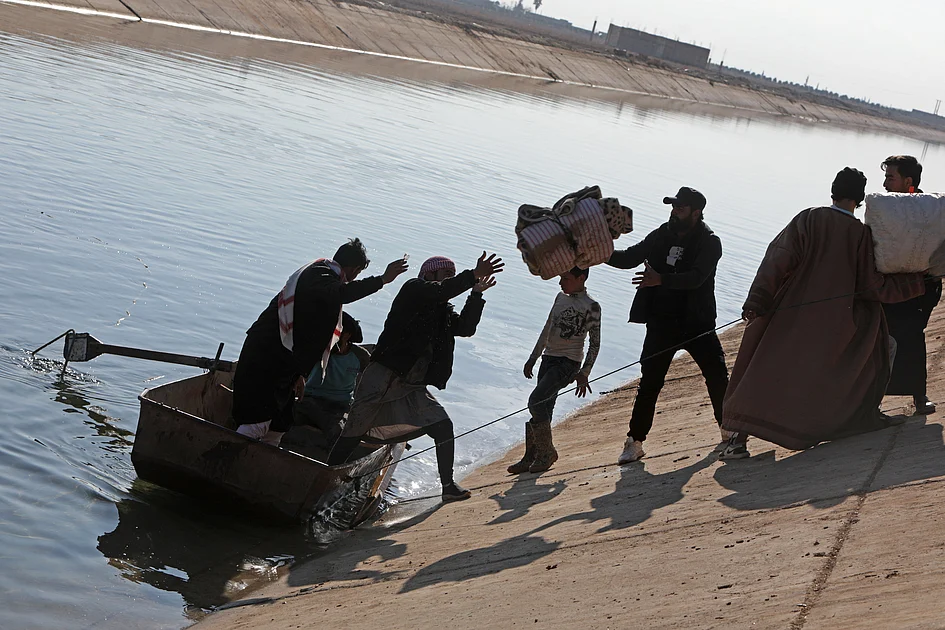
    The Syrian military has officially declared the establishment of complete authority over the strategic town of Deir Hafer, located approximately 50 kilometers east of Aleppo. This development occurred on Saturday, January 17, 2026, following a negotiated withdrawal agreement with Kurdish-led forces that had previously controlled the area.

    According to an official statement broadcast on Syrian state television, government forces have successfully implemented ‘full military control’ throughout the town and its surrounding territories. Independent verification from an AFP correspondent deployed in the region confirmed the visible presence of Syrian army personnel conducting systematic deployment operations within Deir Hafer’s urban center.

    The transfer of authority concludes a period of heightened military tensions in the Aleppo periphery, where recent clashes between Syrian government units and Kurdish forces had raised concerns about potential escalation. The negotiated disengagement represents a significant territorial acquisition for the Damascus government, strengthening its strategic positioning in northern Syria’s complex geopolitical landscape.

    This development marks another phase in the ongoing reorganization of military control across Syria’s northwestern regions, where multiple factions including government forces, Kurdish-led administrations, and various opposition groups maintain intersecting spheres of influence. The peaceful resolution of this particular standoff suggests evolving tactical relationships between previously opposed military factions in Syria’s protracted conflict.

  • AP obtains documents showing Venezuelan leader Delcy Rodriguez has been on DEA’s radar for years

    AP obtains documents showing Venezuelan leader Delcy Rodriguez has been on DEA’s radar for years

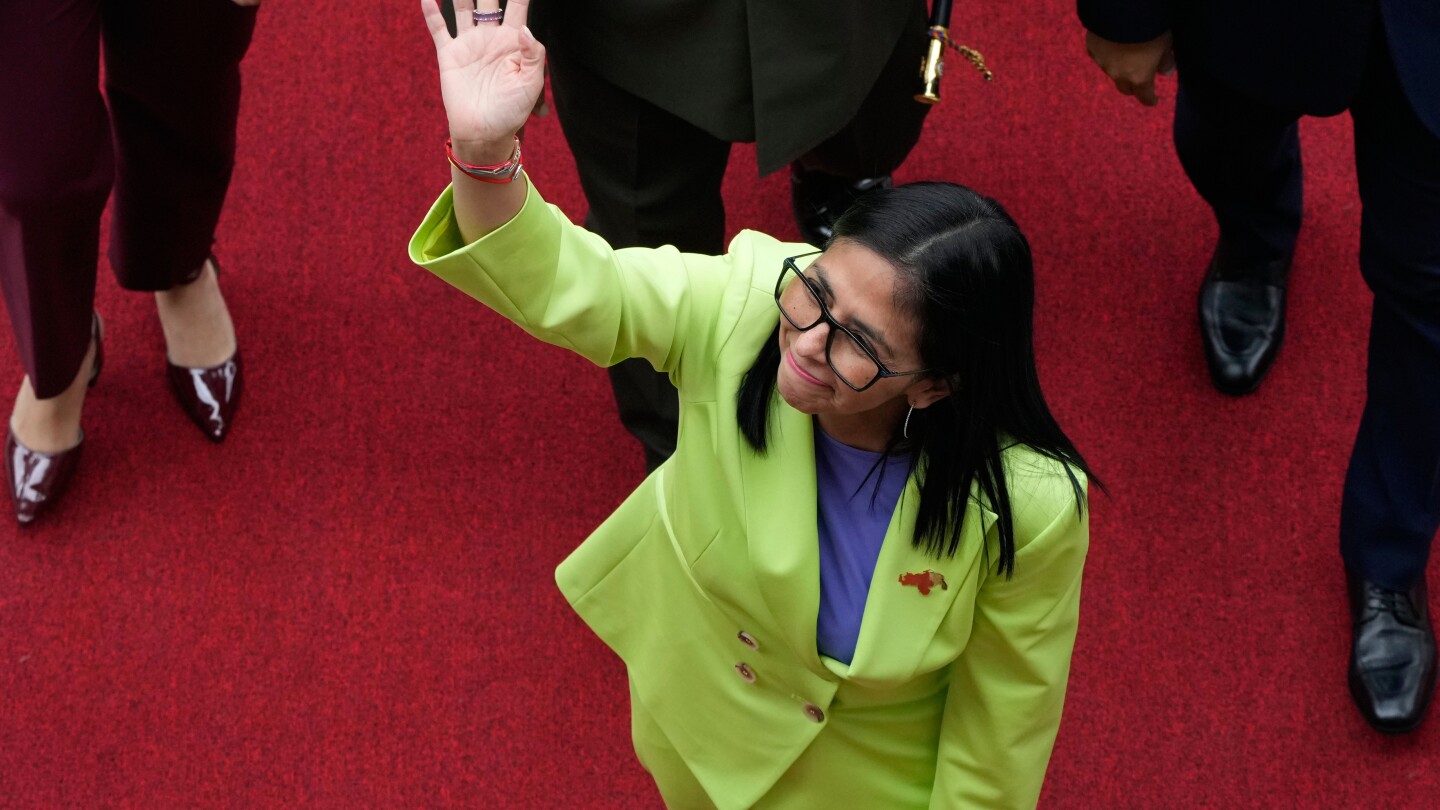
    A significant contradiction has surfaced in U.S.-Venezuela relations as President Donald Trump’s administration embraces acting Venezuelan President Delcy Rodríguez while internal Drug Enforcement Administration records reveal she was designated a ‘priority target’ for drug trafficking investigations. According to documents obtained by The Associated Press and confirmed by multiple law enforcement officials, Rodríguez attracted intense DEA scrutiny dating back to at least 2018, with the agency amassing substantial intelligence on her alleged involvement in narcotics and money laundering operations.

    The DEA’s classified files, reviewed by AP, contain numerous allegations against Rodríguez, including claims from confidential informants that she utilized Caribbean resort hotels as fronts for money laundering operations. The records further connect her to Alex Saab, Maduro’s alleged financial operative currently facing U.S. money laundering charges, and detail her associations with individuals involved in corrupt government contracting schemes worth hundreds of millions of dollars.

    Despite this extensive investigative background, the Trump administration has conspicuously avoided bringing formal charges against Rodríguez while simultaneously positioning her as America’s preferred partner for stabilizing Venezuela. President Trump has publicly praised Rodríguez as a ‘terrific person’ following Maduro’s capture, and high-level communications have occurred between Rodríguez and U.S. officials, including CIA Director John Ratcliffe.

    This paradoxical situation creates a complex geopolitical landscape where U.S. law enforcement continues ongoing investigations into Rodríguez’s activities even as diplomatic channels remain open. Current and former DEA officials note that while ‘priority target’ designation indicates significant investigative interest, it doesn’t automatically lead to criminal charges. Experts on Venezuelan affairs describe the Maduro regime as a ‘criminal-hybrid regime’ where achieving power requires at minimum abetting criminal activities, suggesting Rodríguez’s situation reflects systemic issues rather than individual corruption.

    The DEA’s investigations into Rodríguez span multiple field offices and involve numerous ongoing cases, though specific details remain classified. This development occurs against the backdrop of Venezuela being ranked as the world’s third most corrupt nation by Transparency International, with the U.S. apparently leveraging Rodríguez’s investigative status as diplomatic pressure while pursuing strategic interests in Venezuela’s vast oil reserves.

  • Tribute to Lata Mangeshkar: UAE-born Malhaar Baithak’s 90-minute ode to  Indian legend

    Tribute to Lata Mangeshkar: UAE-born Malhaar Baithak’s 90-minute ode to Indian legend

    ABU DHABI – In a captivating celebration of Indian musical heritage, the UAE-born cultural organization Malhaar launched its inaugural Malhaar Baithak in the capital city on January 16. The event featured an immersive 90-minute musical journey honoring the legendary playback singer Lata Mangeshkar’s extraordinary seven-decade career.

    Held at the Indian Embassy Auditorium, the performance strategically coincided with India’s 77th Republic Day celebrations. The carefully curated repertoire spanned Mangeshkar’s most beloved compositions, including timeless classics such as ‘Ajeeb Dastan Hai Yeh,’ ‘Lag Ja Gale,’ ‘Dekha To Yeh Khwab, Tere Mere Honthon Pe,’ and the cherished ‘Lukachuppi.’ The musical homage concluded powerfully with the devotional piece ‘O Paalanhaare’ from the acclaimed film Lagaan.

    Distinguishing itself from conventional concerts, the Malhaar Baithak incorporated audience participation as a fundamental element. Throughout the evening, the ensemble actively encouraged attendees to join in singing familiar refrains, transforming the venue into a resonant chorus of shared nostalgia and collective musical experience.

    The performers adopted an innovative educational approach, seamlessly integrating spontaneous ‘micromasterclasses’ within the performance flow. Artists periodically paused to deconstruct complex musical phrases, breaking down intricate note patterns and ornamentations in an accessible, engaging manner that both educated and entertained the diverse audience.

    Jogiraj Sikidar, Founder and Director of Malhaar, emphasized the organization’s philosophical approach: ‘Malhaar Baithak has always been imagined as more than a concert. It represents a cultural space where multiple generations of families converge to sing together, reminisce, and reconnect through music that has soundtracked their lives across decades.’

    The Abu Dhabi debut follows the format’s remarkable success in Dubai, where it has drawn capacity crowds through over fifty houseful concerts. Looking forward, Malhaar Baithak has announced an ambitious schedule of twelve performances across the UAE in 2026, with six events planned in both Abu Dhabi and Dubai.

    The next scheduled performance on February 6 will celebrate Valentine’s month with a special edition dedicated to the cinematic romance of filmmaker Yash Chopra and the enduring musical legacy of Yash Raj Films.

  • Toxic gas leak in Anhui classified as major work safety liability accident

    Toxic gas leak in Anhui classified as major work safety liability accident

    An investigation into a lethal toxic gas leak at a chemical facility in China’s Anhui province has officially designated the incident as a major work safety liability accident. The tragedy, which claimed four lives and caused direct economic losses exceeding 6.09 million yuan ($873,531), occurred at Anhui Xintai New Material Co in Chizhou on October 27, 2025.

    The catastrophic sequence began when an operator, identified only by surname Zhang, entered a confined space—a frozen brine tank—without authorization or adherence to mandatory safety protocols. At approximately 8:12 pm, Zhang ventured into the hazardous environment without proper ventilation, gas detection equipment, or respiratory protection to retrieve a pump. The worker was rapidly overwhelmed by dangerously high concentrations of nitrogen and other toxic gases.

    Subsequent rescue attempts tragically compounded the casualties when co-workers and the workshop director intervened without adequate personal protective equipment, resulting in three additional fatalities.

    Provincial authorities concluded that the direct cause stemmed from severe violations of confined space entry procedures and the absence of proper protective gear during rescue operations. The investigation further identified systemic failures including deficient corporate safety management, inadequate staff training, unaddressed risk controls, insufficient hazard inspections, and regulatory oversight lapses by local authorities.

    Legal proceedings have commenced with three company executives—the chairman, general manager, and a deputy general manager—released on bail pending further police investigation. The deceased workshop director has been recommended for liability exemption. The Chizhou emergency management bureau will impose legal penalties on the company, while potential dereliction of duty by government personnel has been referred to the Anhui Provincial Commission for Discipline Inspection and Commission of Supervision for accountability proceedings.

  • Senegal ‘concerns’ over treatment before Afcon final

    Senegal ‘concerns’ over treatment before Afcon final

    The Senegalese Football Federation (FSF) has formally raised alarm over significant security lapses and logistical shortcomings as the national team prepares for the 2025 Africa Cup of Nations final against host nation Morocco this Sunday. The concerns emerged immediately upon the team’s arrival in Rabat on Friday, where players faced a chaotic scene at the train station. Supporters swarmed the squad in attempts to take selfies, forcing athletes to physically push through crowds to reach their team bus without adequate security presence.

    In an official statement, the FSF detailed multiple grievances beyond the security failure. These included dissatisfaction with the allocated hotel accommodations, an insufficient number of match tickets provided for Senegalese supporters, and being offered training facilities at the Moroccan national team’s base camp. The federation emphasized that the ‘lack of adequate security’ placed players and staff in potentially dangerous situations.

    Team manager Pape Thiaw condemned the incident, stating, ‘What occurred was completely abnormal. Given the crowd size, anything could have happened, potentially endangering my players. Such situations should not occur between nations considered brothers.’

    Confederation of African Football (CAF) president Patrice Motsepe responded by affirming CAF’s duty to ensure Senegal receives ‘all necessary support and encouragement’ ahead of the championship match.

    Separately, Manager Thiaw addressed speculation about star forward Sadio Mané’s international future. Following Mané’s match-winning performance in Wednesday’s semi-final against Egypt, the player suggested he would not participate in future AFCON tournaments. Thiaw expressed hope that Sunday’s final would not be Mané’s last, suggesting the decision was made ‘in the heat of the moment’ and that ‘the country does not agree’ with his potential retirement from the competition. Mané, Senegal’s all-time leading scorer with 52 goals in 123 appearances, will turn 35 before the next tournament in 2027, hosted by Kenya, Tanzania, and Uganda.

  • Watch: Trump says Arab, Israeli officials did not convince him against striking Iran

    Watch: Trump says Arab, Israeli officials did not convince him against striking Iran

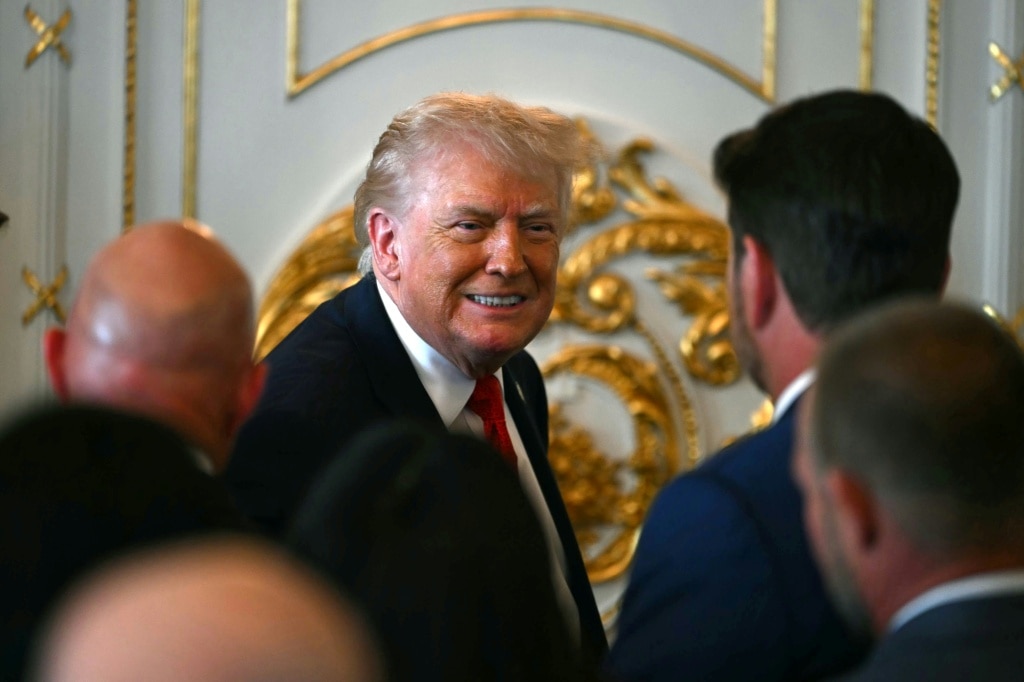
    In a revealing press briefing on the White House lawn Friday, President Donald Trump asserted that his decision to withhold military action against Iran was entirely self-determined, contradicting reports of intensive diplomatic lobbying by Middle Eastern allies. The president specifically denied that conversations with Arab or Israeli officials influenced his calculus, stating emphatically: “Nobody convinced me, I convinced myself.”

    Trump identified a singular development as having substantial impact on his decision-making process: Iran’s cancellation of planned executions of protestors. The president claimed Tehran had scheduled “800 hangings” that were subsequently called off, though he provided no evidence to substantiate this specific figure.

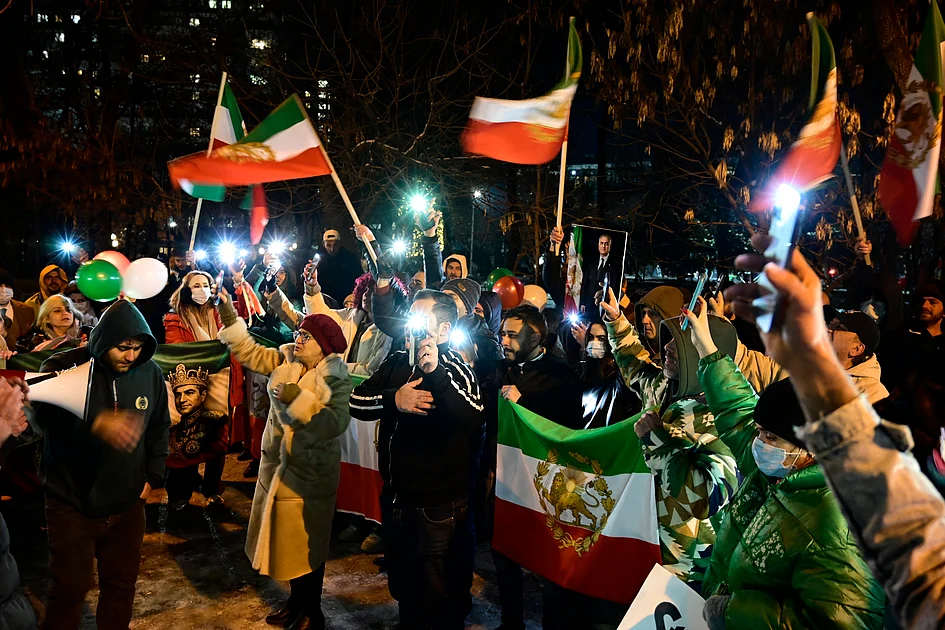
    The context for these statements stems from widespread anti-government demonstrations that have engulfed Iran since late December. What began as economic protests in Tehran’s bazaar has evolved into a broad movement challenging the country’s clerical establishment that has governed since the 1979 revolution. According to human rights organizations, security forces have killed thousands of participants in the unrest, with estimates ranging from 5,000 to 20,000 fatalities.

    This disclosure comes amid reports of frantic diplomatic efforts led by Saudi Arabia, Qatar, and Oman aimed at persuading the Trump administration to exercise restraint. Throughout the two-week crisis, the president had repeatedly threatened military intervention to support Iranian protestors, creating heightened tensions in the region.

    The developments have prompted international responses, with New Zealand and Slovakia temporarily closing their embassies in Tehran and withdrawing diplomatic staff, reflecting growing concerns about regional stability and security conditions in Iran.

  • Reza Pahlavi confident Iran rulers to fall; Trump holds off despite claiming ‘help on way’

    Reza Pahlavi confident Iran rulers to fall; Trump holds off despite claiming ‘help on way’

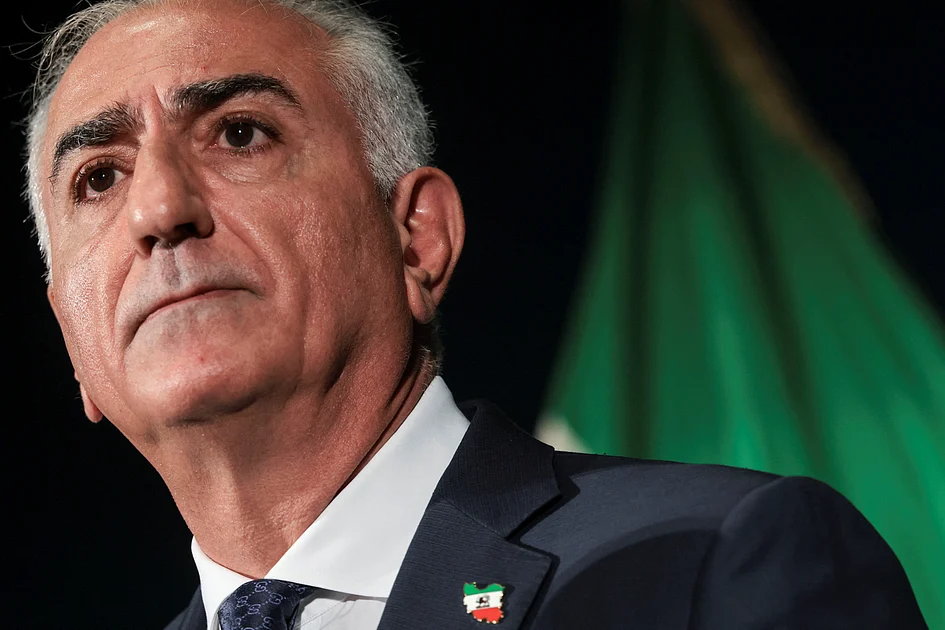
    In a significant development within Iran’s political crisis, Reza Pahlavi—the exiled son of Iran’s last Shah—has publicly declared his conviction that the current Islamic republic will inevitably collapse. During a Friday press conference in Washington, Pahlavi positioned himself as an opposition leader while urgently calling for international action to support protesters.

    The political tension escalates as former U.S. President Donald Trump maintains a contradictory stance. Despite previously threatening military intervention if Iranian security forces harmed demonstrators, and explicitly promising that ‘help is on the way,’ Trump has taken no tangible action. This hesitation persists amid alarming casualty reports from human rights organizations. Norway-based Iran Human Rights documents at least 3,428 protester deaths, with some estimates reaching between 5,000 and 20,000 fatalities.

    Pahlavi specifically appealed to Trump to avoid following the diplomatic approach of former President Barack Obama, emphasizing his belief that Trump would ultimately honor his commitments to the Iranian people. Meanwhile, Trump utilized his Truth Social platform to claim that Iran had ceased executing protesters, posting a message of gratitude to the clerical leadership.

    The opposition leader outlined concrete measures for international powers, including surgical strikes targeting the command structure of Iran’s Revolutionary Guards, expulsion of Iranian diplomats from foreign nations, and restoration of internet access which authorities have severely restricted.

    Addressing his vision for Iran’s future, Pahlavi advocated for a secular democracy determined through a national referendum, distancing himself from his father’s controversial legacy while promising improved relations with the United States and Israel. He proposed a ‘Cyrus Accord’ to normalize ties with Israel, invoking the ancient Persian emperor who liberated Jews from captivity.

    Despite gathering support from protesters chanting his name, Pahlavi faces skepticism from critics who suspect monarchical restoration ambitions and prefer opposition leadership emerging from within Iran itself.

  • Trump invites more leaders to join Gaza ‘Board of Peace’

    Trump invites more leaders to join Gaza ‘Board of Peace’

    The geopolitical landscape surrounding postwar Gaza witnessed significant developments as former U.S. President Donald Trump’s proposed ‘Board of Peace’ attracted international participation. Multiple world leaders have received invitations to join the controversial initiative, which aims to address the territory’s reconstruction and governance following prolonged conflict.

    Egyptian President Abdel Fattah al-Sisi, Turkish President Recep Tayyip Erdogan, Argentine President Javier Milei, and Canadian Prime Minister Mark Carney have all been approached to participate in the board. Their responses vary from immediate acceptance to careful consideration, with Milei publicly expressing honor at the invitation via social media platform X.

    The board’s composition includes prominent political figures such as former British Prime Minister Tony Blair, who acknowledged Trump’s leadership in establishing the initiative. Blair’s involvement remains contentious due to his role in the 2003 Iraq invasion, though Trump previously verified his acceptability to all parties.

    Administrative structure reveals two distinct entities: a primary Board of Peace focusing on governance capacity-building, regional relations, reconstruction, and investment mobilization, and a secondary Gaza executive board with advisory functions. The primary board incorporates Secretary of State Marco Rubio, senior negotiators Jared Kushner and Steve Witkoff, World Bank President Ajay Banga, billionaire financier Marc Rowan, and National Security Council member Robert Gabriel.

    Concurrent with these developments, a technocratic Palestinian committee held its inaugural meeting in Cairo, attended by Kushner. The White House confirmed additional appointments would follow for both boards, though specific allocations for world leaders remain unclear.

    Security dimensions advanced with the appointment of U.S. Major General Jasper Jeffers to lead an International Stabilization Force. This unit will assume security responsibilities in Gaza and establish a new police force to replace Hamas structures. Jeffers previously managed the Lebanon-Israel ceasefire monitoring in late 2024.

    The initiative progresses amid ongoing military operations, with Washington characterizing the effort as transitioning from ceasefire implementation to Hamas disarmament. The approach continues to generate debate regarding its vision for economic transformation and potential demographic policies in the conflict-ravaged territory.

  • ‘Nothing’s changed’ in Gaza as US peace deal enters second phase

    ‘Nothing’s changed’ in Gaza as US peace deal enters second phase

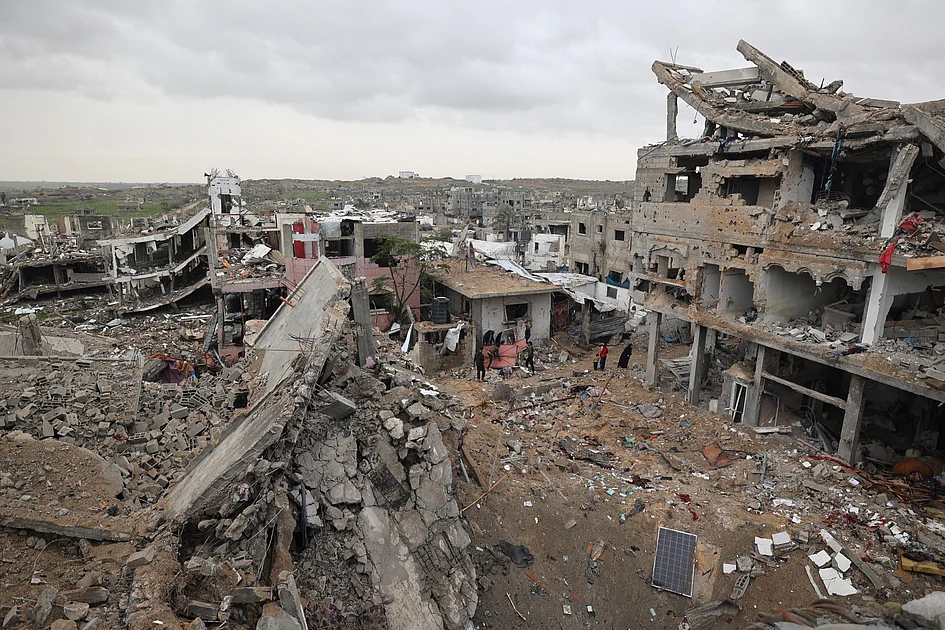
    Despite the official commencement of Phase Two of the US-brokered peace agreement, Gaza residents report no substantive improvement in their daily reality. The coastal territory witnessed over 14 fatalities on January 14th alone, according to Gaza civil defense authorities, highlighting the persistent violence that continues to plague the region.

    From his makeshift shelter in Gaza City, Mahmoud Abdel Aal expressed the collective frustration of Palestinians: “There is no distinction between wartime and the ceasefire, nor between the initial and subsequent phases of this agreement—aerial assaults persist daily.”

    The announcement of Phase Two by US Middle East envoy Steve Witkoff, representing President Donald Trump’s peace initiative, has failed to translate into tangible security improvements. Both Israeli forces and Hamas continue trading accusations of violating the ceasefire terms established in October 2025.

    An AFP correspondent documented the aftermath of a recent airstrike in Deir al-Balah that claimed five members of the Houli family. Israel’s military identified the target as a Hamas military operative, while neighbors like Ahmad Suleiman questioned the ceasefire’s validity: “Media broadcasts proclaim the ceasefire, but the actual situation tells a different story.”

    Deep skepticism prevails regarding newly proposed governance structures, including the Trump-chaired “Board of Peace” and an associated technocratic committee intended to oversee reconstruction efforts. “The international community convenes in Cairo to discuss Gaza’s future while unable to even access the territory,” noted Hossam Majed, residing amidst his destroyed home in Gaza City.

    The humanitarian situation remains catastrophic with UN assessments indicating over 80% of infrastructure destroyed. Essential services including water, electricity, and waste management remain non-functional. Medical facilities operate at minimal capacity, educational institutions have largely ceased to exist, and UNICEF reports all Gaza children require psychological support after more than two years of conflict.

    While humanitarian workers acknowledge some logistical improvements since the initial ceasefire, they emphasize that Israeli access restrictions continue to hamper adequate relief efforts—a claim Israeli authorities dispute.

    For displaced residents like Nivine Ahmad in Al-Mawasi’s camps, the promise of peace remains abstract: “We anticipate returning to something resembling normal life—perhaps prefabricated housing with basic utilities where our homes once stood. Only then will we believe the war truly ended.” Until then, she notes, Gazans survive on “hope and patience alone.”