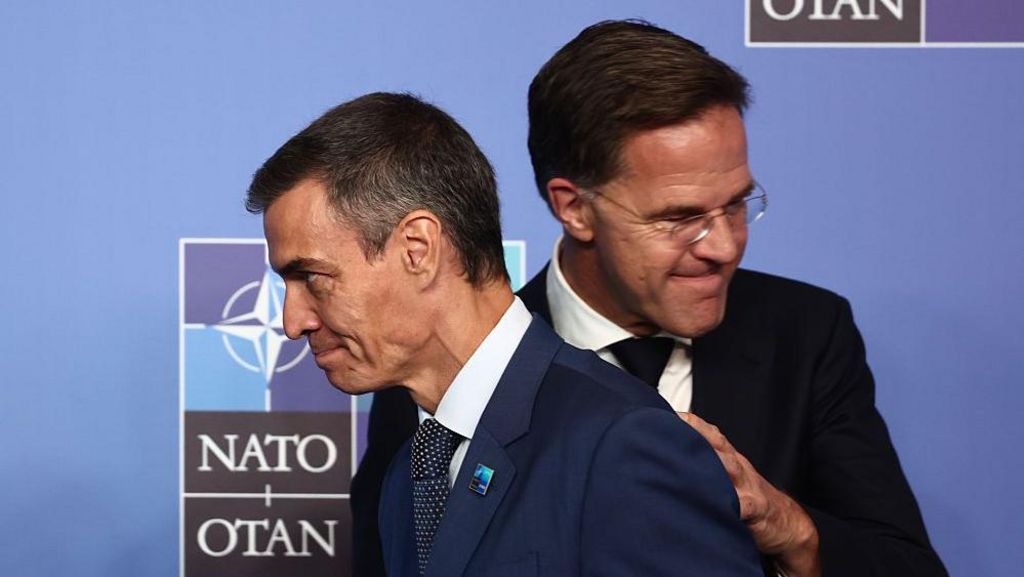
The 2026 NATO summit hosted in Ankara has become a stage for fresh diplomatic friction, as U.S. President Donald Trump launched a new public criticism of alliance member Spain and reignited his long-stated ambition to acquire the self-governing Danish territory of Greenland. Speaking alongside newly appointed NATO Secretary General Mark Rutte, Trump issued a stark threat to cut off all bilateral trade with Spain, labeling the Southern European ally a ‘wasted cause’ and a ‘terrible partner’ within the transatlantic defensive alliance. He also framed NATO allies’ widespread opposition to his Greenland takeover plan as a major sticking point for U.S. interests. The public outburst stems from long-simmering tensions between the Trump administration and Spanish Prime Minister Pedro Sánchez’s socialist government. Earlier this year, Sánchez refused U.S. requests to access Spanish military bases at Morón and Rota for operational missions tied to the conflict with Iran, a stance that already drew Trump’s anger. The U.S. president has also repeatedly pushed Spain to ramp up its defense spending to 5% of gross domestic product, a demand Sánchez has rejected as unreasonable and counterproductive. Currently, Spain meets the existing NATO defense spending target of 2% of GDP, a benchmark many members have only recently hit. This is not the first time Trump has threatened Spain with trade restrictions: he issued an identical warning back in March 2026, after Sánchez publicly stated his opposition to joining military action against Iran. That threat never translated into actual policy changes, and economic data points to the mutually beneficial nature of the bilateral trade relationship. According to figures from the U.S. Congress, total two-way trade between the two nations reached $75 billion in 2025, with the U.S. holding a $3 billion trade surplus over Spain – a fact Madrid has repeatedly highlighted to emphasize the imbalance works in Washington’s favor. Despite the sharp public rebuke from Trump, Spanish officials have responded with deliberate calm, stressing that bilateral relations remain stable and constructive. Following the public confrontation, Sánchez told reporters that he had an informal, friendly chat with Trump during the summit focused on the ongoing FIFA World Cup, and denied any atmosphere of tension between the two leaders. Madrid government sources reaffirmed that Spain has no plans to adjust its long-standing, robust social, cultural and economic ties with the U.S. and will maintain its policy positions unchanged. The European Union has quickly stepped forward to back Spain, with European Commission spokesperson Olof Gill noting that EU-U.S. trade is deeply integrated and delivers mutual benefits for both blocs. Gill emphasized that the European executive will always fully protect the interests of the EU and all its member states, reminding stakeholders of the comprehensive EU-U.S. trade agreement finalized last year that establishes structured tariff rules for cross-Atlantic imports. Beyond his attack on Spain, Trump used the summit platform to repeat long-held grievances against NATO allies, claiming that the alliance has failed to meet its commitments to the U.S. even as Washington has shouldered massive defense costs to protect Europe from Russian aggression. ‘We’ve been there for them, but they weren’t there for us,’ Trump told reporters, asserting that the U.S. has poured more than $1 trillion into European defense efforts in recent years. The U.S. president also once again pushed his controversial plan to acquire Greenland, arguing that the Arctic territory is strategically critical for U.S. national security, and claiming it holds little value for Denmark. Greenland is a semi-autonomous territory that remains under Danish sovereignty, and both Copenhagen and Nuuk have repeatedly rejected any suggestion that the territory is up for sale. On the sidelines of the NATO summit, Danish Prime Minister Mette Frederiksen reaffirmed that long-standing position, while the European Commission stressed that any decisions regarding Greenland’s status are exclusively for Greenlandic and Danish stakeholders to make. Danish Foreign Minister Lars Løkke Rasmussen later noted that while Trump raised the topic publicly with reporters, he did not bring up the acquisition proposal during closed-door summit negotiations. Despite the public drama generated by Trump’s comments, NATO Secretary General Mark Rutte characterized the summit as a tremendous success, highlighting that all 32 member states reaffirmed their unwavering commitment to the alliance’s Article 5 mutual defense clause, which frames an attack on one member as an attack on all.
作者: admin
-

Police name man wanted over murders of wife and daughters
A cross-border manhunt is underway after a mother and her two young daughters were found dead in a residential property near Bedford, in what UK police describe as a targeted, deeply distressing suspected triple murder. The victims are 42-year-old Nothabo Zandile Tshuma and her children, 15-year-old Natalie and five-year-old Nala. Their bodies were discovered on Monday, when officers from Bedfordshire Police forced entry into their home in the Great Denham neighbourhood after community members raised alarm that the entire family had not been seen in public for several days.
Authorities have named the prime suspect as 45-year-old Ndodana Mkhanyisi Tshuma, also known by the informal name Mark, who is the husband of the murdered mother and father of the two dead girls. Investigators have confirmed that Tshuma used a valid British passport to leave the United Kingdom through London Heathrow Airport on Saturday, two full days before the bodies were found. Detective Inspector Lee Martin, the lead officer on the case, confirmed that UK police believe Tshuma has traveled to Zimbabwe, and that law enforcement teams are collaborating with domestic national agencies and international partners to track the suspect down.
“We are urgently working to find and apprehend him, and would appeal to him directly to hand himself in,” Martin said in a public statement. Addressing the suspect directly, he added: “Mark, unthinkable harm has been caused to those around you and this has left your relatives and friends utterly devastated. Criminal investigation knows no borders. Please do the right thing, come forward and hand yourself in to local authorities.”
As of Tuesday, Zimbabwean national police have not yet received a formal Interpol notice regarding Tshuma’s possible presence in the country, a police spokesperson Paul Nyathi told the BBC. Nyathi added that Zimbabwean authorities were aware of the case through media reports, and had already put monitoring systems in place to flag any credible sightings of the suspect.
The tragic deaths have prompted an outpouring of grief from the local community and the girls’ schools, which have paid warm tribute to the two young lives cut short. Jo Webster, headteacher at Pilgrims Pre-Prep School, where Nala was a pupil, described the five-year-old as a “ray of sunshine” celebrated for her curious personality and wonderful sense of humour. “Many of our staff had known her since she was just seven months old and had the privilege of watching her grow,” Webster said.
At Bedford Girls’ School, headteacher Gemma Gibson remembered 15-year-old Natalie, a Year 10 student, as a bright, accomplished young person with extraordinary talents across dance, music and sport. “She was fun-loving, full of life and had a positive impact on everyone she came into contact with. She will be remembered with great warmth and affection,” Gibson said.
The family’s Carnoustie Drive home has been cordoned off as an active crime scene, and local residents have left bunches of flowers at a nearby hedge as a quiet tribute to the victims. One tearful resident who left flowers told the BBC: “We’re really sorry to lose her. She was such a gracious mother.” Multiple neighbours told reporters they were deeply shocked that such violence could occur in what they described as a quiet, typically safe residential area.
Bedfordshire Police Assistant Chief Constable John Murphy previously called the incident “a deeply distressing incident in which a mother and her two children are believed to have been murdered.” The force stressed there is no current evidence to suggest the suspect poses any wider risk to the general public, but has confirmed it will increase visible patrols in the Great Denham area to reassure anxious residents.
Formal identification of the victims has not yet been completed, according to a police update. Investigators are asking any member of the public who noticed suspicious activity in the local area between Friday and Saturday, or who holds any relevant information about the case, to contact Bedfordshire Police immediately with details.
-
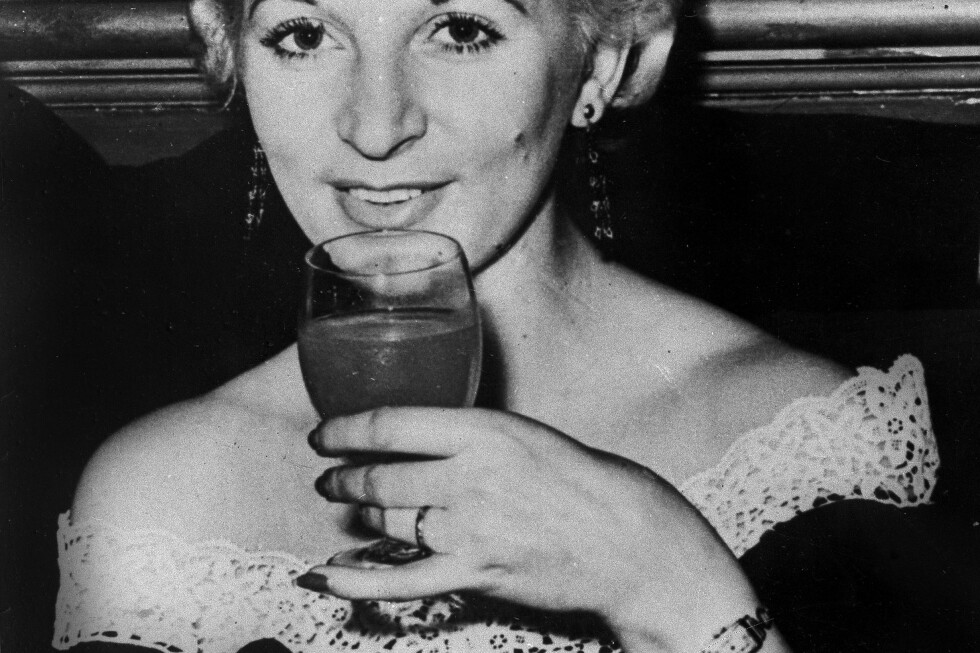
Last woman executed in Britain for killing abusive lover is given a conditional pardon
LONDON – Seventy-one years after Ruth Ellis became the final woman executed in Britain, the UK government has granted her a posthumous conditional pardon, recognizing a profound miscarriage of justice in one of the nation’s most infamous 20th-century legal cases.
Ellis, a 28-year-old nightclub hostess and single mother, was hanged at London’s Holloway Prison on July 13, 1955, after being convicted of murdering her abusive partner, race-car driver David Blakely. The fatal shooting took place outside the Magdala pub in North London’s Hampstead neighborhood on April 10 that same year, following months of escalating abuse that the trial would never consider as a mitigating factor.
Deputy Prime Minister David Lammy announced the long-awaited pardon this Wednesday, clarifying that the executive action does not dispute that Ellis killed Blakely, but instead revises her original sentence: replacing the unlawful by modern standards death penalty with a life imprisonment sentence to correct a clear historical injustice. “This exceptional case exposed a gaping flaw in the mid-century British justice system that cannot stand,” Lammy noted in his official statement.
The killing and subsequent rapid trial sparked immediate national outcry. When Ellis was led to the gallows, nearly 1,000 members of the public gathered outside Holloway Prison for a silent vigil protesting the sentence, turning the case into a cultural and political cause celebre that reshaped British criminal law. Just two years after Ellis’s execution, Parliament passed a landmark bill introducing the diminished responsibility defense, a change legal experts widely trace back to public outrage over the shortcomings of her trial.
For decades after the execution, Ellis’s family campaigned for justice, with her grandchildren leading the modern push to revise her conviction. Last year, legal representatives from Mishcon de Reya submitted a formal pardon application on the family’s behalf, presenting extensive evidence that Ellis met the modern diagnostic criteria for battered woman syndrome. As the firm outlined, multiple witnesses including Ellis’s close friends and treating physicians confirmed Blakely subjected her to repeated brutal abuse: public assaults that left her covered in bruises, a push down a flight of stairs that caused severe injury, and one severe blow to her abdomen that resulted in a miscarriage. Blakely also repeatedly threatened to kill Ellis, leaving her in constant fear for her life.
During the 1955 trial, however, jurors were explicitly barred from considering any evidence of Ellis’s abuse at Blakely’s hands. The entire proceeding lasted little more than 24 hours, and the jury returned a guilty verdict in under 30 minutes. Pardon campaign legal teams argue that if the 1957 diminished responsibility law had been in place at the time of Ellis’s trial, she would likely have been convicted of manslaughter rather than murder, avoiding the death penalty entirely.
Speaking after the pardon announcement, Laura Enston, one of Ellis’s grandchildren, said the acknowledgment of injustice ends a decades-long fight for her family. “Justice has finally been done,” Enston said. “This pardon does not undo what happened 71 years ago. It does not restore the lives that were broken — the children left behind, the years lost. But it says, formally and finally, that Ruth should not have been executed; that the justice system failed her. That acknowledgment matters profoundly to our family.”
Enston also detailed the intergenerational trauma caused by Ellis’s execution. Ellis’s two children never recovered from their mother’s death: her son died by suicide, and lifelong trauma left Ellis’s daughter unable to care for her own children during much of their childhood. “The shadow of Ruth’s execution has fallen across two generations. We have carried shame that was never ours to bear,” Enston added.
The UK formally suspended capital punishment for murder in 1965, and fully abolished the death penalty across all offenses in 1970. Ellis’s case has remained a cultural touchstone in Britain in the decades since her death, inspiring the 1985 feature film *Dance with a Stranger* and a 2024 ITV miniseries titled *A Cruel Love: The Ruth Ellis Story*.
-
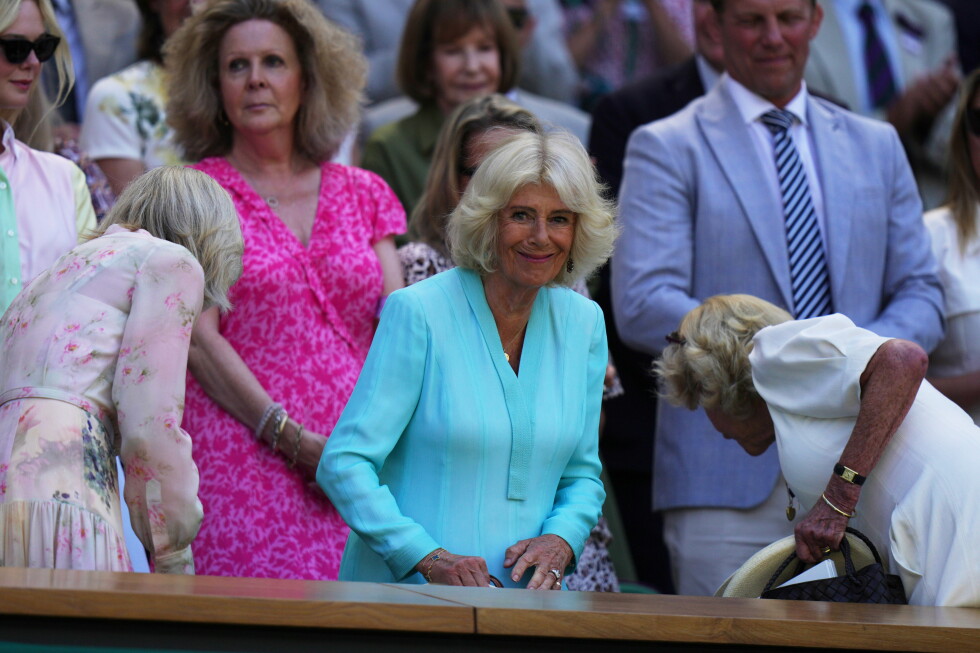
Queen Camilla visits Wimbledon and is joined by actor who played her husband
LONDON – As the Wimbledon Championships reached its tenth day of competition on Wednesday, Queen Camilla, wife of Britain’s King Charles III, continued her annual tradition of attending the iconic Grand Slam tournament, marking her fourth straight year in attendance at the All England Lawn Tennis Club. This year’s outing brought an unexpected, charming twist: the British monarch was joined in the event’s exclusive Royal Box by Dominic West, the Emmy-nominated actor who famously brought King Charles III to life on the hit Netflix drama series *The Crown*.
Queen Camilla stepped into Centre Court dressed in a soft light blue ensemble, taking her traditional seat to watch one of the women’s singles quarterfinal matches between Italy’s Jasmine Paolini and Ukraine’s Marta Kostyuk. Alongside West, other high-profile celebrity guests also occupied the Royal Box on the day, including acclaimed American actor Elle Fanning.
After Kostyuk secured her spot in the semifinal with a victory over Paolini, the queen surprised the next scheduled players: British wild card entrant Arthur Fery and Italian star Flavio Cobolli. As the two athletes prepared to make their entrance onto Centre Court, Camilla walked over to greet the pair with personal handshakes, a warm gesture that delighted onlookers. Before the day’s tennis action got underway, the queen also carved out time to meet with a ball boy, a ball girl, and multiple long-tenured staff members who have dedicated decades of service to the All England Club.
This year’s royal presence at the tournament has been split between two senior members of the British royal family. The Princess of Wales, Kate Middleton, who holds the ceremonial role of patron of the All England Club, made her own trip to Wimbledon the previous week. During her visit, she stopped to interact with thousands of tennis fans waiting in the legendary queue outside the tournament grounds, before taking her seat on Centre Court to watch early round play alongside two-time Wimbledon champion Andy Murray.
-

Kostyuk sets up Wimbledon semi-final against Noskova
The 2024 Wimbledon Championships delivered another dramatic day of women’s quarter-final action on Wednesday, as Ukraine’s Marta Kostyuk turned in a masterclass performance to crush Italy’s Jasmine Paolini and book her spot in the final four of the grass-court Grand Slam. The 12th-seeded Kostyuk needed just 69 minutes on Wimbledon’s iconic Centre Court to secure a lopsided 6-3, 6-2 victory over 2023 runner-up Paolini, booking a semi-final showdown with Czech ninth seed Linda Noskova for Thursday. For Kostyuk, the run marks her second consecutive Grand Slam semi-final appearance, and a particularly poignant moment on the sport’s most famous showcourt.
Nine years before her quarter-final win, the 24-year-old Ukrainian visited the All England Club as a spectator, watching tennis legend Roger Federer compete on the very same court. “I was on this court as a spectator once nine years ago watching Roger (Federer) and to be back here as a player is amazing,” Kostyuk said after her first-ever Centre Court match at the championships. “I walked past the ‘wall of honour’, stood beside it and took a moment.”
Kostyuk enters Thursday’s semi-final on one of the hottest streaks in women’s tennis, having dropped just one match across her last 22 outings. That sole defeat came in the French Open semi-finals last month, where she lost to eventual champion Mirra Andreeva. For Paolini, the result brings an end to her 2024 Wimbledon run; the Italian could not replicate the clinical form that carried her to a fourth-round win over Alexandra Eala, falling at the quarter-final stage of a major for the first time in her career.
Standing between Kostyuk and a spot in her first Grand Slam final is 21-year-old Linda Noskova, who lived up to her top-seeded billing in the bottom half of the women’s draw to defeat experienced Belgian 25th seed Elise Mertens 6-3, 7-5 on Court One. The Czech has enjoyed a breakout grass-court season this year, claiming her second career WTA title in Berlin earlier this month before powering into her first ever Grand Slam semi-final at Wimbledon. After early upsets knocked out top contenders Iga Swiatek and Elena Rybakina, Noskova became the highest remaining seed in the bottom half of the draw, and she delivered against Mertens, who was playing her first major quarter-final since 2020. Though Mertens fought hard throughout the two-set clash, she could not match Noskova’s aggressive power from the baseline.
Noskova acknowledged the challenge of facing in-form Kostyuk, who defeated the Czech in straight sets during the Madrid Open quarter-finals earlier this season, en route to lifting the Madrid title. “A tough one, it’s never going to be easy,” Noskova said of the upcoming semi-final. “Marta, she’s an incredible player.” The winner of Thursday’s clash will go on to compete for the Wimbledon crown on Saturday, against either American top seed Coco Gauff or Czech 10th seed Karolina Muchova.
In the men’s draw, the quarter-final round continues Wednesday with two matches that could set up a rematch of this year’s French Open men’s final. Second seed Alexander Zverev, who claimed his maiden Grand Slam title at Roland Garros last month, will face sixth-seeded American Taylor Fritz for a spot in the semi-finals. A win for Zverev would set up a repeat clash with Italy’s Flavio Cobolli, who he defeated in a five-set French Open final. If Cobolli defeats British wildcard Arthur Fery in his own quarter-final clash, the two will meet again for a spot in the Wimbledon final four.
Zverev enters the match as a respected contender, but he will face a tough test against Fritz, who has won seven consecutive matches against the German. Fritz boasts a proven record on grass, having reached the Wimbledon quarter-finals four times in the last five years, and his powerful serve makes him a dangerous opponent on the All England Club’s fast courts.
For Cobolli, the quarter-final run marks his second consecutive deep run at Wimbledon; 12 months ago, he fell to Novak Djokovic in the last eight, and this year he faces a very different opponent in Fery. The Italian entered the tournament with an unexpected off-court hurdle: he did not book extended accommodation in London, forcing an Italian family to step in and “give him a house in Wimbledon” to stay for his deep run. Cobolli enters the match as the heavy favorite against Fery, who is ranked world number 114 and the lowest-ranked men’s player to reach the Wimbledon quarter-finals since Nick Kyrgios in 2014. However, Fery holds a win over Cobolli, having defeated the Italian in the first round of this year’s Australian Open — that win remains Fery’s only career Grand Slam match victory to date. If Fery upsets Cobolli, he will become the first men’s wildcard to reach the Wimbledon semi-finals since Goran Ivanisevic claimed his iconic title run in 2001. “I played really well in Australia,” Fery said. “Felt like I dominated the match. So we’ll use that experience for Wednesday.”
-

Oil shoots back up, stocks slide as Trump says Iran ceasefire over
Renewed geopolitical upheaval in the Middle East sent shockwaves through global financial markets on Wednesday, after U.S. President Donald Trump announced that a temporary ceasefire with Iran had ended, reigniting investor fears over disrupted energy supplies. The resurgence of tensions traces back to recent Iranian attacks on commercial vessels transiting the Strait of Hormuz, the world’s most critical chokepoint for global oil shipping, which prompted the U.S. to launch new extensive strikes against Iranian targets this week. Washington also moved to revoke a temporary sanctions waiver that had allowed limited exports of Iranian crude, further tightening global energy supplies.
Speaking to reporters on the sidelines of a NATO summit held in Turkey, Trump confirmed the ceasefire was “over” while stopping short of ruling out future diplomatic negotiations. The announcement immediately upended market sentiment that had stabilized in recent days, when oil prices had drifted back down to pre-conflict levels following a period of earlier volatility.
By mid-trading on Wednesday, global energy prices had posted sharp double-digit percentage jumps from their previous closes. The international benchmark Brent North Sea crude climbed more than 5% to peak near $78 per barrel, while U.S. West Texas Intermediate crude also gained 4.6% to settle around $73.65 a barrel. Both benchmarks pulled back slightly in afternoon trading, but still held onto most of their daily gains by the 1350 GMT reporting cutoff.
The spike in geopolitical risk triggered a broad sell-off across equities markets worldwide. On Wall Street, the Dow Jones Industrial Average fell 1.0% to 52,412.15 in early midday trading, while the broad S&P 500 dropped 0.5% and the tech-heavy Nasdaq Composite declined 0.3%. “Trump triggered a sell-off,” noted Sam Stovall, chief market analyst at CFRA Research, summarizing the immediate market reaction.
European markets saw even steeper losses: 90 minutes before closing, France’s CAC 40 and Germany’s DAX were both down 1.8%, while London’s FTSE 100 had shed 1.2%. Asian equities closed the trading day deep in negative territory as well, compounded by existing investor concerns over overinflated valuations and excessive capital spending in the AI technology sector. South Korea’s Kospi, which has been the leading benchmark for the regional AI-driven tech rally, plummeted 5.4% to close at 7,246.79 — falling more than 20% below its record high set just one month prior. Tech giants Samsung and SK hynix both dropped around 6% on Wednesday, extending steep losses from the previous session even after Samsung projected a roughly 19-fold year-on-year jump in second-quarter operating profit fueled by strong AI chip demand.
“Investors have been spooked in recent weeks by fears of excessive spending in the AI world and rich valuations in parts of the tech space, causing widespread profit-taking,” explained Dan Coatsworth, head of markets at British investment firm AJ Bell.
Market analysts warn that the return of open conflict in the Middle East could have long-lasting spillover effects for the global economy. “Geopolitical risks are rising for markets,” said Kathleen Brooks, research director at global trading group XTB. Fawad Razaqzada, a senior market analyst at Forex.com, framed the renewed tensions as an unwelcome development for market participants heading into the summer holiday period. “After a long and eventful first half of the year dominated by the US-Israel war on Iran and Trump’s constant flip-flopping, the last thing investors, and frankly anyone else, needed was a return of the same geopolitical environment,” he said. “Unfortunately, it looks like we could be heading back to that.”
Brooks added that a further escalation that blocks the Strait of Hormuz would send prices even higher: “For the Brent crude oil price to extend gains above $80 per barrel, we would need to see another US naval blockade of the Strait of Hormuz, which would stop Iran from selling its oil and cause a major escalation in tensions.”
The U.S. dollar posted modest gains against most major global currencies on Wednesday, as investors priced in the risk that sustained higher oil prices will keep global inflation elevated longer than previously projected. That outcome would put additional pressure on the U.S. Federal Reserve to implement further interest rate hikes to cool price growth, which typically supports dollar valuations. By 1350 GMT, the dollar rose to 162.49 Japanese yen from 162.09 yen the previous day, while the euro fell to $1.1399 from $1.1415 against the greenback.
-

Eight killed after landslide hits girls’ school in Bangladesh
A devastating landslide has claimed the lives of eight people, among them seven student girls, after it struck a girls’ Islamic study school at the world’s largest Rohingya refugee settlement in Bangladesh’s Cox’s Bazar, compounding a growing humanitarian crisis fueled by relentless seasonal monsoon rains.
The disaster unfolded on Wednesday afternoon, when a cascade of mud and debris buried the makeshift school hut, triggering immediate, frantic search and rescue operations led by local relief authorities. As of the latest official updates, rescue teams have managed to extract 13 people trapped beneath the mudslide, eight of whom could not be revived after being pulled from the debris. Among the fatalities are seven students between the ages of 7 and 12 and one female teacher, while five other injured children have been transported to local medical facilities for urgent care. The total number of people who were inside the school at the time of the landslide remains unconfirmed, local officials confirmed.
This landslide is just the latest in a string of rain-triggered disasters that have shaken the Cox’s Bazar region since Sunday, when this year’s monsoon season intensified to bring record levels of rainfall to the coastal district. Prior to the school disaster, official data already recorded at least eight additional Rohingya refugee deaths from separate landslides across the settlement, five of which were children.
Cox’s Bazar is currently home to more than 1 million Rohingya refugees, the vast majority of whom fled a brutal military crackdown in their native Myanmar in 2017 that left thousands of Rohingya dead and forced more than 700,000 to cross the border into Bangladesh. As a stateless ethnic Muslim minority in majority-Buddhist Myanmar, Rohingya people have long been denied full citizenship and basic rights in their home country, leaving them dependent on humanitarian aid in the overcrowded Bangladesh camps. Most refugees live in flimsy, makeshift homes constructed from tarpaulin and bamboo, many of which are built on precarious steep hillsides that are extremely vulnerable to mudslides during heavy monsoon rains.
Local disaster management authorities have warned that the risk of further catastrophe remains high, with additional heavy rainfall forecast across the region in the coming days. Officials have already issued urgent warnings for impending landslides and flash floods, and have begun moving high-risk families out of vulnerable slope-side settlements to safer emergency shelters.
-
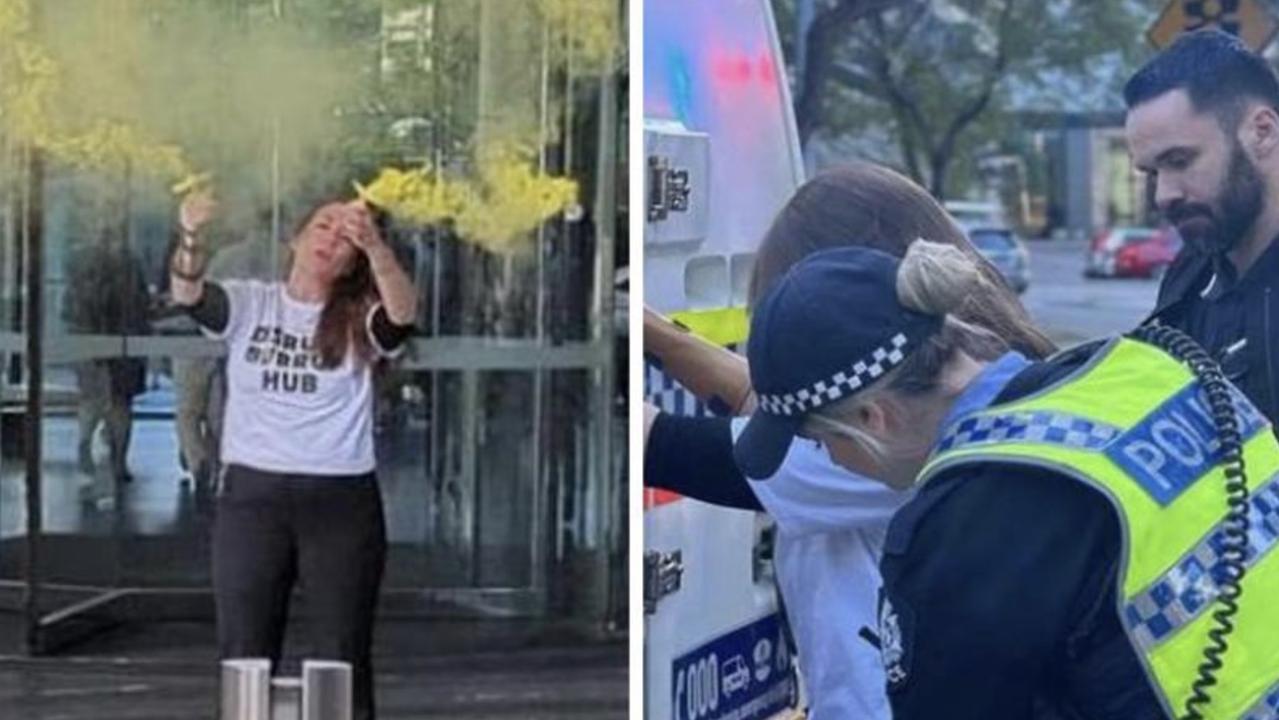
Woodside pursues protesters over 2023 stinky gas stunt in the WA Supreme Court
A high-stakes legal clash between energy giant Woodside Energy and three convicted climate activists is set to resume next week in Western Australia’s Supreme Court, as the company pushes to force the protesters to disclose the identities of other co-conspirators behind a disruptive 2023 protest that forced the evacuation of thousands of staff.
The incident at the center of the dispute dates back to 2023, when three environmental activists affiliated with the Disrupt Burrup Hub campaign carried out a deliberate stunt inside Woodside’s Perth headquarters. Activist Kristen Morrissey deployed a foul-smelling “stench bomb” in the building’s main lobby, with logistical support from co-activists Joana Partyka and Emil Davey. The action was deliberately designed to be mistaken for a toxic gas leak, triggering a full evacuation that displaced roughly 2,000 employees from the site.
The protest was organized to draw public attention to Woodside’s controversial Burrup Hub gas expansion project. Activists argue the project poses severe threats to both the global climate and sacred Aboriginal cultural heritage sites located in the project area. Last year, all three activists pleaded guilty to criminal charges in the WA District Court. Morrissey and Partyka received suspended prison sentences, while Davey was ordered to complete a community-based sentence.
Months before the criminal case concluded, Woodside first issued a demand to the activists: hand over internal documentation that would reveal the identities of other people involved in planning and executing the 2023 stunt, or face civil litigation. When the activists refused to comply while criminal proceedings were still ongoing, Woodside followed through on its threat and filed a civil suit against the trio in the WA Supreme Court five months after the initial warning.
When the case returns to court on July 16, Woodside’s legal team is widely expected to formally ask the Supreme Court to compel the three protesters to disclose the names of other collaborators. In its court filings, Woodside argues that the stunt caused measurable financial harm, including costs for cleaning services, lost workplace productivity, and other damages, and that the company has legal grounds to pursue claims against all responsible parties.
But activists and their legal representatives have framed the legal action as a blatant campaign of intimidation against climate campaigners speaking out against the company’s fossil fuel expansion. “This is a blatant attempt by Woodside to threaten, intimidate and silence young campaigners sounding the alarm about their gas expansion,” Davey said in a statement ahead of the hearing. Represented by the advocacy group Climate Defenders Australia, Davey added that the Burrup Hub project destroys both sacred Aboriginal cultural sites and contributes to planetary damage for future generations, and that the campaign has successfully held the company accountable for its actions.
“Every Australian now understands that the gas industry is ripping us all off and refusing to pay its fair share,” Davey said.
Partyka echoed Davey’s criticism, describing the legal action as a calculated attempt to bully peaceful citizens challenging a multi-billion dollar corporation. Instead of discouraging her activism, Partyka said Woodside’s legal push only confirms how effective the campaign has been at disrupting the company’s plans.
“Far from cowing me, Woodside’s legal move serves only to confirm the significant impact of our campaign. Woodside is trying to prevent people from doing this again, because it was so successful,” Partyka said. “Woodside may have endless resources at their disposal to pursue legal action against me, but they sure as hell don’t have history on their side.”
The upcoming court hearing will mark the next major step in a conflict that has become a flashpoint for tensions between fossil fuel developers and climate campaigners opposing new fossil gas projects in Australia.
-
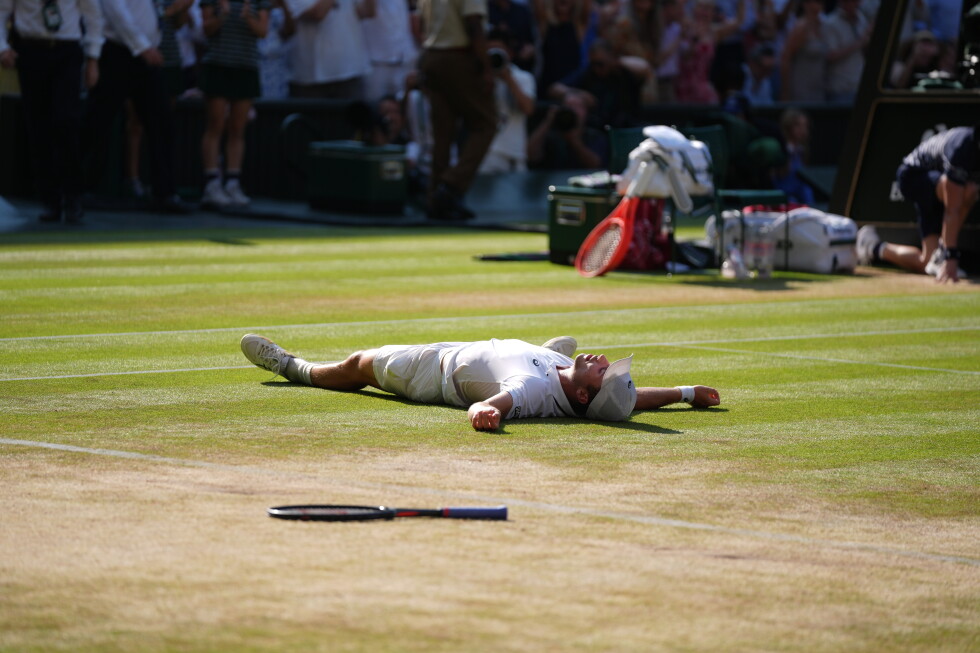
‘Ferytale’ rolls on at Wimbledon as British wild card Fery into semifinals after meeting queen
Wimbledon 2024 has delivered one of its most breathtaking underdog stories in recent memory, as British wild card Arthur Fery has etched his name into Grand Slam folklore by storming into the men’s singles semifinals — a feat only one other unranked qualifier has pulled off at the All England Club in more than two decades.
Growing up just five minutes away from Wimbledon’s iconic grounds, the 23-year-old local hopeful has turned a childhood dream into reality, beating Italy’s ninth-seeded Flavio Cobolli in straight sets 6-4, 7-6(4), 6-0 in front of a raucous Centre Court crowd Wednesday. The stands were packed with cheering home fans, and the Royal Box even included Britain’s Queen Camilla, who got an early surprise meeting with both Fery and Cobolli in the player hallway moments before the match kicked off.
Fery’s run has already made history: he is only the second men’s singles wild card to reach the Wimbledon semifinals, following Goran Ivanisevic’s legendary championship run in 2001. The young Brit’s emotional victory had the crowd roaring from start to finish. After clinching the opening set, he earned a full standing ovation from the Centre Court crowd, and the cheer that followed his tiebreak win to seal the second set was so loud it carried across to No. 1 Court, where Alexander Zverev was competing against Taylor Fritz. Fery sealed the match with a blistering ace, then fell onto his back to soak in the moment, overwhelmed by the support.
“It gets better and better every match,” Fery told reporters in an on-court interview after the win. “I just can’t believe it. That last game, I felt emotions that I hadn’t experienced before in my life.”
Zverev, who wrapped up his own straight-sets 6-4, 6-4, 6-2 win over Fritz shortly after Fery’s victory, will now face the local favourite in the semifinals on Friday. Friday’s other men’s semifinal will be a blockbuster clash between seven-time Wimbledon champion Novak Djokovic and 2023 title holder Jannik Sinner.
The day also delivered historic milestones on the women’s side, as Ukraine’s Marta Kostyuk booked her spot in her first ever Wimbledon semifinal with a dominant 6-3, 6-2 win over Italy’s Jasmine Paolini. The 24-year-old 12th seed, who also reached the French Open semifinals earlier this year, called the moment surreal after the win, recalling that she watched Roger Federer play on Centre Court as a spectator just nine years ago.
“I was flabbergasted by this entrance and everything inside,” Kostyuk said. “I was like, ‘wow,’ I need one day to recover from what I saw. I was on this court as a spectator once nine years ago watching Roger.” After Paolini misfired on second match point, Kostyuk dropped to her knees in celebration before spinning in a joyful pirouette for the crowd.
She will face 21-year-old Czech rising star Linda Noskova, who notched a 6-3, 7-5 win over Belgium’s Elise Mertens on No. 1 Court to claim her first ever Grand Slam semifinal spot. Noskova, who carried a 9-1 grass court record into Wimbledon after winning the Berlin Open, said she thrives under pressure when stakes are highest.
“I was a little bit nervous before the match,” Noskova admitted after the win. “Usually when it’s really, really important for me and I’m putting a little bit of pressure on myself, that’s when I play the best.”
Kostyuk and Noskova will compete for a spot in Saturday’s women’s singles final on Centre Court Thursday, following the first women’s semifinal between American Coco Gauff and Czech player Karolina Muchova. As the tournament enters its final stretch, Fery’s historic Cinderella run has already given British fans something massive to cheer for, with local supporters already poised to celebrate wildly if the local wild card can keep his fairy tale run going.
-

At least 5 children die in monsoon landslide at a Rohingya camp in Bangladesh
A devastating monsoon-driven landslide has claimed the lives of at least five children after crashing into an Islamic school within a sprawling Rohingya refugee camp in southeastern Bangladesh’s Cox’s Bazar district, a senior fire service official has confirmed. The Cox’s Bazar camp complex hosts more than 1 million displaced Rohingya refugees who fled persecution in neighboring Myanmar, making it one of the largest refugee settlements in the world.
Dollar Tripura, local head of Bangladesh’s Fire Service and Civil Defense, stated that the disaster struck mid-lesson, when children were gathered in their classes for the school day. Rescuers managed to pull five injured children out of the debris alive, but the official warned that the death toll is likely to rise, as teams suspect additional people remain trapped and buried under the mud and rubble.
As of Wednesday evening, search and rescue efforts were still ongoing, with crews working through the night to locate possible survivors. This latest tragedy comes just three days after separate rain-induced landslides in the same camp region killed at least eight other people, amplifying concerns about the safety of refugees living in at-risk hilly terrain.
Bangladesh’s national weather office, based in the capital Dhaka, has issued warnings for additional heavy rainfall across the region over the coming days, raising fears of more landslides. In response to the ongoing risks, local authorities have launched an urgent relocation effort to move refugees out of high-risk hilly areas that are prone to mudslides during monsoon season. More than 1,000 refugees have already been moved to safer locations, though officials report that many displaced families remain reluctant to leave their makeshift huts and small plots of land, even after repeated official warnings of the dangers.
For years, Bangladesh has hosted the bulk of the Rohingya refugee population, who fled a 2017 military crackdown in Myanmar’s Rakhine State that the United Nations has labeled ethnic cleansing. The Bangladeshi government has repeatedly called on the international community to support a safe repatriation process for refugees to return to their homeland in Myanmar, but years of negotiations have failed to move the process forward, leaving the repatriation initiative effectively stalled.