作者: admin

  • US futures sink after Trump warns of higher tariffs for 8 countries over Greenland issue

    US futures sink after Trump warns of higher tariffs for 8 countries over Greenland issue

    Financial markets experienced significant turbulence on Monday as U.S. stock futures declined sharply following President Donald Trump’s unexpected threat to impose additional 10% tariffs on imports from eight European nations. The unprecedented move came in response to European opposition to Trump’s aspirations regarding Greenland’s sovereignty.

    The targeted European countries—Denmark, Norway, Sweden, France, Germany, the United Kingdom, the Netherlands, and Finland—issued a strongly worded joint statement condemning the tariff threats as undermining transatlantic relations and potentially triggering a dangerous economic escalation. This represents the most forceful diplomatic rebuke from European allies since Trump’s return to the White House nearly one year ago.

    Market indicators showed substantial losses with S&P 500 futures dropping 0.8% and Dow Jones Industrial Average futures declining 0.7%. According to Stephen Innes of SPI Asset Management, these developments are testing the fundamental strategic alignment and institutional trust that underpin European support, which remains crucial as Europe serves as America’s largest trading partner and primary source of financing.

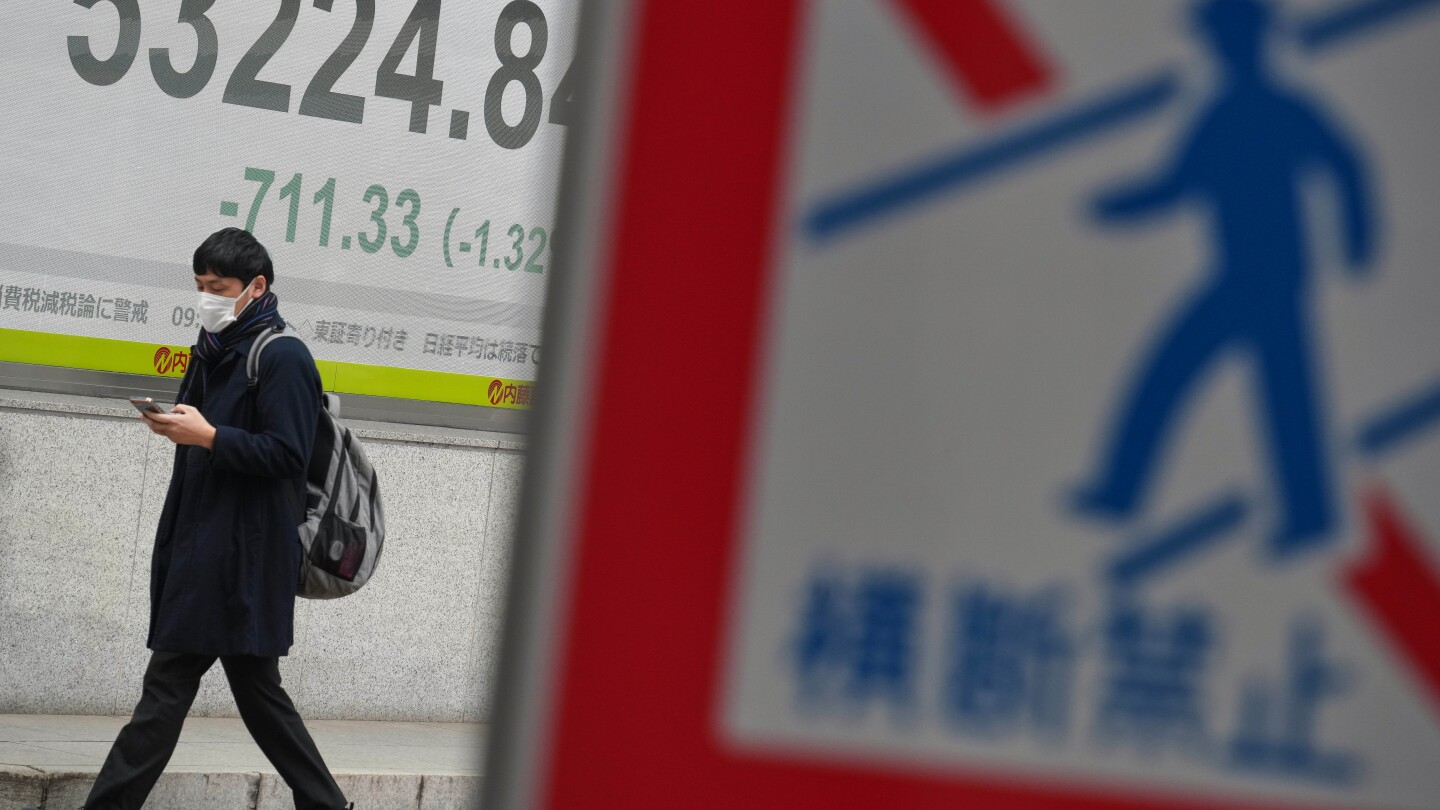
    Asian markets presented a mixed performance amid the global uncertainty. China reported 5% annual economic growth for 2025, though quarter-quarter expansion showed signs of deceleration. Hong Kong’s Hang Seng index declined 0.9% while Shanghai Composite gained 0.3%. Japan’s Nikkei 225 dropped 0.8% amid political developments suggesting potential parliamentary dissolution for snap elections. South Korea’s Kospi notably outperformed with a 1.4% surge to record territory, driven by robust technology sector performance.

    The broader market context reveals ongoing concerns about corporate earnings sustainability, particularly in technology sectors where artificial intelligence-driven valuations face increased scrutiny. This week’s economic calendar includes critical inflation data through the Personal Consumption Expenditures price index—the Federal Reserve’s preferred inflation metric—ahead of the central bank’s upcoming policy meeting where interest rates are expected to remain unchanged amid persistent inflation concerns.

    Commodity markets showed varied movements with crude oil prices experiencing modest declines while precious metals surged significantly, with gold advancing 1.7% and silver jumping 5.2% as investors sought safe-haven assets amidst growing geopolitical tensions.
  • US believes its power matters more than international law, UN chief tells BBC

    US believes its power matters more than international law, UN chief tells BBC

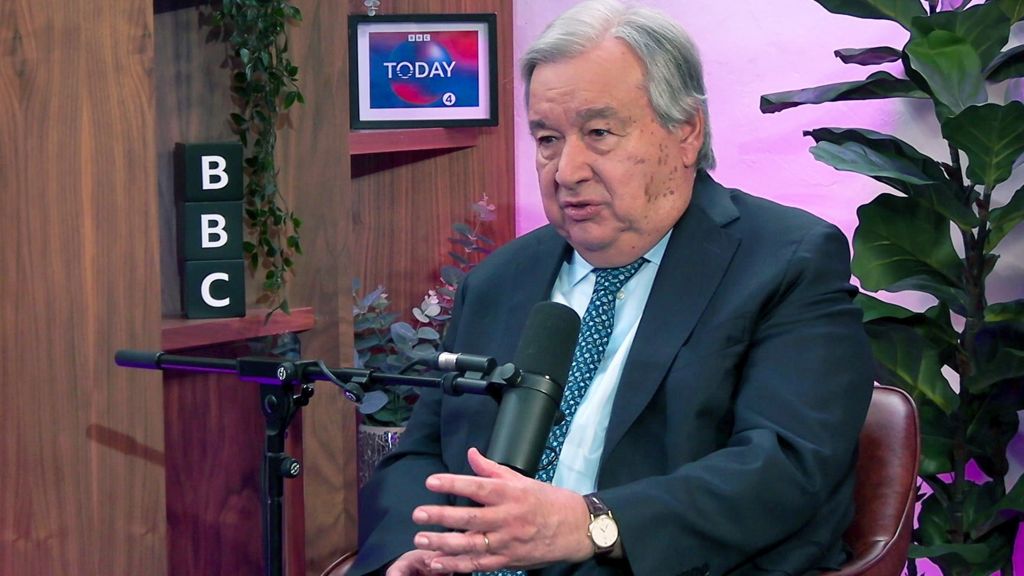
    In a striking critique of American foreign policy, United Nations Secretary-General António Guterres has declared that the United States is operating with impunity while prioritizing its own power over established international legal frameworks. During an exclusive interview with BBC Radio 4’s Today programme, Guterres expressed profound concern that Washington’s “clear conviction” now dismisses multilateral solutions as irrelevant, favoring instead the unilateral “exercise of U.S. power and influence, sometimes at the expense of international law norms.”

    The Secretary-General’s remarks arrive amidst escalating global tensions, including recent U.S. military actions in Venezuela and former President Donald Trump’s repeated threats to annex Greenland. Guterres identified these developments as symptomatic of a broader crisis threatening the foundational UN principle of member state equality.

    Guterres directly addressed Trump’s previous criticisms of the United Nations, acknowledging the organization’s struggle to enforce compliance with the UN Charter among member states. While insisting the UN remains “extremely engaged” in resolving major conflicts, Guterres conceded that the institution lacks leverage compared to powerful nations. He questioned whether this influence is being utilized to achieve lasting solutions or merely temporary fixes to complex international problems.

    The UN leader highlighted urgent need for institutional reform to address “dramatic problems and challenges” facing its 193 member states. He particularly criticized the UN Security Council’s structure, noting its ineffective representation of the modern world and the problematic veto power exercised by permanent members (France, China, Russia, the UK, and US), which has repeatedly obstructed resolutions on conflicts in Ukraine and Gaza.

    Guterres called for compositional changes to the Security Council to “regain legitimacy” and “give voice to the whole world,” including limitations on veto powers to prevent unacceptable “blockages” of international action. He specifically questioned why “three European countries” held permanent seats while other regions remained underrepresented.

    Regarding Gaza, Guterres countered allegations of UN ineffectiveness, explaining that aid distribution was impossible during periods when Israel blocked access to the territory. “Whenever Israel would not allow us to move into Gaza, we couldn’t move into Gaza,” he stated, adding that the UN was prepared to deliver aid “provided we had the conditions.”

    Despite acknowledging a world “brimming with conflict, impunity, inequality and unpredictability,” Guterres maintained an optimistic outlook. He emphasized the necessity of confronting powerful nations to create a better world, even as questions multiply about the decline of multilateralism and some leaders’ failure to defend international law.

  • Record gold price fails to stop ASX 200 from dropping after five-day rally

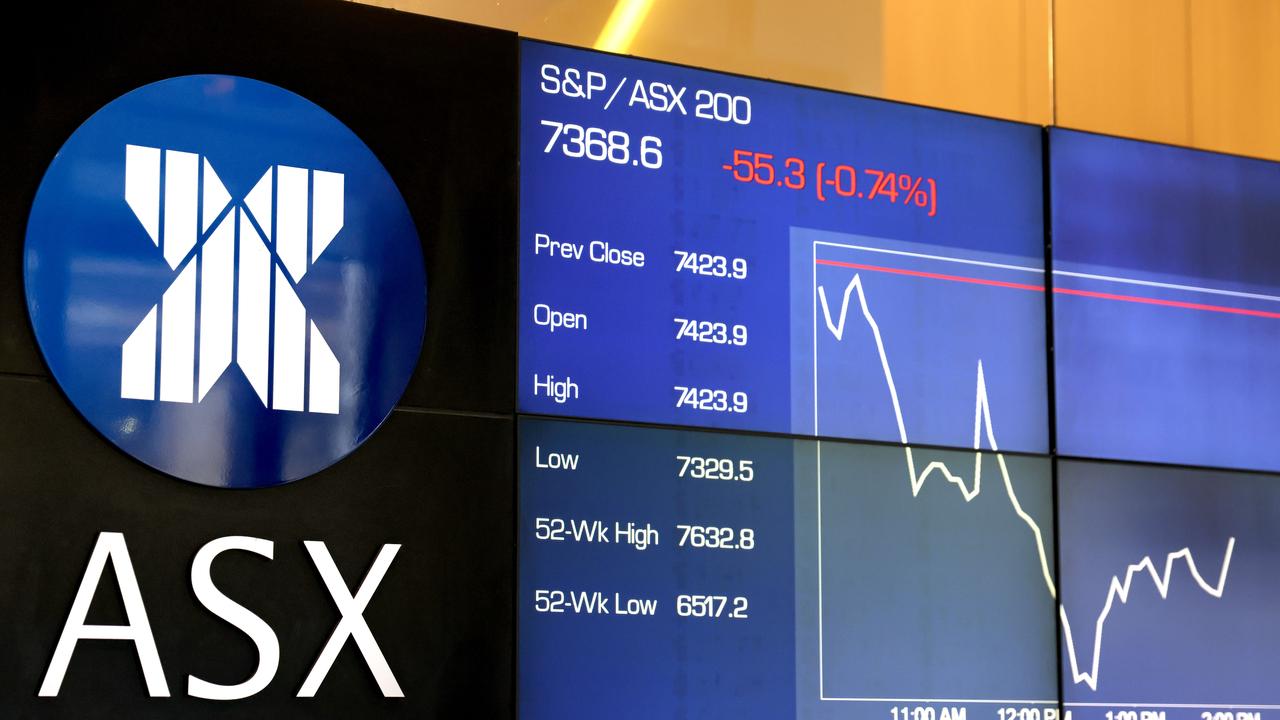
    Record gold price fails to stop ASX 200 from dropping after five-day rally

    Global financial markets experienced significant turbulence as former President Donald Trump’s unexpected trade policy announcement triggered a flight to safe-haven assets. Gold prices surged to an unprecedented $4,690.59 per ounce, while silver reached $94.12, marking historic highs in precious metal trading.

    The Australian sharemarket snapped its five-day winning streak despite the commodity rally, with the benchmark ASX 200 declining 29.40 points (0.33%) to close at 8,874.50. The broader All Ordinaries index similarly fell 31.80 points (0.34%) to 9,194.90. Market analysts attributed the divergence to sector-specific performances, where strengthening commodity prices were offset by substantial declines in technology, consumer discretionary, and financial stocks.

    Trump’s controversial proposal involved imposing 10% export tariffs on eight countries that opposed the United States’ attempted acquisition of Greenland, a largely autonomous Danish territory. This announcement reignited fears of potential trade conflicts between Europe and the United States, prompting investors to seek refuge in traditional safe-haven assets.

    Gold producers emerged as clear market winners, with Northern Star Resources jumping 3.17% to $27.68, Evolution Mining climbing 3.13% to $13.53, and Newmont Corporation adding 1.41% to $171.64. According to eToro market analyst Zavier Wong, “The outlook for precious metals remains positive, particularly for gold and silver. Structural forces are doing much of the heavy lifting, including sustained central bank buying, rising government debt levels and a world that looks increasingly fragmented geopolitically.”

    Technology stocks suffered significant losses, with WiseTech Global slumping 4.40% to $64.07, Xero declining 2.64% to $100.89, and TechnologyOne falling 1.43% to $13.15. Banking shares also retreated, with Commonwealth Bank sliding 0.67% to $153.25, Westpac falling 0.56% to $38.97, NAB slumping 1.05% to $42.22, and ANZ slipping 0.40% to $37.37.

    In corporate developments, A2 Milk shares plummeted 10.64% to $8.40 and entered a trading halt despite no negative financial disclosures. Market speculation suggested investor concerns might be linked to Chinese government data showing declining birth rates. Conversely, City Chic Collective shares jumped 3.57% to $0.14 after reporting $69.2 million in sales revenue for the 26 weeks to December 28. Treasury Wine Estate shares continued their upward trajectory, gaining 0.73% to $5.53 following European billionaire Olivier Goudet increasing his stake to 6.13% of the business.

    The Australian dollar edged higher to 66.96 US cents amid the mixed market performance, reflecting the complex interplay between commodity strength and broader market uncertainties.

  • China’s population falls again as births drop 17% a decade after the 1-child policy ended

    China’s population falls again as births drop 17% a decade after the 1-child policy ended

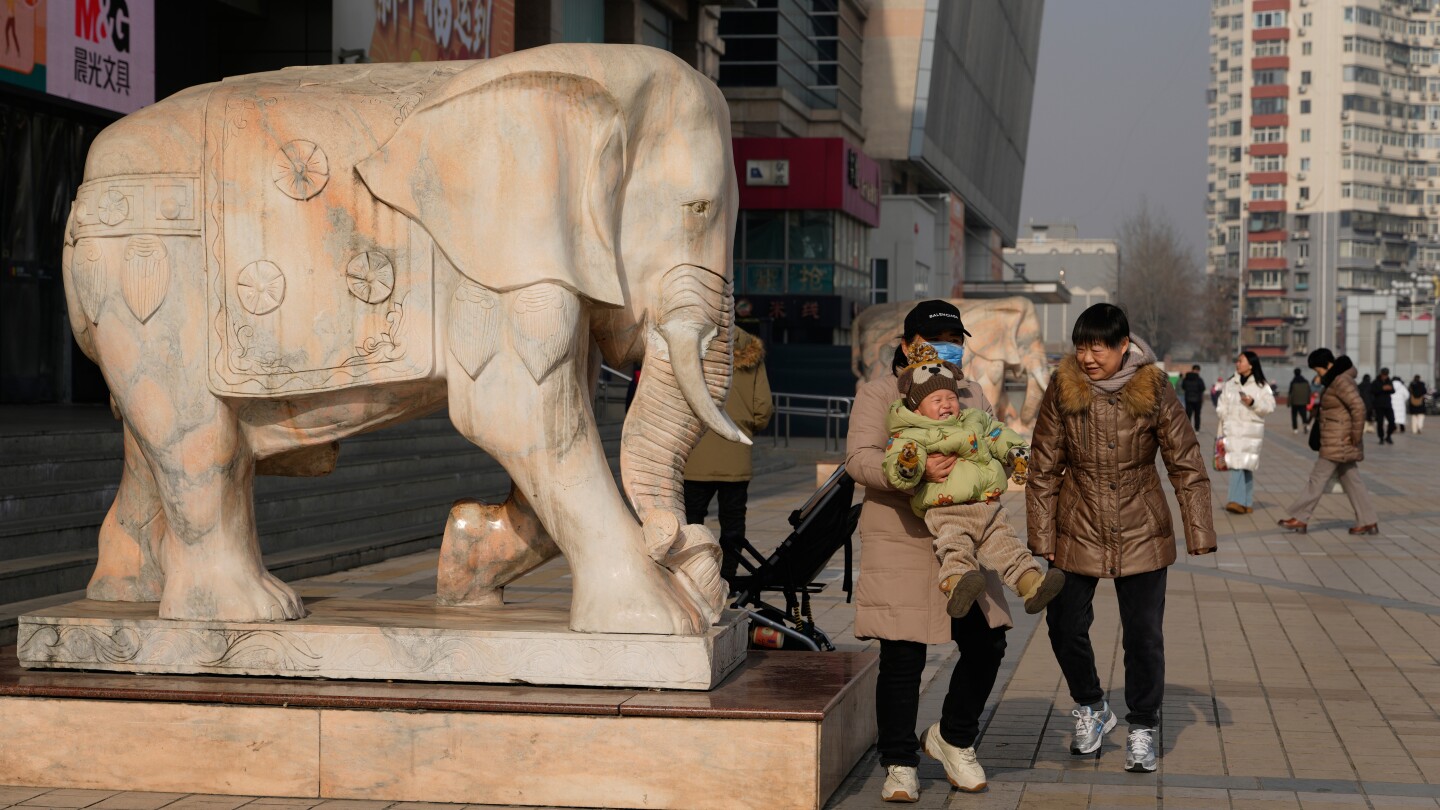
    A decade after dismantling its infamous one-child policy, China confronts an escalating demographic crisis as innovative pronatalist measures fail to reverse the nation’s persistent population decline. Recent statistics reveal China’s populace shrank for the fourth consecutive year in 2025, with the current tally standing at 1.404 billion—a reduction of 3 million from the preceding year.

    The most alarming data emerges from birth figures, which show merely 7.92 million newborns in 2025. This represents a dramatic 17% decrease (1.62 million fewer births) from previous counts, decisively countering the slight resurgence observed in 2024. This continuation of the downward trajectory marks the seventh year of declining births since 2023, when India surpassed China as the world’s most populous nation.

    Demographic experts estimate China’s fertility rate has plummeted to approximately 1.0—far beneath the 2.1 replacement level required for population stability. This critical shortage of new births compounds the nation’s existing demographic pressures, creating an inverted population pyramid with profound implications for future economic stability and social welfare systems.

    Despite implementing creative policy interventions—including direct cash subsidies of 3,600 yuan ($500) per child, tax exemptions for childcare services and matchmaking agencies, and the controversial imposition of a 13% value-added tax on contraceptives—authorities have achieved limited success in altering reproductive behaviors. Surveys indicate most families attribute their reluctance to expand to the exorbitant costs and intense pressures of child-rearing within China’s hyper-competitive society, exacerbated by ongoing economic uncertainties that strain household budgets.

    The government’s approach has evolved through multiple phases: transitioning from the one-child policy to a two-child limit in 2015, then expanding to three children in 2021. However, these incremental relaxations have proven insufficient to counteract deeply entrenched social and economic deterrents to larger families, leaving China grappling with a demographic challenge that threatens to reshape its global standing and domestic future.

  • China’s Buddha artisans carve out a living from dying trade

    China’s Buddha artisans carve out a living from dying trade

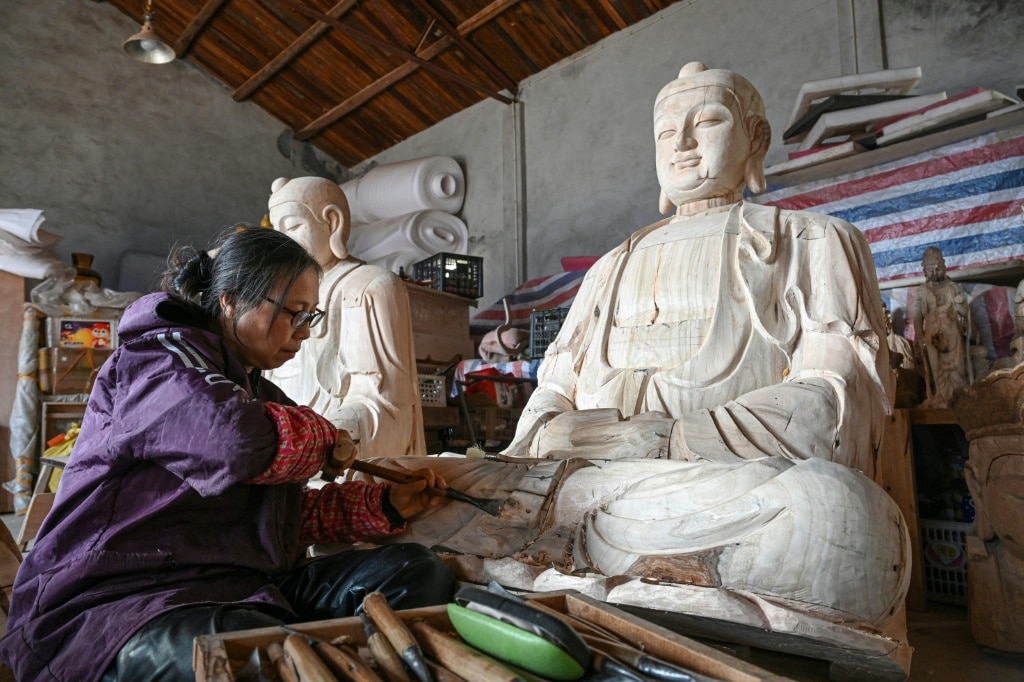
    In the dusty workshops of Chongshan village near Suzhou, a centuries-old tradition of sacred woodcarving stands on the brink of disappearance. Master craftsman Zhang meticulously shapes a block of wood into a divine foot beneath the silent gaze of dozens of unfinished life-sized Buddhist and Taoist statues, continuing a family legacy that spans multiple generations.

    This specialized craft, requiring five to six years of dedicated apprenticeship to master, faces an existential crisis as younger generations reject the demanding profession. Zhang, who learned the intricate art from his father during his teenage years, acknowledges the inevitable: ‘Once our generation retires, there will be no one left to carry on the tradition.’

    The decline stems from a combination of inadequate financial compensation and modern youth’s reluctance to invest the necessary time and energy. The village experienced a temporary resurgence in orders during the late 20th century when China relaxed religious restrictions, leading to a nationwide revival of temple construction and decoration.

    However, the market has now reached saturation point, with most temples across China already furnished with statues. At another workshop, 71-year-old artisan Gu recalls adapting to political pressures during the Cultural Revolution by producing secular handicrafts when religious expression was suppressed. Specializing in carving expressive Buddha heads, Gu demonstrates how each gilded figure conveys unique emotional depth – some smiling, others crying, with renowned monk Ji Gong sculptures even displaying contrasting expressions on each side of the face.

    While outsiders perceive these creators as artists, Zhang maintains a pragmatic perspective: ‘People look at us like we’re artists. But to us, we’re just creating a product.’ This disconnect between cultural significance and economic reality ultimately threatens the survival of one of China’s most spiritually significant artisanal traditions.

  • Libya signs $2.7bn deal to expand Misurata Free Zone, in diversification push

    Libya signs $2.7bn deal to expand Misurata Free Zone, in diversification push

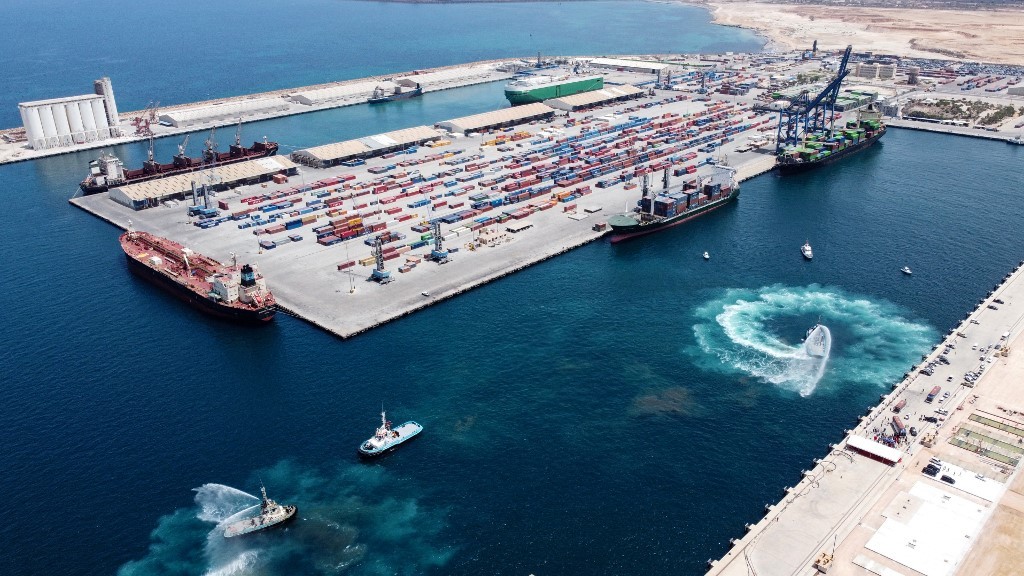
    In a significant economic development, Libya’s Government of National Unity has finalized a landmark strategic partnership with international firms to dramatically expand the Misurata Free Zone. Prime Minister Abdulhamid Dbeibah announced the agreements on Sunday, revealing the project is projected to attract approximately $2.7 billion in foreign investment—a crucial step toward diversifying the nation’s oil-dependent economy.

    The partnership brings together Terminal Investment Limited and Doha-based Maha Capital Partners, combining operational expertise with long-term capital investment. According to government projections, the expanded zone is expected to generate annual operating revenues of around $500 million while transforming the port into a competitive logistics hub connecting Africa, Europe, and the Middle East.

    Prime Minister Dbeibah emphasized the strategic importance of the project in a statement on social media platform X, noting that it “enhances Libya’s position among the region’s largest ports in terms of size and capacity” while relying on “direct foreign investment within a comprehensive international partnership.”

    The expansion represents a conscious effort to reduce Libya’s overwhelming dependence on hydrocarbons, which currently account for more than 95% of economic output. Officials envision the project as a catalyst for broadening the country’s economic base through modernized infrastructure and transformed state assets.

    Substantial employment benefits are anticipated, with the project expected to create approximately 8,400 direct jobs and roughly 60,000 indirect positions. The terminal’s capacity will be increased to handle four million containers annually, up from its current 190-hectare footprint.

    The signing ceremony at the Misurata Free Zone was attended by high-profile figures including Sheikh Mohammed bin Abdulrahman al-Thani and Antonio Tajani. Muhsin Sigutri, the free zone’s chairman, stated that the partnership reflects “Misurata’s determination to build modern, internationally competitive infrastructure that can unlock new industries, support local employment, and strengthen Libya’s position within regional and global supply chains.”

    This development occurs against the backdrop of prolonged instability following the 2011 NATO-backed uprising, which led to rival administrations emerging in eastern and western Libya in 2014, significantly complicating economic recovery efforts.

  • ‘Set the record’: Pauline Hanson claims Trump, Farage ‘followed’ her as One Nation vote surges to 22 per cent

    ‘Set the record’: Pauline Hanson claims Trump, Farage ‘followed’ her as One Nation vote surges to 22 per cent

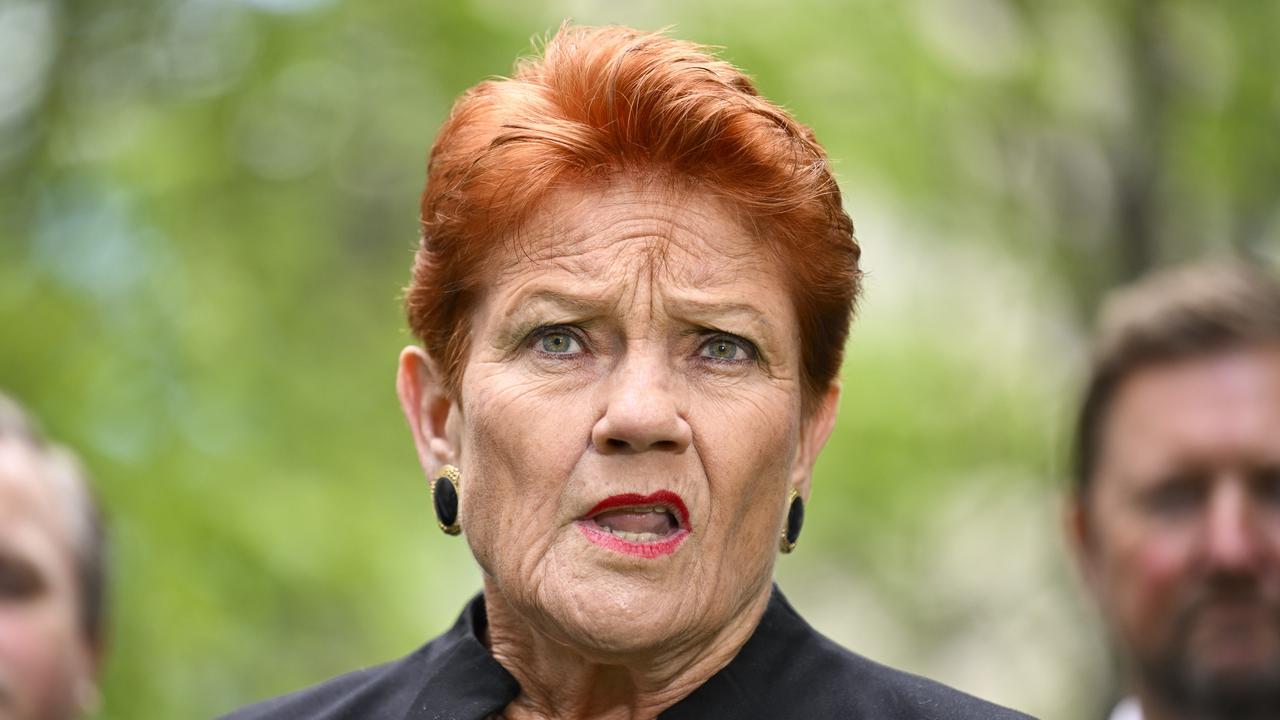
    In a stunning political realignment, Pauline Hanson’s One Nation party has eclipsed the Coalition in the latest Newspoll, capturing an unprecedented 22% of the primary vote following a seven-point surge over two months. The controversial leader framed this seismic shift as public endorsement of her longstanding nationalist agenda while pointing to recent violent incidents as catalysts for awakening Australian consciousness.

    Addressing media at Parliament House, Senator Hanson positioned herself as the original architect of global right-wing populism, asserting her ideological precedence over figures like Nigel Farage and Donald Trump. ‘I’ve set the record—I stand up for what I believe in and don’t back away from anything,’ she declared, characterizing her consistency as the cornerstone of her appeal.

    The One Nation leader specifically referenced the alleged assassination attempt on American commentator Charlie Kirk and the Bondi Beach terror attack as pivotal moments that galvanized public support. She described these events as ‘wake-up calls’ that exposed systemic failures in national security and immigration policy. ‘Mass migration has been a huge issue for Australians calling out to government,’ Hanson stated, linking housing shortages, job insecurity, and cost-of-living pressures to uncontrolled immigration.

    Her commentary extended to defending her notorious 2017 burqa stunt in Parliament, which resulted in her exclusion from recent Senate condolence proceedings. ‘It wasn’t a stunt—I was standing my ground,’ she insisted, maintaining that the gesture highlighted security concerns about full-face coverings in public spaces.

    The party’s momentum was further amplified by defector Barnaby Joyce, who joined One Nation after fracturing with the Nationals. The former deputy prime minister rejected characterization of the party as radical, asserting ‘It is not radical if it’s the truth.’ Joyce criticized performative political empathy without substantive action, questioning the value of ’empathetic self-aggrandisement.’

    As Liberal Senator Jonathon Duniam acknowledged the polling indicates ‘we’ve got our work cut out for us,’ Hanson revealed ambitions beyond protest politics. ‘You bet I want to form government,’ she stated, confirming active recruitment strategies for Queensland lower house seats while recognizing the formidable challenge of maintaining record polling numbers.

  • Death toll in Karachi shopping plaza fire rises to 10 as search continues for dozens missing

    Death toll in Karachi shopping plaza fire rises to 10 as search continues for dozens missing

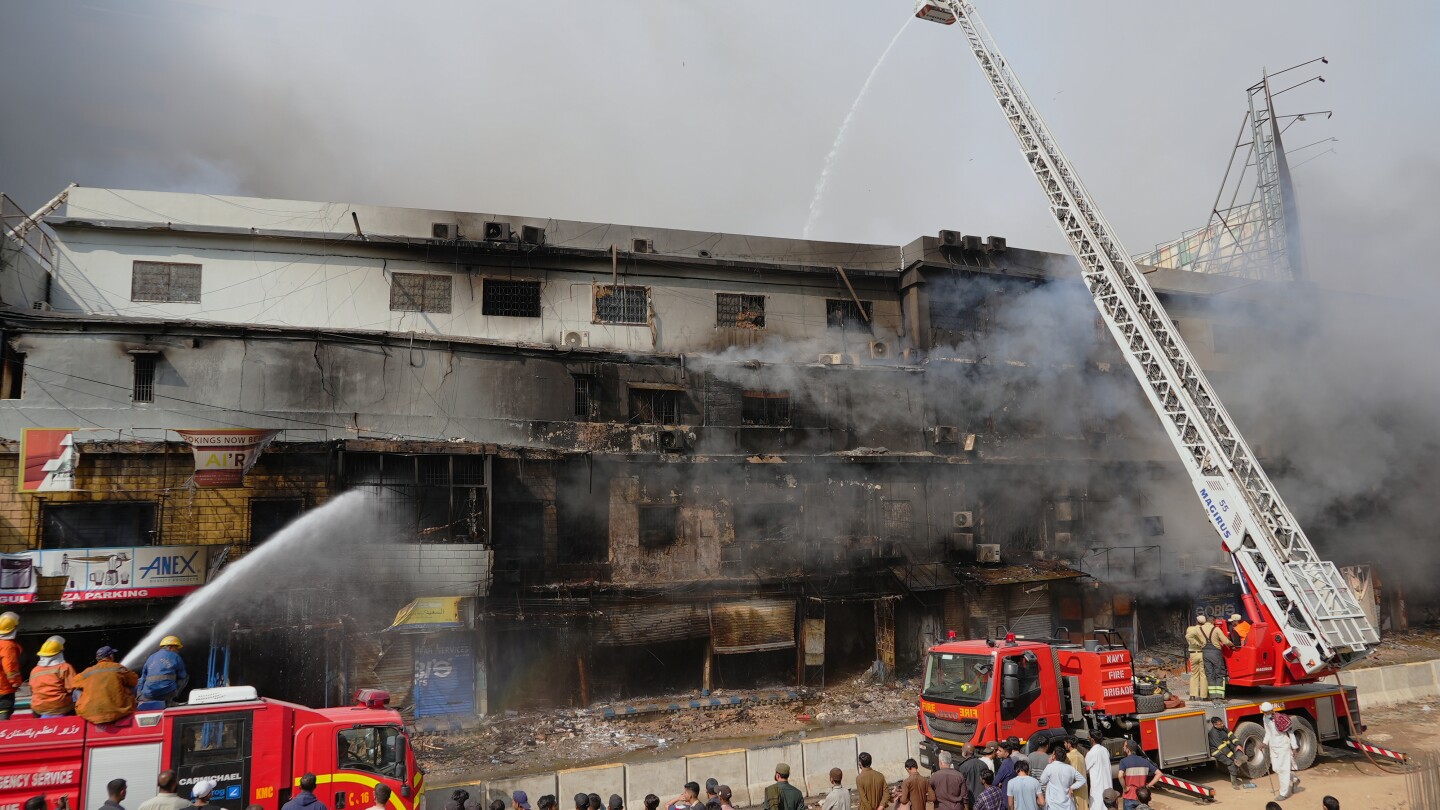
    KARACHI, Pakistan — A devastating multi-story fire at Gul Plaza shopping complex has resulted in at least 10 confirmed fatalities, with rescue teams recovering four additional bodies during overnight operations. The blaze, which ignited late Saturday, consumed the building for nearly 24 hours before firefighters finally contained the inferno late Sunday.

    According to Mayor Murtaza Wahab, the death toll continues to rise as emergency crews comb through the severely damaged structure. Local media sources indicate the fatalities may have reached 14 individuals. The rapid spread of flames through shops containing highly flammable materials—including cosmetics, garments, and plastic goods—created extremely hazardous conditions, according to Dr. Abid Jalal Sheikh, Karachi’s chief rescue officer.

    The scale of the tragedy became increasingly apparent as Sindh Chief Minister Murad Ali Shah revealed that approximately 60 individuals have been reported missing by concerned families. This prompted authorities to initiate an intensive search operation amid emotional scenes outside the charred building, where distraught relatives gathered awaiting news of their loved ones.

    Karachi, the provincial capital of Sindh, has experienced numerous deadly fires throughout its history, with safety experts frequently citing inadequate safety protocols and unauthorized construction practices as contributing factors. This latest incident echoes previous tragedies, including a November 2023 shopping mall fire that claimed 10 lives and injured 22, and the horrific 2012 garment factory blaze that resulted in 260 fatalities—one of Pakistan’s deadliest industrial disasters.

    Authorities have launched a formal investigation to determine the origin and cause of the fire, though preliminary findings have not been released. The incident has renewed concerns about urban safety standards and emergency response capabilities in Pakistan’s largest metropolitan area.

  • Vietnam party meeting opens with leadership and economic growth on the line

    Vietnam party meeting opens with leadership and economic growth on the line

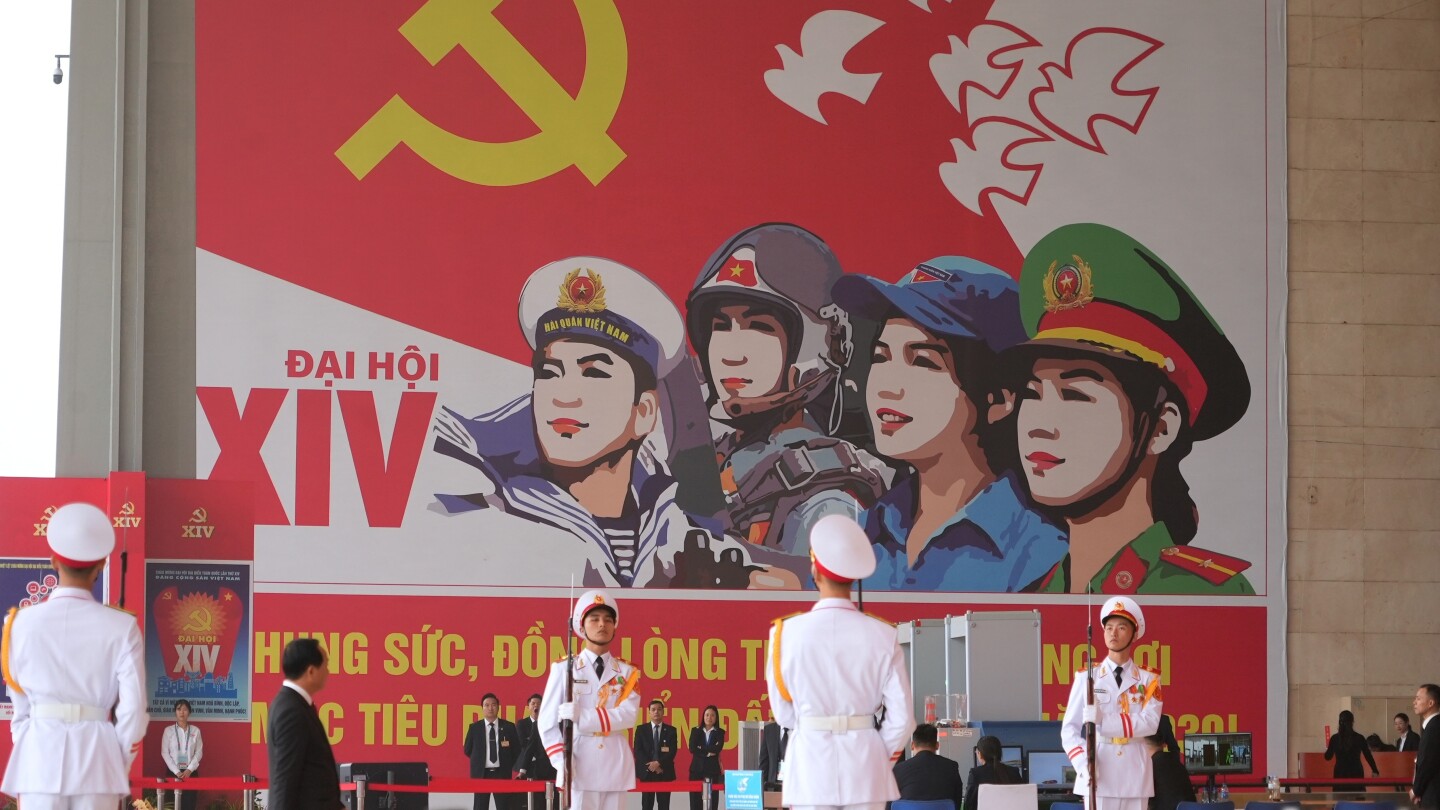
    HANOI, Vietnam — Vietnam’s political landscape enters a pivotal phase as the ruling Communist Party commenced its five-year National Congress on Monday. This critical gathering brings together 1,588 delegates in Hanoi to determine the nation’s leadership structure and policy trajectory through 2031.

    The conclave represents the party’s supreme decision-making authority, convening every five years to elect approximately 200 Central Committee members. This body subsequently appoints 17-19 individuals to the influential Politburo through a meticulously orchestrated selection process.

    At the forefront of deliberations is Communist Party General Secretary To Lam, anticipated to secure a full five-year term. Significant attention focuses on whether Lam will consolidate power by assuming both party leadership and state presidency roles—a potential departure from Vietnam’s traditional ‘four pillars’ governance model that maintains balance between party chief, president, prime minister, and National Assembly chair. Such consolidation would mirror political structures in China under Xi Jinping and neighboring Laos.

    Lam’s political ascent stems from his tenure as Minister of Public Security since 2016, where he spearheaded the extensive anti-corruption initiative championed by predecessor Nguyen Phu Trong. His administration has implemented the most substantial bureaucratic and economic reforms since Vietnam’s late-1980s economic liberalization, including significant public-sector workforce reduction, administrative boundary restructuring, and initiation of major infrastructure projects.

    Analysts note internal party dynamics between Lam’s security-aligned faction and more conservative military-associated elements. According to Nguyen Khac Giang of Singapore’s ISEAS–Yusof Ishak Institute, conservatives express concern about potential deviation from socialist principles and advocate for maintaining checks on concentrated power.

    The Congress simultaneously addresses Vietnam’s ambitious development agenda, particularly its goal of achieving high-income economy status by 2045. Delegates are finalizing a resolution targeting unprecedented 10% average annual GDP growth from 2026-2030, building upon 2025’s 8% expansion despite previous shortfalls in growth targets.

    This economic vision emphasizes industrial upgrading, production modernization, and technology-driven growth, exemplified by military-run Viettel’s inaugural semiconductor chipmaking plant launched in January. The project aims for trial production by 2027, representing Hanoi’s strategic push for technological self-reliance.

    Notably, draft documents recognize the private sector as ‘one of the most important driving forces of the economy,’ signaling a potential shift from state-owned enterprise dominance. The resolution equally prioritizes foreign relations with national security, acknowledging Vietnam’s export economy’s global interdependence, while elevating environmental protection to central status alongside economic and social development.

  • Prince Harry returns to court in battle with British tabloids

    Prince Harry returns to court in battle with British tabloids

    LONDON — The High Court in London has commenced a pivotal nine-week trial that pits Prince Harry and six other prominent figures against Associated Newspapers Ltd., publisher of the Daily Mail and Mail on Sunday. The plaintiffs allege systematic privacy invasions through unlawful information-gathering methods spanning more than two decades.

    The Duke of Sussex serves as the lead claimant in this collective action that accuses the media conglomerate of employing private investigators to conduct surveillance operations including phone interception, vehicle bugging, and unauthorized access to private records. The celebrity cohort includes music icon Elton John, actors Elizabeth Hurley and Sadie Frost, anti-racism campaigner Doreen Lawrence, and former politician Simon Hughes.

    Associated Newspapers has categorically denied all allegations, dismissing them as “preposterous” in previous court filings. The trial represents the third major legal confrontation between Prince Harry and British media organizations, following his successful 2023 lawsuit against Mirror Group Newspapers that resulted in substantial damages for “widespread and habitual” phone hacking.

    Legal analysts note the case’s complexity stems from its historical scope, with some claims dating back to 1993. Justice Matthew Nicklin previously ruled that the plaintiffs had demonstrated a “real prospect of succeeding” despite defense arguments that the statute of limitations should invalidate older claims.

    The proceedings have been complicated by contradictory sworn statements from private investigator Gavin Burrows, who initially claimed to have conducted “hundreds of jobs” for the Daily Mail between 2000-2005 before submitting a subsequent affidavit denying any unlawful work for the publisher.

    The trial coincides with ongoing tensions within the royal family, though palace observers note that Harry’s current visit appears strictly focused on legal proceedings rather than family reconciliation. The timing coincides with King Charles III’s scheduled engagements in Scotland, minimizing opportunities for father-son interaction.

    This legal battle forms part of Prince Harry’s broader campaign against British tabloid culture, which he holds partially responsible for his mother Princess Diana’s 1997 death and the subsequent treatment of his wife Meghan that prompted their royal exit and relocation to California.