作者: admin

  • Starmer says Trump’s Greenland tariff threat ‘completely wrong’ and a trade war in no one’s interest

    Starmer says Trump’s Greenland tariff threat ‘completely wrong’ and a trade war in no one’s interest

    LONDON — British Prime Minister Keir Starmer has publicly denounced former U.S. President Donald Trump’s proposed tariff measures against European allies as “completely wrong,” warning that such protectionist policies would harm global economic interests. The diplomatic friction emerged following Trump’s announcement of impending 10% import duties on goods from eight European nations, including the United Kingdom, scheduled to take effect in February.

    The controversial tariff threat represents retaliation against European countries’ symbolic military deployment to Greenland, a semi-autonomous territory under Denmark’s administration. Trump characterized these troop movements as essential for maintaining the U.S. “Golden Dome” missile defense infrastructure while expressing concerns about potential territorial ambitions from Russia and China regarding the strategic Arctic island.

    During a London press conference, Starmer emphasized Britain’s unwavering support for Greenland and Denmark’s sovereign rights to determine the island’s future. While acknowledging the critical importance of maintaining strong U.K.-U.S. relations, the British leader clarified that “being pragmatic does not mean being passive and partnership does not mean abandoning principles.”

    The Prime Minister indicated that Britain currently has no plans for retaliatory trade measures, stating his administration’s priority is preventing further escalation through continued dialogue with European partners, NATO allies, and American officials. Starmer characterized the transatlantic relationship as vital but noted that strength comes from acknowledging differences rather than ignoring them.

  • Return capsule of Shenzhou XX spaceship safely returns to Earth

    Return capsule of Shenzhou XX spaceship safely returns to Earth

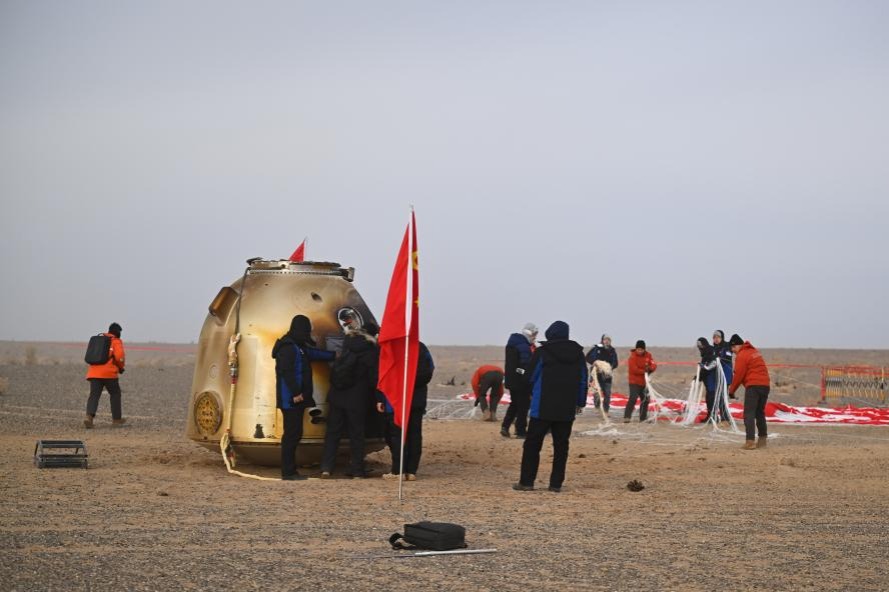
    China’s ambitious space program marked another significant achievement on January 19, 2026, as the return capsule of the Shenzhou XX spacecraft completed its journey back to Earth, touching down safely at the Dongfeng landing site in Inner Mongolia Autonomous Region. The successful recovery operation, documented by photographer Wang Jiangbo, demonstrates China’s growing capabilities in space exploration and spacecraft retrieval technology.

    The landing represents the culmination of a meticulously planned mission that underscores China’s advancing position in the global space community. The return capsule’s descent through Earth’s atmosphere and subsequent parachute-assisted landing required precise engineering and coordination between ground control teams and the autonomous systems aboard the spacecraft.

    Located in North China, the Dongfeng landing site has previously served as the recovery zone for multiple Chinese space missions, with infrastructure specifically designed to support these complex operations. The site’s remote characteristics provide ideal conditions for spacecraft recovery while minimizing potential risks to populated areas.

    The Shenzhou program, which began in the 1990s, has evolved into a cornerstone of China’s space ambitions, encompassing both crewed and uncrewed missions. This latest successful return further validates the program’s technical maturity and operational reliability as China continues to expand its activities in space, including the development of its Tiangong space station and planned lunar exploration missions.

  • Factory blast in China’s Inner Mongolia kills 2, missing rises to 8, 84 injured

    Factory blast in China’s Inner Mongolia kills 2, missing rises to 8, 84 injured

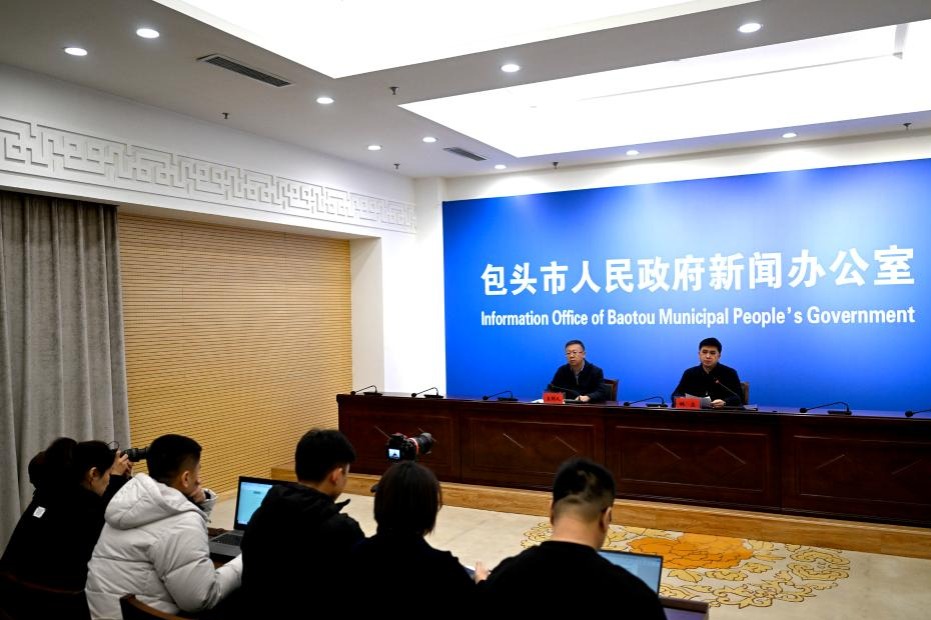
    A catastrophic industrial explosion has rocked Baotou City in China’s Inner Mongolia Autonomous Region, resulting in multiple casualties and triggering a massive emergency response. The incident occurred at 3:03 PM local time on Sunday at a plate manufacturing facility operated by Baogang United Steel, one of the region’s major industrial enterprises.

    According to official statements from Baotou executive vice mayor Lin Li, the disaster originated from the sudden detonation of a 650-cubic-meter saturated water and steam spherical tank. The explosion’s force caused significant damage to the facility and resulted in substantial human casualties.

    The current casualty figures indicate two confirmed fatalities, with eight individuals remaining unaccounted for. Medical facilities across the region are treating 84 injured personnel, including five patients in critical condition. The majority of injuries consist of facial wounds and soft tissue contusions, with all affected individuals reported to be in stable condition under the care of leading medical specialists.

    Emergency response teams have established a comprehensive rescue headquarters to coordinate multi-departmental efforts involving fire control, public security, health services, and market supervision authorities. The local government has implemented immediate safety measures, including the suspension of operations at the affected plant and initiating a city-wide safety inspection across all industrial and trade enterprises.

    Environmental monitoring agencies have conducted preliminary assessments indicating no adverse effects on surrounding air quality, soil conditions, or water systems. Utility services and residential heating in adjacent areas continue to operate normally without disruption.

    Regional authorities have formed a specialized investigation team to determine the precise cause of the accident and assess potential liabilities. Legal proceedings have been initiated against responsible parties within the enterprise management structure.

  • Beer supplies across Australia Day long weekend under threat as transport union warns of strike action

    Beer supplies across Australia Day long weekend under threat as transport union warns of strike action

    A nationwide beer shortage threatens to disrupt Australia Day celebrations as transport workers initiate strike action against logistics conglomerate Qube. The Transport Workers Union (TWU) has announced a 24-hour work stoppage commencing at 5am Wednesday, affecting operations in both Western Australia and Victoria.

    The industrial action places critical supplies of Asahi beer, Coca-Cola beverages, and Mondelez chocolate products at risk during the peak holiday period. Union officials cite four years of stagnant wages and unsafe working conditions as primary catalysts for the work stoppage, despite Qube reporting consistent annual profit growth.

    TWU Western Australia State Secretary Tim Dawson emphasized the strategic importance of consolidating state agreements into a national framework, stating this action represents a key component of the union’s 2026 initiative to elevate industry standards. “Transport remains Australia’s most lethal industry,” Dawson noted. “Fragmented agreements and relentless cost reduction measures exacerbate an already dangerous situation.”

    Victorian TWU Director Sam Lynch reinforced these concerns, highlighting the growing disparity between corporate profits and worker compensation. Union representatives maintain that Qube’s offer of 12% wage increases over three years fails to address fundamental safety concerns and does not constitute adequate compensation given inflation rates.

    Qube Logistics has denounced the strike as a “calculated scare campaign” while asserting the implementation of contingency supply arrangements. Company representatives revealed that the action involves minimal workforce participation—merely five drivers in Western Australia and twelve in Victoria—and should not significantly impact supply chains.

    The confrontation represents a broader national debate about wage stagnation, worker safety, and corporate responsibility in Australia’s logistics sector during a period of record corporate profitability.

  • Vietnam sees rapid growth despite tariffs

    Vietnam sees rapid growth despite tariffs

    As Vietnam commences its 14th National Congress this week, economic analysts are spotlighting the nation’s remarkable resilience as an emerging Southeast Asian powerhouse. Defying significant trade headwinds, Vietnam achieved an impressive 8.02% GDP expansion in 2025, positioning it as the fastest-growing economy within ASEAN and among global leaders.

    Burkhard Schrage, interim head of the Management Department at RMIT University Vietnam’s Business School, characterized the achievement as “a landmark accomplishment” and “a bright spot amid continued global volatility.” The congress, running through Sunday, is anticipated to mark a strategic pivot toward a quality-focused growth model emphasizing sustainability and technological sovereignty rather than pure quantitative expansion.

    This transformational shift is reflected in the draft political report which, for the first time, positions science, technology, and innovation at the core of Vietnam’s national development strategy. Schrage described the gathering as “a historic turning point, marking the transition into a new era of national strength and self-reliance.”

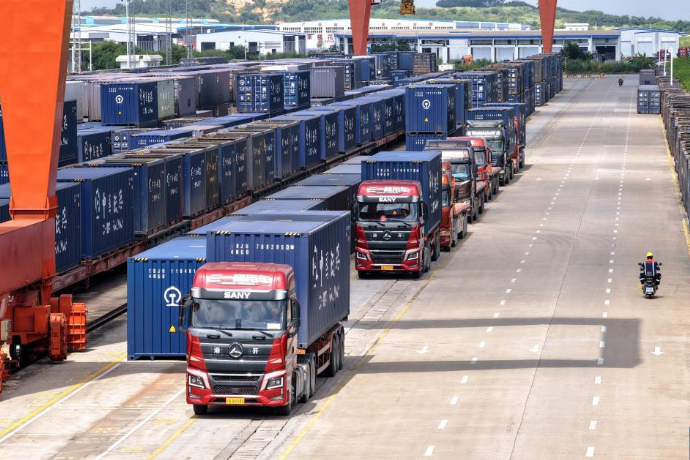
    According to Le Hong Hiep, senior fellow at Singapore’s ISEAS-Yusof Ishak Institute, Vietnam’s economic momentum stems from multiple drivers: robust export performance, heightened foreign direct investment, accelerated infrastructure development, and diversified consumption strategies. Despite facing 20% tariffs imposed by the United States since August, Vietnam’s exports surged 20% year-on-year in the fourth quarter, reaching $475 billion annually—a 17% overall increase. Disbursed FDI inflows simultaneously rose 9% to $27.6 billion, marking a five-year high.

    Hiep noted that 2026 will provide clearer insights into the tariffs’ comprehensive impact on exports and the broader economy. In response, Vietnamese authorities are implementing strategic countermeasures including export diversification away from the US market. “In these efforts, China is also featured significantly in Vietnam’s plans,” Hiep emphasized, noting Hanoi’s intention to increase exports to China to reduce its trade deficit and offset potential declines in shipments to Western economies.

    Infrastructure development represents another critical frontier, with Vietnam increasingly collaborating with China on connectivity projects. Hiep highlighted the logical progression of integrating Vietnam’s infrastructure network with China’s robust systems, noting that such connections would “boost the efficiency and potential of these projects to contribute to the overall economic development of Vietnam.” The state-run Vietnam News Agency recently identified infrastructure breakthroughs as a “foundational pillar” for achieving double-digit growth in 2026.

    Looking toward the future, Schrage projected that Vietnam is entering a “defining decade” that could reshape Southeast Asia’s economic hierarchy, potentially overtaking Thailand as ASEAN’s third-largest economy by 2026 or 2027. By 2030, Vietnam’s economic standing will likely be defined by its transition toward high middle-income status, solidifying its position as a regional economic leader.

  • Urumqi to host youth winter games

    Urumqi to host youth winter games

    Urumqi, the capital of China’s Xinjiang Uygur Autonomous Region, is poised to become the epicenter of winter sports development as it prepares to host the National Youth Winter Games from January 28 to February 1. The event will showcase young athletic talent across five disciplines: figure skating, speed skating, 3-on-3 ice hockey, snowboard slalom, and cross-country skiing.

    This competition forms part of the broader ‘Happy Run’ initiative, a national fitness program launched in 2021 through collaboration between China’s General Administration of Sport, the Ministry of Education, and other institutions. The program aims to promote physical activity among children and adolescents nationwide.

    Official registration data reveals significant participation, with 862 young athletes and 140 coaches from across China set to compete. Jiang Qingguo, Deputy Director of the General Administration of Sport’s youth sports division, announced these figures during a January 8 press conference in Urumqi.

    Xinjiang has strategically invested in winter sports infrastructure and development in recent years. Aert, Director of the Regional Sports Bureau, emphasized that the games will demonstrate Xinjiang’s advanced sports facilities and services while simultaneously boosting winter tourism, sports training programs, and equipment sales.

    The region has witnessed remarkable growth in youth participation. During Xinjiang’s inaugural ‘snow break’ for primary and secondary students from December 1-5, Urumqi’s six major ski resorts recorded approximately 61,000 student visits. The Silkroad Mountain Resort experienced particularly high demand, with daily attendance reaching 20,000 visitors and nighttime attendance doubling compared to previous periods. In Altay Prefecture, ski resorts reported over 21,000 student visits, with about 16,000 students enrolling in skiing or snowboarding lessons.

    Xinjiang’s institutional approach includes designating 213 schools as winter sports specialty institutions. Among these, Miaoergou Middle School in Shuixigou Town has pioneered the region’s first regular high school winter sports program since 2024. The program currently enrolls 72 students across two cohorts who balance standard academic coursework with professional training in speed skating, ice hockey, alpine skiing, snowboarding, and cross-country skiing. Six students have already advanced to train with regional professional teams.

    The program’s innovative structure allows students to pursue both academic and athletic excellence. Gu Xinxiang, the school’s Vice-Principal, noted that this balanced approach has received enthusiastic support from both students and parents.

    Bi Xihao, a 15-year-old speed skater training with the Xinjiang team, exemplifies this dual-path success. In just over a year, he has reduced his 500-meter time from 41 seconds to 37.8 seconds. Based full-time at the Xinjiang Winter Sports Training Center in Shuixigou Town, Bi maintains his academic studies through online evening classes in mathematics and English, supplemented by independent study of history and Chinese literature.

    The Training Center itself offers world-class facilities, situated at 1,650 meters above sea level—making it one of the world’s highest-altitude ice rinks. Li Shunyi, Deputy Director of the center’s venue management office, explained that the rink features precision-controlled ice with low friction characteristics. The subplateau environment and dry climate combine to create optimal training conditions.

    Han Fang, a coach with the Xinjiang speed skating team, confirmed that the center’s advanced facilities and altitude advantage have produced demonstrable competitive results. The program’s success is further evidenced by three athletes currently training with the national team for the upcoming Olympic Winter Games Milano Cortina 2026.

  • ‘Not young any more’ – Wawrinka advances to round two

    ‘Not young any more’ – Wawrinka advances to round two

    MELBOURNE PARK — Two decades after his main-draw debut and twelve years removed from his iconic Australian Open triumph over Rafael Nadal, Stan Wawrinka, 40, authored a new chapter in his storied career with a hard-fought first-round victory. The Swiss wildcard, who has announced his retirement at the conclusion of the 2026 season, overcame Serbia’s Laslo Djere in a grueling four-set encounter lasting three hours and twenty minutes. After dropping the opening set 5-7, Wawrinka mounted a characteristic comeback, securing the match 5-7, 6-3, 6-4, 7-6(4) to the roaring approval of the Show Court Arena crowd.

    The emotional victory marks Wawrinka’s first Grand Slam win since Wimbledon 2024 and his first in Melbourne in five years. At 40 years and 296 days, he becomes the second-oldest man to win a singles match at the Australian Open, trailing only Ivo Karlovic’s 2020 record. In a post-match reflection, Wawrinka acknowledged the weight of the moment, stating, ‘The passion is still intact but I’m not young any more… It’s so special for me to enter the court and enter a Grand Slam. I’m a competitor so I’m always going to fight.’

    The latter half of Day Two emerged as a showcase for veteran resilience, contrasting an earlier session marred by injury retirements. Joining Wawrinka in the second round was 37-year-old Marin Cilic, the 2014 US Open champion and 2018 Australian Open finalist. Cilic delivered a breathtaking performance against Germany’s Daniel Altmaier, storming through the first two sets 6-0, 6-0 in a mere 50 minutes and winning 13 consecutive games. He narrowly missed achieving a rare ‘triple bagel’—a 6-0, 6-0, 6-0 scoreline last accomplished by Sergi Bruguera at the 1993 French Open—as Altmaier rallied to force a third-set tiebreak, which Cilic ultimately claimed 7-6(3).

    The victories set compelling second-round matchups: Wawrinka will face French qualifier Arthur Gea, who ousted 17th seed Jiri Lehecka, while Cilic is slated to challenge Canadian 21st seed Denis Shapovalov.

  • Ukrainian team arrives in Miami for peace talks

    Ukrainian team arrives in Miami for peace talks

    A high-level Ukrainian delegation has arrived in Miami, Florida, for crucial peace negotiations with representatives of the Trump administration, aiming to find a resolution to the four-year conflict with Russia. The talks, scheduled for this weekend, will center on security assurances and postwar reconstruction efforts.

    Leading the Ukrainian contingent is Kyrylo Budanov, recently appointed Chief of Staff to President Volodymyr Zelensky. The delegation includes Security Chief Rustem Umerov and lead negotiator David Arakhamia. They are set to meet with key US figures including Jared Kushner, special envoy Steve Witkoff, and US Army Secretary Daniel Driscoll.

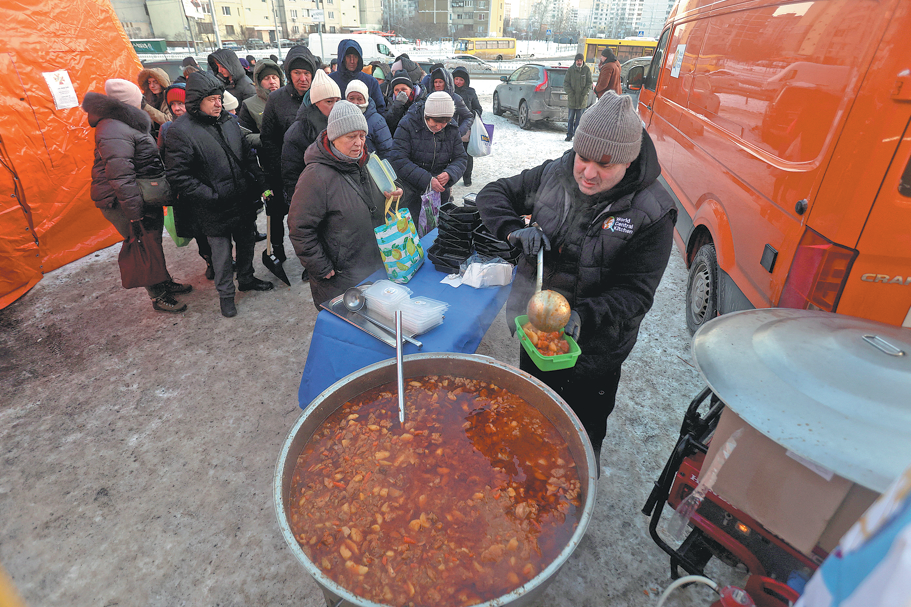
    The negotiations occur against a backdrop of severe humanitarian challenges in Ukraine. President Zelensky reported that approximately 400,000 residents in Kharkiv, Ukraine’s second-largest city, are experiencing significant electricity shortages following nighttime Russian strikes. Additionally, 56,000 families in the Bucha region near Kyiv remain without power, prompting authorities to extend school closures until next month due to health concerns.

    Ukraine’s Energy Ministry has declared a state of emergency across the nation’s energy sector, implementing power restrictions in most regions due to sustained infrastructure attacks. Zelensky has ordered the accelerated import of electricity and additional power equipment to address the crisis.

    The peace process faces significant challenges as President Trump has expressed frustration with both conflict parties and has advocated for peace terms that Kyiv considers tantamount to surrender. Meanwhile, Russia’s Defense Ministry reported continued territorial advances, claiming control of five populated settlements in the past week, including two additional locations in the Donetsk and Zaporizhzhia regions captured on Saturday.

    Zelensky emphasized the importance of providing accurate information about Ukraine’s current situation, noting that the ongoing attacks have undermined public faith in diplomatic solutions. The Miami talks represent a critical effort to bridge differences between Washington and Kyiv on security guarantees, with Zelensky hoping to finalize relevant documents with the US next week.

  • Indonesian rescuers find body, wreckage of plane

    Indonesian rescuers find body, wreckage of plane

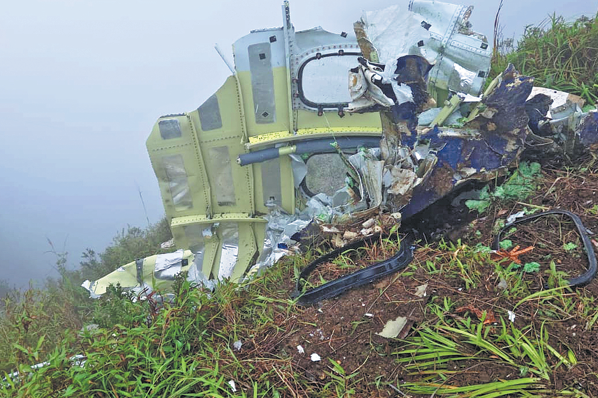
    Indonesian search and rescue teams have made a significant breakthrough in the recovery operation for a missing turboprop aircraft, locating the main wreckage site and retrieving one body from the crash location on Mount Bulusaraung. The ATR 42-500 aircraft, operated by Indonesia Air Transport, vanished from radar on Saturday during adverse weather conditions while approaching Makassar, the capital of South Sulawesi Province.

    The critical discovery occurred on Sunday when rescue personnel identified scattered aircraft debris in a steep ravine approximately 200 meters deep on the mountainside. Muhammad Arif Anwar, head of Makassar’s Search and Rescue Office and mission coordinator, confirmed the recovery of a male victim’s body and the visual identification of major aircraft components, including the engine, fuselage sections, and passenger seats.

    The aircraft was conducting a specialized flight from Yogyakarta on Java island to Makassar with ten individuals aboard, including seven crew members and three officials from Indonesia’s Marine Affairs and Fisheries Ministry. The government personnel were engaged in an aerial monitoring mission surveying local fisheries when the aircraft encountered difficulties.

    Initial detection of the crash site was made by air force helicopter crews who spotted aircraft windows in the forested mountainous terrain. Ground teams subsequently accessed the challenging location, confirming the presence of extensive wreckage consistent with a high-impact collision. The remote and topographically complex area has complicated recovery efforts, though the discovery has enabled rescuers to narrow their search parameters significantly.

    Anwar emphasized that the joint rescue operation is now prioritizing the search for additional victims while maintaining hope for potential survivors. The recovered body awaits formal identification procedures to confirm its connection to the flight manifest. Aviation authorities have initiated an investigation into the circumstances surrounding the incident, particularly focusing on the aircraft’s final communications with air traffic control regarding approach alignment corrections prior to disappearance.

  • Guangzhou to screen all seniors in care homes for early signs of dementia

    Guangzhou to screen all seniors in care homes for early signs of dementia

    The city of Guangzhou, a major metropolitan hub in Southern China’s Guangdong province, has unveiled an ambitious public health initiative to conduct universal cognitive screening for all residents of elderly care facilities. This program represents a significant escalation of the city’s ongoing efforts to combat dementia through early detection and intervention.

    According to disclosures from the Guangzhou Municipal Health Commission, this systematic screening operation will be implemented across all senior care institutions throughout the city by the conclusion of 2027. The initiative emerges in response to policy recommendations advanced during Guangzhou’s January 2025 political consultative sessions.

    The driving force behind these proposals was Ouyang Zhihong, a standing committee member of the Guangzhou Committee of the Chinese People’s Political Consultative Conference who concurrently serves as executive president of the Guangdong Home-Care Services Association. Ouyang presented a comprehensive framework emphasizing the critical importance of community-based screening mechanisms combined with professional clinical assessment to identify early-stage Alzheimer’s disease and high-risk individuals.

    Central to Guangzhou’s dementia prevention strategy is the innovative ‘Hui Ji Yi’ (Wisdom Memory) digital platform—a smart screening mini-program integrated into the municipal government’s digital infrastructure. This technological solution has already facilitated approximately 400,000 preliminary cognitive assessments since its implementation in April 2024, resulting in the identification of 23,000 positive cases that subsequently received early intervention.

    The city’s approach establishes a multi-tiered medical consortium that creates a seamless continuum of care from hospital diagnosis to community and family-based support. Personalized intervention protocols are being developed to address the full spectrum of cognitive conditions, ranging from subjective cognitive decline to mild impairment and advanced dementia.

    At the community level, Guangzhou has embedded dementia prevention within its national basic public health services framework, leveraging family physician teams to maintain ongoing monitoring and support. Through a coordinated alliance of medical institutions, the city has established a district-wide responsibility system encompassing all eleven administrative regions of Guangzhou.

    The ultimate objective of these concerted efforts is to achieve dementia prevention awareness among no less than 80% of the city’s elderly population, representing a substantial public health advancement in addressing the challenges associated with aging and cognitive disorders.