作者: admin

  • Russia ignores Ukraine’s unilateral ceasefire and attacks kindergarten

    Russia ignores Ukraine’s unilateral ceasefire and attacks kindergarten

    In a sharp escalation of hostilities just hours after Ukraine enacted its own unilateral ceasefire, Russian forces have launched a coordinated wave of drone and missile strikes across Ukrainian civilian and frontline areas, killing multiple civilians and drawing sharp condemnation from Ukrainian President Volodymyr Zelenskyy.

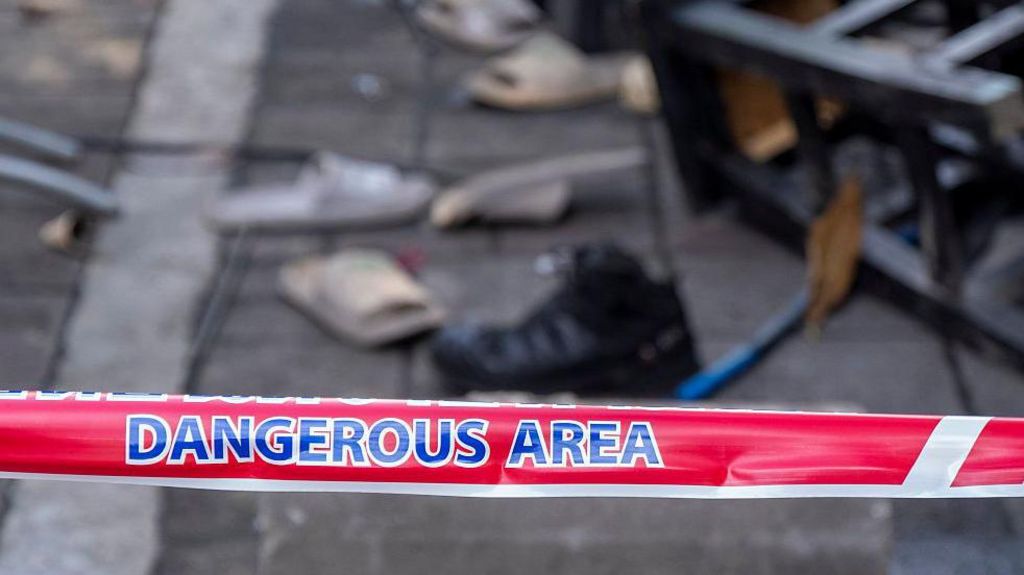
    Local officials in Ukraine’s northern Sumy region confirmed Wednesday morning that a direct strike on a local kindergarten claimed the life of one adult woman. No children were present on site at the time of the attack, limiting what could have been a far deadlier outcome.

    The breakdown in the temporary truce comes after both Russia and Ukraine announced competing unilateral ceasefires earlier this week, with no shared agreement on terms, duration or independent monitoring. Russia first declared a 36-hour truce spanning May 8 and 9 to coincide with its annual Victory Day commemorations marking the Soviet Union’s 1945 defeat of Nazi Germany, which will be capped Saturday by a traditional military parade on Moscow’s Red Square. Ukraine followed suit, announcing an open-ended ceasefire starting at midnight Tuesday, stating it would respond symmetrically to any Russian actions.

    Zelenskyy accused Russia of outright rejecting the opportunity to de-escalate and save civilian lives in a statement Wednesday morning. “Russia’s choice is an obvious spurning of a ceasefire and of saving lives,” the president said, adding that Ukraine would “decide on our further actions” after receiving updated evening briefings from military and intelligence commanders. Zelenskyy noted that Russian forces had launched “active hostilities and terrorist shelling” across the frontline, alongside dozens of drone and missile strikes targeting populated civilian areas.

    A wave of Russian attacks across Ukraine Tuesday left 27 civilians dead, including 12 people killed in strikes in the southern Zaporizhzhia region alone. Andriy Sybiha, Ukraine’s foreign minister, said the continued aggression laid bare the insincerity of Moscow’s ceasefire call. “Fake calls for a ceasefire on May 9th have nothing to do with diplomacy. Putin only cares about military parades, not human lives,” Sybiha said.

    This year’s Victory Day events in Russia, including the Red Square parade, have been scaled back dramatically, with officials citing a heightened “terrorist threat” from Ukraine. Residents of Moscow and St. Petersburg have also been notified that mobile internet service will be disrupted across parts of both cities during the commemorations for security purposes.

    Since launching its full-scale invasion of Ukraine in February 2022, the Kremlin has worked to shield the Russian public from direct impacts of the war. But in recent months, Ukraine has increasingly demonstrated its ability to strike deep into Russian territory with long-range drones. While these attacks typically cause limited physical damage, they have eroded public confidence and rattled Russian political leadership.

    On Tuesday, Ukraine carried out a strike on the city of Cheboksary, located more than 1,500 kilometers (930 miles) from the Ukrainian border, which killed two people.

    Moscow has not issued any formal response to Ukraine’s ceasefire proposal. Instead, the Kremlin has threatened to carry out a “massive missile strike” on central Kyiv if Ukraine violates Russia’s 8-9 May truce. The Russian Ministry of Defense announced Wednesday that it had downed 53 Ukrainian drones between 21:00 Tuesday and 07:00 Wednesday GMT, but did not clarify whether any of the intercepted drones were launched after Ukraine’s ceasefire went into effect.

  • Pope to inaugurate Barcelona’s Sagrada Familia tower and meet with migrants in June trip to Spain

    Pope to inaugurate Barcelona’s Sagrada Familia tower and meet with migrants in June trip to Spain

    Vatican officials announced Wednesday that Pope Leo XIV will undertake a seven-day pastoral visit to Spain next month, headlined by two major engagements: the inauguration of the iconic central tower of Barcelona’s world-famous Sagrada Familia basilica, and a outreach visit to migrant communities in the Canary Islands.

    The trip, scheduled to run from June 6 to 12, will kick off in Spain’s capital Madrid, where the pontiff is set to hold official meetings with top Spanish government leaders, members of parliament, and King Felipe VI and Queen Letizia. He will also lead an evening prayer vigil with young Catholics, an event that echoes the 2011 World Youth Day gathering hosted in Madrid by the late Pope Benedict XVI, the last pope to travel to Spain.

    From Madrid, the papal tour will move on to Barcelona, where the visit coincides with the 100th anniversary of the death of Antoni Gaudí, the legendary Catalan architect who devoted his life to designing the Sagrada Familia, the world’s tallest church structure. During his time in the city, Pope Leo will celebrate Mass inside the UNESCO-listed basilica and formally open the recently completed Tower of Jesus Christ, the soaring central spire that was secured into its final position in February. This new tower brings the basilica to its planned maximum height of 172.5 meters (566 feet) above the Barcelona skyline, though the Sagrada Familia’s decades-long construction project remains incomplete.

    Spanish bishops also confirmed Wednesday that while Gaudí is currently advancing through the canonization process toward sainthood, the ceremony will not take place during Pope Leo’s visit. This mirrors the 2010 visit of Pope Benedict XVI, who consecrated the still-unfinished basilica during his trip to the site.

    The final leg of Pope Leo’s trip will take him to the Canary Islands, a Spanish archipelago off the northwest coast of Africa that serves as the primary entry point for migrants traveling from Africa to Europe. The visit fulfills a long-held priority of Pope Francis, Pope Leo’s immediate predecessor, who made outreach to migrants and refugees a defining mission of his papacy. Pope Leo has continued this legacy, consistently calling for dignified treatment of migrants even amid restrictive new migration policies put in place by the Trump administration in his native United States.

    The trip to the Canaries also aligns with the migration agenda of Spain’s current socialist government led by Prime Minister Pedro Sánchez. At a time when many European governments have tightened border controls and expanded deportation programs, Sánchez’s administration has openly championed managed legal migration. The government is currently advancing a sweeping migrant amnesty that would grant legal status to an estimated 500,000 unauthorized migrants currently residing in Spain. The policy has drawn fierce pushback from conservative opposition groups, particularly the far-right Vox party, which has labeled the legalization push an “attack on Spanish national identity.”

    Despite the criticism, the amnesty plan holds broad support from a coalition of backers that includes the Catholic Church and leading Spanish business groups. Sánchez has repeatedly framed the reform as a demographic and economic necessity: Spain’s population is rapidly aging, and the nation requires additional working-age people to sustain its growing economy and fund public social security programs. Currently, roughly 10 million of Spain’s 50 million residents are foreign-born — around one in five people — with the largest share hailing from Latin America and Africa.

    During his time in the Canaries, Pope Leo will first meet with migrant support organizations in Las Palmas, before traveling the next day to meet with migrants at a reception center on the island of Tenerife, where he will also hold separate talks with local aid groups that work with newcomer populations.

    For decades, the Canary Islands, located just 105 kilometers (65 miles) from the African mainland, have been a key transit route for migrants seeking to reach the European Union from West Africa and Morocco. To avoid interception by security forces, many migrants undertake dangerous extended sea journeys that can last days or even weeks. Arrivals peaked in 2024, when nearly 47,000 migrants reached the islands, according to data from Spain’s interior ministry. After the EU struck cooperation deals with Morocco, Mauritania, Senegal and Gambia to curb irregular crossings, arrivals have dropped sharply: just over 2,000 migrants landed in the Canaries in the first four months of 2026.

    Following his Spain trip, Pope Leo — the first U.S.-born pope in history — will travel to another major European migrant entry point: the Italian island of Lampedusa, off the coast of Sicily. That visit is scheduled for July 4, the same date the United States celebrates the 250th anniversary of its Declaration of Independence.

    This report includes contributions from correspondents Naishadham in Madrid and Brito in Barcelona, and is produced by the Associated Press. AP’s religion coverage is supported through a collaboration with The Conversation US, with funding from Lilly Endowment Inc. The AP retains full editorial responsibility for all content.

  • German police raid neo-Nazi criminal youth groups

    German police raid neo-Nazi criminal youth groups

    Over the past two years, a worrying new wave of explicitly neo-Nazi youth organizations has sprung up across multiple regions of Germany, prompting a large-scale coordinated law enforcement operation targeting two of the most prominent violent groups. On Wednesday, more than 600 police officers carried out raids across approximately 50 residential and commercial locations spanning 12 German states, with operations concentrated in the country’s eastern and southern regions including Bavaria, Berlin, Brandenburg, and Saxony. Federal prosecuting authorities confirmed that the operation targeted individuals linked to two groups: Jung & Stark (JS, translating to Young and Strong) and Deutsche Jugend Voran (DJV, or Forwards German Youth). While no arrests were made during the search operation itself, investigators have laid out detailed allegations of organized criminal violence and extremist networking against the suspects. According to a formal statement from federal prosecutors, the targeted individuals are suspected of coordinating violent attacks through encrypted social media platforms and building interconnected extremist networks that span the entire country. Prosecutors detailed that multiple accused group members have carried out brutal assaults on people they categorized as political enemies, including left-wing activists, as well as individuals they falsely accused of being pedophiles. In each documented attack, victims were beaten by multiple attackers and left with severe, lasting injuries. Internal group meetings, authorities add, regularly include open calls for violent action against political opponents and the groups’ perceived enemies. This is not the first time members of these networks have faced legal consequences: last year, a leading figure in DJV was sentenced to over three years in prison following a series of violent assaults on political opponents in Berlin. Twenty-four-year-old Julian M. was convicted alongside a cell of attackers aged 16 to 23 for brutally beating multiple people who displayed visible symbols associated with left-wing political movements. Unlike older generations of German far-right extremist groups, these new youth networks operate with unprecedented openness, maintaining active, public profiles on major mainstream and encrypted social platforms including Telegram and Instagram. Experts on extremism warn that this intentional openness is a deliberate recruitment strategy targeting young, disillusioned men who feel alienated from mainstream society. Jakob Guhl, a researcher at the Institute for Strategic Dialogue, notes that the majority of people joining JS and DJV are extremely young, typically teenagers or in their early 20s. Guhl emphasizes that unlike more established, mainstream far-right political movements in Germany such as the Alternative for Germany (AfD) or the Identitarian movement, which aim to build broad public support and enter mainstream political discourse, JS and DJV center their activities on militant training, public protest participation, and direct physical violence against perceived enemies. Since 2024, hundreds of smaller, local offshoots of these groups have emerged across eastern Germany in particular, following JS’s model of open online organizing and militant activity. German security and political officials have repeatedly voiced deep, growing concern over the rising rates of young people being radicalized and drawn into far-right extremist activity, which has increasingly targeted not only left-wing political figures but also members of Germany’s LGBT community. Today’s coordinated raids mark one of the largest law enforcement actions against this new wave of openly militant far-right youth groups, underscoring the German state’s growing alarm over the spread of violent neo-Nazi organizing among young people.

  • The Summer I Turned Pretty fans asked to stop visiting film set

    The Summer I Turned Pretty fans asked to stop visiting film set

    One of Prime Video’s biggest breakout hit series of recent years is wrapping up its run with a feature-length conclusion — but the massive, passionate fanbase that turned *The Summer I Turned Pretty* into a global phenomenon is now creating unexpected headaches for its production team.

    In an official public statement posted across social media channels, the creative team behind the coming-of-age romantic drama has urged fans to immediately stop visiting active filming locations and leaking on-set footage online, citing legitimate safety risks and constant disruptions to the production process.

    “We absolutely love how excited you are for this final chapter, but sharing unconfirmed location details and turning up on set derails our filming schedule,” the team explained in the post. The statement comes after dozens of unofficial clips purporting to show lead cast members on set have circulated widely across TikTok, Instagram, and other social platforms, with some short videos racking up hundreds of thousands of views in just days.

    To deliver a polished, seamless final product, the production team says they have worked for months to build a controlled, private production environment, calling this “protected bubble” critical to crafting the conclusion fans deserve. Jenny Han, the best-selling author who originally wrote the *The Summer I Turned Pretty* trilogy and is returning to write and direct the upcoming final film, echoed the team’s request in a post to her own Instagram Story.

    Han explained that overenthusiastic fan visits have forced production to repeatedly pause filming to clear crowds from shooting setups, breaking crew focus and throwing carefully planned shooting schedules off track. “This story means more to me than I can say, and I know it means just as much to all of you,” she wrote.

    First launched on Prime Video in 2022, *The Summer I Turned Pretty* quickly became a cultural juggernaut, drawing millions of viewers worldwide with its tender coming-of-age story and addictive love triangle at its core. The series follows Isabel “Belly” Conklin, played by rising star Lola Tung, as she navigates young adulthood and a years-long romantic connection with brothers Conrad and Jeremiah Fisher, portrayed by Christopher Briney and Gavin Casalegno. The show’s central romantic dynamic even spawned an internet-wide cultural divide, with passionate “Team Conrad” and “Team Jeremiah” factions that have occasionally spilled over into targeted harassment of cast members amid heated debates.

    At the peak of its third season run last year, *The Summer I Turned Pretty* claimed the title of Prime Video’s most-watched series in the United Kingdom, and hit the number one streaming spot in more than 120 countries around the globe, cementing its status as one of the platform’s most successful original series. This is not the first time production has been forced to rein in fan behavior, either: ahead of the third season’s emotional climax last year, creators issued a similar plea asking fans to “act normal online” after cast members faced sustained online abuse tied to plot developments.

    While the series is set at the iconic fictional Cousins Beach, on-location filming primarily takes place across coastal towns in North Carolina. Plot details for the upcoming feature film remain tightly under wraps, but Amazon MGM Studios has confirmed it will serve as the definitive final chapter closing out Belly’s coming-of-age journey, with all core lead cast members set to reprise their roles for the feature-length conclusion.

  • China is stepping up its Iran war diplomacy ahead of Trump’s summit with Xi

    China is stepping up its Iran war diplomacy ahead of Trump’s summit with Xi

    As a highly anticipated bilateral meeting between U.S. President Donald Trump and Chinese President Xi Jinping approaches, China’s growing diplomatic influence in the ongoing Iran conflict has moved into the global spotlight, following high-stakes talks Wednesday between the two nations’ top foreign policy officials in Beijing.

    Over the past decade, Beijing has steadily expanded its footprint in global diplomacy, shifting from its long-standing policy of avoiding entanglement in distant regional conflicts to emerge as a key power broker mediating disputes spanning from Southeast Asian border tensions to the war in Eastern Europe. While Beijing has not taken on the formal title of mediator in the Iran war, both Washington and Tehran have publicly acknowledged its outsized quiet influence in pushing for de-escalation of the conflict.

    The Trump administration has repeatedly pushed Beijing to leverage its close economic ties with Tehran to force the reopening of the Strait of Hormuz, a critical global oil chokepoint that Iran has blockaded amid the fighting. During Wednesday’s talks with Iranian Foreign Minister Abbas Araghchi — his first visit to Beijing since the war began on February 28 — Chinese Foreign Minister Wang Yi reiterated China’s call for an immediate comprehensive ceasefire, stating that Beijing is deeply troubled by the human and security costs of the ongoing conflict.

    “The entire international community shares a urgent collective goal of restoring normal, secure passage through the Strait of Hormuz, and China hopes all relevant parties will move quickly to answer the strong calls from the global community,” Wang told Araghchi, according to China’s official state news agency Xinhua. Wang also added that Beijing recognizes Iran’s legitimate right to develop peaceful nuclear energy and welcomes Tehran’s long-standing pledge to refrain from pursuing nuclear weapons.

    The timing of Araghchi’s visit is not accidental, with the Trump-Xi summit scheduled for next week in Beijing, where the Iran conflict is expected to top the bilateral agenda. A day ahead of the Beijing talks, U.S. Secretary of State Marco Rubio urged Chinese officials to use the meeting to pressure Tehran to lift its blockade of the strategic waterway.

    Araghchi signaled that progress on reopening the strait could be within reach, telling reporters through Xinhua that “currently, it is possible to resolve the issue of reopening the Strait of Hormuz as soon as possible.” Wang’s renewed public call for the strait’s reopening has already created new momentum for behind-the-scenes negotiations between Washington and Tehran to end the conflict, analysts note.

    Regional and global policy experts have offered mixed assessments of what the high-profile meeting signals about China’s evolving role. Tuvia Gering, a nonresident fellow at the Atlantic Council’s Global China Hub, noted that the coordinated visit demonstrates Beijing and Tehran’s aligned messaging, and reinforces China’s ambition to secure a permanent seat at the table for any future regional security agreement. “However, unless Beijing rolls out a concrete, actionable peace initiative, I would not characterize this as a meaningful shift in China’s approach to the conflict,” Gering added.

    Hoo Tiang Boon, a professor of Chinese foreign policy at Singapore’s Nanyang Technological University, pointed out that the visit was arranged at Beijing’s initiative, marking a deliberate display of China’s leverage over Tehran. “By summoning the Iranian foreign minister and holding high-profile talks, Beijing cannot be accused of sitting on the sidelines and refusing to engage,” Hoo noted.

    Many analysts highlight that China holds a unique position in any mediation efforts thanks to its status as a leading economic power with deep ties to all key stakeholders in the conflict, from Iran to major Gulf Arab states and Pakistan. Unlike most other global powers, Beijing is positioned to offer large-scale postwar reconstruction investment and targeted economic relief to war-impacted regions, tools few other actors can match.

    George Chen, a partner at the international advisory firm The Asia Group, argued that China’s role in the Iran dispute is irreplaceable. As Tehran’s largest crude oil buyer, Beijing’s policy positions carry significant weight with Iranian leadership, he noted, adding that China is also one of the few major powers that has publicly expressed sympathy for Iran’s position at the United Nations. The U.S. government has additionally noted that Iran’s ballistic missile program was developed with early Chinese technology support, and Beijing continues to sell Iran dual-use industrial components that can be repurposed for missile manufacturing.

    This is not China’s first high-profile mediation success in the Middle East. In 2023, Beijing played a central role in brokering the restoration of formal diplomatic relations between longtime regional rivals Saudi Arabia and Iran, a breakthrough that drastically reduced the risk of direct and proxy conflict across the Gulf. Muhammad Zulfikar Rakhmat, a researcher at Indonesia’s Center of Economic and Law Studies, called the 2023 deal a major geopolitical win for China, but noted that Beijing is deliberate about when it chooses to engage. “Its mediation tends to be opportunistic and low-risk, often occurring when conditions are already ripe for an agreement,” Rakhmat explained, noting that both Riyadh and Tehran already had strong incentives to re-engage before Beijing stepped in.

    Beyond the Middle East, Beijing has built a growing track record of conflict mediation in recent years. It hosted multiple rounds of talks between Thailand and Cambodia during their 2024 border conflict, and joined the U.S. for initial ceasefire negotiations in Malaysia, helping broker a second ceasefire when fighting resumed late last year. Beijing has also put forward formal peace proposals for the war in Ukraine, and even hosted Ukraine’s foreign minister for talks, despite its public “no-limits” strategic partnership with Russia.

    Experts note that China’s diplomatic messaging in global conflicts follows a consistent pattern, with Beijing repeatedly emphasizing respect for the U.N. Charter and national sovereignty. Amid the Iran conflict, President Xi last month reiterated this framing, calling for “upholding the principles of peaceful coexistence, upholding national sovereignty, upholding the rule of international law, and coordinating development and security.” Hoo noted that this consistent messaging has become a hallmark of China’s mediation efforts.

    Thitinan Pongsudhirak, a professor of international relations at Thailand’s Chulalongkorn University, argued that for distant conflicts, Beijing often faces low tangible stakes but can reap major diplomatic benefits, particularly as the world adjusts to the Trump administration’s unconventional negotiating style. “What the U.S. is doing under Trump is deeply damaging, and everyone suffers from it … and China is displaying global leadership and exerting its global role by speaking to the rules-based international system,” Pongsudhirak said. “It’s an inescapable contrast” between the two approaches to global diplomacy, he added.

    Wu contributed reporting from Bangkok.

  • Protest groups block access to Russian pavilion at Venice Biennale

    Protest groups block access to Russian pavilion at Venice Biennale

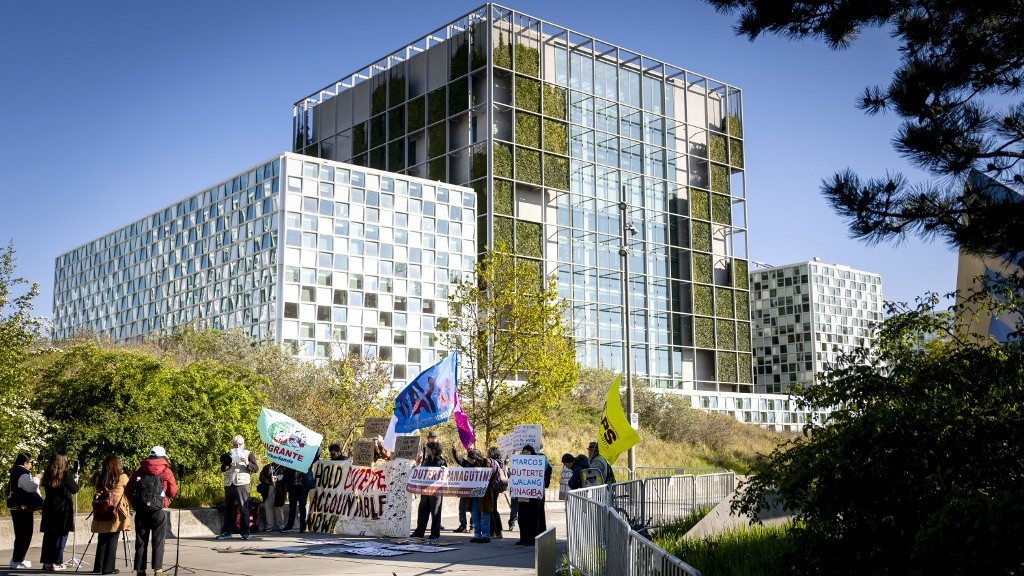
    VENICE, Italy — A high-stakes demonstration rocked the prestigious Venice Biennale on Wednesday, as two prominent activist collectives—Russian punk protest group Pussy Riot and Ukrainian feminist organization FEMEN—joined forces to block the opening of Russia’s national exhibition space at the world’s most influential contemporary art event. Chanting slogans including “Russia’s art is blood” and “Disobey” amid a cloud of colored smoke matching the blue and yellow of Ukraine’s national flag mixed with pink associated with the groups’ feminist messaging, the masked activists, who covered their faces with pink balaclavas, advanced toward the Russian pavilion in the Biennale’s central Giardini exhibition district. Italian law enforcement officers quickly formed a line at the venue’s entrance, and the demonstration successfully halted access to the space for roughly 30 minutes, delaying Russia’s return to the Biennale after its years-long absence.

    Speaking after the protest, Nadya Tolokonnikova, founder of Pussy Riot, emphasized that only art created by Russian dissidents imprisoned on what she called absurd politicized charges deserves to represent Russia on the global stage. “Those people make art, and I want that art to represent Russia, because they represent the real face of Russia,” Tolokonnikova told reporters. She added that repeated attempts to open a dialogue with Biennale organizers about the controversy went unanswered, and she was forced to register for entry to the Giardini under a false name to pass security screening and join the demonstration.

    This year’s Biennale marks Russia’s first participation in the event since Moscow launched its full-scale invasion of Ukraine in 2022. The controversial decision to allow the Russian pavilion has already triggered sweeping fallout: the European Union stripped 2 million euros ($2.5 million) in funding from the art fair over the inclusion, and last week the entire international jury tasked with awarding the Biennale’s coveted Golden Lion prizes resigned in protest. The jury stated it would not issue awards to any countries under investigation by the International Criminal Court for alleged human rights abuses, a position that targets both Russia and Israel, drawing broader controversy to the 2024 event.

    Organizers of the Venice Biennale have stood by their decision to include Russia, releasing a statement noting that any country maintaining formal diplomatic relations with Italy is eligible to participate in the national pavilion program. While the Italian national government in Rome has publicly opposed the inclusion of Russia, it has acknowledged that the Venice Biennale operates as an independent cultural institution and has not moved to block the pavilion’s opening. For 2024, the Russian pavilion is centered around a series of live musical performances held in a lower-level gallery space, and it is currently only scheduled to operate during the first week of previews leading up to the Biennale’s official opening to the public on May 9.

  • Zelensky says Russia choosing war as dual ceasefires falter

    Zelensky says Russia choosing war as dual ceasefires falter

    As a pair of overlapping ceasefire proposals aimed at pausing hostilities during Russia’s annual May 9 Victory Day celebrations collapsed into renewed bloodshed, Ukrainian President Volodymyr Zelensky has publicly accused Moscow of deliberately choosing war over diplomacy and the protection of civilian life.

    The breakdown of the tentative truce talks has raised urgent fears that Ukraine could launch retaliatory strikes against Russian territory during Saturday’s major Red Square parade, which marks the Soviet Union’s victory over Nazi Germany in World War II. The Kremlin had earlier announced it would pause offensive operations on May 9 in the expectation that Kyiv would match the gesture, but the agreement fell apart before it could take full effect.

    “Russia’s choice is an obvious spurning of a ceasefire and of saving lives,” Zelensky wrote in a social media post Wednesday. He noted that Ukraine had previously committed to matching any Russian ceasefire over the Victory Day weekend, when millions of Russians gather for public commemorations across the country. “It is obvious to any reasonable person that a full-scale war and the daily murdering of people are a bad time for public ‘celebrations,’” he added.

    Hours before Zelensky’s statement, Ukrainian officials confirmed that Russia launched a massive overnight drone assault targeting multiple regions across eastern and southern Ukraine, deploying more than 100 unmanned aerial vehicles. The attack came just one day after a wave of Russian strikes killed nearly 30 Ukrainian civilians across the country. As of Wednesday morning, Kyiv confirmed at least one civilian death from the overnight drone assault, with additional casualties reported after Russian forces hit a kindergarten in the northeastern border region of Sumy, killing the facility’s on-site security guard.

    The chain of collapsed truce efforts began when Moscow first announced a unilateral ceasefire to cover its May 9 Victory Day parade in Red Square, one of the most politically significant events on Russia’s annual calendar for President Vladimir Putin. In response, Zelensky put forward a counter-truce, calling on Russia to halt all offensive operations starting midnight May 6. The Kremlin never publicly confirmed it would abide by Kyiv’s proposal, only repeating its call for Ukraine to pause attacks on May 9.

    Zelensky has already decried what he calls Russia’s “utter cynicism” in calling for a ceasefire solely to protect its holiday celebrations, while continuing to launch deadly strikes on Ukrainian population centers. Frontline Ukrainian commanders confirmed Wednesday that combat intensity has remained unchanged, with Russian forces continuing infantry raids and assault operations against Ukrainian defensive positions across the eastern front.

    “The enemy continued to carry out infantry raids and attempts to storm our positions,” an anonymous Ukrainian officer on the eastern front told Agence France-Presse. Since Russia “did not comply” with the Kyiv-suggested ceasefire, “our unit responded in kind and countered all provocations,” he added. Another frontline commander echoed the assessment, noting that combat intensity has held steady, and his unit is responding to every Russian incursion: “An eye for an eye, a tooth for a tooth!”

    Moscow’s defense ministry reported Wednesday that it had downed 53 Ukrainian drones between 21:00 Tuesday and 07:00 Wednesday GMT, a lower number than recorded in previous days. The ministry did not address whether any of the Ukrainian drone activity occurred after Kyiv’s unilateral truce was supposed to go into effect at midnight Tuesday.

    The escalating exchange of strikes follows a deadly 24-hour period of cross-border attacks. Late Tuesday, Moscow-appointed authorities in Russian-annexed Crimea said a Ukrainian drone strike on the northern part of the peninsula killed five people. The attack came just hours after Russia launched one of the deadliest waves of strikes on Ukrainian cities in weeks, killing at least 28 civilians across the country, including 12 people in a strike on the central city of Zaporizhzhia that Zelensky said had “absolutely no military justification.” Zelensky has since called on Ukraine’s international allies to issue formal condemnation of the Russian attack.

    In recent weeks, both sides have significantly ramped up long-range strikes deep into each other’s territory. On Tuesday, a Ukrainian strike hit Cheboksary, a Volga River city hundreds of kilometers inside Russian territory far from the Ukrainian border, killing two people.

    The rising strike frequency has stoked widespread nervousness across Russia ahead of Saturday’s parade. For the first time in nearly 20 years, Moscow has announced it will remove all heavy military hardware from the Red Square procession, and has implemented intermittent city-wide internet shutdowns that will remain in place through Saturday. Zelensky has framed these moves as a clear sign of Russian weakness, saying “They fear drones may buzz over Red Square.”

    Now in its fifth year, the full-scale Russian invasion of Ukraine has evolved into Europe’s deadliest and largest conflict since World War II, with hundreds of thousands of soldiers and tens of thousands of civilians confirmed killed. Diplomatic efforts to negotiate a end to the war have stalled in recent months, largely sidelined by growing regional tensions tied to the ongoing Iran-Israeli conflict. Moscow has set preconditions for peace that Kyiv deems unacceptable, including a demand that Ukraine withdraw all military forces from four eastern and southern Ukrainian regions that Russia illegally claims as its own territory.

  • Poland warns Russia is moving from low-cost recruits to professional sabotage cells

    Poland warns Russia is moving from low-cost recruits to professional sabotage cells

    WARSAW, Poland — A new report from Poland’s leading internal intelligence service has drawn urgent attention to a shifting tactic in what Western officials describe as Russia’s ongoing hybrid conflict against Europe, revealing that Moscow is abandoning its reliance on disposable, ad-hoc recruits in favor of building structured, professional sabotage networks tied to organized crime.

    The assessment, published Wednesday by Poland’s Internal Security Agency (ABW), comes amid a historic surge in Russian espionage activity across Central Europe that has matched levels unseen since the end of the Cold War. ABW officials confirmed that the total number of espionage investigations launched in 2024 and 2025 equals the cumulative total of cases opened between Poland’s 1991 post-Soviet independence and the end of 2023, with 62 people arrested on spying charges over the past two years alone.

    For years, European security leaders and law enforcement agencies have warned that Russia is waging an undeclared hybrid campaign against European allies, encompassing everything from arson and infrastructure vandalism to disinformation influence operations. Data from the Associated Press has tracked more than 150 such incidents tied to Moscow that have been confirmed by Western officials since Russia launched its full-scale invasion of Ukraine in 2022.

    Previously, the majority of these operations relied on low-cost, one-time agents recruited spontaneously through online platforms. In many cases, recruited individuals had no idea they were actually working on behalf of Russian intelligence. This model became widespread after Western countries expelled hundreds of Russian intelligence officers in the wake of the 2022 invasion, forcing Moscow to adapt its operational structure. Now, the ABW report confirms a clear strategic shift toward institutionalized, professionalized sabotage activity.

    “Russian intelligence is increasingly using methods typical of special forces — reconnaissance and sabotage — as part of Russia’s undeclared war with the Western world,” the ABW report stated. The document goes on to note that Russia is now actively building complex sabotage cells that draw on closed organized crime networks, prioritizing recruits with existing specialized experience: former military personnel, ex-law enforcement officers, and veterans of the Wagner Group mercenary organization. Russian intelligence has also ramped up in-territory training for these agents, designed to prepare them for coordinated terrorist and sabotage acts, the report added.

    Polish security officials warn that the long-term strategic goal of the Russian Federation remains unchanged: to destabilize Euro-Atlantic institutions from within, split alliance unity, and sow socio-political and economic chaos in individual member states. While Poland is the primary target of these operations, the ABW noted that some activity is also coordinated by Belarusian secret services — which work in close lockstep with Moscow — and even Chinese intelligence.

    The ABW warned that mass surveillance operations being carried out across Poland are laying the groundwork for future diversionary attacks, which the agency calls the most serious threat to national security it currently faces. It added that escalating Russian operations in Poland now accept the very real risk of fatal casualties among civilians and infrastructure workers.

    The shifting threat comes on the heels of a high-profile incident last November that highlighted the danger of these attacks. At that time, explosions and technical malfunctions struck a key railway line used for military and humanitarian aid deliveries to Ukraine, disrupting service for two trains including a passenger service. Polish Prime Minister Donald Tusk described the event as an “unprecedented act of sabotage.” No casualties were reported in that incident.

  • Australian court rejects convicted murderer’s appeal of deportation to small island nation

    Australian court rejects convicted murderer’s appeal of deportation to small island nation

    In a landmark unanimous ruling by Australia’s highest judicial body, an Iranian man convicted of murdering his wife has lost his final legal challenge to prevent his deportation to the Pacific island nation of Nauru, clearing the way for the Australian government’s controversial multi-million-dollar resettlement deal to move forward.

    The 61-year-old perpetrator, identified in court documents only as TCXM to protect refugee confidentiality standards in Australia, had appealed a lower court’s 2023 ruling that greenlit his deportation to Nauru under a 30-year visa arrangement. All seven High Court justices rejected his appeal, closing off the last avenue of legal recourse for the convicted murderer.

    TCXM first arrived in Australia from Iran in 1990 and was granted a protection visa five years later. In 1999, he was sentenced to 22 years in prison for the fatal murder of his wife. His visa was canceled in 2015 following his conviction, and he was moved from prison to immigration detention, where he remained for eight years. Iran does not allow the forced repatriation of its citizens from other countries, and Australia maintains a longstanding policy of not refouling refugees to nations where they would face persecution, leaving Australian authorities with no clear path to remove him from the country until the Nauru deal was struck.

    The Nauru resettlement agreement emerged as a policy solution to a political and legal crisis created by a 2023 High Court ruling. That earlier decision found that Australia could no longer hold stateless people or non-citizens who cannot be returned to their home countries in indefinite immigration detention with no path to third-country resettlement. In response to that ruling, more than 350 non-citizens — many of them convicted criminals, including TCXM — were released from detention on temporary bridging visas, creating widespread public and political pressure on the government to find a long-term solution.

    Under the 2023 bilateral deal, Australia agreed to pay Nauru a total of AU$408 million (US$296 million) to host up to an agreed number of unwanted non-citizens over a 30-year period, with an additional annual ongoing payment of AU$70 million (US$51 million) to the small island nation, which has a total population of just 12,000 people. To date, eight men have already been resettled in Nauru under the agreement, which has faced fierce domestic criticism for what opponents call its exorbitant and unjustified cost to Australian taxpayers.

    In his appeal to the High Court, TCXM put forward two core arguments against his deportation. First, he claimed that Nauru’s limited public health infrastructure could not provide adequate care for his severe chronic asthma. Second, he argued that the bilateral resettlement agreement between Canberra and Nauru was unlawful, and that his deportation amounted to punitive action by the executive branch of government, which violates the Australian Constitution — the document reserves the power of punishment exclusively to the judicial system, not the government. Both arguments were rejected by the court’s full bench.

    Immigration Minister Tony Burke, who had defended the deportation order through the legal process, praised the High Court’s outcome as a critical victory for Australia’s sovereign control of its immigration system. “I welcome the decision of the court. A canceled visa must have consequences in our migration system,” Burke said in a post-ruling statement.

    TCXM was permitted to remain in Australian territory during his legal challenge, and no official timeline has been announced for when his deportation will be carried out. He was one of the first three non-citizens selected for resettlement in Nauru under the new program, and his legal challenge was widely viewed as a key test case for the validity of the government’s entire deal with the Pacific nation.

    This is not the first time Australia has partnered with Nauru to manage irregular migration and unwanted non-citizens. For more than a decade, Canberra funded offshore detention camps on Nauru and in Papua New Guinea for asylum seekers who attempted to reach Australia by boat, a policy that largely ended the large-scale people smuggling trade that once flourished in Southeast Asia, as thousands of asylum seekers attempted the dangerous crossing on rickety, overloaded fishing vessels.

  • China calls for Strait to be reopened ‘as soon as possible’ in Iran talks

    China calls for Strait to be reopened ‘as soon as possible’ in Iran talks

    In a high-stakes diplomatic gathering in Beijing on Wednesday, Chinese Foreign Minister Wang Yi held talks with his newly appointed Iranian counterpart Abbas Araqchi, marking Araqchi’s first visit to China since the outbreak of the US-Israeli military conflict against Iran. At the top of the agenda was the ongoing crisis in the Strait of Hormuz, with Wang pressing for the immediate reopening of the critical global waterway that has been largely blocked by reciprocal restrictions from Iran and the US since the war began.

    As one of the world’s most vital chokepoints for global energy trade, the Strait of Hormuz carries roughly a fifth of the world’s daily crude oil supplies. Its prolonged closure has sent ripples through energy markets, leaving the international community on edge about potential price spikes and supply disruptions. Wang emphasized in the meeting that restoring safe and unobstructed navigation through the strait aligns with the shared interests of the entire global community, and he called on all relevant parties to answer the international community’s urgent call to lift the blockades without delay.

    On the broader conflict, Wang stressed that reaching a lasting, comprehensive ceasefire remains the world’s most urgent priority. He warned that any resumption of large-scale hostilities would only deepen the region’s crisis and bring more catastrophic harm to civilians and infrastructure. Reaffirming China’s consistent neutral mediation position, Wang noted that Beijing has long avoided direct entanglement in the conflict while working quietly behind the scenes to push all sides toward dialogue. He reiterated that China remains fully ready to facilitate further talks and support international efforts to de-escalate tensions across the Middle East.

    In a notable gesture of diplomatic engagement, Wang also publicly recognized Iran’s longstanding commitment to not developing nuclear weapons, a point that aligns with China’s broader efforts to preserve the non-proliferation framework in the region. According to Iranian state media readouts of the meeting, Araqchi used the occasion to reaffirm Iran’s commitment to deepening bilateral cooperation with China, telling Wang that partnership between the two countries will grow even stronger in the coming years.

    This meeting comes as the international community prepares for a landmark summit next week between US President Donald Trump and Chinese President Xi Jinping, a meeting that was originally scheduled for March but postponed after the US and Israel launched their wide-ranging military strikes on Iran. If the summit proceeds as planned next week, it will mark the first visit by a sitting US president to China in nearly a decade, and the Iran conflict and the Strait of Hormuz impasse are widely expected to top the bilateral agenda.

    Notably, both US and Iranian officials have already credited Chinese diplomatic mediation for helping broker the April ceasefire between the two sides, which was formally arranged through Pakistan. China has also repeatedly criticized the US naval blockade of Iranian ports, describing the move as “irresponsible and dangerous” that risks unraveling the fragile ceasefire agreement that has been in place for months.

    For China, the stakes of the Strait of Hormuz reopening are deeply personal. China is one of the largest buyers of Iranian crude oil, even as the oil remains under US unilateral sanctions. Data from the Center on Global Energy Policy shows that China imported an average of 1.38 million barrels of Iranian crude per day in 2025, accounting for roughly 12 percent of China’s total crude imports. Despite this heavy reliance on energy supplies that pass through the strait, Trump told reporters at the White House earlier this week that Xi Jinping has acted with “very respectful” posture toward the US in recent months. He claimed that China has not challenged US positions on the conflict, adding that “Xi would not challenge the US because of me.”

    As diplomatic activity ramps up on multiple fronts ahead of the Trump-Xi summit, the outcome of the talks on the Strait of Hormuz could have far-reaching implications for global energy security, the future of the Iran conflict, and the trajectory of bilateral relations between the world’s two largest economies.