作者: admin

  • Disappointed France and England meet for third place in the World Cup

    Disappointed France and England meet for third place in the World Cup

    MIAMI GARDENS, Florida — For two elite soccer powerhouses that entered the 202X FIFA World Cup with trophy dreams dancing in their heads, the next match is not one either side ever imagined they would be playing. After bowing out in the semifinal round, France and England will share an unwanted stage Saturday, contesting the World Cup’s third-place playoff while Argentina and Spain prepare to battle for the sport’s biggest prize in Sunday’s final.

    Neither side hid their disappointment at falling just one win away from a spot in the final, a result that ends their pursuit of the global title they came into the tournament chasing. France entered the competition as one of the pre-tournament favorites to lift the trophy, while England was gunning to end its 58-year wait for a second World Cup crown, following its historic 1966 victory.

    “None of us wanted to play in this game for third place,” French defender Ibrahima Konate shared with reporters on Friday. “But we don’t have a choice to play. France and England have a big story together. And yeah, we are looking forward for the game tomorrow, and let’s see what will happen.”

    While the third-place match offers no path to the World Cup title, it still carries meaningful subplots for both sides. For England manager Thomas Tuchel, the game presents an opportunity to rebuild public standing after widespread criticism of his tactical decisions in the Three Lions’ tight semifinal loss to Argentina. For French superstar Kylian Mbappé, he still has a shot at claiming the tournament’s Golden Boot, awarded to the top goalscorer across the competition.

    Mbappé currently sits level on eight goals with Argentine captain Lionel Messi atop the scoring leaderboard. Messi holds a narrow advantage on the tiebreaker, however, having notched four assists to Mbappé’s three. England’s Harry Kane and Jude Bellingham remain in the hunt as well, with six goals each.

    Didier Deschamps, France’s head coach, confirmed that Mbappé will be available for selection on Saturday, though he plans to rotate his regular starting lineup for the fixture. “We do have a match for the third place playoff, and there’s a duty,” Deschamps said. “We have duties. I have duties, my staff has duties and so do the players. We have a responsibility to wear this jersey for all the French people who are cheering for us.”

    Beyond individual accolades and team pride, Saturday’s match will mark a historic capstone: it is the final game in charge for Deschamps, who has led the French national team for 14 years. Konate said the French squad is determined to send their manager out with a victory as a tribute to his tenure. “He carried many French players,” Konate said. “We had some disappointing moments, but he brought a lot of joy.”

    Deschamps’ legacy with France is already cemented: he led the nation to a World Cup victory in 2018, suffered a heart-wrenching penalty shootout loss to Argentina in the 2022 final, and saw his side undone by a solid Spanish defensive block that neutralized France’s potent attacking trio of Mbappé, Ousmane Dembele and Michael Olise in this year’s semifinal. The manager’s only major title is the sport’s biggest prize, though he also led France to a runner-up finish at the 2016 European Championship on home soil.

    “I know it will be the last match and I also know that the French national team will be missed,” Deschamps said. “I had the privilege for 15 years to be up here with this jersey, to experience magnificent moments, more difficult moments. The French national team is the most beautiful thing that has ever happened to me in my professional career.”

  • Israeli general praises illegal outposts driving Palestinian ethnic cleansing

    Israeli general praises illegal outposts driving Palestinian ethnic cleansing

    A senior Israeli military commander has publicly framed illegal settler outposts in the occupied West Bank as critical security assets, pulling back the curtain on explicit state support for a network that human rights and research groups say is a core tool for driving Palestinians off their ancestral land.

    Major-General Avi Bluth, commander of Israel’s Central Command which oversees the West Bank and a settler himself, made the remarks Wednesday during a conference hosted by the Israeli Farm Union. Bluth argued that so-called agricultural outposts are fully aligned with Israeli military security strategy, saying: “It integrates with it, provided that this is also reflected in operational conduct, as well as ethical conduct, and in accordance with the law.” The general went further to voice unreserved personal support for the settlers maintaining these outposts, stating: “All of this greatly strengthens security… I love you, I appreciate you and appreciate what you do.”

    Every Israeli settlement and outpost built in the occupied Palestinian territories is illegal under binding international law, and even violates Israel’s own domestic legal framework. This explicit endorsement by a top military official directly undermines the carefully crafted public narrative Israeli officials have promoted to global audiences, which frames violent extremist settlers as a small, unruly fringe unconnected to official state policy. Prime Minister Benjamin Netanyahu has repeatedly echoed this framing, describing settler attacks on Palestinians as the actions of a “small minority” that do not represent the broader settler movement or official Israeli policy. Bluth’s comments mark a rare, unguarded admission that these outposts are integrated into official Israeli military strategy.

    Ori Goldberg, an independent Israeli political analyst and commentator, told Middle East Eye that Bluth’s remarks confirm outposts function as forward operating posts for the Israeli military rather than independent civilian settlements. “This indicates a complete submersion of settlements and these farms, as he calls them, but what they are violent, radical posts, they’re not even outposts, they are posts, and as he says, they serve the IDF [Israeli Defense Forces] agendas in that they control the tactical territory that the IDF can’t,” Goldberg explained. He added that these outposts are the primary actors behind targeted violence against Palestinians and play a central role in the ongoing ethnic cleansing of Palestinian communities from the West Bank.

    The “farming outposts” model allows a small number of settlers to seize huge swathes of Palestinian land by grazing livestock across private and communal Palestinian property, blocking local Palestinian shepherds from accessing traditional pastures and carrying out sustained campaigns of intimidation and violence against nearby Palestinian villages. A July 7 joint report from Israeli peace and research organizations Peace Now and Kerem Navot found that 120 new farming outposts established since October 2023 have been linked to violence and harassment that forced 118 Palestinian communities to leave their land.

    Prime Minister Netanyahu’s far-right government has actively supported the expansion of these outposts, providing settlers with state-funded equipment, agricultural subsidies for livestock, and pushing through legislation to retroactively legalize the already built outposts. Human rights organization Amnesty International has repeatedly characterized these mass expulsions of Palestinian communities as a state-led campaign of ethnic cleansing, rejecting Israeli claims that violence is carried out only by isolated extremists or rogue ministers. Amnesty’s research confirms that settler outposts and farming operations operate as a deliberate strategic tool to displace Palestinian herding communities and expand Israeli state control over occupied Palestinian territory.

  • Kim Jong Un was meant to be their only idol – then North Koreans discovered K-pop

    Kim Jong Un was meant to be their only idol – then North Koreans discovered K-pop

    Across the heavily fortified border dividing the Korean Peninsula, a quiet cultural revolution has been unfolding: forbidden South Korean K-pop has slipped past state censorship, reshaping how generations of North Koreans see the world, and in many cases, pushing them to risk everything for a life of personal freedom. For defectors who have settled in the South, this music has done more than entertain—it has helped them heal, build new identities, and embrace the autonomy they were denied for decades.

    Lee Yeon-su, a North Korean defector who fled to South Korea in 2011, knows this transformation firsthand. On a warm Saturday in June, she traveled from Seoul to Busan to attend her third BTS concert in three months, chasing a sense of joy she once never could have imagined. After a distant view at the group’s Seoul comeback concert in March and a rain-soaked opening tour stop in April that drowned out the music, the Busan show lived up to every expectation. “Every time I come to a BTS concert, I realise how happy I am that I can like and support someone of my own free will,” she said, asking to keep her real name private to protect family still in North Korea. “That would have been unimaginable in North Korea.”

    Born and raised in the closed authoritarian state, Lee grew up cut off from all outside media, where access to public events required state approval and the regime maintained strict control over every aspect of daily life through surveillance and ideological loyalty requirements. “You had to be selected to attend events and if you weren’t, you had to stay home with your curtains closed,” she recalled. Raised in a military family that was taught to view South Korea as an enemy, she avoided South Korean culture after first escaping—but music eventually found its way to her. Today, screaming, jumping, and singing along to high-energy BTS hits like *Fire* and *Mic Drop* alongside thousands of other fans is more than a hobby: it is a celebration of the personal choice she was denied for most of her life.

    Today, accessing or sharing South Korean media remains a serious criminal offense in North Korea, punishable by imprisonment, labor camp detention, and even execution. Yet interviews with multiple defectors published by the BBC reveal that K-pop has quietly permeated daily life across the country, spreading through hidden SD cards, smuggled MP3 players, and illegally accessed cross-border TV signals. Young people have embraced the music so thoroughly that references to the global supergroup BTS (known as Bangtan Sonyeondan in Korean) have even entered coded everyday slang, with defectors reporting phrases like “Have you tried on a Bangtan vest?” used to discuss contraband South Korean goods.

    For many North Koreans, the first encounter with K-pop is a jarring, eye-opening experience. Kang Gyu-ri, who defected from North Korea in 2023, first encountered BTS’s disco-infused global hit *Dynamite* while still living in a coastal North Korean county, where families could pull South Korean TV signals across the water with homemade antennas. Even though she did not understand the song’s English lyrics when she first heard it, the upbeat melody won her over immediately. “Everything was shocking. I thought they were Korean like us, but they looked very different,” she said of the colorful hair, stylized makeup, and sharp choreography that define K-pop performances. Rap, a genre entirely absent from state-approved North Korean music, was a novelty at first, but the cool confidence of K-pop idols dancing while they rapped quickly made it a hit among local teens, who began copying the groups’ signature dance moves. By her account, learning a popular K-pop choreography became a widespread underground trend, with groups like 2010s electro-pop outfit Teen Top gaining a massive following among young people.

    Unlike the state-mandated music of North Korea, which almost exclusively centers on themes of revolution and political loyalty, K-pop and other South Korean music offers North Koreans something entirely new: songs about love, personal struggle, joy, and self-acceptance. For Hannah Oh, a 25-year-old defector who fled North Korea in 2019, smuggled SD cards of South Korean music often had corrupted file names, leaving her with no way to know the title or artist of the songs she listened to. She focused on the lyrics, and one sentimental ballad stayed with her for years: after she arrived in the South, she eventually identified it as *It’s Not Too Late* by 1990s popular duo Green Zone. “It was all in Korean, so it was much easier to understand than the K-pop I was listening to,” she said. “It was the first time I thought, ‘so this is how people express love.’”

    Consuming this forbidden content comes with extreme risk. Oh recalled hiding her contraband music on a separate SD card, keeping an empty card ready to hand over to authorities if she was searched. Public criticism sessions and public executions are used to deter people from accessing foreign media: in 2022, three North Korean teenagers were reportedly publicly executed for distributing South Korean content, and Kang says she knew two young boys who were executed for possessing forbidden media. The North Korean regime has worked for decades to isolate its population from outside influence, framing life under the Kim family as superior to all other alternatives and cracking down on any information that suggests greater freedom exists across the southern border. The isolation is intentional: it is central to the regime’s hold on power.

    Even with these harsh penalties, North Koreans continue to seek out South Korean music, calling it their “breathing hole” and “window to the outside world.” A 2023 survey of North Korean defectors found that 98% had consumed South Korean film or television before escaping, and 80% said the content increased their curiosity about the South and shaped their speech, fashion, and cultural habits. For Oh, this cultural shift is exactly what the regime fears: “Some start wearing shorter skirts or dyeing their hair. Once people begin expressing themselves, it affects a system where everyone is supposed to think and move together.” For Kang Gyu-ri, exposure to K-pop and South Korean media was the direct reason she decided to escape: after seeing glimpses of a freer life, the contrast with North Korea’s surveillance and control became impossible to ignore. “It was our breathing hole, our window to the outside world. People risk their lives for it because they gain hope to endure another day,” she said.

    For defectors who have built new lives in South Korea, K-pop has continued to play a transformative role, helping them adjust to a new country and embrace their own identities after decades of hiding. Lee Yeon-su struggled to adjust to life in South Korea after her escape, facing discrimination in job searches and hiding her North Korean origins for years. That changed when she discovered BTS, joined the group’s global fandom known as ARMY, and began attending events and connecting with other fans. For the first time, she felt comfortable sharing her background, and she found the group’s message of self-acceptance—central to their *Love Yourself* album trilogy—deeply resonant. The track *Answer: Love Myself*, with its lyrics encouraging listeners to embrace even their past mistakes and scars, helped her find the courage to stop hiding her identity. “I found the courage to stop running and face that part of myself,” she said. “As I understood myself, I found I had more room in my heart to embrace others.”

    Other defectors report similar experiences of connection and healing. Hana Kang, who arrived in South Korea 20 years ago, found that BTS’s 2017 track *Spring Day*, a meditation on separation and longing, perfectly captured the quiet homesickness she feels for the family and hometown she left behind in North Korea. For both Hana and Lee, BTS’s open discussion of their own struggles and hardships resonated deeply, giving them the confidence to keep pushing forward with their own new lives. “Looking at them made me think, ‘If they can keep trying like that, maybe I can too,’” Hana said.

    For newer defectors like Hannah Oh, life in South Korea brings a different kind of change: the freedom to choose not just to listen to music, but to build any life they want. “There were so many other things I could do,” she said. “In a way, I’m now living in the kind of world I used to only see in dramas.” Even as the North Korean regime doubles down on its crackdown on foreign media, K-pop continues to spread across the border, proving that the desire for personal expression and freedom cannot be contained by censorship or force.

  • White House defends Argentina team over Falklands banner

    White House defends Argentina team over Falklands banner

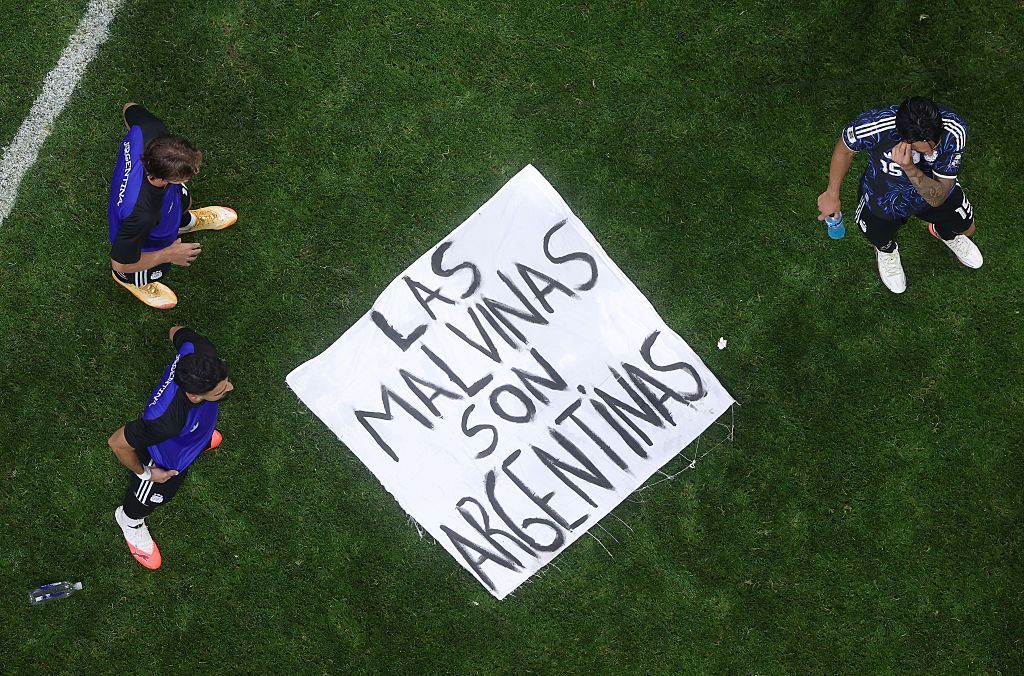
    A diplomatic controversy has ignited following Argentina’s World Cup semi-final win over England, after the nation’s football team unfurled a banner asserting Argentina’s territorial claim to the Falkland Islands, a long-disputed South Atlantic territory controlled by the United Kingdom as an overseas territory.

    The banner, which read “Las Malvinas son Argentinas” (translated to “The Falklands are Argentine”) was displayed in the immediate aftermath of Argentina’s 3-0 quarter-final victory over England on Wednesday, putting the team at risk of formal disciplinary measures from FIFA, international football’s governing body. FIFA’s rules prohibit political demonstrations and statements during official tournament matches, meaning the incident could lead to sanctions against the Argentine Football Association.

    In a surprising intervention that has amplified tensions around the incident, a senior White House official has defended the Argentine squad’s right to make the political statement. Andrew Giuliani, head of the White House’s FIFA task force, told reporters Friday that the team retained the right to express such positions, aligning with U.S. free speech principles. “We believe in our First Amendment rights here in the United States of America,” Giuliani said, confirming the White House’s stance that players should have the opportunity to make those statements.

    The United Kingdom has pushed back firmly against the White House’s comments, with Downing Street reiterating its unwavering sovereignty claim over the islands and backing growing calls for FIFA to launch a formal investigation. “The World Cup might not be ours, but the Falkland Islands definitely are. Our commitment to the Falklands will never waver,” a spokesperson for UK Prime Minister Rishi Sunak said Friday. While Number 10 noted that any disciplinary action falls under FIFA’s authority, it echoed calls from Business Secretary Peter Kyle for the governing body to probe the incident fully.

    Officials from the Falkland Islands government said they were “disappointed but not surprised” by the team’s action, and urged FIFA to issue sanctions aligned with its existing rules against political displays. “We do not wish to see politics being brought into sport,” the government said in an official statement, adding “Nor do we wish the Islands and their people to be used as a political football in every conversation about England and Argentina.”

    The sovereignty dispute between the UK and Argentina stretches back more than a century, and flared into open conflict in 1982, when Argentine military forces invaded the islands to assert Buenos Aires’ claim. A 74-day war led by a British military task force ended with Argentina’s defeat, leaving 255 British service members, three Falkland Island civilians, and 649 Argentine soldiers dead. In a 2013 referendum held by the Falkland Islands government, more than 90% of eligible voters turned out, and 99.7% voted to remain a British overseas territory.

    Senior Argentine officials have echoed the team’s claim, with Vice President Victoria Villarruel writing on social platform X after the win that the match was “not just another match.” “The Falklands are Argentine,” she posted. “They banned bringing them to the stadium and forgot that we carry them in our blood and our hearts.” This is not the first instance of the Argentine squad raising the sovereignty issue during the 2022 World Cup: after the team’s dramatic 3-2 round of 16 win over Mexico, players sang chants referencing the Falklands, alongside tributes to Argentine legends Diego Maradona and Lionel Messi.

  • Israel advances crocodile plan to stop Palestinian prisoners escaping

    Israel advances crocodile plan to stop Palestinian prisoners escaping

    In a decision that has sparked fierce backlash from environmental, legal, and human rights advocates, Israel’s Environment Ministry has revoked the protected status of Nile crocodiles, clearing a legal path for a far-right minister’s extremist proposal to build a Palestinian detention facility ringed by the large predatory reptiles. Israeli public media first reported on the policy shift Thursday.

    Environment Minister Idit Silman signed the official decree Wednesday that reclassifies Nile crocodiles into a newly created legal designation: “specially managed wild animal.” This new category explicitly authorizes Israeli state bodies to hold the species for security uses, according to Israeli news outlet Ynet. The decree formalizes the change, granting Israeli security forces permission to keep crocodiles under loosely defined “specific conditions.”

    Multiple sources confirm the approval moved forward despite explicit opposition from the Environment Ministry’s own top legal advisor, the country’s leading wildlife conservation authority, and a coalition of Israeli environmental organizations. The policy shift comes after months of relentless lobbying from National Security Minister Itamar Ben Gvir, the far-right leader who first unveiled the outlandish plan for a crocodile-encircled prison in December 2023.

    Ben Gvir, who directly oversees the Israel Prison Service (IPS), has openly stated he drew inspiration from Florida’s widely condemned “Alligator Alcatraz” immigration detention center, a facility that drew global outrage for its use of alligators as a natural deterrent to escape attempts.

    Prior to Silman’s decree, the Israel Nature and Parks Authority (INPA), Israel’s official wildlife management body, had long held that Nile crocodiles — a protected species in the country since 2013 — could only be held in captivity for educational and scientific research purposes. Neta Drori, the Environment Ministry’s in-house legal advisor, also formally opposed the reclassification, arguing the proposal lacked any solid legal or professional justification.

    The IPS attempted to defend the plan by claiming its staff could manage crocodiles based on their existing experience working with security attack dogs, an argument Drori rejected outright in her formal assessment. “The IPS does not appear to have expertise in raising dangerous wild animals such as crocodiles,” Drori wrote, adding that the proposal failed to meet basic legal requirements for the reclassification.

    Despite the unified opposition from legal and wildlife experts, Silman moved to approve the policy change this week. Ben Gvir quickly celebrated the decision on his official Facebook page Thursday, sharing an AI-generated image of himself holding a crocodile on a leash alongside a threatening message: “Damn terrorist, thinking of trying to escape? Think again.”

    The controversial plan comes amid a documented collapse of conditions for Palestinian detainees held in Israeli prisons since the start of Israel’s military campaign in Gaza in October 2023. Under Ben Gvir’s leadership, reports of torture, systematic starvation, and degrading treatment of detainees have skyrocketed. Leading international human rights organizations have accused Israeli authorities of widespread, systematic abuses against detainees, going so far as to label several Israeli detention facilities “torture camps.”

    Conservation groups and the INPA have doubled down on their opposition in the wake of Silman’s announcement, arguing the reclassification is unlawful and creates unnecessary risks for both the crocodiles and the general public. The INPA emphasized there is “no sufficient professional basis” to allow the Israel Prison Service to hold crocodiles at security facilities. The agency, which holds legal responsibility for protecting Israel’s native and protected wildlife, warned that housing crocodiles in prison facilities would create “significant risks” and expressed grave doubt that the IPS could meet the complex care requirements the species needs to survive in captivity.

    In a joint statement released after the decision, a coalition of Israeli environmental organizations said they “strongly object to the use of animals as a means of guarding and deterrence.” The groups noted that “crocodiles are sentient beings, with complex needs for space, water, temperature and natural behavior,” arguing that Israeli prison authorities should rely on proven, conventional security measures rather than experimental and unethical use of wild animals.

    The organizations also questioned the practical effectiveness of the proposal, pointing out that Nile crocodiles slow their metabolic rate during winter months, become extremely sluggish, and stop eating entirely — a biological trait that would render them useless as a deterrent to escape. “Security should be achieved through real means, not through animals,” the statement concluded.

    Nile crocodiles have held protected status across Israel since 2013. Prior to that designation, commercial crocodile farms operated primarily as tourist attractions, but many operations shifted to breeding the animals for their luxury skins after tourist numbers declined. The issue of crocodile management in Israel already made headlines last year, when the Israeli military killed more than 250 Nile crocodiles at a farm located in an Israeli settlement in the occupied West Bank. That massacre drew widespread condemnation from global and local animal welfare groups, which accused the military of unlawfully killing a protected species.

    This report was originally sourced from independent coverage of the Middle East by Middle East Eye, a publication that specializes in independent, on-the-ground reporting of the region.

  • Leader Herbert, Burns equal record 62 at British Open, DeChambeau docked two shots

    Leader Herbert, Burns equal record 62 at British Open, DeChambeau docked two shots

    The second round of the 2025 British Open at Royal Birkdale delivered one of the most dramatic days in major golf history Friday, as Australia’s Lucas Herbert and American Sam Burns both matched the all-time record for the lowest 18-hole score in men’s major championship golf, carding 8-under-par 62s that left the tournament leaderboard reshaped and packed with surprises.

    Ranked 97th in the world and competing on the breakaway LIV Golf Tour, Herbert entered the day far from the list of pre-tournament favorites but exploded into contention with a historic round that nearly ended with an unprecedented achievement. The 30-year-old Australian got off to a blistering start, sinking birdies on his first three holes before adding three more birdies at 5, 7, and 9 to turn in a 28 on the front nine – a new British Open record for the opening nine holes.

    Herbert carried his momentum through the back nine, picking up additional birdies at 12, 13, and 16 to reach 8-under par through 17 holes, putting him one stroke away from becoming the first player in major golf history to shoot a 61. But after a wayward tee shot on the par-4 18th, nerves got the better of the leader in front of thousands of packed spectators: two tentative putts left Herbert with a bogey, and he missed his short par attempt that would have secured his place in the history books as the sole record-holder. Herbert doubled over his putter in open disappointment after the slip, but said after the round he remained proud of his performance.

    “It was not lost on me the amount of history in major championships and the opportunity I had to obviously break the record,” Herbert told reporters. “To tie it as well is still something I’m really proud of.”

    Less than an hour after Herbert finished his round, Burns matched the historic score, taking the opposite path to 62 with a six-under-par 30 on the back nine. The world No. 18 sank a 20-foot birdie putt at 17 before chipping in from a greenside bunker at the final hole to secure his share of the record. The round catapults Burns to five-under-par for the tournament, putting him firmly in contention heading into the weekend.

    “I caught myself by surprise,” Burns said after his round. “I think the finish there the last three holes was just a bonus.”

    The 62s tie the course record set by Branden Grace the last time the Open was hosted at Royal Birkdale in 2017, and match the five previous 62s carded across the history of men’s major championships. After his second round, Herbert holds a two-shot lead over the rest of the field heading into the third round.

    The day’s drama did not end with the historic low rounds. Two-time U.S. Open champion Bryson DeChambeau appeared poised to close within one shot of Herbert’s lead before rules officials handed him a two-stroke penalty for inadvertently improving his lie during his second shot at the fifth hole. The penalty came after a lengthy discussion between DeChambeau and officials over whether he improperly trampled down rough grass to improve his stance, dropping DeChambeau down the leaderboard and erasing his near-leader position.

    Further down the leaderboard, several top golfers fought to secure their spots for the weekend and position themselves for a comeback. World No. 4 Cameron Young is tied for second at six-under-par alongside overnight leader Jackson Suber and Ryan Gerard, putting him in strong position to claim his first career major victory. Defending champion and world No. 1 Scottie Scheffler sits four shots off the lead, but a series of missed short birdie putts kept him from challenging Herbert for the top spot on Friday.

    Four-time major champion Rory McIlroy survived a rocky opening round to make the cut, shooting a four-under 67 on Friday to climb to one-under-par for the tournament. The Northern Irishman opened with a 72 that included six bogeys, leaving him on the cut line heading into the second round. “I think the main objective today was to be here for the weekend, which I am,” McIlroy said. “I think if I can get off to a decent start tomorrow, be four of five under for the tournament, I’ll be right in it.”

    Local favorite Tommy Fleetwood earned deafening cheers from the home crowd with a late charge, carding three birdies in his final five holes to climb to four-under-par, putting him within striking distance of the lead. High-profile casualties of the cut include world No. 3 Matt Fitzpatrick and former major champion Justin Rose, both of whom missed the weekend cut after two underperforming rounds.

  • Trump says these documents prove his false claims of election fraud. Here’s what they really say

    Trump says these documents prove his false claims of election fraud. Here’s what they really say

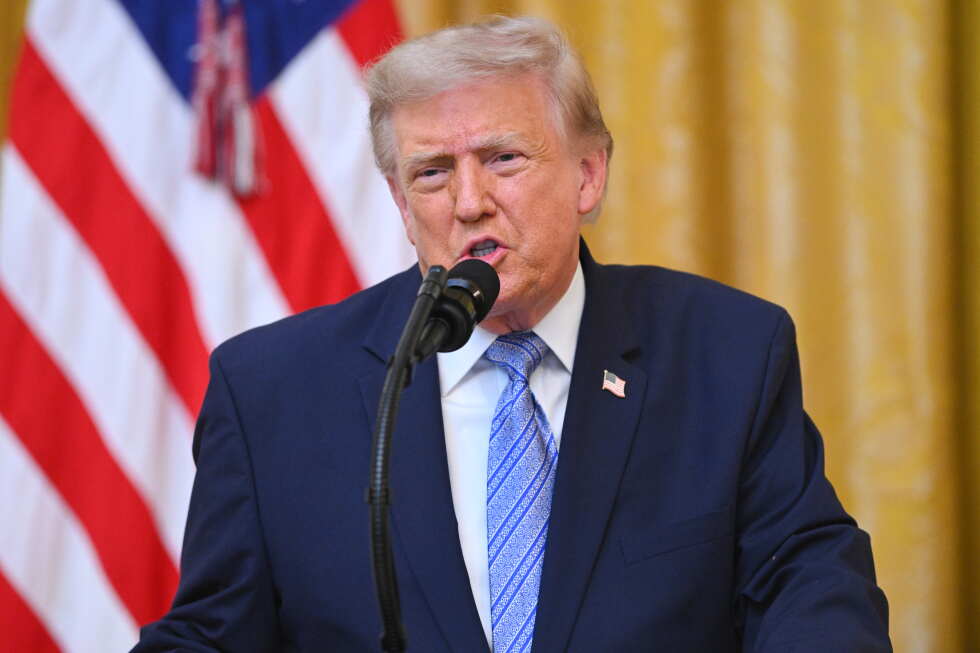
    In a primetime national address from the White House on Thursday, former President Donald Trump unveiled a large collection of declassified documents that his allies had billed as definitive proof to back his years of unsubstantiated claims of widespread 2020 election fraud. Trump opened his remarks by claiming the trove held shocking revelations, including proof of Chinese meddling to defeat his 2020 candidacy and a coordinated deep state cover-up of election vulnerabilities, asserting that “Americans were blatantly lied to about the security of our election infrastructure.”

    But an independent review conducted by The Associated Press found none of the blockbuster evidence Trump and his allies promised. The cache of documents—made up of newly declassified intelligence reports, closed investigation files, analytical assessments, and internal correspondence—offers no verifiable proof that China or any other foreign power manipulated vote results in the 2020 election, or any other U.S. election in history. Many pages are so heavily redacted that any potential findings are illegible, and the majority of remaining content outlines long-documented election security vulnerabilities that have been public knowledge for years.

    David Becker, executive director of the Center for Election Innovation & Research, who attended a pre-speech White House briefing on the materials, summed up the release bluntly: “The White House promised a bombshell, and they delivered a dud.” Becker added that despite coordinated efforts from administration officials to frame the documents as groundbreaking, “there was absolutely nothing here that was news, nothing here that even calls into question past elections and certainly not the 2020 election.”

    One of Trump’s central claims centered on Chinese acquisition of U.S. voter data, with Trump asserting that during the 2020 cycle, China pulled off “what is believed to be the largest compromise of election data in history,” stealing 220 million voter files. However, the released documents offer no evidence that China ever used this data to interfere with election outcomes. Security analysts have long confirmed that China collects vast volumes of public and private data on Americans, but this activity is not tied to election manipulation. Additionally, most basic voter file information is already publicly available online, and routinely bought and sold by political campaigns and parties to guide outreach efforts.

    While it is already well-documented that China sought to influence public discourse during the 2020 campaign, the new documents do not contradict the long-standing intelligence conclusion that Beijing never engaged in direct vote manipulation. The records do reveal an internal intelligence community debate over how to characterize China’s activities and motives, including a dissenting view that China took steps to denigrate Trump—a perspective that was already included in the post-2020 election public intelligence assessment. On Friday, Chinese officials dismissed Trump’s claims as “groundless” and “entirely fabricated,” reiterating that China has never interfered in U.S. elections and has no intention of doing so.

    Trump also highlighted a new Department of Homeland Security analysis that he claimed identified roughly 278,000 noncitizens illegally registered to vote across the U.S. The report counted 278,000 entries based on public records—often incomplete or error-prone—in California, Pennsylvania, New Jersey, and Nevada, plus an additional 28,000 names flagged using the federal Systematic Alien Verification for Entitlements (SAVE) system across 25 states. Crucially, the report makes no allegation that any of these people actually cast a ballot, an act that would be a felony.

    The DHS data has not been independently verified, and multiple prior audits have shown the SAVE system is riddled with critical errors, including outdated information that frequently mislabels naturalized U.S. citizens as noncitizens. A federal judge has already barred the system from being used for voter roll purges over widespread concerns about wrongful disenfranchisement. Academic studies consistently find that noncitizen voting is extremely rare, and some noncitizens are legally registered to vote in local U.S. elections, explaining their presence on voter rolls.

    The declassified documents do offer new granular details on Russia’s long-running efforts to interfere in U.S. elections, filling in gaps in existing public assessments. For years, Trump has publicly pushed back on the intelligence community’s 2016 finding that Russia meddled to help him win that year’s election. A 2020 declassified National Intelligence Council document confirms that Russia has engaged in more aggressive efforts to penetrate U.S. election systems than any other foreign power, with the explicit goal of defeating Joe Biden and securing Trump’s re-election in 2020. The document confirms Russia amplified false claims about Biden’s ties to Ukrainian energy firm Burisma, a line of attack repeatedly pushed by Trump and congressional Republicans. It also notes that both China and Iran preferred that Trump lose the 2020 election, but only Russia has been confirmed to actively target, access, or manipulate U.S. election processes and related systems. Russia has continued to deny any interference in U.S. domestic affairs.

    A significant share of the released documents center on a 2020 Michigan case, in which a canvassing operation reportedly aligned with Democrats submitted thousands of suspicious voter registration forms to local election officials. The official in question rejected the submissions and alerted law enforcement. The documents include heavily redacted notes from at least one FBI agent showing the agent pushed unsuccessfully for further investigation and criminal charges through 2024, and Michigan Republicans have repeatedly criticized the state’s Democratic attorney general for failing to bring charges. However, one of the case records explicitly confirms the investigation was closed because “logical investigation and/or leads have been exhausted, and the investigation to date did not identify a criminal violation or a priority threat to national security.”

    Trump claimed the documents exposed “shocking vulnerabilities in our election infrastructure” that leave systems open to “hacking, exploitation and foreign interference.” The reports do catalog a series of past breaches, most carried out by Russian actors, and urge state and local election officials to strengthen cyber defenses to prevent adversaries from accessing information to alter absentee ballot requests or manipulate voter rolls. U.S. election officials have long acknowledged that all voting technology carries some risk, and current security frameworks rely on layered safeguards including physical security, routine equipment testing, paper ballot backups, and mandatory post-election audits to catch errors or tampering.

    Notably, the Trump administration has rolled back key federal election security initiatives even as it highlights vulnerabilities. Earlier this month, Trump removed all members of a bipartisan federal election commission that distributes federal security grants to states, tests voting systems, and maintains the national voter registration form, after the panel resisted his demand to require all prospective voters to provide documented proof of U.S. citizenship before registering. Trump has also cut millions of dollars in funding for the Cybersecurity and Infrastructure Security Agency (CISA), the federal body that supports state and local officials in securing election systems, and disbanded an FBI task force dedicated to investigating foreign influence operations targeting U.S. elections.

    While the documents repeatedly warn of the risks of foreign access to large centralized U.S. voter databases, the SAVE system that Trump has pressured all states to adopt has itself been widely criticized as an unlawful centralized federal voter database that could create a new high-value target for foreign hackers.

    This report contains contributions from Associated Press writers based in New York and Washington.

  • Palestine Action defendant ‘missed the last year’ of his mother’s life while behind bars

    Palestine Action defendant ‘missed the last year’ of his mother’s life while behind bars

    As a high-profile trial over a Palestine Action raid on an Israeli-owned arms factory unfolds, one defendant has shared devastating personal details about losing his terminally ill mother while he was held in pre-trial detention, opening a new chapter of debate over the case and its ties to the Gaza conflict.

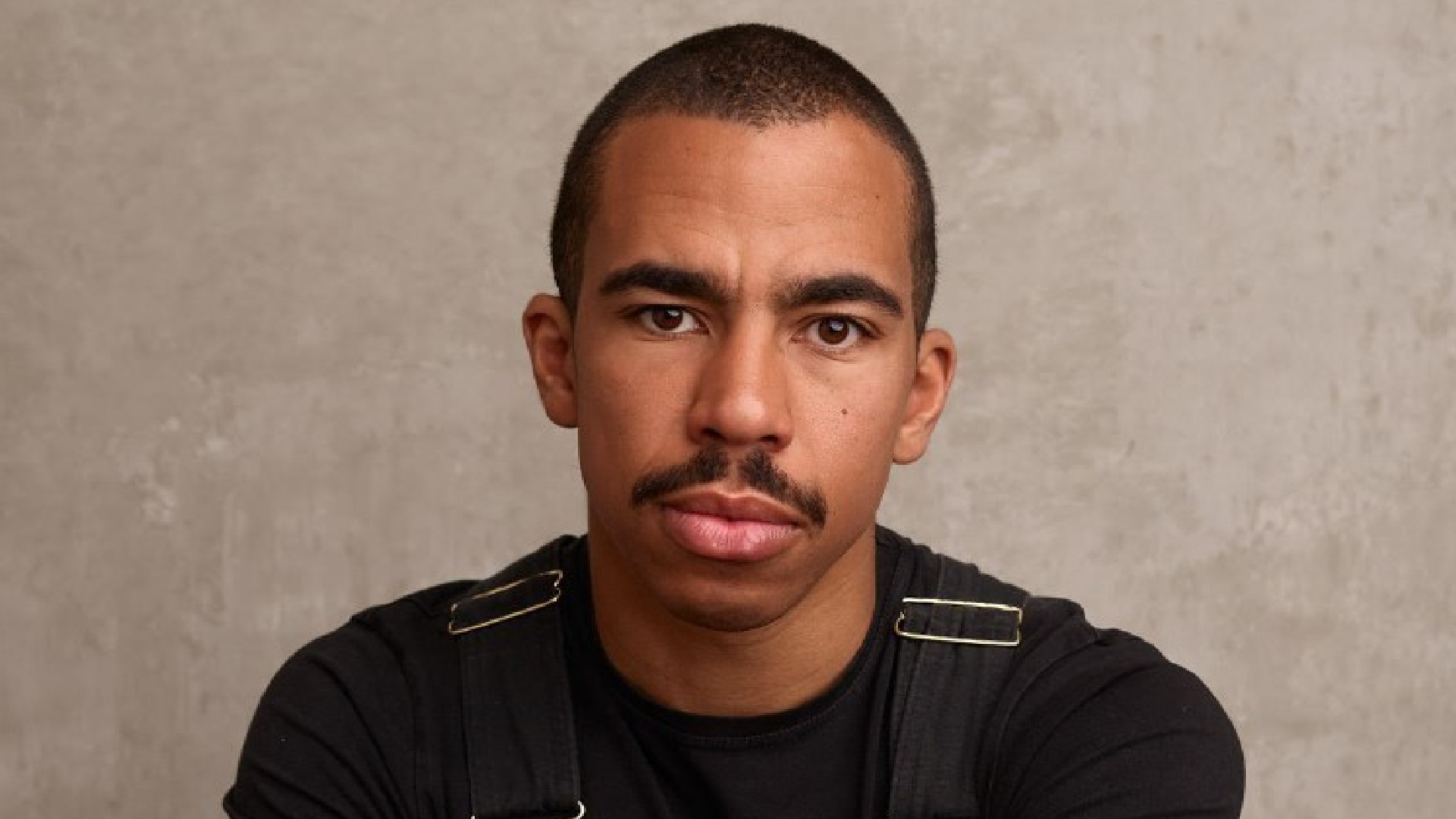
    Thirty-five-year-old William Plastow, the grandson of Julius Nyerere — Tanzania’s revered first president — is one of eight people facing criminal charges linked to the August 2024 raid on an Elbit Systems facility in Filton, near Bristol. While none of the eight are accused of entering the factory premises during the action, prosecutors allege they coordinated the break-in by carrying out reconnaissance and purchasing necessary equipment. Last week, presiding judge Patrick Field acquitted Plastow of violent disorder, ruling the prosecution had failed to present sufficient evidence to support the charge; he remains formally charged with criminal damage.

    Giving evidence to the court this week, Plastow laid out a personal and political context for his actions. Raised as an only child by his mother Jane Plastow in Leeds, he recalled childhood trips to Eritrea and Ethiopia, where his mother ran community theatre outreach programs for war veterans and children living in poverty. These experiences, he said, shaped his lifelong commitment to social justice. That commitment deepened dramatically after the October 7 2023 attacks and the subsequent Israeli military campaign in Gaza. “My awareness of Israel’s actions in Gaza increased vastly,” he told the jury. “I saw those images every day of kids being blown into pieces, massacres, buildings being knocked down with everyone inside them. How is anyone supposed to feel about seeing dismembered children and not being able to do anything about it?”

    Plastow explained that he first turned to conventional forms of activism: joining mass protest marches, writing to his Member of Parliament, signing public petitions. But he soon came to see these actions as futile. “It felt very obvious that all of that was pretty futile,” he said. It was around this time that he first encountered Palestine Action, a direct-action group targeting companies linked to Israeli arms supplies. The group first caught his attention after a successful rooftop protest that forced a property owner to cut ties with Elbit, and he noted the group had already managed to shut down multiple facilities supplying what he described as “genocidal machinery to slaughter children in Gaza”. He compared the discovery of Elbit’s UK operations to learning that Zyklon B gas for Auschwitz was being manufactured 10 minutes from his home, with no public pushback.

    After attending a Palestine Action training session, where he heard firsthand accounts of “unimaginable suffering” from a Gaza native, Plastow said he agreed to participate in a low-profile lock-on protest at an Elbit drone factory in Leicester in April 2024. He was convicted of criminal damage for that action. He emphasized that the group operates on a strict “need to know” basis, with very little information shared with participants ahead of actions, and described the loosely affiliated network as “chaotic” rather than the tightly organized conspiracy prosecutors have described. “Nothing about Palestine Action could be described as highly organised,” he said. “It’s a bunch of loosely connected people scrabbling around.”

    Following the Leicester action, Plastow said he had no interest in participating in further on-the-ground direct actions due to work commitments, but agreed to purchase equipment for the group when asked in early August 2024. Co-defendant Sean Middlebrough contacted him via the encrypted messaging app Signal to request he buy rucksacks, protective gear, and crowbars, but never disclosed what the equipment would be used for. “It was a very busy time for me, a play I’d been trying to put together was falling apart,” Plastow told the court. “I was just paying attention to the things I’d been asked to buy and get them ready in as time-efficient a way as possible.” He told the jury he never heard of the Filton site before the day of the raid, and had no idea the equipment was destined for the action.

    Days later, when a Palestine Action activist named Charlotte Head — part of the on-the-ground team that entered the Filton factory — arrived at his Manchester home in a distinctive prison van to collect the equipment, Plastow said he was caught completely off guard. Head appeared frazzled, he said, after being told she could not go to the pre-planned staging location she expected. She had nowhere to go, so Plastow allowed her to stay the night, and when Middlebrough and co-defendant Ian Sanders arrived the next day, the three left together in the van. Prosecutor Harry Warner suggested that by hosting Head, Plastow was knowingly assisting the group’s plan to damage Elbit property. Plastow pushed back on this: “I was trying to assist a young woman who was stressed out to have a place to stay for the night and not have to sleep in a van.”

    Plastow only learned of the Filton raid on the morning of August 6, when he saw a public post from Palestine Action on X (formerly Twitter) announcing the action. The post stated that activists had “directly intervened in Elbit’s genocidal supply chain” by dismantling weapons and machinery inside the factory. After seeing a subsequent BBC News report confirming the raid and the arrest of multiple activists, Plastow said he strongly suspected the equipment he had purchased had been used for the action — and that he felt “duped”. He told the jury he would never have agreed to participate had he known the scope of the operation.

    Five days after the raid, on August 9, Plastow was arrested by roughly 20 counter-terrorism police officers. He told the court he was held for six days in a windowless white cell where the lights stayed on 24 hours a day, conditions he compared to the treatment of fictional serial killer Hannibal Lecter. What made this timing even more devastating, he said, was that this period of detention was the final days he could have spent with his mother, who was in the end stages of terminal cancer. He was denied bail for 18 months following his arrest, only granted release on compassionate grounds to spend the final four days of his mother’s life at her bedside. “I missed the last year of her life,” he told the court.

    Forensic analysis of Plastow’s phone and laptop, conducted by investigators, has backed up his account of no prior knowledge of the Filton operation. His defense lawyer Alex Rose told the jury that no evidence was found of Plastow accessing the encrypted planning document for the Filton raid, no history of searching for the Filton site or related planning materials, and no record of him joining group Signal calls related to the action. The only reference to the raid found on his devices before August 6 was the public Palestine Action post he viewed on the morning of the action.

    When pressed by prosecutors that he must have known the equipment he bought would be used to damage Elbit property, Plastow acknowledged he knew the items would serve Palestine Action’s core goal. “I knew they were going to be used towards the aims of Palestine Action, which were ultimately to save lives,” he said.

    The trial against the eight defendants is ongoing.

  • Giant sinkhole appears on Sunset Boulevard from burst water pipe

    Giant sinkhole appears on Sunset Boulevard from burst water pipe

    A catastrophic water main break stemming from a 100-year-old pipeline has carved out a massive sinkhole along one of Southern California’s most iconic thoroughfares, Sunset Boulevard in West Hollywood, bringing localized chaos to the busy corridor and leaving officials scrambling to assess damage and coordinate repairs.

    The rupture, which occurred early [on an unreported date], sent thousands of gallons of water gushing onto adjacent streets, submerging portions of the roadway and creating hazardous conditions for motorists and pedestrians in the area. First responders and local municipal utility crews were dispatched to the scene within minutes to shut off water flow, cordon off the danger zone, and begin initial evaluations of the infrastructure failure.

    In a welcome update, local government representatives confirmed that no injuries or fatalities have been linked to the incident as of the latest assessments. The sinkhole, which formed rapidly after the pipe burst, has closed multiple lanes of traffic along the popular boulevard, a major route that sees heavy daily use from commuters, tourists, and local businesses. Utility officials have not yet released a timeline for full repairs or a cost estimate for the damage, noting that teams will first conduct a full inspection of the surrounding pipe network to rule out additional structural weaknesses before beginning restoration work.

  • Moroccan whistleblower reveals how Rabat used Israel’s Pegasus spyware for surveillance

    Moroccan whistleblower reveals how Rabat used Israel’s Pegasus spyware for surveillance

    A decades-long insider from Morocco’s domestic intelligence apparatus has blown the whistle on the North African kingdom’s years-long use of sophisticated surveillance tools, including Israel’s infamous Pegasus spyware, to target domestic critics, journalists, and even high-ranking foreign officials from allied nations. The explosive new disclosures from the anonymous whistleblower, codenamed Safir, form the core of a major new collaborative investigation published Thursday by a global consortium of press freedom and human rights groups, including Forbidden Stories, Amnesty International, and 13 additional independent media organizations.

    Safir, who spent nearly 10 years as an officer with Morocco’s Direction Generale de la Surveillance du Territoire (DGST), the country’s primary domestic intelligence agency, offers a firsthand, on-the-ground account of Morocco’s entire relationship with Pegasus, from the tool’s initial introduction to senior Moroccan officials to its repeated deployment against surveillance targets. His firsthand testimony is backed by a mountain of corroborating evidence compiled by the investigative consortium: leaked internal correspondence, targeting logs linked to Pegasus and other surveillance tools, statements from targeting victims, internal agency training documents, and leaked datasets analyzed forensically by Amnesty International’s specialized Security Lab.

    According to the investigation’s reconstruction of events, Pegasus made its debut with Moroccan intelligence in 2017, during a closed-door presentation held at a luxury private villa in Rabat, the country’s capital. The villa, nicknamed the “FSSYS villa” for its ties to FSSYS Maroc, the Moroccan subsidiary of Emirati surveillance intermediary al-Fahad, hosted senior NSO Group representatives, the Israeli cyber firm that developed the Pegasus tool, who walked a group of high-ranking Moroccan intelligence leaders and technical specialists through the spyware’s full capabilities.

    In his testimony, Safir made a startling claim about the origins of Morocco’s access to the extremely expensive tool: he says Pegasus was gifted to Moroccan intelligence by the United Arab Emirates, drawing a comparison to popular streaming subscriptions to explain the arrangement. “Millions for the Emiratis, that’s nothing,” Safir told investigators. “The Emirates bought it and redistributed it to friendly services. You could say it’s like Netflix: a friend pays for the subscription, and the others use their account.”

    The investigation notes that even with this donated access, the high cost of operating Pegasus led the DGST to reserve the tool only for high-priority targets, deploying it only after exhausting far cheaper, traditional surveillance methods. These older tactics included compromising devices at public internet cafes and convincing local shop owners to sell pre-infected mobile phones to political dissidents, Safir explained. “We never start with Pegasus,” he said. “It’s the monster’s weapon.”

    Data from the investigation confirms that just months after the 2017 Rabat presentation, the DGST began using Pegasus against Moroccan journalists and domestic human rights defenders. While domestic dissidents were the first targets, they were far from the only ones. Prominent Western Sahara human rights activist Aminatou Haidar and Spanish journalist Ignacio Combrero were both named among more than 200 Spanish mobile numbers selected for targeting by what investigators confirmed was a DGST-linked Pegasus user.

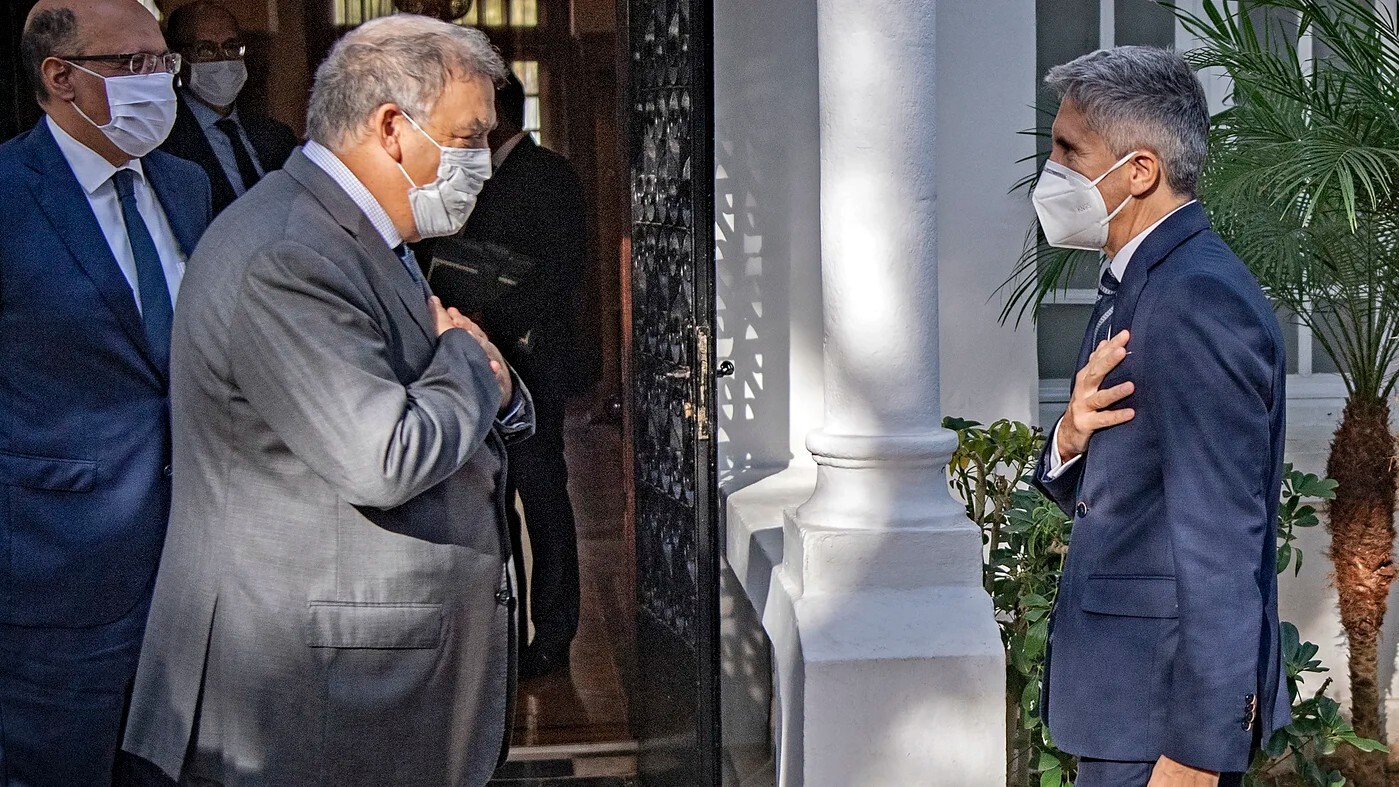
    The targeting extended even to senior serving Spanish government officials, including Spain’s then-Defense Minister Margarita Robles and then-Interior Minister Fernando Grande-Marlaska, the investigation confirms. In a particularly striking revelation, the investigation found that Moroccan intelligence also deployed Pegasus against Spanish Civil Guard officers who traveled to Morocco to share counterterrorism training and expertise with their Moroccan counterparts. Spanish National Police typically take extra security precautions during trips to Morocco, but the Civil Guard officers skipped these measures, seeing Morocco as a trusted counterterrorism ally. One senior Civil Guard officer told the consortium, “We didn’t do it because we didn’t suspect we would be spied on.”

    Notably, the investigation found no evidence of Pegasus deployment by Moroccan intelligence after late 2021. This gap lines up with major shifts in global regulation of the NSO Group: that same year, the United States added the Israeli cyber firm to its commerce blacklist, a move that reportedly prompted Israel’s then-defense minister to ban exports of Israeli cyber-surveillance technology to multiple countries, including Morocco and the UAE.

    This new investigation marks the most detailed on-the-record account of Moroccan Pegasus abuse to date, five years after initial 2021 reporting first accused Rabat of using the spyware against domestic critics and allied foreign officials — claims Moroccan authorities flatly denied at the time.