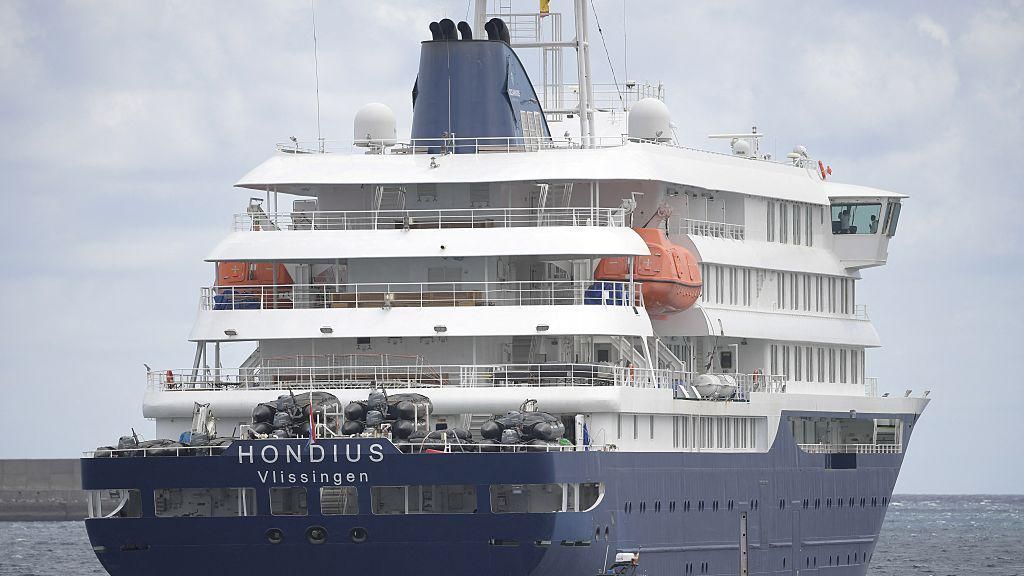
Eighteen American passengers evacuated from the Dutch cruise vessel MV Hondius over potential hantavirus exposure are now under close public health supervision in the United States, with federal and state authorities repeatedly emphasizing that the overall risk to the general American public remains extraordinarily low.
The current incident marks the first confirmed case of Andes virus — a rare strain of hantavirus — detected in an American passenger who was aboard the ship, which is currently docked in Spain’s Canary Islands. One passenger received a positive test result for the virus, while a second individual has developed mild, non-specific symptoms that could be consistent with infection. More than 90 passengers from the ship are in the process of being repatriated to their home countries following the outbreak.
Of the 18 monitored Americans, 16 are being held at the United States’ only national quarantine facility located in Nebraska, while the remaining two, including the symptomatic passenger and their travel partner, have been transferred to monitoring sites in Atlanta to avoid overcrowding the Nebraska unit, according to Centers for Disease Control and Prevention (CDC) official Brendan Jackson. “No-one who poses a risk to public health is walking out the front door onto the streets of Omaha,” Nebraska Governor Jim Pillen confirmed during a joint press conference with state and federal health leaders on Monday morning.
Admiral Brian Christine of the U.S. Department of Health and Human Services (HHS) reinforced the official risk assessment, saying, “Let me be crystal clear: the risk of hantavirus to the general public remains very, very low. The Andes variant of this virus does not spread easily, and it requires prolonged close contact with someone who is already symptomatic.”
Unlike most hantavirus strains, which are carried by rodents and cannot spread between human hosts, public health experts confirm that the Andes variant — the strain detected in multiple passengers on the MV Hondius — is capable of person-to-person transmission. The outbreak on the ship has already resulted in three deaths, two of which have been confirmed by the World Health Organization to be linked to hantavirus infection. To date, two British nationals have also tested positive for the virus, and are receiving treatment in the Netherlands and South Africa respectively. One British-U.S. dual national is among the passengers quarantined in Nebraska.
Michael Wadman, medical director of the National Quarantine Unit in Nebraska, reported that the 16 passengers held at the facility are in good physical condition and positive spirits. The passenger who received the confirmed positive test result has been placed in a specialized biocontainment unit, and is currently not experiencing any symptoms of infection.
Jackson explained that the CDC is taking an overly cautious approach to monitoring: even mild cold-like symptoms trigger further evaluation, as these can overlap with early signs of hantavirus infection. Earlier confusion over a “mildly positive” PCR test result from one passenger was clarified by Jackson, who noted the original sample was collected on the ship rather than in the U.S., and that one of two collected samples returned positive while the other was negative. “With these PCR tests… there’s sort of a range in where they can fall,” Jackson said. “And so for that reason, we just want to make sure there’s further testing to evaluate that.”
U.S. health officials are currently prioritizing active symptom monitoring for all quarantined passengers. Wadman added that passengers in Nebraska will undergo full clinical assessment after they have had time to rest following their travel, and will remain at the facility for several days of evaluation. Officials will then review each case individually to decide whether passengers need to complete the full 42-day quarantine period before being released.