作者: admin

  • Reflections of an unforgettable journey to China

    Reflections of an unforgettable journey to China

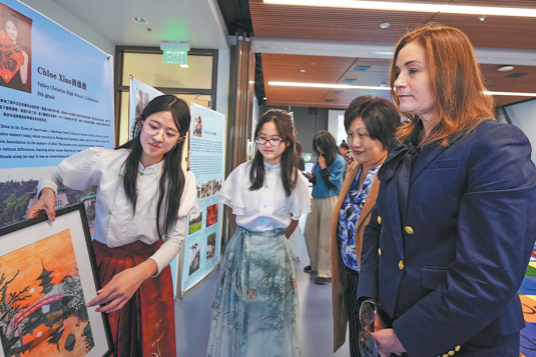
    An extraordinary cultural bridge between the United States and China materialized through the artistic expressions of American high school students, now showcased in a compelling exhibition at Cupertino Library. “China in the Eyes of Americans” presents the profound experiences of 21 students who embarked on a transformative two-week immersion across Hubei province during the summers of 2024 and 2025.

    The exhibition, inaugurated on Sunday in California’s San Francisco Bay Area, features a diverse collection of photography, sketches, and personal narratives captured during the students’ journeys through Wuhan, Enshi, Xiaogan, and surrounding regions. Organized by the US-China Culture and Communication Association (UCCA), the display offers unique perspectives on China’s rich cultural heritage through the fresh eyes of young Americans.

    Chloe Xiao, a California sophomore from Valley Christian High School, described how the experience deepened her understanding beyond language to encompass China’s ancient civilization and intangible cultural heritage. “In Enshi, we wore traditional Tujia attire, experiencing first-hand the elegance and profound heritage of Tujia culture,” she recalled, noting the striking silver hair ornaments and complete costumes.

    Jasmine White, a senior at Carlmont High School, focused her photographic lens on Hubei’s architectural marvels, particularly the Yingwuzhou Yangtze River Bridge. “This journey revealed the symbolic significance of bridges in China—they represent connection: linking people, communities, and cultures across generations,” White explained.

    The human connections formed during the trip proved equally impactful. Benjamin Li, a sophomore from Florida, emphasized how friendship made his summer unforgettable: “We laughed, played games, and shared joy together in Enshi.”

    Aiden Wei Tanner from San Jose contrasted his China experience with previous European travels: “European cities feel distinctly foreign. China felt different—I became part of the culture rather than an outsider.”

    UCCA President Song Min initiated the program six years ago driven by what he described as “urgency and necessity” to connect youth from both nations. “When young people listen to their peers and learn from each other, great things happen,” Song stated, emphasizing that American participants become “practitioners of cross-cultural communication” rather than mere observers.

    Cupertino Vice-Mayor Liang-Fang Chao encouraged students to cherish the relationships forged during their journey, highlighting that the true value lies in “the friendships made, memories created, and stories shared.”
  • Chile wildfires rage for 3rd day as toll rises to 20

    Chile wildfires rage for 3rd day as toll rises to 20

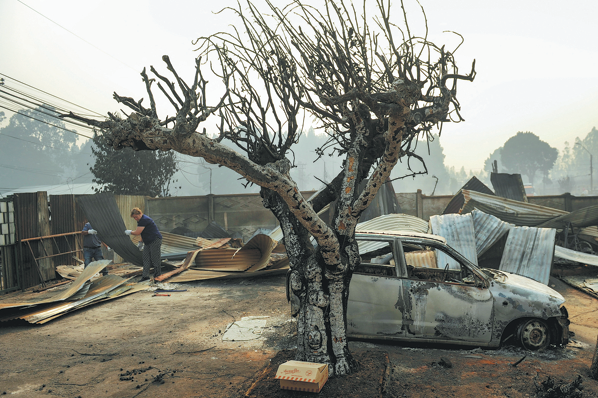
    Southern Chile continues to confront devastating wildfires for the third consecutive day, with the confirmed death toll rising to 20 as flames consume entire communities. The infernos, which ignited on Saturday across the Nuble and Biobio regions approximately 500 kilometers south of Santiago, have been exacerbated by unseasonably warm temperatures and powerful winds characteristic of the southern hemisphere’s summer peak.

    Official reports indicate approximately 1,000 residences have been either completely destroyed or severely damaged. Chilean President Gabriel Boric confirmed that while firefighting crews have successfully contained certain blazes, numerous fires remain highly active, with new outbreaks emerging in the neighboring Araucania region.

    The government has declared a ‘state of catastrophe’ in the hardest-hit areas, enabling military deployment to assist in disaster response. Soldiers now patrol devastated landscapes where melted automobiles, twisted metal skeletons, and residential ruins testify to the fires’ destructive power.

    Survivors recount terrifying escapes as walls of flame advanced toward residential areas. Yagora Vasquez, a resident of the severely impacted port town of Lirquen, described grabbing her son and fleeing while her brother rescued their dog. Many residents returned Monday to sift through ashes and debris, attempting to salvage remnants of their former lives.

    The tragedy carries particular irony for some survivors who previously relocated inland following Chile’s devastating 2010 tsunami that claimed over 500 lives, only to confront what one resident termed ‘a wave of fire, not water.’ Mareli Torres, who lost her two-story family home of nearly two decades, characterized the wildfire destruction as ‘much more devastating’ than previous natural disasters.

    More than 3,500 firefighters continue battling blazes amid temperatures hovering around 25°C, slightly cooler than weekend conditions. Scientific research from Santiago’s Center for Climate and Resilience Research indicates climate change has established conditions for extreme fire seasons through prolonged drying and warming trends in south-central Chile.

    The current catastrophe echoes previous fire emergencies, including February 2024 fires near Viña del Mar that killed 138 people. This ongoing disaster coincides with extreme weather events across Latin America, including heatwaves exceeding 40°C in Brazil and wildfires in Argentina’s Chubut province, highlighting regional climate vulnerabilities.

  • Fukushima nuclear plant operator to restart reactor at another plant, reviving safety concerns

    Fukushima nuclear plant operator to restart reactor at another plant, reviving safety concerns

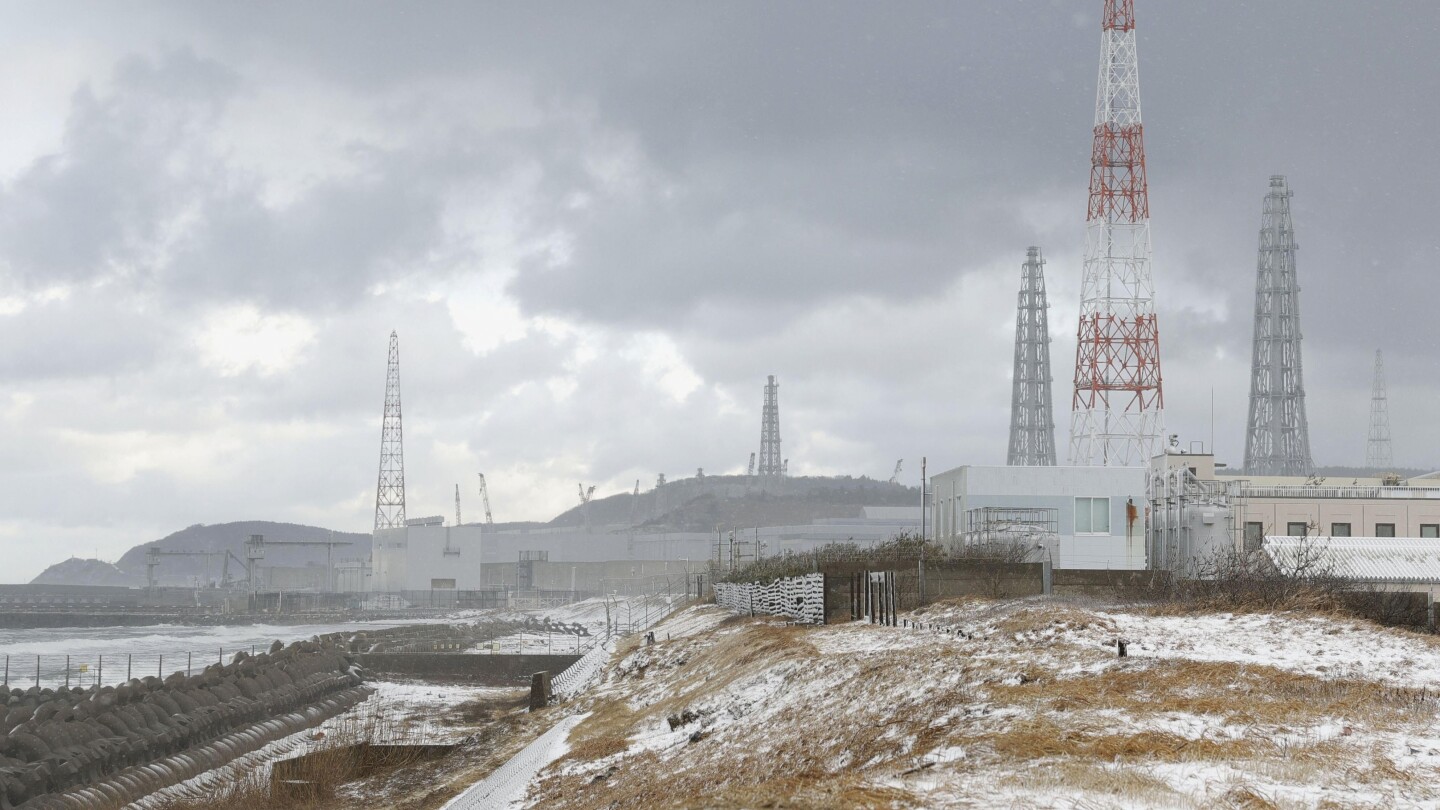
    Japan has initiated the restart process for the Kashiwazaki-Kariwa nuclear facility, the world’s largest nuclear power plant, marking Tokyo Electric Power Company Holdings’ (TEPCO) first return to atomic energy generation since the 2011 Fukushima disaster. The reactor No. 6 commencement represents a pivotal moment for Japan’s energy strategy as the nation confronts escalating electricity demands despite persistent public apprehension.

    The reactivation comes after years of regulatory scrutiny and safety upgrades, with TEPCO investing over 1 trillion yen ($6.33 billion) in protective measures including reinforced seawalls, earthquake-resistant command centers, and advanced filtered venting systems. The utility company remains under intense public scrutiny due to its management of the Fukushima Daiichi catastrophe, where meltdowns rendered surrounding areas uninhabitable and resulted in an estimated 22 trillion yen ($139 billion) cleanup cost.

    Local residents express conflicted sentiments, acknowledging potential economic benefits while voicing substantial concerns regarding evacuation feasibility in the earthquake-prone region. These worries intensified following the 2024 Noto Peninsula earthquake that caused significant infrastructure damage, demonstrating the potential impracticality of existing evacuation plans for the approximately 418,600 residents within the plant’s emergency zones.

    Japan’s policy reversal on nuclear energy reflects broader strategic calculations, including energy security needs following Russia’s invasion of Ukraine, rising fossil fuel costs, and increasing electricity demands from power-intensive AI data centers. The government now aims to nuclear power to constitute 20% of Japan’s energy mix by 2040, more than doubling its current contribution.

    The Kashiwazaki-Kariwa reactor will undergo phased activation, reaching 50% capacity within approximately one week before temporary shutdown for comprehensive inspection. Full commercial operation is anticipated by late February, representing a significant milestone in Japan’s reembrace of nuclear technology despite its complex legacy.

  • Commercial, reusable Chinese rocket PALLAS-2 completes engine system test

    Commercial, reusable Chinese rocket PALLAS-2 completes engine system test

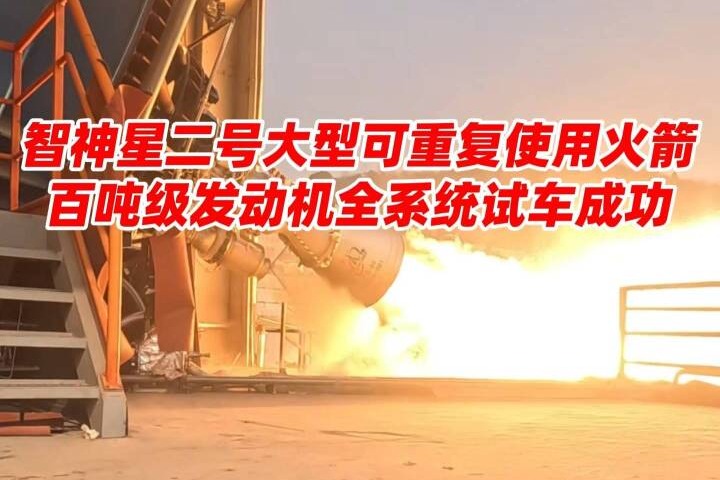
    In a significant advancement for China’s commercial space sector, Beijing-based Galactic Energy has successfully completed a comprehensive system test for the engine powering its reusable PALLAS-2 rocket. The breakthrough test, conducted recently, marks a pivotal step toward the development of China’s indigenous reusable launch vehicle technology.

    The CQ-90 liquid oxygen-kerosene engine, an upgraded variant of the company’s earlier CQ-50 model, demonstrated exceptional performance during the rigorous testing phase. According to official reports, the engine achieved smooth ignition, maintained stable operation throughout the test duration with highly visible flame characteristics, and executed a flawless shutdown sequence.

    Performance data confirmed all parameters met or exceeded design specifications, with combustion efficiency reaching an impressive 96 percent threshold. The CQ-90 engine features advanced capabilities including bidirectional swing functionality of up to 6 degrees, multiple ignition capacity, and wide-range thrust variability – essential characteristics for reusable rocket operations.

    The PALLAS-2 rocket, measuring 4.5 meters in diameter, will be available in two configurations. The baseline version will possess a lift-off mass of 757 tonnes, generating 910 tonnes of thrust with capacity to deliver 20 tonnes to low Earth orbit. An enhanced strap-on booster configuration will substantially increase capabilities to 1,950 tonnes lift-off mass, 2,730 tonnes of thrust, and 58 tonnes to low Earth orbit.

    This technological achievement positions Galactic Energy as a competitive player in the global commercial space market and demonstrates China’s growing capabilities in reusable launch vehicle development, potentially reducing space access costs and increasing launch frequency capabilities.

  • Rome pays its last tribute to fashion ‘Emperor’ Valentino in a two-day public viewing

    Rome pays its last tribute to fashion ‘Emperor’ Valentino in a two-day public viewing

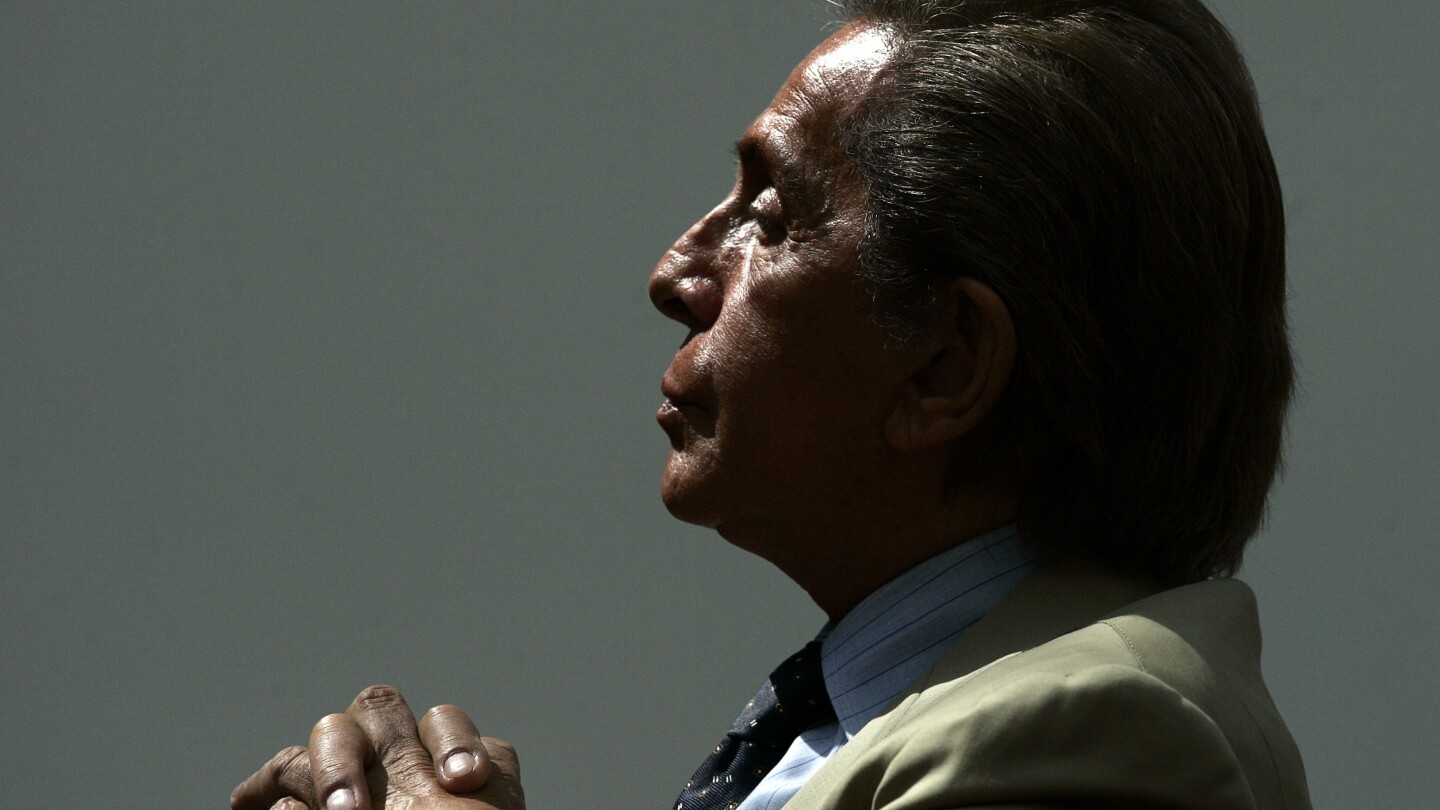
    The city of Rome is preparing to bid its final farewell to Valentino Garavani, the legendary fashion designer who passed away at age 93 on Monday. The iconic creator, known universally by his first name, will lie in state at his foundation in Piazza Mignanelli on Wednesday and Thursday, situated mere steps from the renowned Spanish Steps—a symbolic location reflecting his deep connection to the Italian capital.

    Valentino’s funeral services will be conducted on Friday at the Basilica di Santa Maria degli Angeli e dei Martiri in central Rome, drawing international attention from the fashion world and beyond. The designer, often referred to as Italian fashion’s ‘last emperor,’ maintained his atelier in Rome throughout his career while predominantly presenting his collections in Paris.

    Throughout his nearly half-century career, Valentino became synonymous with high-glamour elegance and his signature shade of red, dressing generations of royalty, first ladies, and Hollywood celebrities. His clientele included style icons from Jackie Kennedy Onassis to Julia Roberts and Queen Rania of Jordan, all of whom praised his ability to make them appear and feel their absolute best.

    Rome Mayor Roberto Gualtieri honored Valentino as one of ‘Italy’s most luminous and beloved figures,’ emphasizing the designer’s profound ties to the Eternal City. The public viewing is expected to attract hundreds of fashion luminaries, government officials, and ordinary citizens wishing to pay their respects.

    Valentino established his fashion house on Rome’s prestigious Via Condotti in 1959, and his fail-safe designs eventually made him the undisputed king of red carpet fashion. His sumptuous gowns graced numerous Academy Awards ceremonies, most memorably when Julia Roberts accepted her Best Actress Oscar in 2001 wearing a vintage black and white column dress, and when Cate Blanchett won Best Supporting Actress in 2005 in a butter-yellow silk creation.

    Alessandro Michele, the current creative director of the Valentino fashion house, posted on Instagram that he continues to feel Valentino’s ‘gaze’ as he prepares the next collection, which will be presented in Rome on March 12—a departure from the traditional Paris venue, further cementing the designer’s enduring legacy in the city he called home.

  • IS group claims attack on Kabul restaurant, killing 7

    IS group claims attack on Kabul restaurant, killing 7

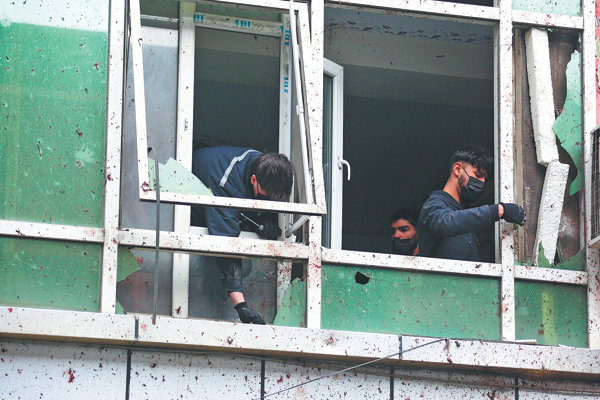
    In a devastating security breach, the Islamic State militant group has officially claimed responsibility for a suicide bombing that ripped through a restaurant in Kabul’s high-security Shahr-e-Naw district on Monday. The attack resulted in seven fatalities, including one Chinese national, and left multiple others wounded.

    The explosion occurred in an area renowned for housing diplomatic missions, commercial offices, and shopping complexes—previously considered among the capital’s safest neighborhoods. Afghan police spokesman Khalid Zadran confirmed the blast originated near the restaurant’s kitchen, claiming the lives of six Afghan citizens and a Chinese individual identified only as Ayub. Among the injured were five Chinese nationals.

    China’s Foreign Ministry responded forcefully on Tuesday, with spokesman Guo Jiakun announcing that Beijing has lodged urgent diplomatic representations with Afghan authorities. The Chinese government demanded comprehensive medical care for the wounded, a thorough investigation into the incident, and punishment for those responsible. “China strongly condemns and firmly opposes terrorism in any form,” Guo stated, adding that Beijing supports regional cooperation against terrorist violence.

    The ministry issued renewed travel advisories, explicitly warning Chinese citizens against non-essential travel to Afghanistan and urging Chinese entities already in the country to enhance security measures and evacuate from high-risk areas promptly.

    Humanitarian organizations reported receiving numerous casualties, with Dejan Panic, Afghanistan director of a relief group, confirming his hospital treated 20 victims, including seven dead on arrival. The wounded included four women and a child.

    This attack underscores the persistent security challenges facing Afghanistan since the Taliban’s 2021 takeover, despite their promises to restore stability. The local Islamic State branch remains the primary source of ongoing bomb attacks targeting both civilians and international presence in the region.

  • University to aid training for disasters

    University to aid training for disasters

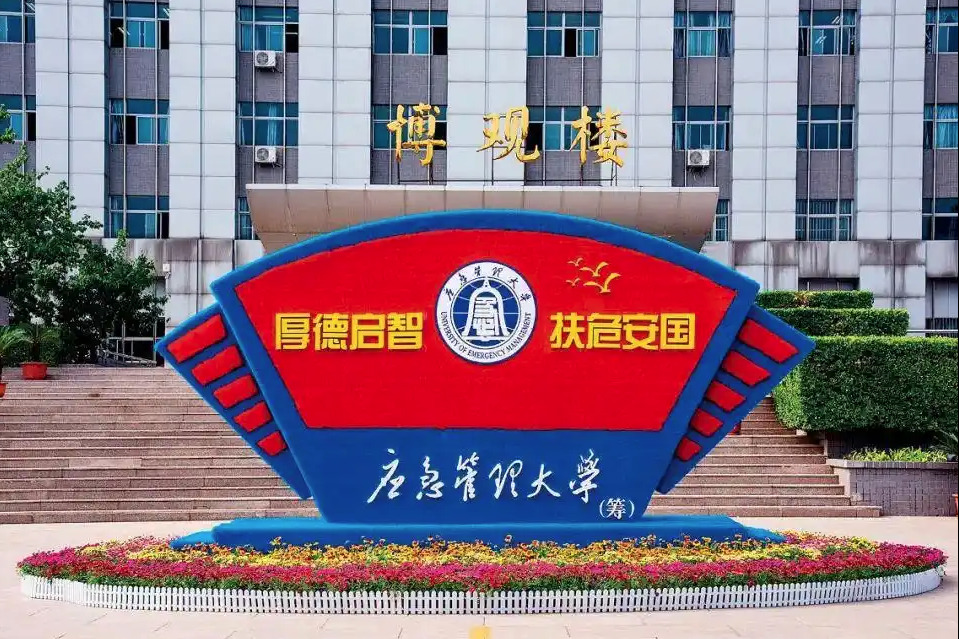
    China has inaugurated its first specialized institution for emergency management education, the University of Emergency Management, marking a significant advancement in the nation’s disaster response capabilities. The establishment ceremony in Langfang, Hebei Province, featured Vice-Premier Zhang Guoqing emphasizing the institution’s crucial role in modernizing China’s emergency management systems through specialized talent development.

    The university emerges from the strategic merger of the North China Institute of Science and Technology and the Institute of Disaster Prevention, both with established backgrounds in safety training and seismic monitoring. This consolidation creates a comprehensive educational institution featuring 15 specialized schools covering critical areas including emergency technology, mine safety, chemical safety, and emergency equipment management.

    Vice-Premier Zhang outlined the university’s mandate to develop innovative ’emergency management plus’ training models that integrate cutting-edge technologies such as artificial intelligence, big data analytics, and equipment engineering into practical disaster response scenarios. The curriculum will emphasize hands-on operational readiness through realistic drills and simulations, addressing a identified gap in traditional emergency management programs.

    Professor Yang Saini, a disaster reduction expert at Beijing Normal University, explained that contemporary emergency scenarios require interdisciplinary professionals capable of navigating complex, interconnected disaster chains. ‘A single weather event can trigger multiple cascading emergencies—from flash floods to landslides, industrial accidents to infrastructure failures—demanding coordinated response across sectors,’ Yang noted.

    The institution addresses a substantial workforce shortage identified in the 2025 Safety and Emergency Management Blue Paper, which documented a national deficit of approximately 5.5 million professionals despite existing workforce of 10.5 million. The university will focus on developing professionals who combine technical expertise with practical response capabilities, systemic thinking, and cross-departmental coordination skills essential for modern disaster management.

    With China’s earthquake monitoring system already drawing 70-80% of its frontline personnel from the predecessor institutions, the new university represents a strategic investment in national resilience through advanced education and research in emergency preparedness.

  • Medical expert’s concern about AI sparks discussion

    Medical expert’s concern about AI sparks discussion

    A significant debate is unfolding within China’s medical community as the nation accelerates its artificial intelligence integration in healthcare. Dr. Zhang Wenhong, a renowned infectious disease expert from Fudan University who gained national prominence during the COVID-19 pandemic, has publicly expressed reservations about incorporating AI into critical medical systems.

    At a Hong Kong forum on January 10, Dr. Zhang stated his firm opposition to implementing AI in hospital medical record systems, emphasizing concerns about how machine-generated outputs might compromise clinical judgment. While acknowledging AI’s potential utility, the prominent physician insisted that human expertise must remain central to medical practice. “I can tell where AI is wrong,” Zhang asserted. “I won’t be misled by it.”

    The expert’s primary concern centers on medical education and training. He warned that if AI-generated conclusions become default “standard answers” in diagnosis and treatment, young physicians might never develop essential critical evaluation skills. “Without systematic training, doctors will lose the ability to judge whether AI’s conclusions are correct,” Zhang explained, advocating that future physicians must master assessing AI reliability and managing complex cases beyond algorithmic capabilities.

    Despite these concerns, AI adoption continues to expand across Chinese hospitals. At Ningbo University’s Affiliated People’s Hospital, an oncology tool called PANDA analyzes CT scans to identify pancreatic cancer risks, having already reviewed over 180,000 scans and detected more than 20 initially overlooked cancer cases. According to Dr. Zhu Kelei, director of hepatobiliary and pancreatic surgery, “AI entirely saved their lives in these cases.”

    Primary-level hospitals with physician shortages are particularly enthusiastic about AI assistance. At Beijing’s Chuiyangliu Hospital affiliated with Tsinghua University, the Agent Hospital system is undergoing testing to help doctors track medical histories, locate treatments, and receive clinical suggestions more efficiently.

    The global AI healthcare market, valued under $30 billion in 2024, is projected to reach $500 billion by 2033. In China, central and local governments are rolling out “AI+” initiatives, with over 100 medical device projects currently underway nationwide. Implementation typically begins in departments with standardized data, high workloads, and relatively low risks, with medical imaging, electrocardiography, and laboratory testing identified as priority areas.

    However, skepticism persists within the medical establishment. Dr. Gao Wen of Capital Medical University noted, “Not every medical problem requires AI. Some technologies appear advanced but offer limited real benefit to healthcare.” As AI systems penetrate deeper into diagnosis and treatment, regulatory challenges are becoming increasingly difficult to ignore, highlighting the ongoing tension between technological advancement and medical tradition.

  • Hydropower deal boosts grid integration in ASEAN

    Hydropower deal boosts grid integration in ASEAN

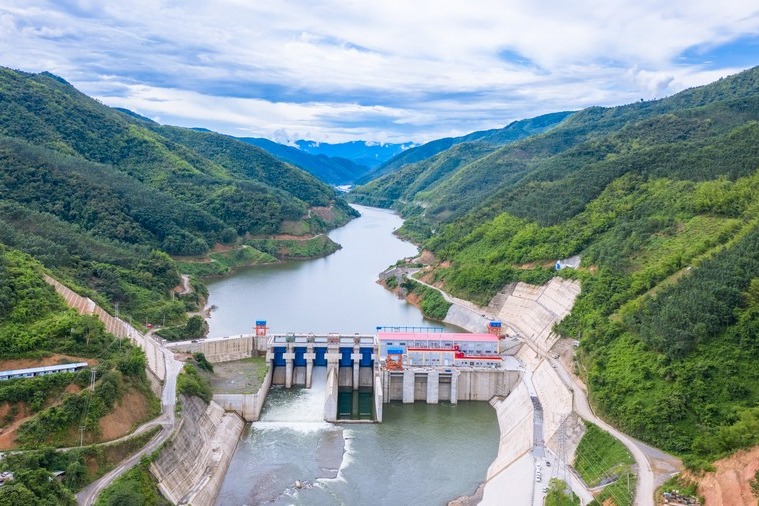
    Southeast Asian nations are advancing regional energy integration through a renewed multilateral agreement facilitating hydropower transmission from Laos to Singapore via Thailand and Malaysia. The landmark deal, signed on January 14, represents a strategic step in the Association of Southeast Asian Nations’ (ASEAN) broader initiative to create an interconnected power framework across the region.

    While the initial capacity of 100 megawatts may appear modest, energy experts emphasize the arrangement’s significance lies in establishing a replicable commercial model rather than immediate volume. Christina Ng, Managing Director at the Energy Shift Institute, described the capacity as ‘inconsequential’ but highlighted the framework’s importance: ‘It’s what ASEAN needs right now—a repeatable, bankable commercial framework that markets can scale.’

    The agreement forms part of the ASEAN Power Grid (APG) initiative, first conceptualized through a 2007 memorandum of understanding and implemented in 2009. The Laos-Thailand-Malaysia-Singapore Power Integration Project, operational since 2018, represents the first multilateral cross-border electricity trade project within ASEAN. The current renewal follows successful pilot operations from 2022 to 2024 where Laos transmitted hydropower to Singapore using existing interconnections, with Thailand and Malaysia serving as transmission intermediaries.

    Energy security experts note that cross-border renewable energy trade offers ASEAN nations a strategic tool to diversify energy risks without increasing dependence on volatile fossil fuels. ‘Energy security today is less about ‘owning fuel’,’ Ng explained. ‘It’s more about managing exposure to concentrated risks’—particularly relevant as geopolitical tensions threaten traditional shipping routes and fuel costs.

    According to Dinita Setyawati, Senior Analyst at global energy policy think tank Ember, the collaboration demonstrates ASEAN countries prioritizing economic growth and decarbonization goals over political differences. The region’s energy ministers reinforced this commitment in October 2025 by signing an enhanced memorandum understanding to strengthen electricity connectivity through multilateral power trade and renewable integration.

    Implementation challenges remain, however. David Broadstock, partner at Singapore-based consultancy The Lantau Group, noted that incomplete power grid infrastructure hinders regional connectivity, while Ng highlighted interoperability issues across eleven nations with differing technical standards. For land-constrained Singapore, which lacks sufficient wind resources, hydropower potential, and space for large-scale solar development, such cross-border arrangements represent essential pathways toward renewable energy adoption and energy security.

  • Danish veterans of US wars feel betrayed by Trump’s threats against Greenland

    Danish veterans of US wars feel betrayed by Trump’s threats against Greenland

    COPENHAGEN, Denmark — The profound bond forged between American and Danish soldiers on the battlefields of Afghanistan now stands in stark contrast to the diplomatic crisis unfolding over U.S. threats to acquire Greenland. Danish veterans who fought alongside U.S. troops express deep feelings of betrayal as the Trump administration escalates its campaign to seize the strategic Arctic territory.

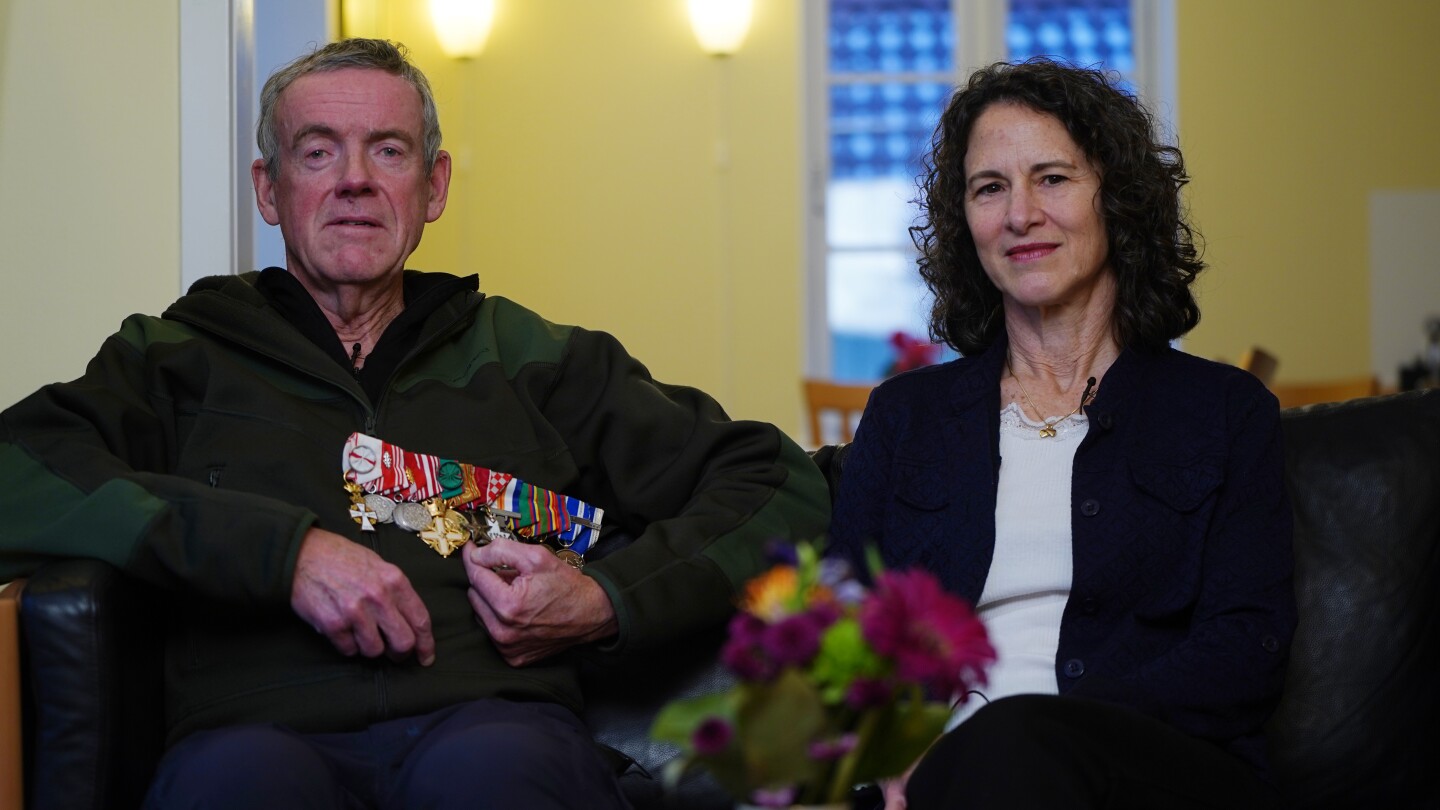
    Martin Tamm Andersen, a 46-year-old former platoon commander, vividly recalls the moment in 2010 when his armored vehicle struck an improvised explosive device in Helmand Province. Amid the chaos and dust, American Marines immediately halted their firefight with Taliban forces to secure the area and evacuate the wounded Danish soldiers. “When America needed us after 9/11 we were there,” Andersen stated in an interview at the Danish War Museum, where his destroyed vehicle is now displayed.

    The current diplomatic tension stems from President Trump’s repeated assertions that the United States must take control of mineral-rich Greenland, even suggesting military force as a viable option. This stance has generated widespread shock across Europe, particularly among Danish military personnel who sacrificed greatly in joint operations with American forces.

    Denmark, a NATO member since 1949, suffered the highest per capita casualties among coalition forces in Afghanistan, with 44 soldiers killed. An additional eight died during operations in Iraq. Søren Knudsen, a 65-year-old veteran who served two tours in Afghanistan, described the situation as “surreal” and “like a bad joke.” The deputy president of the Danish Veterans Association has personally packed away his U.S. Bronze Star medal and American flag—gifts from his service alongside U.S. troops—until the alliance is restored.

    Both veterans emphasized that Denmark remains committed to regional security through existing agreements, including the 1951 defense pact that already grants the U.S. military access to Greenland’s Pituffik Space Base. They assert that their wartime experiences created unbreakable bonds with American comrades, whom they believe do not share the administration’s confrontational approach toward Denmark.

    The potential seizure of Greenland would represent, in Knudsen’s words, “the final moments of the NATO alliance” and the end of his “admiration and love of what has been the American experiment for 250 years.”