作者: admin

  • Palestine Action defence barrister wins UK contempt of court challenge

    Palestine Action defence barrister wins UK contempt of court challenge

    In a landmark ruling with few parallels in modern English legal history, a prominent human rights barrister who represented Palestine Action activists has successfully overturned a contempt of court proceeding brought against him over his conduct during a high-profile trial of climate and pro-Palestinian protesters.

    Rajiv Menon KC, a legal professional with 30 years of courtroom experience, stood accused of violating judicial directions issued by presiding Justice Johnson during the first trial of six Palestine Action defendants at Woolwich Crown Court. The defendants in that case were charged with causing criminal damage to equipment at an Israeli arms manufacturer, Elbit Systems, which operates a facility outside Bristol, and faced additional charges of aggravated burglary. After the first trial resulted in all defendants being acquitted of aggravated burglary, a retrial was ordered, and four of the six activists were ultimately convicted of criminal damage last week.

    The contempt case against Menon stemmed from a direct clash over the long-standing legal principle of jury equity, also known as jury nullification — the right of juries to acquit defendants based on conscience, even if evidence technically supports a conviction. Ahead of closing statements, Justice Johnson issued a strict order barring defense lawyers from two key actions: they could not ask jurors to disregard the court’s formal rulings or existing law, and they could not remind jurors of their inherent right to issue acquittals based on personal conscience.

    In his closing argument defending defendant Charlotte Head, who was tried in both proceedings, Menon deviated from the judge’s order by reading aloud the text of a commemorative plaque at London’s Old Bailey. The plaque honors Bushell’s Case of 1670, the historic legal ruling that first cemented juries’ right to deliver verdicts aligned with their own convictions rather than judicial direction. Menon also argued to the jury that the defendants had been improperly restricted from introducing evidence about Elbit Systems’ role in supplying arms for Israel’s military campaign in Gaza, claiming it would be absurd to ask jurors to ignore this broader political and humanitarian context that motivated the activists’ actions. He further noted that a trial judge had no authority to order jurors to return a guilty verdict.

    In response, Justice Johnson ruled that Menon’s speech had directly undermined his direction to jurors to set aside their views on the Gaza war and the broader Middle East conflict, and referred the contempt matter to the High Court’s Administrative Court for action. Menon’s legal team launched an immediate appeal, arguing that the High Court had no legal jurisdiction to hear the case unless the country’s top law officer, the Attorney General, formally intervened in the matter.

    On Monday, the UK Court of Appeal upheld Menon’s challenge, ruling that Justice Johnson had acted improperly in initiating the contempt proceedings on his own. The court found that the trial judge should have either resolved the issue on the spot during the trial or referred the matter directly to Attorney General Lord Hermer for review.

    Following the ruling, Jenny Wiltshire, Menon’s solicitor from the law firm Hickman & Rose, told reporters that her client “is delighted that the Court of Appeal has found in his favour”, adding that he “hopes that this is now an end to the matter”. Under the terms of the Court of Appeal’s ruling, the case is sent back to the original trial judge, and the contempt proceedings will be formally dismissed unless the judge chooses to refer the matter to Lord Hermer for further action. Legal observers note that the proceeding against Menon was unprecedented: no other lead defense barrister has faced contempt action in modern English legal history for conduct during closing arguments in a criminal trial, making the appellate ruling a critical win for defense advocacy rights in high-profile political cases.

  • Israel qualifies but Boy George is out of Eurovision

    Israel qualifies but Boy George is out of Eurovision

    The 2026 Eurovision Song Contest, hosted this year in Vienna, Austria, has already delivered dramatic twists, political tension, and standout musical performances, as 10 acts locked in their spots for Saturday’s grand final during the first semi-final held Tuesday.

    Against a backdrop of years-long controversy tied to Israel’s military operations in Gaza that has roiled the competition, 28-year-old Israeli contestant Noam Bettan secured his place in the final with his tender, romance-driven pop track *Michelle*. The controversy over Israel’s participation has been particularly sharp this year: five nations have already announced a full boycott of the 2026 event, including seven-time Eurovision champion Ireland.

    Bettan’s semi-final appearance was met with a deeply divided reaction from the arena audience. While some attendees booed and shouted anti-Israeli slogans, other supporters chanted the singer’s name in solidarity. Ahead of his performance, Bettan told the *Jerusalem Post* he intended to stay focused on his craft, dismissing all political criticism as nothing more than irrelevant “background noise.” Host broadcaster ORF had previously confirmed it would not censor audience protests or negative reactions toward any contestant, a policy that meant the boos were clearly audible for viewers watching the live broadcast.

    In a joint statement released after the semi-final, ORF and contest organizers the European Broadcasting Union (EBU) detailed the disruptions: several protesters positioned themselves near on-stage microphones to amplify their anti-Israel messages, both as Bettan prepared to perform and during his song. “They were later removed by security for continuing to disturb the audience,” the statement read, adding that three additional protesters were also ejected from the Wiener Stadhalle arena for continued disruptive behavior. After his qualification was announced, Bettan publicly thanked the audience that supported his advancement.

    This year’s semi-final also marked a historic milestone for Eurovision, opening with a heartfelt 70th-anniversary tribute short film. The film followed Toni, a young Austrian boy who developed a lifelong love for the contest as he grew up, watching the competition through decades of shifting cultural trends and evolving personal relationships. The film featured cameos from some of Eurovision’s most iconic winners, including Abba, Sandie Shaw, Conchita Wurst, and 2024 champion Nemo, and closed with adult Toni taking the stage to perform *L’amour Est Bleu*, the classic 1967 entry from Vicky Leandros — the first year Austria hosted the contest. Leandros herself then joined Toni on stage, accompanied by a 70-voice choir, for a moving opening to the night of competition.

    Once the tribute concluded, the 16 competing acts took the stage in sequence. Moldovan contender Satoshi opened the competitive portion of the night with high-energy party anthem *Viva, Moldova!*, making a memorable entrance in a football shirt printed with 373 — the country’s international dialing code. Next up was Sweden’s Felicia, who performed her infectious dance track *My System* — a playful metaphor for falling in love framed as a fatal infection — while performing behind an artful face mask. Croatian all-female folk outfit Lelek shifted the tone with *Andromeda*, a harmonically rich track exploring the history of gender suppression during the Ottoman Empire. Greek contestant Akylas delivered one of the night’s most elaborate staging concepts for his track *Ferto*, weaving in references to ancient Greek sculpture, traditional knitting culture, and 2005 Eurovision winner Helena Paparizou, Greece’s only champion to date. The track draws sharp contrasts between the materialistic culture of today’s social media generation and the severe hardship Greek families endured during the 2009–2018 Greek financial crisis.

    The current bookmakers’ favorite to take home the 2026 Eurovision trophy is Finnish duo Pete Parkonnen and Linda Lampenius, whose fiery, emotional love song *Liekinheitin* (Flamethrower) delivered a showstopping performance Tuesday. The pair made Eurovision history during their set: Lampenius, a world-class classical violinist, received special permission to perform with a rare 19th-century Gagliano violin, marking just the second time a live acoustic instrument has been allowed on the Eurovision stage since a rule change in 1998. The performance was so intense that Lampenius actually snapped the bow hair on her violin mid-set, adding an unplanned moment of drama.

    Other standout moments of the semi-final included Italy’s Sal Da Vinci’s lush disco tribute to his wife on *Per Sempre Si*, and Lithuanian contestant Lion Ceccah’s visually striking performance of man-vs-machine anthem *Sólo quiero más*, which saw Ceccah cover his entire body in metallic silver paint. Closing out the competitive performances was Serbia’s all-female metal band Lavina, who brought a dark, hard-edged energy to the semi-final with their track *Kraj Mene*, a far cry from the electro-pop that dominated most of the night’s line-up.

    In a surprise twist, former Culture Club frontman and British music icon Boy George failed to qualify for the final, after appearing as a guest performer on San Marino’s entry. San Marino was among the five countries eliminated from the first semi-final, alongside Estonia, Georgia, Montenegro, and Portugal. The elimination stung for some fans, as it cut short the return of three veteran Eurovision acts: Estonia’s fan-favorite Vanilla Ninja, San Marino’s long-time contestant Senhit, and Georgia’s Bzikebi, the 2008 Junior Eurovision champions.

    Along with Bettan and the Finnish duo, the 10 acts advancing to Saturday’s grand final are: Belgium’s Essyla with *Dancing on the Ice*, Croatia’s Lelek with *Andromeda*, Greece’s Akylas with *Ferto*, Lithuania’s Lion Ceccah with *Sólo quiero más*, Moldova’s Satoshi with *Viva, Moldova!*, Poland’s Alicja with *Pray*, Serbia’s Lavina with *Kraj Mene*, and Sweden’s Felicia with *My System*.

    Tuesday’s vote count was conducted under new competition rules, implemented after widespread allegations of voting irregularities during the 2025 contest. The overhauled system caps public votes at 10 per voter, down from 20 in previous years, and requires voters to enter credit card details to cast votes online. Organizers say the credit card requirement will verify that votes originate from the country they are submitted from, cutting down on cross-border voting fraud. While votes were counted, audiences were treated to an acrobatic performance honoring Vienna’s Wurstelprater, one of the oldest operating amusement parks in the world, plus a surprise cameo from Eurovision superfan and Hollywood star Will Ferrell, and a novelty comedy number leaning into the running joke between Austria and Australia, centered mostly on playful gags about kangaroos.

    The second semi-final is set to take place on Thursday, where high-profile contenders from Denmark and France will make their first 2026 contest appearances. The night will also mark the highly anticipated debut of Australian pop superstar Delta Goodrem, one of the biggest names on this year’s line-up, alongside the United Kingdom’s entry, from experimental artist Look Mum No Computer.

  • Air India crisis deepens ahead of final Ahmedabad crash report

    Air India crisis deepens ahead of final Ahmedabad crash report

    Almost a year after the tragic crash of Air India flight AI-171, which crashed seconds after departing Ahmedabad for London in June 2025 and claimed 260 lives, India’s official accident investigation body is preparing to release its long-awaited final report within the next four weeks. As the aviation industry and global public wait for the crash’s official findings, the flag carrier is already grappling with a cascading series of crises that have thrown its years-long ambitious turnaround plan into serious doubt.

    The most immediate blow came last month, when chief executive Campbell Wilson stepped down mid-term, just as the carrier announced annual losses reaching $2.4 billion for the fiscal year ending March 2026. Wilson’s exit has left a critical leadership gap at a moment when the airline desperately needs steady direction to navigate its mounting challenges. Wilson was brought in after the Tata Group, one of India’s largest conglomerates, acquired the loss-making state-owned carrier in 2022, with a 5-year roadmap to overhaul operations and restore profitability. Today, Air India stands as the largest money-losing business in the Tata Group portfolio, and the Tata board has openly expressed growing concern over its performance. Last week, the board held a closed-door meeting to review aggressive cost-cutting strategies and warned employees that difficult adjustments lie ahead. Compounding this uncertainty, the April visit of senior Singapore Airlines leadership to Tata’s Mumbai headquarters has fueled widespread speculation that Singapore Airlines, which holds a 25.1% stake in Air India, is preparing to deepen its involvement in the struggling carrier. Air India declined to respond to detailed questions from the BBC regarding the ongoing crisis.

    Aviation industry insiders warn that the carrier’s problems run far deeper than just the sudden CEO departure. Jitendra Bhargava, a former Air India executive director, told reporters that the Tata Group fundamentally underestimated the scale of structural and cultural issues it inherited when it took over the legacy carrier. Bhargava added that Wilson faced major delays building a cohesive leadership team to execute the privatization overhaul, leaving a growing gap between the carrier’s 5-year recovery plan and on-the-ground implementation. Over the past year, a string of high-profile operational and safety missteps have further eroded public trust in the airline. In March 2026, a Delhi-to-Vancouver flight was forced to turn back after eight hours of flying, after the carrier failed to secure required regulatory approval to enter Canadian airspace. Alok Anand, a aviation consultant at Acumen Aviation and former maintenance head of India’s first low-cost carrier Air Deccan, called the incident deeply alarming, noting that such a major error points to a systemic breakdown in internal processes. A 2025 annual audit by India’s civil aviation regulator also uncovered 51 separate safety violations across Air India’s operations, seven of which were classified as the highest-severity level.

    Beyond internal structural and safety issues, a series of external headwinds have further pummeled the carrier’s financial performance. Global supply chain bottlenecks have delayed deliveries of dozens of new aircraft that Air India counted on to replace its aging fleet, throwing its fleet renewal schedule completely off track. Since 2024, the airline has cut a number of high-priority long-haul routes, including Delhi-Washington and Mumbai-San Francisco, shrinking its global network and further eroding revenue. A more than 10% depreciation of the Indian rupee against the U.S. dollar has also drastically increased operating costs, aviation analyst Mahantesh Sabarad explained, noting that most of Indian airlines’ core costs, including jet fuel, are pegged to the dollar. The ongoing Middle East conflict, which weakened the market position of major Gulf carriers, actually created a rare opening for Air India to capture more international market share—but the airline was unable to capitalize due to its ongoing aircraft availability shortfall.

    Looking ahead, industry analysts disagree on how the crisis will unfold. Sabarad argues that the carrier’s majority and minority shareholders, the Tata Group and Singapore Airlines respectively, will need to inject substantial new capital to cover the carrier’s growing losses. He compared the current $2.4 billion shortfall to the major financial challenge Tata Steel faced after acquiring the UK’s Corus Steel nearly 20 years ago, noting that the Tata Group has a proven track record of turning around large struggling assets, but will need to pursue creative new financing strategies to stabilize Air India. Anand, however, warned that the worst financial pain may still be ahead, noting that this year’s losses include one-time charges for fleet refurbishment and penalties for returning older leased aircraft, and that the ongoing impact of high fuel prices, currency depreciation and network cuts will hit the carrier’s bottom line even harder in coming quarters. As the carrier waits for the AAIB’s final crash report, experts also warn that the investigation’s findings could have lasting reputational damage. While Sabarad noted that most liability from the crash is covered by insurance, eliminating the risk of unexpected new financial hits, any negative findings linking the crash to Air India’s operational or safety practices would deal a major blow to the carrier’s already battered brand, one that will take years of sustained effort to repair.

  • A decade on, Trump returns to a stronger and more assertive China

    A decade on, Trump returns to a stronger and more assertive China

    Eight years after Donald Trump’s 2017 state visit to Beijing, the U.S. president is back at the Chinese capital this week for high-stakes talks with Chinese leader Xi Jinping, arriving to a changed China that stands far more confident and globally assertive than it did during his first trip. Back in 2017, Beijing rolled out an unprecedented honor for Trump, hosting a formal dinner inside the Forbidden City — a gesture no sitting U.S. president had received before. This year’s reception promises equal grandeur, with a scheduled stop at Zhongnanhai, the closed compound that houses China’s top political leadership. But while the hospitality is warm, the summit agenda remains fraught: alongside longstanding sticking points of trade, technology competition and the Taiwan issue, rising tensions over Iran have added a new layer of geopolitical friction to the talks.

    To understand the scale of China’s transformation since Trump’s last visit, one need only look beyond Beijing’s historic central districts to the megacity of Chongqing, tucked into the mountainous southwest of the country. Where Trump’s 2017 visit saw Beijing pour extensive diplomatic effort into proving it stood as a geopolitical equal to the U.S., that effort is no longer necessary today, according to Ali Wyne, senior research and advocacy adviser for US-China relations at the International Crisis Group. Washington now openly recognizes China as a “near-peer” competitor, Wyne notes — arguably the most formidable rival the United States has faced in its entire history.

    Chongqing, once a gritty, overlooked manufacturing hub, has been remade by billions in state investment into a symbol of China’s new economic and global ambitions. Its dramatic, vertically stacked skyline, where subways cut through residential skyscrapers and winding roads cling to steep hillsides above the Yangtze River, has earned it the viral nickname of the world’s “cyberpunk capital,” drawing two million international visitors annually after China expanded visa-free travel to boost its soft power. It is also at the forefront of Xi Jinping’s push to develop “new productive forces,” with massive state investment pouring into renewable energy, robotics, artificial intelligence and electric vehicle manufacturing. Chongqing now leads China in automobile production, underpinning China’s status as the world’s largest car exporter, and is positioning itself to become the Silicon Valley of western China. This year alone, China plans to invest roughly $400 billion in the robotics sector, where it already operates more industrial robots than any other country.

    Yet behind Chongqing’s futuristic skyline and viral social media trends such as the “Chongqing train eating” challenge that draws tourists and locals alike to snap viral photos, the city also exposes the challenges China currently faces. Years of large-scale urban construction have left the local government, which serves a population of more than 30 million, heavily indebted, alongside broader national headwinds: a sluggish property sector, falling home prices, rising youth unemployment and persistently low domestic consumption. U.S. tariffs first implemented under Trump’s first term and economic spillover from the ongoing Iran conflict have only amplified these pressures. In older working-class neighborhoods of Chongqing, many daily-wage workers and small vendors still struggle to make ends meet, and ordinary residents expressed a range of views on the approaching summit and the U.S. president.

    Many ordinary Chinese credit Trump’s “America First” agenda and divisive trade policies with weakening U.S. global standing and accelerating China’s rise, even as they criticize his unilateral approach. “He doesn’t care about the consequences at all. He should know that we share the same world — it is a global village. He should not always put America first,” one unnamed tourist told reporters. Still, for many young Chinese people, the U.S. remains a symbol of opportunity and creative freedom, even as strained bilateral relations have made studying abroad a more uncertain dream. That uncertainty, however, has also pushed Chinese engineers and innovators to accelerate domestic technological development, visible in Chongqing’s new innovation hubs, where school children now interact with domestically developed humanoid and aquatic robots.

    One major sticking point in this week’s talks is expected to be access to advanced semiconductors, the core component powering AI and robotics innovation. While the previous Biden administration imposed tight restrictions on sales of cutting-edge chips to China to slow the country’s technological progress, President Trump has relaxed some of those rules, allowing U.S. chip giant Nvidia to sell certain mid-tier advanced chips to China, while keeping bans on the most high-end models. For global analysts, the growing competition over AI also creates a shared risk: both powers must set aside great power rivalry to address common threats, from cyberattacks on critical infrastructure to the risk of malicious actors misusing AI to access sensitive nuclear or medical systems.

    Trade remains the most closely watched issue on the summit agenda. Since 2017, China has deliberately reduced its reliance on the U.S. market, reorienting its trade toward Southeast Asia and the European Union; U.S.-bound Chinese exports have dropped by roughly 20%, pushing the U.S. to third place among China’s largest trade partners. When Trump began threatening new tariffs ahead of the 2024 election, Beijing prepared for the outcome, and did not back down when the tariffs took effect last year. Today, Beijing is far more economically resilient, with new trade routes such as the China-Europe rail link through Central Asia helping domestic manufacturers like Chongqing’s electric vehicle makers reach new global customers. The Iran crisis has also boosted demand for EVs as global gasoline prices rise, strengthening the sector’s outlook. “I’m quite optimistic about the future development of Chongqing’s EV industry,” says Lucia Chen, an EV sales executive at a local Chongqing firm. “My family and friends have all made the switch from fuel cars to EV. Because of the Iran war, petrol prices have risen a lot and many buyers are considering an EV for the first time.”

    Beyond trade and technology, Trump is also arriving in Beijing seeking China’s diplomatic help to de-escalate the ongoing Iran conflict, a shift that underscores Beijing’s growing central role in global geopolitics. For Trump, a successful summit would be marked by a tangible win, such as an agreement for China to increase purchases of American goods. For Xi, any outcome that delivers a smooth, orderly visit is already a win: it reinforces his core message that China remains open to business and open to the world, after years of isolation during the COVID-19 pandemic.

    Today, as Beijing rolls out the red carpet for Trump, the contrast between the two leaders could not be clearer: Xi is positioning China as a beacon of global stability, against a backdrop of the unpredictable, mercurial Trump whose foreign policy has scrambled traditional global alliances. Since Trump returned to the White House, his on-again off-again approach to trade and diplomacy has left U.S. allies reeling, while Beijing has steadily built ties with Western leaders from across the globe. To be sure, challenges remain beneath the polished image China presents to visiting leaders: strict state control over media and public discourse, pervasive surveillance, and zero tolerance for political dissent. Still, Chongqing’s transformation offers a clear preview of the future China is working to build: a future where it stands as a fully equal global power to the United States, leading in key emerging technologies and projecting growing influence across every region of the world. Whether that transformation is seen as a success story or a cautionary sign, it is impossible to ignore: the China that greets Donald Trump in 2025 is vastly different from the one he visited in 2017.

  • Federal budget gets mixed reaction from business leaders, analysts

    Federal budget gets mixed reaction from business leaders, analysts

    Australia’s freshly unveiled federal budget, delivered on Tuesday, has emerged as a polarizing policy package, with industry leaders across technology, renewable energy, and finance clashing over its long-term economic impact. While Commonwealth Bank analysts have concluded the budget fails to meaningfully curb persistent nationwide inflation, segments of Australia’s tech and clean energy sectors argue the policy changes will unlock fresh capital and drive strategic growth across key innovative industries.

    Global market volatility has already rippled through Australian financial forecasts following the budget announcement. Overnight, the Australian dollar posted minor gains against the U.S. dollar, supported in part by rising global oil prices even as higher-than-anticpected U.S. inflation readings rattled American investor confidence. Futures markets now point to a slight 0.1% dip for the ASX 200 at Wednesday’s opening bell, mirroring marginal losses recorded on Wall Street overnight.

    Stakeholders in Australia’s startup and tech ecosystem have delivered sharply divergent assessments of the budget’s key business and tax adjustments. Shaun Broughton, Regional Director for Shopify across Asia Pacific and Japan, framed the policy package as a net step forward for domestic entrepreneurs. “Yesterday’s budget moves in the right direction for Australian entrepreneurs – from a permanent instant asset write-off to venture capital reform and measures that support productivity and growth,” he noted. However, Broughton cautioned that proposed adjustments to the capital gains tax discount send mixed signals to founding teams, early startup employees, and growth-focused investors. For founders who spend years building businesses from scratch, he explained, long-term incentive structures are critical, rewarding not just the risk of launching a venture but the work of scaling and sustaining long-term success.

    That caution was echoed as a full-throated critique from accounting industry body CPA Australia, which argues the tax changes directly undermine the federal government’s stated goals of boosting productivity and supporting sustainable economic growth. Jenny Wong, Lead Tax Advisor at CPA Australia, emphasized that productivity growth relies on investment, particularly in high-potential areas like startups, innovation, and business expansion. “These changes make that equation harder,” Wong said. “If you’re taking a risk, building something, investing in growth, you’re handing over a significant portion of that return. That is a clear disincentive. It reduces the incentive to invest in the kinds of businesses that drive long-term productivity and job creation. For anyone looking to invest, grow a business or take on risk, the message is clear – the government will take at least 30 per cent, regardless of the outcome.”

    Despite the criticism over tax adjustments, some tech leaders see meaningful progress in the budget’s commitments to advancing Australia’s artificial intelligence strategy. Charlie Farah, Field Chief Technology Officer at global analytics firm Qlik, pointed to the budget’s alignment with the National AI Plan the government unveiled last December. “The $3.5bn-plus business tax package to support risk taking and the R&D tax incentives announced in the budget will boost AI investment and are a welcomed step in the right direction for Australia becoming a global leader in AI,” Farah said. He added that growing interest in building domestic AI enterprises currently outpaces the nation’s existing skilled workforce and capabilities, calling the government’s new focus on AI a welcome move even amid the budget’s broader goal of stabilizing the national economy. Still, Farah noted, significant gaps remain: “There is still work to be done in making Australia truly AI ready and championing AI skills. As a next step, we would like to see updates to the National Skills Agreement or Digital Economy Strategy with frameworks for AI and data literacy. This way, the government is facilitating future workforce training and reskilling, making AI a national skills priority for Australian workers.”

    For leaders in Australia’s renewable energy sector, the budget’s ambition to accelerate the national energy transition has drawn praise, even as questions remain over whether the policy matches ambition with sufficient investment. Jack Curtis, co-founder of Australian unicorn startup Neara – which achieved a $1 billion valuation earlier this year – said the government’s energy transition targets outlined in the budget are directionally correct. “The question is whether we’re investing equally in the solutions required to deliver it,” Curtis said. He noted that the budget includes the most sweeping reform to the National Electricity Market’s wholesale trading framework since the 1990s, paired with an expansion of the national Capacity Investment Scheme, changes that will trigger a new wave of investment in transmission and distribution infrastructure. “But the scale and pace of change raise the stakes on decision quality,” Curtis warned. “Utilities will need to make significant infrastructure calls at speed, with the margin for error narrowing as the cost of getting it wrong widens.”

    On the macroeconomic side, Commonwealth Bank currency analyst Kristina Clifton said the budget delivers only a minor improvement to Australia’s fiscal position. The document outlines stable budget deficits holding around 1% of GDP over the next three years, before gradual fiscal improvement begins. “Our Aussie economics team note that the budget is unlikely to shift the RBA’s near‑term view on interest rates, but it does little to help in the fight against inflation,” Clifton said. She added that more aggressive spending restraint scheduled for 2026-27 would have reduced aggregate demand across the economy and created additional policy headroom for the Reserve Bank of Australia (RBA) if inflation remains sticky. “As it stands the risk sits with further tightening by the RBA,” Clifton said. Currently, financial markets are pricing in roughly a 20% probability that the RBA will implement another cash rate hike at its upcoming June policy meeting.

    The budget announcement comes against a backdrop of persistent global economic headwinds, with rising inflation and slowing growth driven in large part by the ongoing global energy crisis. Energy supply shocks have pushed up headline inflation across all major advanced economies, with the steepest increases recorded to date in the European Union and the United States.

  • Thief jailed after stealing unreleased Beyoncé music from car

    Thief jailed after stealing unreleased Beyoncé music from car

    A 41-year-old Georgia man has been handed a two-year prison sentence for a random car break-in that resulted in the theft of hard drives holding unreleased Beyoncé music, just days before the global superstar launched a multi-night stop of her hit Cowboy Carter tour in Atlanta.

    Kelvin Evans pleaded guilty last year to charges of entering an automobile and criminal trespass, with a Fulton County judge adding three years of probation to his sentence on top of the prison term. As part of the court ruling, Evans is also barred from contacting the victims of the theft and is prohibited from entering the parking garage where the crime took place.

    The burglary unfolded on July 8, 2025, when Evans targeted a Jeep Wagoneer rented by two members of Beyoncé’s touring team: choreographer Christopher Grant and dancer Diandre Blue. When the pair returned to their vehicle after a pre-tour work stop, they found the rear window smashed and all their luggage stolen. Investigators have never recovered the hard drives or any of the other stolen property, which included two MacBook laptops, a pair of Apple headphones, high-end clothing and accessories, and devices that carried personal sensitive information belonging to Beyoncé herself.

    Court proceedings confirm Evans struck a plea deal with prosecutors on Tuesday, just ahead of his scheduled trial that was set to begin this week. Jury selection had already gotten underway on Monday, where prosecutors presented key surveillance evidence tying Evans to the crime. The footage first showed a red Hyundai, linked to Evans, pulling alongside the rental Jeep in a downtown Atlanta parking garage. A second surveillance clip captured the same vehicle arriving at a nearby apartment building, with Evans carrying the suitcases confirmed to belong to Grant and Blue.

    Prosecutors added that tracking technology built into the stolen MacBooks also led law enforcement directly to the apartment address captured in the second video, solidifying the case against Evans. Evans has been held in county jail since his arrest in August 2025, meaning that time served will be applied to his new sentence. His defense attorney told the court during sentencing that Evans is seeking to rebuild his life after his release, telling the judge his client “is hoping for a future where he can make money legitimately and be part of society like the rest of us.”

    The theft sent shockwaves through the Beyoncé fandom ahead of the singer’s four-night tour run at Atlanta’s Mercedes-Benz Stadium, with fans speculating for months about what unreleased content was lost in the burglary. To date, none of the stolen material has leaked online, and no public comment has been issued by Beyoncé’s team regarding the final sentencing.

  • Brazil says the EU has moved to block its animal product exports starting from September

    Brazil says the EU has moved to block its animal product exports starting from September

    Just days after the long-negotiated EU-Mercosur free trade agreement entered provisional force, a new trade dispute has emerged between Brazil and the European Union, after Brasilia confirmed Tuesday that Brussels will implement a full block on Brazilian animal product imports starting this September.

    The landmark transatlantic trade pact, which covers a combined $22 trillion market and includes Mercosur members Brazil, Argentina, Paraguay and Uruguay, was formally signed in January 2025 and entered provisional application on May 1. European Commission President Ursula von der Leyen pushed forward the provisional enactment, moving ahead of full ratification and sidestepping the European Parliament, where the agreement has faced fierce criticism from multiple blocs of lawmakers. The deal is currently being reviewed by the European Court of Justice, and will be scrapped entirely if the court rules against its legal standing.

    From its earliest stages of negotiation, the trade agreement has faced staunch pushback from European farmers and environmental advocacy groups. Opponents cite a range of concerns including unfair competitive pressure from lower-cost South American imports, risks to the livelihoods of EU agricultural producers, downward pressure on European food prices, and lower environmental and food safety standards among Mercosur exporting nations.

    Brazil’s Ministry of Agriculture said in an official statement Tuesday that the EU’s import ban came as a complete surprise to Brazilian authorities, and that the federal government will launch immediate diplomatic efforts to reverse the decision. Per Brazilian media reporting, the EU has justified the new restriction by stating it has not received sufficient documentation proving that Brazilian animal products are free of growth-promoting antimicrobial substances, a common livestock feed additive banned under EU food safety rules.

    In a next step to resolve the dispute, Brazil’s head of mission to the European Union will hold a formal meeting with EU agricultural regulators on Wednesday to demand clarity on the new restriction and push back on the ban, the agriculture ministry confirmed.

    Data from the Brazilian Animal Product Industry Association shows that EU member states ranked as the third-largest export market for Brazilian beef in 2025, trailing only the United States and China. The new import block is expected to deal a significant blow to Brazilian beef producers who had anticipated expanded market access under the new trade deal.

  • Australia has some of the world’s costliest homes. Will scrapping tax breaks help?

    Australia has some of the world’s costliest homes. Will scrapping tax breaks help?

    Thirteen-year-old Adelaide student Sebastian Muñoz-Najar has not yet reached his teens, cannot legally hold a full-time job, and is years away from learning to drive. But even this primary school graduate is already consumed by despair over one critical life question: will he ever be able to afford to own a home in his own country?

    Against a backdrop of non-stop headlines about Australia’s deepening national housing affordability crisis, Sebastian began running the numbers himself using little more than a Google search and a basic calculator. What he found alarmed him: if current trends of skyrocketing property prices and stagnant wage growth hold steady, the average Adelaide home will cost 17 times his projected annual income by the time he completes university.

    Australia’s housing affordability emergency is no longer a contested political issue – across the political spectrum, policymakers and the public agree the country is in crisis. What has divided the nation and gridlocked legislative action for more than a decade, however, is how to fix it. Now, the federal government is moving forward with a polarizing set of reforms: eliminating long-standing, lucrative tax breaks for property investors, a change it argues will begin to address the intergenerational inequality that has come to define Australia’s housing market.

    For younger Australians like Sebastian, the promise of the “Australian Dream” – the idea that hard work guarantees the reward of home ownership – has already been broken. They argue they have been locked out of the same opportunities their parents took for granted, and hope the reforms will rebalance a housing market tilted heavily in favor of wealthy investors. But critics warn the changes could choke off the very investment the country needs to build much-needed new housing, push rental prices even higher for already struggling tenants, and unfairly erode the life savings of ordinary Australians who built wealth through property investment.

    Australia is now home to some of the least affordable major cities on the planet. Today, the average Australian property costs nearly 10 times the median annual household income – a four-fold increase from where it stood 25 years ago. Over that same period, national average rental prices have doubled. The root of the crisis is a simple supply and demand imbalance: Australia does not have nearly enough housing to accommodate its fast-growing population. Decades of underinvestment in public social housing, chronically slow residential construction, and restrictive zoning laws that block new development in high-demand urban areas have all combined to create the current crunch.

    But many analysts argue that generous tax breaks for property investors have significantly exacerbated the problem. The two most high-profile policies at the center of the debate are negative gearing, which allows investment property owners to deduct any losses from their taxable income, and the 50% capital gains tax (CGT) discount, which halves the tax owed on profits from selling an investment property. Together, these policies have turned residential housing into an extremely attractive speculative asset, incentivizing mass buying and selling of properties for profit rather than for use as homes. Analysts note these policies were rolled out at the turn of the millennium, marking a clear turning point after which house prices began to outpace wage growth permanently.

    These tax arrangements remain fiercely defended by existing homeowners, who benefit from rising property values that grow their personal wealth, as well as investor groups and real estate industry bodies that argue changes will cut into profits and disrupt the market’s ability to deliver new supply. The group bearing the worst of the crisis is young people, who are caught in a vicious cycle: saving for ever-larger down payments while paying soaring rents, only to face decades of large mortgage repayments on smaller properties located far from city center job markets.

    Sebastian’s parents had long harbored quiet concerns about their children’s future housing prospects, but were shocked to learn the issue was already weighing on their 13-year-old son’s mind. “The first thought I had was you shouldn’t have to worry about this – you should be worrying about homework, friends, school,” Sebastian’s father Ed told the BBC. “The second was: you don’t have to just accept this.”

    Together, the pair turned their anxiety into action: they built a website publishing Sebastian’s calculations and launched a public petition calling for reform to the CGT discount and negative gearing, which has now collected thousands of signatures from supporters across the country. “We hope this would remove the incentive to use houses as investments and bring houses back to being places to live,” Sebastian says.

    This is not the first time Australian federal politicians have pushed for these changes. The center-left Labor Party, which now forms government, first proposed reforms to negative gearing and CGT in the 2016 and 2019 federal elections. It lost both campaigns, with many political analysts blaming the housing reform proposals for the defeat. But much has changed since 2019: the housing crisis has deepened dramatically, pushing its impact up into the middle class, while demographic shifts have put younger, disenfranchised millennial and Generation Z voters in a much larger share of the national electorate. Many older voters are also now seeing the crisis impact their own children and grandchildren, shifting their views on the need for change.

    “It’s like a slow-boiling frog – this has been building for more than 20 years, but it has now hit crisis point,” Danielle Wood, chair of the Productivity Commission, the Australian government’s independent economic advisory body, told the BBC. “And I think these tax changes have probably become a bit symbolic in thinking about what’s created this problem.”

    For older Australians who have already built property wealth, many see the proposed reforms as an unfair political attack. Retired Melbourne couple Christine and Cliff Hill, who own their own home plus three investment properties, reject the complaints from younger generations. Cliff, 64, says he and his wife were able to afford their first home by making sacrifices: moving to an outer suburb, cutting every unnecessary expense, and skipping luxury holidays. “You can’t go complaining that houses are $1m because they aren’t. They’re $500,000 or $600,000 but the young folks don’t want to live 35km from Melbourne,” he says. The couple profited heavily from the current tax system when they sold a fourth investment property last year, earning a $348,000 profit they would have paid half the tax on under existing rules. They argue the government’s reforms will lead to disaster: investors will either raise rents or sell off their properties, and even if there is a temporary bump in supply, long-term demand will still outstrip supply, leaving homes just as unaffordable for first-time buyers.

    “The government are going after the inter-generational gap that they keep talking about – and being a baby boomer, I’m really over that,” Christine says.

    But the current Labor government believes public opinion has shifted enough to make reform politically viable this time around. One early indicator of shifting public attitudes came in 2024, when Prime Minister Anthony Albanese faced widespread public backlash over his purchase of a multi-million-dollar clifftop holiday home amid the worsening affordability crisis. In its first budget following its landmark 2025 election win, passed as public anger over inaction on housing boosted support for minor progressive parties, the government outlined its planned changes: it will replace the fixed 50% CGT discount with an inflation-adjusted markdown, and restrict negative gearing tax benefits to newly constructed properties only.

    Crucially, the changes will be grandfathered, meaning they will only apply to investment properties purchased after the budget passes; existing investors will keep their current tax benefits permanently. Even supporters of the reforms, however, acknowledge the tax changes alone will not solve the crisis. Experts warn the reforms will do little to address the core issue: the national shortage of housing supply. The tax changes are projected to cause a small drop in property prices and free up more market space for first-time buyers by reducing investor competition, but they are not a silver bullet.

    “They’re not a panacea on house prices,” Wood says. Critics on the right have increasingly shifted blame for the crisis to Australia’s high migration intake, with the conservative Coalition opposition and right-wing populist party One Nation both calling for deep cuts to migration to reduce housing demand. While migration does contribute to population growth, experts say it is a minor factor in the supply shortage, and economists warn cutting migration would have severe negative knock-on effects for Australia’s labor force and overall economy.

    Wood says the real solution is far simpler: “We just need to make it easier and faster to build.” While construction regulation is necessary to protect public safety, the current system requires dozens of overlapping approvals and layers of bureaucracy that have slowed average build times by 40% over the past 15 years.

    For Sebastian, the tax reforms feel like a small step in the right direction, but he remains deeply skeptical that policymakers truly have the interests of young people at heart. Many sitting politicians own investment properties themselves, and he argues the grandfathering clause was explicitly designed to protect their own wealth. “Young people, they feel let down… disappointed in policymakers for allowing this to happen. And they also feel just sad that the ‘Australian Dream’ of owning a house is unattainable for them.”

  • UN expands Nairobi hub to boost Global South representation

    UN expands Nairobi hub to boost Global South representation

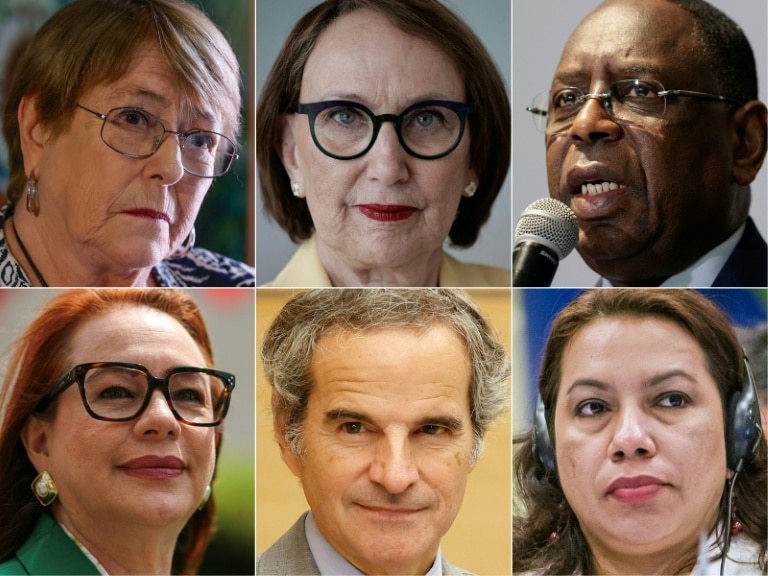
    On a symbolic Monday in Nairobi, Kenya, the United Nations launched construction of a cutting-edge new conference complex at its regional headquarters, marking a $340 million strategic investment that will reshape the body’s global footprint and amplify the voice of developing nations in global governance. Once completed, the redevelopment project — which includes a 1,600-seat assembly hall and climate-resilient office infrastructure — will catapult Nairobi into the ranks of the UN’s largest diplomatic hubs, bringing multilateral decision-making closer to the regions that are increasingly setting the global agenda on climate action, sustainable development, and peacebuilding.

    The ground-breaking ceremony was co-led by UN Secretary-General António Guterres and Kenyan President William Ruto, who highlighted the transformative scope of the expansion: the project will grow the hub’s total delegate capacity from 2,000 to 9,000, and increase the number of available meeting rooms from 14 to 30. When finished, Nairobi will become the UN’s third-largest duty station by conferencing scale, outranking Vienna and trailing only New York and Geneva.

    Guterres emphasized that the expansion is far more than an infrastructure upgrade — it is a tangible commitment to reforming global governance to better reflect shifting global realities. “Nairobi is neither a satellite nor an outpost. It is a pillar — the only United Nations headquarters in Africa and in the Global South,” Guterres told attendees. He added that the project embodies the UN’s recognition that Africa is not just a region facing challenges, but a core driver of innovative solutions and a critical moral voice in the global pursuit of peace, security, sustainable development, and universal human rights. The Secretary-General also noted that Nairobi’s strategic location and cost-effective operating environment make it an ideal site for broader UN reform, with additional organizational functions set to be relocated to the Kenyan capital in coming years to boost operational efficiency and cut overhead costs.

    Aligned with the UN’s global climate goals, the new complex is built around sustainability and universal accessibility. The completed office blocks already operate as the UN’s first net-zero carbon buildings, powered entirely by on-site solar installations, with the full campus targeted to achieve full energy neutrality by 2029. The investment also dovetails with Kenya’s long-running effort to position Nairobi as Africa’s preeminent hub for diplomacy, climate policy, and international development cooperation.

    President Ruto noted that the upgrade comes at a critical moment for multilateralism, which faces growing strains from deepening geopolitical divisions and widening global economic inequality. “As the only UN headquarters in the Global South, Nairobi stands as a powerful symbol that the United Nations truly belongs to all the peoples of the world,” Ruto said, committing the Kenyan government to continued investment in supporting infrastructure — from expanded road networks and water systems to enhanced security and environmental restoration across the capital — to accommodate the UN’s growing presence.

    Currently, the Nairobi UN campus hosts more than 70 UN agencies, funds, and programs, with over 4,000 personnel based on the compound and nearly 6,000 total UN staff working across Kenya. Diplomats from across the Global South welcomed the expansion as a long-overdue correction to historical underrepresentation. William McDonnell, Barbados’ permanent representative to the UN in Kenya, noted that smaller and developing nations have long been sidelined in major global negotiations held in Northern hemisphere hubs. The new complex will provide a modern, fully accessible venue on par with UN facilities in New York, Geneva and Vienna, creating a more inclusive platform for Global South nations to shape global outcomes. “With the development of this campus and conferencing facility, this trend should — and hopefully will — change,” McDonnell said.

    Kenya’s Prime Cabinet Secretary and Foreign Affairs Cabinet Secretary Musalia Mudavadi echoed that sentiment, noting the project reflects both Kenya’s enduring commitment to multilateral cooperation and Africa’s rising influence within the UN system. “Kenya remains committed to working closely with all member states and the leadership of the United Nations to ensure that the UN system becomes more efficient, effective, responsive, and impactful in improving the lives of all people, especially the most vulnerable populations,” Mudavadi said.

  • Trump Justice Department subpoenas news outlets over war coverage

    Trump Justice Department subpoenas news outlets over war coverage

    A sweeping escalation of tensions between the former president and the American press has emerged, with multiple leading U.S. news organizations confirming they have been subpoenaed by the Department of Justice at the explicit urging of former President Donald Trump, who has waged a relentless campaign against critical coverage of his Iran conflict.

    The Wall Street Journal, one of the nation’s most prominent business and general-interest news publications, broke the story Monday, confirming it received a grand jury subpoena dated March 4 seeking internal reporter records. The demand comes as Trump pressures Attorney General Todd Blanche—his former personal attorney, who now leads the DOJ—to launch investigations into leaks of sensitive information related to the ongoing Iran war.

    Citing an anonymous senior administration official, the Journal reported that Blanche personally pledged to secure subpoenas specifically targeting the work records of reporters who have reported on sensitive national security topics tied to the conflict. In one high-level meeting, the outlet added, Trump handed Blanche a thick stack of news articles that the president and other top officials claimed undermined U.S. national security. Scrawled on a sticky note attached to the stack was a single word: “treason.”

    Trump’s aggression toward press coverage of the Iran war is not a new development. The president and his top cabinet members, including Pentagon Secretary Pete Hegseth, have repeatedly publicly condemned media coverage of the conflict and threatened journalists who publish classified information—a routine practice for national security reporting that is protected under longstanding press freedom precedents.

    As early as March of this year, Trump raised the prospect of bringing treason charges against journalists he accused of spreading what he called “false information” about the Iran war. The following month, he doubled down, stating explicitly that he would push to imprison reporters who covered the downing of a U.S. fighter jet by Iranian forces and the subsequent rescue operation for the plane’s crew.

    The subpoena issued to the Wall Street Journal specifically ties back to a February 23 report that revealed Chairman of the Joint Chiefs of Staff General Dan Caine and other senior Pentagon leaders had privately warned Trump about the severe risks of a prolonged military campaign against Iran. Multiple other major outlets, including Axios and The Washington Post, published matching reports on the same day. Five days after that reporting, on February 28, Trump officially launched the full-scale military offensive against Iran.

    In an official statement Monday, Ashok Sinha, chief communications officer for Dow Jones, the Wall Street Journal’s parent company, denounced the action as a direct attack on constitutionally protected journalistic work. “The government’s subpoenas to The Wall Street Journal and our reporters represent an attack on constitutionally protected newsgathering,” Sinha said. “We will vigorously oppose this effort to stifle and intimidate essential reporting.”

    CNN corroborated the Journal’s reporting Monday, adding that multiple other news outlets beyond the Journal have also received similar subpoenas over the past several months. However, the network noted that many of these targeted organizations have opted not to comment publicly on the orders to date, a choice that has drawn sharp criticism from press freedom advocates and independent journalists.

    Scott Stedman, an investigative journalist with independent outlet The Newsground, slammed the leadership of silent targeted organizations for what he called cowardice in the face of an open assault on press liberty. “The president uses the DOJ to target your news organization with subpoenas because he wants to out your sources and you don’t even have the guts to say anything,” Stedman wrote.