作者: admin

  • ‘Absolutely stupid’: NSW top cop slams daredevil who scaled Sydney’s tallest building

    ‘Absolutely stupid’: NSW top cop slams daredevil who scaled Sydney’s tallest building

    A reckless urban climbing stunt has drawn sharp criticism from senior New South Wales police in Australia, after an unidentified daredevil shared footage of his unsanctioned, safety gear-free ascent of a 300-metre crane at Sydney’s tallest under-construction building site. The incident unfolded at the 55 Pitt Street development in the heart of Sydney’s central business district, where the man climbed undetected past on-site security to reach the top of the towering construction crane.

    In the publicly released footage, the climber can be seen scaling the structure from underneath the construction site, before pausing at the summit to look out over the entire Sydney cityscape. In an interview with local broadcaster 9News, the daredevil described the unique experience of reaching the top, saying the feeling of being alone thousands of metres above the rest of the city cannot be put into words.
    The climber also made the surprising revelation that this stunt was not his first visit to the site. He claims to have successfully completed the same unauthorised climb four times previously. Pushing back against widespread criticism of his actions, the daredevil argued that labeling his climb as “absolutely stupid” was unfair. He drew a comparison to everyday road travel, noting that far more people are injured or killed in car crashes than in construction crane climbing accidents, implying his activity was no more inherently reckless than common activities that people accept as routine.

    New South Wales Police Commissioner Mal Lanyon has publicly condemned the stunt in the strongest terms, calling the climber’s reckless choice “absolutely stupid”. Lanyon emphasized that no social media clout or personal achievement is worth putting one’s own life at extreme mortal risk. As of the latest update, NSW Police confirm they are aware of the viral footage circulating online, but confirm no official reports about the climber’s unauthorized access to the site have been lodged with authorities. It remains unclear whether investigators will actively pursue charges against the daredevil, or whether site management will implement additional security measures to prevent future incursions.

  • Man shares footage from inside hantavirus quarantine

    Man shares footage from inside hantavirus quarantine

    A rare, behind-the-scenes look at life in a hantavirus quarantine facility has been made public by an American passenger who recently disembarked the expedition cruise ship MV Hondius. The traveler, whose identity has not been released to protect medical privacy, is currently isolating in a dedicated quarantine unit located in Omaha, Nebraska, after potential exposure to the rodent-borne virus linked to the vessel.

    The shared footage offers the public an unfiltered view of the daily protocols and conditions that individuals undergo when quarantined for a potentially serious infectious pathogen. Medical authorities have not yet confirmed whether the passenger has tested positive for hantavirus, only that they are being monitored as a precautionary measure following exposure reports connected to the MV Hondius voyage.

    Public health officials in Nebraska have activated standard response protocols to contain any potential spread of the virus, placing the exposed passenger in a controlled isolation environment to limit transmission risk. The sharing of this footage comes as interest grows in how quarantine facilities operate for emerging and rare infectious diseases, giving audiences a firsthand perspective that is rarely seen outside of official public health statements.

  • ‘Within the next few months’: Massive problem budget failed to fix

    ‘Within the next few months’: Massive problem budget failed to fix

    Australia’s federal government has tabled what is widely labeled the most sweeping set of budget and tax reforms in a quarter century, but independent analysts warn that even these ambitious changes will not stop the nation’s gross central government debt from crossing the $1 trillion threshold in the coming years.

  • Rubio, with new Chinese name, heads to Beijing despite sanctions

    Rubio, with new Chinese name, heads to Beijing despite sanctions

    A surprising diplomatic workaround has cleared the way for U.S. Secretary of State Marco Rubio to join President Donald Trump on a high-stakes state visit to Beijing this week, even though the top American diplomat has been hit with multiple entry bans and sanctions from Chinese authorities over his past criticism of Beijing. This unorthodox solution, which centers on changing the Chinese transliteration of Rubio’s surname, has broken a months-long diplomatic deadlock that once appeared to block him from joining the historic trip.

    This is the first visit to China for the 54-year-old Cuban-American secretary of state. Before he joined the Trump cabinet as the nation’s top diplomat, Rubio served decades in the U.S. Senate, where he built a reputation as one of Washington’s most vocal hardliners on China. He led the drafting of landmark congressional legislation that imposed sweeping economic sanctions on China over unsubstantiated claims of forced labor among the Uyghur ethnic minority in Xinjiang, and he repeatedly spoke out against Beijing’s policy in Hong Kong. During his Senate confirmation hearing for secretary of state earlier this year, Rubio openly labeled China an “unprecedented adversary” to the United States, a stance that aligned with his long-held anti-communist views.

    China first imposed sanctions and an entry ban on Rubio during his time in the Senate, retaliating for his sharp criticism of Chinese policy — a move that mirrored the sanctions the U.S. regularly imposes on foreign officials it accuses of human rights violations. By the time Trump nominated Rubio to serve as Secretary of State after the 2024 presidential election, the existing sanctions tied to his name had created a major diplomatic stumbling block.

    Two anonymous senior diplomats familiar with the behind-the-scenes negotiations have confirmed that Chinese officials found a creative way to bypass the entry restriction: adjusting the Chinese character used for the first syllable of Rubio’s surname, “lu”, in official government documents and state media coverage shortly before he took office in January 2025. Because the original entry ban and sanctions were formally issued under the old transliteration of his name, the small linguistic adjustment effectively unties Rubio’s new role as secretary of state from the existing restrictions.

    As of Tuesday, the Chinese Embassy in Washington had not issued any immediate response to requests for comment on the name change and the upcoming visit. A spokesperson for the U.S. State Department declined to share additional details about the negotiations, confirming only that Rubio would be traveling with Trump. Photo and on-the-ground reporting from Joint Base Andrews outside Washington shows Rubio boarding Air Force One alongside the president ahead of the trans-Pacific trip.

    Since taking office as Secretary of State, Rubio has aligned his public stance with President Trump’s approach to China. Trump has repeatedly described Chinese President Xi Jinping as a personal friend, and has prioritized expanding bilateral trade relations while downplaying public discussion of human rights issues. Even so, Rubio has broken with softer approaches on some matters: last year, before he took office, his public statement that the Trump administration would not negotiate away Taiwan’s status as a self-governing democracy in exchange for a new trade deal was widely welcomed by government officials in Taipei.

  • Messi still highest-paid player in MLS

    Messi still highest-paid player in MLS

    Major League Soccer continues to see Lionel Messi stand alone atop its salary rankings, with the Inter Miami Argentine superstar holding onto the position of the league’s highest-earning player, the MLS Players Association confirmed in an official announcement released Tuesday. Per the union’s latest public salary disclosure, Messi commands an annual base salary of $25 million, more than double the base pay of the second-highest paid player in the league, Son Heung-min of Los Angeles FC.

    The updated salary figures reflect the multi-year contract extension Messi signed with the Florida-based club back in October, which locks him in at Inter Miami through the 2028 MLS season. Under the terms of the new deal, Messi’s base salary has doubled from his original 2023 contract, pushing his total guaranteed annual compensation to $28.3 million.

    Claiming the second spot on the salary rankings is South Korean international Son Heung-min, the former Tottenham Hotspur captain who joined LAFC last August for a reported league-record $26 million transfer fee. Son’s base salary checks in at $10.36 million, with his total guaranteed compensation coming out to $11.2 million for the 2025 campaign.

    It is important to note that the published salary data does not account for additional off-field income from player endorsement deals. For Messi specifically, the reported compensation also excludes the value of his option to purchase an ownership stake in Inter Miami, a franchise co-founded by English football legend David Beckham that the 8-time Ballon d’Or winner first joined in 2023.

    At 38 years old, Messi remains one of the most productive players in MLS on the pitch, even as he prepares to lead Argentina’s defense of their FIFA World Cup title in the 2026 tournament kicking off next month. Across 64 MLS regular-season matches with Inter Miami, Messi has scored 59 goals. He led the entire league in goals with 29 strikes last season, and earned the league’s Most Valuable Player award for the second consecutive year.

    Rounding out the top five highest-paid players in MLS are Messi’s Inter Miami and Argentina teammate Rodrigo De Paul, Mexico star Hirving “Chucky” Lozano, and Atlanta United playmaker Miguel Almiron. De Paul ranks third with $9.7 million in total guaranteed compensation, while Lozano takes fourth with $9.3 million despite not appearing for his club San Diego FC since November. Almiron closes out the top five with $7.9 million in guaranteed pay.

    Across the entire league, total player compensation hit $631 million in the latest reporting period. The average guaranteed compensation per MLS player now sits at $688,816, representing an 8.9% increase from the salary figures published by the players association last October.

  • Police reveal new focus in hunt for missing mother Trisha Graf

    Police reveal new focus in hunt for missing mother Trisha Graf

    Five months after 41-year-old mother Trisha Graf vanished in South Australia’s remote outback opal mining region, law enforcement has launched a new phase of the investigation, refocusing search efforts on an unexamined area of the outback to unlock the mystery of her disappearance.

    Graf was first reported missing to authorities on December 12, after she traveled to the small remote town of Andamooka, located roughly 600 kilometers north of the state capital Adelaide, for a visit. A timeline of her final confirmed movements places her at the Roxby Downs Hotel at 12:19 a.m. that day, when she left the premises just minutes later alongside a friend. Shortly after departing the hotel, her vehicle – a Ford Territory – collided with a kangaroo just outside Andamooka’s town limits, but she continued her trip regardless. She then stopped at a private residence in the town’s northwestern district before leaving shortly before 2 a.m., and was last observed driving along Dunstan Drive, leaving the Andamooka area.

    By midday that same day, her partner and traveling companion launched an independent search and located her abandoned vehicle perched on a dirt mound near the local Blue Dam landmark, triggering a large-scale law enforcement response. Since her disappearance first was reported, South Australian Police have carried out extensive search operations across the wider Andamooka region, combing through everything from abandoned opal mine shafts to local septic tanks in previous searches. Investigators previously searched a private residential property and a stretch of land on Andamooka’s eastern fringe, but those efforts turned up no critical evidence to clarify Graf’s fate or whereabouts, leaving investigators with few substantive leads for half a year.

    This week, specialist law enforcement teams have returned to the Andamooka region to renew their search, with a new targeted search area identified. In an official public statement released this week, a South Australia Police spokesperson confirmed that officers from the Major Crime Investigation Branch, STAR Group specialist operations and Far North local policing unit will spend the next several days searching a previously unsearched area on the western edge of Andamooka, looking for any physical evidence tied to the missing woman.

    Investigators are continuing to appeal for public assistance to move the case forward. Any member of the public with information about Trisha Graf’s current location, or details about her movements and activities in the hours before she vanished, is asked to contact Crime Stoppers anonymously at 1800 333 000 or submit tips via the official organization website at www.crimestopperssa.com.au.

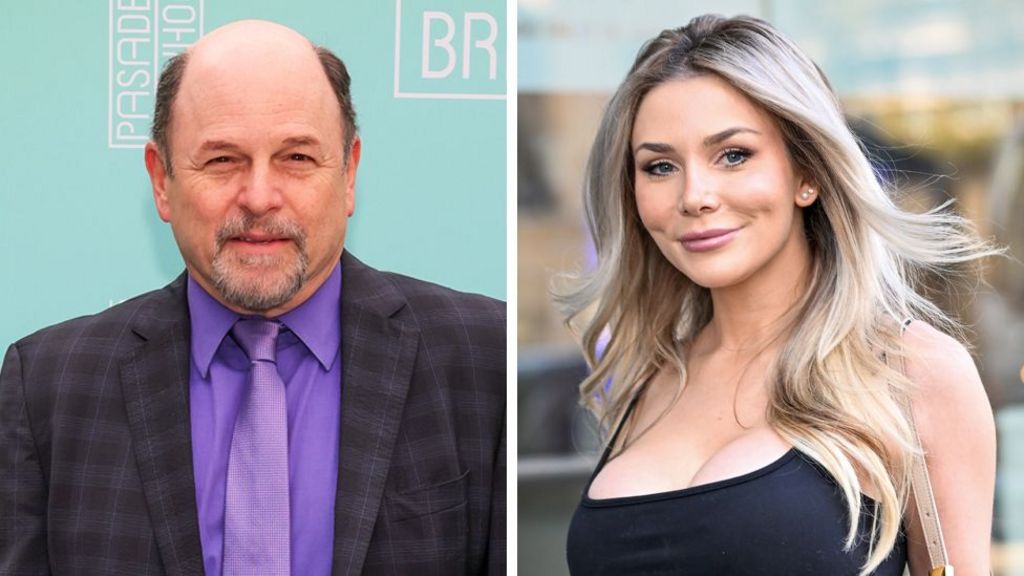
  • Jason Collins, NBA’s first openly gay player, dies aged 47

    Jason Collins, NBA’s first openly gay player, dies aged 47

    Jason Collins, the former NBA center who made history as the first active male athlete from one of the United States’ four major professional team sports to publicly come out as gay, has passed away at the age of 47 following a courageous fight against glioblastoma, an aggressive and deadly form of brain cancer.

    The news of his death was confirmed in a family statement shared publicly by the National Basketball Association, the league where Collins built a 13-year professional career. Collins first opened up about his diagnosis a year ago, revealing that the inoperable tumor had been detected after he began experiencing persistent difficulty concentrating. In a public update in December 2025, he described the growth as “a monster with tentacles spreading across the underside of my brain the width of a baseball.” Medical professionals told him at the time that without targeted treatment, he would not survive more than three months.

    To slow the tumor’s progression, Collins underwent treatment with the drug Avastin, and made repeated trips to Singapore to receive specialized targeted chemotherapy. Throughout his treatment, he maintained the same radical honesty that defined his 2013 coming out, framing his cancer battle as another chapter of living authentically. “Your life is so much better when you just show up as your true self, unafraid to be your true self, in public or private. This is me. This is what I’m dealing with,” he said at the time, drawing a parallel between his decision to share his cancer diagnosis and his choice to come out 12 years prior. He added that the years after coming out had been “the best of my life.”

    Born and raised in California, Collins launched his NBA career in 2001 with the New Jersey Nets, and went on to play for six different franchises across his 13 seasons in the league, retiring from professional basketball in 2014. Long recognized for his outsized impact beyond the court, he was named one of Time Magazine’s 100 most influential people in the world in the years following his coming out.

    When Collins published his iconic coming out essay as the front-page cover story for Sports Illustrated in 2013, he opened the groundbreaking piece with a simple, unflinching declaration: “I’m a 34-year-old N.B.A. center. I’m Black and I’m gay.” At the time of publication, Collins was a free agent, and many wondered whether his decision to come out would force an early end to his NBA career. Though the LGBTQ+ rights movement had made notable gains by 2013, same-sex marriage would not be legalized across the entire United States until two years later.

    Collins went on to re-sign with the Nets, who had by that time relocated to Brooklyn, officially becoming the first openly gay active athlete to compete in any of the four major U.S. professional sports leagues. His barrier-breaking move paved the way for greater LGBTQ+ inclusion across all levels of organized sports, a legacy that league leaders and loved ones emphasized in tributes following his death.

    “Jason Collins’ impact and influence extended far beyond basketball as he helped make the NBA, WNBA and larger sports community more inclusive and welcoming for future generations,” NBA Commissioner Adam Silver said in a statement Tuesday. “Jason will be remembered not only for breaking barriers, but also for the kindness and humanity that defined his life and touched so many others.”

    In their own statement released Tuesday, Collins’ family echoed that sentiment, noting his far-reaching impact beyond the hardwood. “Jason changed lives in unexpected ways and was an inspiration to all who knew him and to those who admired him from afar,” the family said.

  • As Trump heads to China, past US flubs on US policy toward Taiwan can be a warning

    As Trump heads to China, past US flubs on US policy toward Taiwan can be a warning

    For close to 50 years, every sitting U.S. president has been forced to navigate an extraordinarily delicate diplomatic verbal minefield when addressing U.S. policy toward Taiwan and China. Even the smallest misstatement or off-script comment can send immediate shockwaves through global geopolitics, triggering widespread alarm across major capitals.\n\nUnder the long-standing U.S. \”One China\” policy, Washington formally acknowledges Beijing’s position that Taiwan is part of China, while maintaining only unofficial, people-to-people and security ties with the self-governing island democracy. The framework has intentionally been crafted to remain vague, a diplomatic approach widely referred to as \”strategic ambiguity.\” Under this doctrine, the U.S. pledges to ensure Taiwan retains the necessary capabilities to defend itself against any forced unification attempt by Beijing, but deliberately refuses to explicitly state how far it would go militarily to counter a Chinese attack. As far back as 1995, former Assistant U.S. Defense Secretary Joseph Nye summed up the approach for Chinese officials asking about U.S. responses to a Taiwan crisis: \”We don’t know, and you don’t know.\”\n\n\”The whole idea is that you stick rigidly to the carefully crafted language that’s been built up over decades, you don’t deviate from it at all,\” explained Mike McCurry, former White House press secretary during the Bill Clinton administration. \”Because there are so many stakeholders on all sides listening and paying extremely close attention to every word.\”\n\nCarefully calibrated to preserve Taiwan’s security and de facto autonomy without making explicit irreversible security commitments, while also avoiding unnecessary provocation of Beijing, this long-standing policy is poised to return to the center of global attention ahead of former President Donald Trump’s visit to China this week. A review of modern diplomatic history makes clear that past U.S. leaders have repeatedly stumbled over the wording of the policy, requiring rushed, high-stakes diplomatic damage control to reset expectations.\n\n\”The entire thing relies on the precision of the language,\” said John Kirby, who has served as a spokesperson for the State Department, the Pentagon, and the White House across multiple Democratic administrations. \”You have to be extraordinarily precise when talking about Taiwan because, quite frankly, the stakes could not be higher.\”\n\n### A History of Missteps: When Presidents Strayed From Script\nPresident Joe Biden has repeatedly overstepped the long-standing parameters of the policy, four separate times publicly suggesting the U.S. would intervene militarily if China invaded Taiwan, each time forcing White House officials to quickly step in to clarify that decades of U.S. policy had not changed.\n\nDuring an August 2021 interview with ABC News, Biden was discussing U.S. commitments to mutual defense for NATO allies when he added, \”Same with Taiwan.\” The White House was immediately forced to issue a correction reaffirming that U.S. policy toward Taiwan remained unchanged. That October, during a CNN town hall, Biden again stated the U.S. was committed to defending Taiwan if China launched an attack, prompting an identical walkback from White House staff.\n\nIn May 2022, during a press conference held in Tokyo, Biden answered \”yes\” when asked if he would commit U.S. military forces to defend Taiwan, adding \”That’s the commitment we made.\” The comment forced Defense Secretary Lloyd Austin to publicly reaffirm Washington’s long-standing commitment to the \”One China\” framework just days later. Biden made a similar comment during a September 2022 interview with CBS’ *60 Minutes*, leading to another round of official clarifications from the White House.\n\nThe Trump administration also faced its own share of verbal and protocol blunders during its first term. Then-President-elect Trump broke with decades of precedent in 2016 when he took a direct phone call from Taiwanese President Tsai Ing-wen – a move no U.S. president-elect or president had made since Washington formally cut official diplomatic ties with Taiwan in 1979. Trump later dismissed the backlash to the call, posting on social media: \”Interesting how the U.S. sells Taiwan billions of dollars of military equipment but I should not accept a congratulatory call.\”\n\nThe following year, the Trump White House made another high-profile misstep when a statement about a meeting between Trump and Chinese President Xi Jinping in Germany incorrectly referred to Xi as the president of the Republic of China – the formal name for Taiwan – rather than the People’s Republic of China. The official White House transcript was quickly altered after the error was spotted to correct the wording.\n\nMiles Yu, who served as principal China policy advisor to former Secretary of State Mike Pompeo during the first Trump administration and now leads the China Center at the conservative Hudson Institute, argued that the frequent missteps are inevitable because the framework itself is a \”conceptual trap\” set by Beijing. \”You cannot explain something that’s unexplainable,\” Yu said, noting that he has pushed for the U.S. to abandon ambiguity and explicitly state its commitment to defending Taiwan. He added that the \”One China\” principle, as Beijing frames it to assert Taiwan is an inalienable part of Chinese territory, is \”completely of Chinese making.\”\n\nYu argued that even under the policy of strategic ambiguity, there has never been any real uncertainty about U.S. intentions among China’s top leadership. \”No one inside the Chinese high command has ever believed there is any ambiguity as to America’s resolve to defend Taiwan,\” he said. Instead, he pointed to repeated U.S. military mobilizations in the Taiwan Strait over decades of heightened tensions as clear evidence that Washington has long planned to defend Taiwan in proportion to any threat from Beijing. Today, Trump’s team says U.S. policy has not changed, but rejects the need for the traditional careful verbal gymnastics, pointing to Trump’s approval of multiple major arms sales packages to Taiwan during his time in office.\n\n### The Policy Has Always Been Hard to Articulate\nThe origins of the modern U.S. framework date back to the end of the Chinese Civil War in 1949, when Washington initially recognized Chiang Kai-shek’s Nationalist government as the legitimate ruler of all China, even after that government retreated from the mainland to Taiwan. It was not until 1979, when President Jimmy Carter normalized diplomatic relations with Beijing, that the U.S. formally adopted the \”One China\” policy, after months of closed-door negotiations between the two countries. Even so, Carter later acknowledged that the agreement did nothing to block a future president or Congress from committing U.S. military forces to defend Taiwan if needed.\n\nSubsequent presidents have repeatedly stumbled over the wording of the policy. During a 1998 roundtable in Shanghai, President Bill Clinton committed to the widely accepted \”Three No’s\” pledge: the U.S. does not support Taiwan independence, does not support a \”two Chinas\” or \”one Taiwan one China\” framework, and does not support Taiwan’s membership in international organizations that require statehood for membership. But just one year later, Clinton made off-script comments seeming to suggest he could pursue a military intervention in Taiwan similar to past U.S. military actions abroad.\n\nIn 2001, during an interview with The Associated Press, President George W. Bush was asked whether the U.S. would use military force to counter a Chinese attack on Taiwan, and responded simply \”It’s certainly an option.\” He later was forced to clarify the comment to CNN, saying it did not represent a toughening of U.S. policy, repeating his commitment to do \”what it takes to help Taiwan defend itself.\” Five years later, during a state visit to Washington by then-Chinese President Hu Jintao, a White House announcer mistakenly announced that the national anthem of the Republic of China would be played, instead of the People’s Republic of China, though the error was corrected before the anthem was played.\n\n### Staying On Message Requires Discipline\nA small number of presidents have managed to stick to the carefully crafted script over the years. In 1989, during a state banquet in Beijing, President George H.W. Bush stated that while the U.S. adheres to \”the bedrock principle that there is but one China, we have found ways to address Taiwan constructively without rancor.\” In 2014, during a joint press conference with Xi Jinping in Beijing, President Barack Obama struck a careful balance, saying \”We encourage further progress by both sides of the Taiwan Strait towards building ties, reducing tensions and promoting stability on the basis of dignity and respect.\”\n\nEven so, getting the wording right remains one of the hardest tasks in modern U.S. diplomacy. \”Anybody who has been at the State Department, the Pentagon or even the White House podium can tell you: When the issue of Taiwan came up, you went to your notes,\” Kirby said. \”You didn’t freelance it.\” Kirby admitted that even he once made a mistake when he got overconfident and spoke off-script, mischaracterizing the policy and causing what he called a \”little kerfuffle.\” Any major misstatement, Kirby explained, almost immediately draws pushback from senior U.S. policy officials, who demand an immediate correction: \”You’ll be highly encouraged to make a statement correcting it right away.\”

  • Trump set to meet with Xi in Beijing as war and inflation weigh on his presidency

    Trump set to meet with Xi in Beijing as war and inflation weigh on his presidency

    WASHINGTON and BEIJING – As global anxieties over armed conflict, trade frictions, and accelerating artificial intelligence development reach a fever pitch, former U.S. President Donald Trump has departed the White House en route to Beijing, where he will meet Wednesday with Chinese President Xi Jinping for what is shaping up to be one of the most consequential bilateral summits in recent years.

    Speaking to reporters ahead of his departure Tuesday, Trump framed the U.S.-China dynamic as a meeting of the world’s two preeminent global powers, noting, “We’re the two superpowers. We’re the strongest nation on Earth in terms of military. China’s considered second.” Despite this public projection of U.S. strength, the trip unfolds at a precarious moment for Trump’s domestic standing, with his approval ratings dragged down by fallout from the U.S.-Israeli war against Iran, which has sent U.S. inflation soaring.

    Against this backdrop, Trump is prioritizing trade negotiations, aiming to secure tangible wins through new agreements that would expand Chinese purchases of American agricultural products and civilian aircraft. His administration is also pushing to launch a new bilateral “Board of Trade” mechanism designed to resolve ongoing economic disputes, a step that grows out of the 12-month trade truce reached last October. That truce ended a tense year-long trade war sparked by Trump’s unilateral tariff hikes on Chinese goods, which China countered by leveraging its global dominance of rare earth mineral supplies.

    Even as trade sits atop the agenda, the Iran conflict continues to overshadow all other U.S. policy priorities. The war has forced the effective closure of the Strait of Hormuz, a critical global chokepoint for energy shipments, stranding countless oil and liquefied natural gas tankers and pushing energy prices to multi-year highs that threaten to derail fragile global economic growth. Though Iran’s foreign minister Abbas Araghchi held talks in Beijing just last week, Trump played down the need for Chinese mediation, telling reporters, “We have a lot of things to discuss. I wouldn’t say Iran is one of them, to be honest with you, because we have Iran very much under control.”

    Two other high-stakes issues will also feature heavily in the closed-door talks: the status of Taiwan and global nuclear arms control. The Chinese government has repeatedly voiced strong objection to planned U.S. arms sales to Taiwan, the self-governing island that Beijing claims as an inalienable part of its sovereign territory. The $11 billion weapons package, authorized by the Trump administration in December but not yet implemented, will be on the agenda, according to Trump himself. Trump has long signaled ambivalence about U.S. commitments to Taiwan, a stance that has sparked widespread speculation that he may be open to rolling back American support for the island democracy. At the same time, Taiwan’s position as the world’s leading producer of advanced semiconductors has made it central to the global AI race, with the U.S. importing more chips and related goods from Taiwan than from mainland China so far this year. Like his predecessor, Trump has pushed policy initiatives to reshore more advanced chip manufacturing to the U.S.

    Despite the many sticking points between the two sides, Trump struck an optimistic tone ahead of the meeting, declaring that the U.S.-China relationship will remain strong for decades to come. He also confirmed that Xi has agreed to a reciprocal visit to the U.S. before the end of the year, joking that he only regretted that a new White House ballroom currently under construction would not be completed in time for the high-profile visit. Trump departed Washington on Air Force One accompanied by a delegation of senior aides, family members, and leading tech industry figures, including Nvidia CEO Jensen Huang and Tesla and SpaceX CEO Elon Musk. Following his Wednesday evening arrival in Beijing, Trump will attend a formal state banquet Thursday before holding a working lunch with Xi on Friday and returning to the U.S.

    Analysts note that China enters the talks from a far stronger negotiating position than during previous summits with the Trump administration. “Even if they don’t get much on any of their core goals, as long as there’s not a blow-up in the meeting and President Trump doesn’t go away and look to re-escalate, China basically comes out stronger,” explained Scott Kennedy, senior adviser on Chinese business and economics at the Center for Strategic and International Studies, a Washington-based think tank. Key Chinese priorities for the summit include rolling back U.S. restrictions on Chinese access to advanced semiconductors and reducing remaining bilateral tariffs, Kennedy added.

    On the global security front, a senior anonymous Trump administration official confirmed that Trump will also propose a new three-way nuclear arms control pact that would include the U.S., China, and Russia, placing binding caps on each country’s deployed nuclear arsenal. China has long rejected participation in such agreements, pointing out that its current stockpile of roughly 600 operational nuclear warheads — per Pentagon estimates — is far smaller than the more than 5,000 warheads each held by the U.S. and Russia. The last remaining bilateral arms control pact between Washington and Moscow, New START, expired in February, ending more than 50 years of binding caps on the world’s two largest nuclear arsenals. As the treaty approached expiration, Trump rejected a Russian proposal to extend the bilateral agreement for one additional year, instead calling for “a new, improved, and modernized” deal that includes Beijing. Pentagon projections estimate China’s nuclear arsenal will grow to more than 1,000 operational warheads by 2030.

  • Trump’s ‘Golden Dome’ to cost $1.2 tn, watchdog estimates

    Trump’s ‘Golden Dome’ to cost $1.2 tn, watchdog estimates

    Washington D.C. — A new independent analysis from the nonpartisan Congressional Budget Office (CBO) has delivered a staggering cost projection for U.S. President Donald Trump’s ambitious national missile defense initiative, the “Golden Dome,” finding that developing, deploying, and sustaining the program over 20 years will reach roughly $1.2 trillion (£882 billion) — nearly seven times the total cost the Trump administration initially cited for the project. The CBO report, released publicly this Tuesday, breaks down the unprecedented spending, noting that acquisition costs alone for the multi-domain system will top $1 trillion. That price tag includes development and manufacturing of layered interceptor systems, as well as the construction of a new space-based network for missile warning and tracking, the congressional watchdog confirmed. Unveiled by President Trump just days into his second term in the White House this January, the Golden Dome is designed to blanket the entire continental United States in defensive coverage, capable of countering a wide range of aerial threats ranging from intercontinental ballistic missiles to advanced cruise missiles. The project was framed from its announcement as a response to the growing sophistication of next-generation offensive weapons developed by potential global adversaries. When Trump first announced the outlines of the plan last year, he said the program would require an initial $25 billion investment, with total long-term costs capped at $175 billion (£129.25 billion) — a figure that the new CBO analysis now completely invalidates with its far higher projection. Democratic Senator Jeff Merkley, who formally requested the independent cost estimate from the CBO, issued a sharp rebuke of the proposal following the report’s release. “The President’s so-called ‘Golden Dome’ is nothing more than a massive giveaway to defense contractors paid for entirely by working Americans,” Merkley said in a statement Tuesday. The BBC has reached out to both the White House and the U.S. Pentagon to request comment on the CBO’s findings and the criticism from lawmakers, but has not yet received a response. Beyond the sticker shock of the new cost projection, the report also underscores longstanding technical and strategic doubts surrounding the program. Defense experts and government officials have previously questioned whether a comprehensive nationwide defensive shield can actually be built to cover the United States’ massive landmass, while existing defense systems are already acknowledged to have fallen behind the pace of advanced weapons development by peer adversaries. The CBO’s analysis adds another critical warning: even if the full system is built as designed, it could still be overwhelmed by a large-scale full attack launched by major nuclear powers like Russia or China. The framework for the Golden Dome traces back to an early executive order from President Trump, which initially framed the initiative as an “Iron Dome for America” — a reference to the Israeli regional defense system. The order noted that the threat of advanced next-generation offensive weapons has “become more intense and complex” over time, creating a potentially “catastrophic” vulnerability for the United States. A week into his second term, the President directed the Department of Defense to draft formal development plans for the system, which the White House identified as the top priority to counter “the most catastrophic threat” facing the United States. Per Trump’s original description, the Golden Dome will integrate cutting-edge next-generation technologies across all operational domains: land, sea, and space. Key components include space-based tracking sensors and interceptor capabilities, with the President claiming last year that the system will be “capable even of intercepting missiles launched from the other side of the world, or launched from space.”