作者: admin

  • Greece says new biometric checks are active for non-EU travelers, but some could pass without scans

    Greece says new biometric checks are active for non-EU travelers, but some could pass without scans

    ATHENS, Greece – Amid swirling confusion over travel rules ahead of the peak summer tourism season, Greek authorities have clarified that the new EU-mandated biometric screening system for non-European Union travelers at the country’s entry points is fully functional, directly contradicting earlier reports of a temporary seasonal exemption for British visitors. The clarification comes as Greece, one of Europe’s top tourism destinations, balances European regulatory obligations with the economic urgency of supporting its critical travel industry.

    Responding to queries from the Associated Press on Thursday, the Greek Foreign Ministry confirmed that no official notification of nationality-based temporary waivers has been issued. “We have not received any further update or clarification as to whether, for example, specific nationalities are temporarily exempt from the relevant procedure,” the ministry stated.

    The biometric screening framework, officially named the EU Entry-Exit System (EES), launched at Greek airports and border crossings on April 10 as part of a bloc-wide rollout that replaces traditional ink passport stamps with digitally stored biometric data, including facial photographs and electronic fingerprint records. The system is designed to streamline border security and track cross-border travel more efficiently across the Schengen area.

    Confusion over exemptions first emerged after a visit by Greek officials to the United Kingdom, during which informal comments suggested British travelers – who make up one of the largest tourist groups visiting Greece annually – would be waived from the requirement for the 2024 summer travel season. Even the UK Foreign Office updated its official travel guidance to reflect this initial claim, noting that “Greek authorities have indicated that they will not collect biometric data (fingerprints and photos) for UK travelers as part of EES. Follow the advice of authorities on the ground.”

    That informal understanding was quickly corrected by senior Greek and EU officials, who made clear that temporary suspensions of the system are only permitted during periods of extreme peak passenger congestion at specific individual entry points, and are never granted on the basis of nationality or country of origin. In short, no national group will be automatically exempt from the screening requirement.

    Even with that clarification, many non-EU travelers may still avoid the biometric check process in practice this summer. European Union rules allow for temporary pauses in biometric collection during the early rollout phase of the system to prevent crippling airport delays that could disrupt travel. Last week, Greek police reaffirmed that the EES is in full operation, but added that authorities would “take all necessary measures to ensure the smooth flow of visitors … making full use of provisions in Union legislation” – a nod to the potential temporary suspensions at busy airports when passenger numbers surge.

    The confusion around the rule has stoked anxiety among private Greek tour operators, who worry that added screening requirements could deter last-minute travel bookings from the UK – a key market for Greek tourism. Operators also note that the requirement creates a clear disparity between non-EU travelers and EU citizens, who face no routine passport checks when moving within the Schengen bloc.

    Tourism is one of the largest drivers of the Greek economy, accounting for a substantial share of national output. In 2023 alone, nearly 38 million international travelers visited the country, pumping 23 billion euros ($25 billion) into Greece’s 204-billion-euro national economy. Germany topped the list of source markets with nearly 6 million visitors, followed closely by the United Kingdom with 4.9 million. The upcoming summer travel season is widely seen as critical to sustaining the country’s post-pandemic economic growth.

  • What to know about Xi’s warning to Trump over the ‘Taiwan Question’

    What to know about Xi’s warning to Trump over the ‘Taiwan Question’

    In a high-stakes diplomatic summit between Chinese leader Xi Jinping and former U.S. President Donald Trump, Beijing has delivered its starkest warning to Washington in recent years over the long-running Taiwan dispute, emphasizing that mishandling the issue could trigger direct confrontation between the two global powers.

    According to an official readout released by China’s Ministry of Foreign Affairs, Xi framed the Taiwan question as the single most sensitive and consequential issue shaping the future of bilateral relations between Beijing and Washington. Striking an uncompromising tone, Xi stated that Taiwan independence and cross-Strait peace are fundamentally incompatible, incompatible as fire and water. He added that a constructive approach to the issue would pave the way for overall stability in U.S.-China ties, while mismanagement would lead to open clashes and even full conflict that would put the entire bilateral relationship in catastrophic jeopardy.

    The historically separate governance of China and Taiwan dates back to the end of the Chinese civil war in 1949, when defeated Nationalist Party forces retreated to the island after the Communist Party claimed victory on the mainland. Over the following decades, Taiwan transitioned from decades of martial law to a fully functional multi-party democracy, a status that Beijing has never recognized. China continues to claim the self-governing island of 23 million people as an integral part of its territory, reserving the right to retake it by force if necessary. Cross-Strait relations have deteriorated sharply since 2016, when Tsai Ing-wen of the pro-sovereignty Democratic Progressive Party was elected president of Taiwan. Beijing responded by cutting off all official bilateral dialogue with Taipei, and in recent years has ramped up military pressure, deploying warships and fighter jets to air and sea spaces close to the island on an almost daily basis. Beyond military coercion, Beijing has also successfully poached a number of Taiwan’s remaining formal diplomatic allies, steadily isolating the island on the global stage.

    The U.S. maintains no official diplomatic relations with Taiwan but is the island’s largest and most critical unofficial ally, bound by domestic law to ensure Taiwan has the capability to defend itself against potential aggression. For decades, Washington has maintained a policy of “strategic ambiguity”, refusing to explicitly confirm whether it would intervene militarily if China launched an attack on the island. Following Xi’s comments, then-U.S. Secretary of State Marco Rubio reaffirmed that long-standing U.S. policy on Taiwan remained unchanged, while warning that a military seizure of Taiwan by force would be a catastrophic mistake for Beijing.

    Beyond its geopolitical significance, Taiwan holds a critical position in the global tech supply chain: it is the world’s leading manufacturer of advanced semiconductors, AI servers, and high-precision instruments, and the global AI boom of recent years has pushed the island’s top technology firms to record-breaking revenue and profit levels.

    Regional analysts note that Xi’s unusually stern rhetoric reflects growing anxiety in Beijing over shifting U.S. policy and deepening ties between Washington and Taipei. In December preceding the summit, the Trump administration announced an $11 billion arms package for Taiwan — the largest ever offered to the island — and Trump has repeatedly pressured Taipei to increase its own defense spending.

    William Yang, senior Northeast Asia analyst at the International Crisis Group, explained that Beijing’s forceful readout of the summit carries a clear signal. “If China had secured any meaningful concession on Taiwan from Trump, it would have been reflected in Beijing’s official statement. The absence of any such mention and the relatively stern tone suggest Trump may not have budged on Taiwan in principle,” Yang said.

    Ma Chun-wei, a scholar of cross-Strait relations at Taiwan’s Tamkang University, added that Beijing is also concerned that the Trump administration has begun to deviate from long-standing standardized diplomatic language on the Taiwan issue. While the U.S. has for decades acknowledged Beijing’s position on Taiwan while maintaining unofficial ties with the island, the Trump administration’s December national security strategy only reaffirmed a commitment to opposing any unilateral change to the status quo, a framing that experts say leaves room for interpretation that worries Beijing.

    For Xi, Ma noted, taking a hard line on the Taiwan issue is also a matter of domestic political credibility: “For Xi Jinping, he must show that the Taiwan issue is in China’s hands. He must demonstrate this image, or else he would be criticized,” Ma explained.

    The report was filed from Bangkok by AP correspondents, with additional contributions from Simina Mistreanu in Bangkok and Michelle L. Price in Washington.

  • Why were Alex Murdaugh’s murder convictions overturned?

    Why were Alex Murdaugh’s murder convictions overturned?

    One of the highest-profile criminal cases in recent United States history has taken a dramatic legal turn: the South Carolina Supreme Court has overturned Alex Murdaugh’s convictions for the murder of his wife and son, and has mandated that he stand trial again. This unexpected development has drawn widespread attention to systemic questions about judicial conduct and the integrity of high-stakes criminal proceedings, with legal analysts and the public alike dissecting the ruling’s far-reaching implications.

    Murdaugh, a former prominent personal injury lawyer from a powerful South Carolina legal dynasty, was found guilty in 2023 of murdering his wife Margaret “Maggie” Murdaugh and their 22-year-old son Paul Murdaugh at the family’s hunting estate in 2021. The trial captivated national media, shining a light on the decades-long influence of the Murdaugh family in South Carolina’s legal and political circles, as well as a web of financial fraud and alleged misconduct that had already entangled Alex Murdaugh. Following the guilty verdict, he was sentenced to two consecutive life terms in prison.

    In his explanation of the court’s ruling, BBC correspondent Bernd Debusmann points to a key controversy that undermined the original trial: the misconduct of the lead law enforcement officer who led the investigation into the Murdaugh killings. The court found that the officer, who had been accused of multiple instances of corrupt and unethical conduct in other cases, failed to disclose critical information about his own history of problematic behavior to the defense during the original trial’s jury selection process. This failure, the supreme court ruled, violated Murdaugh’s constitutional right to a fair and impartial trial, a core protection in the U.S. criminal justice system.

    The ruling has reignited debates across the country about the standards of conduct for law enforcement in high-profile cases, as well as the safeguards in place to prevent wrongful convictions. Legal experts note that the supreme court’s decision does not acquit Murdaugh of the murder charges; it simply orders that the case be retried with a new jury, free from the procedural irregularities that marred the first proceeding. As the legal process moves forward, the case continues to hold national attention, with observers waiting to see how the new trial will unfold and whether it will bring a definitive conclusion to a case that has already shaken South Carolina’s legal establishment to its core.

  • Polish capital makes history with the first same-sex marriage registration

    Polish capital makes history with the first same-sex marriage registration

    In a landmark step for LGBTQ+ equality in Central Europe, Poland’s capital Warsaw marked a historic milestone Thursday by issuing its first official transcription of a same-sex marriage, acting in compliance with binding court orders that mandate recognition of same-sex unions legally registered in other European Union member states.

    The process set in motion months ago, when the European Court of Justice, the EU’s highest judicial body, ruled last November that Poland must formally recognize same-sex marriages completed in other EU nations, even though Poland’s domestic legislation does not currently allow for same-sex marriage within its borders. That top EU ruling was subsequently upheld and applied this March by Poland’s Supreme Administrative Court, which ordered local authorities to recognize the 2018 marriage of two Polish men that was legally registered in Germany.

    Warsaw Mayor Rafał Trzaskowski, a prominent center-left political figure, confirmed the breakthrough in a public announcement Thursday. “This morning we issued the first transcription of a marriage certificate for a same-sex couple, in accordance with the court rulings,” Trzaskowski stated. Going beyond the mandatory court order, the mayor also pledged that Warsaw would take a proactive approach to recognizing future same-sex marriages contracted by Polish couples in other EU countries, even in cases where no individual court ruling has been issued for a specific couple.

    The move aligns with commitments from Poland’s new prime minister, Donald Tusk, whose centrist government took office late last year with a pro-EU, pro-equality agenda. Speaking earlier this week, Tusk confirmed that his administration was working to speed up implementation of the court rulings across the country. Addressing directly to same-sex couples in Poland, Tusk offered a public apology for decades of marginalization. “I apologize to all those who, for many years, felt rejected and humiliated,” he said.

    Tusk also called on public officials across the country to uphold equal treatment for LGBTQ+ Poles, regardless of their own personal beliefs. “I appeal to all officials to respect the dignity of each individual and to remember that these people live around us, among us, near us, and that they deserve the same feelings of respect, dignity and love as any other person,” he emphasized.

    The milestone comes after decades of grassroots advocacy by LGBTQ+ activists in Poland, where national law has long banned both same-sex marriage and formal civil partnerships for same-sex couples. Crucially, the recent court rulings do not require Poland to fully legalize same-sex marriage domestically, a distinction that has softened some opposition from conservative groups. Tusk’s government ran on a platform that included legalizing civil unions for same-sex couples, a key campaign promise that has hit a wall in recent months. The proposal faces persistent pushback from hardline conservative factions within Tusk’s own governing coalition, as well as firm opposition from Polish President Karol Nawrocki, a devout Catholic who has repeatedly voiced opposition to LGBTQ+ equal rights measures.

    This development comes amid a broader push for LGBTQ+ protections across the European Union, where the European Commission has recently moved forward with a proposed ban on the controversial practice of gay “conversion therapy”, a discredited practice aimed at changing an individual’s sexual orientation.

  • Israeli minister criticizes Barcelona star Lamine Yamal for waving Palestinian flag

    Israeli minister criticizes Barcelona star Lamine Yamal for waving Palestinian flag

    In the wake of FC Barcelona’s 2025 La Liga title victory, a celebratory parade through the streets of the Catalan capital has sparked international controversy, after 18-year-old star winger Lamine Yamal displayed a large Palestinian flag during the open-top bus procession.

    Local officials estimated that close to 750,000 fans turned out to line Barcelona’s streets on Monday, just 24 hours after the club secured its latest domestic league crown. Yamal, a rising Muslim football talent who is set to represent Spain at the upcoming men’s FIFA World Cup in North America, later shared images of himself holding the flag to his public Instagram account, where he boasts millions of followers worldwide.

    The incident quickly drew sharp rebuke from Israel’s top defense official. On Thursday, Israeli Defense Minister Israel Katz took to social media platform X to denounce Yamal’s action, framing it as a deliberate act of hate incitement amid ongoing conflict between Israel and the Palestinian militant group Hamas. “Lamine Yamal chose to incite hate against Israel while our soldiers combat the terrorist organization Hamas, an organization that massacred, raped and burned Jewish children, women and the elderly on Oct. 7, 2023,” Katz wrote.

    Yamal’s gesture comes amid longstanding, widespread criticism of Israel’s military campaign in Gaza across Spanish society and politics. Since Hamas’ October 2023 cross-border attack that triggered the conflict, Israeli military operations have killed tens of thousands of Palestinians in Gaza, leading to broad condemnation from the Spanish government and general public. Spain is also one of five nations that have announced a boycott of the 2025 Eurovision Song Contest, in protest of Israel’s participation in the annual competition.

    The Gaza conflict has increasingly spilled over into global sports and cultural spaces, with growing public backlash against Israel’s military campaign driving high-profile protests across multiple disciplines. Last year’s Vuelta a España, one of cycling’s three Grand Tour races, faced repeated disruptions from demonstrators objecting to the inclusion of an Israeli-backed team. Football, basketball and other major sports have also seen public acts of protest from athletes echoing widespread global calls for a ceasefire and an end to the humanitarian crisis in Gaza.

  • Honda makes its first annual loss in 70 years

    Honda makes its first annual loss in 70 years

    Japanese automotive manufacturing giant Honda has logged its first annual operating loss in 70 years, after high-stakes investments in the global electric vehicle (EV) segment failed to deliver the projected returns the company counted on. For the 12-month period ending March 2026, the firm reported a staggering operating deficit of ¥423 billion, equal to roughly $2.68 billion or £1.99 billion, driven heavily by weaker-than-forecast consumer uptake of EVs across key markets.

    In response to the disappointing results, Honda announced it will walk back several aggressive EV production targets, and shift to sourcing key components from lower-cost suppliers based in China as part of a sweeping cost-cutting strategy. The company also pinned a portion of its losses on shifting policy dynamics in the United States, one of its largest global markets. Changes implemented by the Trump administration in 2025 eliminated the $7,500 tax credit that U.S. consumers previously received for purchasing new EVs, and introduced new tariffs on imported cars and auto parts. Even after a late-year reduction that cut the tariff rate from 25% to 15%, the levies have squeezed profit margins for most major foreign automakers operating in the U.S. market, including Honda.

    Founded as a motorcycle manufacturer before expanding into passenger vehicles, Honda has grown steadily since its 1957 stock market listing to become Japan’s second-largest automaker. Industry analysts note that the company’s large scale and long-standing legacy as a conventional gas-powered vehicle producer have left it poorly positioned to pivot quickly to match volatile swings in EV consumer demand.

    Going forward, Honda will refocus its resources on its consistently profitable motorcycle division, its in-house financial services arm, and hybrid vehicle manufacturing, segments that have delivered steady returns for the firm in recent years. The company named North America, Japan and India as its top three priority markets for future growth, while confirming it has suspended planned EV and battery production facilities in Canada.

    Honda CEO Toshihiro Mibe confirmed that the company is abandoning two of its most high-profile EV targets: the goal to make EVs 20% of all new car sales by 2030, and the broader plan to transition 100% of the company’s vehicle lineup to electric power by 2040. Looking ahead, Honda projects it will post an additional ¥512 billion in EV-related losses during the 2026-2027 fiscal year ending March 2027.

    Danni Hewson, head of financial analysis at investment firm AJ Bell, called the 70-year losing milestone “bleak but not surprising.” “Like many legacy automakers it gambled on motorists making a quick move to EVs – and lost as the world shifted,” Hewson explained. She noted that a combination of political policy changes, persistent global cost of living pressures, and stiff competition from lower-cost Chinese EV manufacturers forced Honda to scale back its ambitious EV plans and absorb massive write-down costs.

    Even with a recent uptick in EV demand driven by spiking gasoline prices tied to geopolitical tensions between the U.S., Israel and Iran, Hewson noted that large, established manufacturers like Honda face steep challenges adapting to rapid market shifts in real time. She warned that further volatility remains on the horizon, and that the industry could face additional unforeseen twists and turns in coming years that will test the resilience of legacy automakers still navigating the transition from conventional to electric vehicles.

  • Full list of Israel’s ceasefire violations in Gaza, seven months on

    Full list of Israel’s ceasefire violations in Gaza, seven months on

    Seven months have passed since the United States announced a mediated ceasefire designed to end Israel’s two-year military campaign in Gaza, but the fragile truce has failed to deliver on its stated goals, with consistent Israeli violations and a still-unresolved humanitarian disaster continuing to unfold across the Palestinian enclave. While the intensity of Israeli operations has dropped from the pre-truce level, near-daily military strikes and breaches of the agreement have become the new normal, and Israel’s crippling land, air and sea blockade remains firmly in place, leaving Gaza’s civilian population trapped in a worsening crisis.

    Israeli military officials have repeatedly attempted to justify their violations by claiming Palestinian armed factions have broken the terms of the ceasefire. However, verified data from Palestinian and international bodies confirms that the overwhelming majority of people killed, displaced and detained during this seven-month period have been unarmed civilians, including hundreds of children.

    A core stumbling block remains the failure to implement even the first phase of the ceasefire agreement, and Washington has been unable to push forward negotiations for the planned second stage. That phase was originally intended to deliver tangible progress: the disarmament of Palestinian armed groups, deployment of international peacekeeping stabilisation forces, large-scale reconstruction of war-damaged infrastructure across Gaza, and a full withdrawal of all Israeli military forces from the enclave. This stalled progress has cast deep uncertainty over the future of the already fragile truce, as Israel continues to amass additional military units along Gaza’s borders and issues repeated threats of a large-scale new ground offensive.

    According to official documentation released by the Gaza government media office, Israeli forces committed no fewer than 2,400 verified ceasefire violations between 10 October 2025 and 10 April 2026, with dozens of additional breaches recorded in the weeks since that six-month window. These violations break down into more than 1,100 air strikes and artillery shelling attacks, alongside 921 incidents of direct gunfire targeting civilian populations.

    Official figures from the Palestinian Ministry of Health show that as of 14 May 2026, these ongoing attacks had killed at least 857 Palestinians and injured another 2,486 people. Of those killed, UNICEF confirms that at least 229 were children. The Gaza government media office also adds that Israeli forces have arbitrarily detained at least 50 Palestinians within Gaza during the ceasefire period.

    Documented violations span a wide range of targets: attacks on civilian community gatherings, strikes on internally displaced person camps, targeted killings of Palestinian police officers, journalists and international aid workers, and repeated incursions into civilian areas. Israeli naval units have also consistently opened fire on Palestinian fishermen and civilian communities along Gaza’s coastline, arresting multiple fishermen. In one high-profile incident last month, Israeli gunboats shot and killed an unarmed Palestinian woman off the northwestern coast of Gaza.

    Overall, the confirmed death toll from Israel’s military campaign, which began in October 2023, has now reached more than 72,700 Palestinians killed, with thousands more still missing and presumed dead beneath the rubble of destroyed residential and public buildings across the enclave.

    The initial October 2025 ceasefire agreement included a core provision that all existing battle lines would remain frozen in place until subsequent phases of the agreement could be negotiated and implemented. This arrangement led to the creation of what Israel calls the “Yellow Line”, a unilateral Israeli demarcation that declared vast swathes of Gaza territory as off-limits to Palestinian civilians, barring them from returning to or accessing their own land. When the ceasefire was first signed, Israeli forces already controlled approximately 53 percent of Gaza’s total territory, spread across the enclave’s northern, southern and eastern regions. The agreement stipulated that future phases would include a gradual full withdrawal of Israeli forces from all of Gaza.

    Instead of withdrawing, however, the Israeli military has expanded the area behind the Yellow Line, bringing roughly 64 percent of Gaza’s total territory under direct Israeli military control and forcing the enclave’s 2 million-plus civilian population into just 36 percent of their own land. Israeli forces have also carried out near-daily home demolitions across the enclave, another clear violation of the ceasefire terms. While most demolitions have occurred in areas Israel now claims beyond the Yellow Line, multiple demolitions have also been recorded in areas officially designated as under Palestinian control. An analysis published by The New York Times in January 2026 found that Israel had demolished more than 2,500 residential and public buildings in just the first three months of the ceasefire.

    One of the most high-profile commitments Israel made under the ceasefire agreement was to ease its restrictions on humanitarian aid deliveries, and allow up to 600 trucks of food, fuel, medical supplies, emergency shelter materials and commercial goods to enter Gaza every single day. To date, these commitments have never been met, according to official United Nations data. Human rights organisations have repeatedly warned that ongoing Israeli restrictions on aid have prolonged the humanitarian catastrophe and severely limited the ability of relief groups to deliver life-saving support to Gaza’s population.

    By the end of April 2026, the Gaza government media office confirms that just over 4,500 aid trucks had entered the enclave – that is only 25 percent of the 18,000 trucks that were stipulated under the terms of the agreement. That works out to an average of just over 200 trucks per day, less than a third of the agreed 600-truck daily threshold. Even the limited aid that has been allowed in has excluded many of the most urgently needed supplies, including emergency shelter materials like tents and prefabricated mobile homes, as well as essential life-saving medications, medical equipment and fuel for civilian infrastructure and emergency services.

    These ongoing restrictions have triggered a new wave of severe food insecurity in recent months, with many Gaza residents now fearing a return to the full-scale famine conditions that the United Nations officially declared in parts of Gaza in August 2025, during the height of Israel’s siege. Doctors from Gaza’s Ministry of Health and civil defence rescue teams have repeatedly stated that shortages of fuel and medical supplies have left them unable to provide even basic adequate healthcare to injured and sick civilians, or carry out effective rescue operations for people trapped under rubble after Israeli strikes.

    Another key commitment under the ceasefire agreement was that Israeli forces would withdraw from the Rafah border crossing with Egypt in southern Gaza, and allow unimpeded free movement of people through the crossing. With thousands of Palestinians suffering from severe war injuries requiring urgent specialist treatment that is not available inside Gaza, full reopening of the Rafah crossing was widely seen as a critical measure to reduce civilian suffering. Instead, Israel kept the Rafah crossing fully closed for nearly four months after the ceasefire agreement was signed.

    In February 2026, Israel began allowing a maximum of 50 Palestinians a day to enter Gaza from Egypt, while limiting the number of people allowed to depart Gaza for treatment or other purposes to roughly 150 people per day. Even these greatly reduced quotas have not been consistently respected, with Israel repeatedly blocking movement for travellers who had already received official approval, and shutting the crossing down for extended periods. One of the longest shutdowns came in late February, during Israel’s military strike campaign against Iran.

    Official data from the Gaza government media office shows that between 2 February and 30 April 2026, only 1,567 people crossed through Rafah, out of the 6,000 people that the agreement allowed to cross during this period. That puts Israeli compliance with the Rafah crossing terms at just 26 percent. According to the Palestinian Ministry of Health, these movement restrictions have contributed to the deaths of up to 10 Palestinian civilians every single day, who die before they can access the urgent medical treatment they need abroad.

  • Flattery and fanfare as Trump welcomed to China – but thorny issues remain

    Flattery and fanfare as Trump welcomed to China – but thorny issues remain

    Nine years after his last trip to China during his first presidential term, former and returning U.S. President Donald Trump touched down in Beijing for a landmark summit that could redefine the trajectory of relations between the world’s two most powerful rival nations. Chinese President Xi Jinping rolled out a meticulously orchestrated, grand ceremonial welcome for Trump outside the Great Hall of the People, complete with a military honor guard, 21-gun salute, and a military band playing the U.S. national anthem. As Trump walked the receiving line, he twice paused to greet crowds of waving schoolchildren holding both Chinese and American flags, before sharing a warm, informal greeting with Xi, patting Xi’s arm in a gesture of goodwill that drew attention from observers.

    In unscripted remarks after their initial handshake, Trump offered effusive praise for his host, telling Xi, “You’re a great leader. I say it to everybody.” During a later cultural tour of the 600-year-old Temple of Heaven, he commented to reporters that China is a beautiful country, and opened his remarks at that evening’s state banquet by calling the high-level talks a “cherished” opportunity to connect. This warm reception marks a striking departure from Trump’s long-held rhetorical posture toward China, which he built his 2016 political brand around by taking a hardline stance. During his first campaign, he infamously claimed China was “raping” the United States economically; in 2020, he doubled down, saying China had “ripped off the United States like no one has ever done before” and labeled the COVID-19 pandemic the “Chinese virus”. Ahead of his return to office, he pledged to force China to “pay” for what he framed as unfair trade practices.

    At the peak of the U.S.-China trade war in the preceding year, the two powers imposed reciprocal tariffs totaling over 100% on each other’s goods. A fragile truce followed the escalation, and this summit was framed around three core unanswered questions: whether the truce will hold, what long-term trade deal will replace it, whether Beijing can help broker a diplomatic resolution to the ongoing Iran crisis that has blocked the Strait of Hormuz, and how the two powers will navigate the long-simmering tensions over Taiwan – the self-governing island that China claims as its sovereign territory, and which the U.S. maintains unofficial diplomatic and defense ties with.

    Beijing’s elaborate welcome was not just a gesture of hospitality to Trump and the 30 top American CEOs accompanying him on the trip; it was a deliberate display of geopolitical strength broadcast to audiences across the United States and the entire globe. Almost immediately after talks got underway, Chinese state media released comments from Xi that made clear Taiwan remains a major flashpoint that could derail progress between the two sides. When reporters pressed both leaders on whether they had discussed Taiwan during their Temple of Heaven visit, neither leader responded to the question.

    John Delury, senior fellow at the Asia Society’s Center on US-China Relations, framed the summit as a visible marker of shifting global power dynamics. “We are witnessing a historical change,” Delury explained. “I hesitate to put too much on this specific summit, but the inexorable rise of China to a place where it is legitimately rivaling the U.S. – that is now happening before our eyes. Beijing is now the second world capital.”

    Xi has positioned himself as a steady, predictable global leader in contrast to what many global observers frame as Trump’s mercurial policy style. In the years since Trump’s first term, China has expanded its global trade reach dramatically, pre-emptively building new economic partnerships to offset the risk of renewed U.S. tariffs. Over the past year, China demonstrated its economic leverage during the trade war: it matched Trump’s tariffs tit-for-tat, and restricted exports of rare earth minerals – critical inputs for advanced global manufacturing – forcing Washington to return to negotiations and agree to lower tariff rates.

    Today, China controls 30% of global manufacturing output, processes over 90% of the world’s rare earth minerals, and produces between 60% and 80% of global supplies of solar panels, wind turbines and electric vehicles. Xi has indicated he believes this summit has already made clear to the U.S. and the world just how deeply dependent global economies are on Chinese manufacturing and technology. While ongoing international concerns over China’s human rights record and its close diplomatic ties to Russia and North Korea persist, those issues have been pushed to the background amid Trump’s broader reshaping of the global world order. Many global analysts now see the trajectory of global power shifting in China’s favor.

    China enters these talks with a clear upper hand, as Trump faces domestic political headwinds of his own, including sinking approval ratings, and international pressure over the ongoing Iran crisis that has shut down the Strait of Hormuz – a critical global energy shipping lane whose closure has sent shockwaves through the global economy. Trump has publicly said he is counting on Beijing’s help to reopen the corridor. As Iran’s largest trading partner with decades of close diplomatic ties to Tehran, Beijing holds significant influence over the Iranian government. If Xi can help push Tehran toward negotiations to de-escalate the crisis, that would give China even greater leverage in talks with the U.S.

    U.S. Secretary of State Marco Rubio framed the U.S. position ahead of the trip, telling Fox News, “It’s in their interest to resolve this. And we hope to convince them to play a more active role.” But analysts widely agree China will demand major concessions in exchange for cooperation on Iran. According to Chinese state media, Xi has already made clear to Trump during closed-door talks that the Taiwan issue has the potential to spark direct conflict between the two powers. Analysts expect Xi will pressure the U.S. to delay or halt arms sales to Taiwan – a requirement that would put Washington in a difficult position, as it is legally bound to provide the island with defensive military capabilities. Officials in Taipei are closely watching the summit’s outcome with significant anxiety.

    This visit differs from Trump’s first trip to China in key ways: unlike his first visit, when former First Lady Melania Trump accompanied him, this trip centers heavily on the high-powered U.S. business delegation, which includes some of the biggest names in American tech and industry: Tesla CEO Elon Musk, Apple CEO Tim Cook, and Nvidia CEO Jensen Huang, all of whom attended the opening state banquet.

    Trump has centered his trade demands around pushing China to further open its domestic markets to increased access for U.S. companies. As of the end of the first day of talks, few concrete details of any potential deal have been released to the public. A preliminary White House statement only confirmed that the two sides “discussed ways to enhance economic cooperation”, including expanding U.S. firms’ access to the Chinese market and facilitating Chinese investment in U.S. domestic industries. On the Iran issue, the statement added that “both countries agreed that Iran can never have a nuclear weapon” and “the Strait of Hormuz must remain open to support the free flow of energy”.

    Additional talks between the two leaders are scheduled for the following day, which are expected to yield more concrete details on potential agreements. For Trump, a tangible diplomatic win from the summit is critical to boost his sinking domestic approval ratings back home. Xi, for his part, has signaled China is open to expanding cooperation in trade and agriculture, a move widely interpreted as a signal Beijing is prepared to increase purchases of U.S. soybeans, beef, and Boeing commercial aircraft.

    The two leaders have agreed to a new framing of the bilateral relationship as “constructive, strategic and stable”, a positioning that will guide U.S.-China ties for the next three years. At the same time, China is grappling with its own serious domestic economic challenges, including rising youth unemployment, uneven post-pandemic growth, a persistent real estate sector crisis, and record high levels of local government debt. While Beijing seeks a global order less centered on U.S. hegemony, it still has a critical strategic interest in maintaining stable, functional relations with Washington.

    At the close of the opening day’s state banquet, after remarking that he had received a “magnificent welcome like no other” in Beijing, Trump formally invited Xi to visit Washington D.C. for a return summit in September. Xi struck a unifying tone in response, saying that the “great rejuvenation of the Chinese nation” and Trump’s campaign slogan “Make America great again” can progress hand in hand. He closed his remarks with a toast to the future of both nations, ending the evening with a single word: “Cheers.”

  • US federal judge blocks US sanctions against UN’s Francesca Albanese

    US federal judge blocks US sanctions against UN’s Francesca Albanese

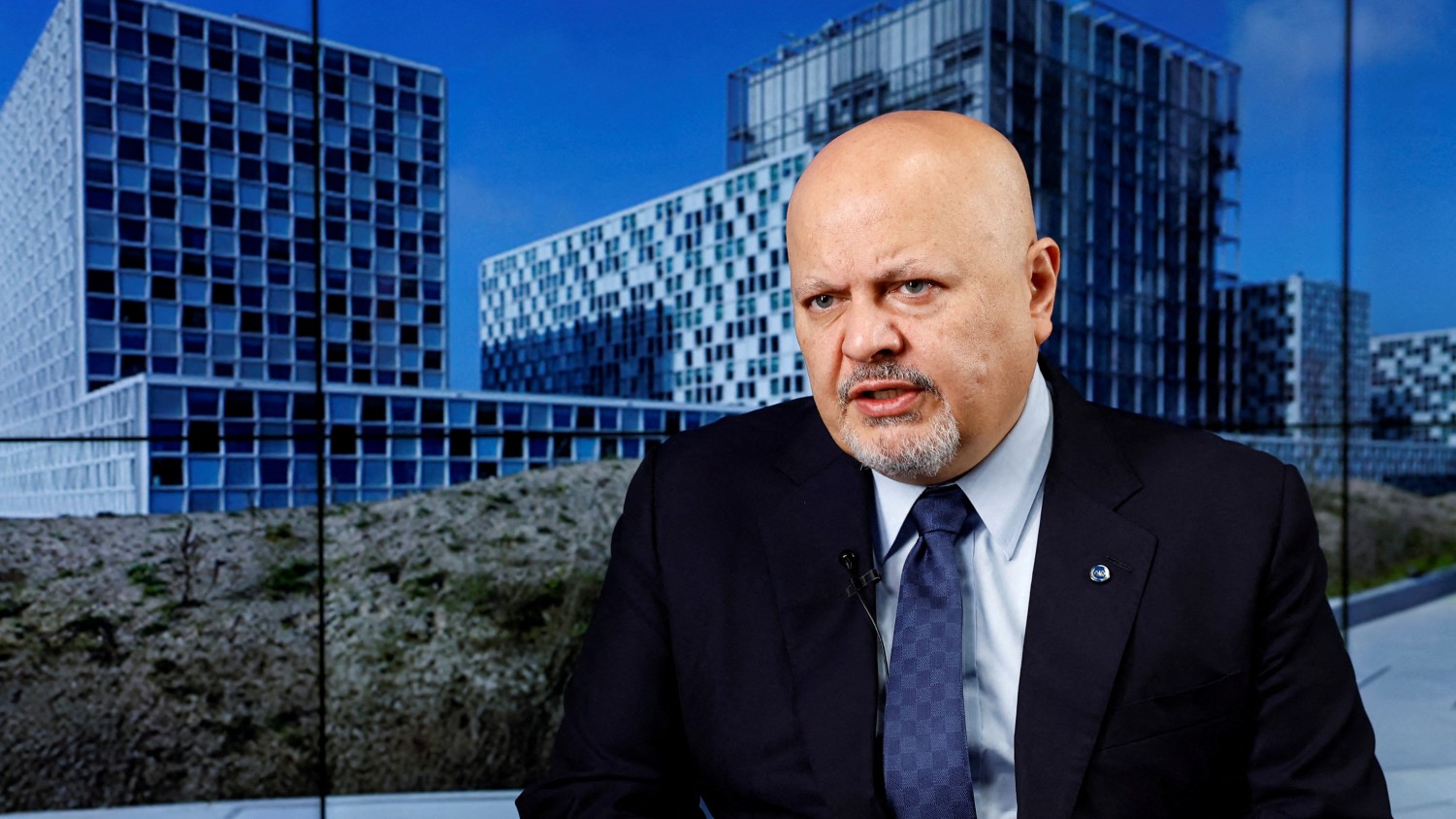
    In a landmark ruling that upholds core free speech principles, a US federal judge issued a temporary preliminary injunction on Wednesday halting the Trump administration’s sanctions against Francesca Albanese, the United Nations Special Rapporteur on Palestine, finding the punitive measures likely violated her constitutional right to free expression.

    Albanese was targeted with US sanctions in July 2025, just weeks after she published a sweeping, critical report on June 30 that condemned Israel’s military campaign in Gaza. In that document, she identified over 60 major global firms — including tech giants Google, Amazon, and Microsoft — alleging the companies were complicit in shifting Israel’s occupation-based economy into what she framed as an economy of genocide. The report called on the International Criminal Court (ICC), national judicial bodies worldwide to launch investigations and prosecute implicated corporate leaders and companies, and urged UN member states to impose targeted sanctions and asset freezes on the entities named.

    The sanctions imposed on Albanese carried severe practical consequences: she was barred from entering the United States, and was shut out of the US banking system, cutting off access to basic financial services. The legal challenge to the sanctions was brought by Albanese’s husband Massimiliano Cali, a senior World Bank economist based in Tunisia, who filed the civil suit on behalf of himself, Albanese, and the couple’s US citizen daughter. The complaint argued that the Trump administration had unlawfully seized Albanese’s accessible assets without adhering to due process, violated existing US sanctions legislation, and effectively de-banked her, leaving her unable to meet routine daily needs.

    In his opinion accompanying the injunction order, US District Judge Richard Leon emphasized that safeguarding free speech is always aligned with the public interest. The judge further ruled that Albanese’s status as a non-US resident does not strip her of protections under the First Amendment to the US Constitution, noting that the administration targeted her specifically because of the content and message of her public criticism.

    Albanese celebrated the court’s decision in a public post on X, writing, “BREAKING! US court has suspended the US sanctions against me! As the judge says: ‘Protecting the Freedom of speech is always just the public interest’. Thanks to my daughter and my husband for stepping up to defend me, and everyone who has helped so far. Together we are One.”

    The ruling comes amid growing international solidarity with Albanese. Earlier that month, on May 7, Spanish Prime Minister Pedro Sanchez awarded the UN expert the Order of Civil Merit in a clear show of support. A day before that honor, Sanchez formally asked the European Commission to activate the EU’s Blocking Statute, a regulation designed to protect EU individuals and institutions from extraterritorial US sanctions, to shield both the ICC and the United Nations from US punitive measures.

  • Princess of Wales’ Italy visit highlights progressive preschool approach that shuns standardization

    Princess of Wales’ Italy visit highlights progressive preschool approach that shuns standardization

    When the Princess of Wales touched down in northern Italy for her first solo international trip following her cancer remission, she did not come for a simple ceremonial visit. Instead, her two-day tour of preschools in Reggio Emilia has pulled back the curtain on one of the world’s most revolutionary early childhood education models, a framework that upended conventional ideas about how toddlers learn and continues to spark debate about educational standardization decades after its founding.

    For Catherine, who has centered her public advocacy on early childhood development, the trip offered a first-hand look at a philosophy that aligns perfectly with her policy priorities. “I love that you put children and childhood at the heart of the community, and I’m really fascinated to learn more about it,” she told local educators during her Wednesday arrival at one of the city’s flagship preschools. On Thursday, she joined young students in the garden at Reggio Emilia’s Salvatore Allende daycare, kneeling in the grass to examine insects with a magnifying glass and even letting a slimy wild newt crawl across her open palm, noting that similar newts are found in gardens back in her home country.

    The Reggio Emilia Approach, as it is formally known, is rooted in a child-first philosophy that stands in stark contrast to the test-heavy, standardized early education frameworks common in the U.S. and United Kingdom. Unlike traditional models that cast teachers as lead instructors, Reggio frames educators as facilitators who guide children’s curiosity, rather than dictating lesson plans. The approach also requires active participation from parents and the local community, centering early learning as a collective public responsibility rather than a private individual pursuit. Partially built on the foundations of the earlier Montessori method, another Italian-origin educational philosophy, Reggio has spread to every corner of the globe, but it remains unevenly adopted even in its home country.

    Its origins stretch back to the immediate aftermath of World War II, when Reggio Emilia, a hub of anti-Fascist resistance left decimated by conflict, began the slow work of rebuilding. A group of local mothers, eager to create a safe space for children while the rest of the community rebuilt their lives and livelihoods, banded together to launch a new preschool. “They sold the metal from a abandoned German tank for funds and they hand-carried stones from the nearby river to reconstruct a place for the children to be cared for,” explained Margie Cooper of the North America Reggio Emilia Alliance. That grassroots effort caught the attention of innovative pedagogical scholar Loris Malaguzzi, who expanded on Montessori and other early 20th century educational reform movements to formalize the Reggio framework for children aged 0 to 6.

    At the time, Malaguzzi’s core argument — that young children hold inherent curiosity, existing capabilities, and unique perspectives worth centering — was radical. Mid-20th century conventional wisdom viewed children as incomplete adults-in-training, with no valuable knowledge or skills of their own. Malaguzzi captured the philosophy in a iconic poem that became the movement’s manifesto, arguing that children communicate and understand the world through hundreds of forms of expression: drawing, painting, dancing, singing, play, and exploration, not just written or verbal instruction.

    The approach quickly spread to other progressive, left-leaning municipalities across northern Italy, but faced decades of political pushback from Rome’s national government, which was led by conservative Christian Democrats until the 1990s. Historians attribute that resistance to Reggio’s deep roots in the communist-led resistance movement of Reggio Emilia. Today, that old political opposition has faded, but adoption remains uneven across Italy. Cash-strapped local governments often lack the funds to invest in specialized teacher training required for the model, so expansion is largely left to individual educators who seek out training on their own, explained Elisabetta Nigris, professor of didactic programs and evaluation at the University of Studies Milan-Bicocca.

    Unlike many traditional early education settings, Reggio classrooms prioritize natural materials, open green space, and long-term student-teacher relationships: children typically stay with the same teacher for multiple years, rather than moving between instructors each academic year. Students often help prepare meals, and outdoor exploration and art are core components of daily learning. Research from University of Chicago senior researcher Sylvi Kuperman, who published a 2017 study of Reggio outcomes in Italy, has found measurable long-term benefits: children who attended Reggio early education programs saw higher high school graduation rates and better employment outcomes in adulthood compared to peers who did not have access to formal early childcare.

    Still, even for Italian parents who experienced rigid rote learning in their own childhoods, the lack of structured test preparation can cause anxiety, particularly as children approach age 5 and primary school. “When the children are 3 or 4, they’re totally fine with it. And then when they hit 5, they (the parents) start getting a little twitchy because they’re thinking about Grade 1,” where children are expected to sit still for extended periods and master formal reading and writing skills, said Kathryn Ramsay, a veteran early childhood educator who runs a Reggio-inspired bilingual program north of Rome.

    Ramsay’s center, called Wild Joy, embodies the modern Reggio approach: a sprawling grassy outdoor space replaces traditional playground equipment, with no bright branded posters or rigid classroom layouts. Most learning happens outside, at a “mud kitchen” play area, a digging pit, and a large rock climbing slide. Ramsay argues that unstructured child-led play is actually the best preparation for formal academic skills, because it teaches children to focus by following their own curiosity. “They don’t learn to concentrate by being told what to concentrate on. They’re learning to concentrate by having the freedom to be able to follow their own interests,” she said.

    For the United Kingdom, Catherine’s visit carries particular significance, because the Reggio Approach is not formally recognized in UK national education policy, and the vast majority of British early childhood programs are run by for-profit private organizations, explained Peter Moss, emeritus professor at University College London’s Institute of Education. Moss added that while the model is influential, its origins in post-Fascist reconstruction make it difficult to replicate elsewhere. “Reggio Emilia is a reaction to 20 years of authoritarian rule under Mussolini and, after that fell, of course a lot of places in Italy were asking the question ’How do we make sure that never happens again?’” he noted, pointing out that the child-centered, community-focused model was intentionally designed to foster democratic values from a young age.