作者: admin

  • Guinea-Bissau suspends Trump-backed hepatitis B vaccine study for ethical review

    Guinea-Bissau suspends Trump-backed hepatitis B vaccine study for ethical review

    DAKAR, Senegal — The West African nation of Guinea-Bissau has announced the suspension of a controversial hepatitis B vaccine study on newborns that was backed by the Trump administration. Health Minister Quinhi Nantot confirmed the pause pending a comprehensive ethical review, revealing that the initial confirmation process lacked proper oversight from a six-person ethics committee.

    The study design, structured as a randomized controlled trial, proposed administering the hepatitis B vaccine to some infants while withholding it from others. Researchers intended to track participants for mortality rates, illness patterns, and long-term developmental outcomes. This methodology has drawn significant criticism from medical ethicists who argue that deliberately withholding proven vaccines from vulnerable newborns—particularly in a region with high hepatitis B prevalence—raises serious ethical concerns.

    Africa Centers for Disease Control and Prevention Director-General Jean Kaseya expressed full support for the ethical review process while maintaining the agency’s “excellent relationship” with the U.S. government. “We are led by the interests of our people in Africa,” Kaseya emphasized during a press conference. “We are not led by the small interests of individual people.”

    The research initiative originated from a $1.6 million no-bid contract awarded by the Trump administration to the University of Southern Denmark. The grant went to scientists whose work has been cited by anti-vaccine activists and questioned by mainstream public health experts. Notably, research team leader Christine Stabell Benn serves as a consultant for a committee appointed by U.S. Health Secretary Robert F. Kennedy Jr., which recently voted to stop recommending hepatitis B vaccines for all American newborns.

    Despite the suspension, U.S. health officials maintain that the study remains active. Andrew Nixon, spokesman for the U.S. Department of Health and Human Services, stated: “The study is proceeding as planned, and we continue to work with our partners to finalize the study’s protocols.” The research was scheduled to begin early this year in Guinea-Bissau, targeting 14,000 newborns over a five-year period, with the first 500 participants followed for behavioral and brain development monitoring.

  • US touts ‘New Gaza’ filled with luxury real estate

    US touts ‘New Gaza’ filled with luxury real estate

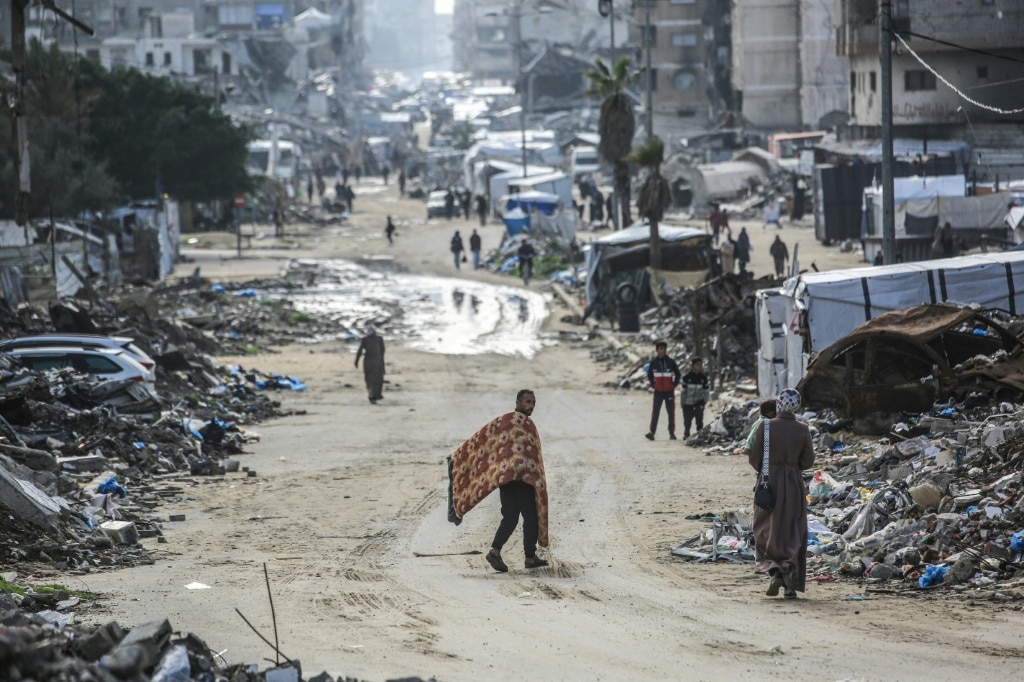
    At the World Economic Forum in Davos, former White House adviser Jared Kushner presented a controversial redevelopment blueprint for Gaza that envisions transforming the war-ravaged territory into a luxury coastal destination within three years. The proposal, endorsed by former President Donald Trump, features gleaming skyscrapers, tree-lined promenades, and terraced apartment towers overlooking the Mediterranean—a stark contrast to Gaza’s current reality of widespread destruction.

    Kushner, operating without official title but as one of Trump’s envoys for Gaza ceasefire efforts, described his ‘master plan’ as aiming for ‘catastrophic success.’ He projected requiring至少$25 billion in investments to rebuild infrastructure and public services, promising that within a decade Gaza could achieve a $10 billion GDP with households earning an average of $13,000 annually through ‘100-percent full employment.’

    The presentation notably omitted mention of Egypt’s President Abdel Fattah al-Sisi, whose government had spearheaded a separate reconstruction plan supported by Arab nations and the European Union in 2025. Gaza’s newly appointed administrator under Trump’s ‘Board of Peace’ framework acknowledged the Egyptian plan as the ‘foundation’ for reconstruction efforts.

    The vision emerges against a grim backdrop: according to UN-verified figures, Israel’s retaliatory assault following Hamas’ October 2023 attack has killed至少71,562 Palestinians, with widespread damage to neighborhoods, hospitals, and schools forcing hundreds of thousands into makeshift shelters. A US-brokered ceasefire implemented last October has reduced bombing but failed to alleviate what UN officials describe as ‘inhumane’ living conditions.

    Kushner argued that complete disarmament of Hamas—as stipulated in the October ceasefire agreement—would unlock corporate and donor commitments, with investment announcements expected ‘in a couple of weeks in Washington.’ The proposal has sparked global criticism for its timing and perceived disregard for Palestinian political aspirations amid ongoing humanitarian catastrophe.

  • ICE detains 5-year-old during Minnesota operation

    ICE detains 5-year-old during Minnesota operation

    A controversial immigration enforcement operation in Minnesota has drawn sharp criticism after U.S. Immigration and Customs Enforcement (ICE) officers detained a 5-year-old boy during the apprehension of his father. The incident occurred Tuesday when agents approached Adrian Alexander Conejo Arias, identified by the Department of Homeland Security (DHS) as an undocumented immigrant, on his driveway as he returned home with his preschool-aged son Liam Ramos.

    Columbia Heights Public Schools Superintendent Zena Stenvik publicly challenged the operation’s tactics, questioning why federal agents would detain a young child. ‘You can’t tell me that this child is going to be classified as a violent criminal,’ Stenvik stated during a Wednesday press conference. Photographs provided by the school district show the young boy wearing a bunny-shaped winter hat while an officer holds his backpack.

    The DHS defended its actions in a social media statement, asserting that ‘ICE did NOT target a child’ and characterized the operation as targeting Conejo Arias, who they claim ‘abandoned’ his son when approached. The department stated that standard procedure involves offering parents the choice to be removed with their children or having ICE place children with a designated safe person.

    However, school officials present during the incident reported that another adult residing in the home was refused permission to take custody of the child. Instead, agents allegedly instructed the child to knock on the door to check for additional occupants. Legal representative Marc Prokosch indicated both father and son were likely being held at a Texas detention facility, despite the father having an active asylum case with no outstanding deportation order.

    The incident forms part of broader enforcement efforts under ‘Operation Metro Surge,’ which DHS describes as targeting ‘the worst of the worst criminal illegal aliens’ to restore public safety in Minnesota. The operation has generated significant community backlash in Minneapolis and St. Paul, particularly following the January 7th fatal shooting of Renee Good by a federal officer in Minneapolis, which previously sparked widespread condemnation.

  • Nigeria church attackers demand ransoms as search intensifies for over 150 hostages

    Nigeria church attackers demand ransoms as search intensifies for over 150 hostages

    ABUJA, Nigeria — In a brazen assault highlighting Nigeria’s escalating security crisis, armed militants have demanded 17 motorcycles as ransom payment for over 150 Christian worshippers abducted during coordinated church attacks in northwestern Kaduna state. The mass kidnapping occurred Sunday when gunmen raided three separate churches in Kajuru district, initially seizing 177 congregants before 11 managed to escape during the operation.

    Local authorities confirmed tactical security teams have been deployed to track the kidnappers, believed to be part of rogue criminal gangs exploiting limited state presence in remote communities. The motorcycle ransom demand—estimated at approximately $17,000 total—represents both a practical and symbolic request, as these vehicles serve as primary transportation for militants operating throughout Nigeria’s conflict zones.

    Village head Ishaku Dan’azumi reported the captors explicitly requested motorcycle replacements rather than monetary compensation, a detail corroborated by Sebastine Barde of the Adara Development Association. The abduction methodology reflects broader patterns in regional violence, where attackers utilize forest reserves as hideouts and motorcycles for rapid movement between communities.

    Kaduna Governor Uba Sani visited affected communities Wednesday, pledging coordinated efforts between state and security agencies to secure hostage release. “Our administration will continue to pursue peace, security, and inclusive development,” Sani stated during his assessment of the crisis.

    The incident occurs amid deteriorating diplomatic relations between Nigeria and the United States, following U.S. accusations that Nigerian authorities have failed to protect Christian communities during the nation’s prolonged security emergency. While attacks affect both religious groups, the targeting of worship centers has drawn international concern and complicated bilateral counterterrorism cooperation.

  • In Greenland, locals fed up with deals done over their heads

    In Greenland, locals fed up with deals done over their heads

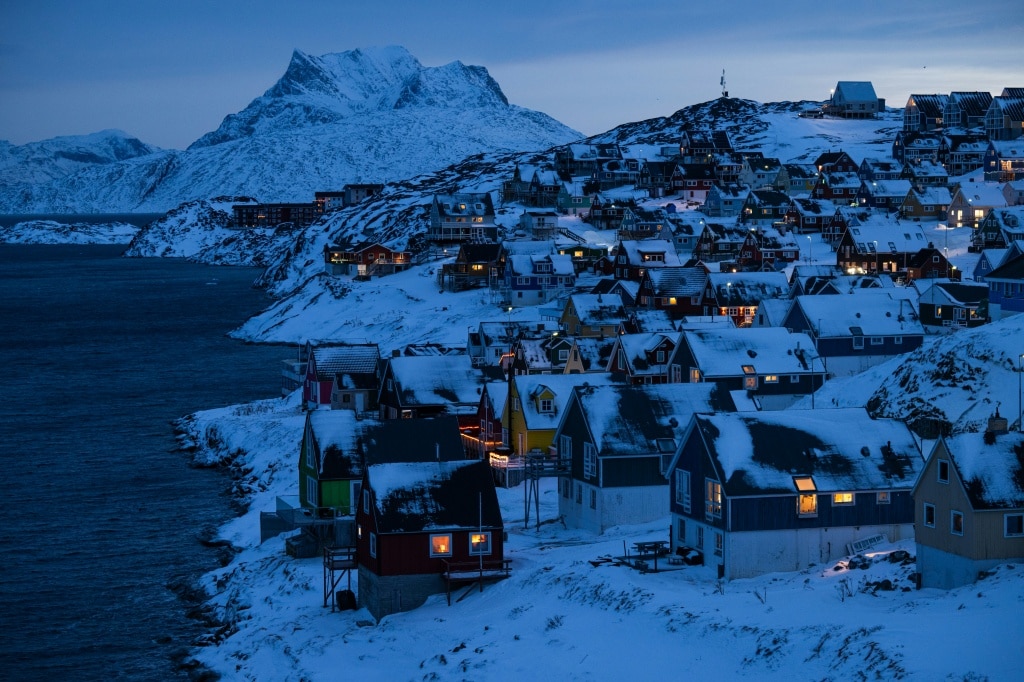
    Residents of Greenland have expressed profound frustration following reports that high-level discussions about their territory’s future occurred without their inclusion. This outcry emerged after U.S. President Donald Trump and NATO Secretary-General Mark Rutte reportedly established a preliminary agreement concerning Greenland during the World Economic Forum in Davos, Switzerland.

    In Nuuk, Greenland’s capital, locals voiced strong objections to being sidelined in diplomatic negotiations that directly impact their autonomous region. Niels Berthelsen, a 49-year-old maritime captain, articulated the prevailing sentiment: “If they want to make deals about Greenland, they have to invite Greenland to the negotiating table.” His statement, “Nothing about Greenland without Greenland,” has become a rallying cry for those feeling marginalized by international power dynamics.

    While President Trump has retreated from earlier suggestions of forcibly acquiring Greenland, the vague nature of the purported agreement has stirred concerns among the territory’s 57,000 inhabitants. Greenland, which transitioned from Danish colonial status to autonomous governance in the late 20th century, maintains control over most domestic affairs while Denmark handles foreign and defense policies.

    The historical context amplifies current tensions. Greenland’s colonial past included oppressive assimilation policies such as suppression of the Inuit language and forced sterilizations, creating lasting grievances. Deputy Prime Minister Mute Egede reinforced Greenland’s stance on self-determination, declaring on social media: “Whatever pressure others may exert, our country will neither be given away, nor will our future be gambled with.”

    Elder residents like 80-year-old Arkalo Abelsen question the validity of the alleged agreement, suggesting President Trump may have misinterpreted diplomatic conversations. The ongoing uncertainty has disrupted the traditionally tranquil existence of Greenlanders, with many expressing nostalgia for more predictable times before recent geopolitical interest in their strategically significant territory.

    Travel agency employee Susan Gudmundsdottir Johnsen echoed this desire for stability: “From now on, we need peace and quiet,” capturing the collective yearning for resolution that respects Greenland’s autonomy and includes its people in decisions determining their future.

  • Fiber chip thinner than a hair

    Fiber chip thinner than a hair

    Researchers at Shanghai’s Fudan University have achieved a groundbreaking advancement in electronic technology by developing ultra-thin fiber chips capable of housing over 100,000 transistors per centimeter. This innovation, detailed in the January 22 publication in the prestigious journal Nature, represents a significant departure from conventional chip manufacturing methodologies.

    The newly developed ‘fiber chip’ technology enables the creation of complex electronic circuits within exceptionally thin, pliable fibers that maintain flexibility despite their computational capabilities. These advanced fibers can be stretched, twisted, and seamlessly integrated into conventional textiles without compromising their electronic functionality.

    This technological breakthrough fundamentally transforms ordinary fabrics into smart materials capable of sophisticated information processing. The integration of computational power directly into clothing materials opens unprecedented possibilities for wearable technology, allowing everyday garments to perform computer-like functions while maintaining complete wearability and comfort.

    The research challenges established paradigms in semiconductor manufacturing, potentially revolutionizing how electronic devices are conceived and produced. By embedding computational capacity within flexible fibers, the technology bridges the gap between rigid electronics and soft materials, creating new horizons for smart textiles and wearable computing applications.

    The development marks a significant milestone in materials science and electronic engineering, offering transformative potential for numerous industries including fashion, healthcare monitoring, and human-computer interaction technologies.

  • Colombia imposes tariffs and halts energy sales to Ecuador as trade feud escalates

    Colombia imposes tariffs and halts energy sales to Ecuador as trade feud escalates

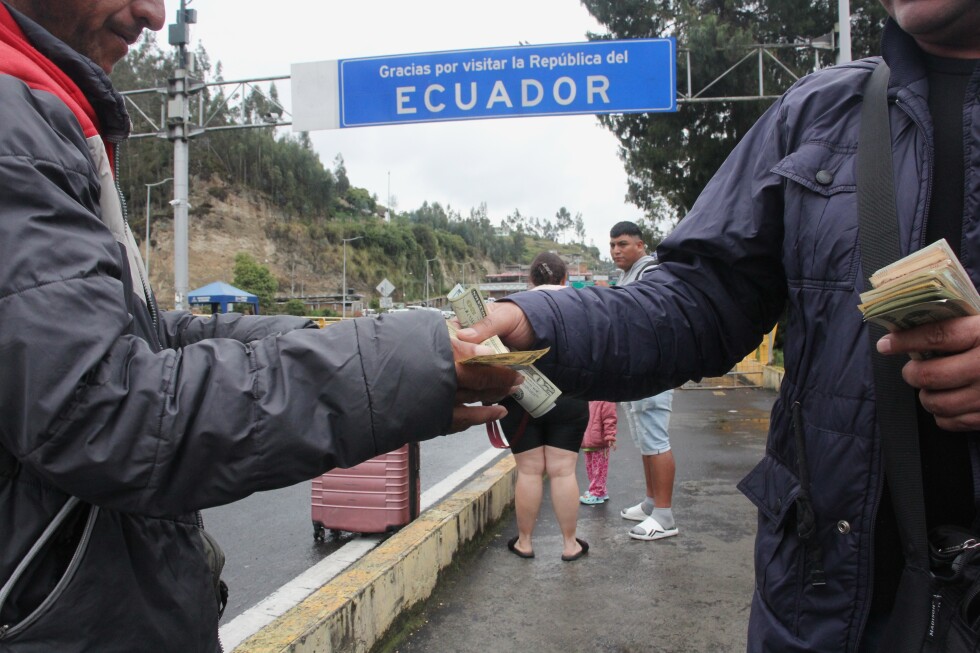
    In a significant escalation of cross-border tensions, Colombia has declared immediate economic countermeasures against Ecuador, implementing a 30% tariff on select Ecuadorian imports and suspending all electricity exports to its neighbor. This decisive action comes as a direct response to Ecuador’s previous imposition of similar trade barriers, marking a rapid deterioration in bilateral relations between the two Andean nations.

    The trade dispute originated from Ecuadorian President Daniel Noboa’s public statements highlighting an $852 million trade deficit with Colombia and expressing concerns about inadequate security cooperation along their shared border—a region notorious for criminal organizations and international drug trafficking operations.

    Colombian authorities expressed astonishment at Ecuador’s unilateral trade measures, emphasizing that bilateral cooperation continues through established joint mechanisms including military and anti-narcotics operations. Official trade data reveals a substantial imbalance: from January to November 2024, Ecuador exported $760 million worth of goods to Colombia while importing $1.8 billion in Colombian products.

    Colombia’s new tariff structure affects 20 specific Ecuadorian products representing approximately $250 million in annual trade. Commerce Minister Diana Marcela Morales characterized the measures as temporary while reaffirming Colombia’s commitment to seeking diplomatic resolution through negotiation.

    Simultaneously, Colombia’s Ministry of Mines and Energy announced an indefinite suspension of electricity exports to Ecuador, framing the decision as a necessary precaution to protect national energy security. Energy Minister Edwin Palma condemned Ecuador’s initial tariffs as “economic aggression” while highlighting Colombia’s previous energy assistance—during Ecuador’s severe power crisis in late 2024, Colombia supplied roughly 90% of its exportable capacity (approximately 450 megawatts) to stabilize Ecuador’s grid.

    Business communities in both nations have expressed grave concerns about immediate economic consequences. Oliva Diazgranados, executive director of the Colombian-Ecuadorian Chamber of Commerce, reported widespread alarm among member companies regarding potential impacts on corporate development, sales projections, and employment stability. Diazgranados noted that while businesses bear the immediate brunt, the underlying tensions stem primarily from security rather than trade issues.

  • Bangladesh players want to play the World Cup, says BCB president

    Bangladesh players want to play the World Cup, says BCB president

    The International Cricket Council has formally dismissed Bangladesh’s appeal to relocate their Twenty20 World Cup matches from India, creating a diplomatic standoff just weeks before the tournament’s February 7 commencement. Despite expressing grave concerns about player and fan safety amid heightened political tensions between the South Asian neighbors, the Bangladesh Cricket Board saw its proposal to shift matches to Sri Lanka rejected by cricket’s global governing body.

    BCB President Aminul Islam revealed the board will make a final appeal to Bangladesh’s interim government before determining their participation fate. ‘I requested the ICC board for additional time to consult my government one last time,’ Islam stated following the decision. ‘They acknowledged this as a valid concern and granted me 24 to 48 hours to respond.’

    The president maintained that India remains ‘not secure for us’ despite the ICC’s security assurances, emphasizing that Bangladesh’s preference to compete in Sri Lanka remains unchanged. This diplomatic impasse stems from deteriorating political relations that recently spilled into cricket when Bangladeshi pace bowler Mustafizur Rahman was unexpectedly dropped from the Indian Premier League after signing with Kolkata’s franchise.

    Bangladesh retaliated by banning IPL broadcasts domestically and initiating the World Cup venue change request. With the ICC maintaining its position, Bangladesh now faces the critical choice of either participating under current arrangements or potentially being replaced by another team in the global tournament. Islam acknowledged the players’ strong desire to compete, stating ‘Bangladesh players want to play the World Cup,’ while simultaneously expressing hope for ‘a miracle from the ICC’ regarding venue security concerns.

  • Ariana snubbed and Chalamet supreme? Five Oscars takeaways

    Ariana snubbed and Chalamet supreme? Five Oscars takeaways

    The Academy of Motion Picture Arts and Sciences unveiled its nominations for the 97th Oscars on Thursday, delivering a mix of expected accolades, startling omissions, and historic milestones. Leading the pack is the psychological drama ‘Sinners,’ which shattered records with an extraordinary 16 nominations, positioning it as the undeniable frontrunner for the upcoming ceremony on March 15.

    Among the most discussed surprises was the complete shutout of the musical sequel ‘Wicked: For Good,’ which failed to secure a single nomination. This was particularly shocking for its star, pop icon Ariana Grande, who had earned a Best Supporting Actress nod for the first installment but was overlooked this year despite her expanded role. Other notable snubs included Chase Infiniti for ‘One Battle After Another’ and Paul Mescal for ‘Hamnet.’

    In a landmark moment for international cinema, a record four non-English language performances received acting nominations. The Norwegian dramedy ‘Sentimental Value’ propelled three of its stars—Renate Reinsve, Stellan Skarsgard, and Inga Ibsdotter Lilleaas—into the spotlight, while Brazil’s Wagner Moura was recognized for ‘The Secret Agent.’

    The nominations also heralded a potential swansong for Warner Bros. as an independent studio. The century-old distributor dominated the field with its two flagship productions: ‘Sinners’ (16 noms) and the epic ‘One Battle After Another’ (13 noms). This triumph comes amid a fierce acquisition battle between Paramount Skydance and Netflix for the studio.

    A new category, Best Casting, made its debut, with nominations mirroring the Best Picture race and including ‘Hamnet,’ ‘Marty Supreme,’ ‘One Battle after Another,’ ‘The Secret Agent,’ and ‘Sinners.’

    Actor Timothée Chalamet, at just 30 years old, secured his third Best Actor nomination for his leading role in the ping-pong drama ‘Marty Supreme,’ which garnered an impressive nine nominations overall. His performance as a hustling player in 1950s New York and Japan, coupled with his credit as a producer on the film, solidifies his status as a generational talent, though he faces stiff competition from Leonardo DiCaprio.

  • Is holding Afcon every four years ‘totally wrong’ or ‘good call’?

    Is holding Afcon every four years ‘totally wrong’ or ‘good call’?

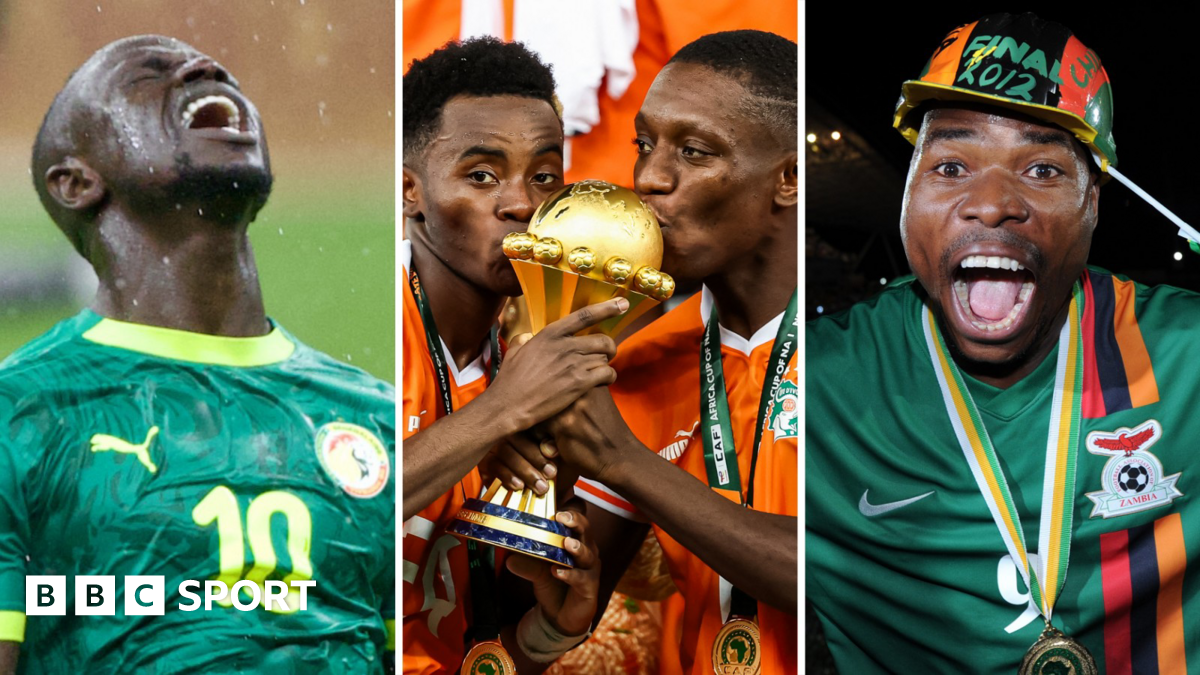
    The Confederation of African Football (CAF) has announced revolutionary structural changes to its competition calendar, headlined by transitioning the Africa Cup of Nations (AFCON) from a biennial to a quadrennial event starting after the 2028 edition. The seismic shift, confirmed by CAF President Patrice Motsepe, coincides with the creation of an annual African Nations League set to debut in 2029.

    The decision, finalized after extensive consultation with FIFA, concludes the tournament’s 67-year history as a primarily two-year event. Motsepe defended the controversial move as essential for synchronizing with the global football calendar and serving “the best interests of African football.” The announcement has sparked vigorous debate across the continent’s football community, revealing sharp divisions between stakeholders.

    Mali coach Tom Saintfiet emerged as an early critic, labeling the change “totally wrong” and accusing CAF of prioritizing European club interests. This perspective finds support among active players, including Senegal captain Kalidou Koulibaly, who noted the biennial schedule had been “amazing for continental development.”

    Conversely, Ivory Coast manager Emerse Fae suggested the extended interval might benefit African football’s growth, while Burkina Faso captain Bertrand Traore acknowledged mixed reactions from players depending on career stages. The transition also signals the termination of the African Nations Championship (CHAN), which Motsepe described as a “spectacular money-loser” despite its role in developing local talent.

    Financial considerations appear central to CAF’s calculus. The organization reported substantial revenue growth from recent AFCON tournaments, with the 2025 edition forecast to generate $114 million—a significant increase from previous cycles. Motsepe indicated the Nations League would outperform AFCON financially, though specific projections remain undisclosed.

    The restructured calendar aims to address persistent scheduling conflicts with European leagues while creating more competitive opportunities through regionally-based Nations League divisions. This format promises to revive historic rivalries like Ghana-Nigeria, who’ve met only five times competitively in twenty years.