作者: admin

  • Israel strikes south Lebanon day after ceasefire extension

    Israel strikes south Lebanon day after ceasefire extension

    Just one day after Israel and Lebanon agreed to extend a fragile existing truce by an additional 45 days, the Israeli military launched a new wave of airstrikes across southern Lebanon on Saturday, deepening the displacement of thousands of Lebanese civilians and fueling widespread skepticism over whether the negotiated ceasefire can hold.

  • What to know about joint US-Nigeria operation that killed a senior militant leader

    What to know about joint US-Nigeria operation that killed a senior militant leader

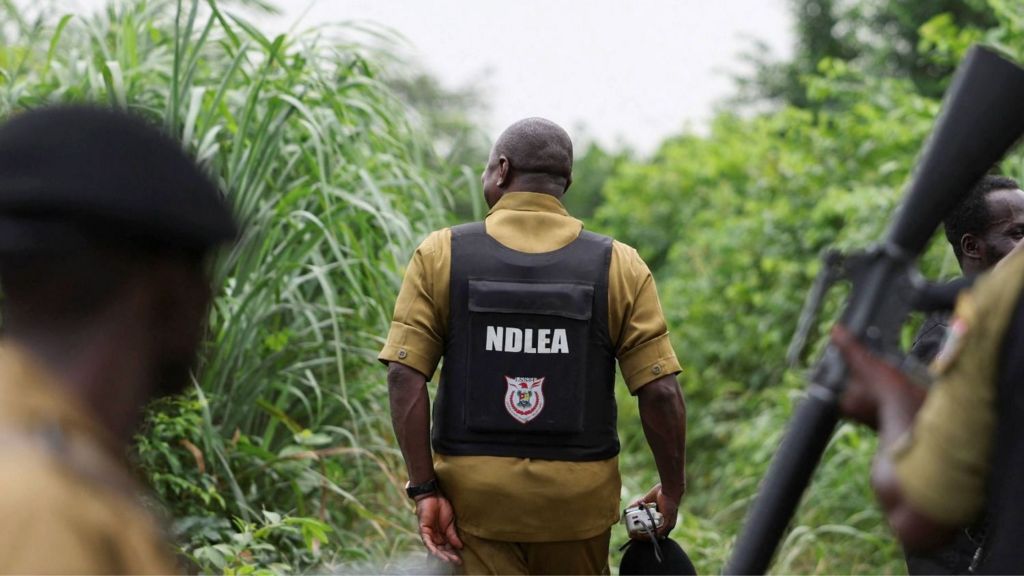
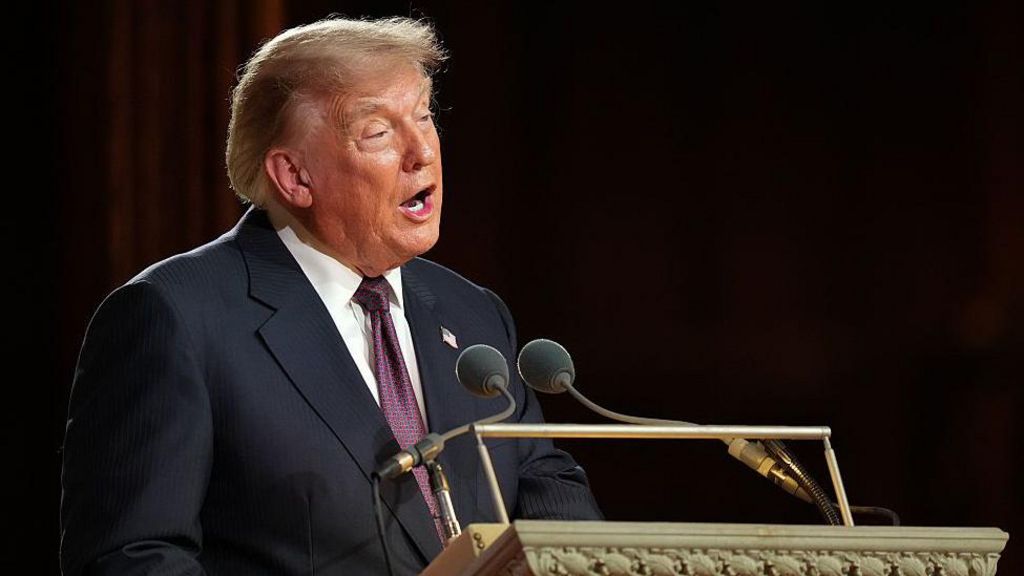
    In a landmark counterterrorism strike that marks a sharp escalation in military cooperation between the United States and Nigeria, a top-tier Islamic State commander has been killed in a targeted early-morning operation in Nigeria’s restive northeastern region, former U.S. President Donald Trump and Nigerian military officials have confirmed.

    The operation, carried out in the early hours of Saturday in the Lake Chad Basin — a long-held militant stronghold where the Boko Haram insurgency and its offshoot, the Islamic State West Africa Province (ISWAP), have waged a deadly uprising for over 15 years — targeted Abu Bakr al-Mainuki, a founding senior leader of ISWAP who climbed the ranks to become one of the highest-profile global terrorists in the Islamic State network.

    Born in 1982 in the village of Mainok in Nigeria’s Borno State, the epicenter of the region’s decade-long insurgency, al-Mainuki rose to prominence after ISWAP split from the original Boko Haram faction in 2016. He served as deputy to former ISWAP leader Abu Musab al-Barnawi, who was reported killed in 2021, and oversaw three critical pillars of the group’s activities: operational planning, media outreach, financial networks, and weapons development. The U.S. State Department officially designated al-Mainuki as a Specially Designated Global Terrorist in 2023, and both Trump and Nigerian military officials confirm he had recently been appointed to the role of Head of the General Directorate of States, placing him second-in-command within the global Islamic State hierarchy. This claim has been met with skepticism from some independent security analysts, however.

    Nigerian government and military officials have emphasized that the successful strike was only possible through a newly revitalized bilateral security partnership with the U.S. The collaboration comes after relations between the two nations hit a historic low last year, when Trump publicly accused Nigeria’s government of overseeing a “Christian genocide” — a claim Nigerian authorities repeatedly and firmly denied. After months of diplomatic engagement to repair ties, military cooperation resumed: the U.S. deployed additional troops to Nigeria in February, following a U.S. airstrike targeting IS positions in December 2023. While U.S. troops have long been limited to advisory and training roles in Nigeria, analysts note this joint operational strike signals a new, more active phase of partnership.

    The Lake Chad Basin, a resource-rich region spanning four countries, has long been a safe haven for extremist groups, whose dense forests and remote cross-border terrain provide ideal cover to avoid military detection. Groups operating in the area fund their violent activities through illegal taxation of local communities, and Nigerian security forces have long struggled with critical capability gaps to effectively root out insurgents in the hard-to-access region. “This would demonstrate to militants that American-Nigerian counterterrorism cooperation has really picked up,” explained Bulama Burkati, a leading security analyst focused on sub-Saharan Africa. “We know the Nigerian forces lack the basic capacity to fight violent extremist groups, especially in places like the Lake Chad region, which is densely forested.”

    Analysts widely frame al-Mainuki’s death as a historic turning point for Nigeria’s 15-year counterinsurgency campaign. He is the most senior militant leader ever killed by Nigerian security forces; previously, most top extremist figures died as a result of internal factional fighting between competing militant groups. While the targeted strike is expected to significantly disrupt ISWAP’s operations across West Africa in the short term, by upending the group’s financial networks, recruitment pipelines, and attack planning, analysts warn that sustained precision operations will be required to cement long-term gains.

    Nigeria continues to grapple with a sprawling, multifaceted security crisis that has reshaped life across much of the country’s north. Beyond jihadi insurgent groups including Boko Haram, ISWAP, and the newer Lakurawa network, the country also faces a surge in organised criminal activity centered on kidnapping for ransom. Since the Boko Haram insurgency first began in 2009, United Nations data confirms more than tens of thousands of people have been killed in attacks, and millions more have been displaced from their homes across the country.

  • UK police brace far-right rally and counter demonstration

    UK police brace far-right rally and counter demonstration

    On a busy Saturday in central London that also hosted English football’s iconic FA Cup Final, dual large-scale demonstrations – one organized by high-profile far-right figure Tommy Robinson, and a counter-rally merging pro-Palestine activism and anti-fascism – drew tens of thousands of attendees, requiring one of the largest UK police deployments in recent memory.

    London’s Metropolitan Police Service (Met) had prepared extensively for the dueling events, pre-positioning 4,000 officers supported by mounted units, canine teams, surveillance drones and helicopters to separate the rival crowds and prevent public disorder. The force estimates the entire security operation will cost £4.5 million (approximately $6 million), marking an unprecedented investment in protest policing for a domestic demonstration. In a new regulatory move, organizers have for the first time been held legally responsible for ensuring invited speakers do not violate UK hate speech legislation, with police announcing a strict zero-tolerance policy for any violence, harassment or hate speech.

    Robinson, whose real name is Stephen Yaxley-Lennon, a former football hooligan turned anti-Islam activist who has gained massive online traction in recent years, organized the event billed as the “Unite the Kingdom” march, which set off from Holborn in central London. Ahead of the rally, the UK government barred 11 foreign far-right agitators from entering the country to attend, including U.S.-based extremist Valentina Gomez, who authorities condemn for repeated inflammatory, dehumanizing rhetoric targeting Muslim communities. Early Saturday morning, officers arrested two men en route to Robinson’s rally who were wanted on suspicion of grievous bodily harm linked to a Birmingham incident where a man was hit by a vehicle; no further details have been released about that case.

    Many attendees of Robinson’s rally framed the event as a patriotic gathering centered on British national culture, with multiple participants describing their presence as a stand against current UK immigration policies, which have drawn widespread public anger over the tens of thousands of migrants crossing the English Channel in small boats each year. Natasha, a 44-year-old attendee draped in a Union Jack and wearing a Union Jack-patterned bucket hat, told reporters “it’s nice to be around my own culture,” calling the event patriotic and denying any racist intent. Justin, a 56-year-old from Essex who declined to share his last name, echoed that framing, confirming that immigration was a core issue driving attendance. This rally follows a September 2023 event organized by Robinson that drew up to 150,000 people to central London, a shocking turnout for the far-right that featured a video address from X (formerly Twitter) owner Elon Musk. That event ended in clashes that injured dozens of police officers, pushing the far-right’s growing influence into the national spotlight.

    Across the capital, the competing counter-demonstration combined three separate initiatives: a commemoration of Nakba Day, which marks the 1948 displacement of Palestinians during the founding of Israel; a pro-Palestine protest; and an anti-fascism rally organized by the group Stand Up to Racism. The Met projected an estimated 30,000 people would attend this combined event, which began in west London before marching toward central London. Simon Ralls, a 62-year-old attendee from Nottingham, explained his participation as a direct response to the growing confidence of far-right groups in the UK. “The right (wing) are emboldened — we’re here to try and counter that, make sure people aren’t ignorant,” he told reporters ahead of the march.

    The dual demonstrations come amid heightened domestic security tensions in the UK. Just two weeks prior, the country’s terrorism threat level was raised to “severe” – the second-highest possible level – with security officials citing growing risks from both Islamist extremism and extreme right-wing terrorism. The events also follow a recent string of violent anti-Semitic attacks targeting London’s Jewish community, a wave of violence that some have linked to hostile rhetoric at pro-Palestine rallies across the country. To boost security, police are deploying live facial recognition technology for the first time ever at a UK protest, a move that has sparked debate over privacy and surveillance even as authorities defend it as a necessary public safety measure.

    Adding to the strain on policing resources, the FA Cup Final – one of the biggest dates on the UK football calendar – kicked off at Wembley Stadium at 4 pm GMT, drawing tens of thousands of football fans to the capital just miles from the protest routes. Prime Minister Keir Starmer spoke out a day before the demonstrations, issuing a strong warning that “anyone who sets out to wreak havoc on our streets, to intimidate or threaten anyone… can expect to face the full force of the law.” Starmer explicitly condemned organizers of Robinson’s rally, accusing them of “peddling hatred and division.” For his part, Robinson has urged attendees to avoid masks, excessive alcohol, and any disruptive behavior, calling on supporters to remain “peaceful and courteous.” Police have nonetheless voiced concerns about potential unrest from known football hooligan groups that have a history of supporting Robinson’s events.

  • Israel says Hamas armed wing chief killed in Gaza strike

    Israel says Hamas armed wing chief killed in Gaza strike

    In a confirmed development over the weekend, Israeli security and military forces announced they had successfully eliminated Ezzedine Al-Haddad, the top commander of Hamas’s armed wing, whom Israel identifies as a key architect of the deadly October 7, 2023 cross-border attacks from Gaza into Israel. The targeted airstrike was carried out Friday in the densely populated Rimal neighborhood of central Gaza City, striking a residential building in the area.

    The Israel Defense Forces (IDF) and Shin Bet, Israel’s domestic security agency, jointly released a statement Saturday confirming the operation’s success. “The IDF and the ISA announce that yesterday, in a precise strike in the area of the City of Gaza, the terrorist Ezzedine Al-Haddad was eliminated,” the joint statement read. Multiple Hamas officials have independently confirmed Haddad’s death to Agence France-Presse, matching Israel’s account of the operation. According to one senior Hamas source, Haddad was assassinated in a strike that hit both a civilian residential apartment and a civilian vehicle in Gaza City. The same source confirmed that Haddad was killed alongside his wife and one of his daughters.

    Photographs captured by AFP journalists on the ground show mourners carrying Haddad’s flag-wrapped body on a stretcher pulled from the rubble of the targeted building. His remains were transported to a local mosque for funeral prayers before a processional through city streets to his burial site.

    Israeli military leadership has framed the elimination as a major breakthrough in its ongoing campaign against Hamas. IDF Chief Lieutenant Colonel Eyal Zamir called the killing a “significant operational achievement” in a public statement Saturday. “In every conversation I held with the hostages who returned, the name of the arch-terrorist Ezzedine Al-Haddad… came up again and again,” Zamir said. “Today, we succeeded in eliminating him. The IDF will continue to pursue our enemies, strike them, and hold accountable everyone who took part in the October 7th massacre.”

    Israeli officials say Haddad was not only a core planner of the October 7 attacks but also oversaw the group’s system of holding Israeli hostages captured during the incursion. The IDF claimed Haddad deliberately positioned himself near hostages to avoid being targeted, in an attempt to shield himself from Israeli assassination attempts.

    Haddad’s killing marks the latest in a string of targeted assassinations of senior Hamas leaders by Israel since the October 7 attacks. Prior to Haddad, Israeli forces have killed Yahya Sinwar, the group’s top political leader widely seen as the mastermind of the October 7 operation, as well as Mohammed Deif, the longtime commander of Hamas’s armed wing who was also identified as a key plotter of the incursion. Beyond Gaza, Israeli strikes have also targeted Hamas operatives in neighboring Lebanon, killing senior commanders from the Iran-aligned militant group Hezbollah, including its longtime leader Hassan Nasrallah.

    According to Hamas sources, Haddad, 55, was appointed to lead the group’s armed wing in May 2023, after his predecessor was killed in a previous Israeli assassination strike. He had already survived six separate Israeli assassination attempts prior to Friday’s strike, a Hamas source told AFP. Beyond his role as military commander, Haddad was a founding member of Hamas’s internal security service and oversaw multiple prisoner and hostage exchange negotiations, including the temporary ceasefire swap that took place in November 2023.

    The October 7 attacks, which were led by Hamas armed wing militants, killed 1,221 people in Israel according to an AFP tally compiled from official Israeli government data. Militants also abducted 251 people and took them back to Gaza as hostages. In response, Israel launched a large-scale retaliatory military campaign in Gaza that has killed more than 72,700 Palestinians in the territory, according to Gaza’s Hamas-run health ministry, figures that the United Nations has deemed reliable.

    Even after a temporary ceasefire was agreed in October 2024, daily violence continues to grip Gaza, with both Israeli forces and Hamas repeatedly accusing the other side of truce violations. Since the ceasefire went into effect, Gaza’s health ministry reports at least 856 Palestinians have been killed in ongoing Israeli strikes, while the IDF confirmed five of its soldiers have been killed in militant operations in the territory during the same period.

  • Swatch shuts stores after crowds queue for new watch

    Swatch shuts stores after crowds queue for new watch

    A highly anticipated limited-edition watch collaboration has sparked chaotic scenes across the globe, forcing Swiss watch giant Swatch to close all its participating retail locations across the United Kingdom over public safety concerns. The unprecedented demand for the new Royal Pop pocket watch, created in partnership with luxury Swiss watchmaker Audemars Piguet, drew hundreds of eager collectors and fans to Swatch stores over the weekend, leading to overcrowding, reported aggression, and widespread store closures.

    The collaboration, which launched eight distinct watch models priced at an accessible £335, was billed by Swatch as a disruptive, groundbreaking partnership between two iconic Swiss watchmaking brands. Drawing inspiration from the mid-20th century Pop Art movement, the collection is described by the company as a fusion of joyful, bold aesthetic and high-end fine watchmaking craft. However, the extreme accessibility of the price point, paired with the limited production run, created a feeding frenzy among watch enthusiasts and resellers alike. Within days of the launch announcement, resold examples of the Royal Pop watch were already listed on secondary online marketplaces for as much as £16,000 – a nearly 4,700% markup from the original retail price.

    In the UK, the scale of demand caught many by surprise. On Saturday morning, hundreds of people queued outside Swatch’s Liverpool One location on Paradise Street, with some committed fans camping out for two full days to secure a spot near the front of the line. By 7 a.m. BST, Merseyside Police received reports of a group of men acting aggressively and making threats toward other shoppers in the queue. Officers quickly responded to the scene, and the crowd dispersed shortly after the intervention.

    Following the incident, and citing growing safety risks for both customers and staff, Swatch announced it would keep all of its participating UK branches – including locations in London, Birmingham, Cardiff, Glasgow, Liverpool, Manchester, and Sheffield – closed for the duration of the launch. The brand has not yet announced when or if the stores will reopen for sales of the limited collection.

    The chaos unfolding in the UK is not an isolated incident. Watch enthusiasts around the world have been lining up for days, even weeks, to get their hands on one of the limited watches. In New York, fans camped outside a Swatch store for a full week, with local reports noting that several people experienced health issues during the prolonged wait in public. Queues also formed outside the brand’s Tokyo location, its global headquarters in Biel, Switzerland, and the Dubai Mall launch event in the United Arab Emirates was ultimately cancelled due to the unexpectedly massive turnout of hopeful buyers.

    BBC News has reached out to Swatch for additional comment on the store closures and future plans for the collection, and has not yet received a response.

  • SA clubs could withdraw from European competitions

    SA clubs could withdraw from European competitions

    South Africa’s national rugby governing body is set to launch a wide-ranging review of its national teams’ competitive calendar, a process that could reshape both domestic and international rugby schedules across the continent and Europe. The South African Rugby Union (Saru) confirmed it will hold a formal strategic planning session before the end of July to evaluate current scheduling arrangements. While officials note that it is too early to confirm any concrete changes, one of the most significant outcomes under discussion is the potential withdrawal of South Africa’s top professional club sides from the European Rugby Champions Cup and EPCR Challenge Cup.

    Under the current structure, elite South African rugby players face a grueling 12-month competitive season. Since 2020, the country’s four top professional clubs — the Stormers, Bulls, Sharks and Lions — have competed in the United Rugby Championship (URC), a cross-continental league that runs from September through June each year. After wrapping up their URC commitments, elite players who represent the South African national side, the Springboks, enter the annual Rugby Championship — the southern hemisphere’s flagship international tournament held in July and August — leaving little to no time for rest and recovery. Only a small number of Springboks, who play their club rugby in Japan, avoid this packed annual schedule.

    Saru made clear in an official statement that the review was launched to address growing calls for a balanced calendar that protects both player welfare and competitive team performance. “The views of all internal stakeholders will be canvassed and workshopped on the domestic and international playing calendar for South African players,” the statement added.

    South African rugby’s shift into Northern Hemisphere-focused club competition is a relatively recent change. For more than two decades after the founding of Super Rugby in 1996, South African sides competed exclusively in the southern hemisphere-based domestic competition. But Saru officials long pushed for a move to European competitions, citing more aligned time zones that reduce cross-continental travel burdens, and the shift to the URC was completed in 2020. Two years later, South African teams gained entry to the Champions and Challenge Cups, European club rugby’s top two competitions.

    The integration of South African sides into the URC has been widely viewed as a success for both the league and the South African franchises. The Stormers won the URC title in their first full season in the league in 2022, while the Bulls have reached three of the last four tournament finals. All four South African sides are now permanent shareholders in the URC, with league chief executive Martin Anayi confirming in 2025 that the addition of South African teams has been overwhelmingly positive for the competition.

    However, South African participation in the Champions Cup has been far more problematic, both on and off the pitch. While the Sharks claimed the Challenge Cup title in 2024, no South African side has advanced past the quarter-final stage of the top-tier Champions Cup. Constant logistical and travel challenges between South Africa and Europe have also created persistent disruptions for both South African teams and their European opponents.

    The Saru review comes at a time of widespread uncertainty across European club rugby, with multiple major competitions set for potential restructuring. European rugby bosses are already weighing a major overhaul of the Champions Cup, with one leading proposal cutting the tournament field to around 16 teams and holding the entire competition in a single block at the end of the regular season. The long-term structure of the URC is also unresolved, as the Welsh Rugby Union plans to reduce its number of professional franchises from four to three, a shift that will alter the league’s makeup.

    Currently, South Africa’s EPCR shareholder agreement is locked in through 2030, though Saru notes that changes would be possible if all relevant stakeholders reach a consensus. “Should consensus be reached on a potential revision of the calendar, any contractual or constitutional requirements to affect such a revision will be observed,” the Saru statement said.

    If South African sides do withdraw from European club competitions, one widely discussed alternative is expanding and strengthening the country’s historic domestic competition, the Currie Cup, which was first launched in 1891 and remains a beloved part of South African rugby’s sporting identity.

  • North America’s largest commuter rail system shuts down as workers strike

    North America’s largest commuter rail system shuts down as workers strike

    A decades-rare labor action has brought North America’s largest commuter rail network to a complete halt, leaving hundreds of thousands of travelers across the New York metropolitan region scrambling for alternate transportation this weekend and beyond. Early Saturday, five unions representing roughly half of the Long Island Rail Road (LIRR) workforce initiated a strike after months of stalled contract negotiations that even saw intervention from the Trump White House fail to broker a compromise. Legally permitted to walk off the job starting at 12:01 a.m. Saturday, the strike is the first work stoppage to hit the LIRR since a 1994 two-day action.

    As of the early hours of the strike, no new bargaining sessions have been scheduled, according to Kevin Sexton, national vice president of the Brotherhood of Locomotive Engineers and Trainmen. “We’re far apart at this point,” Sexton told reporters Saturday morning. “We are truly sorry that we are in this situation.” But Janno Lieber, chair of the Metropolitan Transportation Authority (MTA), which oversees the LIRR, has pushed back on the union’s position, claiming the agency met all of the unions’ original pay demands and arguing that organized labor always planned to initiate a walkout.

    The shutdown is already throwing major planned New York City events into disarray. This weekend, the crosstown rivalry matchup between the New York Yankees and New York Mets is scheduled, and the New York Knicks are continuing their NBA playoff run at Madison Square Garden. Both venues have dedicated LIRR stops, drawing thousands of fans from Long Island’s eastern suburbs who rely on the rail line to reach Manhattan.

    If the strike extends past the weekend, the disruption will grow exponentially. Around 250,000 daily weekday commuters depend on the LIRR to travel between Long Island suburbs and New York City workplaces. For most, the only viable alternative is driving, which will put added pressure on the region’s already famously congested highways. “People are still going to commute, but if everybody starts driving now, the traffic is only going to get worse,” said Rich Piccola, a city-bound accountant who spoke to reporters Thursday while waiting for a train at Penn Station.

    New York Governor Kathy Hochul has issued an urgent recommendation for Long Island residents to work from home wherever possible to cut down on travel chaos. The MTA has rolled out a limited contingency plan of shuttle buses connecting LIRR hubs to New York City subway stations, but the system was never designed to absorb the full volume of daily commuter traffic. While remote work has become far more widespread since the COVID-19 pandemic, many in-person workers cannot do their jobs from home, noted Lisa Daglian, executive director of the Permanent Citizens Advisory Committee to the MTA, a commuter advocacy organization.

    “You work in construction, you work in the healthcare industry, you work at a school or you’re about to graduate from school, that’s not always possible,” Daglian said. “People need to get where they need to go.”

    Contract talks have deadlocked over two core issues: worker wage increases and health care premiums. Unions argue that more robust pay bumps are necessary to help LIRR workers, which include locomotive engineers, machinists and signalmen, keep pace with decades-high inflation and soaring living costs in the New York region. The MTA, however, has warned that meeting the unions’ original demands would force steep fare increases for riders and create pressure to match those terms in negotiations with other unionized MTA workers.

    Many commuters have expressed sympathy for workers’ concerns over affordability, even as they acknowledge they will bear the brunt of any agreed pay hikes. “Like the union workers, we too are burdened by the increase in the cost of living here on Long Island,” said Gerard Bringmann, chair of the LIRR Commuter Council, a rider advocacy group. Bringmann warned that if unions win the full pay increases they are seeking, a planned 4% annual fare hike could double to 8% for passengers.

    Labor experts note political pressure is already building to resolve the standoff quickly. Hochul, a Democrat, is up for reelection later this year, and Long Island is a critical swing voting bloc for her campaign. William Dwyer, a labor relations scholar at Rutgers University who studied last year’s three-day commuter rail strike in neighboring New Jersey, said a prolonged shutdown or steep fare hike would damage Hochul’s electoral prospects. “She’s up for reelection, and Long Island is a critical vote for her,” Dwyer said. “So if there’s a significant fare hike, that does not bode well for her on Election Day.”

  • Pope to visit France in September with a stop at UNESCO

    Pope to visit France in September with a stop at UNESCO

    VATICAN CITY — The Vatican officially confirmed Saturday that Pope Leo XIV will expand his packed 2026 international travel agenda with a four-day official visit to France, scheduled to run from September 25 to 28. The trip will include a stop at the Paris-based headquarters of UNESCO, the United Nations’ cultural and educational agency, marking a key engagement with a global multilateral institution during the pontiff’s busy year.

    This forthcoming French visit will be Pope Leo XIV’s fourth foreign voyage of 2026. The pontiff has already logged two international trips this year: a short one-day visit to Monaco in March, and a longer multi-nation tour of four African countries in April. He is also scheduled to travel to Spain and the Canary Islands in June, ahead of the September trip to France. A potential end-of-year visit to Latin America — including Peru, which Leo has called his beloved second home — remains unconfirmed as of press time, with no final details released by Vatican officials.

    The confirmed trip to France highlights a notable shift in papal travel priorities compared to the 12-year pontificate of Pope Francis. Unlike Francis, who repeatedly opted to prioritize small, remote Catholic communities far from Rome and largely avoided major historic Christian centers in Western Europe, Leo’s itinerary shows a clear new focus on the experiences of Catholic faithful in Europe. This shift comes as informal reports point to a resurgence of interest in the Catholic faith among young European adults, a trend the Vatican appears to be acknowledging through this high-profile visit.

    Francis did travel to France twice during his time as pope, but never completed a full state visit to the French capital Paris. In 2014, he made a single-day trip to Strasbourg to speak to the European Parliament and the Council of Europe, and in 2023 he traveled to the southern port city of Marseille to attend an international conference focused on migration policy.

    Leo’s stop at UNESCO headquarters will also give the pontiff a platform to address a global audience, a notable detail given his decision to forgo a trip to his native United States this year. Traditionally, popes have used invitations to address the U.N. General Assembly in New York as a key opportunity for major global addresses, but Leo has chosen not to make that trip in 2026, instead taking the global stage at UNESCO in Paris.

  • Congolese report constant burials as deaths in new Ebola outbreak reach 80

    Congolese report constant burials as deaths in new Ebola outbreak reach 80

    A new Ebola outbreak in the Democratic Republic of the Congo’s eastern Ituri Province has claimed at least 80 lives, pushing public health authorities into a race against time to scale up border screenings, contact tracing and outbreak containment measures as of Saturday, local officials confirmed.

    Authorities first publicly declared the emergency on Friday, when they initially reported 65 fatalities and 246 suspected cases across affected areas of the province. As of Friday evening, Congolese Health Minister Samuel-Roger Kamba confirmed that eight cases had received positive laboratory confirmation, four of which have resulted in death. Genomic sequencing has identified the pathogen as the Bundibugyo strain, a less common Ebola variant that has not been the primary cause of past large-scale outbreaks in the country. This event marks the 17th Ebola outbreak the country has grappled with since the disease was first detected in Congolese territory in 1976.

    Ebola is an extremely contagious viral pathogen that spreads through direct contact with infected bodily fluids including blood, vomit, and semen. While the disease is classified as rare, it causes severe, acute illness that carries a high fatality rate for most infected patients.

    According to Minister Kamba, health investigators believe the suspected index case, or first patient to trigger the outbreak, was a nurse who died at a Bunia hospital three weeks prior, on April 24. Kamba noted the patient showed classic Ebola symptoms, though he did not confirm whether the nurse’s samples were tested for the virus.

    Local residents in Bunia, the capital of Ituri Province, described a growing climate of fear to Associated Press journalists on the ground, as communities face repeated burials of suspected Ebola victims. “Every day, people are dying … and this has been going on for about a week. In a single day, we bury two, three, or even more people,” said Jean Marc Asimwe, a long-time Bunia resident. “At this point, we don’t really know what kind of disease it is,” Asimwe added.

    The outbreak has already crossed Congo’s northern border, with Ugandan health authorities confirming an imported Ebola case from Congo on Friday. The infected patient died at Kampala’s Kibuli Muslim Hospital on May 14. The Uganda Ministry of Health later confirmed the patient’s remains were returned to Congo for burial, and no secondary locally transmitted cases have been detected in the country to date. As of Saturday, routine health screenings have been activated at the entrance of Kibuli Muslim Hospital to prevent further transmission.

    The Africa Centres for Disease Control and Prevention has issued a statement warning of high risk of further cross-border spread, due to the close proximity of affected Congolese areas to both Uganda and South Sudan. Some regional neighbors have already activated emergency preparedness measures: Kenya, a neighbor of Uganda, announced Saturday that it assesses the current risk of Ebola importation as moderate, driven by frequent regional travel and cross-border movement. In response, the Kenyan government has convened a dedicated Ebola preparedness task force and boosted public health surveillance at all border entry points.

    For many Ugandans, the new outbreak has stirred painful memories of past public health emergencies. “I really get scared because I remember burying my father without looking at his body during the COVID-19 pandemic,” said Kampala resident Ismail Kigongo.

    While the DRC has decades of experience responding to and containing Ebola outbreaks, the response to this latest emergency faces steep structural challenges. The country is the second largest on the African continent by land area, with vast distances between provinces that are frequently disrupted by ongoing armed conflict. Ituri Province, where the outbreak is concentrated, sits roughly 1,000 kilometers (620 miles) from the national capital Kinshasa, and has been ravaged by years of violence from insurgents affiliated with the Islamic State group.

    To date, the outbreak has been confirmed in three Ituri health zones: Bunia, Rwampara, and Mongwalu, with the bulk of cases concentrated in the latter two areas. The National Institute of Biomedical Research has only been able to process 13 blood samples from suspected cases, according to Kamba; eight returned positive for the Bundibugyo strain, while the remaining five could not be analyzed due to insufficient sample volume.

    Despite the growing death toll, daily life in central Bunia remained largely unchanged as of Friday, with businesses open and public activity continuing as normal. Local resident Adeline Awekonimungu called on national authorities to prioritize a rapid, coordinated response. “My recommendation is that the government take this matter seriously and that it takes charge of the hospitals so that this matter can be brought under control,” she said.

    Reporting for this article included contributions from Associated Press journalists Chinedu Asadu based in Abuja, Nigeria; Patrick Onen in Kampala, Uganda; and Evelyne Musambi in Nairobi, Kenya.

  • Cannabis worth over €515k seized at Dublin Airport

    Cannabis worth over €515k seized at Dublin Airport

    In a major drug interdiction operation at Ireland’s Dublin Airport, customs and revenue officials have seized a shipment of cannabis valued at more than €515,000 (£449,235), leading to the arrest of a man in his 20s connected to the contraband.

    The seizure unfolded on Friday, after officers targeted the baggage of an incoming passenger who had traveled to the Irish capital from Toronto, Canada. A physical search of the passenger’s checked luggage revealed the cannabis, which had been carefully hidden inside multiple vacuum-sealed packages to evade detection.
    Following the recovery of the drugs, the man was taken into custody by Gardaí, Ireland’s national police service, and is currently being held at a Dublin-area police station for interrogation. As of the latest update from law enforcement, official investigations into the suspected drug trafficking operation remain active, with officers working to trace the full network behind the smuggling attempt.