作者: admin

  • Anthropic to meet White House over AI tool suspension

    Anthropic to meet White House over AI tool suspension

    Top leadership from leading artificial intelligence startup Anthropic will convene with senior White House and U.S. Department of Commerce officials in Washington D.C. this Monday, a gathering prompted by emerging national security risks tied to the company’s recently launched cutting-edge AI models, two anonymous sources familiar with the planned meeting confirmed.

    The scheduled discussion comes on the heels of a rapid sequence of events that saw Anthropic halt all public access to its latest AI tool release this past Friday. The pullback followed an explicit federal order barring the company from granting any foreign national access to the advanced technology, which carries far greater capabilities than most publicly available AI systems currently on the market.

    The models at the center of the current debate are Fable 5 and Mythos 5, two variants of Anthropic’s next-generation Claude Mythos architecture. Fable 5, the version configured with additional safety guardrails, was released for general public use, while Mythos 5 — which operates under alternative access controls — is restricted to a small curated group of approved organizations. The Claude Mythos line first made headlines back in April, when Anthropic rolled out limited preview and testing access to a small cohort of entities, including multiple U.S. government agencies.

    According to insiders, Anthropic CEO Dario Amodei will personally attend the Monday meeting alongside Commerce Secretary Howard Lutnick. Official spokespersons for the White House declined to provide any on-the-record comment when reached for this report, while representatives from both the Commerce Department and Anthropic also did not respond to requests for comment.

    Last week, when Anthropic first announced the public rollout of Fable 5, the company openly acknowledged the rollout carried inherent risks. In a public statement, Anthropic noted that Fable 5 outperforms every model the company has ever released for general use, a capability that has drawn heightened scrutiny from federal regulators.

    Just days after the public launch, federal authorities flagged that they had identified a potential “jailbreak” vulnerability — a loophole that could allow bad actors to coerce the AI into carrying out functions it was never designed or approved to perform. Anthropic responded Friday that it had only received unsubstantiated verbal reports of the claimed vulnerability, with no concrete evidence provided to date.

    The current standoff over the new models marks the second high-profile conflict between Anthropic and the federal government this year. Earlier in 2025, Anthropic filed a lawsuit against the U.S. Department of Defense over disputes regarding permissible use cases for its AI models. Just a few weeks ago, however, tensions appeared to ease after company leaders held a “productive” meeting with senior White House officials, raising hopes that regulatory disagreements could be resolved collaboratively.

    Sources familiar with Monday’s planned agenda say the meeting will center on a full formal documentation of the alleged national security and vulnerability concerns raised by federal officials. As of this report, it remains uncertain whether Anthropic will be permitted to restore public access to Fable 5 and limited access to Mythos 5 following the discussion.

  • South African jazz legend Abdullah Ibrahim dies at 91

    South African jazz legend Abdullah Ibrahim dies at 91

    South Africa has lost one of its most influential cultural figures: Abdullah Ibrahim, the legendary pianist and composer who forged a distinct, beloved genre of South African jazz, has died at the age of 91. In an official statement shared by his family, Ibrahim passed away peacefully in Germany following a brief illness, surrounded by his loved ones.

    Born Adolph Johannes Brand in 1934, Ibrahim grew up in the coastal city of Cape Town, where he discovered his passion for music at an extraordinarily young age. By seven years old, he was already picking out melodies on a household piano and developing his innate gift for composition. That early spark grew into an extraordinary eight-decade career that produced dozens of landmark recordings, cementing his status as a giant of global jazz.

    His 1974 composition *Mannenberg* remains one of his most enduring works, and it became inextricably tied to the anti-apartheid movement that fought to end white-minority racist rule in South Africa. Ibrahim first performed under the stage name Dollar Brand early in his career, adopting the name Abdullah Ibrahim after converting to Islam in the late 1960s.

    As a teen performer cutting his teeth in Cape Town’s vibrant mid-20th century music scene, Ibrahim played in swing groups, led his own trio, and eventually co-founded the Jazz Epistles, a groundbreaking sextet that featured another of South Africa’s most celebrated jazz talents, Hugh Masekela. The rising group’s trajectory was cut short by the tightening grip of apartheid, the formal system of racial segregation enforced by the state starting in 1948. Under apartheid, jazz was widely viewed as a countercultural force that promoted racial integration, and it was systematically marginalized by the government. Political pressure forced the Jazz Epistles to disband, and Ibrahim made the difficult decision to relocate to Switzerland.

    It was there that American jazz legend Duke Ellington discovered Ibrahim’s talent, sponsoring his move to the United States and helping him launch his international career. As outlined in a previous profile by BBC Radio 3, Ibrahim went on to develop a one-of-a-kind sonic identity: he wove the traditional vocal and harmonic patterns of his South African roots with the rhythmic drive and spontaneous improvisation that defines core jazz tradition.

    Though he spent decades living outside his home country, Ibrahim never severed his connection to South Africa, returning frequently to perform, record, and engage with local audiences. His final public performance took place just three months before his death, at the Cape Town International Jazz Festival, where he delivered the kind of captivating, masterful set that audiences had come to expect over his lifetime.

    World leaders and loved ones have paid tribute to Ibrahim in the wake of his passing. South African President Cyril Ramaphosa honored Ibrahim, noting that his work celebrated the South Africa that shaped both his unwavering political commitment and his extraordinary musical brilliance. Ramaphosa added that Ibrahim enriched global life through his artistic gifts and his commitment to building a more just, equitable world. Dr. Marina Umari, Ibrahim’s partner, also shared a moving tribute, saying he carried South Africa and its people in his heart until the end, and his love for his country never faded no matter where he lived in the world.

  • Cape Verde secures stunning 0-0 draw with Spain in its World Cup debut

    Cape Verde secures stunning 0-0 draw with Spain in its World Cup debut

    In one of the most shocking upsets of the current FIFA World Cup, first-time qualifier Cape Verde held European champion and tournament favorite Spain to a goalless draw in their historic tournament debut, shutting out a star-studded Spanish side that entered the match heavily favored to claim three points. The unlikely stalemate, delivered by a tenacious underdog side representing an island nation of just 500,000 people, already stands as the biggest surprise of the tournament to date.

    The hero of Cape Verde’s defensive masterclass was 40-year-old veteran goalkeeper Vozinha, who turned in a man-of-the-match performance to keep Spain’s high-powered attack off the scoreboard for 90 minutes. Vozinha was in fine form from the opening whistle, turning away a string of Spanish chances in the first half. He denied Barcelona midfield star Pedri, pushed back a late first-half scoring opportunity, and twice stopped shots from Barcelona forward Ferran Torres — including one effort that hit the crossbar before Vozinha claimed the follow-up.

    Cape Verde’s stunning defensive stand even survived the introduction of teenage phenom Lamine Yamal, who came off the Spanish bench in search of a match-winning goal but could not break through the underdog’s stubborn backline to turn the result in Spain’s favor. Shockingly, Cape Verde itself nearly claimed all three points late in the match, only for Spanish keeper Unai Simon to stop a late header from Diney Borges that would have secured a historic victory for the debutants.

    Spain, which claimed its first World Cup title in 2010 and entered this tournament as one of the bookmakers’ top picks to lift the trophy for a second time, entered the match with a roster stacked with global superstars from top European clubs. Even before kickoff, Spanish head coach Luis de la Fuente had warned that Cape Verde carried the potential to upset higher-ranked sides in the tournament — a prediction that proved far more accurate than many expected. For the tiny African island nation, the draw against one of the world’s top soccer powers already cements their place in World Cup history as giant-killers in their first ever appearance on the global tournament stage.

  • ‘They didn’t have time to jump’ –   Witnesses recall skydiving plane crash

    ‘They didn’t have time to jump’ – Witnesses recall skydiving plane crash

    A devastating small plane crash outside Butler, Missouri, has claimed the lives of all 12 people on board on Sunday, leaving the regional skydiving community reeling and triggering a full federal investigation into the tragedy.

    Local emergency responders first declared the incident a mass casualty event shortly after the crash, which unfolded around 11:20 a.m. local time near the Butler-area airport. The aircraft, identified by the Federal Aviation Administration as a Pacific Aerospace P750, was operating as a skydiving flight carrying 11 skydivers and one pilot. According to initial accounts, the plane spun out of control shortly after departing the airport and plummeted to the ground. No identities of the deceased have been released to the public as of the latest updates, next-of-kin notifications remain ongoing.

    Witness accounts paint a grim picture of the plane’s final moments. Bailey Reed, who saw the crash unfold, told CBS News, the BBC’s U.S. partner, that the aircraft was completely perpendicular to the ground and moving at high speed when it impacted. Reed added that the plane dropped to such a low altitude before crashing that none of the skydivers on board had any chance to exit and deploy their parachutes, noting there was no possible scenario for a survivor after such a rapid descent.

    For the local skydiving community, the loss hits especially close to home. Charles Crinklaw, a frequent skydiver based in Kansas City, roughly 50 miles from the crash site, told a local NBC affiliate that he personally knew every person on the flight. “Everybody on that plane was somebody that I know. I know four of them very, very well. They jumped with me [at Falcon Skydiving] on a regular basis,” Crinklaw said.

    Skydive Kansas City, the regional operator running the skydiving outing, released a statement calling the incident an unfathomable “devastating loss” for the entire global skydiving community. “Our deepest sympathies are with the families, friends, and loved ones of all who were lost,” the company said, adding that it is cooperating fully with federal investigators to support their probe.

    The National Transportation Safety Board confirmed that its investigative team departed for the remote crash site early Monday morning to begin sifting through wreckage and reconstruct the sequence of events that led to the crash. The FAA noted that the plane was not required to use air traffic control communication services at the time of the crash, due to the classification of the airspace it was operating in, so no active communications were being tracked by controllers.

    Bates County Sheriff Chad Anderson, whose office was among the first emergency agencies to respond to the scene, confirmed his department activated mass casualty protocols immediately after receiving reports of the crash, with support from local and state first responders as well as federal investigators.

  • What does the US-Iran deal mean for Lebanon?

    What does the US-Iran deal mean for Lebanon?

    A landmark framework agreement between the United States and Iran designed to end months of open conflict and crippling blockades has brought a wave of cautious relief across much of the Middle East, even as it ignites sharp tensions with Israel and leaves core regional disputes unresolved.

    Iran’s state-affiliated Mehr News Agency has published details of the draft framework, which is scheduled for formal signing this Friday. According to the outlet, the agreement mandates an immediate and permanent halt to all hostilities across every regional front — with Lebanon explicitly included as a core part of the ceasefire.

    This provision has triggered an furious rebuke from top Israeli officials, who have flatly rejected the deal and refused to be bound by its terms. “Trump’s agreement does not bind us… we are not party to this agreement. It does not safeguard our security,” Israeli National Security Minister Itamar Ben Gvir wrote on his official Telegram channel. Ben Gvir added that Israel would accept nothing less than the full dismantling of the Iran-backed Hezbollah movement in Lebanon.

    Israeli Defense Minister Israel Katz doubled down on this position, confirming that Israeli military forces will not withdraw from the so-called “security zones” Israel has established in southern Lebanon, Syrian territory, and the Gaza Strip. Data from Lebanon’s Ministry of Health underscores the heavy human cost of months of cross-border conflict: Israeli strikes across Lebanon since March 2 have killed at least 3,696 people and wounded more than 11,400 others.

    The inclusion of a Lebanese ceasefire and Israeli withdrawal from occupied Lebanese territory was a non-negotiable core demand for Iran during negotiations with Washington. Analysts warn that Israel’s outright refusal to pull back its forces could either kill the entire US-Iran deal or create an unprecedented, historic rift between the long-time allies Washington and Jerusalem.

    Issam Kaysi, a research analyst at the Carnegie Middle East Center, noted that even as the deal was announced, violent exchanges continued: just one day before the framework was revealed, Hezbollah launched an attack on northern Israel, and Israel carried out retaliatory airstrikes targeting southern Beirut. Senior Israeli officials have repeatedly made clear that they reserve the right to take unilateral military action against what they deem threats in Lebanon, effectively distancing themselves from any broader US-Iran negotiated understanding. “Will the US now force a change in Israeli actions? The Israelis show no sign that they are willing to withdraw from southern Lebanon anytime soon. Will Hezbollah accept this?” Kaysi asked.

    The current rift marks a sharp shift from the close alliance that defined US-Israeli relations during Donald Trump’s first term. Since 2016, the relationship between Trump and former Israeli Prime Minister Benjamin Netanyahu has been a cornerstone of Israel’s regional strategy. Trump’s pro-Israel policy moves — recognizing Jerusalem as Israel’s capital, relocating the US embassy to the city, and formally accepting Israel’s annexation of the Golan Heights — made him a hugely popular figure in Israel, with streets and West Bank settlements even named in his honor.

    But the Iran negotiations have put intense strain on this relationship. Just hours before the deal was announced, Trump publicly excoriated Netanyahu for launching new strikes in Lebanon that he said risked derailing the final agreement. “He’s a very difficult guy,” Trump told reporters of Netanyahu, adding, “and to be honest with you, he should be very thankful to us for doing this. Because if Iran had a nuclear weapon, Israel wouldn’t be around for two hours.” Multiple reports confirm that during a private phone call last week, Trump went further, calling Netanyahu “fucking crazy” over his continued military campaign in Lebanon.

    As of Monday, Hezbollah has not claimed responsibility for any new attacks on Israeli targets. The group issued a statement Monday expressing deep gratitude to Tehran for its unwavering commitment to including Lebanon in the broader ceasefire agreement. It praised Iran for its “consistent stand with Lebanon, its people, and its resistance, as well as for its insistence that Lebanon be a party to any agreement leading to a ceasefire.”

    Lebanese President Joseph Aoun also welcomed the draft deal on Monday, saying he hoped the Washington-Tehran agreement would bring a “definitive end” to the months-long war between Israel and Hezbollah. In an official statement, Aoun praised the framework for enshrining that “Lebanon’s security and safety are an integral part of any effort to consolidate stability in the region.”

    Israel has maintained its military occupation of southern Lebanon since mid-March, a move it says is necessary to respond to cross-border attacks by Hezbollah that began after Israel launched strikes on Iranian territory. Even amid Israel’s refusal to withdraw, the reported deal has already prompted some displaced Lebanese civilians to begin returning to their homes in the south, despite widespread uncertainty about whether the ceasefire will hold.

    Kaysi noted that any lasting end to hostilities would eventually reopen long-simmering debates over the disarmament of Hezbollah and the Lebanese government’s efforts to establish a state monopoly on armed force across the country. With the deal still not finalized, however, much remains uncertain. As Kaysi pointed out, even as discussions of the deal progress, Israeli drones remain active over Beirut. “For now, I think the safest conclusion is that the deal may reduce regional escalation in the short term, but it does not by itself resolve the underlying disputes over Lebanon between Israel, Hezbollah/Iran, and the Lebanese government,” he said.

  • Empty seat at World Cup for imprisoned French sports journalist

    Empty seat at World Cup for imprisoned French sports journalist

    As the 2026 FIFA World Cup unfolds across North America, a quiet but powerful act of solidarity has emerged within the French national team’s press operations, drawing global attention to the detainment of a French sports journalist in Algeria. Across every match France has played in the tournament, an empty seat has been deliberately left vacant in the press box, and a similar empty chair sits at every official team press conference — all to advocate for Christophe Gleizes, a football reporter for Paris-based outlet So Foot who has been imprisoned in Algeria since 2024.

    Gleizes, who specialized in coverage of African football, was arrested during a reporting trip to Algeria in May 2024, where he was researching a feature on JSK, a top club based in the northern city of Tizi Ouzou. In 2025, he was convicted of supporting terrorism and handed a seven-year prison sentence. The conviction stems from allegations that he communicated with a supporter of self-determination for Algeria’s Kabyle minority, a charge that press freedom advocates have rejected as criminalization of routine journalistic work.

    The show of support for Gleizes ramped up on Monday, ahead of France’s highly anticipated group stage match against Senegal at New Jersey’s New York Stadium. Before head coach Didier Deschamps began his pre-match press conference, attending French sports journalists held up printed scarves emblazoned with the words “Free Gleizes” to honor their colleague. Even Gleizes’ official 2026 World Cup press accreditation — personally approved by FIFA President Gianni Infantino — was displayed prominently at the conference, a visible reminder of the seat he should have filled.

    Gleizes’ mother, Sylvie, traveled to the 2026 World Cup specifically to amplify calls for her son’s release. In an interview with BBC Sport on the grounds of the New York Stadium on Monday, she shared that her son, cut off from most outside contact in prison, feels disconnected from the global football community he has spent his career covering.

    Major press freedom and journalist bodies in France have rallied behind Gleizes’ cause. Following his 2025 sentencing, representatives from roughly 40 French media outlets issued a joint statement condemning the imprisonment, arguing that “the imprisonment of a journalist for carrying out his profession is a red line that must never be crossed.” French journalists’ unions have formally called on the Algerian government to reverse the conviction and release Gleizes immediately.

    The solidarity action extended into the question-and-answer portion of Deschamps’ press conference on Monday. Veteran L’Equipe journalist Vincent Duluc asked a routine question about hydration breaks in the upcoming match on Gleizes’ behalf. Responding to the gesture, Deschamps expressed his public support, saying “I hope for his sake and his family’s that he can be here as soon as possible and ask his questions himself.”

    The coordinated demonstration within the high-profile World Cup press corps has brought new international visibility to Gleizes’ case, turning a global football stage into a platform for press freedom advocacy.

  • MSF staff abused Sudanese refugees in sex-for-food scandal

    MSF staff abused Sudanese refugees in sex-for-food scandal

    The global medical humanitarian organization Doctors Without Borders (MSF) has publicly acknowledged that its personnel have been accused of committing sexual abuse against at least 59 Sudanese refugees who sought safety across the border after fleeing Sudan’s ongoing civil war. The disturbing allegations detail patterns of exploitation that targeted vulnerable displaced people, including underage girls, with perpetrators often coercing survivors by offering life-saving food or informal employment in exchange for sexual favors.

    All of the reported offenses took place in refugee-hosting regions of eastern Chad, with incidents traced back to 2024, roughly one year after Sudan’s full-scale civil conflict erupted and triggered a mass exodus of civilians seeking refuge outside the country’s borders. According to MSF’s official statement to the Associated Press, the organization has already terminated the employment of 18 staff members linked to the abuse allegations, but investigators have not been able to identify and hold accountable other named suspects in the case.

    Findings from an internal MSF investigation published in July also noted that the documented patterns of exploitation may meet the legal definition of sexual trafficking. MSF further confirmed that many survivors chose to remain silent about their abuse out of fear that retaliation would result in them being cut off from critical humanitarian aid, which is already a scarce and life-sustaining resource for displaced populations. For survivors who did come forward to file official reports, many received no meaningful response or support services, and the organization’s existing formal complaint mechanisms were found to be largely ineffective at addressing allegations.

    In an official response to AP’s investigative reporting on the scandal, MSF acknowledged the gravity of the abuses. “This misconduct represents a serious breach of MSF’s values and responsibilities, and we deeply regret the harm caused,” the organization said.

    To contextualize the scale of vulnerability facing Sudanese refugees, Sudan entered full-scale civil war in 2023 after a brutal power struggle collapsed the fragile partnership between the country’s regular military and the Rapid Support Forces (RSF), a powerful paramilitary group. Today, the crisis is widely classified as the world’s most severe humanitarian catastrophe: more than 11 million Sudanese have been displaced from their homes, with over a million fleeing to neighboring countries including Chad, and 28 million people across Sudan face acute food insecurity. While no definitive full death toll has been compiled, estimates place the number of conflict-related deaths between 150,000 and as high as 400,000.

    Sexual violence has been extensively documented as a deliberate weapon of war throughout the Sudanese conflict, with combatants targeting men, women, and children of all ages — including infants as young as 12 months old. This recent abuse scandal within MSF also fits into a broader, long-running pattern of sexual exploitation allegations against humanitarian personnel working across the globe, even after repeated public pledges from aid organizations to root out such abuse and protect vulnerable populations.

  • Kenya to pay compensation to almost 2,000 victims of violent protests

    Kenya to pay compensation to almost 2,000 victims of violent protests

    In a groundbreaking move that marks one of the few nationwide extra-judicial reparation initiatives in modern African history, Kenyan President William Ruto announced Monday that the East African nation will distribute $15 million in compensation to nearly 2,000 people harmed by human rights violations connected to widespread recent protests.

    Kenya has faced repeated waves of civil unrest in recent years, leaving a devastating legacy of loss across the country. Violent demonstrations have killed and injured hundreds of civilians, destroyed countless livelihoods and left widespread property damage in their wake. The most high-profile recent incident saw three people killed and dozens wounded during two separate protests opposing a new Ebola quarantine facility built for American travelers. The deadliest unrest, however, unfolded in back-to-back years in June 2024 and June 2025, when annual anti-government demonstrations over tax hikes left dozens dead, hundreds injured, and millions of dollars in destroyed property. Kenyan officials have long claimed these protests were infiltrated by rogue criminal elements that incited the widespread violence.

    Following a rigorous vetting process conducted by Kenya’s state-funded National Commission on Human Rights, the first compensation payments are scheduled to begin disbursing to eligible victims as early as next week. Speaking at the official launch of the national Reparations Framework Report, President Ruto emphasized that the program carries a clear symbolic meaning beyond its financial value: it represents an official state acknowledgment that harm was done to innocent people, though he stressed it is not a formal legal admission of government guilt.

    Ruto further clarified that the compensation program was never intended to put a monetary value on the irreplaceable loss of life, personal suffering, or property destroyed by the unrest. He also pushed back against critics who argue the initiative rewards unrest, noting that in a country where violent political protest has become common, reparations are a necessary step toward national healing. “A nation heals by tending to its wounds rather than pretending they do not exist,” Ruto told attendees at the launch event.

    Claris Ogangah, the chair of Kenya’s National Commission on Human Rights, echoed the president’s framing of the program as a critical step toward unifying the country. She noted that the report underlying the reparations effort centers the human experiences behind the official casualty statistics, bringing long-unseen suffering from individual victims, their families and affected communities into public view. “By giving voice to these experiences, the report contributes to a national process of healing founded on truth, recognition, and remembrance,” Ogangah said, adding that the compensation payments will be a tangible contribution to mending the deep divisions left by years of protest-related violence.

  • Sweden requires public workers to report migrants not authorized to live there

    Sweden requires public workers to report migrants not authorized to live there

    On Monday, Sweden’s national parliament approved a deeply divisive new piece of legislation that requires most public sector employees to alert police to any undocumented migrants they encounter during the course of their work. The policy marks the latest step in Sweden’s broader push to toughen its national migration rules, arriving amid a continent-wide overhaul of the European Union’s migration framework focused on speeding up deportation processes for people denied residency.

    Following widespread public and expert pushback, a small set of professions were carved out as exemptions to the mandate: teachers, primary care doctors, and social workers will not be required to report undocumented individuals they serve. The mandatory reporting rule still applies to staff across a wide range of other public bodies, including tax agencies, employment services, social insurance departments, and prison and probation systems.

    The vote itself exposed deep rifts within Swedish society over the policy, passing by an extremely narrow margin of just two votes: 174 parliamentarians supported the bill, while 172 voted against it. John Stauffer, a representative of Swedish civil rights nonprofit Civil Rights Defenders, emphasized that this razor-thin result makes clear how widespread opposition to the law remains across the country.

    Migration experts and human rights advocates have roundly criticized the new regulation, warning it will have severe social and public health consequences. Jacob Lind, a migration researcher at Malmö University, called the policy the latest addition to a growing slate of problematic migration restrictions in Sweden. He noted that the law carries unique symbolic weight, framing it as a mandate that forces core state institutions to act as informants on the people they serve.

    A coalition of researchers from three leading Swedish universities issued a warning earlier this year that the law directly undermines undocumented migrants’ fundamental human rights and creates systemic incentives for racial profiling, the discriminatory practice of targeting individuals for suspicion based on race or ethnicity rather than concrete evidence. In interviews with public servants ahead of the vote, the research team documented widespread ethical unease among workers who would be required to enforce the rule.

    Louise Bonneau, a policy advisor at Brussels-based migrant advocacy nonprofit PICUM, explained that the reporting mandate will foster a pervasive climate of fear that harms not just undocumented migrants, but any community member that relies on public services. Even with medical professionals exempted, she noted, the cross-agency flow of information still creates dangerous deterrents to accessing care. For example, if an undocumented mother gives birth in a Swedish hospital, the attending midwife is not required to report her. But the birth registration is automatically shared with the tax agency, which is bound by the new law to report the entire family to immigration authorities.

    “This creates a huge deterrence effect to be in contact with a healthcare professional,” Bonneau said. “We’ll see what happens in practice. Will we see people fearing to be in contact with authorities, issues of maternal health, of the children being born?”

    In defense of the policy, the Swedish government has argued that additional enforcement measures are necessary to ensure that all people denied legal residency can be properly deported to their home countries.

    This mandatory reporting requirement remains an unusual policy across the European continent. Only a small handful of EU member states have enacted similar rules. Germany adopted a limited version of the policy in 2005, requiring a narrow set of public bodies including welfare offices to report undocumented migrants, while also exempting schools and hospitals. Even with those exemptions, data and anecdotal evidence show that many undocumented migrants in Germany avoid accessing necessary medical care, because accessing care requires paperwork from welfare offices that exposes them to deportation. To address this gap, grassroots organizations in major German cities like Berlin have set up separate, confidential healthcare services exclusively for undocumented migrants.

    The United Kingdom offers another recent case study of the risks of such policies. In 2018, the British government rolled back a policy that allowed immigration officials to access confidential patient records from the National Health Service, after widespread outcry that the rule deterred sick migrants from seeking care and violated core patient confidentiality protections. Under the revised framework, UK immigration officials are only permitted to access personal information for individuals suspected or convicted of crimes who are actively part of deportation proceedings.

    Contributions to this reporting were provided by Associated Press correspondents Kirsten Grieshaber in Berlin and Brian Melley in London.

  • Iranians greet deal to end war with relief, suspicion and uncertainty

    Iranians greet deal to end war with relief, suspicion and uncertainty

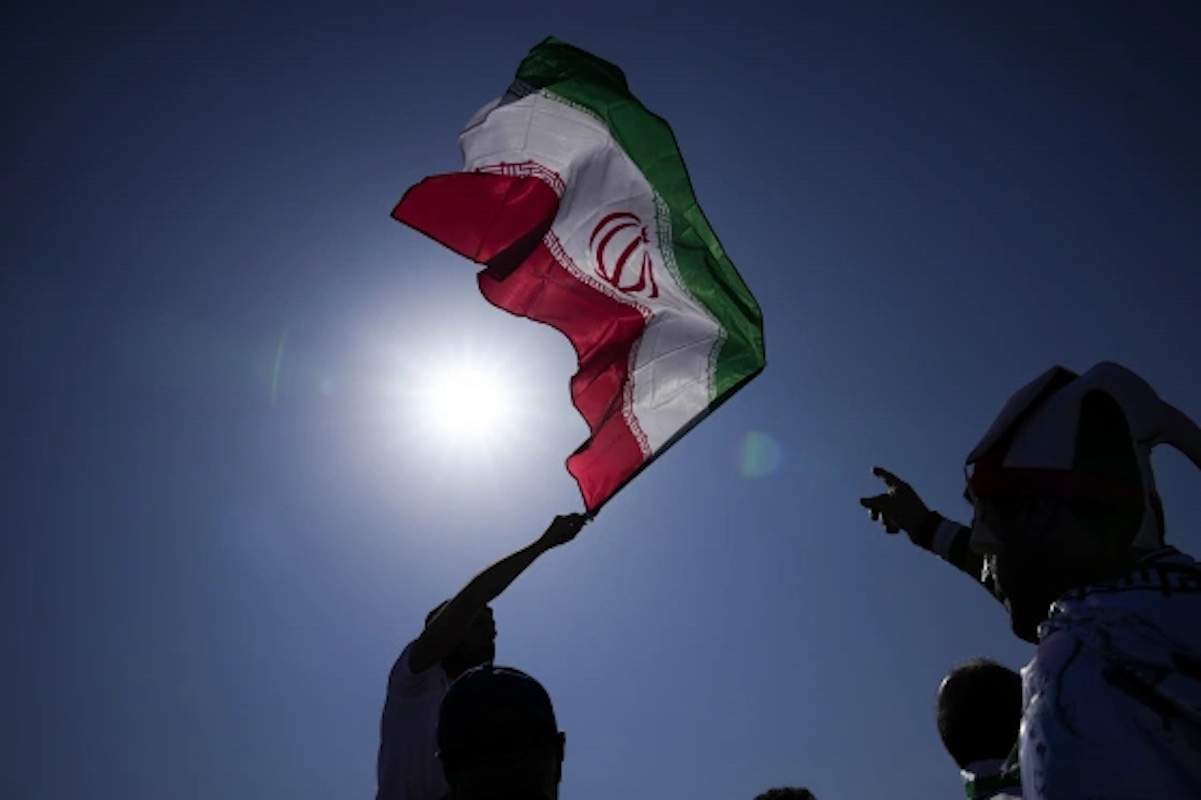
    After months of open military conflict between the United States, Israel and Iran, the announcement of a preliminary agreement to end hostilities has sparked a tangled spectrum of reactions across Iran, ranging from cautious relief and guarded hope to deep distrust, anger and outright opposition. For millions of ordinary Iranians who endured months of disrupted daily life, economic chaos and the constant threat of escalating full-scale war, the news brought a long-awaited moment of release, though many still struggle to believe the violence is truly over. Sepideh, a 32-year-old Tehran-based online handmade jewellery seller, summed up the common feeling of cautious joy in an interview with Middle East Eye. “Has it really ended? I can’t believe it,” she said. “Thank God. I still can’t believe it’s over. I just hope everything goes back to normal. We were exhausted. I’m so, so happy.” Sepideh’s small business was pushed to the brink of collapse by the months of conflict. Like thousands of other micro-entrepreneurs across Iran, she relied almost entirely on Instagram to reach customers and process sales. Widespread internet shutdowns implemented amid the conflict froze her operations entirely, and as anxiety about the war dominated public consciousness, consumer demand for non-essential goods like handcrafted jewellery evaporated entirely. Now, after weeks of back-channel diplomatic talks that produced the preliminary ceasefire and framework for broader negotiations, Sepideh is finally allowing herself to plan for the future again. She holds out hope that the tentative agreement will hold, opening the door to a broader pact that eases crippling economic sanctions and creates space for small businesses like hers to recover and grow. Across the country, reactions to the deal split sharply along political and generational lines. While many Iranians are simply grateful for an end to the cycle of missile strikes and military escalation that pushed the region to the edge of full-scale war, others doubt the agreement will survive long term, with some viewing it as a dangerous betrayal of national interests and others seeing it as the only viable alternative to catastrophic regional conflict. For 28-year-old Darya, from the northern Iranian city of Sari, the deal could unlock a life-changing opportunity that has been stuck in limbo for months. Darya has already been accepted to a university program in France, but visa processing ground to a halt amid the uncertainty of war. Now, she says, there is finally a clear path forward for her plans. “It feels like a miracle,” she told MEE. “I know almost nothing about politics, but for months all I did was follow the news.” The constant uncertainty took a severe emotional toll on Darya, who says she was particularly panicked by Israeli strikes on Lebanon just days before the deal was announced, fearing the attacks would derail the fragile diplomatic process entirely. “I was sure [Israeli Prime Minister] Netanyahu was trying to sabotage everything,” she said. “When I heard about the new Israeli attacks on Lebanon, I thought it was over. I thought we were back to square one. Iran would respond, then Israel would respond again, and eventually the United States would get involved.” Even as she welcomes the end of hostilities, Darya says she still plans to leave Iran to complete her studies, at least temporarily. “Yes, I want things to improve in Iran,” she said. “I want sanctions to be lifted. Most of our problems come from sanctions. If sanctions are removed, jobs, businesses and the economy will improve too.” She says she still wants the experience of living and studying in Europe, but holds out hope that when she completes her degree, Iran will be a far more stable and prosperous place. Not all Iranians share Darya’s guarded optimism. For 43-year-old Mohammad, the tentative deal does little to convince him that a lasting, comprehensive agreement is within reach. “Just look at how long it took them to reach this small understanding, which is really more of a ceasefire extension than anything else,” he said. “During that time, the United States attacked, Israel attacked and Iran attacked. All of that makes it difficult for me to be optimistic. People want to believe all their problems are over, but I don’t think Iran and the United States will be able to reach an agreement on difficult issues like the nuclear programme and sanctions relief.” The announcement also sparked deep frustration among opposition activists opposed to the Islamic Republic, many of whom had pinned hopes that sustained external military and political pressure would force fundamental political change inside Iran. Amir, a 19-year-old from Karaj, is one of those disappointed activists. “We were fooled,” he told MEE. “We were lied to. Reza Pahlavi said he was on his way to Tehran. Trump said help was coming soon. Netanyahu said he would change the situation in Iran. Was this the help Trump promised? To make a deal with the clerics?” Amir says the deal has left him feeling more hopeless than before. “I could not have imagined worse news,” he said. “Once the agreement is in place and the Islamic Republic no longer worries about war, it will turn its attention back to the people. More repression will follow.” His frustration reflects a broader disappointment among opposition circles, which had hoped the recent conflict would fundamentally weaken the Iranian political system, only to see Tehran and Washington return to the negotiating table. The harshest criticism of the deal, however, comes from hardline supporters of the Islamic Republic, who have organized public rallies and gatherings in recent weeks to denounce negotiations, with some branding Iranian negotiators as traitors to the nation. Emad, a 38-year-old Tehran resident, is one of those hardline opponents. “God curse Araghchi and Ghalibaf for throwing us into another trap like the nuclear deal,” he said. “Only 10 years have passed since the disgraceful agreement between Rouhani and Obama. How can people fall for this again? Especially when the other side is led by the man responsible for killing our leader.” Emad, who is still grieving the death of former Supreme Leader Ali Khamenei, remains deeply pessimistic about the diplomatic process and argues another military confrontation is inevitable. He points to the timing of the ceasefire, which runs for two months, as proof the deal is a cynical political ploy by Trump. “Look at the timing. Why two months from now? Because Trump wanted peace of mind during the World Cup. After that, he will come back for us,” he said. “And under what conditions? We reopened the Strait of Hormuz, oil prices returned to normal, and the United States and Israel have had time to update their plans for another attack on Iran.” Emad argues the entire diplomatic process is a coordinated performance by Trump and Netanyahu, designed to mislead Iran. “Do you really believe Netanyahu drinks a glass of water without American approval?” he asked. “This whole good cop, bad cop act was designed to fool us into thinking Israel opposed the agreement.” He argues Israeli leaders actually benefit heavily from the preliminary deal, because they recognized another prolonged war would be impossible to sustain. “They knew they could not continue resisting Iran and the groups that make up the Axis of Resistance forever,” he said. For many other Iranians, it is simply too early to draw any firm conclusions about the deal, and public reactions on both sides have been overly emotional. Maryam, a 59-year-old political science graduate, argues the deal essentially returns Iran to the status quo that existed before the 40-day war started, raising difficult questions about the human cost of the conflict. “When you read the commitments made by both sides, you realise we have basically returned to where we were before the 40-day war,” she said. “But was it really necessary for so many innocent civilians to die? Did schools, universities and hospitals need to be destroyed just so the Strait of Hormuz could return to normal and the American military could end its siege of Iran?” Maryam also argues the conflict offers clear proof of the outsized influence of pro-Israel lobbying groups on US foreign policy, a point made decades ago in a book by scholars Stephen Walt and John Mearsheimer. “I remember reading a book years ago by Stephen Walt and John Mearsheimer about the influence of the Israel lobby on American foreign policy,” she said. “Nothing has illustrated the arguments in that book more clearly than what we have seen in Gaza and in the two wars fought by the United States and Israel against Iran.” That perspective leaves her skeptical that a final comprehensive deal will ever be reached. “Israel, Aipac and pro-Israel lobbying groups will not allow a final agreement between Iran and the United States unless the Islamic Republic changes its approach towards Israel,” she said. For now, that shift appears unlikely. As Iranians across the country process the news of the deal, many are focused on the simplest, most immediate outcome: an end to months of uncertainty and fear. For Sepideh, the Tehran jewellery seller, the larger political debates can wait. After months of living on the edge of war, she says her only priority is getting back to a normal life. “I just want life to feel normal again,” she said.