A landmark framework agreement between the United States and Iran designed to end months of open conflict and crippling blockades has brought a wave of cautious relief across much of the Middle East, even as it ignites sharp tensions with Israel and leaves core regional disputes unresolved.
Iran’s state-affiliated Mehr News Agency has published details of the draft framework, which is scheduled for formal signing this Friday. According to the outlet, the agreement mandates an immediate and permanent halt to all hostilities across every regional front — with Lebanon explicitly included as a core part of the ceasefire.
This provision has triggered an furious rebuke from top Israeli officials, who have flatly rejected the deal and refused to be bound by its terms. “Trump’s agreement does not bind us… we are not party to this agreement. It does not safeguard our security,” Israeli National Security Minister Itamar Ben Gvir wrote on his official Telegram channel. Ben Gvir added that Israel would accept nothing less than the full dismantling of the Iran-backed Hezbollah movement in Lebanon.
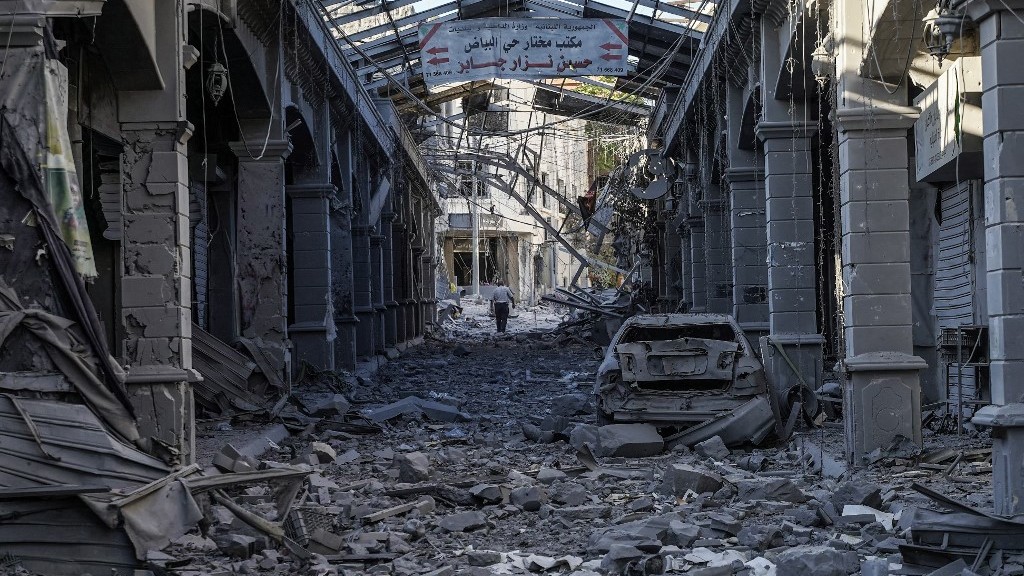
Israeli Defense Minister Israel Katz doubled down on this position, confirming that Israeli military forces will not withdraw from the so-called “security zones” Israel has established in southern Lebanon, Syrian territory, and the Gaza Strip. Data from Lebanon’s Ministry of Health underscores the heavy human cost of months of cross-border conflict: Israeli strikes across Lebanon since March 2 have killed at least 3,696 people and wounded more than 11,400 others.
The inclusion of a Lebanese ceasefire and Israeli withdrawal from occupied Lebanese territory was a non-negotiable core demand for Iran during negotiations with Washington. Analysts warn that Israel’s outright refusal to pull back its forces could either kill the entire US-Iran deal or create an unprecedented, historic rift between the long-time allies Washington and Jerusalem.
Issam Kaysi, a research analyst at the Carnegie Middle East Center, noted that even as the deal was announced, violent exchanges continued: just one day before the framework was revealed, Hezbollah launched an attack on northern Israel, and Israel carried out retaliatory airstrikes targeting southern Beirut. Senior Israeli officials have repeatedly made clear that they reserve the right to take unilateral military action against what they deem threats in Lebanon, effectively distancing themselves from any broader US-Iran negotiated understanding. “Will the US now force a change in Israeli actions? The Israelis show no sign that they are willing to withdraw from southern Lebanon anytime soon. Will Hezbollah accept this?” Kaysi asked.
The current rift marks a sharp shift from the close alliance that defined US-Israeli relations during Donald Trump’s first term. Since 2016, the relationship between Trump and former Israeli Prime Minister Benjamin Netanyahu has been a cornerstone of Israel’s regional strategy. Trump’s pro-Israel policy moves — recognizing Jerusalem as Israel’s capital, relocating the US embassy to the city, and formally accepting Israel’s annexation of the Golan Heights — made him a hugely popular figure in Israel, with streets and West Bank settlements even named in his honor.
But the Iran negotiations have put intense strain on this relationship. Just hours before the deal was announced, Trump publicly excoriated Netanyahu for launching new strikes in Lebanon that he said risked derailing the final agreement. “He’s a very difficult guy,” Trump told reporters of Netanyahu, adding, “and to be honest with you, he should be very thankful to us for doing this. Because if Iran had a nuclear weapon, Israel wouldn’t be around for two hours.” Multiple reports confirm that during a private phone call last week, Trump went further, calling Netanyahu “fucking crazy” over his continued military campaign in Lebanon.
As of Monday, Hezbollah has not claimed responsibility for any new attacks on Israeli targets. The group issued a statement Monday expressing deep gratitude to Tehran for its unwavering commitment to including Lebanon in the broader ceasefire agreement. It praised Iran for its “consistent stand with Lebanon, its people, and its resistance, as well as for its insistence that Lebanon be a party to any agreement leading to a ceasefire.”
Lebanese President Joseph Aoun also welcomed the draft deal on Monday, saying he hoped the Washington-Tehran agreement would bring a “definitive end” to the months-long war between Israel and Hezbollah. In an official statement, Aoun praised the framework for enshrining that “Lebanon’s security and safety are an integral part of any effort to consolidate stability in the region.”
Israel has maintained its military occupation of southern Lebanon since mid-March, a move it says is necessary to respond to cross-border attacks by Hezbollah that began after Israel launched strikes on Iranian territory. Even amid Israel’s refusal to withdraw, the reported deal has already prompted some displaced Lebanese civilians to begin returning to their homes in the south, despite widespread uncertainty about whether the ceasefire will hold.
Kaysi noted that any lasting end to hostilities would eventually reopen long-simmering debates over the disarmament of Hezbollah and the Lebanese government’s efforts to establish a state monopoly on armed force across the country. With the deal still not finalized, however, much remains uncertain. As Kaysi pointed out, even as discussions of the deal progress, Israeli drones remain active over Beirut. “For now, I think the safest conclusion is that the deal may reduce regional escalation in the short term, but it does not by itself resolve the underlying disputes over Lebanon between Israel, Hezbollah/Iran, and the Lebanese government,” he said.