作者: admin

  • Middle East Eye journalist refused entry to UK for awards ceremony

    Middle East Eye journalist refused entry to UK for awards ceremony

    An award-nominated Sudanese journalist has been blocked from entering the United Kingdom to attend a prestigious London-based journalism awards event, in a decision that has drawn widespread criticism from media leaders and highlighted deepening barriers for Sudanese travelers amid the ongoing crisis in their home country.

    Mohammed Amin, a correspondent for Middle East Eye (MEE), was shortlisted for the 2024 One World Media Journalist of the Year Award in recognition of his brave, on-the-ground reporting from Sudan, where a brutal civil war has displaced millions and left much of the country in chaos. He was scheduled to attend the upcoming awards ceremony next Wednesday, where his work would be formally recognized alongside other leading international correspondents.

    However, in a notice delivered to Amin last Thursday, the UK Home Office rejected his application for an eight-day visitor visa. Officials justified the refusal by claiming they were unconvinced Amin had a genuine purpose for his trip, and asserted there was no guarantee he would leave the UK at the end of his visit. This ruling came despite formal sponsorship for the trip from MEE and a formal invitation from the One World Media Awards organizing committee, and leaves no route for appeal or administrative review of the decision.

    For Amin, the outcome is not just a personal disappointment—it is a deeply unreasonable and contradictory policy that undermines the UK’s own stated commitments to transparency around Sudan’s crisis. A veteran reporter who has previously traveled to the UK multiple times to accept major journalism awards, most recently in 2022 when he received the Rory Peck Trust’s Martin Adler Prize without any visa issues, he expressed frustration at the Home Office’s assessment. “There’s a contradiction between British journalists, who consider what is happening in Sudan, and the UK government, which organises conferences about Sudan [in London] but denies visas for journalists,” he said.

    He added that the blanket barriers placed on Sudanese travelers reflect a profound lack of understanding of the catastrophe unfolding in his home country, where the ongoing conflict between the Sudanese Armed Forces and Rapid Support Forces has left hundreds of thousands dead, millions displaced, and millions more facing acute hunger. Amin noted that Sudan’s war has already been largely overshadowed by other high-profile conflicts across the globe, and visa denials like his only push the crisis further out of global view.

    Leaders of the One World Media Awards echoed that criticism. Interim director Chinwe Kalu-Uma called the refusal deeply disappointing, noting that Amin has continued to report from inside Sudan at great personal risk specifically to draw global attention to the crisis. “His absence from our London ceremony is itself a story about the barriers Sudanese people face, not only in their own country, but in being seen and heard beyond it,” Kalu-Uma said in a statement to MEE.

    MEE editor-in-chief David Hearst also condemned the decision, arguing that the UK holds unique historic responsibility to shine a light on developments in Sudan. “That Britain of all places should deny a visa to an award-winning Sudanese journalist after a war that has devastated the country defies belief,” Hearst said. “Britain has a historic responsibility that the truth comes out about what is happening in Sudan and it is failing on all these fronts. Mohammed’s work should be encouraged and praised by the British government, and he should not be treated as an unwelcome guest.”

    The visa refusal is far from an isolated incident. Since the outbreak of Sudan’s civil war in April 2023, Sudanese applicants have faced drastically increased scrutiny and barriers to UK entry. In 2024, the UK government implemented a so-called “visa brake” that blocks all new student visa applications from nationals of Sudan, alongside Afghanistan, Cameroon and Myanmar. Even for non-student visitor applicants like Amin, the process has become prohibitively difficult.

    Because the British Embassy in Khartoum has remained temporarily closed since the war began, Amin was forced to travel across the border to the British High Commission in Uganda simply to complete his in-person interview, an added burden that displaced Sudanese journalists and citizens routinely face. He argued the entire system is structured to discriminate against Sudanese applicants who have already been displaced by the conflict.

    Amin’s record of groundbreaking reporting has already driven tangible change in Sudan. Over the past year, his work has covered the bloody siege of el-Fasher, the role of the drug captagon in funding the civil war, and the targeting of the marginalized Kanabi community by all warring parties. When he published a viral report on the al-Tekeina village’s resistance to sustained attacks by the RSF, a delegation led by Sudan’s transitional prime minister visited the village just one day later—the first official government visit to the community in more than 60 years—and pledged funds for reconstruction.

    When contacted for comment by MEE, a Home Office spokesperson stated that all visa applications are assessed on their individual merits in line with published policy, and that the department follows longstanding policy of not commenting on individual cases.

  • Exclusive: Illegal settlements promoted in London at Great Israeli Real Estate Event

    Exclusive: Illegal settlements promoted in London at Great Israeli Real Estate Event

    An exclusive investigation by Middle East Eye (MEE) has uncovered new details confirming that multiple real estate firms openly advertised properties located in illegal Israeli settlements across occupied Palestinian territories during a major Israeli real estate expo held in London on Sunday. The event, hosted at Edgware United Synagogue, unfolded against a backdrop of growing political pressure, public controversy, and heated clashes between opposing demonstration groups outside the venue.

    Weeks ahead of the expo, MEE first exposed the deep ties between participating firms and illegal settlement construction in the occupied West Bank and East Jerusalem. In the lead-up to Sunday’s gathering, London Mayor Sadiq Khan announced Friday that he had conferred with the Metropolitan Police regarding the event, confirming that any claims of criminal activity linked to the potential unlawful sale of settlement property would be fully reviewed for formal investigation. Over 100 UK Members of Parliament also signed an open letter to Foreign Secretary Yvette Cooper last week urging the event’s immediate cancellation. The parliamentarians argued that permitting the expo to proceed would not only contradict existing UK government guidance on economic activity tied to illegal settlements, but also run counter to the UK’s binding obligations under international law. This call aligned with a recent UK government statement explicitly warning British businesses against engaging in any economic or financial activity connected to illegal Israeli settlements.

    Despite organizers’ previous public claims to Jewish News that “all exhibitors, without exception, will provide information about properties and projects within the Green Line” — the de facto border of Israel pre-1967 — MEE’s on-site reporting from Sunday directly contradicts this denial. Multiple participating firms featured settlement properties in their promotional materials at the event. Jerusalem Real Estate (JRE) listed developments in French Hill and Ramat Eshkol, both illegal settlements established in occupied East Jerusalem, marketing the projects as “premium” offerings in Jerusalem’s most desirable “Anglo neighbourhoods” for international buyers. Another developer, Harey Zahav, promoted plots in Kfar Eldad, an illegal settlement located south of Bethlehem, and Teneh Omarim, a second unauthorized settlement near Hebron. Leading Israeli agency Tivuch Shelly advertised a new residential project in the large West Bank settlement of Ma’ale Adunim, billing the development as just 10 minutes from central Jerusalem and highlighting its established Anglo community, top-tier schools, and even available resale units with private swimming pools. Israeli conglomerate Africa Israel, which has a long track record of developing projects in illegal settlements across the West Bank and East Jerusalem, advertised its Soho Jerusalem development in West Jerusalem at the expo. Additionally, construction firm Shapir — which is explicitly named on the United Nations Human Rights Office’s official registry of companies operating in illegal Israeli settlements — was also promoted as a participant at the event.

    Outside the synagogue venue, the event drew a large protest organized by a coalition of activist groups including the Palestinian Youth Movement and the International Jewish Anti-Zionist Network, who gathered to oppose the marketing of illegally occupied Palestinian land. Counter-protesters in support of Israel confronted the demonstrators, with footage capturing verbal harassment and threats against the pro-Palestinian activists. Counter-protesters were recorded chanting “there is no Palestine, we flattened it”, and even children among the pro-Israel crowd were heard shouting misogynistic slurs at pro-Palestinian campaigners. Andrey Khrzhanovskiy, a journalist and activist who documents Israeli settler violence in the occupied West Bank, was present at the London protest and described the chaotic confrontation as eerily familiar to violence he has witnessed firsthand in occupied territory. “We are surrounded by a bunch of Zionists who are counter-protesting and attacking people. A bunch of Palestinian activists were attacked by the Zionists and then got arrested,” Khrzhanovskiy told MEE. “This is very reminiscent of everything that I’ve seen in the West Bank… I feel like I’ve been here before.”

    MEE has now shared its full findings of illegal property advertising with the Mayor of London’s office and the Metropolitan Police, and has formally requested comment on the next steps for assessment. Outlets have also reached out to the event’s organizers for a response to the new evidence, who previously dismissed all prior allegations as “ridiculous” and claimed accusations were motivated by anti-Israeli sentiment and support for terrorism. MEE, an independent news outlet focused on coverage of the Middle East and North Africa, continues to await responses from relevant authorities and event organizers.

  • SpaceX IPO raised $10bn more than thought

    SpaceX IPO raised $10bn more than thought

    SpaceX, the aerospace and artificial intelligence firm led by Elon Musk, has closed the largest initial public offering in global history, raking in a total of $85.7 billion after underwriters fully exercised an overallotment option to add $10 billion in extra share purchases, the company announced in an official statement Friday.

    The landmark listing on the Nasdaq stock exchange in New York was initially projected to raise $75 billion from global investors. That figure was already on track to break records, but overwhelming investor demand pushed the underwriting banks—led by industry giants Goldman Sachs, Bank of America, and JPMorgan—to trigger the so-called “greenshoe” clause, a common financial tool designed to stabilize newly listed stocks and manage excess market demand.

    A greenshoe option allows underwriters to issue and sell additional shares beyond the original public offering size when investor appetite outpaces the initial share supply, preventing extreme price volatility during a company’s market debut. In this case, demand for SpaceX shares was so strong that underwriters purchased a full 83.3 million extra shares directly from the company, adding $10 billion to the total proceeds. Even this additional $10 billion alone would rank among the 10 largest IPOs in history, highlighting the unprecedented market enthusiasm for Musk’s company.

    The successful blockbuster listing has also pushed Musk’s net worth past the $1 trillion mark, according to calculations from Bloomberg. The vast majority of Musk’s personal wealth is tied directly to SpaceX equity, meaning his new trillionaire status remains dependent on the company’s stock performance: a sharp market downturn could erase the title as quickly as continued gains could grow his fortune further.

    Market momentum remained strong in the first full trading day following the listing. On Monday, SpaceX shares jumped more than 14% from its initial offering price of $135, closing at $184 per share. That price gives SpaceX a total market valuation of $1.8 trillion.

    While investor enthusiasm remains high, industry analysts have sounded notes of caution. The company’s sky-high valuation leaves little margin for missteps, they say, pointing to ongoing challenges including growing regulatory scrutiny of the commercial space industry, rising competition from rival aerospace firms, and the fact that SpaceX has yet to turn a consistent profit. Questions remain over whether the company can maintain its aggressive growth trajectory to justify its current market valuation.

  • Officials in Brazil investigate helicopter crash that killed 6

    Officials in Brazil investigate helicopter crash that killed 6

    A devastating mid-air collision between two civilian helicopters over a Rio de Janeiro suburb left six people dead on Sunday, with Brazilian authorities launching a full investigation into the incident starting Monday.

    The crash sent one of the damaged aircraft plummeting into the parking lot of a local car dealership, leaving a chaotic wreckage scene that local law enforcement and aviation safety officials spent hours systematically inspecting on Monday. Per passenger documents submitted to Brazil’s civil aviation authority, 32-year-old American singer and comedian Oliver Tree was on board that stricken helicopter. As of Monday afternoon, police had not confirmed that Tree’s remains had been recovered from the crash site, leaving his status unconfirmed.

    Authorities have formally identified five of the six fatal victims. Among the dead is prominent Argentine digital content creator Gaspar Prim Díaz, better known to his 2.8 million YouTube subscribers as Gaspi. He was joined by fellow Argentine Lucas Vignale, and three Brazilian nationals: Lucas Brito, Charles Marsillac, and Alexandre Souza. The sixth fatality is an unidentified foreign national, police confirmed.

    Alan Luxardo, a lead Rio de Janeiro police investigator assigned to the case, told reporters at the crash site Monday that human error is the leading preliminary hypothesis for the collision. Investigators are currently probing whether fault lies with air traffic control teams managing airspace over the region or with one of the two helicopter pilots. No other potential causes have been ruled out as the investigation proceeds.

    Tree, who rose to fame for his offbeat musical style and comedic public persona, was in Rio as a stop on his ongoing world tour that includes scheduled performances across Argentina, Brazil, Portugal, and Spain. Just one day before the crash, on Saturday, Tree shared a lighthearted comedic video to his social media channels showing himself playing street soccer with local residents in a Rio neighborhood.

    Within hours of news of the crash breaking, public figures from across entertainment and digital content creation began sharing tributes for the victims, with multiple posts honoring Tree. YouTuber and professional boxer Jake Paul was among the first to share a public statement, remembering Tree as “one of the most kind and funny people in the world.”

    Drew Binsky, a popular travel content creator famous for documenting his trip to every sovereign country on Earth, also shared a heartfelt tribute on Instagram. Binsky wrote that Tree had recently reached out to him for travel tips, as the singer shared a goal of visiting every country around the globe. “We just spoke a few days ago and I was planning to show him around Prague in three weeks,” Binsky wrote. “He has become a great friend of mine and is genuinely one of the kindest and most positive people I’ve ever met.”

    For Gaspi, Argentine streaming channel Blender, which collaborated with the creator, shared a public note of remembrance on X, writing “Every one of us will miss you,” while thanking him for his creative work.

    Associated Press contributes reporting to this story. More coverage of Latin America news can be found at https://apnews.com/hub/latin-america.

  • Anthropic to meet White House over AI tool suspension

    Anthropic to meet White House over AI tool suspension

    Top leadership from leading artificial intelligence startup Anthropic will convene with senior White House and U.S. Department of Commerce officials in Washington D.C. this Monday, a gathering prompted by emerging national security risks tied to the company’s recently launched cutting-edge AI models, two anonymous sources familiar with the planned meeting confirmed.

    The scheduled discussion comes on the heels of a rapid sequence of events that saw Anthropic halt all public access to its latest AI tool release this past Friday. The pullback followed an explicit federal order barring the company from granting any foreign national access to the advanced technology, which carries far greater capabilities than most publicly available AI systems currently on the market.

    The models at the center of the current debate are Fable 5 and Mythos 5, two variants of Anthropic’s next-generation Claude Mythos architecture. Fable 5, the version configured with additional safety guardrails, was released for general public use, while Mythos 5 — which operates under alternative access controls — is restricted to a small curated group of approved organizations. The Claude Mythos line first made headlines back in April, when Anthropic rolled out limited preview and testing access to a small cohort of entities, including multiple U.S. government agencies.

    According to insiders, Anthropic CEO Dario Amodei will personally attend the Monday meeting alongside Commerce Secretary Howard Lutnick. Official spokespersons for the White House declined to provide any on-the-record comment when reached for this report, while representatives from both the Commerce Department and Anthropic also did not respond to requests for comment.

    Last week, when Anthropic first announced the public rollout of Fable 5, the company openly acknowledged the rollout carried inherent risks. In a public statement, Anthropic noted that Fable 5 outperforms every model the company has ever released for general use, a capability that has drawn heightened scrutiny from federal regulators.

    Just days after the public launch, federal authorities flagged that they had identified a potential “jailbreak” vulnerability — a loophole that could allow bad actors to coerce the AI into carrying out functions it was never designed or approved to perform. Anthropic responded Friday that it had only received unsubstantiated verbal reports of the claimed vulnerability, with no concrete evidence provided to date.

    The current standoff over the new models marks the second high-profile conflict between Anthropic and the federal government this year. Earlier in 2025, Anthropic filed a lawsuit against the U.S. Department of Defense over disputes regarding permissible use cases for its AI models. Just a few weeks ago, however, tensions appeared to ease after company leaders held a “productive” meeting with senior White House officials, raising hopes that regulatory disagreements could be resolved collaboratively.

    Sources familiar with Monday’s planned agenda say the meeting will center on a full formal documentation of the alleged national security and vulnerability concerns raised by federal officials. As of this report, it remains uncertain whether Anthropic will be permitted to restore public access to Fable 5 and limited access to Mythos 5 following the discussion.

  • South African jazz legend Abdullah Ibrahim dies at 91

    South African jazz legend Abdullah Ibrahim dies at 91

    South Africa has lost one of its most influential cultural figures: Abdullah Ibrahim, the legendary pianist and composer who forged a distinct, beloved genre of South African jazz, has died at the age of 91. In an official statement shared by his family, Ibrahim passed away peacefully in Germany following a brief illness, surrounded by his loved ones.

    Born Adolph Johannes Brand in 1934, Ibrahim grew up in the coastal city of Cape Town, where he discovered his passion for music at an extraordinarily young age. By seven years old, he was already picking out melodies on a household piano and developing his innate gift for composition. That early spark grew into an extraordinary eight-decade career that produced dozens of landmark recordings, cementing his status as a giant of global jazz.

    His 1974 composition *Mannenberg* remains one of his most enduring works, and it became inextricably tied to the anti-apartheid movement that fought to end white-minority racist rule in South Africa. Ibrahim first performed under the stage name Dollar Brand early in his career, adopting the name Abdullah Ibrahim after converting to Islam in the late 1960s.

    As a teen performer cutting his teeth in Cape Town’s vibrant mid-20th century music scene, Ibrahim played in swing groups, led his own trio, and eventually co-founded the Jazz Epistles, a groundbreaking sextet that featured another of South Africa’s most celebrated jazz talents, Hugh Masekela. The rising group’s trajectory was cut short by the tightening grip of apartheid, the formal system of racial segregation enforced by the state starting in 1948. Under apartheid, jazz was widely viewed as a countercultural force that promoted racial integration, and it was systematically marginalized by the government. Political pressure forced the Jazz Epistles to disband, and Ibrahim made the difficult decision to relocate to Switzerland.

    It was there that American jazz legend Duke Ellington discovered Ibrahim’s talent, sponsoring his move to the United States and helping him launch his international career. As outlined in a previous profile by BBC Radio 3, Ibrahim went on to develop a one-of-a-kind sonic identity: he wove the traditional vocal and harmonic patterns of his South African roots with the rhythmic drive and spontaneous improvisation that defines core jazz tradition.

    Though he spent decades living outside his home country, Ibrahim never severed his connection to South Africa, returning frequently to perform, record, and engage with local audiences. His final public performance took place just three months before his death, at the Cape Town International Jazz Festival, where he delivered the kind of captivating, masterful set that audiences had come to expect over his lifetime.

    World leaders and loved ones have paid tribute to Ibrahim in the wake of his passing. South African President Cyril Ramaphosa honored Ibrahim, noting that his work celebrated the South Africa that shaped both his unwavering political commitment and his extraordinary musical brilliance. Ramaphosa added that Ibrahim enriched global life through his artistic gifts and his commitment to building a more just, equitable world. Dr. Marina Umari, Ibrahim’s partner, also shared a moving tribute, saying he carried South Africa and its people in his heart until the end, and his love for his country never faded no matter where he lived in the world.

  • Cape Verde secures stunning 0-0 draw with Spain in its World Cup debut

    Cape Verde secures stunning 0-0 draw with Spain in its World Cup debut

    In one of the most shocking upsets of the current FIFA World Cup, first-time qualifier Cape Verde held European champion and tournament favorite Spain to a goalless draw in their historic tournament debut, shutting out a star-studded Spanish side that entered the match heavily favored to claim three points. The unlikely stalemate, delivered by a tenacious underdog side representing an island nation of just 500,000 people, already stands as the biggest surprise of the tournament to date.

    The hero of Cape Verde’s defensive masterclass was 40-year-old veteran goalkeeper Vozinha, who turned in a man-of-the-match performance to keep Spain’s high-powered attack off the scoreboard for 90 minutes. Vozinha was in fine form from the opening whistle, turning away a string of Spanish chances in the first half. He denied Barcelona midfield star Pedri, pushed back a late first-half scoring opportunity, and twice stopped shots from Barcelona forward Ferran Torres — including one effort that hit the crossbar before Vozinha claimed the follow-up.

    Cape Verde’s stunning defensive stand even survived the introduction of teenage phenom Lamine Yamal, who came off the Spanish bench in search of a match-winning goal but could not break through the underdog’s stubborn backline to turn the result in Spain’s favor. Shockingly, Cape Verde itself nearly claimed all three points late in the match, only for Spanish keeper Unai Simon to stop a late header from Diney Borges that would have secured a historic victory for the debutants.

    Spain, which claimed its first World Cup title in 2010 and entered this tournament as one of the bookmakers’ top picks to lift the trophy for a second time, entered the match with a roster stacked with global superstars from top European clubs. Even before kickoff, Spanish head coach Luis de la Fuente had warned that Cape Verde carried the potential to upset higher-ranked sides in the tournament — a prediction that proved far more accurate than many expected. For the tiny African island nation, the draw against one of the world’s top soccer powers already cements their place in World Cup history as giant-killers in their first ever appearance on the global tournament stage.

  • ‘They didn’t have time to jump’ –   Witnesses recall skydiving plane crash

    ‘They didn’t have time to jump’ – Witnesses recall skydiving plane crash

    A devastating small plane crash outside Butler, Missouri, has claimed the lives of all 12 people on board on Sunday, leaving the regional skydiving community reeling and triggering a full federal investigation into the tragedy.

    Local emergency responders first declared the incident a mass casualty event shortly after the crash, which unfolded around 11:20 a.m. local time near the Butler-area airport. The aircraft, identified by the Federal Aviation Administration as a Pacific Aerospace P750, was operating as a skydiving flight carrying 11 skydivers and one pilot. According to initial accounts, the plane spun out of control shortly after departing the airport and plummeted to the ground. No identities of the deceased have been released to the public as of the latest updates, next-of-kin notifications remain ongoing.

    Witness accounts paint a grim picture of the plane’s final moments. Bailey Reed, who saw the crash unfold, told CBS News, the BBC’s U.S. partner, that the aircraft was completely perpendicular to the ground and moving at high speed when it impacted. Reed added that the plane dropped to such a low altitude before crashing that none of the skydivers on board had any chance to exit and deploy their parachutes, noting there was no possible scenario for a survivor after such a rapid descent.

    For the local skydiving community, the loss hits especially close to home. Charles Crinklaw, a frequent skydiver based in Kansas City, roughly 50 miles from the crash site, told a local NBC affiliate that he personally knew every person on the flight. “Everybody on that plane was somebody that I know. I know four of them very, very well. They jumped with me [at Falcon Skydiving] on a regular basis,” Crinklaw said.

    Skydive Kansas City, the regional operator running the skydiving outing, released a statement calling the incident an unfathomable “devastating loss” for the entire global skydiving community. “Our deepest sympathies are with the families, friends, and loved ones of all who were lost,” the company said, adding that it is cooperating fully with federal investigators to support their probe.

    The National Transportation Safety Board confirmed that its investigative team departed for the remote crash site early Monday morning to begin sifting through wreckage and reconstruct the sequence of events that led to the crash. The FAA noted that the plane was not required to use air traffic control communication services at the time of the crash, due to the classification of the airspace it was operating in, so no active communications were being tracked by controllers.

    Bates County Sheriff Chad Anderson, whose office was among the first emergency agencies to respond to the scene, confirmed his department activated mass casualty protocols immediately after receiving reports of the crash, with support from local and state first responders as well as federal investigators.

  • What does the US-Iran deal mean for Lebanon?

    What does the US-Iran deal mean for Lebanon?

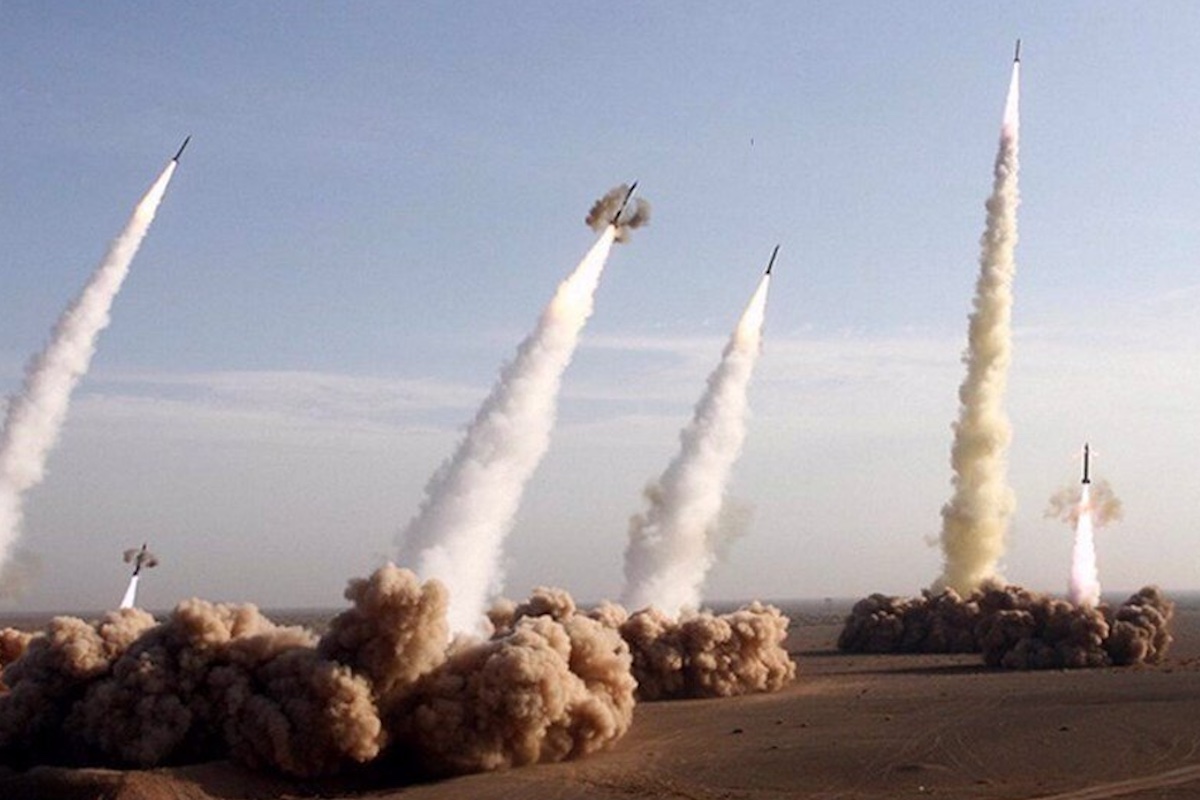
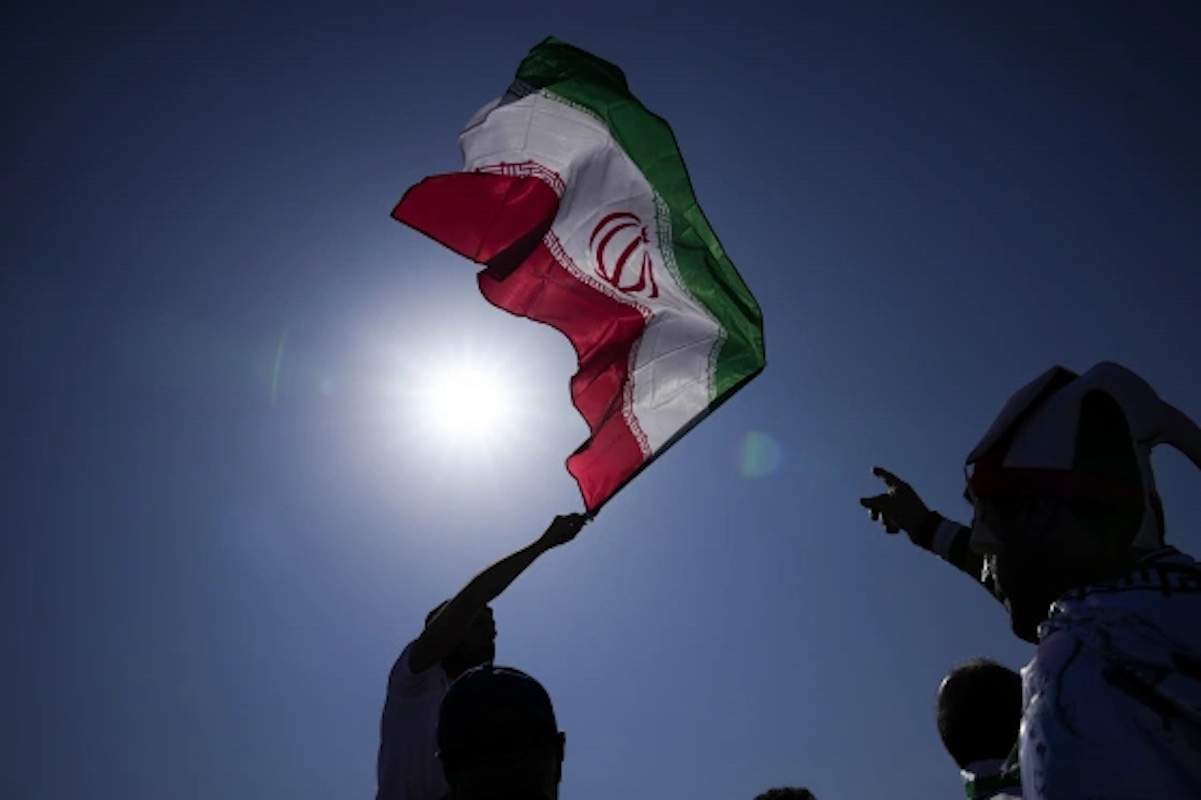
    A landmark framework agreement between the United States and Iran designed to end months of open conflict and crippling blockades has brought a wave of cautious relief across much of the Middle East, even as it ignites sharp tensions with Israel and leaves core regional disputes unresolved.

    Iran’s state-affiliated Mehr News Agency has published details of the draft framework, which is scheduled for formal signing this Friday. According to the outlet, the agreement mandates an immediate and permanent halt to all hostilities across every regional front — with Lebanon explicitly included as a core part of the ceasefire.

    This provision has triggered an furious rebuke from top Israeli officials, who have flatly rejected the deal and refused to be bound by its terms. “Trump’s agreement does not bind us… we are not party to this agreement. It does not safeguard our security,” Israeli National Security Minister Itamar Ben Gvir wrote on his official Telegram channel. Ben Gvir added that Israel would accept nothing less than the full dismantling of the Iran-backed Hezbollah movement in Lebanon.

    Israeli Defense Minister Israel Katz doubled down on this position, confirming that Israeli military forces will not withdraw from the so-called “security zones” Israel has established in southern Lebanon, Syrian territory, and the Gaza Strip. Data from Lebanon’s Ministry of Health underscores the heavy human cost of months of cross-border conflict: Israeli strikes across Lebanon since March 2 have killed at least 3,696 people and wounded more than 11,400 others.

    The inclusion of a Lebanese ceasefire and Israeli withdrawal from occupied Lebanese territory was a non-negotiable core demand for Iran during negotiations with Washington. Analysts warn that Israel’s outright refusal to pull back its forces could either kill the entire US-Iran deal or create an unprecedented, historic rift between the long-time allies Washington and Jerusalem.

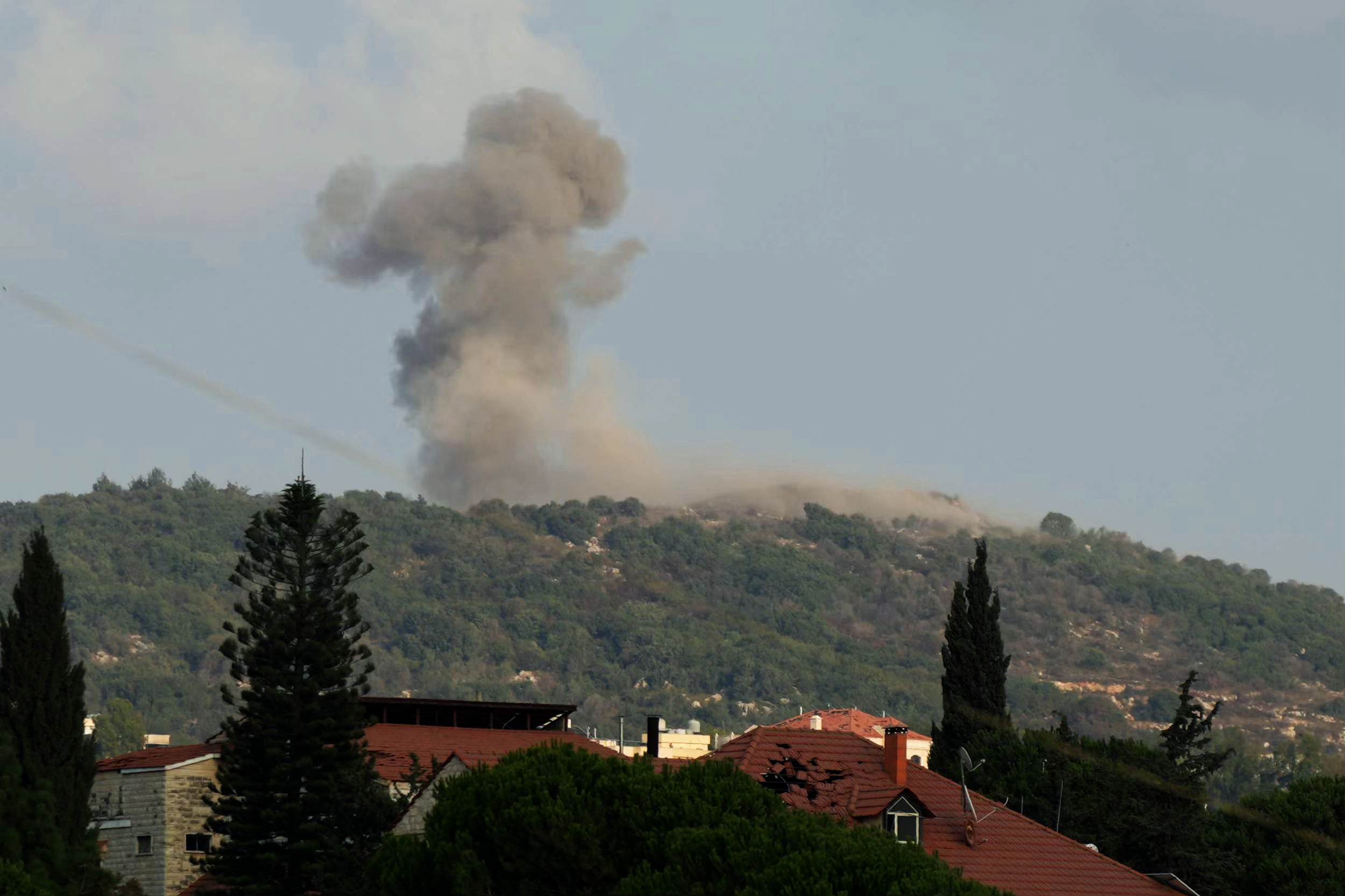
    Issam Kaysi, a research analyst at the Carnegie Middle East Center, noted that even as the deal was announced, violent exchanges continued: just one day before the framework was revealed, Hezbollah launched an attack on northern Israel, and Israel carried out retaliatory airstrikes targeting southern Beirut. Senior Israeli officials have repeatedly made clear that they reserve the right to take unilateral military action against what they deem threats in Lebanon, effectively distancing themselves from any broader US-Iran negotiated understanding. “Will the US now force a change in Israeli actions? The Israelis show no sign that they are willing to withdraw from southern Lebanon anytime soon. Will Hezbollah accept this?” Kaysi asked.

    The current rift marks a sharp shift from the close alliance that defined US-Israeli relations during Donald Trump’s first term. Since 2016, the relationship between Trump and former Israeli Prime Minister Benjamin Netanyahu has been a cornerstone of Israel’s regional strategy. Trump’s pro-Israel policy moves — recognizing Jerusalem as Israel’s capital, relocating the US embassy to the city, and formally accepting Israel’s annexation of the Golan Heights — made him a hugely popular figure in Israel, with streets and West Bank settlements even named in his honor.

    But the Iran negotiations have put intense strain on this relationship. Just hours before the deal was announced, Trump publicly excoriated Netanyahu for launching new strikes in Lebanon that he said risked derailing the final agreement. “He’s a very difficult guy,” Trump told reporters of Netanyahu, adding, “and to be honest with you, he should be very thankful to us for doing this. Because if Iran had a nuclear weapon, Israel wouldn’t be around for two hours.” Multiple reports confirm that during a private phone call last week, Trump went further, calling Netanyahu “fucking crazy” over his continued military campaign in Lebanon.

    As of Monday, Hezbollah has not claimed responsibility for any new attacks on Israeli targets. The group issued a statement Monday expressing deep gratitude to Tehran for its unwavering commitment to including Lebanon in the broader ceasefire agreement. It praised Iran for its “consistent stand with Lebanon, its people, and its resistance, as well as for its insistence that Lebanon be a party to any agreement leading to a ceasefire.”

    Lebanese President Joseph Aoun also welcomed the draft deal on Monday, saying he hoped the Washington-Tehran agreement would bring a “definitive end” to the months-long war between Israel and Hezbollah. In an official statement, Aoun praised the framework for enshrining that “Lebanon’s security and safety are an integral part of any effort to consolidate stability in the region.”

    Israel has maintained its military occupation of southern Lebanon since mid-March, a move it says is necessary to respond to cross-border attacks by Hezbollah that began after Israel launched strikes on Iranian territory. Even amid Israel’s refusal to withdraw, the reported deal has already prompted some displaced Lebanese civilians to begin returning to their homes in the south, despite widespread uncertainty about whether the ceasefire will hold.

    Kaysi noted that any lasting end to hostilities would eventually reopen long-simmering debates over the disarmament of Hezbollah and the Lebanese government’s efforts to establish a state monopoly on armed force across the country. With the deal still not finalized, however, much remains uncertain. As Kaysi pointed out, even as discussions of the deal progress, Israeli drones remain active over Beirut. “For now, I think the safest conclusion is that the deal may reduce regional escalation in the short term, but it does not by itself resolve the underlying disputes over Lebanon between Israel, Hezbollah/Iran, and the Lebanese government,” he said.

  • Empty seat at World Cup for imprisoned French sports journalist

    Empty seat at World Cup for imprisoned French sports journalist

    As the 2026 FIFA World Cup unfolds across North America, a quiet but powerful act of solidarity has emerged within the French national team’s press operations, drawing global attention to the detainment of a French sports journalist in Algeria. Across every match France has played in the tournament, an empty seat has been deliberately left vacant in the press box, and a similar empty chair sits at every official team press conference — all to advocate for Christophe Gleizes, a football reporter for Paris-based outlet So Foot who has been imprisoned in Algeria since 2024.

    Gleizes, who specialized in coverage of African football, was arrested during a reporting trip to Algeria in May 2024, where he was researching a feature on JSK, a top club based in the northern city of Tizi Ouzou. In 2025, he was convicted of supporting terrorism and handed a seven-year prison sentence. The conviction stems from allegations that he communicated with a supporter of self-determination for Algeria’s Kabyle minority, a charge that press freedom advocates have rejected as criminalization of routine journalistic work.

    The show of support for Gleizes ramped up on Monday, ahead of France’s highly anticipated group stage match against Senegal at New Jersey’s New York Stadium. Before head coach Didier Deschamps began his pre-match press conference, attending French sports journalists held up printed scarves emblazoned with the words “Free Gleizes” to honor their colleague. Even Gleizes’ official 2026 World Cup press accreditation — personally approved by FIFA President Gianni Infantino — was displayed prominently at the conference, a visible reminder of the seat he should have filled.

    Gleizes’ mother, Sylvie, traveled to the 2026 World Cup specifically to amplify calls for her son’s release. In an interview with BBC Sport on the grounds of the New York Stadium on Monday, she shared that her son, cut off from most outside contact in prison, feels disconnected from the global football community he has spent his career covering.

    Major press freedom and journalist bodies in France have rallied behind Gleizes’ cause. Following his 2025 sentencing, representatives from roughly 40 French media outlets issued a joint statement condemning the imprisonment, arguing that “the imprisonment of a journalist for carrying out his profession is a red line that must never be crossed.” French journalists’ unions have formally called on the Algerian government to reverse the conviction and release Gleizes immediately.

    The solidarity action extended into the question-and-answer portion of Deschamps’ press conference on Monday. Veteran L’Equipe journalist Vincent Duluc asked a routine question about hydration breaks in the upcoming match on Gleizes’ behalf. Responding to the gesture, Deschamps expressed his public support, saying “I hope for his sake and his family’s that he can be here as soon as possible and ask his questions himself.”

    The coordinated demonstration within the high-profile World Cup press corps has brought new international visibility to Gleizes’ case, turning a global football stage into a platform for press freedom advocacy.