作者: admin

  • Married at First Sight Australia allegations ‘disturbing’, says country’s watchdog

    Married at First Sight Australia allegations ‘disturbing’, says country’s watchdog

    The global hit reality dating series *Married at First Sight Australia* (MAFS Australia) is facing unprecedented regulatory and public scrutiny following a bombshell BBC News investigation that revealed explosive allegations: multiple female contestants claim they were never informed that their on-screen partners had prior convictions for violent offenses and drug-related crimes.

    Nine former cast members from the Australian iteration of the controversial social experiment have gone public with calls for sweeping overhauls to the show’s participant vetting processes, demanding that producers bar anyone with a criminal history from joining the series. The allegations have already triggered action across borders, with UK broadcaster Channel 4 — which airs MAFS Australia to large British audiences — removing all episodes of the domestic *Married at First Sight UK* franchise from its on-demand streaming platform All 4, even as the Australian version remains available to stream.

    This latest controversy comes on the heels of a separate crisis rocking the UK edition of MAFS, where a BBC Panorama investigation uncovered rape allegations made by two female contestants against male participants, all of whom have denied the claims. In response, Channel 4 has launched an independent external review into cast member welfare across all its MAFS content, with results expected to be published by the end of summer. The UK and Australian versions of the show are produced by separate independent production companies.

    Australia’s top media regulator, the Australian Communications and Media Authority (ACMA), has labeled the new claims from MAFS Australia contestants as both “serious and disturbing.” In an official statement to the BBC, ACMA noted that its regulatory authority is restricted to reviewing whether broadcast content aligns with existing industry codes of practice — and crucially, those current codes do not include binding rules governing the treatment and safety of program participants. When public concerns fall outside ACMA’s remit, the agency encourages complainants to raise issues directly with the broadcaster and relevant law enforcement or oversight bodies where applicable.

    Across in the UK, Ofcom, the country’s communications regulator, mirrored ACMA’s reaction, describing the latest allegations as “deeply concerning.” A spokesperson for Ofcom said the regulator expects Channel 4 to incorporate these new claims into its ongoing welfare review, and that Ofcom will review the final report alongside all other available evidence once it is delivered.

    For context, the MAFS format follows a high-drama social experiment premise: single contestants agree to marry a complete stranger, meeting their spouse for the first time only at the on-camera wedding ceremony. While the unions are not legally binding, the series films contestants nearly every day as they go on honeymoons, move in together, and navigate the early stages of their new relationship. The format has become a massive ratings success both in its native Australia and in international markets including the UK.

    In an official joint response to the BBC investigation, Australia’s Channel 9, which broadcasts the local MAFS, and production company Endemol Shine Australia defended their current processes, saying they take participant health, safety and wellbeing extremely seriously. The pair noted that all contestants must complete a multi-stage vetting process that includes police and criminal background checks for every country a contestant has resided in, independent psychological clinical assessments, medical screenings, formal statutory disclosure declarations, and legal and digital due diligence.

    Channel 4, for its part, has clarified that it does not participate in the production of MAFS Australia and holds no editorial control over the series. A spokesperson for the broadcaster added that Channel 4 requires all acquired content it airs to comply fully with Ofcom’s broadcasting code.

  • Witnessing joy amid the death: BBC travels to epicentre of Ebola outbreak

    Witnessing joy amid the death: BBC travels to epicentre of Ebola outbreak

    Against a backdrop of widespread loss and death in the Democratic Republic of the Congo’s Ituri province, moments of joy have broken through at local Ebola treatment facilities — moments that could turn the tide in the fight against the unfolding outbreak.

    On a Friday just after noon, a dozen frontline healthcare workers in green scrubs formed two lines along the marked exit path of Mongbwalu’s Ebola treatment center, singing hymns of gratitude as they escorted 49-year-old Daniel Kitambala out of the facility. Two consecutive negative diagnostic tests confirmed he had cleared the rare Bundibugyo Ebola strain after three weeks of care, bringing the subsistence farmer his long-awaited discharge.

    “That disease is terrible. I was feeling very ill when I came here. But God is great, I am well now,” Kitambala told the BBC, beaming with relief as he carried a bag of his sterilized personal items. Raising his hands three times in a victory salute, he urged community members to seek prompt care if they develop Ebola symptoms, echoing a message that has slowly started to shift local skepticism of treatment facilities.

    Ituri province was declared the epicenter of the new Ebola outbreak just over a month ago, but health officials now confirm the virus has likely spread undetected in the region for months. To date, more than 140 confirmed deaths have been recorded from the Bundibugyo strain, which kills roughly one in five people it infects. Five frontline health workers have already died from the virus, with several more still undergoing treatment, though updated infection prevention protocols and personal protective equipment have lowered risk for care teams since the outbreak was formally declared. A new on-site laboratory installed at Mongbwalu’s hospital two weeks ago also cut wait times for test results from more than a week to just 24 hours, speeding up care and contact tracing.

    For months, dangerous misinformation and local myths have undermined response efforts. The most widespread belief, dubbed the “coffin curse,” blames a series of early deaths on the burning of a broken coffin that carried a deceased person from the provincial capital Bunia for burial in Mongbwalu, rather than the virus itself. Long before the outbreak was confirmed, false rumors that treatment centers spread disease circulated through communities. In May, attackers set fire to an Ebola treatment tent at Mongbwalu hospital, and a treatment center in the second outbreak epicenter of Rwampara was burned two days later, mirroring attacks on care facilities during the 2018-2020 Ebola outbreak in neighboring North Kivu.

    But a string of recent recoveries has begun to turn public opinion. Deogratias Kasereka, a 55-year-old pastor, became the first patient to be discharged from the Mongbwalu center a week before Kitambala, and his safe return home has already driven more community members to seek care voluntarily.

    “We have seen a huge difference in the community since the first patient recovered and returned home. More people are coming here now seeking treatment,” said Dr. Richard Lukodu, medical director of Mongbwalu hospital. Lukodu added that he remains optimistic that these success stories will help rebuild trust in local healthcare, a critical shift after years of violence fueled by misinformation around Ebola response.

    Mongbwalu mayor Sesereki Mandro Israel confirmed that the situation is gradually improving, after early misdiagnosis slowed response — initial tests targeted more common Ebola strains, not Bundibugyo, delaying confirmation of the outbreak. Community leaders have since been mobilized to educate residents on Ebola symptoms and direct suspected cases to treatment centers.

    In Rwampara’s reopened treatment center, where strict safety protocols separate patients from visitors via glass barriers, 2-meter gaps, and isolated cubicles for severe cases, Mireille Gahindo is already looking ahead to her discharge. Both Gahindo and her 11-month-old child tested positive for Ebola after the infant developed a fever that failed to respond to initial local care, and both are now recovering. “I feel very happy. I’m looking forward to going back home,” she said, eager to reunite with her two other young children and her husband.

    For many local families, the pain of the outbreak has already been profound. Eli Asimwe Bawere, who came to the Rwampara center to visit his sister, brother, and stepmother, told the BBC he had already lost his mother and sister-in-law to the virus. “We have mourned a lot. We don’t want to mourn any more,” he said.

    Every patient recovery brings a small, vital wave of hope to a region grappling with widespread death, but health officials warn major gaps remain in the response. To fully stop transmission, every contact of a confirmed Ebola case must be traced and monitored — officials confirm many exposed people are still missing, meaning the fragile optimism of recent weeks could quickly fade if the virus continues to spread undetected.

  • Neymar’s World Cup doubts continue after Brazil forward has new tests on his injured right calf

    Neymar’s World Cup doubts continue after Brazil forward has new tests on his injured right calf

    Uncertainty clouded the prospects of soccer superstar Neymar making his World Cup debut on Monday, as the Brazilian forward underwent a new round of medical assessments for a lingering right leg injury that has kept him sidelined for months.

    Initial optimism had circulated within the Brazil camp that the 34-year-old would rejoin full team training on Monday. Instead, the veteran attacker skipped group sessions and traveled to a specialized sports clinic to complete updated scans on his injured right calf. The Brazilian Football Confederation has not yet released any official statement on the outcomes of these tests, leaving fans and analysts guessing about his availability for the tournament.

    Neymar, who is competing in his fourth World Cup, has not played competitive soccer since picking up the injury during a club match with Santos on May 17. Since Brazil’s five-time World Cup champions set up their pre-tournament training base in Morristown, New Jersey, the star playmaker has not taken part in a single full team training session. His first potential chance to take the pitch comes this Friday, when Brazil faces off against Haiti in Philadelphia.

    The question of Neymar’s return has grown far more pressing for Brazil following a underwhelming 1-1 draw against Morocco in the team’s tournament opening match on Saturday. Though Neymar could not take the field at MetLife Stadium in East Rutherford, New Jersey, he still drew crowds and attention on the sidelines, greeting high-profile spectators including rapper Travis Scott and seven-time NFL Super Bowl champion Tom Brady before kickoff.

    Brazil’s toothless attacking performance against Morocco immediately reignited calls from fans and pundits alike for Neymar’s experienced playmaking presence in the starting lineup. However, the star’s inclusion in the World Cup squad has already sparked fierce public debate across Brazil, ever since new head coach Carlo Ancelotti named him to the roster. Supporters argue that the veteran, who made his World Cup debut on home soil back in 2014, still offers unmatched creativity and leadership that can lift Brazil to a sixth title. Critics, by contrast, claim Neymar is past his athletic peak and that his spot in the squad should have gone to a younger, fit player who could contribute earlier in the tournament.

    Brazil’s medical team is reportedly targeting a full recovery for Neymar in time for the tournament’s knockout stage, according to local Brazilian media reports. For now, the nation waits for official test results to clarify when their biggest star will finally step onto the World Cup pitch.

  • What did Trump do differently to Obama on Iran?

    What did Trump do differently to Obama on Iran?

    For decades, Iran’s nuclear program and regional geopolitical role have stood as one of the most intractable foreign policy challenges for successive U.S. administrations. When comparing the tenures of former presidents Barack Obama and Donald Trump, their strategies toward Iran could hardly be more distinct – differences that have reshaped regional dynamics and set the stage for Trump’s current push for a new negotiated agreement, according to BBC senior White House correspondent Gary O’Donoghue’s analysis.

    The Obama administration centered its Iran strategy on diplomatic engagement, culminating in the 2015 Joint Comprehensive Plan of Action (JCPOA), a multilateral nuclear deal reached alongside China, France, Germany, Russia, the United Kingdom, and the European Union. Under the terms of the agreement, Iran agreed to severely roll back its nuclear enrichment activities and accept rigorous international inspections in exchange for the lifting of crippling economic sanctions that had crippled Iran’s economy for years. Obama framed the deal as a pragmatic, long-term solution that prevented Iran from developing a nuclear weapon and reduced the risk of a broader military conflict in the Middle East through diplomatic dialogue rather than confrontation.

    In stark contrast, Trump adopted a maximalist pressure campaign from the moment he took office, repeatedly denouncing the JCPOA as the “worst deal ever negotiated” by the United States. In 2018, his administration made the controversial decision to unilaterally withdraw from the multilateral agreement, ignoring widespread international objections from other signatory powers. Following the withdrawal, Trump reimposed all previously lifted U.S. sanctions on Iran and expanded them further in a policy dubbed “maximum pressure,” designed to force Iran back to the negotiating table with stricter terms. The campaign pushed Iran’s economy into a deep recession, sent inflation soaring, and gradually led the country to begin violating key nuclear limits of the original deal in subsequent years.

    Now, as Trump promotes plans for a new comprehensive peace deal with Iran, observers are continuing to unpack how his confrontational, sanctions-first approach fundamentally altered the trajectory of U.S.-Iran relations that Obama worked to establish through diplomatic compromise. While Obama prioritized incremental confidence-building through multilateral cooperation, Trump’s strategy relied on unilateral economic coercion to force Tehran to accept a new agreement that addresses not just Iran’s nuclear program, but also its ballistic missile development and regional military support for allied armed groups across the Middle East – priorities the original JCPOA did not cover.

  • A year on, six questions still haunt the Air India crash investigation

    A year on, six questions still haunt the Air India crash investigation

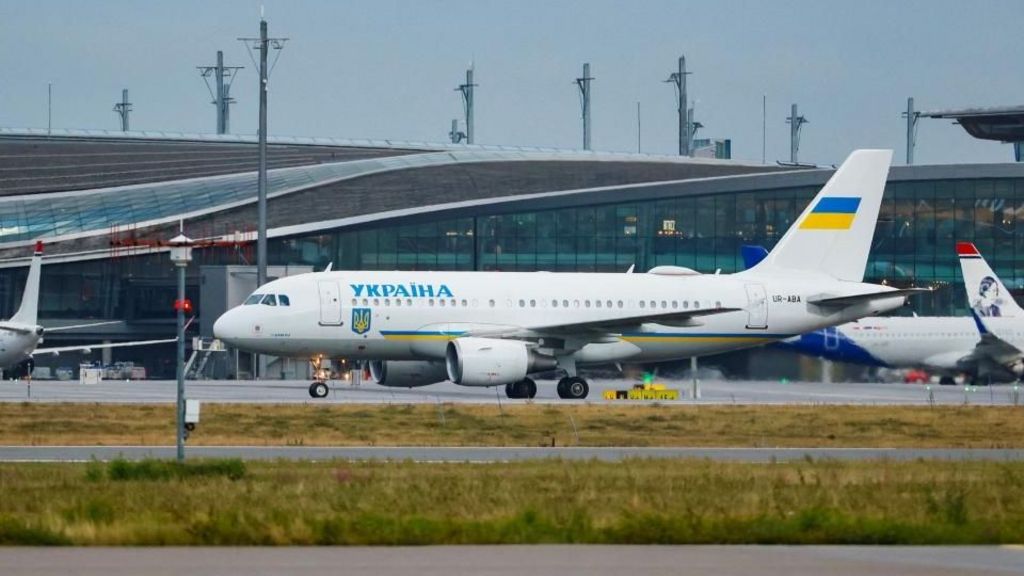
    June 2026 marks one full year since Air India Flight 171, a Boeing 787 Dreamliner bound for London, crashed into a medical college campus moments after lifting off from Ahmedabad in western India. The disaster claimed 260 lives, and as investigators mark the first anniversary of the tragedy, they still cannot confirm what caused one of the world’s most advanced commercial passenger jets to fall from the sky.

    In an updated statement released Friday to coincide with the anniversary, India’s Aircraft Accident Investigation Bureau (AAIB) offered almost no new actionable clues. The agency confirmed only that ongoing analysis of flight recorder data, aircraft system telemetry, engine components, maintenance documentation, and human factors remains ongoing, with no firm conclusion in sight.

    A preliminary report published by the AAIB in July 2025 documented one key, unexplained observation: just seconds after takeoff, the 12-year-old jet’s fuel-control switches suddenly shifted to the “cut-off” position, cutting off fuel flow to both engines and triggering a total loss of power mid-climb. Cockpit audio recordings captured a jarring exchange, with one pilot asking the other why he had moved the switches, receiving only the reply “I did not.” While investigators have not publicly identified which voice belonged to which crew member, the exchange has fueled widespread speculation that deliberate crew action may have played a role, a claim that has divided experts and stakeholders.

    The crash itself is a statistical anomaly. While takeoff and landing are widely recognized as the highest-risk phases of flight, fatal crashes occurring within seconds of lift-off are extremely uncommon. Boeing data from 2004 to 2013 shows that only 14% of global commercial jet crashes occurred during takeoff and initial climb, while Airbus estimates the figure to be closer to 5%. For Flight 171, the entire crash sequence unfolded in just 32 seconds, leaving investigators with a tangled web of conflicting evidence to unpack.

    Aviation industry observers and independent experts note that international aviation rules, overseen by the International Civil Aviation Organization (ICAO), allow investigation teams additional time for complex probes, and the AAIB is well within its rights to take longer to reach a conclusion. “There is intense public interest across India in uncovering the exact cause,” explained John Cox, a former commercial airline pilot and independent aviation safety consultant, in an interview with the BBC. “The insinuation that this was a deliberate act by the captain has drawn extremely sharp criticism. The precise timing of the engine failure is the critical piece to resolve this.” Cox added that investigators must pin down exactly when power was lost, when the switches moved, and whether the aircraft experienced unreported technical issues on the accident flight or prior journeys to reach a final conclusion.

    Shawn Pruchnicki, a former accident investigator and aviation safety expert at Ohio State University, says the 12-month delay in releasing a final report itself signals that investigators are still weighing multiple competing theories. “Air crash investigations are almost never straightforward. If investigators had already confirmed a clear cause, the report would almost certainly be public by now,” he noted. The extended timeline, he argues, points to conflicting hypotheses, unresolved lines of inquiry, and unexplained mechanical anomalies that have yet to be fully characterized.

    Not all observers attribute the delay purely to investigative complexity. A veteran air accident investigator based in Canada, speaking to the BBC on condition of anonymity, suggested that final reports are sometimes held up when their conclusions prove “politically or institutionally sensitive.” He also warned that ongoing unregulated speculation about the cause risks confusing the public and undermining trust in the final report, whenever it is released.

    Long, multi-stage investigations are not unprecedented in commercial aviation: the probe into Air France Flight 447, which crashed into the Atlantic Ocean in 2009, released a series of interim updates before a final report was published three years after the disaster. But what makes the Flight 171 inquiry unusual is the high level of public contention surrounding it, which has divided stakeholders.

    After the preliminary report noted the unexpected shift of the fuel-control switches, sections of international media quickly framed crew action as the most likely cause. At the time of takeoff, the first officer was manipulating the flight controls while the captain monitored the flight. This narrative has sparked fierce pushback from Indian pilots’ groups, safety campaigners, and legal representatives for victims’ families, who argue that jumping to conclusions about crew misconduct outpaces the available evidence.

    Captain CS Randhawa, leader of the Federation of Indian Pilots, argues that investigators should prioritize analysis of the aircraft’s encrypted real-time health monitoring data, which routinely transmits performance data for engines, avionics, and other critical systems during flight. The preliminary report makes no mention of this data, leading Randhawa to call the document “incomplete and full of loopholes.”

    The anonymous Canadian investigator explained why the inquiry has become so heated: multiple major stakeholders have deep vested interests in the outcome. “Families of the deceased pilots are fighting to clear their loved ones’ names; pilot unions are pushing back against conclusions that they say unfairly implicate the entire crew; Air India is eager to prove its safety and maintenance protocols meet global standards; and Indian regulators have a broad public interest in maintaining public confidence in the country’s fast-growing aviation system,” he said.

    At the core of the mystery are the two small fuel-control switches in the 787’s cockpit, which are far from ordinary components. They are physically latched, protected by built-in locking mechanisms, and engineered to require deliberate, intentional force to move — a design feature explicitly intended to prevent accidental engine shutdown. They are almost never adjusted in the seconds immediately after takeoff, only being used before engine start, after landing, or during extreme in-flight emergencies.

    Multiple competing interpretations of the switch movement have emerged from independent experts. Cox notes that accidental movement of even one switch is extraordinarily unlikely. After reviewing operational data from more than 400 million combined flight hours across Boeing’s 757, 767, 777, 787, and 737 MAX fleets, he found no recorded cases of a switch failure causing an unplanned engine shutdown. The odds of two separate switches failing at the same time, within one second of each other, he calculates, are “one in a trillion or more.” The anonymous Canadian investigator concludes that the preliminary report’s findings point clearly to “human action in the flight deck, not a mechanical or electrical failure of the aircraft.”

    But an alternative, widely discussed theory offers a different framing. Simon Hradecky, editor of aviation industry publication The Aviation Herald, argues that the switch movement may not have caused the engine failure — it may have been the crew’s response to an already unfolding emergency. Under Boeing’s standardized dual-engine failure emergency procedure, crew are instructed to move both fuel-control switches to cut-off and then back to run to reset engine controls and attempt an in-flight relight. If this is what occurred, the recorded switch movement is evidence of a last-ditch attempt to save the aircraft, not the root cause of the disaster.

    Another major unresolved question centers on the aircraft’s Ram Air Turbine (RAT), a small backup wind-driven turbine that deploys automatically to generate emergency electrical and hydraulic power if both engines fail. The preliminary report notes the RAT was delivering hydraulic power just five seconds after the fuel switches moved to cut-off. But simulator tests cited by the BBC suggest the full deployment and power delivery process should take between 14 and 18 seconds after fuel cut-off. If the simulator data is accurate, this opens a new puzzle: could the RAT have deployed earlier than currently documented, possibly even before the engines lost power? Hradecky argues this timeline suggests the RAT was triggered after both engines already lost power and fell below idle speed, rather than by an unrelated electrical or hydraulic failure. This nuance is not addressed anywhere in the preliminary AAIB report.

    One unconfirmed theory put forward by safety campaigners centers on a major unreported electrical fault that could have triggered a reboot of the aircraft’s flight control computers seconds after takeoff. Under this hypothesis, the reboot caused the flight systems to incorrectly register the aircraft as still being on the ground, triggering an automatic protection system that cut fuel flow to both engines after misreading high thrust as a dangerous malfunction. Proponents of this theory also argue that the fuel-control switches were never physically moved; instead, the flight data recorder captured an electronic fuel-cutoff command, not mechanical movement of the switches.

    This theory has been advanced by Indian investigative journalist Rachel Chitra, who has highlighted multiple inconsistencies she identifies in the preliminary report, including unanswered questions about the crew’s failed attempts to relight the engines after fuel flow was restored. Campaigners have also alleged the aircraft experienced unreported prior technical issues, including an in-flight fire, but investigators have not publicly linked any of these incidents to the June 2025 crash. The AAIB’s preliminary report makes no mention of in-flight fire or pre-existing unaddressed technical problems. It confirms the 2013-built 787-8 held a valid airworthiness certificate, had logged nearly 42,000 flight hours, complied with all mandatory airworthiness directives and service bulletins, and was up to date on all scheduled maintenance.

    The aircraft was powered by two GEnx engines built by GE Aerospace. While the engines were not new — one dated to 2012, the other to 2013, with roughly 28,000 and 33,000 flight hours respectively — both were still well within the expected service life for modern commercial jet engines. This makes recent reports from Reuters and Bloomberg that the final report is being delayed by ongoing analysis of the engines all the more notable.

    Dual simultaneous engine failures on modern commercial airliners are exceptionally rare. When they do occur, investigators typically quickly identify a common root cause: fuel contamination, disrupted fuel supply, bird strike damage, volcanic ash contamination, or a widespread systemic failure. No such common cause has been publicly identified in the Air India crash to date.

    If fuel starvation caused the total loss of power, the core question remains: do the moved fuel-control switches explain the entire sequence of events? Experts including Cox and Hradecky believe a key clue lies in the Exhaust Gas Temperature (EGT) data recorded by the flight data recorder and the engines’ electronic control systems. By cross-referencing the moment EGT began to drop with the recorded timing of the fuel-control switch movement, investigators can confirm whether engines began losing power before or after the switches moved.

    Many observers believe the full, unredacted cockpit voice recording still holds the key to unlocking the mystery. “There is almost certainly far more context on the cockpit voice recorder than has been released to the public. One single line: ‘why did you do that?’ is not enough to draw a conclusion,” Peter Goelz, former managing director of the U.S. National Transportation Safety Board, noted last year. Only when the full cockpit conversation is aligned frame-by-frame with the aircraft’s final seconds of flight data will a clear, definitive picture of what brought down Flight 171 emerge.

  • California’s Gavin Newsom alleges justice department is investigating his wife and ex-staff at Trump’s behest

    California’s Gavin Newsom alleges justice department is investigating his wife and ex-staff at Trump’s behest

    In a dramatic video statement released Monday, California’s Democratic Governor Gavin Newsom has launched a explosive accusation: the U.S. Department of Justice (DOJ) is targeting associates close to him solely as political retaliation for his vocal opposition to former President Donald Trump, as Newsom openly flirts with a 2028 White House run.

    Newsom claimed in the address that federal law enforcement agents have recently reached out to his family members, close personal friends, and former members of his administration, knocking on their doors to press for information. He argued that this push does not stem from evidence of existing criminal activity, but rather is an attempt to manufacture wrongdoing to damage his political standing. “They’re not here because they found a crime,” Newsom said. “They’re here because they’re simply trying to create one.”

    A high-profile Democratic foil to Trump who has built national name recognition through repeated clashes with the former president, Newsom did not mince words about his motivation for speaking out. The governor acknowledged ongoing public speculation about his 2028 presidential aspirations, directly tying the investigation to his potential candidacy. “Trump is coming after me because I’m considering running for president,” he stated.

    The investigations, which have been underway for approximately a year according to an anonymous source familiar with the probe who confirmed the existence of multiple active inquiries, originated in California with tips from whistleblowers and government insiders, the source claimed. The source rejected any claim that Trump directed or influenced the investigation, noting that federal prosecutors based in Sacramento, California’s state capital, are leading the cases. The probes, per the source, center on two separate areas: one relates to personal tax filings from Newsom’s wife, filmmaker and advocate Jennifer Siebel Newsom, while the other is tied to one of Newsom’s former chiefs of staff.

    Neither the source nor Newsom have specified which current or former aide is under scrutiny, but the most prominent former Newsom chief of staff to face federal charges already is longtime California political operative Dana Williamson, who pleaded guilty to federal campaign finance-related fraud charges in May. Williamson’s case has never been linked to Newsom, and the governor’s office has repeatedly emphasized that her actions were entirely disconnected from him. Prosecutors have accused Williamson of running a scheme to siphon campaign funds from a account belonging to former California politician Xavier Becerra (who is currently running for governor of California himself) for the personal benefit of one of Becerra’s aides, and of pressuring state attorneys to settle a sexual harassment lawsuit against a former gaming industry client during her time in the governor’s office. Neither Newsom nor Becerra have been implicated in any wrongdoing in the case.

    Newsom went further in his video, accusing investigators of overstepping legal bounds to dig up damaging information, claiming they have improperly demanded personal records and abused the grand jury process to target his circle. Over his tenure as governor, Newsom has positioned himself as one of the most visible and outspoken Democratic critics of Trump: his press team has repeatedly mocked Trump’s signature all-caps social media posting style, and Newsom successfully spearheaded a effort to redraw California’s congressional districts after Trump pushed Republican-led states to revise their own maps ahead of this year’s midterm elections.

    Framing the investigation as politically motivated persecution tied to his potential presidential campaign, Newsom argued that Trump has a pattern of targeting political opponents. “One by one anyone who has challenged Donald Trump has ended up on his hit list, and today, I proudly joined that list,” Newsom said. “Donald Trump picked the wrong target. We have nothing to hide.”

    Critics and observers have pointed to a pattern of DOJ investigations and prosecutions targeting high-profile Trump critics over the past two years that align with Newsom’s claims. Former FBI Director James Comey, a frequent Trump adversary who was fired by the former president, has been charged twice by federal prosecutors; a judge dismissed the first case after finding the lead prosecutor was improperly appointed, and the second remains ongoing, with Comey denying all wrongdoing. The DOJ also attempted to prosecute New York Attorney General Letitia James, who successfully brought a massive civil fraud case against Trump and his business empire that resulted in a $355 million judgment against the former president, that prosecution ultimately failed.

    Even former Federal Reserve Chair Jerome Powell, who clashed with Trump over interest rate policy during his tenure, faced a DOJ probe into alleged mismanagement of Fed building renovation projects. The top federal prosecutor in Washington, D.C. ultimately dropped the investigation after it threatened to derail Senate confirmation of Trump’s nominee to replace Powell.

    As of Monday, both the White House and the U.S. Department of Justice have declined to offer any comment on Newsom’s accusations or the ongoing investigations. Political analysts have widely framed Newsom’s public statement as a calculated move that galvanizes Democratic base voters against Trump while reinforcing the governor’s national profile as a leading contender for the 2028 Democratic presidential nomination.

  • ‘Greatest feeling ever’: Cape Verdeans tell BBC of joy at holding Spain to draw

    ‘Greatest feeling ever’: Cape Verdeans tell BBC of joy at holding Spain to draw

    Tucked off the western coast of Africa, the tiny island archipelago of Cape Verde — home to just under 500,000 residents — erupted in nationwide celebration this week after its underdog men’s national football team held European and world champion Spain to a scoreless draw in their first ever FIFA World Cup group stage match.

    The streets of the capital city Praia were flooded with jubilant fans from the final whistle onward, where the thunderous roar of vuvuzelas, rhythmic chants of national pride, and blaring car horns drowned out all other sounds. For locals, sharing a point against one of the most decorated teams in international football felt far more than a draw — to many, it was a victory that will be remembered for generations.

    “It was an emotional moment,” Isa Conceição, a local supporter who watched the match in a packed downtown fan zone, told the BBC. Like thousands of fellow fans, she wore the team’s iconic blue national jersey, a visible display of pride for the Blue Sharks’ unprecedented run to the global tournament. By the time the referee blew the final whistle, communities across the entire island nation had broken out into wild, spontaneous celebration. “Being a small country and being able to achieve such a good result against Spain, a football powerhouse, is the greatest feeling ever,” Conceição added.

    Men, women, and children packed public spaces across the country, dancing and singing along to the Cape Verdean Football Federation’s official 2026 World Cup anthem *Nos Óra Dja Txiga* — a phrase in Cape Verdean Creole that translates to “our time has come.” The line has taken on new meaning for the team’s fans, after the underdog side edged continental heavyweight Cameroon to qualify for the World Cup for the first time in the country’s history.

    Heading into Group H, Cape Verde entered the tournament ranked as the lowest seed, drawn alongside two former World Cup champions: Spain and Uruguay, plus Asian side Saudi Arabia. The shock result against Spain has already turned global public opinion in their favor, with even visiting international supporters praising the team’s tenacious performance.

    Pauline, a tourist visiting from France, told reporters that Cape Verde’s standout performance stemmed from one simple factor: “They played with their hearts. That’s all that matters.” A first-time Congolese visitor to the islands echoed that sentiment, noting “I thought Spain was going to win the match, but the energy, the speed of Cape Verde was just amazing.” Many other foreign tourists, drawn to Cape Verde’s famous idyllic beaches and tropical landscapes that draw roughly one million visitors every year, also said they were rooting for the tiny underdog side.

    Across residential neighborhoods in Praia and beyond, the country’s blue, red, and white national flag hung from windows, balconies, and even the edges of rooftops. Drivers cruising city streets added to the celebration, leaning on their horns and yelling in celebration, with most displaying small national flags from their side mirrors or car windows.

    The Blue Sharks’ tight, disciplined defensive performance against one of the world’s top offensive teams has already lifted domestic expectations, with many fans now holding out hope that the side can advance beyond the group stage. The team will face Uruguay next, followed by a final group fixture against Saudi Arabia, matches that will determine whether their historic World Cup run continues.

    Even if the side fails to advance past the group stage, however, Cape Verdeans across the country say they already consider the tournament a success. The team’s performance has already put the small island nation in the global spotlight, and residents say they will remain fiercely proud of the impact the squad has had in lifting Cape Verde’s international profile. This story was reported by BBC correspondent Michel Mvondo, reporting on location from Praia, Cape Verde.

  • World Cup what to know: Argentina’s Lionel Messi kicks off expected last hurrah against Algeria

    World Cup what to know: Argentina’s Lionel Messi kicks off expected last hurrah against Algeria

    The 2026 expanded 48-team FIFA World Cup, co-hosted across the United States, Canada and Mexico, kicked off its second full matchday on June 16 with a slate of games headlined by two historic defending title bids, a shocking underdog draw, and a collection of long-awaited returns to the global soccer stage.

    All eyes will fall on Kansas City, Missouri, when Argentina takes on Algeria in its opening group stage match – a contest that marks the start of the South American side’s push to become the first nation in 62 years to win back-to-back World Cup titles. For Argentine talisman Lionel Messi, this tournament is widely expected to be his final appearance on international soccer’s biggest stage. The 36-year-old generational talent, who will turn 39 later this month, finally claimed the one major honor missing from his legendary career when Argentina lifted the trophy in Qatar 2022, and now he is chasing a unique piece of history that has not been claimed since Brazil’s 1962 triumph.

    Messi is also within striking distance of another all-time record: he needs just four more World Cup goals to surpass Miroslav Klose’s standing mark of 16. However, the Inter Miami star has carried visible physical fatigue into the tournament, after a hamstring strain forced an early substitution in his final club match before the World Cup. To maximize his fitness for what is being called his final World Cup hurrah, Messi sat out Argentina’s pre-tournament friendly against Honduras, prioritizing full health for his opening match against Algeria. Argentina head coach Lionel Scaloni has already framed the opening contest as an important but not decisive fixture for the defending champions.

    Later the same afternoon in East Rutherford, New Jersey, another pre-tournament co-favorite France will open its 2026 campaign against Senegal, chasing its third World Cup title and second championship in the last three tournaments. Didier Deschamps’ side claimed the 2018 trophy in Russia, before falling to Argentina in a penalty shootout in the 2022 Qatar final, bringing Les Bleus into this tournament with a star-studded roster that includes Kylian Mbappé, Ballon d’Or winner Ousmane Dembélé, and breakout 19-year-old talent Désiré Doué. Mbappé currently sits one international goal short of Olivier Giroud’s all-time France record of 56, though the 2024 Real Madrid transfer has faced consistent criticism in recent months for what pundits call a lack of defensive work rate.

    History also adds extra stakes to this opening match: as the defending 1998 champions entering the 2002 World Cup, France suffered a shocking opening-round defeat to Senegal that ultimately saw the defending champions eliminated in the group stage. Entering this 2026 contest, France is listed as a heavy betting favorite, but that 2002 upset still looms over the fixture.

    Before the two heavyweight favorites kick off their campaigns, the tournament already delivered one of its most surprising results on matchday one, when first-time World Cup qualifiers Cape Verde held pre-tournament favorite Spain to a scoreless draw, weathering an unrelenting Spanish attack to claim a historic point. Spanish coaches had planned to rotate key recovering stars in what was widely projected to be a lopsided rout, but Cape Verde’s squad defied all expectations, anchored by a legendary performance from 40-year-old goalkeeper Vozinha. The veteran shot-stopper turned away multiple high-quality chances from Spain, who recorded 27 total shots on the night, and was left in tears after his heroic performance.

    The gap in resources between the two sides makes the result even more remarkable: per Transfer Markt, Spain’s 17-year-old wunderkind Yamine Lamal holds a market value of 200 million euros, while star midfielder Pedri is valued at 150 million euros. By comparison, Vozinha’s total market value sits at just 50,000 euros. Cape Verde also holds a unique place in World Cup demographics: the archipelago nation off West Africa is the third-smallest country to ever qualify for the men’s World Cup, with a total population of just 525,000, compared to Spain’s 47 million residents.

    The June 16 slate also includes two other opening group stage fixtures, each with their own historic backstories. In Foxborough, Massachusetts, Norway will kick off its first World Cup appearance since 1998 against Iraq, entering the tournament as long shots but boasting one of the world’s most dangerous strikers in Erling Haaland. The 25-year-old Manchester City superstar scored 16 goals in European qualifying to single-handedly drag Norway back to the global stage after nearly three decades of absence. The side went viral pre-tournament for a viral viral photoshoot titled “The Vikings are Coming”, where players dressed in traditional Viking garb and posed alongside three longships on a Norwegian fjord, captured by British photographer David Yarrow. Haaland, known for his iconic long hair, fully leaned into the bit, and enters this tournament primed to become the face of the 2026 World Cup.

    Closing out the day’s action in Santa Clara, California, Austria will face first-time qualifiers Jordan in Group J. Austria’s return to the World Cup after a 28-year absence is largely credited to manager Ralf Rangnick, who turned down a coveted job offer from Bayern Munich to continue leading the national side’s rebuild, a decision that has paid off with a spot in the tournament. After winning their group at Euro 2024 before falling to Turkey, Austria secured their qualifying group to book their spot in the 48-team field, and are now targeting their first knockout stage appearance since 1982. Jordan, making their first ever World Cup appearance, will be without their top goalscorer Yazan Alnemat, who scored eight qualifying goals but suffered a torn ACL at the Arab Cup last December that ruled him out of the tournament.

    Full broadcast details for all June 16 matches, airing across U.S. networks: France vs. Senegal kicks off at 3 p.m. EDT in East Rutherford, broadcast on Fox, Telemundo and Peacock; Iraq vs. Norway follows at 6 p.m. EDT in Foxborough, also airing on Fox, Telemundo and Peacock; Argentina vs. Algeria kicks off at 9 p.m. EDT in Kansas City on FS1, Telemundo and Peacock; and Austria vs. Jordan closes the day at midnight EDT in Santa Clara, airing on FS1, Telemundo and Peacock.

  • Only one Dan Sullivan can run in Alaska’s primary election, official says

    Only one Dan Sullivan can run in Alaska’s primary election, official says

    A high-stakes political controversy has unfolded in Alaska’s 2026 U.S. Senate race, after state election officials ruled a retired schoolteacher sharing the same name as the Republican incumbent ineligible to appear on the August primary ballot, deepening accusations of election manipulation and deceptive campaign tactics. Incumbent Sen. Dan S. Sullivan has spent weeks arguing that fellow Republican candidate Dan J. Sullivan was deliberately recruited to siphon votes from his campaign and tilt the race toward Democratic nominee Mary Peltola, as Democrats fight to flip the seat and secure a majority in the upper chamber in November’s general election. In a ruling published Monday, Alaska Division of Elections Director Carol Beecher sided with the incumbent’s claims, determining that Dan J. Sullivan’s candidacy was not filed in good faith. Beecher outlined multiple red flags that led to her decision: the candidate had never previously registered to vote under the name Dan Sullivan, had no prior affiliation with the Alaska Republican Party, modeled his campaign materials after the incumbent’s branding, and hired a political consultant with a long history of backing Democratic candidates. Notably, Beecher did not uncover concrete evidence of direct coordination between Dan J. Sullivan, the Democratic Party, or Peltola’s campaign. Dan J. Sullivan, a 50-year Alaska resident originally from the Midwest who has never held public office, has repeatedly denied any intent to mislead voters and maintains his campaign is a legitimate bid for office. He told Alaska Public Media he launched his challenge out of opposition to Sen. Sullivan’s support for former President Donald Trump’s proposed $1.8 billion “anti-weaponization fund”, which critics argue would direct public funds to Trump’s political allies. On his campaign website, Dan J. Sullivan frames his challenge as a call for change, writing “We need a Sullivan that stands up for Alaska.” While he acknowledges his odds of victory are extremely long, he says he is committed to giving the race his full effort. Following last week’s announcement of a formal probe by Alaska’s Republican Lieutenant Governor, Sen. Sullivan’s campaign issued sharp condemnations, accusing Democrats of engaging in “dirty, dishonest tactics” to rig the election outcome. The incumbent, who used expletives to vent his frustration to reporters earlier this month, reiterated that Dan J. Sullivan’s sole purpose was to trick his constituents and boost Peltola’s chances. After Beecher’s ruling was released, Sen. Sullivan’s campaign praised the decision and thanked state officials for moving to protect the integrity of Alaska’s elections from what they call a sham candidacy. Representatives for Peltola, a former Democratic U.S. Representative who is running for the open Senate seat, have repeatedly denied any involvement with Dan J. Sullivan’s campaign. Dan J. Sullivan now has 30 days to file an appeal of the ballot disqualification, and his team says they are currently reviewing all available legal options and have not ruled out any course of action. The BBC has reached out to Peltola’s campaign for additional comment following the ruling, and has not yet received a response from Dan J. Sullivan.

  • VAR official says hand gesture was ‘involuntary, subconscious twitch’

    VAR official says hand gesture was ‘involuntary, subconscious twitch’

    A contentious controversy around video assistant referee Shaun Evans has concluded with FIFA clearing the Australian official of any rule breach, following widespread social media speculation over an upside-down OK hand gesture caught on camera during the 2026 FIFA World Cup.

    The incident unfolded ahead of Sunday’s Group Stage match between Germany and Curacao, held as part of the ongoing 2026 World Cup. As part of FIFA’s standard pre-match world feed coverage, cameras cut from the on-field officials to the VAR hub in Dallas, where Evans was captured mid-movement forming his right hand into an inverted OK sign. The gesture quickly sparked global debate, as it carries two wildly different interpretations: one as an innocuous prank from popular culture, and another as a recognized hate symbol associated with white supremacy.

    Hours after footage of the moment spread across social media, FIFA launched a formal internal investigation to determine if Evans had violated the FIFA Disciplinary Code. Following a full review, world football’s governing body announced it had found no evidence of intentional misconduct, clearing Evans to remain eligible for officiating duties for the remainder of the tournament.

    In a formal statement released through FIFA, the 38-year-old veteran official pushed back against widespread assumptions about the gesture, describing the movement as an involuntary, subconscious twitch. Evans stressed he was completely unaware he had made the hand movement at the time of the camera shot, and categorically denied intentionally using the gesture to convey any message, affiliation, or belief. “The coverage following this incident simply does not reflect who I am,” Evans said. He added that internal VAR room video evidence confirmed the movement was not deliberate, noting he had repeated the same involuntary motion multiple times later in the match while holding a pen between his fingers. “Officiating at the World Cup is the biggest honour of my career and I look forward to supporting my colleagues for the rest of the tournament,” he added.

    The upside-down OK gesture at the center of the debate has two distinct public associations. It is most famously known as the core of the “circle game,” a decades-old schoolyard prank popularized by the U.S. sitcom *Malcolm in the Middle* that became a viral internet meme. However, since 2017, the gesture has also been co-opted by far-right and white supremacist groups as a covert identifying symbol. The Anti-Defamation League (ADL) added the OK gesture to its official hate symbol registry in 2019, noting it has become a common trolling tactic used by right-wing extremist groups online.

    Prior to FIFA’s conclusion of the investigation, anti-discrimination organizations called for swift action from the governing body. The Fare network, an anti-racism group that partners with both FIFA and UEFA to combat discrimination in football, issued a statement saying expert analysis concluded the gesture matched the white power symbol used by far-right networks. UK-based anti-racism group Kick It Out also confirmed it had formally written to FIFA seeking clarification on the incident and the investigation’s next steps.

    In a quiet procedural shift that followed the incident, FIFA altered its pre-match broadcast protocol for all subsequent matches. Prior to the Germany-Curacao game, VAR officials at the Dallas hub had posed briefly for the on-screen introduction camera before turning to their monitors. In all three matches held after the incident, and continuing through Monday’s fixtures, cameras cut to VAR officials already positioned at their monitors facing their screens — eliminating the posed camera shot that captured Evans’ gesture. FIFA has not issued any public explanation for the change in protocol.

    A highly experienced official, Evans has been listed on FIFA’s international referee roster since 2017, and previously served as a VAR at the 2022 FIFA World Cup in Qatar. Back home in Australia, he has officiated in the top-tier A-League since 2012, and took charge of the league’s 2019 Grand Final.