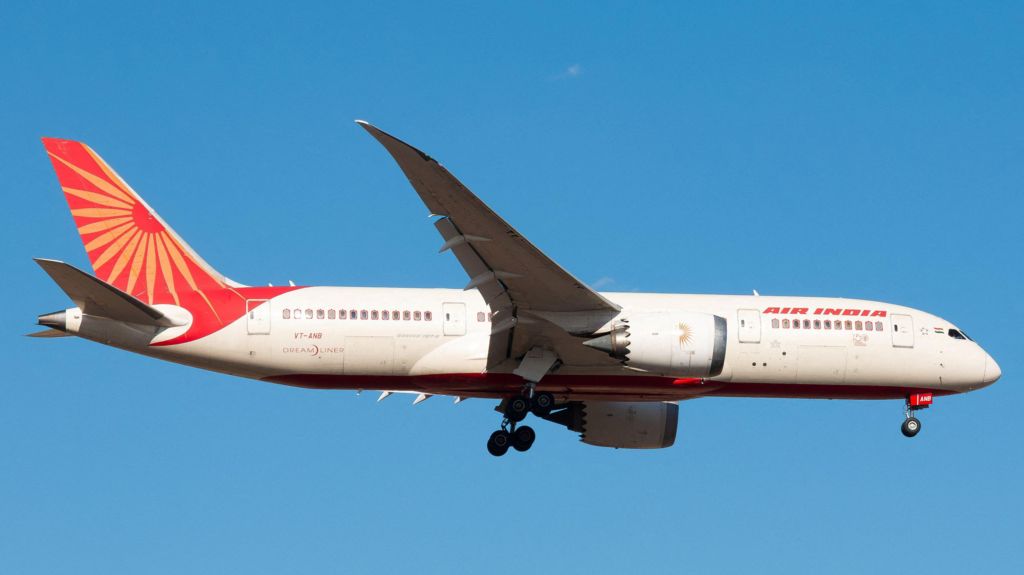
June 2026 marks one full year since Air India Flight 171, a Boeing 787 Dreamliner bound for London, crashed into a medical college campus moments after lifting off from Ahmedabad in western India. The disaster claimed 260 lives, and as investigators mark the first anniversary of the tragedy, they still cannot confirm what caused one of the world’s most advanced commercial passenger jets to fall from the sky.
In an updated statement released Friday to coincide with the anniversary, India’s Aircraft Accident Investigation Bureau (AAIB) offered almost no new actionable clues. The agency confirmed only that ongoing analysis of flight recorder data, aircraft system telemetry, engine components, maintenance documentation, and human factors remains ongoing, with no firm conclusion in sight.
A preliminary report published by the AAIB in July 2025 documented one key, unexplained observation: just seconds after takeoff, the 12-year-old jet’s fuel-control switches suddenly shifted to the “cut-off” position, cutting off fuel flow to both engines and triggering a total loss of power mid-climb. Cockpit audio recordings captured a jarring exchange, with one pilot asking the other why he had moved the switches, receiving only the reply “I did not.” While investigators have not publicly identified which voice belonged to which crew member, the exchange has fueled widespread speculation that deliberate crew action may have played a role, a claim that has divided experts and stakeholders.
The crash itself is a statistical anomaly. While takeoff and landing are widely recognized as the highest-risk phases of flight, fatal crashes occurring within seconds of lift-off are extremely uncommon. Boeing data from 2004 to 2013 shows that only 14% of global commercial jet crashes occurred during takeoff and initial climb, while Airbus estimates the figure to be closer to 5%. For Flight 171, the entire crash sequence unfolded in just 32 seconds, leaving investigators with a tangled web of conflicting evidence to unpack.
Aviation industry observers and independent experts note that international aviation rules, overseen by the International Civil Aviation Organization (ICAO), allow investigation teams additional time for complex probes, and the AAIB is well within its rights to take longer to reach a conclusion. “There is intense public interest across India in uncovering the exact cause,” explained John Cox, a former commercial airline pilot and independent aviation safety consultant, in an interview with the BBC. “The insinuation that this was a deliberate act by the captain has drawn extremely sharp criticism. The precise timing of the engine failure is the critical piece to resolve this.” Cox added that investigators must pin down exactly when power was lost, when the switches moved, and whether the aircraft experienced unreported technical issues on the accident flight or prior journeys to reach a final conclusion.
Shawn Pruchnicki, a former accident investigator and aviation safety expert at Ohio State University, says the 12-month delay in releasing a final report itself signals that investigators are still weighing multiple competing theories. “Air crash investigations are almost never straightforward. If investigators had already confirmed a clear cause, the report would almost certainly be public by now,” he noted. The extended timeline, he argues, points to conflicting hypotheses, unresolved lines of inquiry, and unexplained mechanical anomalies that have yet to be fully characterized.
Not all observers attribute the delay purely to investigative complexity. A veteran air accident investigator based in Canada, speaking to the BBC on condition of anonymity, suggested that final reports are sometimes held up when their conclusions prove “politically or institutionally sensitive.” He also warned that ongoing unregulated speculation about the cause risks confusing the public and undermining trust in the final report, whenever it is released.
Long, multi-stage investigations are not unprecedented in commercial aviation: the probe into Air France Flight 447, which crashed into the Atlantic Ocean in 2009, released a series of interim updates before a final report was published three years after the disaster. But what makes the Flight 171 inquiry unusual is the high level of public contention surrounding it, which has divided stakeholders.
After the preliminary report noted the unexpected shift of the fuel-control switches, sections of international media quickly framed crew action as the most likely cause. At the time of takeoff, the first officer was manipulating the flight controls while the captain monitored the flight. This narrative has sparked fierce pushback from Indian pilots’ groups, safety campaigners, and legal representatives for victims’ families, who argue that jumping to conclusions about crew misconduct outpaces the available evidence.
Captain CS Randhawa, leader of the Federation of Indian Pilots, argues that investigators should prioritize analysis of the aircraft’s encrypted real-time health monitoring data, which routinely transmits performance data for engines, avionics, and other critical systems during flight. The preliminary report makes no mention of this data, leading Randhawa to call the document “incomplete and full of loopholes.”
The anonymous Canadian investigator explained why the inquiry has become so heated: multiple major stakeholders have deep vested interests in the outcome. “Families of the deceased pilots are fighting to clear their loved ones’ names; pilot unions are pushing back against conclusions that they say unfairly implicate the entire crew; Air India is eager to prove its safety and maintenance protocols meet global standards; and Indian regulators have a broad public interest in maintaining public confidence in the country’s fast-growing aviation system,” he said.
At the core of the mystery are the two small fuel-control switches in the 787’s cockpit, which are far from ordinary components. They are physically latched, protected by built-in locking mechanisms, and engineered to require deliberate, intentional force to move — a design feature explicitly intended to prevent accidental engine shutdown. They are almost never adjusted in the seconds immediately after takeoff, only being used before engine start, after landing, or during extreme in-flight emergencies.
Multiple competing interpretations of the switch movement have emerged from independent experts. Cox notes that accidental movement of even one switch is extraordinarily unlikely. After reviewing operational data from more than 400 million combined flight hours across Boeing’s 757, 767, 777, 787, and 737 MAX fleets, he found no recorded cases of a switch failure causing an unplanned engine shutdown. The odds of two separate switches failing at the same time, within one second of each other, he calculates, are “one in a trillion or more.” The anonymous Canadian investigator concludes that the preliminary report’s findings point clearly to “human action in the flight deck, not a mechanical or electrical failure of the aircraft.”
But an alternative, widely discussed theory offers a different framing. Simon Hradecky, editor of aviation industry publication The Aviation Herald, argues that the switch movement may not have caused the engine failure — it may have been the crew’s response to an already unfolding emergency. Under Boeing’s standardized dual-engine failure emergency procedure, crew are instructed to move both fuel-control switches to cut-off and then back to run to reset engine controls and attempt an in-flight relight. If this is what occurred, the recorded switch movement is evidence of a last-ditch attempt to save the aircraft, not the root cause of the disaster.
Another major unresolved question centers on the aircraft’s Ram Air Turbine (RAT), a small backup wind-driven turbine that deploys automatically to generate emergency electrical and hydraulic power if both engines fail. The preliminary report notes the RAT was delivering hydraulic power just five seconds after the fuel switches moved to cut-off. But simulator tests cited by the BBC suggest the full deployment and power delivery process should take between 14 and 18 seconds after fuel cut-off. If the simulator data is accurate, this opens a new puzzle: could the RAT have deployed earlier than currently documented, possibly even before the engines lost power? Hradecky argues this timeline suggests the RAT was triggered after both engines already lost power and fell below idle speed, rather than by an unrelated electrical or hydraulic failure. This nuance is not addressed anywhere in the preliminary AAIB report.
One unconfirmed theory put forward by safety campaigners centers on a major unreported electrical fault that could have triggered a reboot of the aircraft’s flight control computers seconds after takeoff. Under this hypothesis, the reboot caused the flight systems to incorrectly register the aircraft as still being on the ground, triggering an automatic protection system that cut fuel flow to both engines after misreading high thrust as a dangerous malfunction. Proponents of this theory also argue that the fuel-control switches were never physically moved; instead, the flight data recorder captured an electronic fuel-cutoff command, not mechanical movement of the switches.
This theory has been advanced by Indian investigative journalist Rachel Chitra, who has highlighted multiple inconsistencies she identifies in the preliminary report, including unanswered questions about the crew’s failed attempts to relight the engines after fuel flow was restored. Campaigners have also alleged the aircraft experienced unreported prior technical issues, including an in-flight fire, but investigators have not publicly linked any of these incidents to the June 2025 crash. The AAIB’s preliminary report makes no mention of in-flight fire or pre-existing unaddressed technical problems. It confirms the 2013-built 787-8 held a valid airworthiness certificate, had logged nearly 42,000 flight hours, complied with all mandatory airworthiness directives and service bulletins, and was up to date on all scheduled maintenance.
The aircraft was powered by two GEnx engines built by GE Aerospace. While the engines were not new — one dated to 2012, the other to 2013, with roughly 28,000 and 33,000 flight hours respectively — both were still well within the expected service life for modern commercial jet engines. This makes recent reports from Reuters and Bloomberg that the final report is being delayed by ongoing analysis of the engines all the more notable.
Dual simultaneous engine failures on modern commercial airliners are exceptionally rare. When they do occur, investigators typically quickly identify a common root cause: fuel contamination, disrupted fuel supply, bird strike damage, volcanic ash contamination, or a widespread systemic failure. No such common cause has been publicly identified in the Air India crash to date.
If fuel starvation caused the total loss of power, the core question remains: do the moved fuel-control switches explain the entire sequence of events? Experts including Cox and Hradecky believe a key clue lies in the Exhaust Gas Temperature (EGT) data recorded by the flight data recorder and the engines’ electronic control systems. By cross-referencing the moment EGT began to drop with the recorded timing of the fuel-control switch movement, investigators can confirm whether engines began losing power before or after the switches moved.
Many observers believe the full, unredacted cockpit voice recording still holds the key to unlocking the mystery. “There is almost certainly far more context on the cockpit voice recorder than has been released to the public. One single line: ‘why did you do that?’ is not enough to draw a conclusion,” Peter Goelz, former managing director of the U.S. National Transportation Safety Board, noted last year. Only when the full cockpit conversation is aligned frame-by-frame with the aircraft’s final seconds of flight data will a clear, definitive picture of what brought down Flight 171 emerge.