作者: admin

  • Some shipping industry professionals eye leaving Dubai for Greece

    Some shipping industry professionals eye leaving Dubai for Greece

    Escalating geopolitical tensions stemming from the US-Israeli conflict on Iran have driven a wave of western maritime industry professionals based in Dubai to explore relocation options outside the United Arab Emirates, multiple industry insiders including one ship owner have confirmed to Middle East Eye.

    Industry sources note that Athens, Greece and Cyprus have emerged as top relocation candidates, drawing expats with their long-standing global leadership in shipping and competitive pro-industry tax frameworks that match the financial benefits Dubai has long offered. This push for new bases reflects a widespread expectation among mobile western expats that the Gulf region will not return to its pre-conflict stability and operational reliability in the near term.

    The conflict has already roiled regional waterways: an estimated 2,000 commercial vessels remain stranded in the Gulf amid overlapping blockades imposed by the US and Iran. Paradoxically, the global shipping industry as a whole is experiencing an unprecedented boom, as vessel congestion has tightened global supply and triggered skyrocketing freight rates while global energy trade routes are redrawn amid the conflict. US oil and gas exports have climbed to all-time record highs as a result of the shifted demand, though longer transit routes from the US Gulf Coast to Asian markets add significant costs compared to traditional voyages from the Arabian Gulf.

    The industry-wide upswing is highlighted by the performance of the Breakwave Tanker Shipping ETF, which tracks crude oil tanker rate pricing; the fund has surged 240% since the conflict in Iran began. This global prosperity stands in sharp contrast to the severe downturn hitting the UAE’s core maritime sector, which has borne the brunt of the regional blockade.

    For decades, the UAE built itself into the undisputed leading logistics hub connecting the Middle East, Asia, and Africa. Its Jebel Ali Port ranks among the world’s largest container terminals and is a critical transshipment node for global trade moving between continents. Today, however, the sector is reeling: Iran’s control of the Strait of Hormuz has cut the UAE’s top export, crude oil, by more than half.

    For many expats, the core issue is not just slowing business activity, but the eroded reputation of Dubai as a stable, reliable operational hub. “It’s not so much the slowdown in business, but the unreliability of Dubai as a hub. Can you count on a flight back to London or Paris for your family during war?” the anonymous ship owner told Middle East Eye.

    Dubai’s golden age of rapid growth, which followed the Covid-19 pandemic, was unprecedented: the emirate capitalized on soaring global asset prices, the cryptocurrency boom, and the rise of remote work to attract global talent and capital. Its business-friendly policy framework — featuring low corporate tax rates, no personal income tax or capital gains tax, and streamlined bureaucracy — turned it into a magnet for international finance professionals from London and New York. Its financial ecosystem has also drawn capital from a wide range of sources, from Sudanese militia gold traders to Russian and Ukrainian expats fleeing conflict in Eastern Europe.

    While most industry analysts still stop short of writing off Dubai’s long-term status as a regional business hub, thanks in large part to the UAE’s substantial sovereign financial reserves, the conflict has clearly brought an end to the emirate’s years of breakneck expansion. The ripple effects are already spreading beyond the shipping sector to Dubai’s key real estate market.

    Arabian Business reported this week that thousands of Dubai real estate agencies could shut their doors in the coming months as a direct result of the conflict-driven uncertainty. A leading property search platform estimates that up to 30% of active agencies on its site could cease operations within five to six months. Similar to the trend among western shipping expats, the agencies most at risk are small operators and firms focused on highly speculative market segments such as off-plan property sales.

    Lewis Allsopp, chairman and co-founder of leading Dubai real estate consultancy Allsopp & Allsopp, told Arabian Business that Dubai’s broker-to-resident ratio is drastically inflated compared to mature global property markets, standing at nearly 1,000 brokers per 100,000 residents. For context, London — one of the world’s busiest property markets — only counts roughly 176 brokers per 100,000 residents. This oversaturation, paired with new geopolitical risk, has set the stage for a widespread market correction.

  • Trump administration charges Cuba’s Raul Castro with murder

    Trump administration charges Cuba’s Raul Castro with murder

    In a sharp escalation of long-running U.S. pressure on Cuba, the Trump administration has unsealed a sweeping criminal indictment against 94-year-old former Cuban President Raúl Castro, levying charges of conspiracy to murder U.S. citizens, aircraft destruction, and four counts of homicide stemming from the 1996 Cuban air force shootdown of two civilian aircraft operated by a U.S.-based anti-Castro aid group. The indictment also names five additional Cuban defendants: Lorenzo Alberto Perez-Perez, Emilio Jose Palacio Blanco, Jose Fidel Gual Barzaga, Raul Simanca Cardenas, and Luis Raul Gonzalez-Pardo Rodriguez.

    The legal action opens the door for potential U.S. efforts to extradite or forcibly bring Castro to American soil for trial, with senior officials hinting at the same type of extraordinary law enforcement operation that the Trump administration deployed to seize former Venezuelan President Nicolas Maduro in January 2026. President Trump has repeatedly touted that 2026 capture mission as a landmark political win for his administration, even as independent legal experts have widely questioned the operation’s compliance with international law. Trump has also openly acknowledged that the successful extraction of Maduro gave him the confidence to launch the joint U.S.-Israeli military campaign against Iran that began February 28.

    Speaking at a Wednesday press briefing in Miami, Florida — a hub for the Cuban exile community — acting U.S. Attorney General Todd Blanche, who previously served as Trump’s personal defense lawyer, rejected claims that the indictment is a hollow political stunt. “We indict men outside of this country all the time, and there are all kinds of different ways that we get them here,” Blanche told reporters. “The reason why we indict somebody is because we want them here to face justice with a jury of their peers. How we go about doing that obviously depends on the circumstances in the case, and I’m not going to go beyond that, but… this isn’t a show indictment. This is an indictment because we expect that there is a warrant issued for his arrest, so that he will appear here by his own will, or by another way.” Blanche added a clear message of remembrance for the victims: “The United States and President Trump does not and will not forget its citizens.”

    Cuban President Miguel Diaz-Canel immediately pushed back against the charges in a post on X, framing the indictment as evidence of U.S. hostility toward the Cuban Revolution. He called the action “a political maneuver, devoid of any legal foundation, aimed solely at padding the fabricated dossier they use to justify the folly of a military aggression.”

    The indictment is the latest in a series of aggressive moves by the second Trump administration to force Cuba’s government into concessions, a priority shaped heavily by Secretary of State Marco Rubio, a long-time critic of the Cuban regime whose parents emigrated from the island. Just this week, Rubio announced a new round of economic sanctions on Havana, building on decades of U.S. trade and financial restrictions that have been in place since the 1960s. Those long-running sanctions have already gutted Cuba’s financial system and strained its already fragile energy infrastructure. In January 2026, Trump issued an executive order reclassifying Cuba as “an unusual and extraordinary threat” to U.S. national security, and imposed secondary tariffs on any third country that sells goods or oil to the island. The president has previously made blunt remarks about his ambitions for Cuba, saying “Whether I free it, take it, I think I can do anything I want with it… They’re a very weakened nation right now.”

    The charges trace back to the February 24, 1996, incident that claimed four American lives. On that date, Cuban military jets intercepted and shot down two small Cessna aircraft owned by Brothers to the Rescue, a Miami-based organization founded by anti-Castro Cuban exiles that conducted search-and-rescue missions for Cubans attempting to flee the island by boat. The four men killed in the attack were Carlos Costa, Armando Alejandre, Jr, Mario de la Pena, and Pablo Morales.

    The U.S. Department of Justice’s Wednesday statement claims that Cuban intelligence agents infiltrated Brothers to the Rescue years before the shootdown, and passed detailed intelligence on the group’s flight plans and operational schedules back to senior Cuban leadership, including Raúl Castro, who served as defense minister at the time of the incident. While successive U.S. administrations have consistently denied any official connection between the group and American intelligence agencies, the Cuban government has long maintained that Brothers to the Rescue’s core mission was to destabilize the communist regime.

    If convicted on the conspiracy and murder charges, all defendants face a maximum possible sentence of either the death penalty or life imprisonment. Raúl Castro additionally faces up to five years of prison time for each count of aircraft destruction. Any final sentencing would be determined by a presiding U.S. judge, if the accused are ultimately brought into custody.

  • Commander-in-beef: Bangladesh’s ‘Donald Trump’ buffalo wins fans

    Commander-in-beef: Bangladesh’s ‘Donald Trump’ buffalo wins fans

    An unusual new internet sensation has captured the attention of millions in Bangladesh: a 700-kilogram albino buffalo, nicknamed “Donald Trump” for his striking golden-blond mane that echoes the former U.S. president’s iconic hairstyle, has become an overnight social media star — even as he is scheduled to be sacrificed for the upcoming Eid al-Adha holiday.

    The rare buffalo lives on a family farm owned by 38-year-old Zia Uddin Mridha in Narayanganj, a small district just outside Bangladesh’s capital Dhaka. Mridha told reporters it was his younger brother who gave the buffalo its distinctive name, pointing to the animal’s thick, flowing blond coat that sits neatly between his large curved horns, bearing an uncanny resemblance to Trump’s signature hairstyle.

    Since going viral on social media at the start of May, the four-year-old buffalo has drawn a nonstop stream of curious visitors, from local onlookers and social media fans to groups of excited children, all eager to catch a glimpse and snap a photo with the rare animal. Mridha said the constant attention has been overwhelming: the stress of large daily crowds has caused the buffalo to lose weight, forcing the farm to impose limited visiting hours. Still, the starstruck public continues to gather outside the farm gates, many traveling hours by boat or road to see the viral celebrity. One visitor, 30-year-old businessman Faisal Ahmed, traveled with five relatives to see the buffalo, noting his 10-year-old nephew took an hour-long boat trip just to get a look. “Truly, the features are similar between the buffalo and President Donald Trump,” Ahmed told Agence France-Presse.

    To keep the buffalo comfortable amid the warm South Asian spring weather, farm workers bathe him up to four times a day, brushing his blond mane with a pink brush to keep his signature combover neat. Mridha emphasizes that any similarities between the buffalo and the former American president end at the hair.

    Livestock department officials confirm pure albino buffalo are extremely rare: their distinctive pale white-pink coat and light hair come from a genetic condition that prevents the production of melanin, the pigment that gives animals their typical dark skin and fur coloring.

    Bangladesh, a Muslim-majority South Asian nation of 170 million people, is gearing up for Eid al-Adha, the Islamic Feast of the Sacrifice, which is celebrated later this month. The holiday commemorates the Prophet Ibrahim’s willingness to sacrifice his son to obey God, and tradition calls for religious Muslim families to sacrifice a livestock animal, sharing a portion of the meat with poor communities. This year, an estimated 12 million livestock including goats, sheep, cows and buffalo are expected to be slaughtered across the country, providing one of the few annual opportunities for low-income Bangladeshi families to eat meat.

    “Donald Trump” is not the only named buffalo on Mridha’s farm: other bulls have playful nicknames matching their personalities or looks, from Tufan (meaning “storm” in Bengali) for an aggressive bull, to Fat Boy for the largest animal and Sweet Boy for the gentle member of the herd. Another golden-haired bull was named after Brazilian football star Neymar, thanks to his dyed-style bleached blond cut.

    Mridha, who has cared for the viral albino buffalo for more than a year, says he has grown attached to the animal, who currently munches fodder calmly in his pen. Despite the animal’s newfound national fame, Mridha says he will honor the tradition of Eid al-Adha. “I am going to miss Donald Trump, but that is the core spirit of Eid al-Adha — making a sacrifice,” he said.

  • Former stars differ on whether African team can win 2026 World Cup

    Former stars differ on whether African team can win 2026 World Cup

    As the 2026 FIFA World Cup, the first edition expanded to feature 48 participating nations co-hosted by the United States, Canada and Mexico, draws near, a heated debate has emerged among African football greats over a historic question: can an African national team finally lift the sport’s most coveted trophy this summer?

    The conversation was sparked by Morocco’s historic run at the 2022 Qatar World Cup, where the underdog Atlas Lions pulled off shocking upsets over European heavyweights Spain and Portugal to become the first African men’s team ever to reach the tournament semi-finals. That breakthrough has shifted expectations for the continent’s contenders, but opinions on whether 2026 will bring an historic title remain deeply divided.

    Former Senegal international striker El Hadji Diouf, a veteran of multiple World Cup campaigns, is among the most outspoken optimists. Asked by Agence France-Presse if an African captain would lift the trophy at the July 19 final outside New York City, Diouf simply responded: “Why not?”

    Pointing to the depth of talent across the continent, he highlighted his own nation’s roster: “We have amazing players like Sadio (Mane), Idrissa (Gueye) and Edouard (Mendy). They can match stars from any country. The 2026 World Cup — Africa is going there to win the tournament.”

    Diouf’s bullish outlook is fully shared by Confederation of African Football (CAF) president Patrice Motsepe, a South African billionaire who rose from leading top South African club Mamelodi Sundowns to the top of African football’s governing body. The 64-year-old administrator has made ending Africa’s World Cup title drought a core priority of his tenure.

    “We are confident that the 10 African national teams at the 2026 World Cup will make us proud and that an African nation will be champions,” Motsepe told AFP. “What we lacked in the past was self belief. Morocco changed that in Qatar four years ago. We can match the best in the world. I will work relentlessly until I see the captain of an African nation lifting the greatest football prize.”

    But not all African football icons share that confidence. Nigerian midfield legend Jay-Jay Okocha, who featured at the 1994 World Cup held in the United States, offered a more measured perspective, noting that expansion has raised the level of competition across all confederations.

    “Regarding the 2026 tournament, I am concerned about the chances of an African team going all the way,” Okocha said. “We talk a lot about the title contenders from Europe and South America, but what about the North Americans and Asians? They are improving rapidly. I will be very happy to be proven wrong. African footballers have shocked the world before. Let us hope it happens again.”

    Across the continent’s 10 qualified teams — Algeria, Cape Verde, Democratic Republic of Congo, Egypt, Ghana, Ivory Coast, Morocco, Senegal, South Africa and Tunisia — expectations vary widely based on recent form and historical performance. Most analysts and insiders rank Morocco and Senegal as the continent’s strongest contenders for a deep run, though both sides face tough group stage tests.

    Morocco, captained by Paris Saint-Germain star Achraf Hakimi, has been drawn into Group C alongside five-time world champions Brazil, Scotland and Haiti, a draw that most observers expect will see the Atlas Lions advance to the knockout round at minimum. Senegal, meanwhile, will face defending World Cup champions France, Norway and Iraq in Group I, widely labeled one of the toughest groups in the expanded 12-group format.

    The two sides recently faced off in the 2025 Africa Cup of Nations final in Rabat, where Senegal initially claimed a 1-0 win before CAF overturned the result on appeal after Senegal temporarily walked off the pitch over a controversial penalty decision. Senegal has since challenged the ruling at the Court of Arbitration for Sport, with a final verdict still pending.

    For Senegal’s head coach Pape Thiaw, the 2026 World Cup carries extra personal significance: he was an unused substitute in the Teranga Lions’ famous opening-game upset of defending champions France at the 2002 World Cup in Seoul. “That (2002) is history. We know the current French team well. It is going to be a special match and let us hope we win again,” Thiaw said from Dakar.

    Not all African coaches are publicly targeting the title, however. For smaller or historically less successful sides, just securing a first knockout round berth or tournament win represents a historic milestone.

    Egypt, which has won a record seven AFCON titles but has only qualified for three World Cups total since its first appearance 92 years ago, is still chasing its first ever win at the global tournament. Egyptian head coach Hossam Hassan, himself a former Egyptian star striker, said his side is focused on defying low expectations rather than planning a title run. “Reaching the World Cup is complicated and playing there is even harder. However, I see great ambition in my players. They want to achieve more than what Egypt did in the past,” Hassan said from Cairo.

    Tunisia, which has qualified for six World Cups but has never advanced past the group stage, is also keeping expectations grounded. Recently appointed head coach Sabri Lamouchi declined to make bold title promises. “I am not going to tell stories by pretending we will repeat what Morocco did in 2022. But who knows, maybe one day,” Lamouchi told Tunisian media.

    As the countdown to kickoff continues, the debate over Africa’s first World Cup title will only intensify, uniting fans across the continent in the shared hope that 2026 will finally be the year Africa writes football history.

  • ‘Fired and festive’: ‘Late Show’ host Stephen Colbert bows out

    ‘Fired and festive’: ‘Late Show’ host Stephen Colbert bows out

    After 10 years at the helm and 32 years as a staple of American late-night television, *The Late Show* with host Stephen Colbert will air its final episode Thursday night, capping a bitter cancellation that has sparked debate over network influence, political pressure and the future of free expression in entertainment. CBS, the network that originated the long-running show, has repeatedly maintained that the decision to pull the program — which currently leads all competitors in its time slot in ratings — was driven exclusively by financial considerations, and that any political overlap was pure coincidence.

    The cancellation followed a high-profile public rebuke from Colbert, who slammed CBS for a $16 million settlement with former President and current U.S. leader Donald Trump. The settlement stemmed from claims that the network had “maliciously” edited an interview with Trump’s 2024 Democratic election rival Kamala Harris, with Colbert labeling the payout a “big fat bribe.” Critics have also linked the network’s move to ongoing efforts by CBS parent company Paramount to secure federal regulatory approval for its $8.4 billion merger with Skydance Media, a deal that requires sign-off from the Trump administration. In the months leading up to the cancellation, Paramount appointed right-wing journalist Bari Weiss — who has no significant prior leadership experience in television news — to head the network’s news division, a move widely interpreted as an outreach to the conservative White House.

    The 62-year-old host, who took over *The Late Show* from predecessor David Letterman in 2015, has admitted the impending end of the show has weighed on him in recent weeks, with observers noting a more subdued tone compared to his usual sharp, cheerful wit. Last year, Colbert presciently noted in an Emmy acceptance speech, “Sometimes you only truly know how much you love something when you get a sense you might be losing it.” A touching moment came during the penultimate episode, when Colbert was joined by nearly all of his fellow late-night hosts — including Jimmy Fallon, Jimmy Kimmel, Seth Meyers and John Oliver — for a collective tribute that underscored the solidarity of the comedy community in the face of mounting political pressure on critical media.

    That pressure is not theoretical: Kimmel, the ABC late-night host, was pulled off the air for a brief suspension in September 2025 after complaints from conservative groups over a comment he made about the killing of conservative activist Charlie Kirk. Since returning to the presidency, Trump has waged a sustained campaign against independent media and press freedom, using regulatory threats and costly lawsuits to retaliate against outlets and personalities that publish unflattering coverage or satirical jokes about him. Trump has been a particularly vocal critic of left-leaning late-night hosts, who regularly target him with on-air jabs, and has previously called Colbert a “pathetic trainwreck” who should be “put to sleep.”

    Not all conservative-aligned late-night personalities have expressed sympathy for Colbert. Greg Gutfeld, host of the Fox News late-night show *Gutfeld!*, which draws a large conservative audience, responded to news of both Colbert’s cancellation and Kimmel’s suspension in November by asking, “Why did it take so long?”

    Colbert first rose to national fame as a correspondent on Jon Stewart’s *The Daily Show*, where he created his iconic satirical persona: a deadpan, over-the-top conservative blowhard modeled after the loud talking heads popular on right-wing cable news. The persona spawned his own hit spin-off, *The Colbert Report*, before he was tapped to take over CBS’s flagship late-night franchise, where he dropped the character to lean into his own authentic voice as a host and comedian.

    In the lead-up to Thursday’s finale, Colbert has auctioned off dozens of iconic props, costumes, and set pieces from the show’s 10-year run — including the show’s giant illuminated logo — with 100% of proceeds going to disaster relief and food security non-profit World Central Kitchen. While Colbert has remained tight-lipped about his long-term career plans, he has confirmed he will serve as a writer on an upcoming *Lord of the Rings* feature film, and says he plans to take an extended break after the finale ends.

    Details of the final episode have been kept tightly under wraps by production staff, who declined to comment to AFP. One long-held dream for Colbert, a devout Catholic, remains unfulfilled: he has never secured an interview with the pope, whom he has long called his “white whale.” While Pope Leo XIV has an open public schedule on the date of the finale, an unplanned surprise appearance in New York is seen as extremely unlikely.

    In a show of solidarity, all of Colbert’s fellow late-night hosts are scheduled to air reruns on Thursday, clearing the airwaves for his swansong. The after-party, fittingly for Colbert’s characteristic mix of sharp wit and good humor, is themed “Fired and festive!” Earlier this week, Colbert welcomed his predecessor David Letterman, who hosted *The Late Show* from its launch in 1993 until Colbert took over in 2015. The pair climbed to the roof of the show’s iconic Ed Sullivan Theater home to throw old furniture at a giant CBS logo, calling the stunt “wanton destruction of CBS property.” As Letterman put it, summing up the moment: “You can take a man’s show. You can’t take a man’s voice.”

  • Photographer charged with stealing camera of Bondi shooting victim after attack

    Photographer charged with stealing camera of Bondi shooting victim after attack

    In the aftermath of the devastating December 14 mass shooting at Bondi Beach that left 15 people dead, two shocking new criminal cases have unfolded in Australia, drawing widespread public attention. The first case centers on a 35-year-old working photographer who was present at the fatal Hanukkah event targeted by two gunmen. New South Wales Police allege that the man stole professional camera equipment belonging to Peter Meagher, one of the attack’s victims who was a retired police officer and working photojournalist at the time of the shooting. Meagher was killed in the gunfire, and the accused is said to have pawned the stolen gear just days after the attack. Authorities carried out a raid on the suspect’s western Sydney home on Wednesday, where they recovered the stolen camera along with additional items including handcuffs and multiple personal electronic devices. The 35-year-old was taken into custody and formally charged, before being granted strict conditional bail. He is scheduled to make his next court appearance next month. The case is a disturbing development in the wake of the tragedy, which has already shaken Australian communities. In a separate, equally startling case connected to the Bondi Beach attack, two brothers of Ahmed Al Ahmed — the Syrian-Australian shop owner widely hailed as a hero for his actions during the shooting — have been hit with criminal charges over alleged threats and extortion. During the attack, Ahmed rushed to stop one of the gunmen, identified as Sajid Akram, tackling him to the ground and successfully wresting a firearm away from the attacker. For his brave actions, Ahmed was shot multiple times, and he has since undergone multiple reconstructive surgeries on his wounded arm. His courageous intervention earned national acclaim, and a public fundraiser was launched to support his recovery that ultimately raised more than AU$2.5 million, equal to roughly $1.8 million USD or £1.2 million GBP. Following the attack, Ahmed’s two brothers, Hozifa al Ahmed and Sameh al Ahmed, relocated to Australia from overseas and moved into his home, according to court documents filed by prosecutors. Tensions between the siblings eventually deteriorated, prompting Ahmed to move out and relocate to a separate property. Earlier this month, Ahmed lodged an official police report, claiming his brothers had threatened him to force him to hand over a share of the public donation funds. Court documents outline detailed threatening phone calls the brothers are alleged to have made on May 7. During his call, Hozifa reportedly told Ahmed: “I will put your head under my boot, break your other arm, and smash your face. We will only leave if you give us $100,000 each.” Shortly after the first call, Sameh contacted Ahmed with an identical demand, stating: “If you want peace of mind and to be safe, you will give us $100,000 each.” The two brothers appeared in court this Wednesday to face charges of using a carriage service to harass and offend. Both have entered not guilty pleas, and their next court date is scheduled for July. Interim apprehended domestic violence orders have been issued against the pair, requiring them to stay away from Ahmed at all times. In the days after the attack, Australian Prime Minister Anthony Albanese personally visited Ahmed in hospital to recognize his bravery and offer the government’s support. Both cases are now working their way through the New South Wales court system, as the community continues to grapple with the aftermath of the deadliest mass shooting in Australia in recent years.

  • Israeli minister sparks outcry over video of bound flotilla activists

    Israeli minister sparks outcry over video of bound flotilla activists

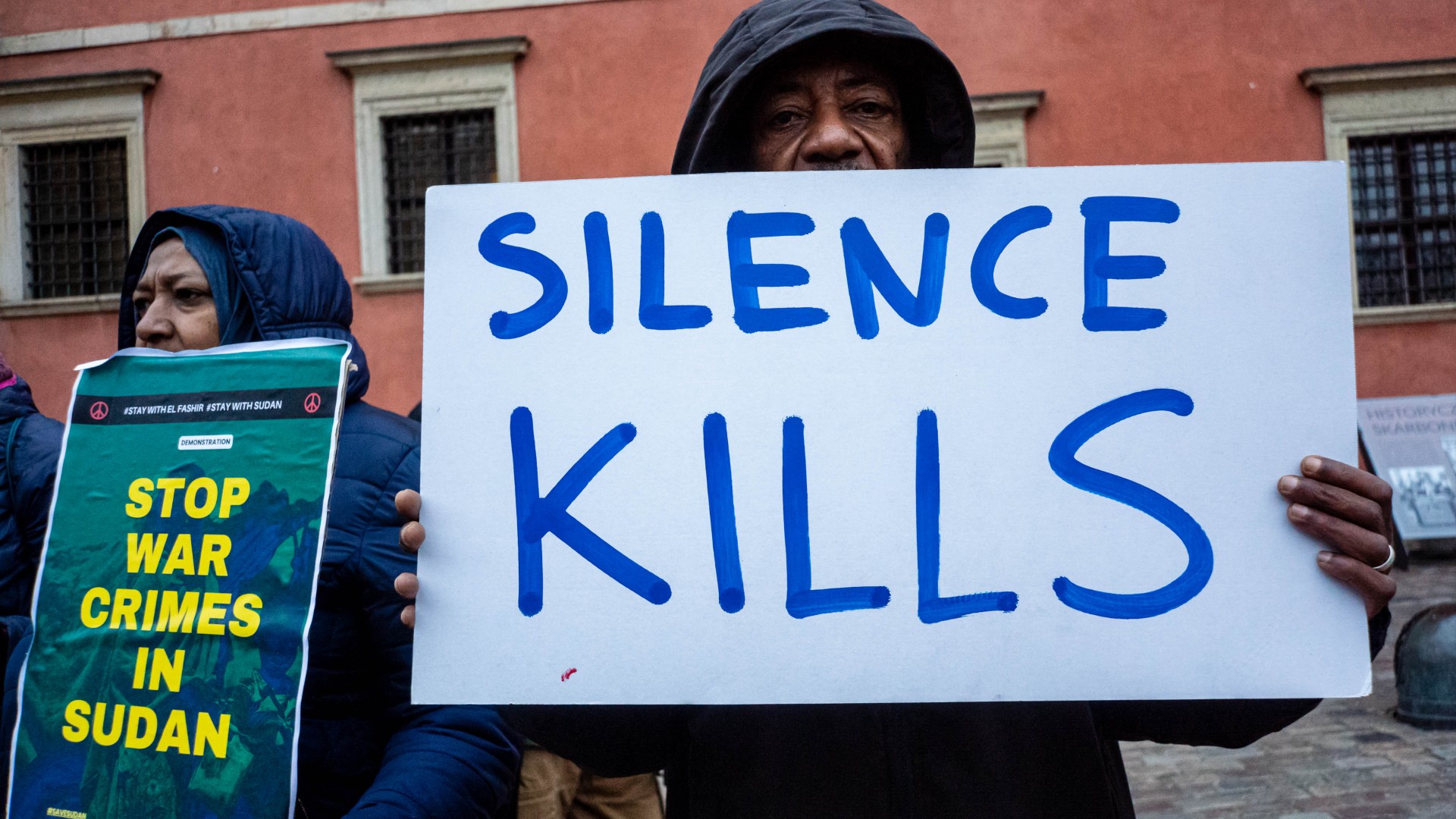
    A controversial move by Israel’s far-right national security minister has ignited a firestorm of global condemnation after he publicly shared footage of bound Gaza-bound flotilla activists held in humiliating conditions by Israeli authorities. Itamar Ben Gvir, a hardline politician known for inflammatory rhetoric, posted the video to the social platform X this Wednesday, just hours after Israeli naval forces intercepted a convoy of activist vessels headed for the blockaded Gaza Strip and detained hundreds of international participants at Israel’s southern port of Ashdod.

    The shocking footage, captioned with the provocative line “Welcome to Israel”, shows dozens of detained activists forced to kneel on the ground with their hands bound behind their backs and their foreheads pressed to the pavement. The Israeli national anthem plays over the footage in the background at multiple points, and Ben Gvir can be seen personally confronting the detained activists, heckling them while waving an Israeli flag.

    The video drew immediate international backlash, and even drew criticism from top figures within Israel’s own government. Prime Minister Benjamin Netanyahu publicly distanced himself from the minister, stating that Ben Gvir’s treatment of the detained activists ran “not in line with Israel’s values and norms”. Netanyahu added that Israeli authorities would move to deport all the detained activists “as soon as possible”. Israeli Foreign Minister Gideon Saar went even further in his rebuke, calling the incident a “disgraceful display” and accusing Ben Gvir of “knowingly caused harm to our State in this disgraceful display — and not for the first time”.

    Criticism also poured in from diplomatic circles around the world. Even the United States ambassador to Israel, Mike Huckabee, denounced Ben Gvir’s actions as “despicable”, writing on X that “Universal outrage & condemnation from every high-ranking Israeli official… for despicable actions by Ben Gvir. Flotilla was stupid stunt, but Ben Gvir betrayed dignity of his nation”. European Commissioner Hadja Lahbib also publicly condemned the minister, noting that “no one should be punished for defending humanity”. Both Belgium and France formally summoned their respective Israeli ambassadors to respond to what Paris called Ben Gvir’s “unacceptable actions”.

    The flotilla in question, organized under the banner of the Global Sumud Flotilla, launched from Turkey last week with around 50 vessels participating. It marks the second major attempt by international activists to breach Israel’s 17-year blockade of Gaza in as many months; a similar convoy was intercepted by Israeli forces in international waters off the coast of Greece last month, with most activists expelled to European countries.

    Israeli officials confirmed that roughly 430 international activists were aboard the intercepted flotilla, with all transferred to Ashdod port for processing and detention. The Israeli legal rights group Adalah, which sent attorneys to the detention facility to represent the detainees, issued a statement condemning both the treatment of activists and Israel’s broader policy towards Gaza. “Israel is employing a criminal policy of abuse and humiliation against activists seeking to confront Israel’s ongoing crimes against the Palestinian people,” the group said.

    By Thursday, multiple other countries had joined the chorus of condemnation, including Canada, Australia, New Zealand, Spain, Poland, and Turkey. Canadian Prime Minister Mark Carney called the treatment of detained civilian activists “abominable” and announced that Canada would summon the Israeli ambassador to the country to respond. Ireland’s Foreign Minister Helen McEntee said she was “appalled and shocked” by the video, and called for the immediate release of all detained activists, which include the sister of Irish President Catherine Connolly.

    Ben Gvir has refused to back down from his actions, doubling down in a speech to Israeli parliament. “I am proud to be the minister in charge of the organisations that operated today against those supporters of terror,” he said. “Yes, there will be all sorts of pictures that Gideon Saar does not like, but I think they are a great source of pride.”

    Netanyahu had earlier framed the entire flotilla effort as “a malicious scheme designed to break the blockade we have imposed on Hamas terrorists in Gaza”. Hamas, the Palestinian militant group that governed Gaza before the October 2023 war and currently controls less than half of the enclave, released a statement calling the video proof of Israeli leaders’ “moral depravity and sadism”.

    Israel has maintained a full land, air, and sea blockade of Gaza since 2007, when Hamas took control of the territory. The ongoing war between Israel and Hamas, sparked by Hamas’ October 7 2023 attack that killed roughly 1,200 people in Israel, has led to catastrophic shortages of food, medicine, and other essential supplies in Gaza, with Israel repeatedly halting all aid deliveries into the enclave over the course of the conflict.

  • Samsung strike on hold – but the fight isn’t over yet. Why?

    Samsung strike on hold – but the fight isn’t over yet. Why?

    Tens of thousands of Samsung Electronics union members gathered at a major factory complex south of Seoul on April 23, bringing a high-stakes labor dispute to the brink of work stoppage that threatened global tech supply chains. On the eve of a planned strike, the tech giant and its largest employee union reached a last-minute tentative wage and bonus agreement, suspending industrial action set to begin Thursday while union members vote on the deal between May 22 and May 27.

    The conflict erupted against a backdrop of unprecedented global demand for AI-related memory chips, which has sent Samsung’s profits and market valuation soaring in recent months. The core point of contention was the unequal distribution of record profits generated by the AI boom across different business units. Samsung initially proposed paying memory chip division workers bonuses equal to as much as 607% of their annual salary – far higher than the 50% to 100% offered to staff in other chip and electronics units, including those producing advanced semiconductors for major clients like Tesla and Nvidia.

    The union, which represents nearly 48,000 Samsung employees, pushed back against the lopsided bonus structure, arguing that 23,000 non-memory chip workers should not be excluded from the windfall. The union also demanded the elimination of a company-wide 50% bonus cap on annual salaries and the allocation of 15% of annual operating profit to a shared worker bonus pool. Industry analysts widely noted that a full strike at Samsung – the world’s largest memory chipmaker by sales and a core supplier to global AI data center builders, smartphone manufacturers, and consumer electronics brands – would have sent shockwaves through already strained global chip supplies.

    Samsung’s outsized role in the global economy amplifies the stakes of any labor unrest: the broader Samsung Group contributes roughly one-fifth of South Korea’s total economic output, making any production disruption a risk to the country’s entire export-driven economy. The dispute also comes at a moment of intensifying competition for Samsung, as rivals SK Hynix and Micron Technology capitalize on the AI chip boom to gain market share. Last year, SK Hynix scrapped its 10-year bonus cap, pushing average bonuses three times higher than Samsung’s previous offerings, which led to a noticeable exodus of skilled Samsung workers to the competitor.

    By early May, booming AI chip demand pushed Samsung’s total market capitalization past the $1 trillion mark, following a 750% year-over-year jump in operating profit during the first quarter of 2025. Even as the deal was struck, legal constraints had already limited the scope of potential strike action: a South Korean court granted Samsung an injunction forcing the company to maintain full staffing for safety, facility maintenance, and quality control operations, and barred the union from blocking facility access or occupying plant grounds, with daily fines of $74,000 for any violations.

    Financial analysts from JP Morgan had projected that a sustained strike could cut Samsung’s annual operating profit by between $14 billion and $20.8 billion, a blow that would have rippled through global tech markets. In a statement released after the tentative agreement was announced, Samsung said: “With a humble attitude, we will build a more mature and constructive labour-management relationship to ensure that such an incident never happens again.” Markets reacted positively to the news, with Samsung’s share price jumping more than 5% on Thursday morning following the announcement.

    The American Chamber of Commerce in Korea had previously warned of the broader global risks of prolonged labor unrest, noting that “In today’s interconnected global economy, disruptions in strategically important industries can create ripple effects extending well beyond a single company or market. Competing regional manufacturing markets could benefit if concerns over predictability and continuity persist.” With the deal now headed for a member ratification vote, the temporary agreement has eased immediate fears of production disruption during a critical period of AI infrastructure expansion worldwide.

  • ‘Disgraceful’: Treasurer Jim Chalmers lashes Israel minister after prisoners taunted

    ‘Disgraceful’: Treasurer Jim Chalmers lashes Israel minister after prisoners taunted

    A viral social media video shared by Israeli far-right National Security Minister Itamar Ben-Gvir has sparked international outrage, including condemnation from top Australian officials and even members of Israel’s own cabinet, over his humiliating mistreatment of detained activists from an international Gaza-bound aid flotilla that includes multiple Australian citizens. The confrontation took place this week when Israeli security forces intercepted the Global Sumud Flotilla, a 430-person international campaign organized to break Israel’s years-long naval blockade of Gaza and deliver critical humanitarian aid to the besieged enclave. Among the detained activists are up to 11 Australian nationals, alongside participants from dozens of other countries including New Zealand and Canada.

    In the video posted to Ben-Gvir’s social media channels Wednesday, titled mockingly “Welcome to Israel”, the hardline politician – who has long advocated for expanding illegal Israeli settlements in the West Bank and has previously been sanctioned by Australia for inciting anti-Palestinian violence – can be seen taunting the handcuffed activists. Footage shows masked Israeli officers forcing one female activist to the ground after she chanted pro-Palestinian slogans, before Ben-Gvir waves an Israeli flag in front of a group of detainees forced to kneel face-down inside a detention tent.

    Australia’s top political leaders were quick to issue a scathing rebuke of the incident. Foreign Affairs Minister Penny Wong called the published footage “shocking and unacceptable”, confirming that Australia’s ambassador to Israel had already formally raised the issue with Israeli authorities. “We condemn his actions and the degrading actions of Israeli authorities towards those detained,” Wong stated. The minister added that she had directed the Department of Foreign Affairs and Trade (DFAT) to summon Israel’s ambassador to Australia to reinforce Canberra’s demands: for the immediate release of all detained Australian citizens, guarantee that no detainees face mistreatment, and that Israel upholds its obligations under international law.

    Treasurer Jim Chalmers echoed Wong’s condemnation during a press appearance in Perth, describing the video as “disgraceful” and “deeply disappointing”. While Chalmers noted that Australian government departments had previously discouraged Australian citizens from joining the flotilla voyage, he emphasized that even after they chose to proceed, humane treatment remained a non-negotiable requirement. “There’s absolutely no need or no place for it,” Chalmers said. “I can only imagine what it’s like to be a parent or a loved one of one of the people involved in that trip, and to see them treated that way.”

    The condemnation extended beyond Australian political circles, even reaching within Israel’s own governing coalition. Israel’s Foreign Minister Gideon Sa’ar publicly distanced his government from Ben-Gvir’s actions, stating that the national security minister “knowingly caused harm to our State in this disgraceful display – and not for the first time. You have undone tremendous, professional, and successful efforts made by so many people, from IDF soldiers to Foreign Ministry staff and many others. No, you are not the face of Israel.” Even the Executive Council of Australian Jewry joined in criticizing Ben-Gvir’s conduct. Council President Daniel Aghion said “Nothing can excuse the appalling behaviour displayed by Minister Ben Gvir against a group of people who were being held in custody in Israel.” While the council acknowledged the activists had undertaken an unlawful and provocative action that it argued would benefit Hamas, Aghion stressed that “it does not in any way justify their mistreatment while they were being held. There is simply no excuse.”

    Other Western nations have also added their voices to the widespread international outcry. New Zealand’s Foreign Minister Winston Peters announced that New Zealand – which already imposed a travel ban on Ben-Gvir last year for undermining prospects for a two-state solution – condemned the minister’s actions, and had instructed its foreign ministry to summon the Israeli ambassador to relay New Zealand’s grave concerns. “His latest conduct with respect to the Gaza flotilla, which has been seriously criticised by his own Prime Minister, is further vindication of that position,” Peters said. “We expect Israel to adhere to its international legal obligations, including in its treatment of New Zealanders participating in the flotilla.”

    Canadian Prime Minister Mark Carney also joined the condemnation, calling the documented abuse “abominable” and “unacceptable”. Carney confirmed that Canada’s foreign ministry had already summoned the Israeli ambassador to demand formal assurances for the safety of Canadian detainees, noting that Canada had previously imposed strict sanctions on Ben-Gvir, including an asset freeze and travel ban, over repeated incitement to violence. “The protection of civilians and respect for human dignity must be upheld everywhere, at all times,” Carney said.

  • Luke Beveridge calls on AFL to overhaul list rules amid injury crisis

    Luke Beveridge calls on AFL to overhaul list rules amid injury crisis

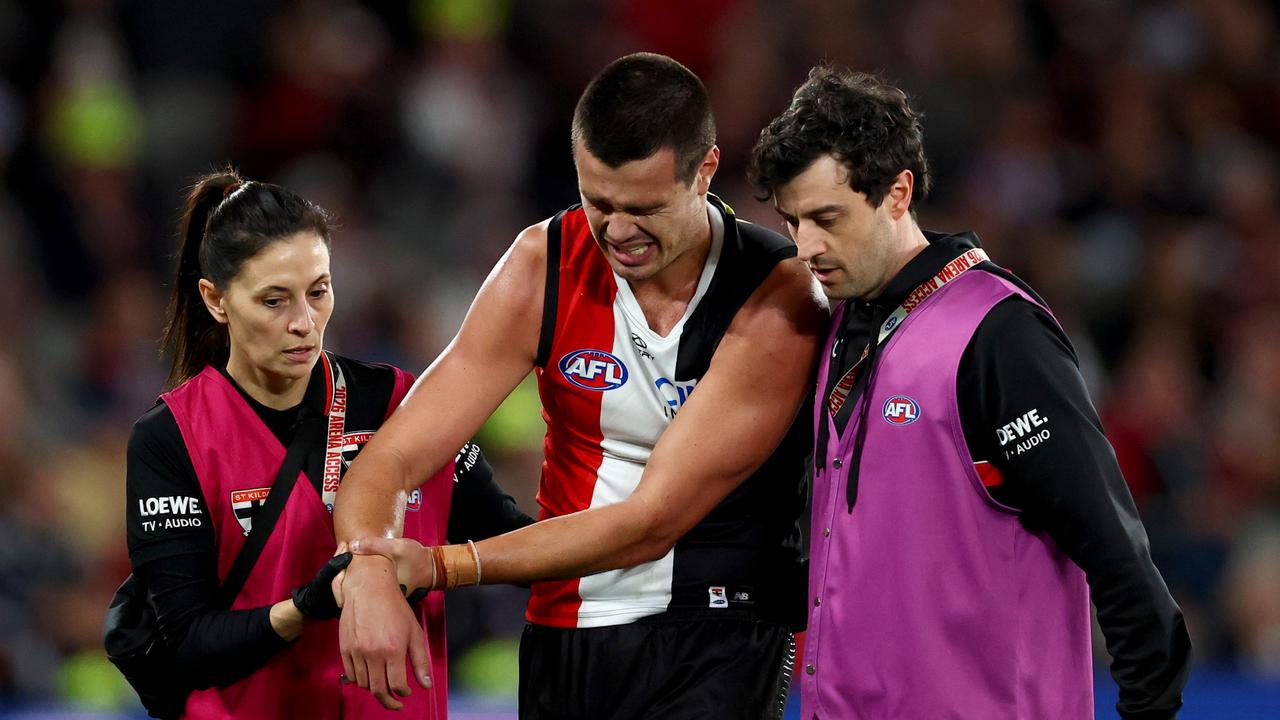
    With the AFL mid-season draft just around the corner, Western Bulldogs head coach Luke Beveridge has put forward a bold proposal aimed at easing the growing pressure of mounting injury lists across the league while opening up more opportunities for fringe players to earn their spot at the top level.

    The long-serving coach has publicly called on league officials to revise current list rules, pushing for expanded squad sizes and more flexible promotion pathways that would allow clubs to address sudden and severe injury outbreaks that have derailed multiple teams’ 2024 campaigns. At the core of Beveridge’s idea is the creation of a formal extended supplementary list, a reserve pool of players that clubs hit hard by injury – such as this season’s crisis-hit Richmond Tigers – can draw from at any point when their senior list is depleted.

    Beveridge argues that the current standard list size of 42 players, excluding category B development spots, is no longer sufficient to withstand the demands of a lengthening AFL season. With the introduction of the new Tasmania Devils expansion side, the league is set to add an additional round to the already packed 23-round regular season, plus retaining the existing pre-season fixture, putting even more physical strain on playing groups across the competition.

    Beyond solving the immediate problem of crippling injury tolls, Beveridge says the expanded supplementary list system would also create greater incentive for undrafted players to continue developing their careers in state leagues, rather than walking away from the sport after being overlooked in the annual national draft.

    “I understand we need key dates for drafts to allow clubs to prepare, plan and strategise in a sophisticated way to build their lists, but I also believe we need far more fluidity when it comes to bringing players onto an AFL list to get them on the field when injuries hit,” Beveridge said in comments this week. “Richmond is the perfect example right now of a club that would benefit from having a supplementary list to draw from as their injury crisis worsens. With 23 regular rounds, pre-season games still on the calendar, and an extra round coming when Tasmania joins the league, 42 players just isn’t enough, in my view.”

    Beveridge expanded on his proposal, suggesting that the supplementary list should be structured to match the 48-player squad size approved for the new Tasmanian Devils franchise, with a dedicated 4 to 6 additional supplementary spots available for all clubs. He added that clubs facing extreme injury strain, like Richmond this year, should even be allowed to expand that supplementary pool further if needed. While he acknowledges that key details – including rules around player retention at the end of the season and which players qualify to move off the primary list – still need to be thrashed out with league bosses, Beveridge stressed the change is a necessary adaptation for the modern game.

    “This is something we need to implement for the future, looking at the list structure that’s already been approved for Tasmania. Every AFL club should have the same flexibility to access a similar system when they’re dealing with a devastating injury toll,” he added.

    The Western Bulldogs themselves have been forced to navigate their own significant injury crisis earlier this season, losing a string of key senior players in quick succession, with young star Sam Darcy headlining the club’s injury list. The good news for Beveridge and Bulldogs fans, however, is that the club is finally starting to get key players back fit and available for selection.

    James O’Donnell is set to be available for selection this weekend, while key trio Tim English, Cody Weightman are on track to return to the line-up in the coming weeks. “We’re expecting James O’Donnell to be available this week. Tim is still probably another week away – we’re just being conservative with him, so he’s unlikely to play this round,” Beveridge confirmed. “Cody is a good chance to return next week. We’re expecting a handful of changes, but James is the main inclusion this week. We’ve always been a very cautious group when it comes to head injuries, so we’re just making absolutely sure Tim is fully fit and ready to go before we bring him back.”