作者: admin

  • Party backed by generals set for landslide as ‘sham’ Myanmar election ends

    Party backed by generals set for landslide as ‘sham’ Myanmar election ends

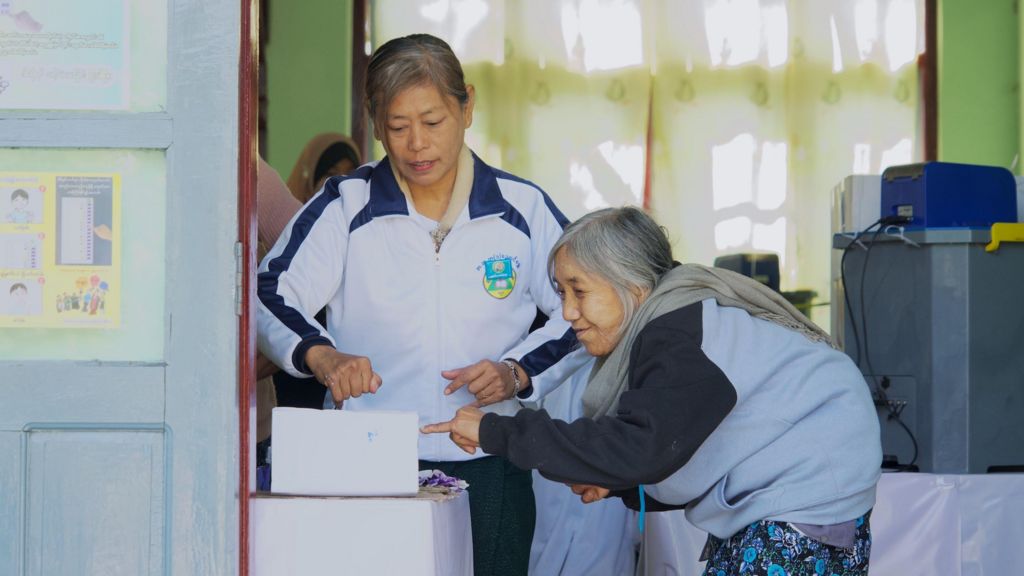
    Myanmar has completed a controversial three-phase electoral process widely condemned by the international community as fundamentally undemocratic. The final voting stage concluded with participation limited to approximately one-fifth of the country’s 330 townships, including major urban centers like Yangon and Mandalay, while approximately half of the nation remained excluded from voting due to an ongoing five-year civil conflict.

    The military-backed Union Solidarity and Development Party (USDP) is projected to secure a overwhelming victory, continuing the political dominance established following the 2021 military coup that overthrew the democratically elected government led by Nobel Peace Prize laureate Aung San Suu Kyi. The electoral landscape featured only six parties permitted to field candidates nationwide, with an additional 51 parties and independent candidates restricted to state and regional levels.

    International observers and critics have denounced the process as fundamentally flawed, citing the exclusion of popular political parties, widespread voter intimidation, and the impossibility of genuine democratic participation in conflict-affected regions. The military junta has consistently rejected these criticisms, maintaining the election’s legitimacy and fairness.

    BBC correspondents reporting from Shan State documented a climate of pervasive fear among voters, with extensive surveillance by police and military personnel creating an environment where open political discussion proved nearly impossible. Despite superficially orderly polling procedures featuring new electronic voting machines, the pre-election period was characterized by intimidation and widespread public resignation regarding the predetermined outcome.

    Constitutional procedures now mandate parliament to convene within two months to appoint a new president, with coup leader General Min Aung Hlaing anticipated to assume the presidency. This transition would require him to relinquish direct military command, though his successor is expected to maintain loyalist alignment. The political shift occurs against the devastating backdrop of civil conflict that has claimed thousands of lives, displaced millions, and crippled Myanmar’s economy, with recent natural disasters and reduced international aid exacerbating humanitarian suffering.
  • Indonesia resumes search for 80 after landslide kills 10 in West Java

    Indonesia resumes search for 80 after landslide kills 10 in West Java

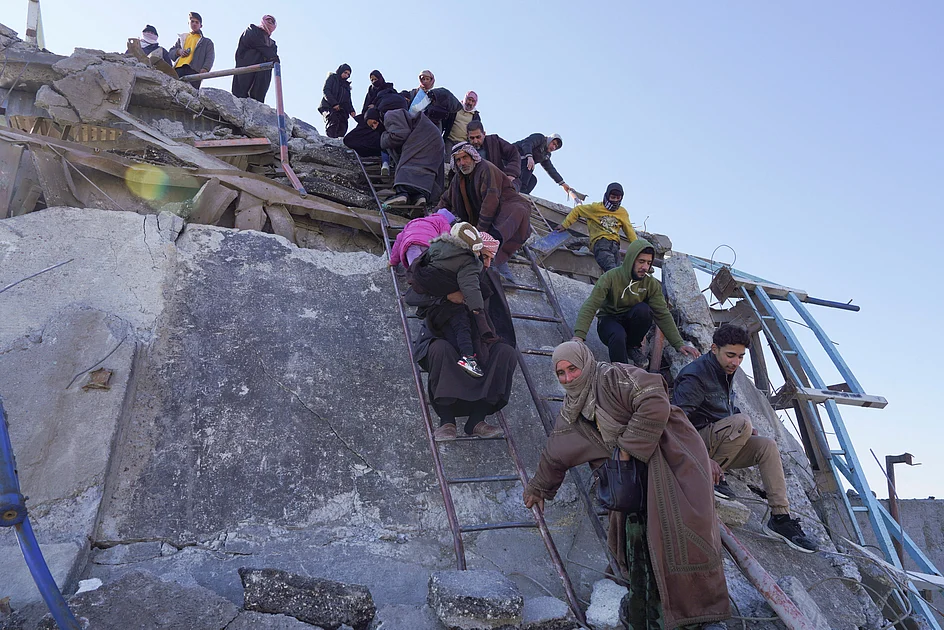
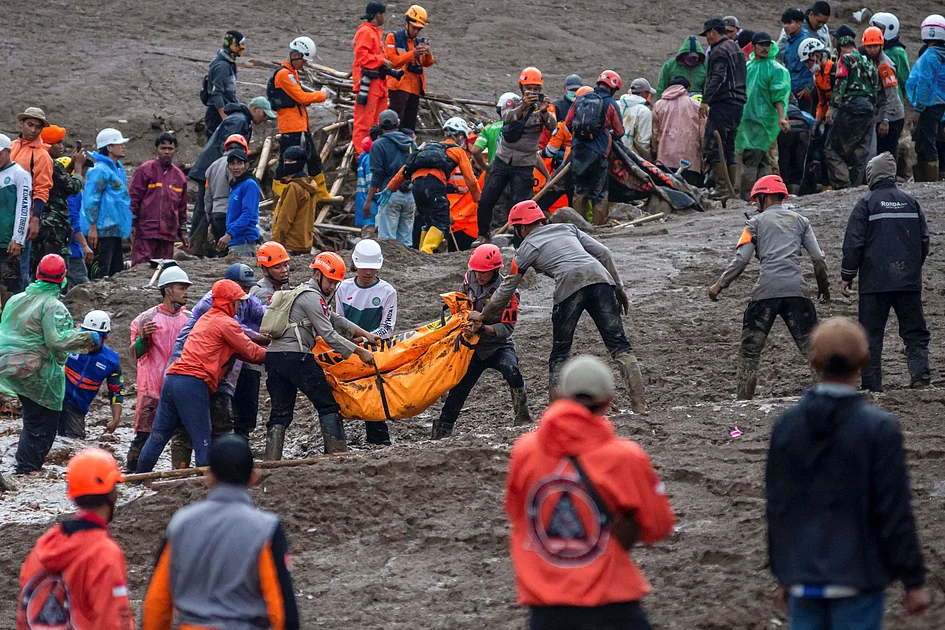
    Search operations have recommenced in Indonesia’s West Java province following a devastating landslide that claimed at least 10 lives and left 80 individuals missing. The catastrophe occurred early Saturday in Pasir Langu village, approximately 100 kilometers southeast of Jakarta, after torrential rainfall saturated the region.

    Emergency response teams faced significant challenges throughout the weekend as continuing precipitation and unstable ground conditions prevented the deployment of heavy excavation equipment. According to Kompas TV reports, rescue personnel have been forced to rely on manual search methods amid the treacherous terrain.

    The meteorological agency has issued extended weather advisories, forecasting potentially persistent rainfall across West Java and surrounding regions for the coming week. This warning raises concerns about further geological instability in the area.

    Local resident Dedi Kurniawan, 36, described the event as unprecedented in his community. “While minor flooding from nearby rivers occasionally occurs, this massive landslide originated directly from the forested areas,” he told Reuters.

    The landslide has triggered widespread flooding across multiple West Java districts, including portions of the capital Jakarta. Numerous residents from severely affected zones have been compelled to evacuate to higher ground and safer locations.

    This tragedy echoes similar devastation that occurred just two months prior when cyclone-induced flooding and landslides on Sumatra island resulted in approximately 1,200 fatalities, widespread property destruction, and the displacement of over one million residents, highlighting Indonesia’s vulnerability to extreme weather events.

  • Getting to ‘no’: Europe’s leaders find a way to speak with one voice against Trump

    Getting to ‘no’: Europe’s leaders find a way to speak with one voice against Trump

    LONDON — European diplomacy has undergone a radical transformation in its approach to dealing with President Donald Trump, shifting from appeasement tactics to firm opposition. The catalyst for this dramatic change emerged when Trump renewed demands for U.S. acquisition of Greenland, a semi-autonomous territory under Denmark’s sovereignty and NATO ally.

    The previously accommodating European leaders have abandoned their flattering approaches and royal treatment diplomacy. Instead, they’ve established clear boundaries against what they perceive as Trump’s disregard for international norms and territorial sovereignty. British Prime Minister Keir Starmer declared that ‘Britain will not yield’ on supporting Greenland’s sovereignty, while Norwegian Prime Minister Jonas Gahr Støre emphasized that ‘threats have no place among allies.’

    This diplomatic hardening occurred during the World Economic Forum in Davos, Switzerland, where multiple European nations collectively rejected Trump’s demands regarding Greenland and his proposed ‘Board of Peace’ initiative. Danish Prime Minister Mette Frederiksen noted the significance of European unity: ‘When Europe is not divided, when we stand together and when we are clear and strong also in our willingness to stand up for ourselves, then the results will show.’

    Trump responded to the resistance with economic threats, proposing a 10% import tariff on goods from eight European nations—Denmark, Norway, Sweden, France, Germany, the United Kingdom, the Netherlands and Finland—with potential escalation to 25% if no Greenland purchase agreement materialized by June 1.

    Political analysts observe that European leaders have undergone a significant learning curve in dealing with Trump’s transactional approach to international relations. Mark Shanahan, University of Surrey associate professor of political engagement, noted: ‘In Trump’s first term, Europe didn’t know what to expect and tried to deal with him using the old rules of diplomacy… It’s very hard for other leaders who deal with each other through the niceties of a rules-based system.’

    Despite initially standing firm, Trump eventually backtracked on his most aggressive demands, canceling threats of using ‘force’ for Greenland’s acquisition and announcing a framework agreement that would make tariff threats unnecessary. However, European leaders maintained their position, with Frederiksen reiterating: ‘We cannot negotiate on our sovereignty.’

    The confrontation signals a potential fundamental shift in transatlantic relations, with Canada’s Mark Carney suggesting that the alliance has experienced a ‘rupture’ rather than a transition, requiring European countries to build collective power against what he characterized as ‘bully’ behavior.

  • Can UAE employees complain against incompetent manager? What the law says

    Can UAE employees complain against incompetent manager? What the law says

    In the United Arab Emirates, employees seeking legal action against managers perceived as incompetent face specific limitations under current employment legislation. While Federal Decree Law No. 33 of 2021 mandates employers to provide a safe and appropriate working environment, there exists no explicit legal provision permitting complaints based solely on managerial inadequacy or deficient leadership capabilities.

    Legal experts clarify that managerial inefficiency alone does not constitute grounds for legal action unless it manifests as conduct violating specific provisions of UAE Employment Law. Actionable complaints require demonstration of workplace harassment, discriminatory practices, abuse of authority, or the creation of hostile work environments.

    The legal framework specifically prohibits sexual harassment, bullying, or any form of verbal, physical, or psychological violence against employees by employers, managers, or colleagues under Article 14(2) of the Employment Law. In such instances, employees may escalate concerns through internal grievance procedures, HR channels, or whistleblowing mechanisms established by their organizations.

    When internal resolution attempts prove unsuccessful, employees retain the right to file formal complaints with the Ministry of Human Resources and Emiratisation (MoHRE). This escalation pathway remains available exclusively for matters involving statutory violations rather than subjective assessments of managerial competence.

    Legal professionals emphasize that while employee dissatisfaction with management quality is understandable, the UAE’s legal system distinguishes between professional incompetence and legally actionable misconduct. Employees are advised to document specific incidents that potentially violate legal standards rather than general complaints about managerial capabilities.

  • Who was Alex Pretti, the intensive care nurse shot dead in Minneapolis?

    Who was Alex Pretti, the intensive care nurse shot dead in Minneapolis?

    Minneapolis is grappling with conflicting narratives surrounding the fatal shooting of 37-year-old intensive care nurse Alex Pretti by federal agents last Saturday. Identified by his grieving family, Pretti was an avid outdoorsman and a dedicated healthcare professional at the Minneapolis Veterans Affairs hospital.

    The incident occurred amidst heightened tensions following the earlier police shooting of Renee Good, 37, by an Immigration and Customs Enforcement (ICE) agent. Pretti had reportedly joined subsequent protests expressing outrage over both immigration policies and environmental regulation rollbacks under the Trump administration.

    The Department of Homeland Security asserts their agent acted in self-defense against an armed individual resisting disarmament. This official account faces direct challenge from multiple eyewitnesses, community officials, and Pretti’s family, who maintain visual evidence shows he was not holding a weapon when apprehended.

    Described by colleagues and neighbors as a compassionate caregiver and enthusiastic mountain biker, Pretti held a concealed carry permit but was never known to carry his legally owned handgun according to those closest to him. His background check revealed no criminal history beyond minor traffic violations.

    The victim’s parents revealed their final conversation with their son focused on home repairs and his generous $100 tip to a Latino worker—a gesture they found particularly meaningful given current community tensions. As makeshift memorials emerge across Minneapolis, colleagues remember Pretti as someone who ‘bonded over mountain biking trails’ rather than political confrontation.

    Medical colleague Dr. Dmitri Drekonja expressed outrage at suggestions Pretti posed any threat, stating: ‘The notion that this helpful, smiling joking guy was being labelled a terrorist? It’s galling.’ The family has issued pleas for accurate representation of their son’s character amid what they call ‘sickening lies’ from authorities.

  • Syria extends ceasefire with Kurdish forces by 15 days

    Syria extends ceasefire with Kurdish forces by 15 days

    In a significant development for Middle Eastern stability, Syria has prolonged its temporary truce with Kurdish-led forces for an additional 15 days following intensive international mediation efforts. The ceasefire extension, which took effect at 11:00 PM local time on Saturday, provides a crucial breathing space amid escalating military tensions in northern and eastern territories.

    The Syrian Democratic Forces (SDF) confirmed the arrangement through an official statement, noting that ‘dialogue with Damascus continues’ despite previous deadlocks. This diplomatic breakthrough comes after government troops under President Ahmed al-Sharaa captured substantial territories from Kurdish forces in recent weeks, dramatically shifting the regional power balance.

    The extension emerged through complex international diplomacy, with the United States actively mediating between the parties. Washington’s engagement aims to establish a lasting ceasefire and facilitate the integration of the SDF—formerly America’s primary Syrian partner—into the state apparatus led by Sharaa, who overthrew longtime ruler Bashar al-Assad in late 2024.

    Western powers including France have expressed grave concerns about potential humanitarian consequences, urging restraint to prevent mass abuses against Kurdish civilians. These apprehensions are heightened by previous sectarian violence that claimed nearly 1,500 lives from minority communities last year.

    Concurrently, the U.S. military is conducting large-scale transfers of detained ISIS combatants from SDF-run facilities in northeastern Syria to Iraqi detention centers—an operation that influenced Syria’s decision to extend the ceasefire.

    This temporary resolution culminates a year of mounting tensions between Damascus and Kurdish authorities, who have maintained autonomous governance in northeastern regions for the past decade. The current standoff represents the most critical challenge to Kurdish autonomy since Sharaa assumed power.

  • ‘Historic’ US storm leaves 160,000 without power, forces over 13,000 flight cancellations

    ‘Historic’ US storm leaves 160,000 without power, forces over 13,000 flight cancellations

    A catastrophic winter storm of historic proportions has plunged large portions of the United States into chaos, leaving approximately 160,000 households without electricity and triggering the cancellation of over 13,000 flights across the nation. The severe weather system, characterized by heavy snowfall, freezing rain, and dangerously frigid temperatures, continues to sweep across the eastern two-thirds of the country with potentially crippling consequences.

    In response to the escalating crisis, President Donald Trump approved federal emergency disaster declarations for multiple states including South Carolina, Virginia, Tennessee, Georgia, North Carolina, Maryland, Arkansas, Kentucky, Louisiana, Mississippi, Indiana, and West Virginia. The President emphasized ongoing monitoring of the situation through his Truth Social platform, urging citizens to ‘Stay Safe, and Stay Warm.’

    The Department of Homeland Security confirmed that seventeen states alongside the District of Columbia have declared weather emergencies. Secretary Kristi Noem reported tens of thousands of residents in southern states experiencing power losses, with utility crews working tirelessly to restore electricity. PowerOutage.com data revealed the majority of outages concentrated in Louisiana and Texas as of Saturday evening.

    The aviation sector experienced unprecedented disruptions with FlightAware reporting over 4,000 Saturday flights cancelled and approximately 9,400 Sunday flights preemptively scrapped. Major carriers including Delta Air Lines, JetBlue, and United Airlines implemented extensive schedule adjustments, with Delta relocating cold-weather experts to southern airports to support de-icing operations and baggage handling.

    The National Weather Service issued grave warnings regarding widespread heavy ice accumulation across southeastern regions, anticipating ‘crippling to locally catastrophic impacts.’ Forecasters predicted record-breaking cold temperatures and dangerous wind chills extending into the Great Plains by Monday.

    Energy infrastructure faced severe strain as the Department of Energy authorized emergency measures for Texas’s Electric Reliability Council to deploy backup generation resources at critical facilities including data centers. Dominion Energy warned that current ice forecasts could produce one of the most significant winter events ever to affect their Virginia operations, which support the world’s largest concentration of data centers.

    Officials urged residents to stock up on essential supplies including fuel and food, emphasizing community resilience in facing the prolonged extreme weather conditions.

  • Anthony Albanese’s plea for unity on Australia Day

    Anthony Albanese’s plea for unity on Australia Day

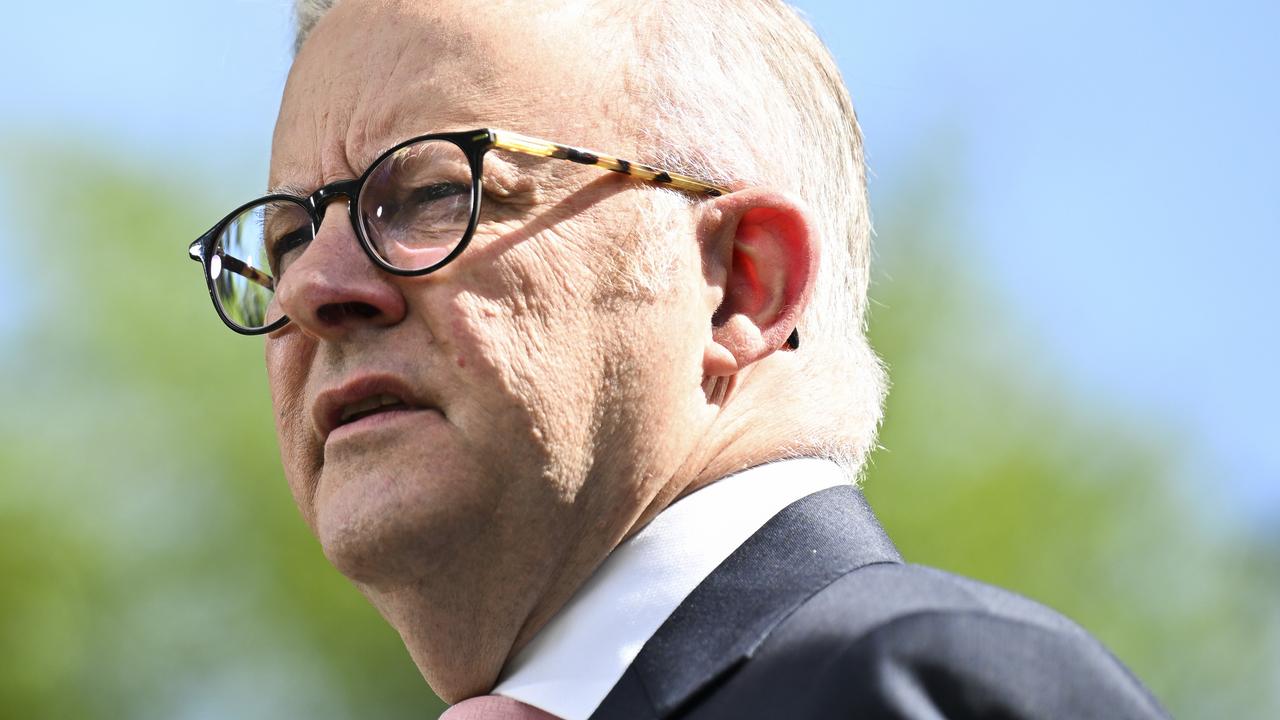
    In the wake of a devastating terrorist attack that shook the nation, Australian Prime Minister Anthony Albanese has delivered a poignant Australia Day address emphasizing resilience and national unity. The December 14 Bondi Beach massacre, which claimed 15 lives, created a period of national turmoil that tested the country’s social fabric throughout the summer months.

    Addressing the nation, Prime Minister Albanese acknowledged the profound challenges faced by Australians while highlighting the characteristic courage and compassion that emerged in response to the tragedy. He asserted that Australia’s distinctive national character isn’t accidental but has been deliberately cultivated through generations of collective service and mutual care.

    ‘This summer has tested our nation once again,’ Albanese stated, ‘but as ever in the worst of times, we have witnessed the very best of the Australian character.’ The Prime Minister encouraged citizens to approach the coming year with renewed pride in their country and strengthened faith in one another, emphasizing the ‘collective responsibility’ to build a ‘stronger and fairer’ Australia for future generations.

    Echoing this sentiment, Opposition Leader Sussan Ley delivered a complementary message during her Australia Day appearance in Corowa, historically recognized as the birthplace of Federation. Ley emphasized that unifying elements among Australians significantly outweigh divisive factors, describing the nation as ‘the best country in the world.’

    Both leaders reflected on how the Bondi tragedy had imbued this year’s Australia Day with deeper significance. Ley noted that the attack had ‘shaken the nation to its core’ while simultaneously revealing the powerful resilience of the Australian spirit. She highlighted how ordinary citizens demonstrated extraordinary bravery by rushing toward danger to assist strangers and comforting the wounded during the crisis.

    The coordinated messages from both government and opposition figures represent a concerted effort to strengthen social cohesion following a period of national trauma, reinforcing values of community solidarity and shared national identity.

  • Mark Tully, the BBC’s ‘voice of India’, dies aged 90

    Mark Tully, the BBC’s ‘voice of India’, dies aged 90

    Sir Mark Tully, the legendary British broadcaster celebrated as the BBC’s definitive “voice of India,” has passed away at 90. His distinctive baritone delivery and profound insights made him an institution across international airwaves for decades, covering pivotal moments in South Asian history including wars, famines, political assassinations, the Bhopal industrial disaster, and Operation Blue Star at Amritsar’s Golden Temple.

    Born in Calcutta during the British Raj in 1935, Tully embodied a unique cultural duality. Despite his English upbringing and education at Cambridge, he developed an extraordinary connection with India that transcended typical foreign correspondence. His fluency in Hindi—a rarity among Delhi’s foreign press corps—earned him both respect and affection, with many Indians affectionately calling him “Tully sahib.”

    The journalist faced grave danger during his coverage of the 1992 Babri Masjid demolition in Ayodhya, where he was threatened by a mob chanting “Death to Mark Tully” before being rescued by local authorities. He later described the ensuing communal violence as independent India’s “gravest setback” to secularism.

    Tully’s career began unexpectedly when he arrived as a BBC administrative assistant in 1965, eventually rising to become the corporation’s Delhi bureau chief for over two decades. His reporting extended beyond India to landmark events across South Asia, including Bangladesh’s liberation war, Pakistan’s military regimes, Sri Lanka’s civil conflict, and the Soviet-Afghan war.

    Despite his professional success, Tully grew increasingly critical of BBC’s corporate direction, culminating in his 1994 resignation following public criticism of the broadcaster’s management culture. He continued his spiritual exploration through BBC Radio 4’s “Something Understood,” returning to the theological interests that initially shaped his career path.

    Uniquely honored by both nations, Tully received India’s Padma Shri and Padma Bhushan civilian awards alongside British knighthood in 2002—an honor he described as recognition of India’s importance. He maintained dual cultural citizenship, living modestly in South Delhi while producing numerous books on Indian society, often in collaboration with partner Gillian Wright.

  • UK plans to create ‘British FBI’ to bring national investigations under single police force

    UK plans to create ‘British FBI’ to bring national investigations under single police force

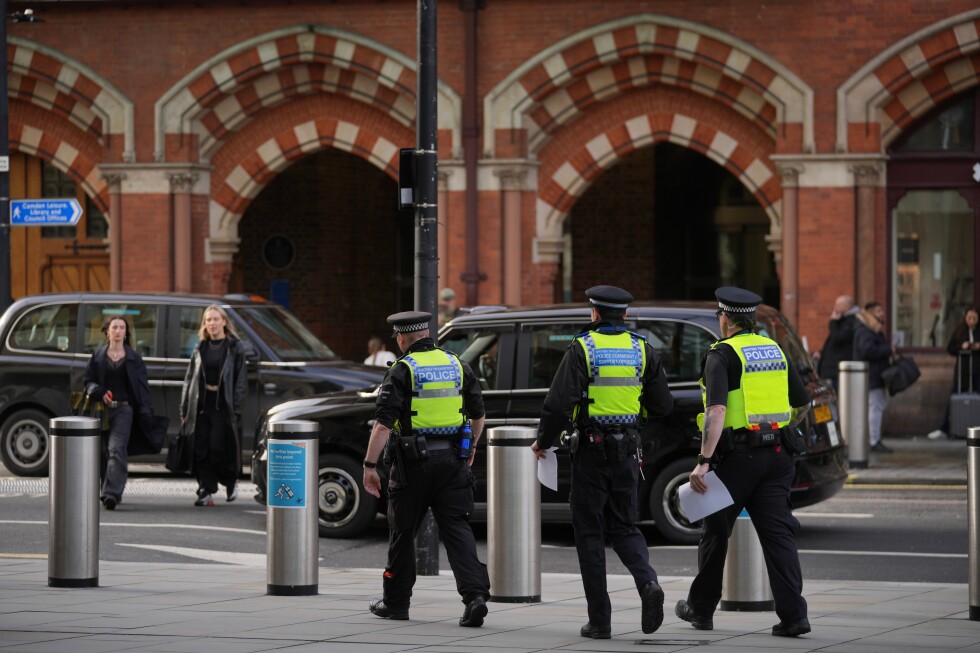
    The British government has revealed groundbreaking plans to establish a comprehensive National Police Service, colloquially termed the ‘British FBI,’ designed to oversee intricate criminal investigations spanning counterterrorism, digital offenses, and organized crime. This transformative initiative, announced on Sunday by Home Secretary Shabana Mahmood, represents the most significant overhaul of British policing in decades.

    The newly proposed agency will consolidate multiple specialized units under a single command structure, incorporating counterterrorism operations, regional organized crime task forces, police aviation resources, and road policing functions across England and Wales. This consolidation aims to address critical gaps in local law enforcement capabilities while creating a centralized framework for complex criminal investigations.

    Home Secretary Mahmood emphasized that the current policing model, established generations ago, has become increasingly inadequate against sophisticated modern criminal networks. ‘Many local constabularies lack either the specialized expertise or necessary resources to effectively combat evolving threats such as cyber-enabled fraud, online child exploitation, and transnational criminal organizations,’ Mahmood stated.

    The restructuring will fundamentally redefine policing responsibilities, enabling regional forces to concentrate exclusively on community-level crimes while the national service handles cross-jurisdictional and technically complex cases. The unification is projected to generate substantial operational efficiencies through centralized procurement processes and attract elite investigative talent through enhanced career development opportunities.

    Additional reforms expected alongside the national service implementation include potential consolidation of England and Wales’ 43 regional police forces and modernization of officer recruitment and management protocols. The Metropolitan Police Service, which currently leads counterterrorism efforts, has expressed strong support for the centralized approach, acknowledging the necessity of adapting to contemporary security challenges.