
Two weeks after a 40-year-old New Zealand father of two died following a fall at an unlicensed rave held on its grounds, Hidden Camp – an off-grid farmstay and camping venue nestled in bushland between Queensland’s Maryborough and Gympie – has announced an immediate temporary shutdown that will last at least several months. The venue’s owners confirmed the decision in a public statement posted to Facebook on Friday, noting that the closure is tied to ongoing planning and development approval processes that have come to the forefront following the fatal incident. All existing and future bookings will be fully canceled and refunded to guests via the camping booking platform HipCamp, per the announcement. For the family that runs Hidden Camp, the shutdown is far more than a business interruption: the property is not only their commercial operation but their family home and primary livelihood, the statement explained. “It is our home, our livelihood, and something we’ve poured our hearts, savings and countless hours into,” the statement read. “Unfortunately, this means Hidden Camp could remain closed for several months while this process runs its course. We know this is incredibly disappointing for everyone who had plans to visit, and it is devastating for our family.” The sudden closure comes in the wake of a tragic accident that shocked the local Glenwood community two weeks prior. During the unauthorised “Rhythm of the Wild” secret rave held on the property, Trenton Ehrhorn, a 40-year-old New Zealand national and father of two, fell from the event stage and suffered fatal injuries. Immediately after the incident, the venue’s owners released an initial statement expressing profound sorrow over the loss of life, extending condolences to Ehrhorn’s family and friends, and acknowledging the negative impact of the tragedy on nearby residents and the wider Glenwood community. Following the accident, Queensland Police took a 33-year-old man from Burpengary into custody for questioning. As of earlier this week, however, law enforcement officials confirmed no charges have been filed against any person connected to the incident, and the official investigation remains active and ongoing. The venue owners said they look forward to reopening Hidden Camp once all required planning and development processes are finalized, though no specific timeline for a potential reopening has been set.
作者: admin
-
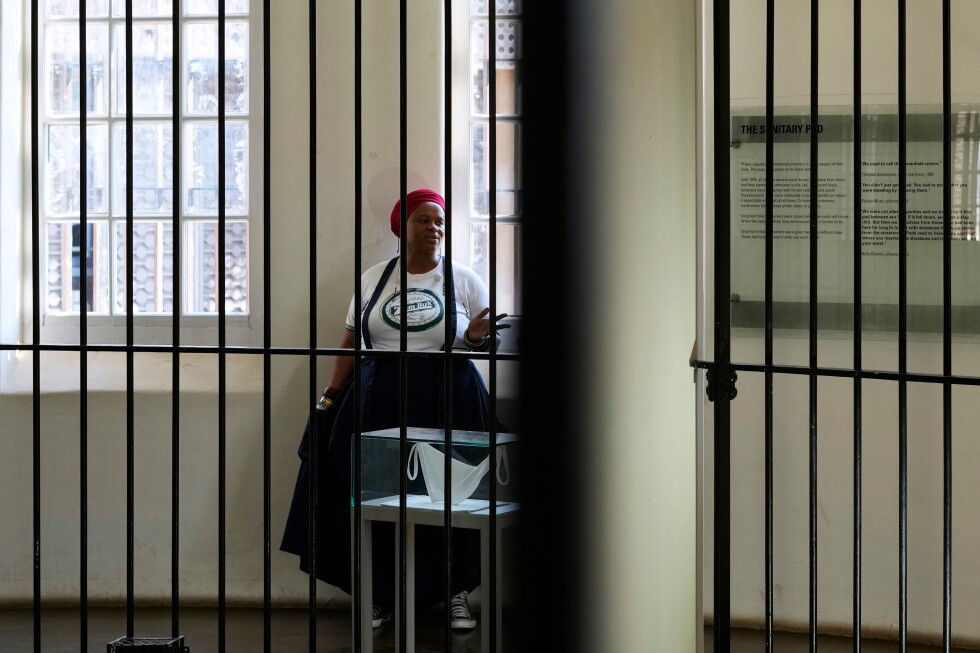
70 years after South Africa’s women challenged apartheid, some say their freedom isn’t complete
On Sunday, South Africa marked a landmark moment in its anti-apartheid struggle: the 70th anniversary of the 1956 Women’s March, a watershed act of collective resistance that brought nearly 20,000 women of all racial backgrounds together to challenge unjust segregation laws. Seventy decades on, however, contemporary South African women say the freedom their predecessors risked everything to win remains incomplete, as the nation grapples with persistent crises of gender-based violence, systemic poverty, and deep-rooted structural inequality.
The 1956 march saw demonstrators converge on Pretoria, South Africa’s administrative capital, to protest apartheid pass laws that forced Black women to carry restrictive identity documents to control their movement across the country. The action has long been recognized as one of the most powerful displays of mass resistance against white minority rule in the nation’s history.
For Ramnie Dinat, an 84-year-old who was a teenager when the march took place on August 9, the day remains a vivid memory. Dinat assisted her mother, Ama Naidoo, a prominent anti-apartheid activist of Indian heritage, with last-minute organizing ahead of the rally. The multiracial coalition that turned out included Black women, women of Indian descent like Naidoo, and a small group of white women, all united in their opposition to racist legislation.
“Black women were organizing, and Indian women couldn’t be silent,” Dinat told the Associated Press, adding that none of the ordinary women who took part could have predicted their action would be etched into national history. “We were ordinary women who believed we could make a difference. We simply believed it was the right thing to do.”
Today, the legacy of the 1956 march is preserved at the former Women’s Jail on Constitution Hill in Johannesburg, a facility once used as a key part of the apartheid prison system that has since been converted into a public museum. Many leaders and participants of the 1956 march were later imprisoned at the facility, where inmates were segregated by race in line with apartheid policy, just as segregation was enforced across every sphere of South African public life.
Nolubabalo Memese, visitor services manager at Constitution Hill, explains that the jail was intentionally designed to dehumanize and break anti-apartheid activists. Black women held at the facility were denied even basic human dignity, including access to proper underwear and sanitary products. Now, the museum honors both the iconic leaders of the anti-apartheid movement, including Winnie Madikizela-Mandela and Albertina Sisulu, and the thousands of ordinary women whose contributions to the struggle have often been left out of mainstream history books.
“Our freedom is built on the shoulders of those kinds of women who were at this prison,” Memese said.
That sentiment is echoed by Kgothatso Montjane, a 40-year-old Paralympic wheelchair tennis champion and the first Black South African woman to compete in all four of tennis’ Grand Slam tournaments, who took home the 2024 Wimbledon wheelchair doubles title. Montjane says the courage of the 1956 marchers cleared a path for her and other women to pursue opportunities their predecessors could not access.
“The fight the women took on 70 years ago has paved the way for us,” she said.
Yet even with the end of apartheid in 1994 and the formal elimination of racial restrictions on movement, work, and political participation, many women argue that new, persistent barriers continue to block full gender freedom in modern South Africa. A 2024 study supported by UN Women found that more than one in three South African women will experience physical or sexual violence over their lifetime, a crisis the United Nations has labeled a “national wound” for the country.
For Memese, gender-based violence acts as a modern restriction on women’s freedom, just as pass laws constrained the movement of Black women 70 years ago. “There’s a different monster which precludes us from enjoying freedom of movement and economic participation. And that’s gender-based violence. That’s a crime,” she said. “If you want to go jog at six o’clock and it’s a bit dark, you’d rather not.”
Systemic economic inequality further exacerbates these challenges. Official government data shows women in South Africa face higher unemployment rates than men, carry a disproportionate share of unpaid care work, and remain drastically underrepresented in senior leadership roles across public and private sectors. Even in sports, Montjane says, structural barriers persist: financial gaps limit access to elite training and competition, leaving women of color underrepresented at the highest levels of the sport.
“The barriers I had to overcome … in a sport like tennis, it’s just a financial issue,” Montjane said. “They don’t lie when they say tennis is a white sport, and you don’t really find people of color dominating in this sport.”
Even amid these ongoing struggles, Montjane emphasized that the 1956 marchers transformed the trajectory of South Africa for her and future generations of women. “The platform has been set,” she said.
The symbolic reuse of materials from the apartheid-era jail to build the current museum holds deep meaning for Memese, who frames the work toward gender equity as a process of building a better future from the lessons of the past. “We are using the bricks of the past to build our future,” she said. “Once we forget the past, it’s very easy for us to make the same mistakes.”
For Dinat, one of the last living participants of the 1956 march, the core lesson of that historic day remains unchanged after seven decades. “Every generation has its own struggles, and every generation has to decide whether it will stand up for what is right,” she said.
-

‘Unfair’ court system lets wealthy offenders hide behind secrecy orders
Two high-profile convicted rapists in Australia have drawn renewed scrutiny of a controversial legal loophole that allowed their identities to remain hidden from the public for years, leading legal experts to warn that the current system undermines open justice, erodes public trust, and perpetuates harmful stereotypes about sexual assault survivors.
Tom Silvagni, son of Australian Football League legend Stephen Silvagni, and Ralph Carr, a prominent sports and entertainment manager, both secured court-issued suppression orders during their separate rape trials, preventing public disclosure of their names until guilty verdicts were returned. Carr’s identity remained sealed for three years, with the order only lifted after his conviction this week. For Silvagni, who was found guilty of raping a friend’s girlfriend on two occasions, the defendant went to extraordinary lengths to maintain his anonymity: he hired a full additional legal team exclusively to argue for continued secrecy, successfully keeping his name out of public view for 18 months throughout his trial.
Legal analysts say the cases highlight deep structural flaws in Australia’s suppression regime, particularly in the state of Victoria, which has gained a reputation as the nation’s “suppression order capital.” Associate Professor Jason Bosland, a legal scholar at Melbourne Law School, argues that prolonged secrecy around high-profile sexual assault cases does profound damage to survivors and the integrity of the justice system. These extended orders, he explains, reinforce harmful cultural narratives that question the credibility of female complainants, while also creating the public perception that wealthy, connected offenders receive preferential treatment in the courts. This uneven application of justice, Bosland says, severely undermines public confidence in how justice is administered. He warns that open justice in Australia, and particularly in Victoria, is at a crisis point, with orders frequently remaining in force for months or even years after they are first granted – one case he reviewed only had its suppression order revoked after six years.
Current laws around the public disclosure of criminal defendants in sexual assault cases vary widely across Australian jurisdictions. In Queensland, new legislation only passed in 2023 to allow public identification of adult defendants charged with rape and other severe sexual offenses before they go to trial. In the Northern Territory, media outlets are still barred from naming defendants in sexual assault cases until they are formally committed for trial or sentencing.
Justin Quill, a partner at law firm Thomsons who represented media organizations in both the Silvagni and Carr trials, says the current system is fundamentally unfair. He notes that most ordinary Australians cannot afford to hire even one King’s Counsel, let alone two separate legal teams focused entirely on keeping a defendant’s name out of the press. Quill says the outcome of these two cases has justifiably left the Australian public angry and disappointed.
Under Australian law, judges grant suppression orders on a limited set of grounds: to protect the fairness of an upcoming trial, to prevent distress to victims, children or witnesses, to protect the personal safety of any individual, or for national security purposes. In both the Silvagni and Carr cases, defense teams centered their arguments for secrecy on mental health grounds, framing public identification as a threat to the defendants’ mental safety. Silvagni’s legal team secured an order citing risks of psychiatric harm and suicide, while Carr’s team argued his history of prior suicide attempts put him at risk of self-harm if his name was made public.
Quill argues that this interpretation of the “safety” provision of the 2013 Open Courts Act directly misrepresents the legislation’s original intent. When the law was drafted, he explains, the safety exception was intended to protect informers who faced deadly violence after providing evidence during the aftermath of Melbourne’s gangland wars – legislative drafters never contemplated that it would be used to shield criminal defendants from public scrutiny by claiming mental harm. Critics add that the process itself is stacked against transparency: defendants submit untested psychiatric evidence to support their claims, and neither media outlets nor prosecution teams are given the opportunity to cross-examine or challenge that evidence before the order is granted. To Quill, this amounts to defendants gaming the system, stretching the law far beyond its intended purpose.
To address these flaws, legal experts are calling for urgent reform. First, Quill says, legislators must close the loophole that allows the safety ground to be used for claims of mental health risk from public identification. Beyond legislative change, he argues, there must be a broad cultural shift among barristers and judges. While many legal professionals pay lip service to the principle of open courts, few are willing to uphold that principle consistently in high-profile, politically charged cases. Bosland is currently set to host a roundtable to discuss targeted reforms to the Open Courts Act that would limit the misuse of suppression orders in sexual assault cases, as the legal community pushes for change to restore public faith in open justice.
-
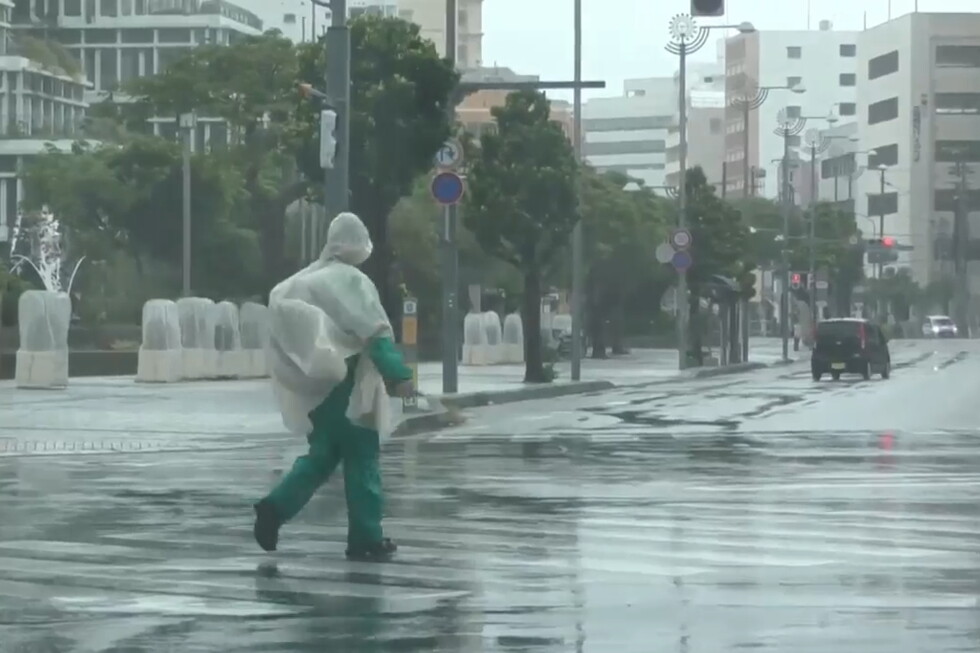
Eastern China braces for Typhoon Dolphin, shutting schools and tourist activities
BEIJING – As powerful Typhoon Dolphin barrels toward the eastern coastline of China, local government agencies have enacted sweeping precautionary measures, closing educational institutions and popular tourist attractions ahead of the storm’s expected landfall this weekend. The tropical cyclone, which is packing maximum sustained winds of 162 kilometers per hour (101 miles per hour), is forecast to make landfall late Sunday along the coasts of Zhejiang Province and the northern section of neighboring Fujian Province. Major Chinese metropolis Shanghai also lies directly in the storm’s projected path. Meteorological and disaster management officials warn that the system will dump extremely heavy rainfall across the region, elevating the risk of catastrophic flash flooding and dangerous landslides that threaten both life and infrastructure. In response to the approaching threat, China’s central emergency management authorities activated a Level III emergency response, the second-lowest tier of the country’s four-tier national emergency classification system. Preparations to mitigate risk have been carried out across multiple regions: all coastal and inland tourist destinations across Zhejiang will remain closed through Saturday and Sunday, with all water-based recreational and commercial activities — including inter-island ferries and passenger cruise operations — suspended for the duration of the storm. In Ningbo, one of Zhejiang’s largest and most economically important port cities, municipal education officials have ordered all public and private schools and other educational facilities to close for the entire weekend to keep students and staff out of harm’s way. Local disaster response teams have been deployed to conduct pre-storm inspections of flood control infrastructure, evacuate at-risk communities in low-lying and mountainous zones, and stockpile emergency supplies including food, water, and temporary shelter materials ahead of the storm’s arrival.
-

13yo charged with NT vehicle theft, police search for others involved
A chaotic, high-risk incident involving a stolen car driven by a group of teenagers has left the remote Northern Territory town of Katherine on high alert, with two minors already in police custody and a manhunt underway for five remaining suspects.
The incident unfolded on Thursday afternoon, when a black Volkswagen was reported stolen from outside a commercial property located on Katherine Terrace, the town’s main commercial strip. For more than eight hours after the theft, the stolen vehicle terrorized local roads: witnesses described the car speeding recklessly along both the Victoria Highway and residential streets of Katherine, with multiple young people seen hanging out of the vehicle’s open windows during the rampage. Eyewitness accounts confirmed up to seven teenagers were involved in the dangerous stunt.
Facing a difficult choice between immediate apprehension and public safety, local police made the deliberate decision not to initiate a high-speed chase. Acting Assistant Commissioner James Gray-Spence explained that standard police policy requires officers to weigh law enforcement goals against the potential harm a high-speed pursuit could cause to innocent bystanders, road users and the broader community. In this case, commanders opted to de-escalate the situation by prioritizing evidence collection and suspect identification over an immediate, risky pursuit.
“The behaviour displayed was extremely concerning and created an unacceptable risk to members of the Katherine community,” Gray-Spence said in a statement released to media.
The rampage came to an abrupt end at approximately 8:50 pm, when the stolen vehicle crashed into a residential fence on Stutterd Street in Katherine South. All seven teenagers fled the scene on foot before officers arrived.
By Friday evening, police had taken the first two suspects into custody. A 13-year-old boy was arrested just before 11 pm, facing charges including motor vehicle theft, additional theft offenses and dangerous driving. A 15-year-old male suspect was taken into custody around 12:30 am Saturday, charged with being a passenger in a stolen motor vehicle and breaching existing bail conditions. Both teens remain in police custody and are scheduled to appear in court at a later date. As of Friday, investigators had identified a third suspect, and are continuing work to track down the remaining five people involved in the incident.
“In this instance, officers made a deliberate decision to prioritise public safety. Rather than escalating the situation through a pursuit, they focused on gathering evidence, identifying those involved and progressing the investigation,” Gray-Spence added. “Police have already identified three suspects, and we are actively working to identify and locate all remaining offenders. We will continue to pursue every available investigative avenue to ensure those responsible are held accountable.”
Local law enforcement has issued a public call for information, urging any Katherine resident or visitor who witnessed the incident or has additional details about the involvement of the remaining suspects to contact Northern Territory Crime Stoppers anonymously with tips.
-

Former Geelong Cats president Craig Drummond outlines ‘lengthy discussions’ were had over concussion contract
The fallout from Australian Football League’s (AFL) most high-profile off-field controversy of the year continues, as newly installed AFL Commission Chair Craig Drummond has publicly addressed the controversial concussion waiver scandal that has put his former club, the Geelong Cats, under intense public and regulatory scrutiny.
Drummond, who led the Geelong Cats as club president through 2024 before stepping into the league’s top governance role in March 2026, released an official statement Saturday morning amid growing pressure to comment on the 2024 incident. In the statement, he described the ordeal as an “extremely complex and sensitive matter”, and formally announced he would recuse himself from any internal AFL disciplinary processes related to the case.
“I was President of the Geelong Football Club in 2024,” Drummond wrote. “This was an extremely complex and sensitive matter, and obligations to both the player and the Club were very carefully considered by the Geelong board.”
Drummond emphasized that the welfare of the player at the center of the scandal, Cats defender Jake Kolodjashnij, was the top priority for the club’s board throughout all internal discussions. Kolodjashnij, who has a history of concussions, was medically cleared to return to play before the agreement was drafted, and the club held extensive consultations with the player, his family, treating physicians and insurance providers to weigh the potential risks of continued play.
Still, Drummond acknowledged that the club overstepped in adding a legal liability waiver to the player’s informed consent documentation. “Regardless of the player’s agreement, the Club went too far in adding a waiver into an informed consent document and it will be removed,” he said, adding that the waiver did not override the player’s existing legal protections under Australian statutory health and safety regulations. He also confirmed a separate procedural failure, noting the club failed to properly lodge the completed agreement with the AFL and the AFL Players Association (AFLPA).
“As the Club has also acknowledged, there was also a process failure in relation to lodgement of the agreement with the AFL and the AFLPA. I have not and will not be involved in any deliberation in relation to this matter and its assessment under the AFL rules and regulations. I apologise for the mistakes made in this very complex situation,” Drummond added.
Earlier this week, Kolodjashnij came forward publicly to identify himself as the player involved, putting an end to days of widespread media speculation. “While I appreciate the efforts made not to identify me, the speculation has left me feeling I needed to address this personally,” the veteran defender said. He confirmed he completed the AFL’s independent concussion assessment process, accepted its outcome that cleared him to play, and has continued competing in the AFL since the agreement was signed.
The story first broke in the Herald Sun last Thursday, which revealed the 2024 contract clause required Kolodjashnij to accept full legal responsibility for any future head injuries sustained while playing. Geelong chief executive Steve Hocking has pushed back against claims the player was coerced into signing the agreement, noting the negotiations stretched over two months, and Kolodjashnij had full representation from his legal team and family throughout the process.
“It was an extensive process, it was conducted over a roughly two-month period. The player’s representatives were involved, including family, legal representation as well, and that letter spelt out all of that entire process. It took time, it wasn’t rushed, as much as some people believe he may have been coerced into it. That is not the case,” Hocking told reporters.
Hocking also confirmed the AFL had requested a formal explanation from the club following the story’s publication, though the league indicated Thursday evening that it was satisfied no disciplinary action would be taken against Geelong at this stage. Drummond, who spent 13 years at Geelong’s Kardinia Park as club president, was confirmed as the new AFL chair in late October 2025 before officially taking office earlier this year.
-

Top doctor slams NSW health system following controversial Chris Minns plea
A growing public health conflict has erupted in New South Wales (NSW), Australia, after state premier Chris Minns drew sharp criticism from a leading medical leader over his controversial call for residents to avoid public hospital emergency departments unless facing life-threatening conditions. The premier’s appeal came in response to a historic winter surge in demand that saw almost 10,000 Sydney residents seek emergency care in a single day earlier this week – a figure that marks the highest daily emergency department attendance ever recorded in the region.
-

Colombia’s new president signals energy policy shift, backs oil and gas
On the day of his inauguration, Colombian President Abelardo de la Espriella laid out a bold new policy direction for the nation’s energy sector, marking a clear break from the environmental agenda of his predecessor Gustavo Petro. In his inaugural address, the new leader framed energy security as a non-negotiable cornerstone of his administration, with three core priorities: breathing new life into Colombia’s stagnant oil and gas industry, rehabilitating the majority state-owned energy giant Ecopetrol, and shoring up the nation’s strained electricity grid.
De la Espriella affirmed his support for a global transition toward cleaner renewable energy sources, including wind and solar power, but pushed back against the rapid fossil fuel phase-out pursued by the previous government. He argued that any responsible energy transition must be built on national economic strength and self-sufficiency, rather than forcing the sector into decline and leaving Colombia dependent on foreign energy imports. “I believe in the energy transition,” he stated. “But that transition must be built from strength, not from weakness, from self-sufficiency and not from dependence.”
This policy shift stands in stark contrast to the agenda of former President Petro, who paused the awarding of all new oil and gas exploration contracts, centered his environmental platform on Amazon rainforest protection, and positioned Colombia as a global leader in the push to phase out fossil fuels. Just four months before de la Espriella took office, Petro’s administration hosted a high-profile international climate summit in the Caribbean coastal city of Santa Marta, where it rallied global support for accelerated fossil fuel transition.
The new president’s pledges align directly with campaign promises that carried him to victory, where he repeatedly called for expanded oil and gas production and a rollback of Petro’s signature energy policies. Framing energy development as a core issue of national sovereignty, de la Espriella argued that Colombia cannot achieve long-term economic prosperity by leaving its abundant domestic fossil fuel reserves undeveloped.
Among his top priorities is the rehabilitation of Ecopetrol, Colombia’s majority state-owned oil firm and one of the single largest contributors to government revenue and national export earnings. De la Espriella accused the previous administration of systematically weakening the company, and pledged that rebuilding Ecopetrol would be a “definitive and absolute priority” for his government.
In addition to resuming exploration activities, the new president confirmed that his administration will authorize hydraulic fracturing, commonly known as fracking, a controversial extraction method that involves injecting high-pressure mixtures of water, sand and chemicals underground to break up rock formations and unlock trapped oil and gas reserves. He stressed that fracking operations would operate under “the strictest technical and environmental standards” to mitigate ecological risk.
De la Espriella warned that Colombia’s energy system is currently in a “critical situation,” citing a years-long decline in proven oil and gas reserves, repeated delays to critical energy infrastructure projects, and steadily rising domestic electricity demand that has stretched supply thin. He added that the approaching El Niño weather phenomenon, which typically brings prolonged drought conditions to Colombia that cut output from the nation’s hydroelectric power sector, leaves no room for delayed action. “The El Niño phenomenon won’t wait for us,” he said. “To overcome it, it is imperative to implement urgent solutions.”
This report from the Associated Press notes that the outlet’s climate and environmental coverage receives grant funding from multiple private philanthropic foundations, with the AP retaining full editorial control over all content.
-
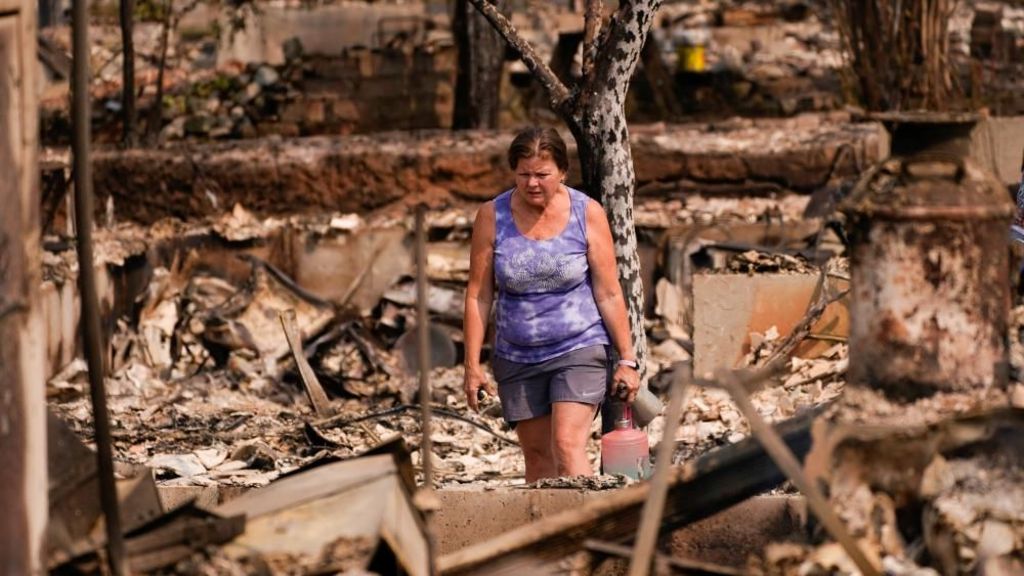
Scale of devastation shocks US city’s fire-seasoned residents
Every summer, seasonal wildfire smoke and small-scale evacuation drills are a familiar routine for residents of Spokane, Washington, located in the U.S. Pacific Northwest. Communities here have long grown accustomed to waiting out the dry fire season for the damp autumn rains that eventually extinguish blazes, and few expected the 2026 fire season to bring anything out of the ordinary. But this year’s wildfire outbreak has shattered all local expectations, leaving widespread destruction in its wake and marking an unprecedented disaster for the city.
For Chris Matthews, a Spokane resident with a family of five, the second evacuation in a year felt routine at first. Just 12 months prior, a brushfire had forced his family to flee their home for only a few hours before they were allowed to return. So when a towering dark smoke column bore down on his neighborhood last Saturday, Matthews grabbed his family and evacuated assuming they would be back home by the end of the day. Instead, when he finally returned to his property, all that remained was smoldering ash and ruined foundations. “All of us thought we were going to be able to get back to our houses,” Matthews recalled. “And we didn’t think it’d be a situation where we were going to lose our homes or anything like that.”
The scale of the blaze’s advance shocked even long-time residents. Kira Townsend, a 39-year-old local, said she understood the catastrophic danger the fire posed only when officials announced it had crossed the Spokane River – a natural geographic barrier that has never failed to stop wildfires from reaching developed neighborhoods. “It’s never jumped the river like that, and just roared up the hill that fast,” Townsend described. Driven by unusually strong winds, the fire crossed the water barrier as if it did not exist, local resident Scott Hansen, 73, explained.
Since the outbreak began, nearly 65,000 people – a quarter of Spokane’s total population – have been ordered to evacuate their homes. Roughly 900 buildings across the city have been confirmed destroyed, leaving hundreds of families like Matthews’ with nothing. Even for residents whose homes survived the blaze, officials warn it may take weeks before air quality and fire risks subside enough to allow a safe return to affected neighborhoods. Miraculously, however, no deaths or critical injuries have been reported as of the latest updates.
The destruction has left many survivors reeling from grief and shock. Thirty-one-year-old Matthew Kincanon fled his Prosperity Lane neighborhood as the fire swept through Saturday night, and when he returned 12 hours later to find his home completely gone, he was overcome. “As soon as I stepped out of the car I threw up. I felt sick. I couldn’t control it. I just lost it. It hit me all at once,” Kincanon said.
Right now, the city is navigating two overlapping crises: three large active blazes surrounding Spokane remain less than 40% contained, with hundreds of firefighters working nonstop to stop the spread, while early recovery efforts are already underway for residents who have lost their homes. “We have two fronts going at the same time. We’re actively fighting the fire and trying to put that out. But we’re also starting recovering for folks that have lost their homes,” City Councilman Zack Zappone, who grew up in the destroyed Indian Trails neighborhood, told the BBC. Speaking from a city-run evacuation shelter, Zappone acknowledged the widespread strain across the community: “There just a lot of uncertainty and frustrations and difficultness.”
Many residents are also directing intense anger at preventable causes of the blaze, urging the public to take extra precautions to avoid sparking new fires. Local officials have warned that even routine, seemingly harmless activities such as lawn mowing can generate sparks that ignite dry brush, and many residents are calling for greater public care. “People have got to use their brains. Stop doing things that are gonna cause sparks. I can’t believe someone was mowing. So many people have lost their houses, and people are just being so stupid,” said Chrissy Goodrich, who remains trapped in a mandatory evacuation zone with her father Hansen.
Public anger intensified after local police arrested 37-year-old Aaron Farinacci, a local man who investigators say has confessed to intentionally starting one of the major fires. Court records show Farinacci has a prior criminal history: he was previously convicted of killing his own father in Arizona in 2010, and had been questioned for arson in previous local incidents. According to investigator accounts, Farinacci specifically chose a dry, windy day to ignite the blaze, aiming to spark a large-scale wildfire. He has not yet entered a plea, and a judge has ordered a mental competency evaluation to determine if he is fit to stand trial. For many survivors, the arrest has brought a strange sense of closure. “It brought a little bit of closure, that sounds weird to say,” said Melissa Matthews, whose home was destroyed in the blaze. Her husband Chris echoed that feeling: “Knowing that a person did this, as opposed to it being a natural thing that happened, it just does feel a little bit comforting for some reason.”
With more dry, windy days forecast for the region in the coming weeks, the fire risk remains far from over. Having lost his home to the unprecedented blaze, Matthews is now urging his fellow residents to prepare for the worst, warning that past patterns cannot predict the new reality of regional wildfires. “For future reference, and for everyone else – take it seriously. Don’t assume past historical times are what’s going to happen in the future as well,” Matthews said.
-
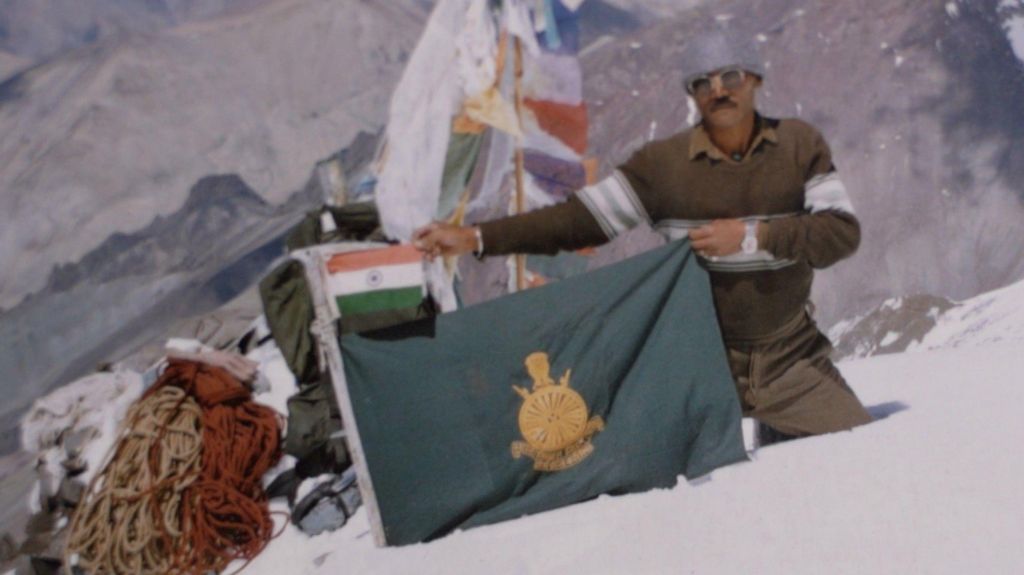
He’s been frozen on Everest for 30 years, now ‘Green Boots’ may finally be coming home
For nearly 30 years, a frozen body tucked into a rock overhang just 350 vertical meters below Mount Everest’s summit has served as one of the mountain’s most haunting and recognizable landmarks. Known universally by the distinctive lime-green mountaineering boots it has worn since the 1996 blizzard that killed its owner, “Green Boots” has guided countless climbers toward the peak of the world’s highest mountain, a grim reminder of the cost of conquering Everest. Now, three decades after the tragedy that claimed his life, Indian authorities are preparing to launch an unprecedented high-risk recovery mission to bring the remains — now confirmed to belong to Indian climber Dorje Morup — home to his waiting family.
Morup, a 48-year-old lance corporal with the Indo-Tibetan Border Police (ITBP), was an experienced Himalayan mountaineer who had already summited Stok Kangri, the highest peak in India’s Ladakh range, when he joined a historic 1996 ITBP expedition. The team aimed to become the first Indian expedition to summit Everest from the treacherous northern slope, located on the Chinese-administered Tibetan side of the mountain, a far less popular and more dangerous route than the southern approach from Nepal.
The night before he departed his Ladakh home for the expedition, Morup made a promise to his wife, Konchak Yangskit: he would return a hero, and make India proud. He asked her to care for their children and wait for him at the airport on his return. But Yangskit carried a quiet premonition that night: she wondered if she would ever see him again.
When the expedition hit a brutal snowstorm mid-ascent, three of the six team members turned back early. Morup and two other climbers, Tsewang Smanla and Tsewang Paljor, pushed on, successfully reaching the 8,849-meter summit. Disaster struck as they began their descent, however, when a full blizzard engulfed the upper slopes, killing all three men. Like more than 300 other climbers who have died on Everest since record-keeping began, their bodies were left trapped in the mountain’s extreme altitude, where recovery was deemed impossible at the time. While the bodies of Smanla and Paljor were never located, Morup’s remains, identifiable by his bright green boots, settled into a stable snow cave at 8,500 meters — just inside what climbers call the “death zone,” where oxygen levels are one-third of those at sea level and temperatures can plummet to -40°C.
For decades, mountaineers assumed Green Boots was the remains of Tsewang Paljor. But new testimony from surviving 1996 expedition members, combined with analysis of the location of Morup’s final radio transmission, led Indian authorities to conclude the body is in fact Morup. A recent review of his climbing gear and clothing confirmed the preliminary identification, and ITBP has now spent years planning a mission to retrieve their former comrade. Officials say the goal is to confirm the identity via DNA testing and finally give Morup’s family the closure they have waited 30 years to receive.
“On some days, before I went to sleep, I would think that there’d be a knock on the door tonight and that when I opened, he would be there,” Yangskit, now in her mid-70s, told the BBC. “When he comes home, I will ask him: ‘Where were you all these years?’” For decades, Yangskit has refused to fully accept Morup’s death, because she never saw his body. “Even though we organised cremation prayers at home, my heart refused to believe he had died,” she said, through tears. “I didn’t see his dead body, so it was difficult for me to believe it.”
The recovery mission that will attempt to bring Morup home is one of the most complex and dangerous high-altitude recovery operations ever attempted on Everest. The body lies on the steep, underdeveloped northern slope, which lacks the helicopter evacuation infrastructure and support systems that exist on Nepal’s more popular southern side. Unlike the south, there is no option for emergency evacuation if the recovery team runs into trouble. Even in the mild spring climbing season, reaching 8,500 meters to retrieve a frozen body is a monumental challenge. Autumn, when ITBP hopes to complete the mission before September, brings far more unpredictable and dangerous weather.
Veteran mountaineers who have led prior recovery efforts say the operation will require a team of 10 to 12 experienced summit climbers just to fix support ropes to the recovery site. Frozen into the snow and encased in layers of ice, the body will weigh several times its original mass, and must be carried by hand down 1,000 meters of extremely steep, rocky terrain before it can be transferred to a helicopter or yak train for transport to India. The first 1,000 meters of descent, experienced Indian climber Kuntal Joisher noted, will be the most treacherous part of the entire mission, with logistical challenges that put the entire team at severe risk.
“The main thing is to not put Sherpa lives at risk for a dead body,” Joisher said. Most recovery operations on Everest cost between $40,000 and $80,000, a sum out of reach for most families of fallen climbers. This mission will be far more expensive, and is being fully funded by ITBP, which has never forgotten its fallen comrade. “We never forgot him. It was only a matter of time,” an anonymous ITBP official told BBC News Hindi.
For most fallen climbers left on Everest, authorities and local teams typically only move bodies out of sight of climbing routes, rather than undertaking the dangerous work of full recovery. For example, American climber Francys Arsentiev, known as the “Sleeping Beauty of Everest,” was only moved to a more private location on the mountain a decade after her death, rather than being brought down. But for Morup’s family, full recovery is the only way to finally close 30 years of uncertainty.
If the mission is successful, Morup’s eldest son Punchok Dorjai says the family will hold a public funeral near the Martyrs Park in Leh, the capital of Ladakh. “My father gave his life for the country and he should be remembered as a martyr,” Dorjai said, noting that his two fallen teammates deserve the same recognition. The family plans to display Morup’s famous green boots alongside his Chinese-issued Everest summit certificate in their home, as a permanent reminder of his legacy.
For the thousands of climbers who have passed Green Boots on their way to the summit over the past 30 years, the landmark has been a permanent part of Everest’s landscape. If the recovery mission succeeds, it will bring an end to one of the mountain’s most famous stories, and finally give a fallen hero the homecoming he promised 30 years ago.