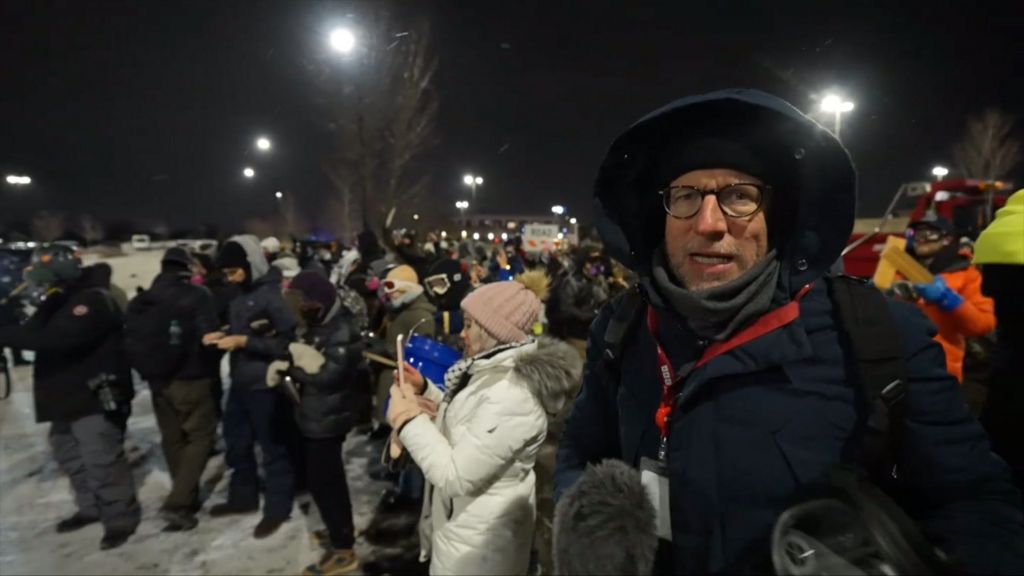
A prominent London hotel believed to be hosting senior U.S. immigration official Gregory Bovino became the focal point of demonstrations on Tuesday evening. Organized protest groups assembled outside the establishment, creating a cacophony of sound with drums and amplified chants directed at the visiting American dignitary. The demonstration, documented by BBC correspondent Tom Bateman, represents growing international dissent against Trump administration immigration policies. Bovino, whose exact itinerary remains unconfirmed by authorities, serves as a high-ranking official within U.S. Citizenship and Immigration Services. The targeted nature of the protest suggests carefully coordinated opposition to current American immigration enforcement strategies. Metropolitan Police maintained a visible presence throughout the event, though no incidents requiring intervention were reported. The demonstration highlights how U.S. domestic immigration policies continue to provoke strong reactions and diplomatic repercussions among allied nations.
作者: admin
-
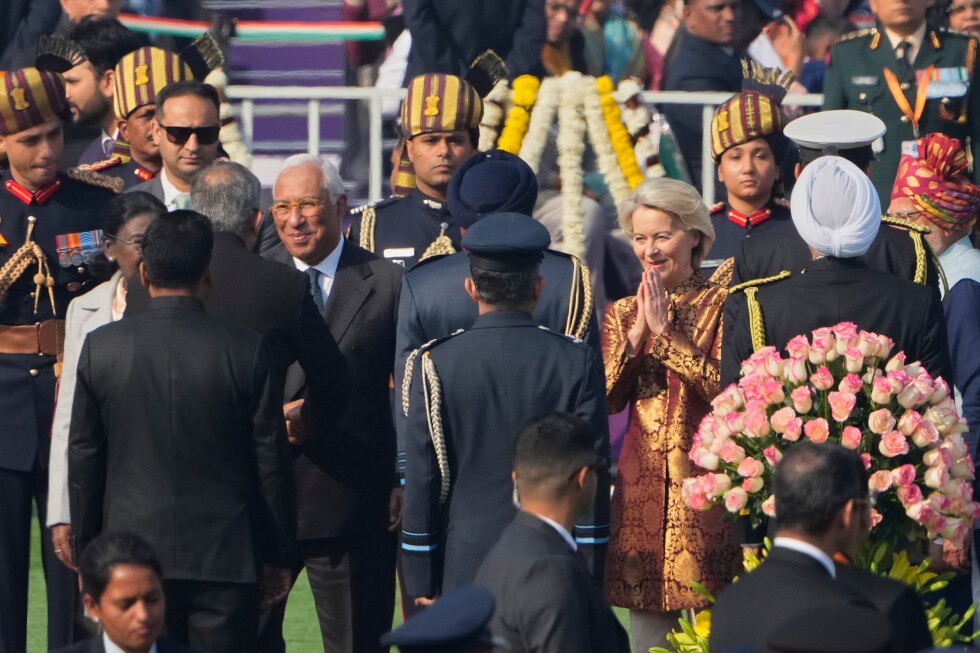
India’s prime minister says it has reached a free trade deal with the EU
In a landmark development for global trade, Indian Prime Minister Narendra Modi announced on Tuesday the successful conclusion of a comprehensive free trade agreement between India and the European Union. This monumental pact, affecting approximately two billion people across both economies, culminates sixteen years of complex diplomatic and economic negotiations.
The agreement, characterized by both parties as the ‘mother of all deals,’ establishes one of the world’s most significant bilateral trade frameworks. The partnership encompasses an extraordinary 25% of global GDP and accounts for approximately one-third of worldwide trade activity, creating substantial opportunities for businesses and consumers across both markets.
Prime Minister Modi revealed the breakthrough during a virtual address at an energy conference, emphasizing the transformative potential of the agreement. ‘This landmark accord will generate tremendous economic benefits and strengthen strategic cooperation between our nations,’ Modi stated, highlighting the agreement’s broad economic implications.
The timing of this agreement carries particular significance as both India and the EU face escalating trade tensions with the United States, which has imposed substantial import tariffs affecting both economies. These developments have disrupted traditional trade patterns and accelerated the pursuit of alternative economic partnerships among major global players.
The formal announcement was scheduled to occur later Tuesday through a joint declaration involving Prime Minister Modi, European Commission President Ursula von der Leyen, and European Council President Antonio Luis Santos da Costa. This high-level participation underscores the strategic importance both sides attribute to the agreement.
Analysts suggest this agreement could reshape global trade dynamics by creating a powerful economic bloc that balances against other major trading nations while establishing new standards for international commerce in the 21st century.
-
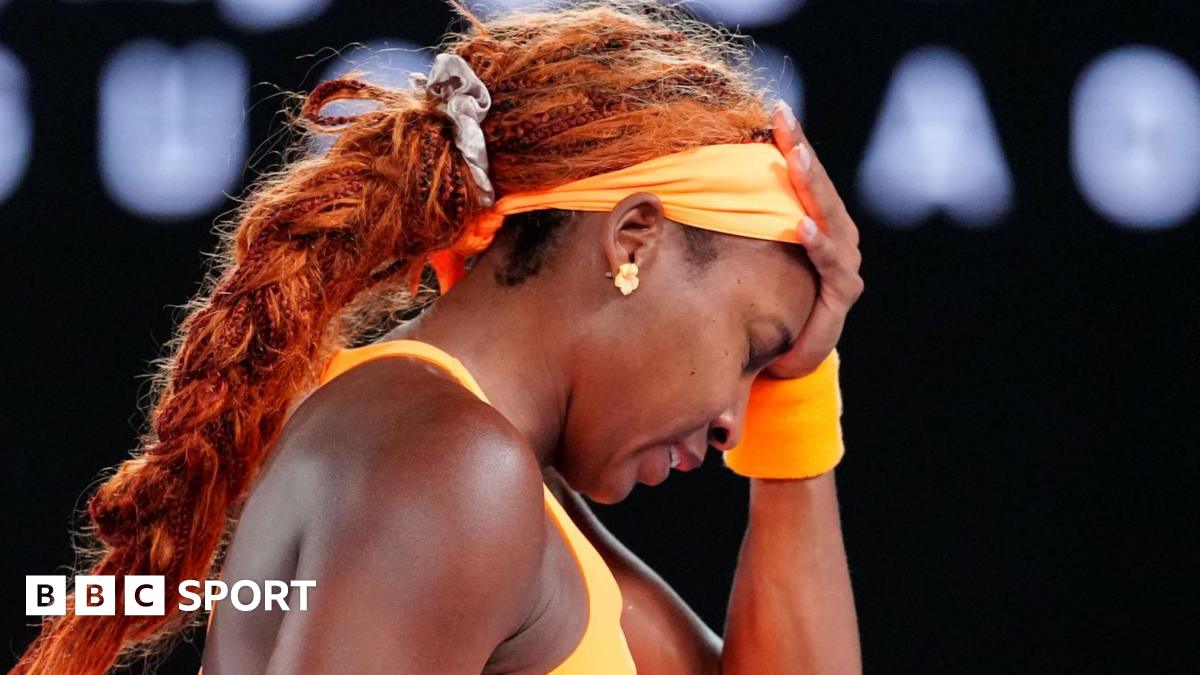
Gauff calls for more player privacy after racquet smash
In a stunning quarter-final upset at the Australian Open, world number three Coco Gauff suffered a devastating 6-1, 6-2 defeat to Ukraine’s Elina Svitolina, prompting a heated discussion about player privacy in professional tennis. The 21-year-old American, who captured the 2023 US Open and 2025 French Open titles, experienced one of her most challenging matches, committing 26 unforced errors and serving five double faults during the 59-minute contest.
The controversy emerged not from the match itself but from tournament broadcasters airing footage of Gauff’s emotional racquet smash in a players’ area she believed was private. This incident mirrors similar privacy concerns raised when Aryna Sabalenka was filmed destroying her equipment after losing the 2023 US Open final to Gauff.
‘I consciously attempted to retreat to spaces without cameras,’ Gauff explained in her post-match press conference. ‘Certain moments—like what happened to Aryna after our US Open final—shouldn’t be broadcast. The locker room remains our only truly private sanctuary during tournaments.’
Svitolina’s dominant performance propelled her to a maiden Australian Open semi-final against defending champion Sabalenka, who continued her relentless march toward a third Melbourne title with a commanding 6-3, 6-0 victory over teenage sensation Iva Jovic.
The privacy debate gained traction when former Wimbledon champion Pat Cash voiced support for Gauff’s position. ‘Cameras permeate every corner,’ Cash stated on BBC Radio 5 Sports Extra. ‘Players deserve quiet zones—their only refuge beyond hotel rooms. The current lack of privacy is fundamentally unacceptable.’
Gauff defended her emotional outburst as a necessary release mechanism: ‘I refuse to direct frustration toward my team. While I avoid such displays in front of young fans, emotional catharsis remains essential for competitors.’
Meanwhile, Sabalenka’s relentless form continues to impress. The Belarusian powerhouse has reached semi-finals in 14 of her last 17 majors and joins an elite group including Lindsay Davenport and Martina Hingis with eight consecutive Grand Slam semi-final appearances. Her scorching 10-match winning streak in 2026, without conceding a single set, establishes her as the overwhelming favorite for the title.
Jovic, despite her quarter-final exit, praised Sabalenka’s mental transformation: ‘Her ability to convert negative experiences into motivational fuel is truly inspiring.’
The tournament also faced physical challenges as Sabalenka’s match against Jovic concluded in extreme heat exceeding 40°C, triggering the Australian Open’s heat stress protocols and prompting roof closure on Rod Laver Arena.
-
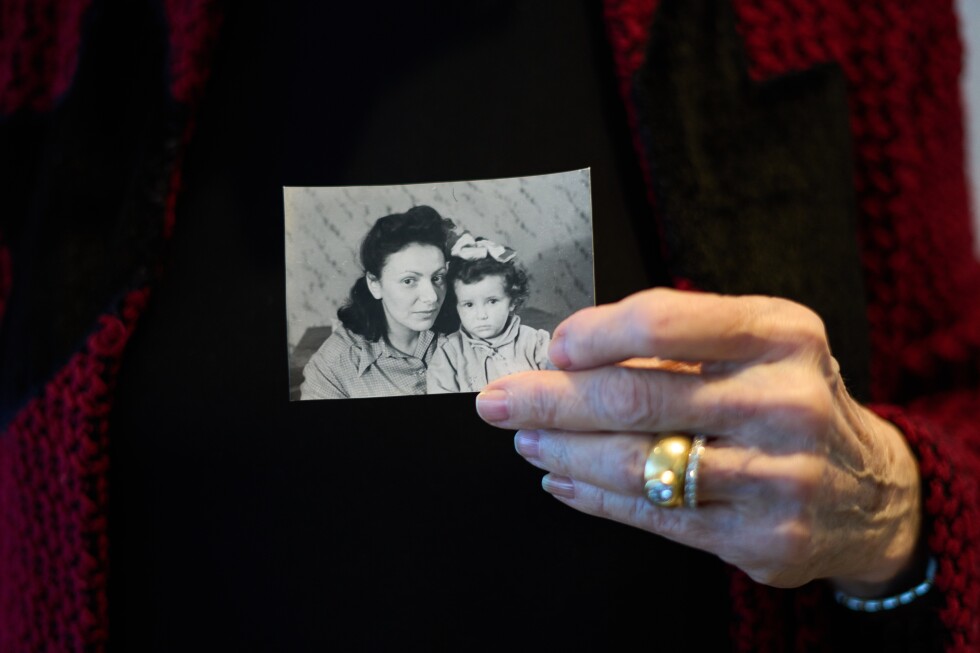
She was born in a concentration camp. A Holocaust survivor tells her story for the first time
TEL AVIV, Israel — Ilana Kantorowicz Shalem, among the youngest living Holocaust survivors at 81 years old, has chosen to break her lifelong silence by revealing an extraordinary story of survival that begins with her birth in the Bergen-Belsen concentration camp during the final days of World War II.
Her mother, Lola Kantorowicz, concealed her pregnancy amidst the horrific conditions of the camp, where widespread starvation made distended bellies commonplace. On March 19, 1945—just thirty days before British forces liberated the camp—Ilana was born as Russian troops advanced through Germany. Archivist Sima Velkovich of Yad Vashem described the circumstances as “unimaginable,” noting the camp was filled with “mountains of corpses” and thousands of desperately ill prisoners at the time.
Shalem’s survival represents a statistical miracle. Most infants born in concentration camps were immediately killed by Nazi authorities. Her existence only became possible because the Nazi leadership was in disarray during the war’s final weeks.
The backdrop to this revelation comes as the world prepares to observe International Holocaust Remembrance Day on January 27, the anniversary of the liberation of Auschwitz-Birkenau. This year’s commemorations occur amidst rising global antisemitism following the Israel-Hamas conflict.
Shalem’s parents, Lola Rosenblum and Hersz (Zvi) Abraham Kantorowicz, first met as teenagers in the Tomaszow Ghetto in Poland. They maintained a clandestine relationship through multiple labor camps after being separated from their families. Though they married informally in the ghetto, they were ultimately separated in 1944. Hersz perished in a death march just days before the war’s end.
Lola survived Auschwitz, the Hindenburg labor camp, and a death march to Bergen-Belsen while pregnant. “If they discovered she was pregnant, they would have killed her,” Shalem explained. “She hid her pregnancy from everyone, including her friends, because she didn’t want the extra attention or anyone to give her their food.”
Following liberation, baby Ilana became a symbol of hope in the displaced persons camp. “Actually, I was everyone’s child,” Shalem recalled. “For them, it was some kind of sign of life.” Photographs from the period show a healthy infant surrounded by adoring adults who saw her as “a new seed” of hope.
Shalem noted that discussing Holocaust experiences was largely taboo in Israeli society during the 1960s when she first began asking her mother questions. “Now we know, in order to absorb trauma, we need to talk about it,” she said, contrasting this with the immediate public sharing by survivors of the October 7 Hamas attacks.
The decision to share her story comes as Holocaust survivors dwindle in number. According to the Claims Conference, approximately 196,600 survivors remain alive today, with nearly half residing in Israel. Nearly 25,000 survivors passed away last year alone, with the median age now 87.
Shalem, who has two daughters, reflects on her mother’s extraordinary strength: “It’s a situation that was very unusual, it probably required special strength to be able to believe. She said that one of the things was that if she had known my father was killed, she wouldn’t have tried so hard. She wanted him to know me.”
-
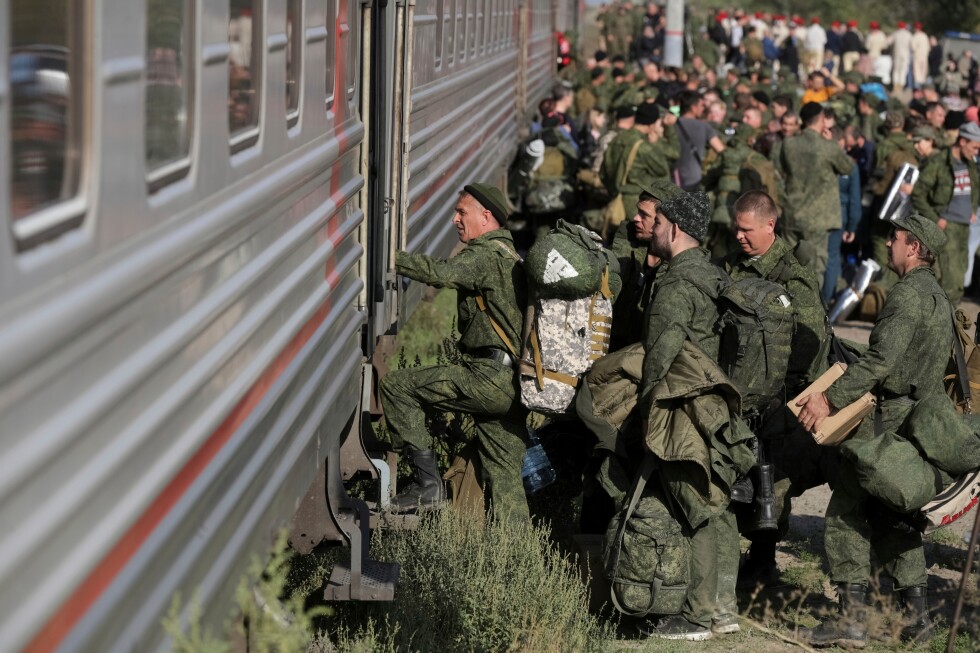
Russia offers cash bonuses, frees prisoners and lures foreigners to replenish its troops in Ukraine
Russia has developed a multi-pronged recruitment strategy to sustain its military operations in Ukraine while avoiding another politically risky nationwide mobilization. The Kremlin’s approach leverages substantial financial incentives, immigration benefits, and questionable recruitment practices to maintain troop levels in the nearly four-year conflict.
For Russian citizens, military service offers unprecedented economic rewards. Regional authorities provide enlistment bonuses reaching approximately $50,000 in some areas—more than double the average annual income. Additional benefits include tax breaks, debt relief, and extensive perks. Despite claims of voluntary enlistment, reports indicate conscripts and prisoners face coercion to sign contracts that automatically extend indefinitely, contrary to initial fixed-term representations.
The recruitment net extends globally, targeting foreign nationals through accelerated citizenship programs and deceptive employment schemes. Citizens from India, Nepal, Bangladesh, South Africa, Iraq, Cuba, and Kenya have reported being misled into military service by traffickers promising legitimate jobs. North Korea contributed thousands of soldiers following a 2024 mutual defense treaty with Moscow, primarily deployed to defend Russia’s Kursk region.
President Vladimir Putin maintains that 700,000 troops are currently deployed in Ukraine, though independent verification remains impossible. British defense officials estimate over 1 million Russian casualties, while Mediazona and BBC researchers have documented more than 160,000 fatalities, including at least 550 foreigners from two dozen countries.
The strategy carries significant economic consequences. Analysts note that recruitment has become “extremely expensive” for Russia’s slowing economy, with foreign nationals particularly vulnerable due to language barriers, lack of military experience, and being considered “dispensable” by commanders. Despite these challenges, recruitment numbers reportedly remained strong throughout 2023-2024, with Putin claiming over 400,000 voluntary enlistments last year.
-
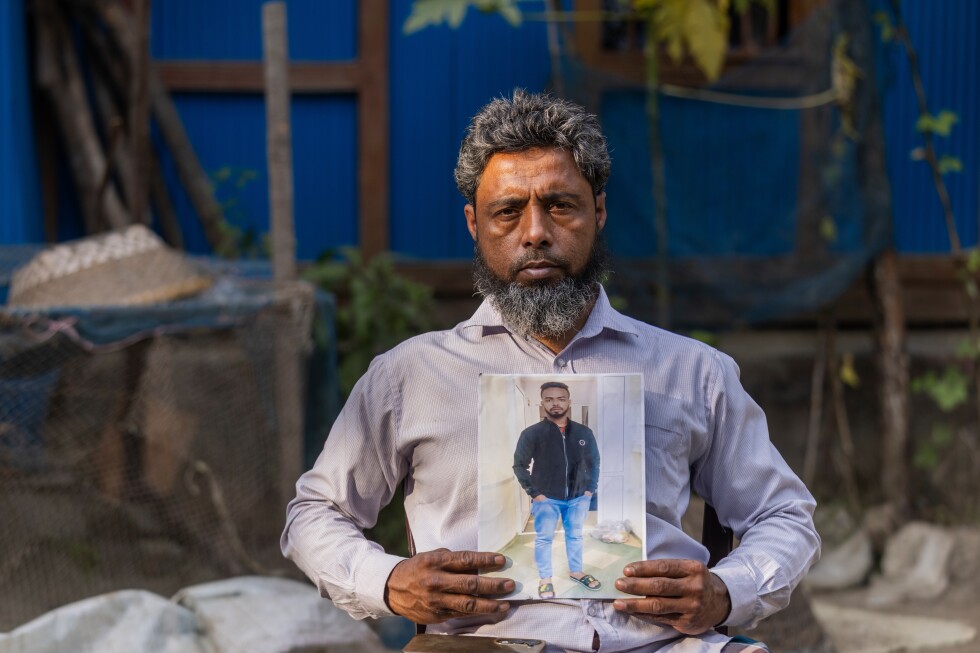
Takeaways from AP’s report on how Bangladeshi workers were tricked into fighting in the Ukraine war
An extensive investigation by the Associated Press has uncovered a systematic scheme wherein Bangladeshi laborers were fraudulently recruited for civilian positions in Russia, only to be coerced into active military participation in the Ukraine conflict. The findings, based on firsthand accounts from survivors and documentation from affected families, reveal a disturbing pattern of human trafficking disguised as employment opportunities.
Three escaped workers—Maksudur Rahman, Mohan Miajee, and Jehangir Alam—provided chilling testimonies of their ordeal. They described being manipulated into signing Russian-language military contracts under false pretenses, followed by compulsory basic training in combat techniques and drone operations. Subsequently, they were forced to perform high-risk duties including frontline supply transport, casualty evacuation, and body recovery operations. Some reported being utilized as human shields in active combat zones.
Labor recruiters specifically targeted economically vulnerable communities in Bangladesh, promoting attractive employment opportunities as cooks, cleaners, and launderers within Russian military installations. These offers included false promises of eventual Russian residency. Many victims incurred substantial debts or liquidated assets to cover processing fees administered by the now-defunct recruitment agency SP Global.
While the precise number of affected individuals remains undetermined, evidence suggests potentially hundreds of Bangladeshi nationals may have been involuntarily conscripted. Bangladeshi police investigations indicate approximately forty citizens may have perished in combat operations.
Authorities in Bangladesh have initiated trafficking investigations targeting networks operated by local intermediaries with connections to Russian officials. The probe began following January 2025 testimony from a returnee who exposed the fraudulent recruitment practices. This led to the identification of nine additional victims and criminal charges against a key operative—a dual Bangladeshi-Russian national residing in Moscow.
The Russian Defense Ministry and Bangladeshi government authorities have not responded to repeated requests for commentary regarding these allegations.
-
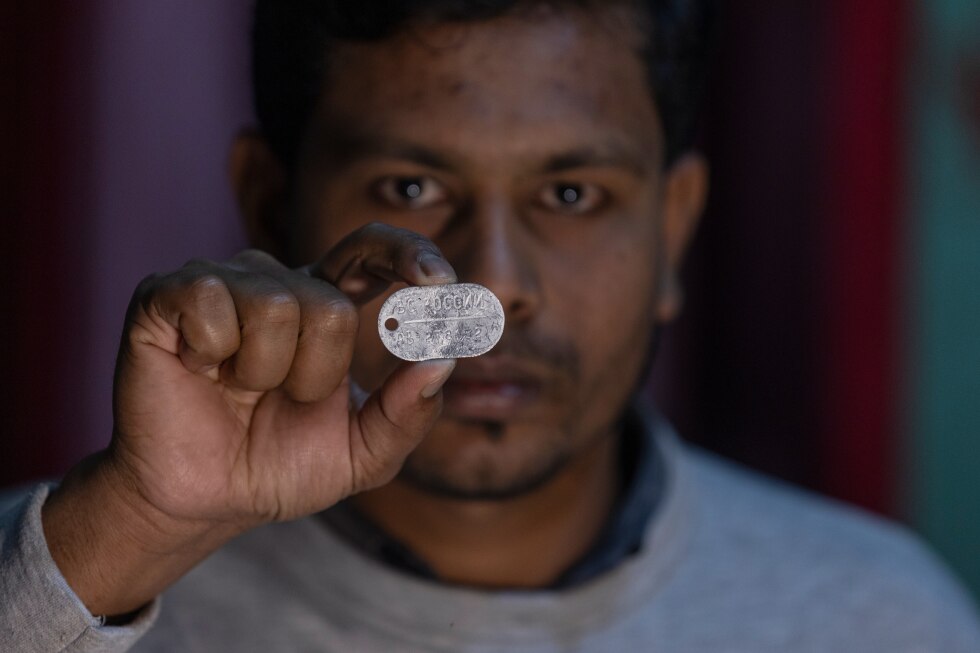
Bangladeshi workers lured to Russia for jobs were forced to fight in the war in Ukraine
An extensive investigation by The Associated Press has uncovered a systematic pattern of human trafficking wherein Russian military operatives and labor recruiters are deliberately deceiving Bangladeshi nationals into combat roles in Ukraine under false pretenses of civilian employment.
The scheme begins with aggressive recruitment in Bangladesh’s impoverished regions, where brokers promise lucrative salaries of $1,000-$1,500 monthly for non-combat positions such as janitors, chefs, and laundry attendants in Russia. Desperate workers often take substantial loans—up to $9,800—to pay broker fees, viewing overseas employment as their only economic opportunity.
Upon arrival in Moscow, victims are immediately coerced into signing Russian military contracts they cannot comprehend. Subsequently transported to military facilities, they receive abbreviated combat training—typically just three days—covering weapons handling, drone warfare, and medical evacuation procedures before being deployed to frontlines.
Multiple eyewitness accounts describe brutal treatment: recruits face severe beatings, torture with shovels, confinement in basement cells, and threats of imprisonment or execution for non-compliance. They are systematically positioned ahead of Russian forces during advances, forced to transport supplies under fire, and retrieve casualties amid intense drone warfare.
The scale of this trafficking operation remains unclear, though witnesses report observing hundreds of South Asian combatants alongside Russian units. Similar recruitment patterns have emerged targeting vulnerable populations in India, Nepal, and African nations.
Bangladeshi authorities have initiated investigations, uncovering intermediary networks with connections to Russian government entities. At least 40 Bangladeshi nationals are believed to have perished in combat, though official confirmation remains elusive as both Russian and Bangladeshi governments have declined to respond to inquiries.
Families of missing personnel cling to documents—military contracts, visa papers, and dog tags—as potential evidence for repatriation efforts. Meanwhile, advocacy organizations like BRAC have identified at least 10 confirmed cases and suspect many more unreported instances of coerced military service.
This exploitation highlights broader systemic issues: Russia’s deliberate targeting of economically vulnerable populations to supplement its military manpower, and the inadequate protections for migrant workers caught in geopolitical conflicts beyond their comprehension or consent.
-
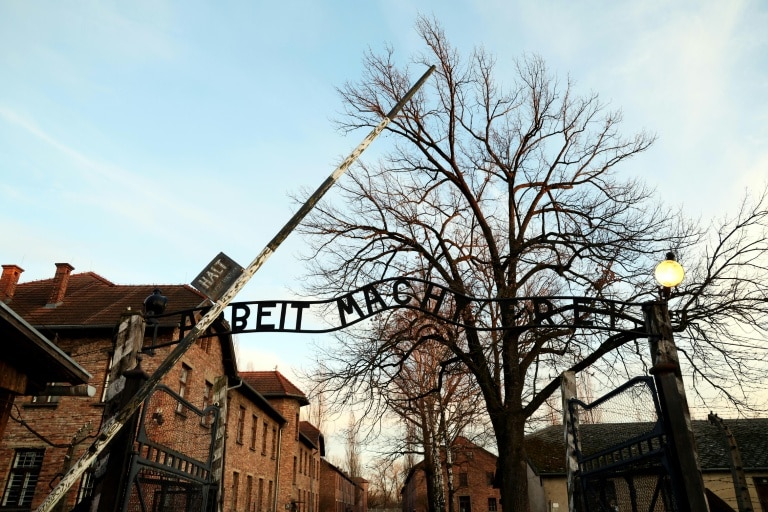
Clickbait and ‘AI slop’ distort memory of Holocaust
On International Holocaust Remembrance Day, historians and memorial foundations are sounding alarms about the proliferation of AI-generated content that systematically distorts the historical record of Nazi atrocities. This synthetic media, ranging from fabricated images of concentration camp prisoners to entirely invented victim narratives, has flooded social media platforms with alarming frequency.
Fact-checking organizations have documented a substantial surge in these digitally fabricated representations, which include emotionally manipulative imagery such as an emaciated, blind man standing in snow at Flossenbuerg concentration camp and a fictional young girl named Hannelore Kaufmann presented as an Auschwitz victim. These creations emerge from content farms exploiting the Holocaust’s emotional impact for maximum engagement and minimal effort.
Memorial directors note these fabrications serve dual purposes: some generate clickbait revenue through monetization programs, while others advance political agendas by deliberately diluting historical facts, shifting perpetrator-victim dynamics, and promoting revisionist narratives. Particularly concerning are images depicting well-fed prisoners that subtly suggest concentration camp conditions were tolerable.
The consequences extend beyond digital misinformation. Memorial staff report increasingly confrontational behavior from visitors influenced by this content, including Hitler salutes and dismissive comments about Holocaust severity—particularly among younger demographics from regions where far-right ideologies have gained dominance.
Despite urgent appeals from memorial foundations requesting platform intervention under EU Digital Services Act obligations, most American social media giants have remained unresponsive. Only TikTok has acknowledged the issue, proposing monetization exclusion and automated verification measures. As AI technology advances exponentially, experts warn the ethical crisis surrounding historical distortion requires immediate societal response and responsible technological standards.
-

Japan’s beloved last pandas leave for China as ties fray
Tokyo’s Ueno Zoological Gardens bid an emotional farewell to its giant panda residents Lei Lei and Xiao Xiao on Tuesday, marking Japan’s first panda-free period in half a century. The four-year-old twins, born and raised at the prestigious zoo, commenced their journey to China via specialized transport vehicles, leaving behind devoted fans who gathered for final glimpses of the beloved bears.
The departure coincides with escalating diplomatic strains between the Asian powers, triggered recently by Japanese Prime Minister Sanae Takaichi’s comments regarding potential military intervention concerning Taiwan. Beijing, considering Taiwan part of its sovereign territory, responded with visible diplomatic displeasure. Although the pandas’ repatriation occurs approximately one month before their official loan period concludes in February, the timing appears strategically significant within broader bilateral tensions.
Since the normalization of Sino-Japanese relations in 1972, giant pandas have served as charismatic ambassadors under China’s distinctive ‘panda diplomacy’ program. These charismatic mammals have consistently drawn massive crowds, generating substantial revenue and cultural goodwill for hosting nations. Despite Japan’s expressed interest in securing a new panda pair, recent polling by Asahi Shimbun indicates 70% of Japanese citizens oppose further negotiations with China regarding additional panda leases.
Final viewing sessions at Ueno Zoo were limited to lottery-selected visitors, though numerous dedicated admirers without tickets assembled outside the facility wearing panda-themed apparel and carrying memorabilia. Concurrently, China has issued travel advisories cautioning citizens against visiting Japan citing security concerns, while reportedly restricting exports of rare-earth minerals critical for Japanese manufacturing sectors.
Academic perspectives suggest caution in interpreting the panda recall as purely political retaliation. Professor Masaki Ienaga, an East Asian relations specialist at Tokyo Woman’s Christian University, noted that China routinely rotates pandas internationally and their diplomatic value often manifests in deployment timing rather than removals. He emphasized that while multiple nations employ charismatic fauna in diplomatic engagements, pandas possess unique economic and soft power advantages due to their immense popularity and revenue-generating capabilities.
-
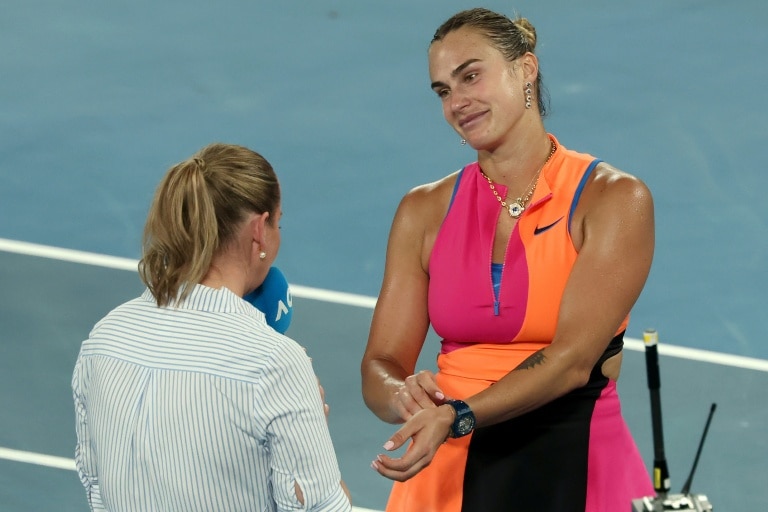
Sabalenka ‘does not understand’ Australian Open fitness tracker ban
Reigning world number one Aryna Sabalenka has publicly expressed bewilderment over the Australian Open’s prohibition of wearable fitness technology during competitive matches. The Belarusian tennis star revealed she was instructed to remove her WHOOP performance tracker shortly before her first-round match in Melbourne.
This regulatory clash highlights a significant discrepancy between Grand Slam tournaments and regular WTA/ATP tour events, where such health monitoring devices receive full authorization. Sabalenka emphasized that players had received prior approval from the International Tennis Federation (ITF), creating confusion about the Grand Slam’s divergent stance.
‘We received official confirmation from the ITF permitting these devices,’ Sabalenka stated following her victory. ‘I was unaware that Grand Slam organizers had reached a different conclusion. Throughout the competitive season, we consistently utilize WHOOP technology across WTA tournaments to monitor physiological metrics.’
The controversy extends beyond Sabalenka, affecting other top competitors including Carlos Alcaraz and Jannik Sinner. The Italian player elaborated on the practical applications, noting: ‘The data collection isn’t for real-time analysis but rather for post-match evaluation of physical exertion, stress responses, and cardiovascular performance.’
Tournament officials acknowledged ongoing discussions regarding potential policy revisions but provided no substantive explanation for the current ban. This technological limitation prevents athletes from gathering crucial biometric data including heart rate variability, recovery metrics, and exertion levels during some of tennis’s most physically demanding matches.
The situation underscores growing tensions between athletic technological advancement and traditional tournament regulations, raising questions about how governing bodies will adapt to increasingly data-driven training methodologies in professional sports.