作者: admin

  • World Cup 2026: Iran’s spirited display against New Zealand eases tensions among divided supporters

    World Cup 2026: Iran’s spirited display against New Zealand eases tensions among divided supporters

    For decades, Iran’s national football squad, popularly known as Team Melli, stood as one of the rare unifying forces cutting across Iran’s deep political, social and generational divides. From the 1998 World Cup upset over the United States that sent entire cities of Iranians at home and abroad into street celebrations to tournament runs that drew cross-spectrum backing from both government supporters and opposition figures, the national side once united Iranians of all backgrounds for 90 minutes of sport.

    That historic unity began to fray as political polarization seeped into global football, most dramatically at the 2022 Qatar World Cup. Just weeks before that tournament erupted nationwide protests across Iran following the death of 22-year-old Mahsa Amini in morality police custody, sparked by anger over the country’s mandatory hijab laws. When Iran took the pitch against England in their opening group match, players refused to sing the official national anthem in a gesture of solidarity with protesters, but the anthem was still loudly booed by anti-government fans in the stands. For many diaspora Iranians who had previously set political disagreements aside to support the team, this moment permanently changed their relationship with the squad.

    In the years that followed that fracturing tournament, Iran has undergone profound upheaval: crippling economic sanctions have gutted household incomes, ongoing political unrest has reshaped daily life, and a February 2024 joint US-Israel strike that killed senior Iranian officials also claimed the lives of 168 schoolchildren and teachers in the southern city of Minab. Ahead of this year’s global tournament preparations, the Iranian Football Federation made a gesture of mourning: dedicating the team’s campaign to the children killed in Minab, requiring players to wear lapel pins marked with the number 168 in official photos, and holding portraits of the victims and children’s schoolbags during pre-match national anthem ceremonies for warm-up friendlies.

    When the team scheduled pre-tournament friendlies in the United States, long-standing visa restrictions imposed by the US government on Iranian teams created immediate barriers. Two planned matches in Los Angeles, a city home to more than 700,000 Iranian-Americans and a major hub of anti-Islamic Republic sentiment, were thrown into chaos when US officials forced the team to relocate its training camp to Tijuana, Mexico. Even when the team arrived in Inglewood for a high-profile friendly against New Zealand at SoFi Stadium, political tensions continued to overshadow preparations. FIFA, which controls all stadium access and rules for World Cup-related events, revoked the Iranian Football Federation’s allocated 8 percent of stadium tickets at the last minute, a decision the federation blamed squarely on US political interference. Bans on pre-revolutionary Lion and Sun flags and political protest symbols inside the stadium were also enforced, despite a legal challenge from local community activists that was ultimately dismissed.

    Heading into kickoff, few could predict how the crowd would react. Anti-government voices dominated public discourse online and in regional media, and a small protest greeted the team upon its arrival in LA. But inside the 70,000-seat stadium, the energy defied expectations. When the national anthem played, cheers from pro-Team Melli fans easily outnumbered boos. Every attacking move from the Iranian side drew loud, unified encouragement. When New Zealand scored an early opening goal, a hush fell over pro-Iranian sections – but that tension turned to eruption when fullback Ramin Rezaeian slotted home an equalizer in the 32nd minute.

    The connection between the squad and the crowd only grew stronger in the second half. After New Zealand retook the lead, supporters launched a steady chant of “Iran, Iran” that lifted the team, and striker Mohammad Mohebi leveled the score once again with a well-placed header off Rezaeian’s cross. Though the match ultimately ended in a 2-2 draw with no late winner for Team Melli, the moment carried enormous symbolic weight. After four years of deep polarization, political upheaval, and global tensions that have split Iranian communities abroad, a spirited, competitive performance on US soil won over the majority of fans in attendance.

    For fans like Hossein Alizadeh, a 40-year-old supporter who traveled from Toronto to attend the match, the outcome was more than just a draw. “Team Melli is an institution that belongs to all Iranians, no matter what their political beliefs are,” he said ahead of kickoff. “I want them to do well and bring back that love people used to share for the national team.” The team will get another chance to build on this moment when it faces off against Belgium in southern California on Sunday.

  • Rights groups call for a halt of AI tech use in the military

    Rights groups call for a halt of AI tech use in the military

    A broad coalition of more than 100 global human rights organizations and technology activists has issued an urgent warning about the accelerating integration of artificial intelligence into military operations, pointing to Israel’s military campaign in Gaza as a catastrophic and dangerous precedent for the future of warfare. The joint statement, signed by prominent groups including Amnesty International, Access Now and the Stop Killer Robots Campaign, warns that expanding AI’s role in end-to-end military kill chains carries severe risks of escalating civilian casualties and eroding mechanisms for holding perpetrators of violence accountable for human rights violations.

    The coalition specifically highlights the widespread deployment of AI-powered targeting systems by the Israeli military during its ongoing operations in Gaza, where more than 73,000 Palestinians have been confirmed killed, with thousands more still trapped and presumed dead beneath the rubble of destroyed residential and infrastructure sites. Three AI tools in particular — named Lavender, Gospel, and Where’s Daddy — have been leveraged to generate air strike targeting lists, drawing on massive Israeli mass surveillance datasets collected on Palestinian residents of Gaza. Rights groups argue that this AI-driven targeting process, which selects targets with little to no active human oversight, is a key contributing factor to the unprecedented scale of death and displacement in the territory.

    “The adoption of AI targeting systems in this campaign follows the example of the Israeli government’s weaponisation of data analysis and machine learning tools, powered by mass surveillance, in its genocidal attacks on Gaza,” the statement reads. “By diluting human responsibility for life-and-death decisions, Israel’s use of systems such as Lavender, Gospel, and Where’s Daddy may contribute to the obfuscation of international crimes behind a veneer of perceived algorithmic objectivity while also obfuscating accountability.”

    The coalition has issued a clear call to action for global technology companies to immediately end all provision of AI and related technical support to the Israeli military and other state armed forces, warning that unregulated deployment risks normalizing and accelerating the proliferation of AI-powered tools of war. In recent years, many of the world’s largest technology firms have deepened their institutional ties to military establishments, particularly the U.S. Department of Defense (DoD). OpenAI has publicly confirmed it provides AI services to the DoD, while Google holds a DoD contract to “develop prototype frontier AI capabilities to address critical national security challenges across warfighting and enterprise domains.” Microsoft, Google, and Amazon have also all secured contracts to provide cloud data storage, processing capacity, and other core enterprise infrastructure to support the DoD’s warfighting programs.

    These corporate military partnerships have triggered significant internal backlash from technology workers, who fear they are being forced to participate in projects that enable human rights abuses. Last month, hundreds of employees at Google DeepMind’s UK artificial intelligence division voted overwhelmingly to unionize, driven by growing concerns over the company’s technology being used by the U.S. for military action against Iran and by Israel against Palestinians in Gaza. UK-based DeepMind staff formally requested that Google management recognize the Communication Workers Union (CWU) and Unite the Union as their official workplace representatives, a move organizers say marks the first unionization drive at a major global frontier AI research lab. In the internal vote among CWU members at DeepMind, 98 percent of participants supported the unionization push. Beyond union representation, DeepMind workers are demanding an end to the use of Google AI by Israel and the U.S. military, the restoration of a previously scrapped corporate commitment not to develop AI-powered weapons or surveillance tools, the creation of an independent ethics oversight body to review high-risk projects, and formal legal protection for workers who refuse to participate in projects on moral grounds.

  • Struggling Pizza Hut chain to be sold for $2.7bn

    Struggling Pizza Hut chain to be sold for $2.7bn

    After years of sliding sales and mounting competitive pressure in the global pizza market, Yum! Brands has finalized a $2.7 billion deal to offload its underperforming Pizza Hut brand, splitting the acquisition between two separate buyers.

    Private equity firm LongRange Capital will take over Pizza Hut operations outside of mainland China for $1.5 billion, while Yum China Holdings, an independent affiliate of Yum! Brands, will acquire the chain’s mainland Chinese business for an additional $1.2 billion. Notably, Yum! Brands will retain ownership of UK-based Pizza Hut locations, which it only took back into direct control less than a year ago.

    In a statement announcing the deal, Yum! Brands Chief Executive Chris Turner expressed confidence that the new ownership structure would set Pizza Hut up for a successful turnaround. “Under LongRange and Yum China, Pizza Hut will be well positioned for future growth with ownership that brings deep expertise in the restaurant industry,” Turner said, adding that the iconic brand has played an foundational role in Yum! Brands’ corporate history.

    The sale comes after more than a year of strategic review, following multiple consecutive quarters of falling same-store sales in Pizza Hut’s largest market, the United States. The U.S. accounts for 40% of the chain’s total international sales, making its weak performance there a major drag on Yum! Brands’ overall results. Yum! first publicly confirmed it was exploring a potential sale of the brand in November 2025.

    Pizza Hut’s declining market share stems from multiple overlapping challenges that have reshaped the competitive landscape, widely referred to as the modern “pizza wars.” Intensifying competition from major national rivals including Domino’s, Papa John’s, and Little Caesars has eaten into Pizza Hut’s customer base, with competitors using aggressive discounting to attract budget-conscious shoppers at a time of persistent sticky inflation. Beyond the big national chains, smaller, more agile mid-sized regional pizza brands have also chipped away at Pizza Hut’s market share by adapting more quickly to shifting consumer preferences for crust styles, toppings, and ordering experiences. The explosive growth of third-party food delivery apps has also flooded the market with new competitors, eroding the brand advantage Pizza Hut held for decades in delivery and takeout.

    Founded in 1958 by two brothers in Wichita, Kansas, Pizza Hut has a long history under corporate ownership. It was first acquired by PepsiCo in 1977, before being spun off along with KFC and Taco Bell to form what is now Yum! Brands in 1997.

    The decision to retain UK operations follows a collapse of the previous franchisee last year. In October 2025, DC London Pie, the operator of UK Pizza Hut dine-in locations, entered administration, forcing the immediate closure of 68 outlets and putting more than 1,200 jobs at risk. Yum! Brands stepped in to acquire the assets, saving 64 locations and most of the at-risk positions in a rescue deal.

    For Yum! Brands, the divestment of most global Pizza Hut operations is part of a broader strategic shift to streamline its business and redirect corporate resources to its higher-performing core brands: KFC and Taco Bell.

    Both transactions are expected to be finalized in the third quarter of 2026, pending completion of standard regulatory approval processes.

  • German broadcaster removes TV intro after Elon Musk takes legal action

    German broadcaster removes TV intro after Elon Musk takes legal action

    A major controversy has erupted after Germany’s leading public broadcaster ZDF was forced to retract and remove a misleading segment from a primetime news program that falsely claimed tech billionaire Elon Musk directly called for anti-migrant hunts amid post-attack unrest in Northern Ireland. The incident comes against a backdrop of rising international tension over social media’s role in amplifying divisive discourse around migration, an issue that has become increasingly politically charged across both Europe and North America.

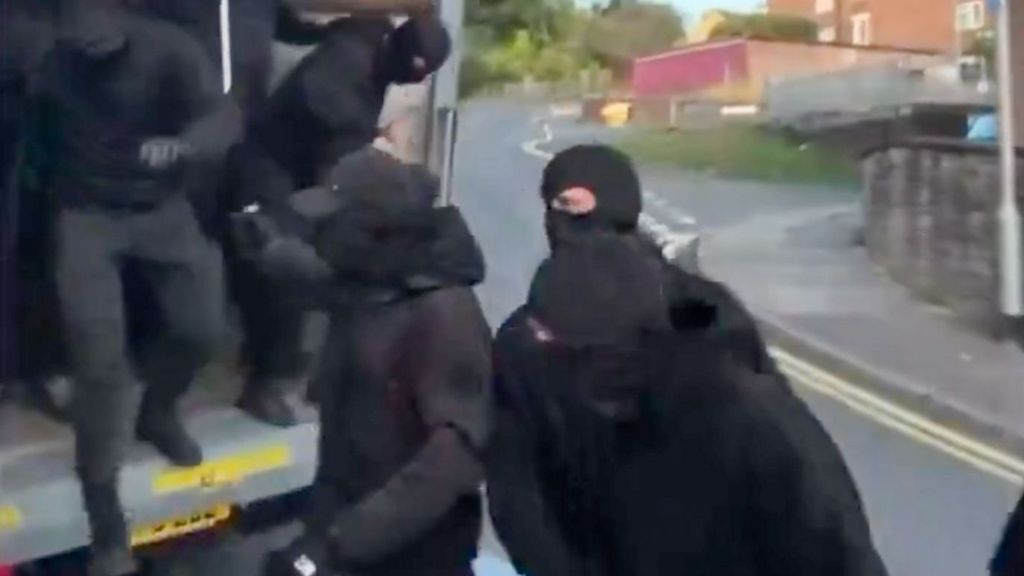
    The unrest that sparked the report began in Belfast last week, shortly after a brutal street knife attack left a victim seriously wounded — court documents confirm the victim lost their left eye in the assault. Police quickly took a Sudanese man into custody at the scene, and he has since been remanded in custody on charges of attempted murder. The attack triggered widespread violent disorder in the city, with rioters setting fire to residential properties and vehicles, drawing global media attention to the escalating tensions in Northern Ireland.

    Migration has emerged as one of the most polarizing political issues in Germany in recent years, making the Belfast unrest a natural topic for national news coverage. On June 12, ZDF’s flagship live news magazine *ZDFheute Live* aired a segment framed around the question “How Musk is fuelling the protests.” In the opening introduction of the segment, which has since been deleted, the program’s presenter made the unsubstantiated claim: “A brutal attempted murder on a public street in Belfast. Someone takes a video which goes viral. Following that, a racist mob is hunting migrants. The call for that came from a British right-wing extremist and tech billionaire Elon Musk.”

    This claim misrepresents the actual sequence of events. British far-right activist Tommy Robinson shared posts about planned protests on Musk’s social media platform X on June 9, writing that “the whole of the United Kingdom is hitting the streets tonight at 7pm following yet another invader attack on our people.” Robinson has himself denied ever explicitly calling for rioting. Musk did quote Robinson’s post and add his own comment: “Only by protesting REPEATEDLY and LOUDLY will there be any change!!” He never issued a personal call to hunt migrants, contrary to ZDF’s original wording.

    The false claim was brought to widespread public attention by Julian Reichelt, a prominent German journalist who heads the newer media outlet NiUS, which is often compared to conservative-leaning outlets like UK’s GB News and US’s Fox News. After Reichelt highlighted ZDF’s inaccurate reporting, Musk responded publicly, confirming he was moving forward with legal action against the public broadcaster over what he called “outrageous lies.”

    Through his German legal team, Musk issued a formal cease and desist demand to ZDF. In a public statement to the BBC on Tuesday, a ZDF spokesperson confirmed the network had complied with the demand, removing the contested passage from the segment’s introduction. The spokesperson added that ZDF had already added a corrective transparency notice to the broadcast as early as Saturday, before fully removing the inaccurate wording, and acknowledged the original language had been “imprecise and therefore misleading.” In its formal clarification, ZDF confirmed the correct facts of the incident: it was Tommy Robinson who called for protests following the Belfast knife attack, and the post was only shared and amplified by Musk.

    This incident is far from an isolated controversy for Musk, who owns not just X but also leading tech firms Tesla and SpaceX, and counts more than 240 million followers on his social media platform. He has faced repeated accusations from political leaders and digital watchdog groups of using his massive online platform to inflame social tensions and spread disinformation around migration. Most recently, UK Prime Minister Sir Keir Starmer accused Musk of attempting to “whip up division” surrounding the death of 18-year-old student Henry Nowak, who died in Southampton after being stabbed by Vickrum Digwa, who falsely claimed he had been the victim of a racist attack.

    Musk has forcefully pushed back against these accusations. In a post on X dated June 10, shortly after the Belfast attack, he wrote that it was “murderous migrants targeting innocent people in their home town that is making people angry, not ‘social media!’”

    Watchdog groups have continued to criticize Musk’s role in the unrest. The US-based Centre for Countering Digital Hate recently released an assessment concluding that social media played a “significant role” in fuelling the Belfast violence, and alleged that Musk had intentionally “amplified anti-migrant narratives” promoted by far-right actors, extending their reach to millions of global users.

  • Photos prove London event marketed illegal Israeli settlement properties

    Photos prove London event marketed illegal Israeli settlement properties

    A contentious real estate exhibition hosted at a UK synagogue has ignited widespread legal and political scrutiny, after new documentation revealed multiple Israeli firms openly advertised residential properties in illegal Israeli settlements across occupied Palestinian territory. The Great Israeli Real Estate Event, held Sunday at London’s Edgware United Synagogue, is now the subject of three separate official probes following the release of promotional materials obtained by Middle East Eye (MEE).

    Within 24 hours of the event closing, UK Foreign Secretary Yvette Cooper confirmed that government ministers had formally requested the UK’s Advertising Standards Authority (ASA) launch an urgent investigation into the exhibition’s activities. This official action came after MEE published first-hand evidence of the illegal settlement advertising on Monday.

    The same day, the International Centre of Justice for Palestinians (ICJP), a London-based legal advocacy group focused on Palestinian rights, submitted a formal complaint to the Charity Commission for England and Wales, the UK’s official charity regulator. The complaint targets Edgware United Synagogue itself, a registered charity, for its decision to host the event. The ICJP stated it holds irrefutable documented proof that multiple participating exhibitors marketed residential properties located exclusively in Israeli settlements built illegally on occupied Palestinian land, and is calling for an immediate regulatory compliance case to be opened against the synagogue and its trustees. In the complaint, the group argues that hosting an event that promotes illegal settlement property amounts to a clear violation of the institution’s legal obligations as a registered UK charity.

    The promotional materials published by MEE name multiple high-profile Israeli real estate developers and agencies that advertised in illegal settlements. One exhibitor, developer Harey Zahav, promoted two separate West Bank settlements: Kfar Eldad, located south of Bethlehem, and Teneh Omarim, situated near Hebron — both established illegally in occupied territory. Leading Israeli agency Tivuch Shelly marketed a new residential development in Ma’ale Adumim, a large illegal settlement in the central West Bank, touting the project’s proximity to Jerusalem and its established English-speaking expat community in its brochure. Jerusalem Real Estate (JRE) featured projects in French Hill and Ramat Eshkol, two illegal settlements in occupied East Jerusalem, positioning the neighborhoods as desirable locations for foreign property buyers. Another firm, Africa Israel, which has a long track record of development work in illegal settlements across the West Bank and East Jerusalem, advertised a residential project in West Jerusalem’s Katomon neighborhood at the event.

    The controversy reached the UK Parliament on Tuesday, where Green Party Member of Parliament Ellie Chowns pressed the government on its inaction ahead of the event. Chowns told lawmakers that officials were notified of the event and its planned promotion of illegal settlement property the week before it took place, but no preventive action was taken. “How is it that this government fails even to prevent the marketing of illegal property in this country and still fails to take action?” Chowns asked in parliamentary questioning.

    In response, Foreign Secretary Cooper reaffirmed the UK government’s clear stance: no commercial entities should engage in marketing or trade related to illegal settlements, and such activity is particularly unacceptable when it occurs on UK soil. She confirmed that the Minister for the Middle East and North Africa, alongside officials from the Department for Digital, Culture, Media and Sport, had directly raised the issue with the ASA, and requested the regulator conduct an urgent review to ensure all applicable laws, regulations and guidance are enforced if evidence of illegal advertising is confirmed.

    ICJP Public Affairs Officer Orlaith Roe emphasized the stakes of the situation for UK charity regulation. “If charities can use their premises and resources to host events connected to illegal settlement activity without scrutiny or consequence, public trust in charity regulation is seriously undermined,” Roe said. She called on both the Charity Commission to launch an urgent probe and the UK government to match its public commitment to upholding international law with concrete action. In addition to its complaint to the Charity Commission, the ICJP has also shared its full set of photographic evidence of the illegal advertisements with London’s Metropolitan Police Service.

    In the lead-up to the event, organizers dismissed allegations that they would feature settlement property, telling Jewish News that “all exhibitors, without exception, will provide information about properties and projects within the Green Line,” the 1949 armistice line that marks Israel’s pre-1967 border. Organizers went further, claiming the allegations were “motivated by anti-Israeli and terrorist supporters, seeking only excuses to attack Jews in general and the State of Israel in particular.”

    As of Tuesday, MEE has reached out to the Charity Commission, Metropolitan Police, event organizers, and Edgware United Synagogue for comment on the controversy. None of the parties contacted had issued a public response as of publication. Last week, the UK government had already announced it would explicitly issue formal guidance advising UK businesses against all economic and financial activity linked to illegal Israeli settlements.

  • Hundreds of cats stolen for food in Vietnam rescued by police, welfare group says

    Hundreds of cats stolen for food in Vietnam rescued by police, welfare group says

    A major crackdown on an organized cat trafficking operation in southern Vietnam has resulted in the rescue of more than 400 cats bound for the commercial meat trade, the arrest of nine suspects, and the joyful reunion of more than 40 stolen pets with their heartbroken owners, animal welfare organization Humane World for Animals Vietnam has confirmed.

    The operation unfolded last week when law enforcement teams executed coordinated raids on multiple storage facilities across Tay Ninh Province and Ho Chi Minh City, following a weeks-long investigation into a rising wave of reported pet disappearances across the region. According to official statements from Ho Chi Minh City Police’s official newspaper, the group dismantled in the raids was a dedicated criminal network focused exclusively on stealing and collecting domestic cats for illegal sale to meat traders.

    During the searches, officers recovered 404 live cats and approximately 80 deceased felines that had been preserved on ice ahead of distribution to markets. The suspects, who have been in custody since the raids, confessed to operating the illegal ring for three years, trapping and collecting cats across multiple provinces in southern Vietnam. Investigators say the group regularly moved stolen felines to secret holding facilities, selling bulk batches to meat traders every two to three days in unlicensed transactions that violate Vietnamese animal trade regulations.

    While cat and dog meat consumption remains legal in Vietnam, all vendors are required to hold official permits proving the legal origin of their animals, a requirement this criminal ring never met. By Tuesday, Humane World for Animals confirmed that more than 40 of the rescued cats that could be identified had already been returned to their original owners. The organization commended local law enforcement for what it called “decisive action that has saved the lives of so many animals,” though it also confirmed that a number of the rescued cats died after being rescued, due to poor conditions they endured while held by the traffickers.

    Humane World for Animals is currently supporting the ongoing investigation by providing food, medical care, and other essential supplies for the hundreds of surviving cats that remain in police custody as evidence. Local police have extended an open call to all residents who have had pet cats go missing in recent months to come forward to file reports and assist with identifying the recovered animals, as the investigation into the full scope of the trafficking network continues.

    According to data from Humane World for Animals, an estimated one million cats and five million dogs are stolen, trafficked, and slaughtered for meat across Vietnam each year. The organization notes that most of these animals are stolen household pets: thieves typically use poisoned bait, tasers, and iron pincers to capture dogs, while cats are most often caught with hidden spring-loaded snares placed in residential neighborhoods.

  • African and Commonwealth nations in Kenya urge quick execution of a key treaty protecting oceans

    African and Commonwealth nations in Kenya urge quick execution of a key treaty protecting oceans

    The 11th annual Our Ocean Conference opened this week in Mombasa, Kenya, marking the first time an African nation has hosted the landmark global gathering focused on reversing decades of damage to the world’s oceans. The event, which brought together hundreds of senior delegates from 56 Commonwealth nations, the United States, the European Union, and climate-vulnerable small island states across the Caribbean and Pacific, opened with a unified call to turn long-stated ocean conservation pledges into tangible, on-the-ground action — starting with immediate execution of the historic High Seas Treaty.

    Formally named the Agreement on Biodiversity Beyond National Jurisdiction, the treaty entered into force in January this year after securing ratification from 60 countries around the globe. For the first time in history, the agreement establishes a binding legal framework to create fully protected marine areas in international waters, a critical step toward hitting the global 30×30 conservation target that aims to safeguard 30 percent of the world’s land and oceans by 2030.

    Speaking at the opening of the Commonwealth Ocean Ministers’ Roundtable during the conference, former U.S. Secretary of State John Kerry highlighted the slow pace of progress despite the treaty’s entry into force. While the global community has now hit a milestone of protecting 10 percent of the world’s oceans, Kerry noted that only 3 percent of that area qualifies as highly or fully protected. Most existing ocean protections, he argued, remain nothing more than lines drawn on official maps, with no meaningful enforcement or conservation measures in place.

    Kerry further criticized unregulated industrial fishing activity, pointing out that large distant-water fleets travel thousands of miles from their home ports and deploy massive nets that capture non-target marine life indiscriminately, devastating vulnerable open-ocean ecosystems. He urged all nations that have not yet ratified the treaty to complete the process immediately, and called on parties that have already ratified to begin full implementation without delay. Key decisions shaping the treaty’s long-term governance framework are scheduled to be made next year, making the coming months a critical window for action.

    Kenya’s Cabinet Secretary for Maritime Affairs, Hassan Joho, echoed this call, emphasizing that global conservation efforts must shift from making promises to delivering measurable results. Since the first Our Ocean Conference was held in 2014, the global gathering has generated more than 2,900 separate conservation pledges totaling over $169 billion in committed funding. Joho stressed that the core challenge now facing the global community is turning these financial and policy pledges into effective, long-term management of fragile marine ecosystems that benefit coastal communities and national economies alike.

    The 56 member states of the Commonwealth collectively control 36 percent of the world’s total ocean jurisdiction and hold stewardship over nearly half of the planet’s coral reefs, giving the bloc an outsized role and unique responsibility in global marine conservation. For its part, Africa is increasingly emerging as a leading voice in global ocean governance, a shift Kerry highlighted during his remarks. He praised the continent for leading transboundary conservation efforts, pointing specifically to a landmark commitment by eight Gulf of Guinea nations to sustainably manage 100 percent of their collective national waters by 2030.

    “Africa, a region long framed as a victim of unregulated ocean exploitation, is now stepping forward to lead global conservation action,” Kerry said.

    As host of this year’s conference, Kenya has already implemented a series of progressive ocean policies: it has adopted integrated coastal zone management frameworks, expanded the total area of its national marine protected areas, and ramped up enforcement efforts to crack down on illegal, unreported, and unregulated fishing. The East African nation’s 400-mile coastline and extensive exclusive economic zone support key economic sectors including commercial fishing and coastal tourism, which sustain livelihoods for millions of Kenyans.

    As delegates continued negotiations in Mombasa, many attendees noted that the policy and regulatory decisions made over the coming months will determine whether the High Seas Treaty becomes a transformative tool for global marine conservation, or joins a long list of unfulfilled international environmental promises.

    This coverage from the Associated Press receives philanthropic funding from multiple private foundations, with the AP retaining full editorial control over all content.

  • From Gaza to Bogota: The election that could reshape Colombia’s relationship with Israel

    From Gaza to Bogota: The election that could reshape Colombia’s relationship with Israel

    Colombia heads to the polls this Sunday for a high-stakes presidential runoff that will not only shape the country’s domestic future but also reverberate across global geopolitics, particularly when it comes to the ongoing crisis in Gaza. The race pits two candidates with starkly opposing visions against one another: left-wing senator and lifelong human rights advocate Ivan Cepeda, who is tasked with carrying forward the progressive agenda of incumbent President Gustavo Petro, and right-wing populist lawyer and businessman Abelardo de la Espriella, a Trump-endorsed candidate who campaigned on a hardline platform to “rebuild the miracle homeland.”

    De la Espriella claimed a narrow lead in the first round of voting held on May 31, securing 43.7 percent of the vote compared to Cepeda’s 40.9 percent, setting the stage for one of the most consequential elections in modern Colombian history. Core domestic issues driving voter turnout include the country’s decades-long unresolved internal armed conflict, entrenched systemic political corruption, and mounting economic and environmental challenges. But unlike many previous elections, the future of Colombia’s relationship with Israel has also emerged as a defining dividing line between the two candidates.

    Since October 2023, Latin America’s left-leaning “pink wave” has sparked a region-wide groundswell of pro-Palestine solidarity, and no country has taken a harder public stance against Israel’s actions in Gaza than Colombia. Under Petro’s leadership, Bogota has recalled its ambassador to Israel, suspended arms sales, halted coal exports, severed full diplomatic ties, and co-founded the Hague Group, a multilateral coalition advancing international legal action against Israel over its conduct in Gaza.

    “It is difficult to overstate the significance of Colombia’s stance internationally,” noted Francesca Emanuele, senior international policy associate at the Centre for Economic and Policy Research (CEPR), speaking to Middle East Eye. “Colombia helped create political space for other governments to take stronger positions on Gaza and contributed to the growing international isolation of the Netanyahu government.”

    Yet the future of this bold pro-Palestine policy remains far from guaranteed. Recent election shifts in Chile, Bolivia and Honduras have shown that pro-solidarity stances can be reversed if right-wing candidates take power, making Colombia’s runoff a critical test of the region’s commitment to Palestinian rights. To help voters understand where each candidate stands on the issue, BDS Colombia has developed a digital monitoring tool called the Sionistometro, which tracks formal and informal ties between candidates and Israeli-affiliated groups and institutions.

    The tool’s analysis found Cepeda has no documented economic or political connections to Zionist-aligned companies, organizations, or the Israeli state itself. The candidate has publicly pledged to “decisively oppose the genocide” in Gaza and has voiced full support for Petro’s landmark policy shifts. Still, BDS Colombia notes that Cepeda has not yet released any new independent policy proposals of his own to advance the current government’s stance, a silence that the group calls concerning, particularly as Colombia retains some residual arms, trade, and cultural ties with Israel. Adopting a more low-profile approach, with his campaign centered on ending Colombia’s long-running internal conflict, political analysts do not expect Cepeda to match Petro’s level of global activism on the issue.

    “I don’t think he is likely to be as active on the global stage as Petro,” said Alexander Main, CEPR’s director of international policy, speaking to Middle East Eye. “He is in the shadow of Petro, and that makes it hard for him to distinguish himself.”

    De la Espriella, by contrast, has positioned his pro-Israel stance as a core pillar of his national security agenda. During a December 2024 meeting with Israeli Foreign Minister Gideon Sa’ar, de la Espriella emphasized “the urgent need for Colombia to strengthen its ties of friendship and cooperation with Israel.” According to BDS Colombia’s analysis, the candidate maintains formal political and social ties to the Confederation of Jewish Communities of Colombia, a prominent Zionist organization in the country.

    Most recently, de la Espriella outlined a plan to “renew” a “strategic alliance” with both the United States and Israel, including expanded exchange of counterterrorism technology, advanced weapons, drones and artificial intelligence to target domestic criminal groups in Colombia. “A collaboration with Israel would allow these resources to be applied directly to combating criminal structures within the national territory,” his plan reads.

    Like other right-wing candidates across Latin America in recent elections, de la Espriella’s pro-Israel stance is heavily shaped by efforts to court the country’s fast-growing conservative evangelical voter base, where Christian Zionist theology, advanced by groups like the Israel Allies Foundation and Philos Latino, has become increasingly influential. His pledge to relocate the Colombian embassy from Tel Aviv to Jerusalem mirrors a move first made by Trump for evangelical voters in 2018, a clear signal of his ideological alignment with U.S. conservative politics.

    De la Espriella also has deep established ties to the South Florida Republican political establishment, with confirmed connections to pro-Israel Congressmembers Maria Elvira Salazar and Carlos A Gimenez, both of whom have publicly supported Israel’s military campaign in Gaza and received campaign funding from major pro-Israel lobbying groups, according to data from TrackAIPAC.

    Main argues that de la Espriella’s platform embodies the shared ideological core of the new Latin American right: “a hyper pro-US vision, extreme security policy, a common war on narco-terror, and common adoration for Israel, or what it represents. De La Espriella is adopting that whole mantle.”

    The ties between Israel and Colombian politics run far deeper than this election cycle, and are deeply intertwined with the darkest chapters of the country’s recent history. During the peak of Colombia’s decades-long armed conflict between successive governments and left-wing guerrilla groups including the FARC and the ELN, Israeli weapons, military training, and security cooperation were deeply embedded within Colombian state security forces during a period marked by widespread extrajudicial killings and human rights abuses, Emanuele explained.

    The human cost of that history is personal for Cepeda: his father was murdered by state-sponsored paramilitaries in August 1994, as part of a systematic extermination campaign against the Patriotic Union, a left-wing political party co-founded by the FARC and the Colombian Communist Party. Nearly 6,000 Patriotic Union members were killed in the campaign carried out by state actors and allied paramilitary groups, a atrocity that the Inter-American Court of Human Rights formally ruled Colombia responsible for in a landmark 2023 decision. For decades after his father’s death, Cepeda has dedicated his political career to documenting these crimes, supporting victims, and demanding accountability, and has served as a lead facilitator for peace talks between the Colombian government, the FARC, and the ELN.

    By contrast, de la Espriella has a well-documented history of providing legal defense for political figures accused of collaborating with right-wing paramilitary groups. In 2005, he founded the Foundation for Peace Initiatives, which provided a public platform for former paramilitary commanders at university events and lobbied to block extradition requests for accused paramilitary leaders. Most recently, on June 11, 2026, Cepeda filed a formal criminal complaint against de la Espriella over his alleged ties to the United Self-Defense Forces of Colombia (AUC), a far-right paramilitary coalition that has been linked to retired Israeli colonel and mercenary Yair Klein, who trained AUC fighters in the 1980s.

    “One day, the army and government of Israel will ask forgiveness from us for what their men did on our land,” Petro wrote in October 2023. “We do not support genocides.”

    Under Petro’s leadership, Colombia’s stance on Gaza extended far beyond symbolic condemnation, with concrete policy changes that have directly impacted Israel’s economy and military. In August 2024, Petro signed a decree banning all coal exports to Israel, and a year later he signed an even stricter order banning all thermal coal exports without exception, including honoring existing contracts. The policy shift has already had a dramatic impact: between October 2023 and August 2024, Colombia supplied 51 percent of Israel’s total thermal coal imports, which Israel relies on to power illegal settlements in the occupied West Bank and fuel its military operations in Gaza. That share dropped to 34 percent in July 2025, and fell to just 6 percent by March 2026. South Africa, another lead critic of Israel’s actions at the International Court of Justice and co-founder of the Hague Group, has since replaced Colombia as Israel’s top thermal coal supplier.

    Two of the largest mining companies operating in Colombia, U.S.-based Drummond and Anglo-Swiss multinational Glencore, were the primary suppliers of Colombian coal to Israel. Glencore, which operates the massive El Cerrejon mine in La Guajira, has recently been embroiled in controversy after an investigation by Raya Revista found that union representatives at the mine allege company leadership pressured workers to attend campaign events and vote for de la Espriella to protect their mining jobs. Even after Colombia halted coal exports to Israel, Glencore’s ongoing mining operations in La Guajira and Cesar continue to displace and harm Indigenous communities including the Yukpa and Wayuu peoples, sparking a wave of international solidarity protests that have spread from Bogota to London and Johannesburg.

    For many Colombians, the connection between the struggle for Palestinian rights and their own fight for justice against state violence and displacement is not a new one. “From Guajira to Gaza, territory is the material and spiritual base of the people,” explained Javier Marin, a sociologist with Colombian human rights advocacy group Asociacion Minga. Pointing to overlapping patterns of territorial dispossession and systematic human rights violations, Marin noted “we share the same historical condition as the Palestinian people.”

    “Palestine has been at the centre of popular movements in Colombia for a long time,” Marin told Middle East Eye. For the past three years, that grassroots solidarity has been reflected in official Colombian government policy—but after Sunday’s election, that policy’s future hangs in the balance.

  • Leaked remarks about South Korea star Son Heung-min spark backlash at World Cup camp

    Leaked remarks about South Korea star Son Heung-min spark backlash at World Cup camp

    As South Korea’s men’s national football team gears up for a critical Group A World Cup match against host-nation Mexico in Guadalajara on Thursday, the squad’s pre-game preparations have been thrown off balance by a public feud between players and members of South Korea’s domestic press. The conflict erupted after disparaging on-camera remarks targeting team captain Son Heung-min were leaked to the public, sparking widespread outrage and a collective boycott of unofficial media interactions by the South Korean roster.

    The controversy traces back to an open training session held on June 7, just days before South Korea kicked off its 2026 World Cup campaign with a tense 2-1 victory over the Czech Republic. During the session, unidentified South Korean media personnel were caught on camera mocking 33-year-old Son for his mandatory military service status, according to footage captured by JTBC, South Korea’s official broadcast rights holder for the tournament. The clip was subsequently leaked to the public, triggering a fierce backlash across South Korean social media platforms.

    Unlike most able-bodied South Korean men, Son secured an exemption from the country’s required 21-month mandatory military service after helping South Korea claim a gold medal at the 2018 Asian Games. In line with regulatory requirements, the Tottenham Hotspur turned Los Angeles FC forward has since completed all mandated alternative service obligations, including a three-week basic military training course in 2020 and required community service work.

    In a formal statement released on Monday, the Korea Football Association (KFA) acknowledged the damage caused by the incident, saying it regretted “the inappropriate remarks made by some media personnel during the national football team’s training at the Guadalajara base camp.” The governing body added that the comments have left “great shock and disappointment” rippling through the entire national team squad. The KFA also committed to taking action to prevent similar incidents moving forward, noting that it “will continue to prioritize the protection of the squad and strive to create a healthy media environment.”

    Local South Korean media reports indicate that in response to the incident, all South Korean national team players have refused to engage with domestic reporters outside of pre-scheduled, mandatory official World Cup media commitments. Multiple pre-arranged one-on-one and group interviews with players have already been canceled amid the standoff. The KFA did not provide an immediate additional comment when contacted by the Associated Press for further details on the boycott and ongoing dispute.

    On the pitch, Son’s performance in South Korea’s opening win against the Czech Republic drew mixed attention, as the star forward missed multiple scoring chances despite the team’s eventual 2-1 result, with goals from Hwang In-beom and Oh Hyeon-gyu securing all three points in Guadalajara. All eyes will now be on Son and the unsettled South Korean squad as they take the pitch against Mexico on Thursday evening local time for their second Group A match, with the controversy off the field adding an extra layer of tension to a critical World Cup fixture.

  • Hot mics at the G7 capture world leaders’ chats between weighty topics

    Hot mics at the G7 capture world leaders’ chats between weighty topics

    EVIAN-LES-BAINS, France — While the top leaders of the world’s wealthiest democracies gathered this week at a scenic lakeside French resort to hash out solutions to pressing global crises, unfiltered open microphones have pulled back the curtain on the far more casual, unplanned side of high-level diplomatic summits. Between formal sessions focused on topics from the Ukraine conflict to global trade tensions, world leaders found time to swap jokes, discuss personal milestones, debate sports, and trade lighthearted quips that would never make it into official communiques.

    One of the most viral unscripted moments came Tuesday, when Italian Prime Minister Giorgia Meloni opened up about a major personal lifestyle change. After German Chancellor Friedrich Merz asked if she had already snuck in a cigarette that morning, Meloni proudly revealed she had kicked the habit entirely, quitting cold turkey starting May 1. The announcement drew immediate warm congratulations from fellow leaders spanning Canada, the United Kingdom, Japan, and the European Union, with Meloni raising her hands in a playful victory lap. Canadian Prime Minister Mark Carney, ever practical, quickly followed up with a question about cessation tools: “Do you have a patch?” he asked, gesturing to his own arm to clarify.

    With the 2026 FIFA World Cup already underway across North America, soccer dominated much of the off-agenda small talk among the gathered leaders. As the group assembled for a working lunch, French President Emmanuel Macron joined in the chatter, with attendees bursting into the iconic French national team cheer “Allez les bleus!” Other leaders weighed in on recent club football, discussing Paris-Saint Germain’s recent Champions League triumph.

    U.S. President Donald Trump steered the sports conversation toward mixed martial arts, highlighting the UFC cage fight event he hosted at the White House this past Sunday — an event that doubled as an informal 80th birthday celebration for the president, who sat ringside for the bouts. Trump spoke warmly of UFC CEO Dana White, praising the event organizer in his off-the-cuff comments. U.K. Prime Minister Keir Starmer also offered his take on a surprising World Cup upset, marveling at Cape Verde’s unexpected 0-0 draw against defending World Cup champion Spain. “Quite remarkable, I have to say,” Starmer commented of the underdog result.

    The most intriguing unscripted moment came when Trump’s brief chat with European Council President António Costa caught on open mics. After a pause and a steady look at Costa, Trump simply said: “You understand? … Greenland.” The full context of the exchange was cut off by the microphone placement, leaving the full meaning unclear. The offhand comment references a long-running point of tension: European politicians have repeatedly pushed back against Trump’s past public threats to acquire Greenland, a semi-autonomous Danish territory that holds significant strategic and natural resource value.

    Another moment of levity unfolded after French President Emmanuel Macron accidentally left his watch behind at the conclusion of the working lunch. Carney first pointed out the abandoned timepiece, telling the group “He’s left his watch here. We’ve got his watch.” Trump quickly jumped in with a playful quip, drawing laughs from the room when he joked “Give me it if he left, gimme.”

    The summit also included several examples of traditional gift-giving diplomacy, another staple of high-level global gatherings. According to Union Cycliste Internationale President David Lappartient’s social media posts, Macron gifted each of his six fellow G7 counterparts a custom personalized bicycle, chosen to promote the 2027 Cycling World Championships scheduled to be held in the French Alps. There was no immediate on-the-record reaction from Trump, who is not known for cycling and has previously joked that he keeps his exercise routine limited to regular golf outings.

    Merz followed the bicycle gift with a birthday-themed present of his own for Trump: a German national soccer jersey emblazoned with Trump’s last name and the number 47, referencing Trump’s status as the 47th U.S. President. Trump held up the jersey to pose for a smiling photo before setting it aside. Merz later shared the photo of the exchange to his social media channels, adding a carefully worded message that struck a conciliatory tone after the two leaders recently sparred over policy toward the war in Iran: “After all, we’re on the same team.”

    This report featured contributions from AP correspondent Joe Binkley, reporting out of Washington, and AP writer Sam McNeil, who contributed from Brussels.