作者: admin

  • Monumental cave art on Paris’ oldest bridge finally opens, as the public steps and sniffs inside

    Monumental cave art on Paris’ oldest bridge finally opens, as the public steps and sniffs inside

    For weeks, an imposing black artificial mountain stood in the place of Paris’ iconic Pont Neuf, drawing curiosity from locals and tourists alike. On a Monday evening, that structure finally opened its doors to visitors, welcoming members of the public into a one-of-a-kind multisensory art experience that reimagines one of the French capital’s most historic landmarks.

    Dubbed the Pont Neuf Cavern, this large-scale installation is the work of celebrated French street artist JR, often referred to as France’s answer to Banksy. Free and open to the public 24 hours a day through June 28, the temporary work transforms the 17th-century bridge into a man-made cave that rises 59 feet above the surface of the Seine. Constructed primarily from printed fabric and inflated to hold its shape, the installation invites guests to step away from the sunlit riverbank and into a dim, atmospheric passage that reframes how visitors interact with the centuries-old crossing.

    As visitors walk along the original undulating cobblestones of the Pont Neuf, their senses are immediately engaged by the space. The walls are lined with glowing photographic prints of natural cave formations, while a low, rhythmic electronic hum hums through the structure, setting a meditative, ancient tone. The most striking element of the illusion, however, is its custom scent design, crafted to make visitors feel they have stepped into a deep, natural underground space.

    Olfactory specialist Sarah Bouasse developed two evolving scent profiles for the installation, centered on geosmin and isoborneol — the natural chemical compounds that create the signature smell of rain hitting dry earth. The aroma shifts gradually as visitors cross the bridge, starting with crisp notes of damp soil and mineral-rich stone before transitioning into warmer, smokier, faintly earthy tones that deepen the immersive illusion. For many regular visitors to the bridge, the experience is transformative. “Usually I cross here without looking up once,” shared Michel Dupré, a 67-year-old Parisian retiree, after stepping back out into daylight. “Today I felt the stones under my feet. And smelled them too. It makes you walk like a child again.” Léa Martin, a 22-year-old art student visiting from Lyon, echoed that sense of disconnection from the familiar city. “It feels like the city has disappeared,” she said. “You know the river is right outside, but for a moment you’re somewhere ancient.”

    Complementing the scent and visual design is a custom sound installation created by Thomas Bangalter, former member of legendary French electronic music duo Daft Punk. His score fills the cavern with soft rumbles, echoing vibrations and steady rhythmic pulses that amplify the feeling of being deep within a natural cave.

    Beyond its immersive design, the installation carries intentional artistic and historical context. Despite its name meaning “New Bridge”, Pont Neuf, completed in 1607, is the oldest standing bridge in Paris, with a history stretching back decades before the French Revolution. JR’s work also pays homage to the iconic late artist duo Christo and Jeanne-Claude, who wrapped the entire bridge in shimmering pale golden fabric for a landmark 1985 installation that drew an estimated 3 million visitors. Where Christo and Jeanne-Claude bathed the bridge in light, JR has chosen to envelop it in darkness, leaning into the metaphor of the cave. The artist draws direct links between his work and Plato’s famous Allegory of the Cave, in which trapped prisoners mistake shadows cast on a cave wall for real reality. JR argues that in the modern era, the “cave walls” that shape our perception are the digital screens and algorithmic feeds that frame most people’s daily experiences.

    For visitors who want a digital layer to their experience, JR has partnered with tech company Snap to add an optional augmented reality component: guests can activate the feature with their smartphones to see digital light-trailing bats, ghostly afterimages of passing visitors and a materializing digital dancer within the cave space. Even without the AR add-on, however, visitors say the installation has a powerful effect. Nadia Benali, a 34-year-old visitor, noted that Paris is often defined by its constant rush, making the installation a much-needed pause. “It’s completely strange,” she said, smiling beside the artificial cliff walls. “Paris needs things that make people stop.”

    When the installation closes on June 28, all of its fabric components will be reused or recycled, aligning with sustainable temporary art practices. The artificial mountain will be disassembled, regular traffic will return to the bridge, and the centuries-old Pont Neuf will once again stand fully exposed to the Paris light — leaving behind a new shared memory of a familiar landmark seen through entirely new senses.

  • Cape Verde hero ‘convinced by team-mates not to retire’

    Cape Verde hero ‘convinced by team-mates not to retire’

    Cape Verde’s veteran goalkeeper Vozinha, who had announced his retirement from professional football ahead of the ongoing FIFA World Cup, is now widely expected to reverse that decision following persistent encouragement from his international teammates, according to close sources.

    The shot-stopper delivered a career-defining performance against Spain, turning in a string of sensational saves that captured global attention and won widespread praise from fans and pundits alike. Now, a close associate of the 30-something goalkeeper has opened up about his future plans, telling BBC Radio 5 Live that his iconic showing against one of the world’s top-ranked teams could not have come at a better time for a player widely regarded as one of the sport’s true good guys.

    Joao Carlos Silva, a board member at Vozinha’s former hometown club Mindelense, confirmed that the goalkeeper had signaled his intention to hang up his gloves months before the World Cup kicked off. However, in the wake of his breakout performance on the global stage, Silva revealed that team-mates have launched a concerted effort to convince Vozinha to stay in the game – and that the campaign appears to be working.

    Silva added that while a final decision has not yet been made public, the mood around the Cape Verde camp has shifted dramatically, with growing optimism that the national side will retain their hero for future fixtures. The news has been met with celebration across Cape Verde, where Vozinha’s performance against Spain has already cemented his status as a national sporting icon.

  • France’s oldest female detainee, 79, goes on trial for in-law’s grisly murder

    France’s oldest female detainee, 79, goes on trial for in-law’s grisly murder

    Thirty-one years after a headless, handless dismembered corpse was pulled from the River Seine west of Paris, one of France’s most chilling cold cases has finally come to trial, with 79-year-old Marie-Thérèse Garcia — the country’s oldest female detainee — standing accused of the kidnap and murder of her former sister-in-law Corinne Di Dio.

    The tragedy dates back to June 1995, when 37-year-old Di Dio vanished without a trace. Just days after her disappearance, boaters spotted a heavy metal trunk chained shut floating on the river’s surface. When authorities pried it open, they found the dismembered remains of a woman, missing her head and hands — key identifying features that delayed a formal match until 1997, when investigators confirmed the body was Di Dio’s. To this day, the missing body parts have never been recovered.

    Garcia emerged as a person of interest early in the investigation, but the case was twice dropped due to a crippling lack of evidence. That stalemate broke in recent years, however, when advances in DNA analysis unlocked a critical breakthrough: two hair strands recovered from inside the trunk were linked to Garcia or another woman sharing her maternal lineage. In 2023, Garcia was taken into custody to await trial, and all her requests for conditional release, made on the basis of her advanced age and poor health, have been rejected by courts.

    Dubbed “Ma Dalton” by the French press, after the intimidating, redoubtable grandmother gang leader from the iconic Lucky Luke comic series, Garcia has repeatedly and forcefully proclaimed her innocence. In a recent interview with *Le Parisien*, she dismissed the entire prosecution’s case as “built on sand,” arguing that without concrete answers about what exactly happened to Di Dio, a conviction is impossible under French law. “No-one knows what happened. And in law if you don’t know, you can’t convict,” she stated, pointing out the hair evidence used against her does not even match her 1995 hair color — the hairs recovered were brown, while she had jet-black hair at the time of Di Dio’s disappearance.

    Her defense attorney, Najwa El Haïté, has further pushed back against the charges, noting that the brutal, dismembered killing bears all the hallmarks of professional organized crime, not a first-time offender with no prior criminal record like Garcia. “The way [Di Dio] was killed – they were the methods of the underworld, of organised crime. No head, no hands – that’s not the method of a Marie-Thérèse, a woman with no criminal record,” El Haïté argued.

    The case is complicated by the fact that both Garcia and Di Dio had deep ties to the French criminal underworld. In the 1980s, Di Dio was in a relationship with Antonio Marquez-Gomez, a Spanish man with known connections to drug trafficking networks. The pair shared a son, Romain, now 41 years old, who was frequently cared for by Garcia, who was also romantically involved with Marquez-Gomez’s brother, Francisco. The pair’s broader social circle included Jean-Jacques and Philippe Maurice, two infamous brothers with deep underworld ties; Philippe Maurice made history as the last person sentenced to death in France before receiving clemency from then-President François Mitterrand.

    Over the course of the three-week trial, prosecutors will lay out their theory that Garcia lured Di Dio to her home south-west of Paris near Rambouillet, where she stabbed Di Dio to death in her living room before dismembering her body. Prosecutors claim the killing grew out of two motives: a pact between Garcia and Marquez-Gomez to take 10-year-old Romain away from his mother, and a bitter personal grudge Garcia held over Di Dio’s affair with Francisco.

    Marquez-Gomez is also facing murder charges in connection with the killing, but he is believed to be hiding in Colombia and remains untraceable by law enforcement.

    For Romain, the case has reopened decades of unhealed trauma. He told *Le Parisien* that just days after his mother disappeared, Garcia handed him over to his father, who by then was living in Madrid with a new wife and children. “I’m 10 years old, and suddenly I’m in Spain with a father I barely know and a family whose language I do not understand. That moment is not just a memory, it’s a scar,” he said.

    Prosecutors are bringing forward multiple pieces of additional circumstantial evidence to bolster their case. The most damning may be testimony from Garcia’s own daughter Nancy, who told police in 2004 that she overheard her mother discussing the murder on the phone shortly before Di Dio vanished. A second, eerie incident also raised suspicions: in 2022, when a young couple including Garcia’s great-niece disappeared, police overheard Garcia tell an associate over a tapped phone line that if she found the people responsible, she would “cut them up and put the pieces in a suitcase.”

    French media have described Garcia as a headstrong woman who is generous to her close circle but unforgiving to anyone she sees as an enemy. Garcia continues to maintain that all evidence against her is purely circumstantial, insisting: “And if I’d wanted to remove every woman who Francisco slept with, there wouldn’t be many women left in the world. There’s no proof against me. No clue. No motive. It’s all built on sand.”

  • US, Iran deal hopeful, but doubts remain

    US, Iran deal hopeful, but doubts remain

    Diplomatic breakthroughs between the United States and Iran have sparked cautious hope for an end to regional conflict, but stark disagreements over core terms, unresolved tensions in Lebanon, and competing domestic political pressures leave the final outcome far from certain. As of June 16, 2026, leaders from both nations have confirmed a preliminary memorandum of understanding aimed at de-escalating ongoing hostilities, with a formal signing ceremony scheduled to take place in Geneva this Friday.

    US President Donald Trump confirmed the framework agreement during remarks alongside French President Emmanuel Macron at the G7 summit in France, noting that the virtual memorandum had already been signed electronically by himself, Vice President JD Vance, and Iranian Parliament Speaker Mohammad Bagher Ghalibaf. Trump added that the Strait of Hormuz, a critical global energy chokepoint that had been closed to commercial traffic for much of the conflict, is already partially open, and will be fully accessible to all vessels by the end of this week. He also announced he would not attend the Friday signing ceremony, and that Vance would travel to Geneva to sign the final document on Washington’s behalf.

    Despite the optimistic messaging from Trump, public statements from Iranian officials reveal significant gaps between the two sides’ interpretations of the framework. Iranian President Masoud Pezeshkian called the memorandum an important incremental step toward ending hostilities and opening full negotiations, but emphasized that no binding final agreement has been completed. He added that Iran remains prepared for all potential outcomes, and that the government’s core priority will continue to be serving the Iranian people regardless of whether negotiations succeed. On the subject of the Strait of Hormuz, Iranian foreign ministry spokesperson Esmaeil Baghaei clarified that while Iran does not intend to impose arbitrary transit tolls on commercial shipping, it will charge standard fees for maritime services provided in the waterway, a detail that has yet to be addressed in US public statements.

    Unresolved tensions also extend to the Israel-Hezbollah front in southern Lebanon, where clashes between Israeli forces and the Iran-backed militant group continued on Monday despite the announced framework. Tehran claims the agreement includes a provision to end the Lebanese conflict, but Israeli Defense Minister Israel Katz rejected any call for withdrawal from occupied security zones in southern Lebanon, stating that Israel will not compromise on its national security interests. Katz warned that if Iran targets Israel over the situation in Lebanon, Israeli forces will respond with overwhelming force. Multiple hardline ministers in Prime Minister Benjamin Netanyahu’s far-right government have even gone as far as saying Israel will not be bound by any deal reached between Washington and Tehran. Trump was previously reported to be angered by Netanyahu’s decision to launch a major strike on Beirut ahead of the framework’s announcement, and Netanyahu acknowledged the rift in a Monday press conference, noting that the two long-time allies “sometimes agree and sometimes disagree” on policy.

    Another major sticking point remains the status of billions of dollars in Iranian sovereign assets frozen in overseas bank accounts. Tehran has prioritized regaining access to these funds as a core condition for any final agreement, but Vance confirmed Monday that Washington has not agreed to release any frozen assets during the proposed 60-day ceasefire period outlined in the framework.

    On Capitol Hill, prominent Republican and Iran critic Senator Lindsey Graham echoed widespread skepticism, noting that he is concerned by the clear disconnect between US and Iranian descriptions of the deal. Graham added that any permanent nuclear agreement with Iran will require full congressional review and an up-or-down vote before it can take effect.

    Global energy markets reacted positively to the news of the framework, with oil prices dropping to their lowest levels since early March on Monday. Brent crude fell 4.8% to settle at $83.17 per barrel, while West Texas Intermediate crude dropped 4.9% to close at $80.75 a barrel, as investors bet that a de-escalation would reopen critical energy supply routes from the Middle East.

    Mehran Kamrava, a professor of government at Georgetown University in Qatar, described the framework as a promising but incomplete step forward. “This is certainly a hopeful start and an indication that things are moving in the right direction. What we have is an agreement on a framework for further negotiations on some of the thorniest issues, particularly the nuclear program that Iran has had,” Kamrava told China Daily. He added that both sides faced significant pressure from domestic hardliners to avoid negotiations entirely, making the framework a breakthrough in its own right, even as the final outcome remains undetermined.

    As the signing ceremony approaches, key questions remain unaddressed: whether the deal will meet Trump’s original war aims of preventing Iran from developing a nuclear weapon and eliminating its long-range missile arsenal, and whether domestic political pressures — including Trump’s need to end US involvement in the conflict ahead of November’s midterm elections — will push the administration to accept a flawed agreement that fails to resolve long-standing regional tensions.

  • Somaliland opens Jerusalem embassy after Israel’s recognition of its independence

    Somaliland opens Jerusalem embassy after Israel’s recognition of its independence

    Six months after Israel made history as the first UN-recognized nation to formally acknowledge Somaliland’s independence, the self-declared state has inaugurated its first diplomatic mission in the Middle Eastern country — placing it in Jerusalem, a choice that has amplified already fierce global debate over the move.

    The embassy opening took place at a West Jerusalem technology park during an official state visit by Somaliland President Abdirahman Mohamed Abdullahi, who held high-level talks with Israeli Prime Minister Benjamin Netanyahu. During the meeting, Netanyahu spoke of what he framed as a shared historical bond between the two peoples, and praised Somaliland’s decision to site its embassy in Jerusalem, which Israel claims as its undivided eternal capital.

    Netanyahu drew a direct parallel between the two polities’ aspirations for global recognition: “Just as you expect nations to recognise your sovereignty, your identity, your own rights, your own national rights. The same thing we have vis-à-vis our capital. It’s only been the capital of the Jewish people since King David. That’s only 3,000 years ago. So, for some countries, it’s a belated recognition. For you, it was instant.”

    Abdullahi returned the praise, hailing Netanyahu for his “courage” in extending recognition to Somaliland last December, and outlined a range of potential areas of bilateral collaboration. He highlighted Somaliland’s untapped natural resource wealth — including rare earth minerals and crude oil reserves — and noted the country’s strategically positioned coastline along the entrance to the Red Sea, which offers major geostrategic value for Israel in the Horn of Africa. For Israel, the partnership secures a rare stable friendly partner in a strategically critical region that has long been dominated by actors hostile to Israeli interests.

    The entire diplomatic exchange has been met with fierce condemnation from multiple stakeholders. Somalia, which formally claims Somaliland as an integral part of its sovereign territory, has condemned any official engagement with what it calls the “secessionist administration of the northern region of Somalia”, framing the embassy opening as a direct violation of Somalia’s national sovereignty. Somalia’s foreign ministry has issued an urgent call for all global actors to uphold international law and condemn actions that undermine the unity and territorial integrity of the Somali state.

    Israel’s original recognition of Somaliland in December 2024 was already deeply controversial globally, drawing sharp criticism from dozens of countries and major international bodies including China, Turkey, Saudi Arabia, and the African Union. The decision to open the embassy in Jerusalem, rather than Tel Aviv where the vast majority of foreign missions remain located, has drawn further rebuke from the Palestinian Authority. In a statement carried by official Palestinian news agency Wafa, the Palestinian foreign ministry condemned “the opening of the alleged embassy by the so-called ‘Somaliland’ in the occupied city of Jerusalem”, calling the move a “flagrant violation of international law and relevant resolutions of international legitimacy”. The Palestinians have long laid claim to East Jerusalem, which Israel captured in the 1967 Six-Day War and formally annexed in 1980, as the capital of their future independent state. The international community almost universally does not recognize Israel’s annexation of East Jerusalem, and most countries retain their embassies in Tel Aviv, despite the 2018 decision by former U.S. President Donald Trump to relocate the U.S. mission to Jerusalem. A small handful of countries including Guatemala, Honduras, Kosovo, Papua New Guinea, Paraguay, and Fiji currently maintain embassies in Jerusalem.

    Somaliland has operated as a de facto independent state since 1991, when it separated from Somalia following the collapse of the central government in Mogadishu that plunged the rest of the country into decades of civil conflict and instability. Over the past three decades, Somaliland has established functional democratic institutions, held multiple peaceful national elections, issued its own independent currency, and built a professional national security force, maintaining far greater stability than most regions of southern Somalia. Even so, prior to Israel’s recognition late last year, no UN member state had formally recognized Somaliland’s declaration of independence.

  • New Zealand recalls Nicholls to replace the retired Williamson for 2nd test at The Oval

    New Zealand recalls Nicholls to replace the retired Williamson for 2nd test at The Oval

    LONDON — Just 24 hours before New Zealand kicks off its second Test match against England at the iconic Oval, the Black Caps have announced a last-minute squad shakeup: experienced batter Henry Nicholls is returning to the Test side to fill the void left by the sudden retirement of all-time leading run-scorer Kane Williamson.

    Nicholls’ path back to international Test cricket has been anything but conventional. The 58-Test veteran has not appeared in the longest format of the game for two and a half years, with his only two Test outings in that stretch coming on Zimbabwe’s soil last year, where he delivered a standout unbeaten 150 in the series’ second match. Across his entire Test career, Nicholls has notched 10 centuries, a solid track record that highlights his pedigree at the top level. Most recently, he featured in one-day internationals against Bangladesh this past April, posting scores of 68, 13 and 4 across three innings.

    Black Caps captain Tom Latham confirmed the selection switch on Tuesday, explaining that Nicholls earned his recall through devastatingly consistent form in domestic first-class cricket. Playing for Canterbury in New Zealand’s top domestic first-class competition, the Plunket Shield, Nicholls finished as the competition’s leading run-getter, posting a Bradman-esque average of 96.66 across 11 innings — numbers that could not be ignored by the national selectors.

    “He’s been out of the national squad for a couple of years now but has certainly forced his way back into the squad through weight of runs at domestic level,” Latham told reporters ahead of the Test. For most of his international career, Nicholls has batted in the middle order at positions four or five, but Latham noted his domestic experience also includes extended time in the number three spot — a role he is expected to fill in Williamson’s absence. “I think the good thing with Henry is he’s always been able to adapt to situations. This is a really exciting opportunity for him to do something new in test cricket,” Latham added.

    Williamson, New Zealand’s most beloved batter and former captain, shocked the cricket world last Friday when he announced his immediate retirement from all forms of international cricket. Initially, the squad called in Will Young as a replacement, with Young arriving in England on Sunday, but selectors ultimately opted for Nicholls after underwhelming domestic and ODI form from Young.

    Latham opened up about the team’s reaction to Williamson’s retirement, saying the squad was deeply disappointed to lose their legend but not caught off guard by the decision. Williamson had already scaled back his international commitments over the past two years as he navigated form and fitness challenges. “For him to acknowledge that he’s not quite right, or he can’t necessarily give that 100% is testament to the player he is, but also the person he is as well, that he’s going to give someone else an opportunity to do that,” Latham said.

    The captain added that the entire squad is grateful for the time they got to play alongside one of the game’s greats. “We’re obviously gutted not to have him, but we also acknowledge what he’s done over his career. He told the guys a few days after that first test and it was an emotional time. I’m certainly like that, I’ve been fortunate enough to play most of my career with Kane. What he’s given to this group, what he’s given to individuals, that legacy will certainly live on.”

    Beyond the batting reshuffle, Latham confirmed that fast bowler Matt Henry will undergo a late fitness test on Tuesday to assess his availability for the Test. Henry suffered back spasms on the opening day of the first Test at Lord’s, which severely limited his impact in the match. New Zealand ultimately fell to an 115-run defeat at Lord’s, a match played on a pitch that was officially rated “unsatisfactory” by the International Cricket Council. Latham said the side has put the disappointing result behind them already, noting that the uneven playing surface had an outsize impact on the game’s outcome.

    “We did a lot of things right at Lord’s. The surface sort of dictated things a little bit,” Latham said. “We’re in a really good place and just because one game didn’t go our way it doesn’t mean you need to reinvent the wheel.”

  • ‘Obsession’ is a sensation. Everyone, including Curry Barker, is trying to figure out what it means

    ‘Obsession’ is a sensation. Everyone, including Curry Barker, is trying to figure out what it means

    Hollywood is reeling from an unexpected box office earthquake that upends long-held industry norms: a $750,000 microbudget horror film from a 26-year-old YouTube creator has grown into one of the most profitable motion pictures in modern cinema.

    When first-time feature director Curry Barker struck a friendly wager with his team ahead of “Obsession’s” theatrical debut, the stakes were modest: if the film opened above $20 million, everyone would get matching tattoos. The opening weekend haul came in just under the mark at $17 million, but that was no disappointment for the team behind the scrappy indie. What no one predicted was the film’s unprecedented staying power: it crossed the $20 million threshold in its second weekend, then repeated the feat two more times, defying the typical box office trend of steep weekly drops for new releases. With a current global gross of $286 million and still counting, Barker has already upped the ante to a new bet: tattoos for all once “Obsession” crosses $300 million, a milestone industry insiders say is well within reach.

    Barker, who built a loyal fan base creating comedy sketches and short horror films for YouTube and TikTok, has emerged as the face of a new generation of filmmakers cutting their teeth online before stepping into the multiplex. The Alabama native moved to Los Angeles at 18, and dropped out of film school after one year to pursue independent digital content alongside collaborator Cooper Tomlinson. After his self-funded $800 found-footage horror “Milk & Serial” went viral on YouTube when he uploaded it directly following a failed search for distribution, Barker landed his first industry representation and caught the eye of major production players.

    Loosely inspired by a *Simpsons* Halloween episode, “Obsession” reimagines the classic Monkey Paw fable: a teenage boy makes a wish for his crush to fall in love with him on an antique charm, and the spell unfolds in chilling, unforeseen ways. The film premiered to critical buzz at the 2023 Toronto International Film Festival, sparking a bidding war that ended with Focus Features acquiring the title for $15 million. To date, it is the highest-grossing release in the distributor’s 24-year history, beating out major studio tentpoles including *Star Wars: The Mandalorian and Grogu* at the North American box office, and even held the number two spot behind Steven Spielberg’s *Disclosure Day* in its fifth weekend of release. The runaway success has forced Focus to postpone its planned video-on-demand release to capitalize on ongoing theatrical demand.

    Industry leaders say “Obsession’s” success, paired with the breakout hit *Backrooms* from 20-year-old YouTube creator Kane Parsons at A24, marks a definitive turning point for Hollywood: digital platforms like YouTube are now a legitimate breeding ground for new cinematic talent, drawing massive, young audiences hungry for original stories from fresh voices. Peter Kujawski, chairman of Focus Features, notes that Gen Z audiences—already a fast-growing segment of frequent theatergoers—are far more interested in whether a story resonates than the pedigree of the filmmaker behind it. “We have a generation that grew up online, approaches culture with enormous curiosity and playfulness, and is far less concerned with where a filmmaker comes from than whether the story connects,” Kujawski said. “They’re engaged, incredibly film-literate and eager to champion new voices and original stories.”

    Barker himself frames the shift as a reflection of his generation’s shifting mood: coming of age during the COVID-19 pandemic, he says young audiences are tired of isolating at home with their phones and hungry for shared, in-person theatrical experiences. “I get it because I think we’re a little tired of being at home. Our generation is the COVID generation,” Barker said. “We’re sick of the phones.”

    For the newly successful director, the rapid shift to A-list status has taken some getting used to. While his daily routine remains largely unchanged, public recognition has brought unexpected adjustments, including occasional feelings of discomfort when out in public. Praise from legendary filmmakers including Spielberg, Ari Aster, and Zach Cregger has even left him grappling with mild impostor syndrome: “When I watch ‘Obsession’ all I see is the problems,” he joked.

    Despite the sudden fame, Barker’s trajectory reflects the same do-it-yourself ethos that got him to Hollywood. He argues his path is not an anomaly, just a modern iteration of the same route iconic directors like Christopher Nolan, David Fincher, and Spielberg took, cutting their teeth on early short films before earning their big break. “YouTube is just a path, a platform we can use now to show the industry what we’ve got,” he said.

    Now one of the most in-demand directors in the business, Barker has already wrapped his next feature *Anything But Ghosts* for Blumhouse Productions, starring Aaron Paul and Bryce Dallas Howard, and A24 has tapped him to write and direct a reboot of *The Texas Chainsaw Massacre*, the film that first sparked his love of horror as an 11-year-old. A sequel to “Obsession” is already a given, with Barker outlining a framework for new stories centered on different characters making ill-fated wishes tied to new vices from greed to fame. But for now, new projects come before returning to the One Wish Willow world.

    For aspiring young creators, Barker offers simple, straightforward advice, honed from his own experience watching film school peers paralyze themselves with pressure to make a perfect first project. “I watched people paralyze themselves with the pressure of: I’ve told people I’m a director so now I have to direct something that has to be good. If it’s not good, everyone’s going to judge me. The result of that thinking is two years on one short film,” he said. “You can’t put too much pressure on an idea. You just got to make it.”

  • FBI thwarted plot targeting White House UFC event, Patel says

    FBI thwarted plot targeting White House UFC event, Patel says

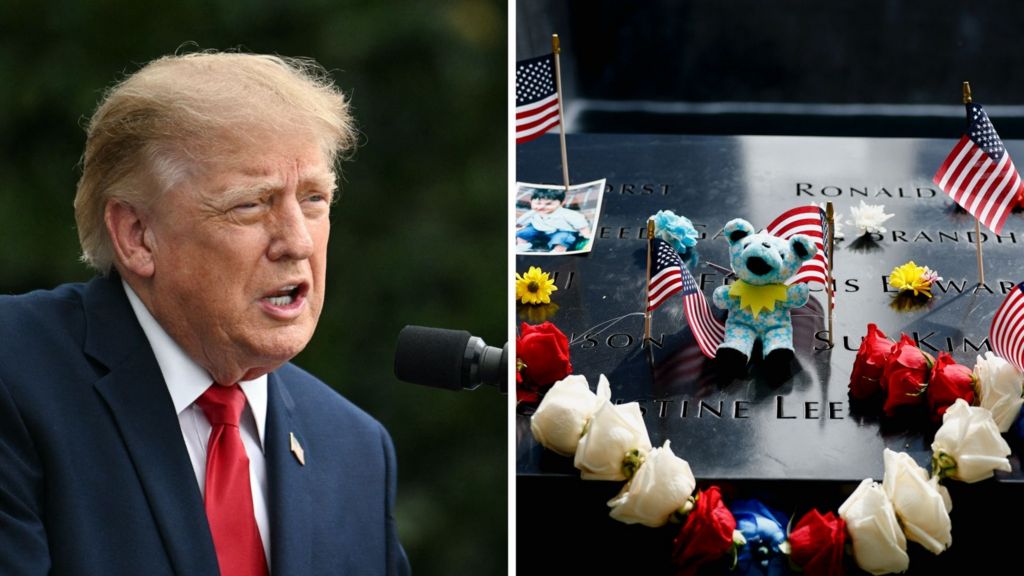
    A planned coordinated attack targeting a high-profile Ultimate Fighting Championship (UFC) event hosted on the White House South Lawn has been disrupted by federal law enforcement, FBI Director Kash Patel has confirmed. The foiled plot coincided with a landmark weekend that marked both the 250th anniversary of the United States and former president Donald Trump’s 80th birthday.

    In a Tuesday morning social media post, Patel announced that multiple suspects had been taken into custody as part of a sweeping multi-state law enforcement operation. The FBI director confirmed that the planned attack had been stopped before it could be carried out, writing, “We are built to detect, respond to and bring to justice those who threaten the lives of American citizens – particularly during large gatherings like the historic UFC 250 fight.”

    Unconfirmed details of the plot, first reported by Fox News and shared via Patel’s post, outline a coordinated two-stage attack plan, according to two anonymous sources who spoke to CBS News, the BBC’s partner for U.S. domestic coverage. The plotters allegedly planned to deploy explosive-laden drones to strike adjacent buildings, with the goal of triggering mass panic and forcing event attendees to flee toward a hidden sniper team positioned along the escape route. After the chaos of the first strike, a second wave of attackers intended to storm the main entrance gate to the White House, the sources claimed.

    Investigators made their first arrest in the plot last week in Cincinnati, CBS reported. Law enforcement officials were also able to secure access to encrypted Signal messaging conversations where multiple co-conspirators allegedly discussed the logistics of the attack in detail.

    Patel’s public statement did not explicitly confirm the specific tactical details of the plot reported by CBS and Fox News, though he directly shared a link to the Fox News report containing these details in his post. The FBI has not released further public information on the case, and the BBC has formally requested additional comment from the agency to clarify outstanding details of the investigation.

    Secret Service Director Sean Curran confirmed in an official statement that the United States Secret Service has worked in close coordination with the FBI throughout the entire investigation. Curran added that formal public comments on the specific details of the case will be released as part of official court filings in the coming weeks.

    The targeted UFC event was held Sunday on the White House South Lawn as a centerpiece of national celebrations marking the 250th anniversary of U.S. independence. The gathering also overlapped with Trump’s 80th birthday, and was attended by multiple senior figures from the Trump administration as well as a number of high-profile celebrities.

  • Hungary’s MPs block return of Orbán, limiting rule of PM to eight years

    Hungary’s MPs block return of Orbán, limiting rule of PM to eight years

    Hungary’s newly elected national legislature has approved a landmark constitutional amendment that caps a prime minister’s cumulative time in office at eight years, a long-promised reform from Prime Minister Péter Magyar’s Tisza Party that explicitly bars former long-serving leader Viktor Orbán from returning to the top executive post.

    Orbán, who led Hungary without interruption for 16 years, was unseated in a landslide April election that handed Tisza a two-thirds supermajority in parliament — enough voting power to unilaterally amend the country’s constitution. The new rule applies retroactively to all prime ministers who have held office since 1990, counting non-consecutive terms toward the two-term limit. The amendment also inherently restricts Magyar’s own tenure, capping his time in office at 2034 if he wins re-election.

    The amendment passed by a lopsided 135-50 vote, with Orbán’s greatly reduced Fidesz party uniformly opposing the measure. Orbán, who was just re-elected as Fidesz leader over the weekend, lashed out at the new government in a Facebook post following the vote, framing the reform as a partisan power grab.

    “The Orban law has just been voted through. That was the most pressing issue. If I’m needed, I’ll be here,” Orbán wrote, adding that it was irresponsible for the Tisza administration — which had only been in power for one month when the amendment was approved — to lock in term limits nearly a decade into the future.

    Balázs Orbán, Viktor Orbán’s former political director and a senior Fidesz lawmaker, doubled down on the criticism, accusing Magyar of abusing his parliamentary supermajority to eliminate a political rival from democratic competition. The accusation sparked a heated parliamentary clash between Balázs Orbán and the prime minister during the legislative session.

    Beyond the term limit provision, the constitutional amendment scraps a controversial requirement to maintain an independent agency tasked with protecting Hungary’s “constitutional identity” — effectively dissolving Orbán’s Sovereignty Protection Office, a body created in 2023 to monitor purported “undue foreign interference” in Hungarian politics. The reform also opens the door to restructuring the so-called Kekva public trust foundations, which were established by the Fidesz government to transfer state assets, including major corporations and higher education institutions, to Fidesz-aligned entities.

    One prominent target of the restructuring is the Mathias Corvinus Collegium, a prominent vocational education institution whose board of trustees is led by Balázs Orbán and maintains close ties to Fidesz. The Tisza government plans to either return transferred assets to state control or cut public funding for aligned institutions like MCC.

    Magyar took office last month on a platform of dismantling the centralized, controversial state apparatus built by Fidesz during 16 years of rule. For four consecutive years, Transparency International has ranked Hungary as the European Union’s most corrupt member state, and the EU froze more than €16 billion in cohesion funds over widespread concerns about democratic backsliding, rule of law violations, and public corruption. Just last month, the European Commission agreed to unfreeze the €16.4 billion package, contingent on the Hungarian parliament passing a series of anti-corruption and governance reforms.

    On the day after the constitutional amendment vote, parliament turned its attention to the next slate of reforms required to unlock the frozen EU funds, including measures to strengthen the mandate and independence of Hungary’s anti-corruption watchdog, the Integrity Authority. Tuesday’s session also included a formal commemoration of the 70th anniversary of the execution of 1956 Hungarian Revolution leaders, who were executed by Soviet-aligned authorities after the uprising was crushed. Magyar individually honored each of the six executed leaders, including former Prime Minister Imre Nagy, and lawmakers marked the anniversary of their 1989 reburial.

    In remarks during the commemoration, Magyar framed the recent election and reform push as a new chapter for Hungary’s place in the free world, noting that Hungarians will mark the 70th anniversary of the 1956 uprising this October against a backdrop of renewed democratic change. Balázs Orbán meanwhile criticized the government’s reform agenda, claiming it has left thousands of Hungarian students facing uncertain futures as institutional restructuring moves forward.

  • Naomi Campbell tells tribunal she was ‘deceived’ as she appeals charity trustee ban

    Naomi Campbell tells tribunal she was ‘deceived’ as she appeals charity trustee ban

    LONDON – Supermodel Naomi Campbell has taken the stand in a UK tribunal to challenge a five-year ban on serving as a charity trustee, arguing she was deliberately misled by a close colleague who was entrusted to manage the operations of her global disaster relief nonprofit.

    The case stems from a 2024 ruling by the Charity Commission for England and Wales, which disqualified the 56-year-old supermodel after a year-long investigation uncovered widespread and serious financial mismanagement at Fashion for Relief, the philanthropic organization Campbell founded to support poverty alleviation and disaster response worldwide.

    Regulators found that over a six-year period ending in 2022, just 8.5% of the charity’s total spending went to direct charitable grants to causes it was supposed to support. The investigation also uncovered that thousands of pounds in charitable funds were diverted to cover Campbell’s personal luxury expenses during a stay at a high-end resort in Cannes, France, including spa services, premium room service, and personal tobacco purchases.

    Campbell launched her appeal against the disqualification last year, framing herself as an unwitting victim of systemic fraud and forgery carried out by her co-trustee, Bianka Hellmich. Appearing before the tribunal on Tuesday, the supermodel doubled down on those claims, alleging that Hellmich forged her signature on key financial documents and lied about holding professional credentials as a charity law specialist.

    Campbell admitted she did not conduct independent background checks on Hellmich, saying she had reasonably assumed her colleague was operating in full compliance with legal and regulatory requirements for charitable organizations. In a pre-hearing written statement, Campbell emphasized that she has never pursued philanthropic work for personal financial gain, and never will.

    The Charity Commission has also barred Hellmich from serving as a charity trustee for nine years, after the inquiry found she received roughly £290,000 ($385,000) in unauthorized payments for unapproved consultancy work. A third trustee, Veronica Chou, received a four-year disqualification over the findings.

    Andrew Westwood, Campbell’s legal representative, told the tribunal that Hellmich persuaded Campbell to take a largely ceremonial “figurehead” role at the charity, while Hellmich carried out a years-long, coordinated scheme of mismanagement and deception that hid the organization’s true financial state from the founding trustee.

    Fashion for Relief was first established in the United States in 2005 and officially registered as a charity in the UK in 2015. Its stated mission was to bring together global fashion industry leaders to fund poverty relief and emergency support for communities affected by natural disasters and humanitarian crises. The organization was dissolved and struck from the UK register of charities earlier this year following the regulator’s investigation. Additional witnesses are scheduled to give testimony on Wednesday as the tribunal hearing continues.