作者: admin

  • Lebanese cling to memories of Liberation Day as Israel reoccupies the south

    Lebanese cling to memories of Liberation Day as Israel reoccupies the south

    On May 25, 2000, 19-year-old Abeer received the historic news that southern Lebanon had finally been freed after 18 years of brutal Israeli occupation. Within hours, she and her family packed their belongings and left Beirut, heading south to their ancestral hometown of Kfar Kila – a centuries-old village sitting directly on the tense Lebanon-Israel border. Recalling that moment decades later, Abeer, now an events coordinator working with musicians, says the joy she felt that day was unlike anything she had ever experienced.\n\nToday, 26 years after that landmark liberation, Abeer is once again displaced. Relentless Israeli bombardment across southern Lebanon forced her to flee her home in Nabatieh, and she now resides in a makeshift tent in Beirut’s Biel district, sharing the small space with her two dogs. Since Israel launched its current military campaign against Lebanon on March 2, the conflict has displaced more than one million Lebanese people. Hundreds of thousands remain barred from returning to their properties, as Israeli troops continue to hold dozens of southern villages under occupation, while 45 percent of all towns across southern Lebanon have suffered severe damage or been completely destroyed.\n\nSitting just outside her temporary tent home, Abeer says she longs to return to Kfar Kila, and holds out hope that the south will be liberated for a second time. “We need to remember this day because we were victorious and hopefully we will be again. They have turned Kfar Kila into a football field,” she told reporters from Middle East Eye. Over the past two and a half years, repeated Israeli airstrikes and ground operations have gradually leveled Kfar Kila along with more than a dozen other villages along the southern border. “Our grandparents, my mother and father are buried in Kfar Kila,” Abeer said. “I pray we can return to them, to our homes and to our work.”\n\nThe long arc of Israeli incursion into Lebanon stretches back decades. In 1967’s Six Day War, Israel seized the Chebaa Farms region, followed by the 1978 Operation Litani invasion, and a larger 1982 ground incursion launched with the stated goal of dismantling the Palestinian Liberation Organization. Then-Israeli Defense Minister Ariel Sharon convinced parliament to approve Operation Peace for Galilee, claiming troops would advance no more than 40 kilometers into Lebanese territory and the operation would conclude in just two to three days. Instead, Israeli forces pushed all the way to Beirut, occupied the capital for three years, then withdrew to a buffer zone in southern Lebanon where they remained for an additional 15 years. A sustained guerrilla resistance campaign led by Hezbollah through the 1990s, targeting Israeli positions and their allied South Lebanon Army militia, ultimately forced full Israeli withdrawal from the south in May 2000.\n\nThis cycle of occupation and resistance is personal history for 28-year-old political activist Tarek Serhan, who holds a master’s degree in human rights. Though Serhan was only two years old when the 2000 liberation was declared, he remains deeply connected to the south, with family roots in Dweir, a village in the Nabatieh district, and upbringing in Beirut’s southern Dahieh suburb. Today, he shares a small Beirut apartment with his dog Lexy, the entrance of which is decorated with a Lebanese flag. The apartment has also become a refuge for his parents and grandmother, who fled intense Israeli bombardment of Dahieh to stay with him. Serhan makes regular trips back to Dweir and neighboring villages to attend funerals and offer condolences to families who have lost loved ones.\n\nEven amid ongoing violence, Serhan says he has been struck by the steady resilience of southern Lebanese communities. “When I was in the village three or four weeks ago, people were not afraid,” he said. “They were carrying the martyrs on their shoulders during the procession, in the middle of the village, under warplanes and bombardment. My heart was full, honestly.”\n\nAccording to Lebanon’s Ministry of Public Health, Israeli strikes across Lebanon have killed 3,151 people and wounded 9,571 more since the current conflict began. Despite a formal ceasefire agreement reached on April 16, Israel continues to carry out daily strikes and enforce mandatory evacuation orders across southern Lebanon, with civilians, journalists, medical workers, and civil defense teams repeatedly targeted, often in deadly double-tap attacks. Hezbollah has continued to launch retaliatory strikes against Israeli occupation troops and targets inside Israeli territory.\n\nAmid the reoccupation, bombardment, and near-constant presence of Israeli drones over Beirut, some have questioned whether the annual marking of Resistance and Liberation Day, the holiday commemorating the 2000 Israeli withdrawal, is appropriate this year. For Serhan, marking the holiday is a non-negotiable national duty. “We have this country due to people’s sacrifices. These aren’t just words. Liberation cost lives, families, time that detainees spent in prison, people who are living to this day with physical pain or disabilities,” he said. “Lebanese were resisting from all areas and all sects. Liberation happened. It’s part of history. It cannot be erased. As Lebanese we have a responsibility to show the danger of the Zionists on our border. We need more education and awareness for all people, especially the youth, to know the history and know what has happened to Lebanese like them.”\n\nIn the small northern Lebanese town of Karm Saddeh, near Ehden, one extended family has worked tirelessly to keep the memory of the 2000 liberation alive for younger generations. In May 2000, the entire clan – grandparents, aunts, uncles, and cousins – boarded a bus and traveled south to see the newly liberated lands and join the celebrations. For Dominic, the family’s son who was just eight years old at the time, the trip was a formative experience. Now a designer living in Beirut, Dominic says his mother instilled in him a deep connection to the south from childhood. “I’m very much from the north, and my heart is very much in the south. That’s what my mother always told me as a kid,” he said. “I love my village, and the south feels like my village but greener, more natural. Southerners are a lot like northerners, but even more hospitable.”\n\nDominic believes that Liberation Day should be commemorated across an entire week, just as the original 2000 celebrations unfolded. “It was a week of celebrations in 2000. A week of people returning to their land. Let’s take a week to remember what happened, why it happened, and what happened after,” he said. The family made the same trip south to reconnect with their land after the 2006 July war, and their commitment to honoring the liberation remains unshaken.\n\nAs Tel Aviv and Beirut hold their first direct diplomatic talks in decades, some Lebanese have publicly expressed support for the prospect of formal peace and normalization with Israel. But for Dominic, normalization with Israel was never an acceptable option after the 2006 war, and it remains off the table today, 25 years after liberation. If he had his way, Lebanese people from every region of the country would travel south to mark the day, even amid the threat of bombardment, as an act of national solidarity.\n\n“We have festivals for cherries and apples that many attend. They matter because they connect people to the land,” he noted. “But the south is the land, and the most precious olive trees in the world grow there. It’s one of the most important parts of our culture. Maybe next year we can hold an olive festival on the border with Palestine – and maybe Palestinians can come too.”’

  • Delhi’s most exclusive club is under threat of shutdown – can it survive?

    Delhi’s most exclusive club is under threat of shutdown – can it survive?

    For more than a century, the Delhi Gymkhana Club has stood as more than just an exclusive recreational space in the heart of India’s capital. Tucked away on 27.3 acres of prime central land along Safdarjung Road, a stone’s throw from the prime minister’s official residence, this cream-coloured colonial-era clubhouse has long been a quiet hub where retired generals, senior bureaucrats, and old-money business families cut informal deals over whisky sodas and grilled kebabs. For generations, its reputation for grandeur and exclusivity has stretched far beyond its locked gates, even to the majority of Delhi residents who have never crossed its threshold. Today, that storied, slow-moving world faces an uncertain future after India’s federal government, which owns the land the 113-year-old institution sits on, issued an eviction order demanding the club vacate the premises by June 5. The government justifies the move, noting the site is a “highly sensitive and strategic” zone, and that the land is required for new defence infrastructure and critical public security projects. The lease termination, the government added, is effective immediately. Club members have formally challenged the order in India’s court system, with the first hearing scheduled for Tuesday. The eviction notice, which comes after years of heightened scrutiny of elite closed institutions by Prime Minister Narendra Modi’s administration, has reignited fierce public debates across the country over inherited privilege, urban heritage preservation, and public land use. It has also sparked an unexpected wave of public nostalgia, with many Delhi residents expressing quiet affection for a space they long claimed to resent. Joining the Gymkhana Club has always been notoriously difficult, with exclusivity enforced more through strict gatekeeping than prohibitive membership costs. Prospective members must be nominated and seconded by existing members before a managing committee votes on their approval. For decades, the process has heavily favored senior civil servants and military officers, leaving only a small fraction of openings for applicants from other backgrounds. Critics argue this closed system has entrenched social inequality, even as it has made Gymkhana membership one of the most sought-after status symbols in Delhi. Still, for many Delhiites, the club represents a rare unchanging fragment of the capital’s elite colonial and post-independence past, preserved through small, beloved rituals: liveried waiters circulating at dusk, gin and lime served on wide shaded verandas, elderly retired officials and diplomats lingering for hours under the shade of ancient neem trees. “It is one of the few structures in Delhi that has remained untouched while the city outside changed completely,” a senior Delhi-based journalist, who never held a club membership, told the BBC. “But now I feel like stepping in once.” Founded in 1913 as the Imperial Delhi Gymkhana Club, the institution was born alongside the construction of New Delhi, after the British colonial government shifted India’s capital from Calcutta (now Kolkata) to Delhi. It first operated out of Coronation Grounds in the Civil Lines neighborhood, serving exclusively British colonial administrators and military officers, before being allocated its current Safdarjung Road site in 1928. The existing clubhouse, designed in the 1930s by celebrated British architect Robert Tor Russell — who also designed New Delhi’s iconic Connaught Place commercial district — embodies the classic colonial architecture of early central Delhi, with deep verandas, lofty high ceilings, and pale facades opening onto sprawling tree-lined lawns. Inside the club’s walls, time has long moved at a different pace: crisp white tennis attire drying under the afternoon sun, quiet bridge games drifting through rooms that still hold faint traces of cigarette smoke and talcum powder, elderly members turning through newspapers under slow-turning vintage ceiling fans. Intimate layers of history are woven into every corner of the space. In its early decades, a small number of Westernized Indian Civil Service officers — among the only Indians granted access to elite colonial social circles — learned ballroom dancing and British social etiquette at the club as they navigated the unwritten rules of imperial society. In 1947, as the British Indian Army was split between the newly independent nations of India and Pakistan, officers from regiments marked for separation gathered at the club for one final round of farewell drinks before the border split them apart forever. That enduring image of shared camaraderie amid historic change helps explain why the prospect of the club’s closure has stirred such deep emotion across Delhi. As historian Narayani Gupta once noted, cities are layered entities, and each generation leaves its indelible mark on the spaces it occupies. Places like the Gymkhana become living repositories of collective memory, holding traces of every era that passed through their gates. In the final decades of British rule and the early years of independence, the club remained tightly intertwined with the capital’s political life. Speaking at the institution’s 2013 centenary celebrations, then-Indian President Pranab Mukherjee recalled that Mahatma Gandhi and Lord Irwin, the Viceroy of India at the time, held a critical private meeting at the club that ultimately led to the landmark Gandhi-Irwin Pact. After independence in 1947, the club dropped “Imperial” from its official name, but much of its old-world atmosphere remained intact: strict formal dress codes, worn vintage carpets, pre-dinner drinks, and long-tenured waiters who served multiple generations of the same families. Over the decades, the Delhi Gymkhana Club also became synonymous with a particular brand of inherited elite privilege in the capital. Its notoriously multi-decade waiting lists entered Delhi folklore, while critics framed it as a symbol of power shaped by nepotism, personal networks, and family legacy rather than merit. A retired Indian Police Service officer told the BBC it took 18 years from his application to secure membership. “When I applied, I was fascinated by the idea,” he said. “By the time I became one, I was totally indifferent and rarely visited it.” For Ghazal Tansir, a Delhi-based doctor who hosted her 2019 wedding reception at the club through a relative’s membership, it remains “a preserved, undisturbed little nook of memories.” The club’s longstanding exclusivity drew increasing government scrutiny after Modi’s Bharatiya Janata Party (BJP) took power in 2014, campaigning on a promise to shift power away from Delhi’s entrenched English-speaking elite. After government inspections in 2016 and 2019, the Ministry of Corporate Affairs filed a case with a national tribunal in 2020, alleging the club had committed financial irregularities and violated longstanding membership rules. Two years later, the tribunal dissolved the club’s elected governing committee and allowed the government to appoint its own administrators to run the institution, a decision that drew sharp pushback from club members. The latest eviction order has once again split public and expert opinion across India. Kiran Bedi, a former top Indian police officer who once ran as the BJP’s chief ministerial candidate for Delhi, called the eviction “unfortunate and tragic,” framing the Gymkhana as an irreplaceable part of the capital’s sporting and institutional heritage. Historian Swapna Liddle acknowledged the club’s elitist colonial origins, but argued that reform, not closure, would have been a better path forward. “Instead of just saying ‘let it not exist’, you [the government] could have asked how it could be changed and made meaningful for more people,” she said. Other observers take a harder line against the institution. Veteran journalist Prabhu Chawla has criticized clubs like the Gymkhana as exclusionary entities that occupy heavily subsidized public land for the benefit of a tiny elite. Former diplomat KC Singh pushed back on that critique, noting that for much of the club’s history, it provided affordable recreational space for civil servants and military officers who earned modest government salaries. BJP spokesperson RP Singh rejected claims that the government is unfairly targeting the historic club. “It is a property leased by the government,” he told the BBC. “Everything has happened according to the rule book and relevant laws.” Beneath the legal and political disagreements, however, runs a deep undercurrent of emotional response, tied to collective memory and the loss of historic space in a city that is constantly remaking itself. For decades, Delhi has undergone rapid transformation, and nearly every long-term resident can point to a list of beloved lost landmarks: the iconic Regal Cinema, the historic old Coffee House, the legendary Urdu book markets of Daryaganj, the open winter evenings at India Gate before widespread security barricades reshaped the central city. Through all that churn, a small handful of spaces managed to outlast the change. The Gymkhana Club was one of those rare constants. It survived British colonial rule, the bloodshed of Partition, the turbulence of independence, and Delhi’s transformation into a sprawling 32 million-person megacity. If the club ultimately loses its legal challenge and is forced to leave its historic home, Delhi will still have no shortage of newer private clubs, luxury hotels, and trendy restaurants. But as many observers point out, the capital will lose something far less tangible: one of the last remaining spaces where the old, slow, layered version of Delhi still feels alive.

  • Wave of child abuse cases shakes schools in Paris

    Wave of child abuse cases shakes schools in Paris

    A landmark sexual abuse trial is set to open Tuesday in Paris, marking the highest-profile legal proceeding in a year-long crisis that has thrown the French capital’s early childhood education system into chaos and sparked widespread parental fury. The defendant, a part-time after-school aide known locally as an animateur, stands accused of sexual misconduct against five young students at Alphonse Baudin Junior School in Paris’ 11th arrondissement.

    The case is just the first of multiple upcoming legal actions tied to a sprawling investigation into abuse allegations involving non-teaching child care staff across the city. Three additional trials are scheduled to begin over the summer, with a verdict expected in a fourth case heard earlier this month, and investigators have confirmed ongoing inquiries at nearly 100 Parisian crèches, kindergartens and primary schools. The allegations range from inappropriate verbal behavior and physical aggression to severe sexual abuse of young children. As recently as last week, police carried out a coordinated raid on three schools in the 7th arrondissement, detaining 16 people and filing formal sexual misconduct charges against three.

    For parents across Paris, the crisis has shattered trust in the city’s child care system. Many have openly criticized Paris City Hall, which directly employs the roughly 15,000 animateurs working across city schools, for dismissing early complaints and failing to address systemic vulnerabilities. One parent, speaking to the BBC, shared the harrowing experience that led his family to uncover the allegations in the upcoming trial. Back in April 2025, after another parent reported their child had been assaulted, he and his wife questioned their four-year-old daughter. When asked if the defendant had touched her, the girl confirmed he had given her inappropriate cuddles, then demonstrated the contact by stroking her own back in an unusual, disturbing manner — a revelation that confirmed the parents’ worst fears.

    Advocacy groups say the root of the crisis lies in deeply flawed hiring and training practices for animateurs, who are responsible for supervising children during lunch breaks and after-school programs, where they lead recreational, arts and sports activities. Elisabeth Guthmann, co-founder of SOS-Périscolaire, an advocacy group founded in 2021 to push for safer after-school care, explained that poor pay and lax hiring standards have created a high-risk system. Most roles require only a basic child care certification to be hired, and pressure to fill vacancies is often so intense that even this minimal requirement is frequently set aside. Guthmann cited one alarming example at a 16th arrondissement primary school, where four animateurs allegedly organized a child fight club, forcing pupils to brawl while other children stood by cheering.

    The crisis has also exposed deep divisions between parents demanding accountability and the animateurs themselves, many of whom say they now face unfair, widespread suspicion that has turned into professional discrimination. Last week, dozens of aides staged a strike to demand better working conditions and fair treatment amid the wave of allegations. Union representative Carla Bonnet argued that while serious abuse claims must be investigated, not all parental reports are well-founded, and city leaders have abandoned neutrality in favor of rushing to action. Rémi, a working after-school assistant, told reporters that “Working with children today, at the drop of a hat you can be accused of absolutely anything,” adding that city officials have failed to support staff amid the panic.

    Newly elected Paris Mayor Emmanuel Grégoire has moved quickly to address public anger, announcing a sweeping overhaul of the hiring and oversight system backed by a €20 million investment in training and monitoring. Under new rules, any animateur facing a formal abuse complaint will be automatically suspended pending investigation, and nearly 80 aides have already been suspended since the start of 2026. Grégoire Ensel, a representative of national parental advocacy group FCPE, said the crisis was entirely predictable: “When you have a system in which workers aren’t properly paid or trained or monitored, and where there’s no money or proper procedures for raising the alert, it’s not surprising that things get out of control.”

    While the scandal has been concentrated in Paris, child protection activists warn that identical systemic weaknesses exist in school systems across France, raising fears that the scope of abuse could be far broader than currently known. For affected families, the trial opening this week represents a long-awaited step toward accountability, even as many continue to demand deeper change to protect children.

  • What we know so far about the US-Iran deal

    What we know so far about the US-Iran deal

    After nearly three months of open regional conflict between the United States and Iran, diplomatic efforts have reached a critical turning point, with former US President Donald Trump confirming that a tentative framework agreement is “mostly finalized”. Should the deal cross the finish line, it would bring an immediate end to months of hostilities that have roiled global energy markets and raised fears of a wider regional war.

    Global financial markets reacted swiftly to the news of a potential breakthrough on Monday morning, with investor sentiment driving a sharp 6% drop in Brent crude prices that pushed the benchmark down to $97 per barrel. While the full text of the proposed agreement remains under wraps, emerging details from anonymous US officials speaking to Axios have shed light on the phased approach being negotiated.

    Under the draft terms, the first step would be a 60-day extended ceasefire between the two parties. During this temporary truce, the Strait of Hormuz – the critical chokepoint through which 20% of the world’s daily crude oil and liquified natural gas shipments pass – would be fully reopened to commercial traffic. No transit fees would be imposed by Iran, and Tehran would clear all naval mines it had placed in waters near the strait as a strategic pressure tactic. Once mine clearance is completed, the US would lift its recent naval blockade of Iranian ports, and Tehran would be allowed to resume oil exports for the two-month period, temporarily pausing some US sanctions to enable the sales. The unnamed US official noted that while the temporary export access would boost Iran’s economy, it would also help cool tight global energy markets and ease upward pressure on energy prices worldwide.

    This 60-day window is intended for the two sides to negotiate long-term arrangements, including the highly contentious issue of Iran’s nuclear program. As part of broader talks aimed at a permanent ceasefire, Iran is demanding the immediate unfreezing of its sovereign assets held around the globe and permanent relief from crippling US economic sanctions. In response, US officials have stated that these major concessions will only be granted in exchange for “verifiable, tangible concessions” from Tehran on nuclear security.

    The still-undrafted memorandum of understanding between the two countries is reported to include a proposed Iranian commitment to never pursue a nuclear weapons program, though there is currently no confirmation that Tehran has accepted this condition. The draft text also proposes negotiations on freezing Iran’s uranium enrichment activities and removing its existing stockpile of highly enriched uranium. A US official told The Washington Post that the two-month ceasefire period will be dedicated to ironing out the verification and implementation mechanism for a final nuclear agreement. However, an Iranian official pushed back on this framing, telling the Post the draft deal only includes a commitment to discuss nuclear issues at a later date, not a pre-negotiated agreement on the terms.

    Over the weekend, Trump faced cross-partisan criticism from US lawmakers over both the ongoing conflict and the terms of the emerging deal. The former president pushed back forcefully against his detractors in a post on his social platform Truth Social, insisting he only negotiates successful agreements. “If I make a deal with Iran, it will be a good and proper one, not like the one made by Obama,” Trump wrote. “Don’t listen to the losers, who are critical about something they know nothing about. Unlike those before me who should have solved this problem many years ago, I don’t make bad deals!”

    By Monday, Trump struck a more optimistic tone, telling reporters negotiations are “proceeding nicely”. He also used the moment to push for an expansion of the Abraham Accords, the 2020 US-brokered normalization agreements between Israel and several Arab states that he oversaw during his first term. Trump said he had spoken with leaders of multiple regional nations on Saturday about efforts to end the conflict with Iran, arguing that after US diplomatic work to resolve the crisis, all involved nations should join the accords. “After all the work done by the United States to try and pull this very complex puzzle together, it should be mandatory that all of these Countries, at a minimum, simultaneously, sign onto the Abraham Accords,” he said. He listed the candidate nations as Saudi Arabia, Qatar, Pakistan, Turkiye, Egypt, Jordan, the UAE (already an accords member), and Bahrain (also already a signatory). The original 2020 accords also included Morocco and Sudan, while Egypt and Jordan already hold established diplomatic relations with Israel.

    Iranian foreign ministry spokesperson Esmaeil Baghaei offered a more muted confirmation of progress on Monday, saying that Tehran and Washington had reached preliminary conclusions on several issues included in the draft memorandum of understanding. But he stressed that this progress should not be read as a sign an agreement is imminent. Baghaei clarified that Iran’s current negotiating priority is ending the ongoing conflict, not addressing nuclear questions. He also reiterated a longstanding Iranian complaint that inconsistent, shifting positions from US officials have consistently complicated efforts to reach a final deal.

  • Trump to undergo annual medical exam ahead of 80th birthday

    Trump to undergo annual medical exam ahead of 80th birthday

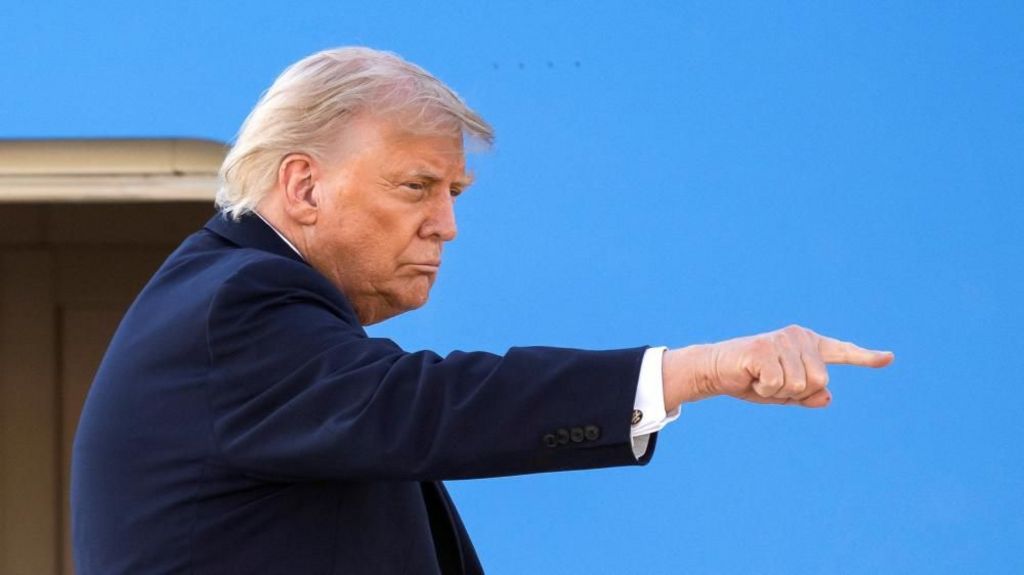
    Ahead of his upcoming 80th birthday, former United States President Donald Trump is set to undergo a routine annual medical examination, a standard procedure that has drawn attention from political observers and the public alike. As one of the oldest major political figures in modern U.S. history seeking high office, the details surrounding his health have long been a topic of national interest, particularly as he remains a dominant force within the Republican Party and a potential 2024 presidential candidate.

    BBC senior correspondent Bernd Debusmann has broken down the context and significance of this scheduled check-up, noting that routine medical evaluations for prominent political figures serve a dual purpose: they assess an individual’s physical and mental fitness to hold public office, and they provide transparency to the electorate that relies on accurate information about leaders’ health. While the exam itself is described as a standard annual appointment, its timing just weeks before Trump reaches the 80-year mark has placed additional focus on the outcome, with political analysts waiting to see whether the results will be released publicly, a common practice for presidential candidates in modern elections.

    Health transparency has become an increasingly important issue in U.S. politics over recent decades, with voters and media organizations pushing for candidates to release full medical records to rule out any underlying conditions that could impact their ability to serve in the nation’s highest office. This upcoming examination fits into that broader context, as Trump continues to lead in early polling for the 2024 Republican presidential nomination, making his health a relevant factor for voters considering their options ahead of the general election.

  • Senegalese president names a new prime minister after sacking his predecessor

    Senegalese president names a new prime minister after sacking his predecessor

    DAKAR, Senegal — Senegal has entered a new phase of political uncertainty after President Bassirou Diomaye Faye appointed former regional banking executive Ahmadou Al Aminou Lo as the West African nation’s new prime minister this Monday. The leadership shake-up comes one week after Faye removed his former ally Ousmane Sonko from the top government post, ending a months-long standoff that has shaken the ruling party amid mounting national economic challenges.

    A formal statement announcing Lo’s appointment was broadcast publicly on Senegal’s national television, confirming that he will take over the head of government role that Sonko held since the ruling Pastef party took power earlier this year. Sonko’s dismissal on Friday triggered the immediate resignation of his entire cabinet and the formal dissolution of the previous administration, leaving Lo tasked with building a new government from scratch.

    The political rift between Faye and Sonko is no secret to the Senegalese public. Tensions between the two Pastef leaders had simmered for months over competing policy priorities, most notably disagreements around ongoing negotiations for a critical loan agreement with the International Monetary Fund. The public friction escalated earlier in May, when Faye issued a public warning that Sonko would only retain his position as prime minister if he improved his performance in the role.

    Lo brings deep regional economic and monetary policy experience to his new post. Before entering domestic politics, he held a senior executive role at the Central Bank of West African States, where he helped shape coordinated monetary and economic strategy across the West African region. Most recently, he served as a state minister to the presidency and cabinet secretary-general in Sonko’s ousted administration, giving him intimate knowledge of the current government’s ongoing policy challenges.

    The political drama marks a dramatic falling out between two figures who just months ago were close allies in a successful election campaign. Pastef — short for Patriotes Africains du Sénégal pour le Travail, l’Éthique et la Fraternité in French — swept to power in March 2024 general elections after a hard-fought campaign against the long-ruling Alliance pour la République. The election cycle was already roiled by controversy, after widespread speculation that former President Macky Sall planned to leverage a 2016 constitutional amendment to extend his time in office.

    Sonko, who founded and leads Pastef, was ultimately barred from running for the presidency himself after Senegal’s Supreme Court upheld a defamation conviction against him, and the Constitutional Court formally rejected his candidacy. Faye stepped in as the party’s replacement candidate, won the presidency, and immediately appointed Sonko as prime minister in a gesture of party unity. Today, that unity has collapsed, leaving the new prime minister to navigate both a ruling party split and pressing national challenges, including a growing national debt crisis that has put Senegal’s economic stability at risk.

  • Ruud overcomes heat struggles to progress in Paris

    Ruud overcomes heat struggles to progress in Paris

    The 2025 French Open opened under sweltering conditions in Paris, with two-time Roland Garros runner-up Casper Ruud pulling off a dramatic comeback victory over Russian qualifier Roman Safiullin in a five-set first-round marathon that tested both men’s physical and mental limits. Temperatures climbed to 33 degrees Celsius across the tournament’s opening two days, turning the clay courts of Court Simonne-Mathieu into a grueling heat trap that pushed both competitors to the brink of exhaustion.

    Ruud, the 15th seed in the men’s draw, entered the match as the clear favorite and raced out to an early lead, taking the first set 6-2 and edging a tight second-set tiebreak 7-5 to go two sets up. But by the third set, the brutal heat had already begun to take its toll: the Norwegian squandered five consecutive match points, and started suffering painful leg cramps that would only worsen as the match dragged on. He called a medical timeout to address heat-related distress, and relied on ice towels and repeated water douses between changeovers in a desperate attempt to bring his core body temperature down.

    Safiullin, who had been down 2-5 in the third set, capitalized on Ruud’s physical collapse to mount an extraordinary comeback: the Russian qualifier won 11 straight games to steal the third set 7-5 and take the fourth set 6-0, turning a match that looked like an easy Ruud win into a deciding fifth set. Like Ruud, however, Safiullin also struggled with the extreme conditions, requiring on-court medical treatment for injury issues late in the fourth set. Both players left the court for an extended cooling break before the fifth set, a pause that would prove pivotal for Ruud.

    When play resumed, the 27-year-old Norwegian had recovered enough of his strength and focus to dominate the decider, closing out a 6-2, 7-5 (7), 5-7, 0-6, 6-2 win after nearly four hours of competition. The entire clash stretched three hours and 56 minutes on the outer Parisian clay court.

    In post-match comments, Ruud opened up about the debilitating impact of the Paris heatwave, comparing his experience to a past heat-related retirement on the ATP tour. “It felt like a bit of a heatstroke feeling,” he explained. “I experienced something similar some years ago when I played in Washington DC and I had to retire in the third set because of it. That’s the only time I had that same feeling as I had today in the fourth set, where I felt at times really dizzy, really tired and walking around like a zombie almost.”

    Ruud credited the mid-match pause for giving him a chance to recover enough to finish the match. “Luckily, I was 2-1 up still [in sets] and allowed myself to kind of lower the intensity a bit to get my pulse and body temperature down as much as possible in the fourth to see if there was any chance to finish in the fifth and have some extra energy. Luckily, that ended up working.”

    When asked if the win counted as a victory of mental toughness or physical resilience, Ruud said it was both, but emphasized the role of mental grit in getting him across the finish line. “It feels like a mental win,” he said. “At times in the fourth [set] I was thinking ‘I have to book the flight home tomorrow and I’ll be watching from home on the sofa the next two weeks’. Luckily, that’s not the case. Physically, also, I’m proud because I never really gave in. I didn’t give up.”

  • Brazilian government commits $617.5M to Amazon ecological investment

    Brazilian government commits $617.5M to Amazon ecological investment

    SAO PAULO – In a bold move to advance sustainable development in the world’s largest tropical rainforest, the Brazilian government announced Monday a 3.1 billion reais ($617.5 million) commitment to drive ecological investment across the Amazon region. This injection of public funds expands Eco Invest, a federal sustainable finance program first unveiled during Brazil’s hosting of the COP30 United Nations climate summit last year.

    The allocated resources are earmarked for private and cooperative enterprises that align with three core priorities: scaling sustainable tourism, upgrading critical regional infrastructure, and growing the Amazon’s bioeconomy – an economic framework centered on sustainable use of native natural resources that keeps standing forest intact.

    Eco Invest operates on an innovative blended finance model: Brazil’s National Treasury provides low-interest loans to participating commercial banks at an annual rate of just 1%. In exchange, partner banks are required to mobilize at least four times the public loan amount in private sector investment, with foreign investors required to make up no less than 60% of that private capital. In the latest round of Eco Invest funding auctions, eight commercial banks pledged an additional 10.1 billion reais ($2 billion) in private capital alongside the government’s new 3.1 billion reais commitment. To date, the program has amassed a combined 140 billion reais ($28 billion) in public and private resourcesto invest across the region.

    Carina Pimenta, national secretary for bioeconomy at Brazil’s Ministry of Environment and Climate Change, outlined the on-the-ground impact of the new funding. She explained that the low-cost credit will support small producer cooperatives harvesting native Amazon goods such as acai berries and Brazil nuts, while also financing sustainable tourism infrastructure in protected conservation areas.

    Stretching across nine Brazilian states, the Amazon rainforest, which more than 60% lies within Brazil’s borders, is a critical global climate regulator, absorbing millions of tons of carbon annually and stabilizing global weather patterns. Much of the Brazilian Amazon is located in the country’s poorest regions, where historically high perceived risk and large upfront project costs have deterred private investors from backing sustainable ventures. Launched in 2024 under President Luiz Inácio Lula da Silva’s administration, Eco Invest was designed to de-risk these projects through public credit guarantees, opening the door for private capital to flow into forest-positive economic activity.

    Brazil’s Environment Minister João Paulo Capobianco emphasized that the program is central to Brazil’s goal of reaching net-zero carbon emissions by 2050. By creating tangible financial incentives for non-extractive, deforestation-free economic activity in the Amazon, Eco Invest offers a viable alternative to the region’s historical reliance on forest-clearing for agricultural expansion. Capobianco noted that since Lula took office in 2023, Brazil has successfully cut Amazon deforestation rates without sacrificing overall agricultural productivity, proving that climate action and economic growth can coexist.

    Monday’s investment announcement comes on the heels of a troubling week for Brazil’s environmental agenda. Last week, Brazil’s lower house of Congress – which holds a conservative majority closely aligned with powerful national agribusiness interests – fast-tracked a package of bills that roll back key environmental protections. One controversial provision would restrict the use of satellite monitoring, a core enforcement tool that Brazil’s environmental enforcement agency IBAMA credits with driving a roughly 50% drop in Amazon deforestation since 2023, to penalize illegal deforestation.

    While the rollback bills still require approval from the Senate and a signature from President Lula to become law, they have sparked widespread alarm among environmental advocates. On Monday, the Climate Observatory, a leading coalition of Brazilian environmental non-governmental organizations, issued a statement warning that the measures weaken oversight, territorial protection, and national environmental governance. By eroding these systems, the network argued, the bills will undermine Brazil’s ability to mitigate and adapt to the social, economic, and climate impacts of global warming.

    Addressing growing concerns about policy inconsistency, Capobianco reaffirmed the federal government’s unwavering commitment to meeting Brazil’s international climate pledges, despite the congressional pushback. “We will show that Brazil remains on a path of controlling and reducing deforestation,” he stated.

    This coverage of climate and environmental issues from The Associated Press receives financial support from multiple private foundations, with AP retaining full editorial control over all content.

  • Carney says Alberta referendum ‘dangerous bluff’ and likens to Brexit

    Carney says Alberta referendum ‘dangerous bluff’ and likens to Brexit

    A decades-long simmering debate over Alberta’s place within Canadian confederation has erupted into a formal political battle, with Prime Minister Mark Carney drawing a stark parallel between the upcoming provincial separation referendum and the UK’s chaotic Brexit process as he pledges to lead a national campaign to preserve Canadian unity.

    Carney, who served as Governor of the Bank of England throughout the 2016 Brexit upheaval, told reporters on Monday that the Alberta vote carries all the same risks of unplanned, irreversible harm that Brexit inflicted on the United Kingdom. A decade after the UK’s 2016 separation vote, Carney noted, British policymakers are still scrambling to fix damage that voters never anticipated when they cast their ballots. He warned against the common argument that backing a separation vote is just a tactic to strengthen Alberta’s bargaining hand with the federal government in Ottawa, stressing that such a gamble could trigger unintended consequences no one can roll back.

    The referendum, scheduled for October 19, will ask Albertans whether they wish to remain part of Canada or move forward with a binding vote on full separation at a future date. The vote was triggered after a grassroots pro-independence movement collected more than 300,000 signatures on a separation petition earlier this year, enough to meet the formal threshold for a public vote under provincial rules. That result was thrown into question earlier, however, after Alberta’s First Nations groups successfully challenged the petition in court, arguing they had not been properly consulted on a measure that would fundamentally alter the future of their traditional lands.

    Despite the court ruling quashing the original petition, Alberta Premier Danielle Smith has confirmed she will move forward with the plebiscite. Smith pointed to a counter-petition organized by pro-unity advocates that gathered more than 400,000 signatures from Albertans who support remaining in Canada, arguing that the public has a clear right to weigh in on the issue regardless of the court’s decision. Notably, Smith herself will campaign for Alberta to stay within Canada, saying that recent negotiations between the provincial government and Ottawa have produced meaningful improvements in the province’s relationship with the federal government.

    Pro-independence supporters frame their push around the province’s vast natural resource wealth, arguing that Alberta’s oil and gas sector has long been sidelined by federal policymakers in Ottawa. They claim that national environmental policies have blocked critical pipeline projects and constrained the province’s ability to develop its natural resources to the benefit of its residents.

    Latest public polling, however, suggests separation faces steep headwinds. A new Angus Reid poll released Monday found that nearly three out of five Albertans intend to vote to remain part of Canada. That aligns with the Brexit result, which produced a narrow 52% majority for exit, but unlike that 2016 vote, current polling shows a solid majority opposed to splitting from Canada. Looking ahead, Carney said he will dedicate significant time over the coming months to campaigning for unity, arguing that the strongest future for Alberta is as a core part of a united Canada.

    “There is a very strong, positive case for Canada, a strong Alberta in a united Canada,” Carney said. “We have to be very careful about this.”

  • Teenager who died during day out at beach will be ‘sadly missed’

    Teenager who died during day out at beach will be ‘sadly missed’

    A devastating coastal tragedy has rocked a tight-knit Irish community after a 15-year-old girl from Ballymun lost her life during a recreational trip to a popular County Dublin beach on Sunday.

    Abbie Carmody-Pepper had traveled to Burrow Beach alongside a group of friends for a casual day out when she disappeared after entering the water for a swim. Emergency services launched an urgent multi-agency search operation to locate the missing teen, with personnel from An Garda Síochána (the Republic of Ireland’s national police force), the Irish Coast Guard, and the Howth division of the Royal National Lifeboat Institution (RNLI) all joining the effort. Eventually, search teams recovered Abbie’s body from the coastal waters.

    Local Dublin City Councillor Gavin Pepper, who confirmed the teen’s identification to the public, revealed he is a distant relative of Abbie, calling the loss even more personally devastating. “I was shocked and saddened to hear of the passing of Abbie Pepper in a tragic accident in Sutton yesterday,” he said in a public statement. “It was even more heartbreaking to find out we are related.”

    Councillor Pepper shared that Abbie’s parents have extended their gratitude to the broader community for the outpouring of sympathy and support they have received in this devastating period. He also requested that the public respect the family’s need for privacy as they process their grief and mourn the loss of their daughter.

    Representatives from the RNLI, which provided on-site emergency casualty care as part of the search and recovery operation, also released a statement expressing their condolences. “The thoughts of everyone in the organisation is with the young girl’s family and friends,” the spokesperson said.

    Local funeral home Rom Massey & Sons, which is handling Abbie’s arrangements, also paid tribute to the teen, noting she will be deeply mourned by all who knew her. “Abbie will be sadly missed by her heartbroken family… school pals, relatives, neighbours and friends,” the firm said in a statement shared publicly.

    The tragedy has left the local community in mourning, with tributes continuing to pour in for the young teen.