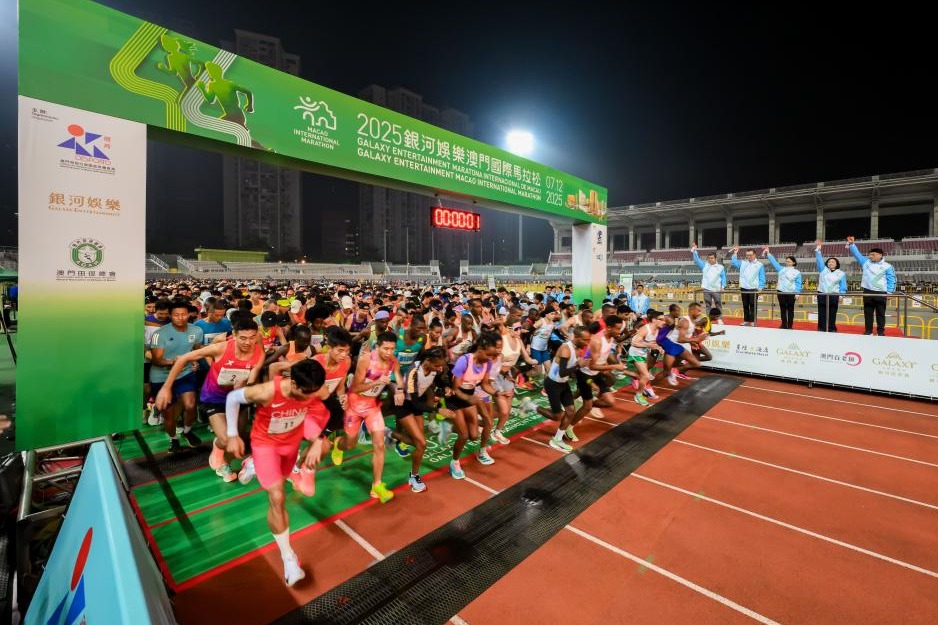
Steven van de Velde, a Dutch Olympic volleyball player convicted of raping a 12-year-old British girl in 2014, has been denied a visa to compete in Australia. The 31-year-old athlete was scheduled to participate in the Beach Volleyball World Championships in Adelaide next month. However, South Australia’s Attorney-General Kyam Maher urged the federal government to reject his visa, describing his crimes as ‘utterly abhorrent’ and emphasizing that foreign child sex offenders should not be allowed entry into the country. Australia’s Home Affairs Minister Tony Burke affirmed the government’s commitment to using all available tools to ensure community safety. Van de Velde, who pleaded guilty to three counts of rape in 2016, served 12 months of a four-year sentence before resuming his professional career in 2018. Despite representing the Netherlands at the Paris Olympics last year, he faced public backlash, including boos from the crowd and an online petition with 90,000 signatures demanding his exclusion from the event. The BBC has reached out to the event organizers and the Dutch volleyball association for comments.
作者: admin
-

The 92-year-old president who never loses
In a widely anticipated yet contentious outcome, Cameroon’s Constitutional Council has declared 92-year-old President Paul Biya the winner of the recent presidential election, marking his eighth consecutive term in office. Biya, the world’s oldest head of state, secured 53.7% of the vote, while his primary challenger, former government minister Issa Tchiroma Bakary, garnered 35.2%. The announcement, made on Monday, has sparked a mix of shock and disillusionment among Cameroonians, many of whom had hoped for a change in leadership. Biya’s decision to seek another seven-year term, after already ruling for 43 years, has been met with criticism, particularly regarding his governance style and frequent absences from the country. His extended stays in Geneva and other undisclosed locations have fueled speculation about his actual involvement in governing Cameroon, with many suggesting that key decisions are made by Prime Minister Ferdinand Ngoh Ngoh and other senior officials. Biya’s inscrutable leadership, characterized by a lack of public engagement and formal cabinet meetings, has left many questioning the direction of his administration. Despite these concerns, Biya has maintained his grip on power, balancing Cameroon’s complex social, regional, and linguistic divides. His regime has sporadically cracked down on dissent, detaining vocal critics and suppressing protests. However, his ability to navigate the country’s internal tensions and maintain financial stability has also contributed to his longevity. The recent election, however, has highlighted growing discontent, particularly in the English-speaking regions, where a bloody crisis has exposed the limits of Biya’s cautious approach. Opposition supporters have accused Biya of rigging the election, and tensions have escalated, with reports of security forces shooting protesters in Douala and Garoua. As Biya embarks on another term, the question remains whether Cameroonians will continue to tolerate his semi-authoritarian rule or demand a more decisive change in leadership.
-

UAE firm provided technology for China to upgrade missiles: Report
In a revelation that has sparked significant geopolitical tension, US intelligence agencies discovered in 2022 that the United Arab Emirates (UAE) provided China with advanced technology to enhance the range of its air-to-air missiles. According to a report by The Financial Times, the technology was transferred by G42, the UAE’s leading AI group, chaired by Sheikh Tahnoon bin Zayed al-Nahyan, the country’s national security adviser. The technology was reportedly passed on to Chinese tech giant Huawei, which utilized it to upgrade China’s PL-15 and PL-17 missiles, potentially giving China a strategic advantage over the US in aerial combat. The technology included software to optimize missile flight, though it remains unclear whether G42 was aware it would be used by China’s People’s Liberation Army. While the UAE may not have violated any laws, the transaction has raised concerns among US officials about the implications for future cooperation with the Gulf state. The advanced nature of the technology could provide Chinese fighter jets with a tactical edge in potential conflicts, particularly over Taiwan. This incident has further strained US-UAE relations, which were already under pressure due to disagreements over Middle Eastern and European policies, as well as the UAE’s perceived alignment with China in technology and military projects. The Biden administration has previously expressed concerns about the UAE’s ties with China, including its involvement in a Chinese port project near Abu Dhabi. Meanwhile, the UAE’s recent agreement to purchase advanced AI chips from Nvidia has faced delays, with US officials reportedly seeking to restrict direct access to these chips for G42.
-

‘Emirates Loves India’ gates close early due to safety concerns; organisers issue apology
The much-anticipated ‘Emirates Loves India’ community celebration at Zabeel Park in the UAE faced an unexpected setback as authorities were compelled to close the gates early due to safety concerns. The event, which aimed to celebrate the cultural ties between Emiratis and the Indian community, drew an overwhelming crowd, prompting organisers to take precautionary measures. Despite opening in the afternoon with cars queuing from 1pm, many visitors arriving later were turned away by security personnel. Heavy patrols were deployed throughout the park to ensure crowd safety. In the aftermath, organisers issued a public apology to those unable to attend, expressing gratitude for the overwhelming response and understanding of the situation. The event, which featured performances by renowned artists like Neha Kakkar and Mika Singh, as well as yoga guru Baba Ramdev, showcased the vibrant creativity and rich talent of the Indian community in the UAE. Attendees enjoyed a lively mix of folk dances, traditional fashion, handmade crafts, and popular Indian dishes, creating a festive atmosphere that celebrated friendship and cultural harmony. However, for many like Damodar Basnet, Parvati Jishi, and Jamuna KC, the day ended in disappointment as they were unable to enter the venue due to the overwhelming crowd. Organisers acknowledged the challenges faced and reiterated their commitment to ensuring safety in future events.
-

History beckons as UAE eye Asian Youth Games endurance gold
The United Arab Emirates (UAE) is poised to make equestrian history at the 2025 Asian Youth Games in Bahrain, as it seeks to become the first nation to clinch an endurance gold medal. The event, making its debut at the Games, will take place on October 30 at the Bahrain International Endurance Village in Sakhir. The UAE’s formidable squad includes Essa Rashed Al Mazrouei, Ahmad Abdulrahman Al Bastaki, Ali Abdulla Al Falasi, Humaid Fahad Al Kaabi, and Khalifa Rashed Al Ameemi, who are set to compete in both individual and team categories. Known as a powerhouse in the sport, the UAE team is among the top contenders, drawing significant attention from spectators and competitors alike. Sheikh Rashed bin Dalmook Al Maktoum, Chairman of Dubai Equestrian Club, expressed pride in the team’s preparation, stating, ‘Their dedication, discipline, and passion have already made the nation proud. We are confident they will deliver outstanding results.’ Ahmed Rashed Al Kaabi, General Manager of Dubai Equestrian Club, echoed this sentiment, emphasizing the team’s commitment to excellence and unity. Meanwhile, the UAE has already made waves at the Games, amassing 18 medals, including seven golds, six silvers, and five bronzes. Notable achievements include gold medals in camel racing and show jumping, as well as a bronze in swimming. The UAE currently ranks sixth overall in the medal standings, trailing leaders China and Uzbekistan. With its athletes continuing to shine, the UAE is solidifying its reputation as a dominant force in regional and international sports.
-

‘Absurd’: India’s widespread crackdown on Muslims saying ‘I Love Muhammad’
Since early October, Indian authorities have intensified a controversial campaign targeting Muslim communities across several states. Thousands of Muslims have been arrested, numerous buildings demolished, and internet services shut down in predominantly Muslim neighborhoods. The catalyst for this crackdown appears to be the widespread display of the phrase “I Love Muhammad” on banners, T-shirts, and social media, which authorities claim threatens public order. However, human rights activists argue that these actions are part of a broader, systemic effort to suppress India’s Muslim minority. According to the Association for Protection of Civil Rights (APCR), over 4,500 Muslims have been charged, and 265 arrested nationwide, with 89 arrests occurring in Bareilly alone. The first incident occurred on September 4 in Kanpur, Uttar Pradesh, during Milad-un-Nabi, a festival celebrating the Prophet Muhammad’s birth. A group of Muslims installed an illuminated sign reading “I Love Muhammad,” which some Hindus deemed provocative. This minor dispute quickly escalated into a national controversy, with young Muslims across India taking to the streets to assert their faith. Authorities responded with a heavy-handed crackdown, including arrests, property demolitions, and internet blackouts. Critics, including Aakar Patel of Amnesty International, have condemned these actions as violations of constitutional rights, including freedom of expression and due process. The situation has raised concerns about India’s commitment to secularism and religious freedom, particularly under the Modi government, which has been accused of promoting Hindu nationalism. With state elections approaching, observers warn that such crackdowns may intensify, further marginalizing India’s Muslim population.
-

Indian rupee falls most in a month as traders cut long bets, importers buy dollars
The Indian rupee experienced its most significant single-day drop in a month on Monday, October 27, 2025, as it fell below the 88 mark against the U.S. dollar. The currency closed at 88.2450, marking a 0.4% decline—its steepest since September 23. This downturn was driven by traders unwinding long positions on the rupee and persistent dollar demand from importers, particularly local oil companies. While the Reserve Bank of India (RBI) had previously intervened to keep the rupee above the 88 threshold, its defensive measures appeared to ease on Monday, contributing to the currency’s slide. Traders noted that state-run banks were active in offering dollars, though the activity was not concentrated at any specific level. The rupee’s decline was further exacerbated by short covering on the USD/INR pair after it breached the 88 mark. Despite this setback, the rupee has outperformed most regional currencies in October, thanks to earlier heavy interventions by the RBI that prevented it from nearing its all-time low. Analysts at BofA Global Research maintain a neutral outlook on the rupee, citing trade uncertainty and export challenges despite its attractive valuation and a weaker U.S. dollar trend in Q4 2025. The rupee’s 40-currency real effective exchange rate (REER), a measure of its competitiveness, fell to 97.65 in September, its lowest in seven years, indicating undervaluation. Meanwhile, the dollar index remained steady at 98.8, and the offshore Chinese yuan reached a one-month high amid progress in U.S.-China trade talks. On the India-U.S. front, a senior Indian official recently hinted that a bilateral trade deal with Washington is ‘very near.’
-

Philippines bans price hikes on basic goods until end of 2025
In a decisive move to stabilize the cost of living, Philippine President Ferdinand Marcos Jr. has mandated a price freeze on basic necessities and prime commodities until the end of 2025. The directive, issued through the Department of Trade and Industry (DTI), aims to curb inflation and ensure affordability during the holiday season and beyond. The price freeze encompasses a broad spectrum of essential items, including canned foods, dairy products, bottled water, instant noodles, condiments, and household staples like candles. President Marcos emphasized the importance of maintaining close collaboration between the DTI and manufacturers to prevent unwarranted price hikes. The announcement was made by Palace press officer Claire Castro during the 47th Association of Southeast Asian Nations (ASEAN) Summit in Kuala Lumpur, Malaysia. DTI Secretary Cristina Roque confirmed that all stakeholders have pledged their cooperation to uphold the price freeze, particularly for imported rice and other food products. This measure underscores the government’s commitment to safeguarding consumer welfare amidst economic challenges.
-

Trump dismisses 2028 VP run as ‘too cute,’ leaves door open to third term
Former U.S. President Donald Trump has firmly dismissed the possibility of running as vice president in the 2028 election, labeling the idea as ‘too cute’ and suggesting it would not resonate with the public. However, he left the door open to the prospect of seeking a third term, reigniting debates about the constitutional limits of presidential tenure. Trump’s remarks, made aboard Air Force One during a flight from Malaysia to Tokyo, have fueled speculation about his political ambitions and the potential legal challenges they might face. The 22nd Amendment to the U.S. Constitution explicitly bars individuals from being elected president more than twice, but some of Trump’s allies have hinted at exploring ways to circumvent this restriction. Trump, who would be 82 in 2028, expressed enthusiasm for another term, citing his ‘best numbers ever’ and maintaining an active public schedule despite his age. He also praised Vice President JD Vance and Secretary of State Marco Rubio as a potentially ‘unstoppable’ team in future elections. Meanwhile, figures like Steve Bannon have suggested that plans are being developed to challenge the 22nd Amendment, further complicating the Republican Party’s future leadership landscape.
-

The Indian village which saw the homecoming of one of the world’s oldest rebels
After more than six decades, Thuingaleng Muivah, the 91-year-old general secretary of the National Socialist Council of Nagalim (Isak-Muivah) or NSCN (I-M), returned to his native village of Somdal in Manipur, India. Muivah, once a prominent figure in one of Asia’s longest-running insurgencies, was greeted by a jubilant crowd that sang and draped him in a traditional shawl. His return marks a poignant moment in the Naga struggle for sovereignty, a movement that has sought either full independence or a ‘Greater Nagaland’ uniting Naga people across borders. Born in Manipur, Muivah left his village in 1964 to join the Naga National Council (NNC), later co-founding the NSCN in 1980. The NSCN (I-M) has been accused of extortion and running a parallel government, allegations it denies. Despite a ceasefire with India since 1997, Muivah’s demands for a separate Naga flag and constitution remain unresolved. Critics argue that his movement has lost its former influence, while supporters see him as a symbol of resilience. Muivah’s return, though deeply personal, underscores the enduring but fading aspirations of the Naga people.