作者: admin

  • Philippines grounds ferry operator’s fleet after deadly sinking

    Philippines grounds ferry operator’s fleet after deadly sinking

    Philippine authorities have imposed an immediate suspension on all passenger vessels operated by Aleson Shipping Lines following the catastrophic sinking of MV Trisha Kerstin 3 that claimed 18 lives. The dramatic maritime disaster occurred during early morning hours on Monday off the southwestern coast of Mindanao, with 344 passengers and crew aboard the ill-fated ferry.

    Transportation Secretary Giovanni Lopez announced the comprehensive grounding order on Tuesday, revealing that the maritime regulator and coast guard would conduct an intensive safety audit over the next ten days. The decisive action comes as President Ferdinand Marcos Jr. ordered a full-scale investigation into the tragedy. “If it turns out the shipowners were deficient, they will expect the full force of the law,” Lopez stated during a press briefing, emphasizing the government’s zero-tolerance approach to maritime safety violations.

    The sunken vessel now rests approximately 76 meters (249 feet) beneath the ocean surface, creating challenging conditions for recovery operations. Coast Guard Commandant Ronnie Gavan confirmed that 10 individuals remain missing, including the ship’s captain, eight crew members, and a safety marshall. Search-and-rescue missions continue as priority, with 16 technical divers and remotely operated vehicles being deployed from Manila to assist in both recovery efforts and the forthcoming investigation.

    Disturbingly, this incident marks the second tragedy on nearly identical routes within three years. In 2023, the Lady Mary Joy 3 ferry fire resulted in 31 fatalities—another vessel owned by the same shipping company. Lopez disclosed that Aleson Shipping Lines has experienced 32 recorded safety “incidents” at sea, though specific details were not immediately provided.

    Survivor accounts paint a troubling picture of potential negligence. Aquino Sajili, a 53-year-old lawyer who survived the sinking, recounted to AFP that crew members failed to alert passengers as the vessel began tilting dangerously. “No one from the crew alerted us,” Sajili described, noting how passengers rushed to one side in a desperate attempt to counterbalance the listing ship before hearing a “loud snap” that preceded rapid submersion. Survivors spent hours floating in life jackets awaiting rescue, with Sajili indicating that legal action against the shipping company appears inevitable.

    The Philippines continues to grapple with maritime safety challenges in its extensive archipelago nation, where inter-island ferries serve as vital transportation links between more than 7,000 islands. This latest incident recalls previous tragedies including the 2015 Leyte Island capsizing (60+ fatalities) and the 1987 Dona Paz collision with an oil tanker—the world’s worst peacetime maritime disaster claiming over 4,000 lives.


  • Spain to regularise 500,000 undocumented migrants

    Spain to regularise 500,000 undocumented migrants

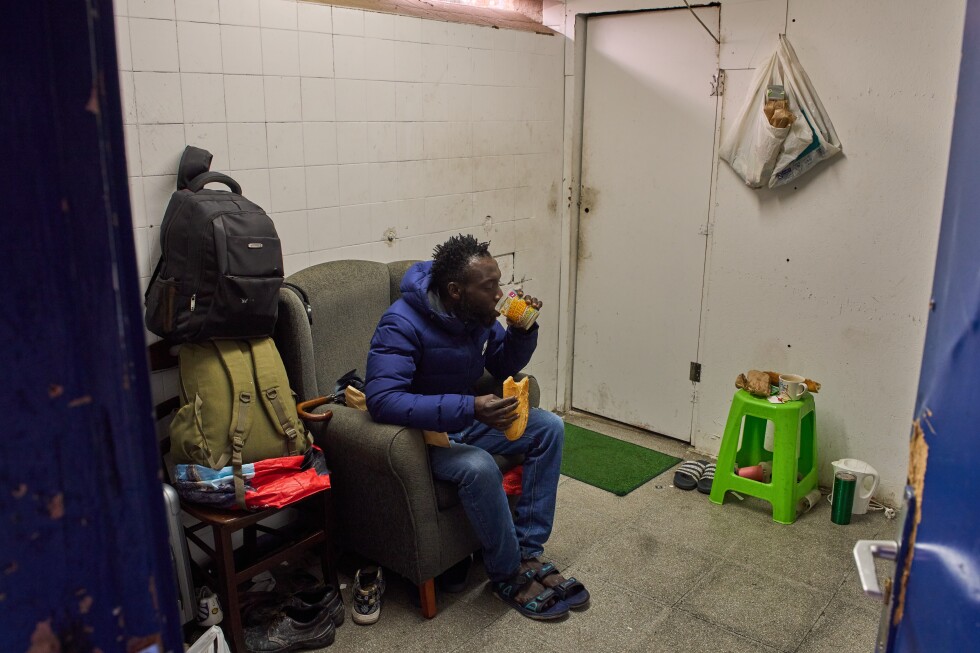
    In a bold policy shift that breaks with hardening European Union migration norms, Spain’s left-wing government has enacted a sweeping decree to grant legal status to approximately half a million undocumented migrants. Approved during Tuesday’s cabinet meeting, the measure establishes one of Europe’s most extensive regularization programs in recent years.

    Migration Minister Elma Saiz championed the initiative as a reinforcement of a rights-based migration model, emphasizing its compatibility with economic growth and social cohesion. Beneficiaries, who must have resided in Spain for a minimum of five months and applied for international protection before December 31, 2025, will gain full access to the labor market across all sectors and regions. A clean criminal record is mandatory, and the regularization extends to applicants’ children already living in the country.

    The application window is scheduled to open in April and run through June 2025. Notably, the government is implementing this via decree, bypassing parliamentary approval—a tactical move given the ruling Socialist coalition’s lack of a majority.

    The policy has ignited fierce opposition from conservative and far-right parties. Alberto Nunez Feijoo, leader of the Popular Party, condemned the move as ‘ludicrous’ on social media platform X, warning it would overwhelm public services and reward illegality. He pledged a comprehensive overhaul of migration policy if elected.

    Conversely, the Spanish Catholic Church lauded the decree as ‘an act of social justice and recognition.’ Prime Minister Pedro Sanchez’s administration justifies the policy on demographic and economic grounds, citing migration as critical for filling workforce gaps and counteracting an aging population that threatens pension sustainability. Official data released Tuesday underscored this contribution: foreigners accounted for 52,500 of the 76,200 new jobs in Q4 2024, helping drive unemployment to its lowest level since 2008.

    This humanitarian approach starkly contrasts with the broader EU trend toward stricter border controls and deterrence policies, often influenced by rising far-right influence. Spain remains a primary entry point for migrants fleeing poverty and conflict, with tens of thousands arriving annually via the Canary Islands. Recent estimates from the Funcas think-tank indicate approximately 840,000 undocumented migrants resided in Spain at the start of 2025, predominantly from Latin America. Foreigners now constitute over seven million of Spain’s 49.4 million population, highlighting the profound demographic impact of migration.

  • Watch: Huge landslide in Sicily after Storm Harry

    Watch: Huge landslide in Sicily after Storm Harry

    A catastrophic landslide has struck the eastern coastline of Sicily, prompting the emergency evacuation of over a thousand residents. The disaster occurred in the wake of Storm Harry, which unleashed torrential rains that destabilized the terrain in the Catania province.

    Dramatic footage captured the moment vast sections of earth and vegetation cascaded down hillsides, threatening residential areas and critical infrastructure. Italian civil protection authorities and emergency services executed a rapid response operation, relocating citizens to temporary shelters as a precautionary measure against further geological activity.

    Meteorological experts attribute the landslide’s severity to a combination of saturated soil conditions from prolonged precipitation and potentially vulnerable geological formations characteristic of the region. This event highlights growing concerns about extreme weather patterns and their impact on Mediterranean communities, particularly in areas with significant coastal development.

    The regional government has declared a state of emergency in affected municipalities, initiating damage assessment procedures and requesting federal support for reconstruction efforts. Geotechnical teams are currently evaluating slope stability across adjacent areas to determine additional evacuation needs.

  • In surprise move, Spain to grant legal status to thousands of immigrants lacking permission

    In surprise move, Spain to grant legal status to thousands of immigrants lacking permission

    In a landmark policy shift, Spain’s government has unveiled plans to grant legal residency and work rights to an estimated 500,000-800,000 undocumented immigrants currently living within its borders. The extraordinary measure, announced by Migration Minister Elma Saiz following Tuesday’s cabinet meeting, represents a direct challenge to the increasingly restrictive immigration policies adopted by the United States and many European nations.

    The reform will be implemented through an expedited decree, bypassing parliamentary gridlock that had stalled similar legislation. To qualify, immigrants must have arrived in Spain before December 31, 2025, provide evidence of at least five months’ residence, and demonstrate a clean criminal record. Successful applicants will receive legal residency status for up to one year alongside official work authorization.

    Minister Saiz hailed the decision as “historic,” noting that the initiative primarily benefits Latin American and African migrants who form the backbone of Spain’s agricultural, tourism, and service sectors. Their contributions have become increasingly vital to the nation’s expanding economy, yet many have remained trapped in societal shadows without legal protections.

    The policy emerged from a last-minute political agreement between the ruling Socialist Party and the left-wing Podemos party, securing parliamentary support for Prime Minister Pedro Sánchez’s administration. The move surprised observers but was immediately celebrated by migrant rights organizations and Catholic associations that had collected 700,000 signatures supporting similar measures.

    With applications expected to open by April, Spain solidifies its status as an outlier in global migration policy. While other nations tighten borders and asylum rules—often inspired by the Trump administration’s approach—Spain’s leadership continues to champion immigration’s economic benefits, having already welcomed millions of legal migrants from South America and Africa in recent years.

  • Ukrainians battle harsh winter after Russia targets energy infrastructure

    Ukrainians battle harsh winter after Russia targets energy infrastructure

    Millions of Ukrainian civilians are confronting a severe humanitarian crisis as a brutal winter sets in, following a sustained campaign of targeted strikes on the nation’s critical energy infrastructure. With thermometers consistently registering at approximately -15°C (5°F), the destruction of power generation and distribution facilities has precipitated widespread blackouts, depriving entire cities of essential heating and electricity.

    The strategic offensive against Ukraine’s energy grid has resulted in a catastrophic degradation of basic services. Urban centers, including the capital Kyiv, are experiencing rolling blackouts, compelling residents to seek refuge in emergency shelters and rely on communal heating points established by local authorities. The systematic nature of the attacks has hampered repair efforts, leaving utility crews struggling to restore even minimal functionality against the backdrop of ongoing security threats.

    This energy warfare has profound implications beyond immediate discomfort. The disruption affects vital medical services, water supply systems, and telecommunications, creating a cascading effect on public health and safety. International aid organizations are ramping up efforts to deliver generators, warm clothing, and essential supplies, yet the scale of the need vastly outstrips the current response. The situation exemplifies a new dimension of modern conflict, where civilian comfort and survival are directly targeted to apply strategic pressure during winter months.

  • Sweden aims to lower age of criminal responsibility to 13 as gangs recruit children

    Sweden aims to lower age of criminal responsibility to 13 as gangs recruit children

    The Swedish government is advancing controversial legislation to reduce the age of criminal responsibility from 15 to 13 for severe offenses, responding to what Justice Minister Gunnar Strommer characterizes as an ’emergency situation’ with criminal networks exploiting minors. The proposed measure specifically targets grave crimes including murder, attempted murder, aggravated bombings, serious weapons offenses, and aggravated rape, with potential prison sentences for convicted offenders.

    This initiative follows alarming data from the Swedish National Council for Crime Prevention showing a doubling in offenses linked to suspects under 15 over the past decade. The center-right government, elected in 2022 on an anti-crime platform, had previously considered lowering the age to 14 based on a 2023 inquiry before opting for the more drastic reduction to 13.

    Despite government assertions that the measure addresses ‘cynical exploitation’ of children by gangs, the proposal faces substantial opposition from law enforcement, judicial, and child welfare authorities. Critics including police, prison officials, and prosecutors warn the change might inadvertently draw even younger children into criminality. The prison and probation service expressed concerns about detention facilities being ill-equipped for juvenile offenders and potential violations of children’s rights.

    The legislation has sparked heated debate about appropriate responses to youth criminality. Opponents like local authority head Fredrik Hjulström argue the proposal lacks factual foundation and represents political maneuvering ahead of September’s general election, advocating for care-based approaches instead of punishment. Lawyer Johan Eriksson concurred that while intervention is necessary, lowering the age threshold might produce counterproductive outcomes.

    The bill now proceeds to Sweden’s Council on Legislation for review before parliamentary consideration, with potential implementation as early as summer 2024 if approved.

  • US-China ties in 2026: scholars see window for stability amid fragility

    US-China ties in 2026: scholars see window for stability amid fragility

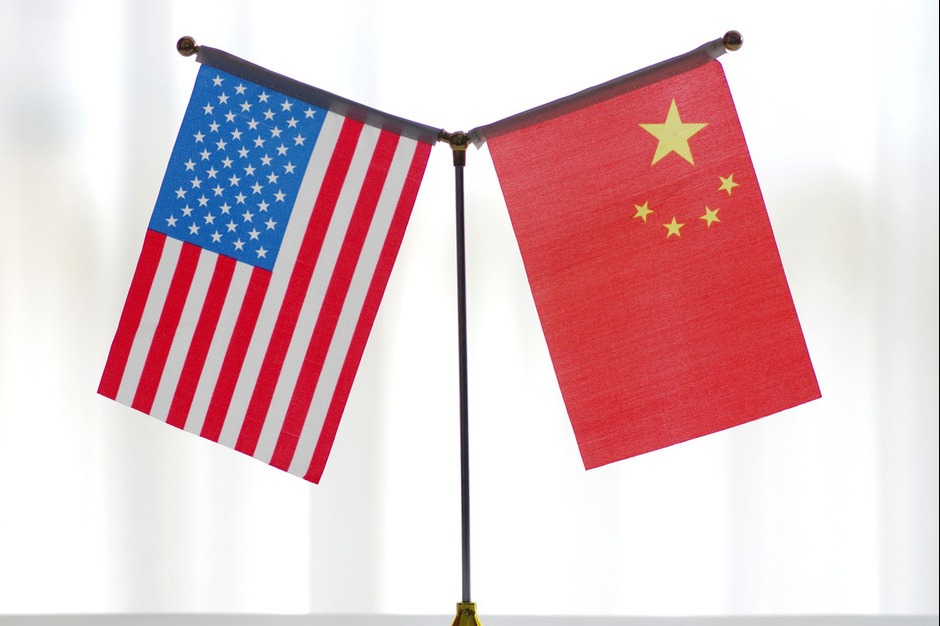
    Academic experts specializing in international affairs have presented a nuanced assessment of Sino-American relations for the coming year, identifying both stabilizing factors and underlying vulnerabilities in the bilateral relationship. The analysis emerged during a recent virtual symposium organized by the Institute for China-America Studies, where scholars examined the geopolitical landscape following significant developments throughout 2025.

    David Kang, who holds the Maria Crutcher professorship in international relations at the University of Southern California, expressed measured optimism, noting that the current state of affairs has surpassed earlier expectations. This cautiously positive outlook follows a year that witnessed five substantial trade negotiation rounds and a consequential summit in Busan, South Korea, which resulted in a temporary suspension of tariff escalations.

    The Trump administration’s recently published National Security Strategy provided additional context for the discussion. The document notably emphasized economic engagement across Asia while refraining from characterizing China as an existential national security threat—a significant departure from conventional Washington foreign policy rhetoric.

    Robert Sutter, professor of practice at George Washington University’s Elliott School of International Affairs, highlighted President Trump’s distinctive approach to China relations, describing it as fundamentally “transactional” rather than ideologically driven. This methodology leverages access to the enormous American consumer market as diplomatic capital to negotiate bilateral agreements more favorable to United States interests.

    However, Professor Kang offered a more circumspect perspective regarding American influence in Asia, suggesting that regional trends continue to move in concerning directions. He characterized the public displays of diplomatic engagement from Asian allies as “performative flattery” that masks deeper efforts to establish regional networks as protection against potential American policy volatility.

    The Taiwan question emerged as a critical flashpoint in the discussions. The United States’ approval of an unprecedented $11 billion arms package to Taiwan in late 2025—the largest single authorization to date—contrasted with the National Security Strategy’s reaffirmation of established policy without explicit endorsement of the One-China principle.

    Bucknell University Professor Zhu Zhiqun described the arms sales as a “problematic approach” that contributes to relationship fragility. He characterized the current bilateral dynamic as a “negative equilibrium” sustained not by mutual benefit or shared values but by reciprocal capacity for economic harm through mechanisms including tariff impositions, technology controls, and commodity restrictions.

    Despite these challenges, Liu Yawei, senior China advisor at the Carter Center, projected optimism for 2026, suggesting that stability on the Taiwan issue could produce stabilizing effects across the entire US-China relationship, ultimately benefiting the international community at large.

  • Journalists invited to cover the 2026 two sessions

    Journalists invited to cover the 2026 two sessions

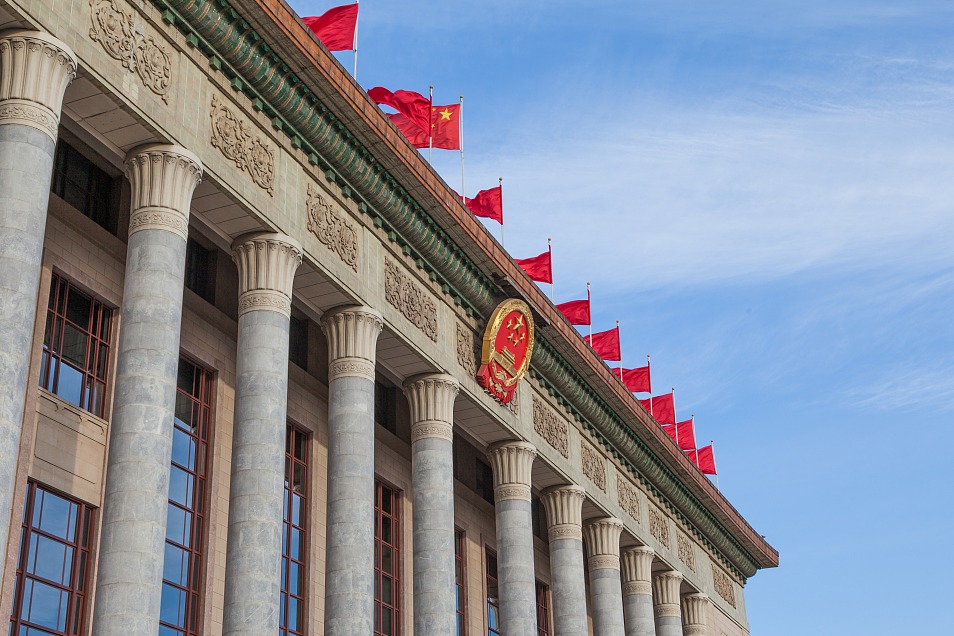
    China has officially commenced media accreditation procedures for the upcoming 2026 ‘Two Sessions,’ the nation’s most significant annual political gathering. According to a joint announcement from the National People’s Congress Committee and the Chinese People’s Political Consultative Conference National Committee, the media center in Beijing will become operational on February 27th in preparation for the events.

    The political calendar confirms the Fourth Session of the 14th Chinese People’s Political Consultative Conference (CPPCC) National Committee will convene on March 4th, followed by the Fourth Session of the 14th National People’s Congress (NPC) commencing on March 5th. Official statements emphasize that journalistic coverage will incorporate diverse methodologies, with particular priority given to on-site reporting.

    International media representatives currently stationed in China must submit their accreditation requests directly to the press center. Correspondents based overseas may apply through Chinese diplomatic missions in their host countries or via visa agencies authorized by China’s Ministry of Foreign Affairs. Journalists from Hong Kong and Macao special administrative regions should process applications through the central government’s liaison offices in their respective territories, while Taiwanese reporters must coordinate through the State Council’s Taiwan Affairs Office.

    The application portal will remain accessible until February 3rd, with comprehensive information available through official channels at www.npc.gov.cn and www.cppcc.gov.cn. These parallel sessions represent China’s paramount political event, convening national legislators and political advisors to examine government and judicial performance reviews, deliberate critical socioeconomic policies, and formulate legislative amendments concerning national development and citizen welfare.

  • ‘One Battle After Another’ leads the pack in nominations for UK’s BAFTA film awards

    ‘One Battle After Another’ leads the pack in nominations for UK’s BAFTA film awards

    LONDON — The British Academy of Film and Television Arts unveiled its nominations for the 2026 awards season, positioning Paul Thomas Anderson’s politically charged action thriller ‘One Battle After Another’ as the frontrunner with an impressive 14 nominations. The film received recognition across major categories, including five acting nods for its ensemble cast.

    Ryan Coogler’s blues-infused vampire epic ‘Sinners’ followed closely with 13 nominations, while Chloé Zhao’s Shakespearean family tragedy ‘Hamnet’ and Josh Safdie’s ping-pong odyssey ‘Marty Supreme’ each secured 11 nominations. The Norwegian family drama ‘Sentimental Value’ rounded out the Best Film category alongside these contenders.

    In the competitive Best Leading Actor category, Robert Aramayo garnered recognition for his portrayal of a man with Tourette’s syndrome in ‘I Swear,’ competing against Timothée Chalamet (‘Marty Supreme’), Leonardo DiCaprio (‘One Battle After Another’), Ethan Hawke (‘Blue Moon’), Michael B. Jordan (‘Sinners’), and Jesse Plemons (‘Bugonia’).

    The Leading Actress race features favorite Jessie Buckley (‘Hamnet’) against Rose Byrne (‘If I Had Legs I’d Kick You’), Kate Hudson (‘Song Sung Blue’), Chase Infiniti (‘One Battle After Another’), Renate Reinsve (‘Sentimental Value’), and Emma Stone (‘Bugonia’).

    Notably, The Associated Press received a nomination in the Best Documentary category for Mstyslav Chernov’s harrowing Ukraine war portrait ‘2000 Meters to Andriivka,’ co-produced by AP and PBS Frontline.

    The awards ceremony, scheduled for February 22 in London with actor Alan Cumming hosting, traditionally serves as a significant indicator for Hollywood’s Academy Awards on March 15. This year presents an unusual sequence with Oscar nominations announced first, where ‘Sinners’ set a record with 16 nominations followed by ‘One Battle After Another’ with 13.

    The British academy demonstrated its distinctive perspective by recognizing several performers overlooked by the Oscars, including supporting actor nominees Paul Mescal (‘Hamnet’) and Odessa A’zion (‘Marty Supreme’). The BAFTAs maintain their British focus through a separate category for Best British Film, with nominees including ‘The Ballad of Wallis Island,’ ‘Pillion,’ ‘I Swear,’ and ‘Bridget Jones: Mad About the Boy.’

    Voting procedures involve 8,500 U.K. industry professionals selecting most winners, while the Rising Star Award remains determined by public vote from a shortlist featuring Infiniti, Aramayo, ‘Sinners’ star Miles Caton, and British actors Archie Madekwe and Posy Sterling.

    The nominations reflect ongoing diversity initiatives implemented after 2020, when no women were nominated for Best Director for the seventh consecutive year and all 20 acting nominees were white. Currently, Zhao stands as the sole female nominee in the Best Director category alongside Anderson, Safdie, Coogler, Yorgos Lanthimos (‘Bugonia’), and Joachim Trier (‘Sentimental Value’). Across all categories including documentaries and shorts, 25% of directing nominees are women.

  • EU steps in to make sure Google gives rivals access to AI services and data

    EU steps in to make sure Google gives rivals access to AI services and data

    BRUSSELS — The European Union has initiated formal proceedings against tech giant Google to ensure compliance with the Digital Markets Act (DMA), specifically targeting the company’s artificial intelligence services and data sharing practices. The executive arm of the 27-nation bloc announced on Tuesday the opening of specification proceedings to verify whether Google is providing rival AI companies and search engines with equitable access to Gemini AI services and essential data.

    The European Commission’s action focuses on two primary concerns: whether Google is granting third-party AI developers “equally effective access to the same features” available through its proprietary services, and whether competing search engines are receiving fair and reasonable access to Google Search data, including eligibility for AI chatbot providers.

    This regulatory move represents the EU’s latest effort to enforce its landmark digital competition rules, designed to prevent dominant tech platforms from leveraging their market position to disadvantage smaller competitors. The proceedings, which must conclude within six months, could result in draft measures imposed on Google’s operations.

    Google’s Senior Competition Counsel Clare Kelly responded with concerns about the procedure, stating that Android’s open design already facilitates Search data licensing to competitors under DMA requirements. Kelly warned that additional rules “driven by competitor grievances rather than consumer interests” could potentially compromise user privacy, security, and technological innovation.

    Teresa Ribera, Executive Vice President of the European Commission overseeing competition affairs, emphasized the EU’s commitment to ensuring that the current technological transformation benefits from “an open and fair playing field, not tilted in favor of the largest few.”

    This development intensifies regulatory pressure on Google, which already faces ongoing antitrust scrutiny from EU authorities regarding potential unfair advantages gained through using online content for its AI models and services.