作者: admin

  • UAE to increase Manila flights to meet rising passenger demand

    UAE to increase Manila flights to meet rising passenger demand

    The United Arab Emirates and the Philippines have solidified an enhanced aviation agreement that will significantly increase flight connectivity between the two nations. Following bilateral consultations between the UAE’s General Civil Aviation Authority (GCAA) and the Philippines’ Civil Aeronautics Board (CAB), authorities have granted additional flight entitlements to UAE carriers.

    This expanded air services agreement enables UAE national airlines including Etihad Airways and Emirates to operate additional flights to Manila’s Ninoy Aquino International Airport. The decision responds to consistently strong passenger demand and reinforces the robust aviation partnership between the two countries.

    The enhanced connectivity builds upon longstanding bilateral relations characterized by dynamic civil aviation cooperation. The agreement reflects mutual interests in expanding commercial flight operations, which officials anticipate will further stimulate tourism, trade, and people-to-people exchanges.

    A significant factor driving this aviation expansion is the substantial Filipino community residing and working in the UAE, which creates consistent demand for air travel between the two nations. The expanded flight allocations are expected to accommodate growing passenger traffic while supporting the development of the civil aviation sector in both countries.

    The agreement represents a strategic advancement in UAE-Philippines aviation relations, highlighting how bilateral cooperation can address market demands while fostering economic and cultural connections through enhanced air transport capabilities.


  • Leonardo DiCaprio, awed by Martin Scorsese, would never turn director

    Leonardo DiCaprio, awed by Martin Scorsese, would never turn director

    At the prestigious A Year in TIME event in New York City, Hollywood icon Leonardo DiCaprio revealed he has permanently dismissed any aspirations to become a film director, attributing his decision to profound admiration for Martin Scorsese’s directorial mastery. The 51-year-old Oscar winner, currently collaborating with Scorsese on their seventh joint project, expressed unwavering reverence for the legendary filmmaker’s craft during their candid conversation.

    DiCaprio articulated his position with unmistakable clarity: ‘When people inquire about potential directing ambitions, my response remains unequivocal – I would never pursue that path. The cinematic excellence Martin Scorsese achieves is simply incomparable. Why would I attempt something I could never approximate?’

    The actor reflected on his professional evolution with notable introspection, acknowledging occasional regrets about not sufficiently observing the directorial process during earlier career stages. ‘As performers, we immerse ourselves in character psychology with intense dedication,’ DiCaprio noted. ‘In retrospect, I wish I had embraced more opportunities to simply observe Marty’s directorial techniques behind the camera.’

    Their distinctive collaborative methodology involves extensive preparatory work months before filming commences. DiCaprio emphasized their creative dynamic thrives on rigorous pre-production debates: ‘Our process involves continuous questioning and playing devil’s advocate to explore unconventional narrative approaches. This thorough preparation has constituted one of the most valuable educational experiences of my career.’

    DiCaprio traced his reverence for Scorsese to childhood exposure facilitated by his father, who identified the director and Robert De Niro as artistic benchmarks. Their professional partnership commenced with 2002’s Gangs of New York and has since produced critically acclaimed works including The Aviator, The Departed, and Killers of the Flower Moon.

    The duo is currently developing What Happens at Night, an adaptation of Peter Cameron’s novel co-starring Jennifer Lawrence, marking their seventh collaborative endeavor.

  • Taoiseach bites back at criticism of party’s Irish presidential review

    Taoiseach bites back at criticism of party’s Irish presidential review

    Irish Taoiseach Micheál Martin faces mounting internal pressure within his Fianna Fáil party regarding the handling of a presidential election review, while simultaneously denouncing media coverage as “extremely disappointing, selective and inaccurate.” The political turmoil stems from the withdrawal of the party’s presidential candidate, Jim Gavin, who abandoned his campaign in October after revelations emerged concerning an accidental overpayment to a former tenant. Although Gavin subsequently repaid the funds, his name remained on the ballot and secured 7.18% of first preference votes. The controversy prompted Fianna Fáil to commission an independent review led by senior counsel, yet the unpublished report has become a source of significant internal strife. Three prominent party TDs—Willie O’Dea, Pat Gallagher, and Seán Ó Fearghaíl—have publicly demanded the “immediate release” of the report, condemning media leaks as damaging to the party’s reputation and public trust. They emphasized that “accountability is now essential if we are to restore trust and credibility.” In response, Martin issued a formal statement clarifying that he has not yet received the report and defending his approach to allow the review committee “to do its work independently.” A special parliamentary party meeting is anticipated to discuss the findings, though no date has been confirmed, prolonging the internal dissent within Ireland’s governing party.

  • Lyon ready to roar again for Australia in third Ashes Test

    Lyon ready to roar again for Australia in third Ashes Test

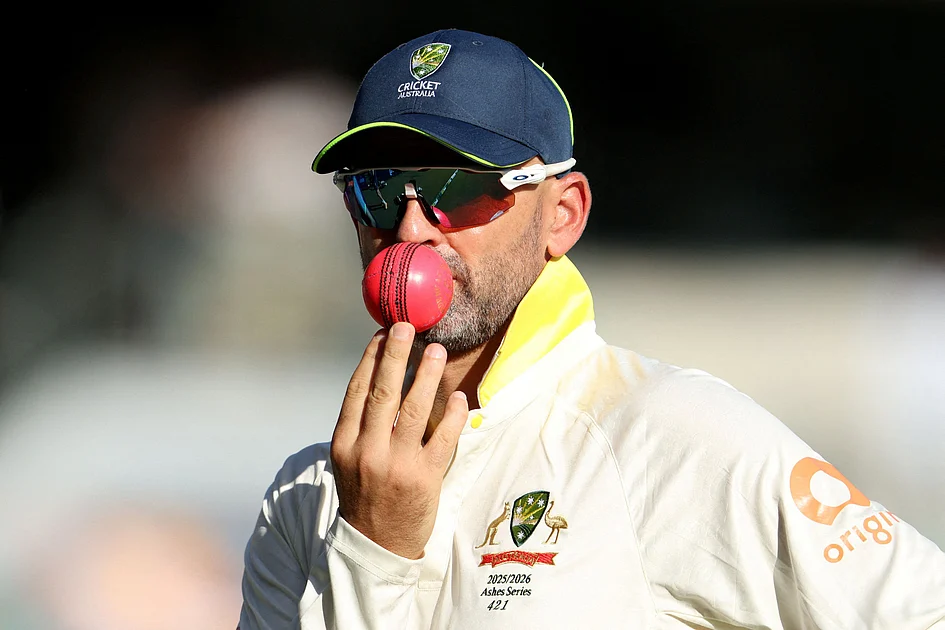
    Australian cricket veteran Nathan Lyon has expressed his eagerness to return to the national squad for the pivotal third Ashes Test at Adelaide Oval, following his unexpected exclusion from the Brisbane match that ended his 14-year consecutive home Test appearance streak. The 38-year-old off-spinner, who once served as ground staff at the iconic Adelaide venue before evolving into Australia’s most prolific Test off-spinner, is poised to rejoin captain Pat Cummins in the lineup for Wednesday’s encounter.

    Despite openly acknowledging his disappointment at being dropped for the Gabba Test, Lyon maintains a forward-looking perspective regarding his role in the current series. ‘Every opportunity that there’s a Test match on, I want to be a part of it. I love playing cricket,’ Lyon stated during a media interaction after being inducted into the stadium’s ‘Avenue of Honour’ on Monday. He emphasized moving past the setback, focusing instead on his potential contributions in the upcoming match.

    With Australia holding a commanding 2-0 series lead, Lyon has had minimal bowling opportunities thus far, delivering merely two overs across the opening Tests. The seasoned spinner anticipates greater involvement at Adelaide Oval, where he boasts an impressive record of 63 Test wickets. ‘I haven’t really had the opportunity to get my teeth into this Test series yet, but that opportunity will hopefully come soon,’ Lyon added.

    Adelaide Oval head groundsman Damian Hough, Lyon’s former supervisor during his groundstaff days, indicated the pitch preparation would likely favor spin bowling. ‘Spin needs to play a part here. It always has,’ Hough commented, highlighting the historical significance of spin at the venue and expressing desire for spin to play a meaningful role in Australian pitches nationwide.

    The Brisbane omission has temporarily halted Lyon’s pursuit of bowling milestones, leaving him at 562 Test wickets—just one dismissal shy of equaling legendary pace bowler Glenn McGrath’s tally as Australia’s second-most prolific Test wicket-taker. Despite his age, Lyon remains unequivocal about his continued international aspirations, stating: ‘I’ve played 140 Test matches. I feel like I don’t have a point to prove to anyone.’ The veteran cricketer reaffirmed his commitment to representing Australia, emphasizing his clarity of role within the team and his enduring passion for the sport.

  • Beijing: Japanese fighter jets harassed pre-notified exercise zone

    Beijing: Japanese fighter jets harassed pre-notified exercise zone

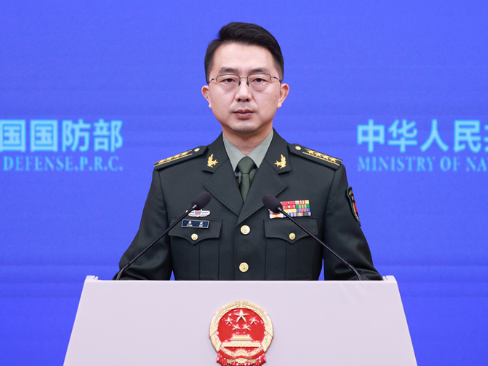
    In a significant escalation of tensions between the two Asian powers, China’s Defense Ministry has presented detailed evidence countering Japan’s claims regarding recent military encounters in the East China Sea. Defense Ministry spokesman Jiang Bin disclosed that Chinese naval vessels had provided explicit prior notification to Japanese counterparts about scheduled carrier-based aircraft training exercises.

    The confrontation centers around allegations made earlier this month by Japan’s defense ministry that Chinese military aircraft had engaged in radar locking maneuvers against Japanese fighter jets during training operations conducted by the CNS Liaoning aircraft carrier and its accompanying task group. Jiang characterized these accusations as baseless and politically motivated.

    According to the Chinese account, on December 6th, Chinese warship 101 formally notified Japanese warship 116 about planned flight training operations, with the Japanese vessel acknowledging receipt of the communication. A subsequent message specified that training would commence at 3:00 PM local time, continue for approximately six hours, and occur primarily south of the Chinese aircraft carrier—again with Japanese confirmation of understanding.

    Despite these explicit notifications, Jiang stated that Japanese fighter jets repeatedly intruded into the designated training zone, creating hazardous conditions and engaging in what China considers deliberate harassment. The spokesman asserted that Japan bears complete responsibility for any safety compromises resulting from these incursions.

    Jiang further accused Japan of systematic deception, claiming Tokyo has ‘repeatedly misled its own public and the international community’ by portraying routine Chinese military exercises as security threats while casting itself as the victim rather than the instigator. The spokesman suggested these actions might represent a calculated diversion from recent controversial statements about Taiwan made by Japanese Prime Minister Sanae Takaichi.

    The Chinese defense spokesman raised concerns about Japan’s broader strategic intentions, questioning whether the incidents reflect attempts to ‘create excuses to break away from the post-war system, to loosen restrictions on its military development, and to revive the specter of its militarist past.’

    China has called on Japan to address fundamental issues in bilateral relations and ‘earnestly reflect on and rectify its wrongdoings,’ warning that political manipulations aimed at evading responsibility would prove unsuccessful.

  • Canada’s Carney called out for ‘utilizing’ British spelling

    Canada’s Carney called out for ‘utilizing’ British spelling

    A coalition of prominent Canadian linguists and language authorities has formally requested Prime Minister Mark Carney to maintain Canadian English standards in all governmental communications, following the discovery of British spellings in key official documents. The controversy emerged after language specialists identified non-Canadian orthography in recent publications from the Carney administration, including the November fiscal budget and an October press release concerning diplomatic engagements in Washington, DC.

    In a collectively signed open letter dated December 11th and obtained by BBC News, the language professionals emphasized that Canadian English represents a crucial element of national identity that reflects the country’s unique historical and cultural position between American and British influences. The signatories—including four distinguished linguistics professors from Canadian universities and the editor-in-chief of the Canadian English Dictionary—argued that governmental deviation from established Canadian spelling conventions could generate public confusion and diminish linguistic pride.

    Canadian English incorporates distinctive characteristics that set it apart from both American and British variants. While it typically favors the British ‘ou’ construction in words like ‘colour’ rather than the American ‘color’, it consistently employs ‘z’ spellings in words like ‘organize’ and ‘analyze’ instead of the British ‘organise’ and ‘analyse’. The language also features uniquely Canadian terminology including ‘toque’ (a winter hat) and ‘washroom’ (restroom), which differ from both American and British equivalents.

    Professor Stefan Dollinger of the University of British Columbia, one of the letter’s signatories, expressed concern that the Prime Minister’s Office might be reversing decades of linguistic evolution. “Language expresses identity,” Professor Dollinger stated, noting the symbolic importance of maintaining Canada’s distinct linguistic traditions rather than reverting to colonial-era conventions.

    Some observers have speculated that Carney’s extended residence in the United Kingdom—where he served seven years as Governor of the Bank of England—might have influenced his linguistic preferences. Prominent linguist JK Chambers of the University of Toronto, another signatory, remarked via email that while Carney “obviously picked up some pretensions while he was there,” he had at least avoided using extreme British forms like ‘gaol’ for ‘jail’.

    Editors Canada President Kaitlin Littlechild noted that it remains unclear whether the British spellings resulted from a procedural misunderstanding or represented a deliberate stylistic directive. The organization has sought clarification from the Prime Minister’s Office regarding its official language policy moving forward.

  • Elephant orphans. Goat’s milk. This safari reveals the impact of wildlife conservation in Kenya

    Elephant orphans. Goat’s milk. This safari reveals the impact of wildlife conservation in Kenya

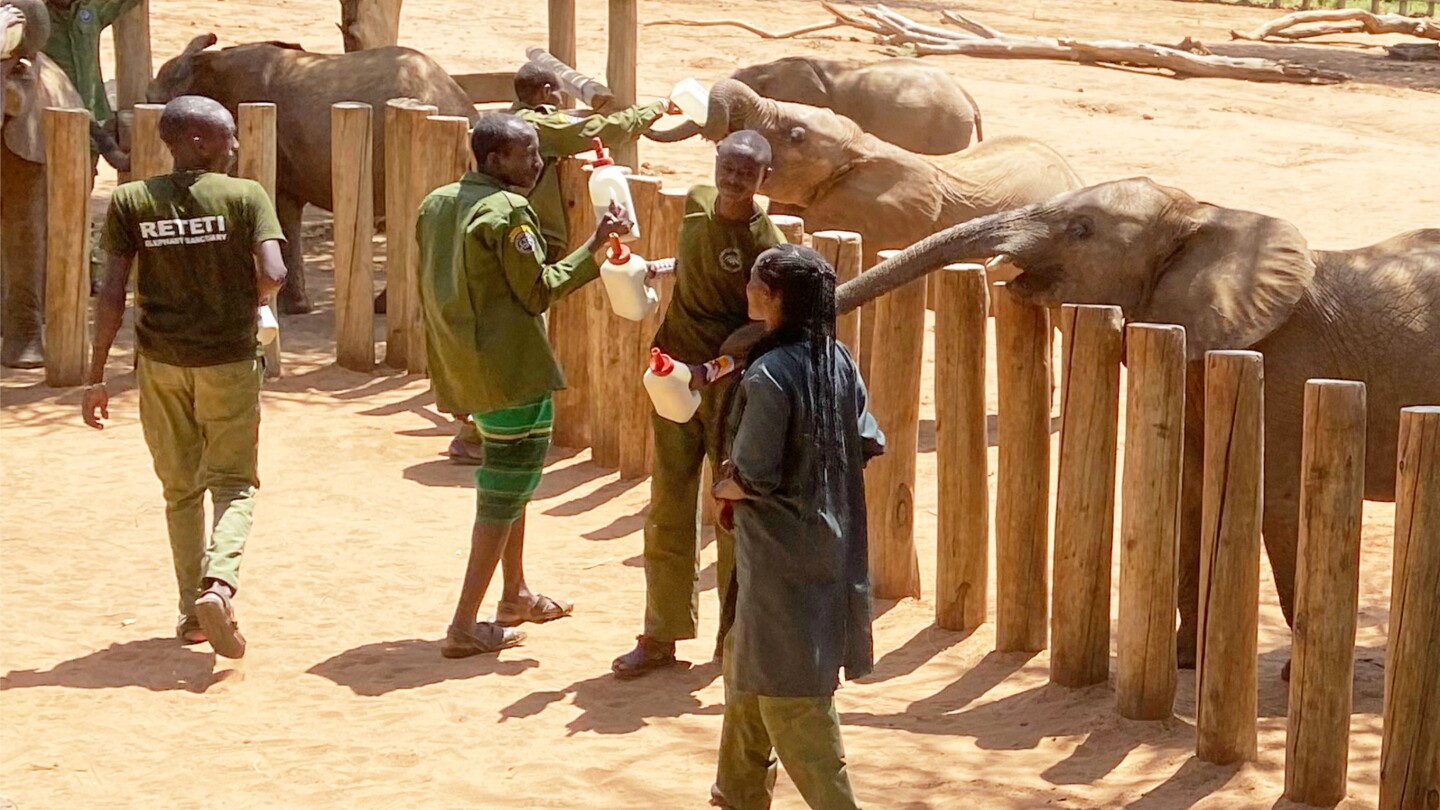
    At Kenya’s Reteti Elephant Sanctuary, a revolutionary conservation model is reshaping the relationship between wildlife protection and community development. Under the equatorial sun, Samburu tribespeople have established Africa’s first entirely Indigenous-run elephant sanctuary, creating an innovative symbiotic system that benefits both orphaned elephants and local communities.

    The sanctuary’s breakthrough came through an unexpected nutritional solution: goat’s milk. When manufactured formula proved costly and unsuitable, caretakers discovered that milk from local goat herds provided an ideal nutritional substitute for elephant milk. This revelation sparked an economic transformation—more than 1,200 Samburu women now supply nearly 700 liters of milk daily to the sanctuary, generating income that provides financial independence and improved living standards.

    Beyond milk production, Reteti employs approximately 100 Samburu people, making elephants what sanctuary spokesperson Dorothy Lowakutuk describes as “the keystone of the entire economy.” The model demonstrates how conservation efforts can directly benefit local populations, particularly women who have traditionally had limited economic opportunities.

    The sanctuary’s success reflects a broader trend in Kenyan conservation where tourism and wildlife protection increasingly support Indigenous communities. Organizations like Uplift Travel have emerged specifically to channel tourism revenue into local development projects, particularly those supporting women and girls. Founded by travel writer Kim Schneider and philanthropy partner Tanja Wittrock, the organization demonstrates how strategic tourism can significantly impact quality of life while providing immersive cultural experiences.

    Kenya’s conservation landscape includes multiple innovative approaches to human-wildlife coexistence. At the Ol Pejeta Conservancy, armed guards protect the last two northern white rhinos while scientists work on advanced reproductive technologies to save the species. In Masai communities, beehive fences create natural barriers that protect both crops and elephants through the insects’ buzzing and stinging deterrent effect.

    These initiatives represent a paradigm shift in conservation philosophy—moving from exclusionary protection models to integrated approaches that recognize Indigenous communities as essential partners in preserving Africa’s magnificent wildlife heritage.

  • Turkish fighter planes shoot down ‘out of control’ drone near the country’s Black Sea coast

    Turkish fighter planes shoot down ‘out of control’ drone near the country’s Black Sea coast

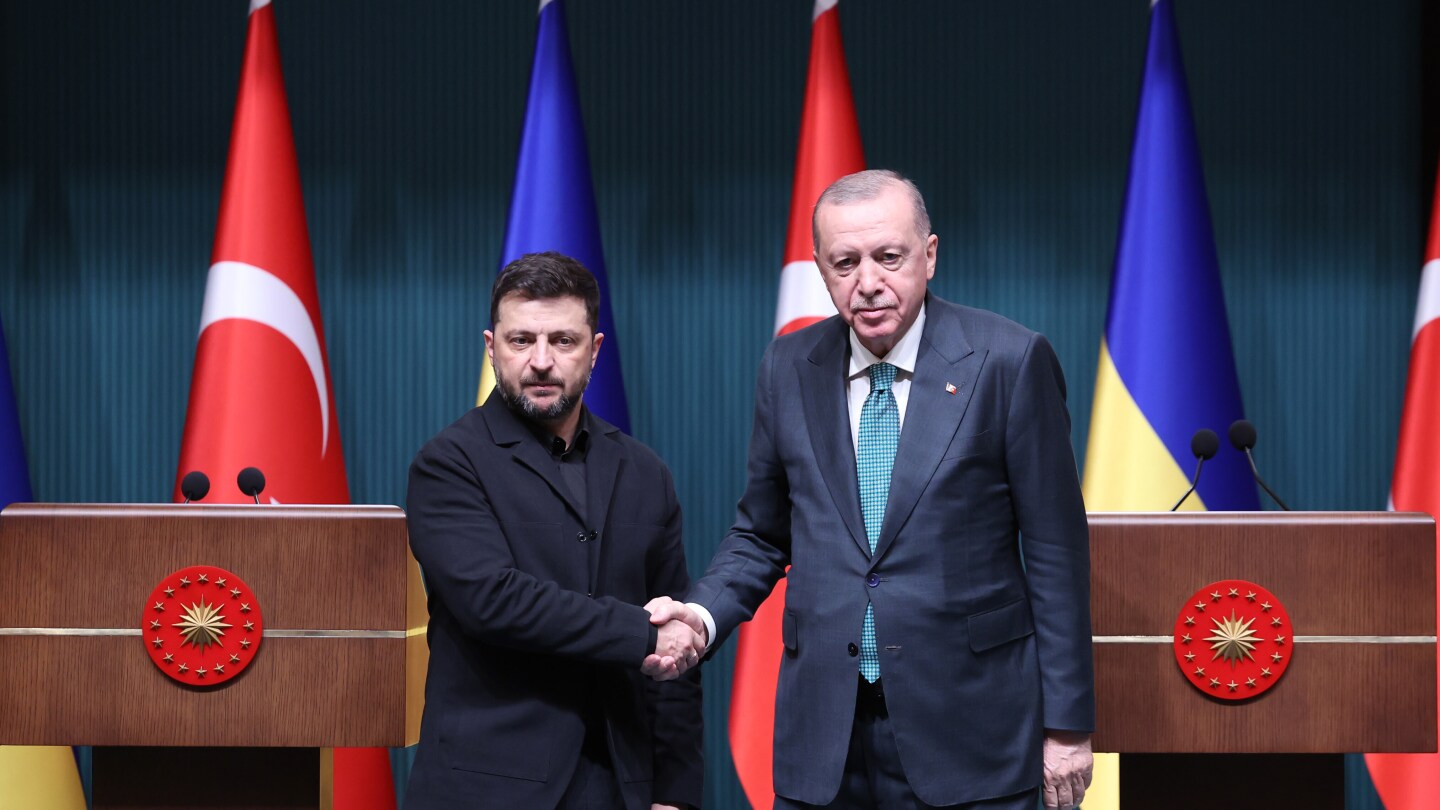
    Turkish military forces have intercepted and destroyed an unmanned aerial vehicle (UAV) detected approaching the nation’s airspace from the Black Sea under uncontrolled flight conditions, according to an official statement released by the Ministry of Defense on Monday.

    The incident occurs against a backdrop of escalating regional security concerns following recent Ukrainian naval drone strikes targeting Russian-affiliated oil tankers near the Turkish coastline. These maritime attacks, including operations against vessels on November 28 and December 2 near the port of Sinop, have raised alarms among Turkish leadership about the potential for the Ukraine conflict to expand into regional waters.

    Upon detecting the unidentified aerial object, Turkish air defense systems initiated standard protocols, scrambling F-16 fighter aircraft to investigate. The Defense Ministry confirmed that the decision to engage was made after determining the drone posed a potential threat. “To prevent any possible security risks, the object was neutralized in a designated safe area away from populated zones,” the statement read, though specific coordinates and timing details were not disclosed.

    President Recep Tayyip Erdogan had previously characterized similar maritime incidents as direct threats to navigational safety, environmental protection, and human life within Turkey’s exclusive economic zone. The interception highlights Turkey’s heightened alert status and its commitment to maintaining territorial integrity amid growing regional instability.

  • Dubai’s outer zones: The new frontier of ultra-luxury living

    Dubai’s outer zones: The new frontier of ultra-luxury living

    Dubai’s luxury real estate landscape is undergoing a profound transformation as affluent buyers increasingly prioritize expansive spaces, enhanced privacy, and wellness-focused communities over central urban locations. This paradigm shift has propelled outer-zone developments like Jumeirah Islands 2.0, Dubai South’s villa enclaves, and private-island-style compounds into the forefront of premium residential offerings.

    According to industry experts, today’s high-net-worth individuals—particularly international families establishing long-term residency—are driving demand for properties that function as personal sanctuaries rather than status symbols. Andrew Elliott, Director of Commercial Agency at Chestertons Mena, notes that ‘buyers seek privacy, spacious plots, and lifestyle-led communities that central districts cannot provide.’

    Developers have responded with masterplanned communities that integrate nature, wellness amenities, and strategic connectivity. Rui Liu, Chairman of LEOS Developments, emphasizes that ‘ultra-high-net-worth buyers are no longer willing to trade lifestyle for location,’ highlighting how outer zones now offer ‘land, light, and true breathing space’ unavailable in central districts.

    Dubai South has emerged as a strategically significant residential zone, bolstered by infrastructure developments including the expansion of Al Maktoum International Airport and the evolution of Expo City. Elie Naaman, CEO of Ellington Properties, observes that these districts ‘are maturing into well-designed neighborhoods with the space and serenity today’s homeowners value.’

    The appeal of waterfront living has also expanded beyond traditional hotspots. Blagoje Antic of DHG Holding notes that demand for ultra-luxury waterfront homes is ‘increasingly shifting toward outer zones’ where developers deliver unprecedented exclusivity. Projects like Palm Jebel Ali and Dubai Islands have recorded billions in sales, offering private beachfront plots, lagoon views, and resort-style amenities.

    Connectivity remains a crucial factor in making peripheral living practical. Proximity to major highways and international airports allows residents to enjoy tranquil surroundings while maintaining access to urban centers and global travel networks. This combination of seclusion and accessibility represents Dubai’s new blueprint for luxury living, redefining the very concept of premium real estate in the region.

  • Japanese scholar condemns Japan’s risky defense spending

    Japanese scholar condemns Japan’s risky defense spending

    A prominent Japanese academic has issued a stern warning about his country’s rapidly expanding military ambitions, citing alarming defense expenditure increases and provocative political rhetoric. Professor Emeritus Atsushi Koketsu of Yamaguchi University recently revealed in an exclusive China Daily interview that Japan’s military budget for fiscal year 2025 will surpass 10 trillion yen (approximately $64.14 billion) – a historic threshold that signals a dramatic shift in the nation’s security posture.

    This substantial financial commitment, Koketsu argues, will primarily facilitate the acquisition of advanced offensive weapon systems rather than defensive capabilities. The professor contends that Japan is dangerously reviving pre-war militaristic tendencies by persistently fabricating external threats from neighboring nations. This approach, he warns, demonstrates a concerning disregard for historical lessons and represents a potential return to past errors that previously led to regional conflict.

    The academic’s critique extends to Prime Minister Sanae Takaichi’s recent controversial statements regarding Taiwan, which Koketsu interprets as evidence of Japan’s increasingly confrontational stance toward China. These developments, according to the scholar, collectively pose a genuine threat to stability and security throughout the Asia-Pacific region. The combination of heightened military spending, offensive weapons procurement, and inflammatory political rhetoric creates a volatile mix that could undermine decades of relative peace and cooperation.

    Koketsu’s analysis suggests that Japan is systematically abandoning its post-war pacifist constitution principles in favor of a more assertive military doctrine. This strategic pivot occurs amid ongoing regional tensions and reflects broader geopolitical realignments that could have far-reaching consequences for international relations and security architectures in East Asia.