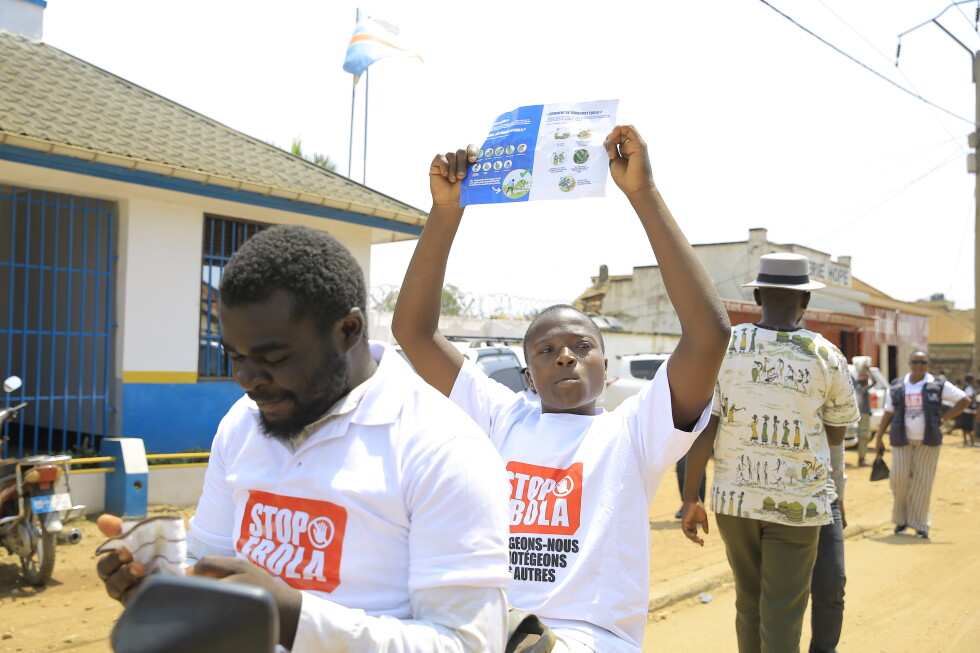
In a grim update released Monday, Democratic Republic of Congo health authorities confirmed that the nation’s unprecedented fast-spreading Ebola outbreak has crossed a devastating threshold, with more than 6,000 confirmed cases and 2,911 fatalities recorded to date. Amid the rising death toll, authorities did highlight one small positive development: over 1,360 patients have successfully recovered from the virus, a trend officials described as encouraging for frontline response teams.
The outbreak, which is centered in eastern Congo, is expanding against a backdrop of extraordinary operational challenges. Chronic regional insecurity, mass population displacement, a recent strike by frontline health workers, and constant large-scale population movements have all combined to accelerate transmission. Displacement camps, where residents already live in overcrowded, unsanitary and precarious conditions, are emerging as particularly high-risk sites for widespread infection. Just last week, health officials confirmed the virus has reached two more previously unaffected health zones, bringing the total number of impacted areas across the region to nearly 60.
The World Health Organization (WHO) has repeatedly warned that the outbreak remains completely out of control, and current projection models indicate it could soon overtake the 2014–2016 West Africa Ebola epidemic as the deadliest outbreak on record. That earlier outbreak killed more than 11,000 people across Guinea, Liberia and Sierra Leone.
Complicating response efforts further, violent attacks against response teams have become increasingly common. On Saturday, an Ebola response team deployed to the outskirts of Mambasa, a town in Ituri province, came under attack while working to safely recover an Ebola-related death. A group of young men armed with machetes stormed the funeral site where the team was operating, forcing all responders to evacuate the area and leaving one team member injured. Floribert Magene, a member of the response team, told the Associated Press that frontline workers are urgently calling for improved protection. “We demand greater security so we can operate in the field and do our work without endangering our lives,” Magene said.
Unlike many previous Ebola outbreaks, this current event is caused by the Bundibugyo strain, a rare variant of the virus for which no officially licensed vaccine or specific treatment currently exists. In a proactive step last week, Congolese health authorities launched a vaccination campaign for health care workers and other frontline response staff using Ervebo, a vaccine that proved effective against Zaire Ebola — the more common strain that caused previous major outbreaks. Clinical trials for a Bundibugyo-specific vaccine are currently ongoing to develop a targeted tool for fighting this outbreak.
Health officials retroactively determined that while the outbreak was formally declared in mid-May, the virus had begun spreading quietly through communities as early as February. It has since expanded from just 3 initial health zones to 60, with data showing that the majority of new cases and deaths are occurring outside of monitored contact tracing networks, spreading undetected within local communities.
Public health control measures, including limits on large public gatherings, social distancing guidelines, and airport closures, have upended daily life across six affected Congolese provinces. Ituri province, which is also grappling with persistent rebel violence that has displaced thousands of residents, has been hit particularly hard by these disruptions. While the Congolese government has rolled out limited interventions, including installing sanitary and medical screening equipment at high-traffic sites, public health advocacy groups emphasize that far more work is needed to build trust with local communities and expand access to care.
Although neighboring Uganda declared itself officially Ebola-free last month after containing a small cross-border outbreak, the WHO warned last week that the risk of future cross-border spread remains elevated, as long as the large-scale outbreak continues to rage in eastern Congo.