作者: admin

  • Hungary’s parliament votes to remain a member of the International Criminal Court

    Hungary’s parliament votes to remain a member of the International Criminal Court

    In a landmark legislative vote that marks a sharp shift in Hungary’s international legal commitments, the country’s national parliament approved a bill on Wednesday to cancel the previous administration’s planned withdrawal from the International Criminal Court (ICC), cementing Hungary’s continued membership in the world’s only permanent tribunal for prosecuting war crimes, genocide, and crimes against humanity.

    The reversal comes eight months after former Prime Minister Viktor Orbán’s right-wing government announced Hungary would exit the ICC, a move that came immediately on the heels of a state visit to Budapest by Israeli Prime Minister Benjamin Netanyahu. The visit sparked global condemnation because the ICC had already issued an arrest warrant for Netanyahu over allegations of war crimes tied to Israel’s military campaign in the Gaza Strip, and Orbán’s government refused to execute the warrant, a requirement for all ICC member states. Orbán at the time defended his decision by claiming the ICC had devolved into a partisan “political court”, drawing sharp rebuke from the court and other global intergovernmental bodies. Hungary’s withdrawal had been scheduled to formally take effect on June 2 of this year.

    The legislation reversing the exit was introduced just two days before the vote by current Prime Minister Péter Magyar, who took office after Orbán’s government lost recent parliamentary elections. In the text of the bill, Magyar’s administration emphasized that upholding global peace and defending universal human rights requires that perpetrators of the world’s most serious atrocities be held accountable before a legitimate international judicial body. “To this end, it is necessary to maintain Hungary’s participation in the Statute of the International Criminal Court,” the bill reads.

    The final vote split largely along party lines: 133 legislators from Magyar’s ruling Tisza Party supported the bill, while 37 lawmakers voted against the measure and five abstained from the vote. The ICC’s governing body, the Assembly of States Parties, had publicly signaled its support for the reversal ahead of the vote, releasing a pre-ballot statement Monday that offered early congratulations to the new Hungarian government for the decision to stay in the court. The group reiterated that Hungary’s continued membership strengthens the global framework for accountability for mass atrocities.

    Notably, this isn’t the first time the ICC has clashed with Hungary over the Netanyahu visit: last year, the court’s judges officially ruled that Hungary had violated its binding legal obligations by failing to detain the Israeli prime minister during his trip. In a July 2024 ruling, a judicial panel found that “failure to arrest suspects severely undermines the court’s ability to carry out its mandate.”

    Hungary has deep historical ties to the court: it was one of the founding members of the ICC, and Orbán himself personally signed the court’s founding treaty, the Rome Statute, back in 1999 when he first held the office of prime minister. If the withdrawal had moved forward, Hungary would have become only the third sovereign state to formally leave the ICC, following the exits of Burundi and the Philippines, and would have been the sole member of the 27-nation European Union not party to the court’s founding treaty. Reporting for this article was contributed by Quell from The Hague, Netherlands.

  • Climbers meet in Nepal to discuss the challenges of scaling Mount Everest

    Climbers meet in Nepal to discuss the challenges of scaling Mount Everest

    Hundreds of mountaineering professionals, climbing enthusiasts and government representatives convened in Kathmandu, Nepal this Wednesday for the first-ever Everest Summiteers Summit, a landmark gathering focused on tackling the growing set of threats facing the world’s highest peak as climbing booms and global warming reshapes its terrain. The convening comes amid what experts and local officials describe as the most crowded spring climbing season in Everest’s recorded history, with hundreds of climbers and their supporting Sherpa guides queuing to reach the 8,849-meter summit in just the first few weeks of the season.

    This year, Nepal’s Department of Tourism issued a historic 494 climbing permits to foreign mountaineers, and preliminary estimates indicate that more than 900 people have already reached the summit — a new all-time high for the annual spring climbing window. Official final figures will be released after the season concludes later this month, but the unprecedented volume of climbers has already sparked urgent calls for reform from seasoned mountaineers who have spent decades on the mountain.

    Kami Rita Sherpa, the Sherpa guide who just set a new global record for the most Everest summits with 32 successful ascents, used the summit to push for immediate government action to cap permit numbers. “Nepal should only allow no more than 250 climber permits issued for the Nepal-facing side of the mountain,” he told attendees. “A hard limit on numbers would be the best step forward to protect everyone on the mountain.”

    Overcrowding is not a new issue, but viral images from recent climbing seasons have laid bare the severity of the problem: queues of hundreds of climbers clipped to fixed ropes, stuck in hours-long “traffic jams” waiting for their turn to reach the summit, a scenario that dramatically increases the risk of exhaustion, frostbite and fatal accidents at extreme altitude.

    Beyond crowd-related safety risks, delegates also focused on the persistent challenge of waste management on the 29,032-foot peak. During the current season alone, roughly 3,000 people — climbers, guides, support workers and porters — are operating across Everest’s base camps and climbing routes. While Nepal has enforced strict regulations requiring climbers to carry out all of their waste under penalty of losing their $4,000 garbage deposit, tons of discarded equipment, food packaging and human waste still remain on the mountain’s slopes each season after climbing teams pack up their camps.

    Renowned Chinese climber He Jing emphasized that preserving the Himalayas’ fragile ecosystem must remain a core priority for the global climbing community. “We should carry all our rubbish off the mountain, and we all have a responsibility to protect our Himalayas,” she said during the summit’s panel discussion.

    Delegates also addressed another gap in current regulation: the lack of required experience for aspiring Everest climbers. Currently, any applicant can secure a permit by paying the $11,000 government fee, regardless of their prior high-altitude climbing experience. Many seasoned climbers say the rise of social media has fueled a boom in inexperienced climbers who underestimate the extreme danger of an Everest expedition.

    Nathaniel Douglas, a seasoned climber from Seattle, who spoke to the Associated Press on the sidelines of the conference, noted that many first-time aspirants develop unrealistic expectations from curated social media content. “They really don’t understand what mountaineering actually demands, what it truly takes to summit Mount Everest and get back down safely,” he explained. In response to this gap, Nepal’s government is currently drafting new regulations that will require all permit applicants to document prior high-altitude climbing experience before being approved.

    The final major risk highlighted by attendees is the growing instability of the mountain caused by rising global temperatures. British mountaineer Adriana Brownlee, the youngest woman to successfully summit all 14 of the world’s 8,000-meter peaks, explained that warmer temperatures are accelerating melt in glacial features like the Khumbu Icefall, a notoriously dangerous section of the popular southern route to Everest’s summit.

    “Every year, the Khumbu Icefall grows more unstable because of global warming,” Brownlee said. “Meltwater under the ice is moving faster, which makes seracs — massive ice blocks — far more likely to collapse as the underlying structure shifts.” Last month, just before the start of the main climbing window, a massive unstable serac hanging directly over the route just above base camp forced officials to delay all climbs through the icefall for more than a week, a clear warning of the growing risks posed by a changing climate.

  • A bitter Eid al-Adha in Mali’s capital as al-Qaida-linked blockade sends sheep prices soaring

    A bitter Eid al-Adha in Mali’s capital as al-Qaida-linked blockade sends sheep prices soaring

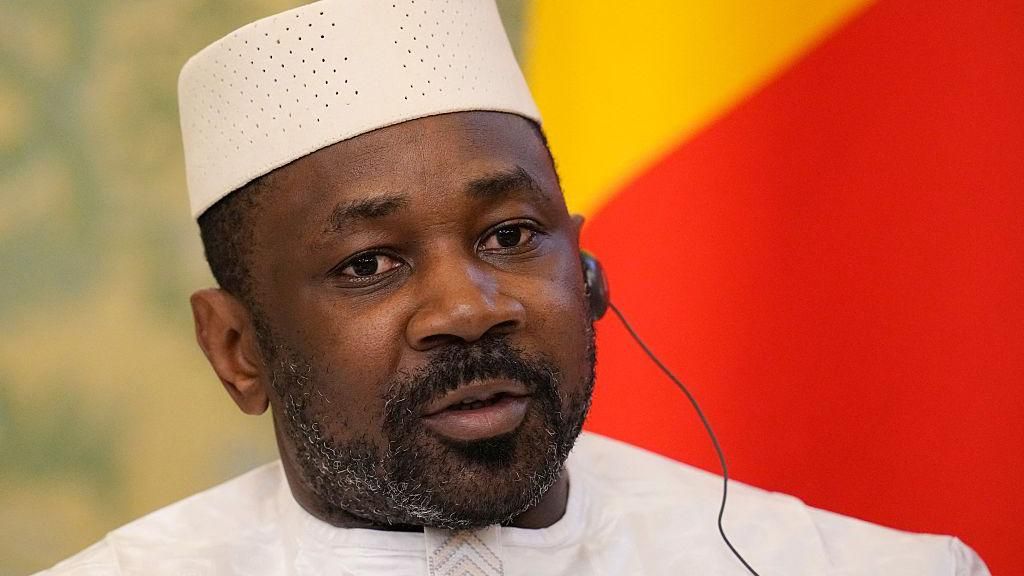
    As millions of Muslims across the globe gear up for the annual Eid al-Adha festival of sacrifice, the holy occasion is tinged with heartbreak and hardship in Bamako, the capital of conflict-stricken Mali. A months-long blockade enforced by al-Qaida-affarmed insurgents has sent livestock prices skyrocketing, pushing the holiday’s central religious ritual — slaughtering an animal and distributing its meat to low-income communities — out of reach for countless local families.

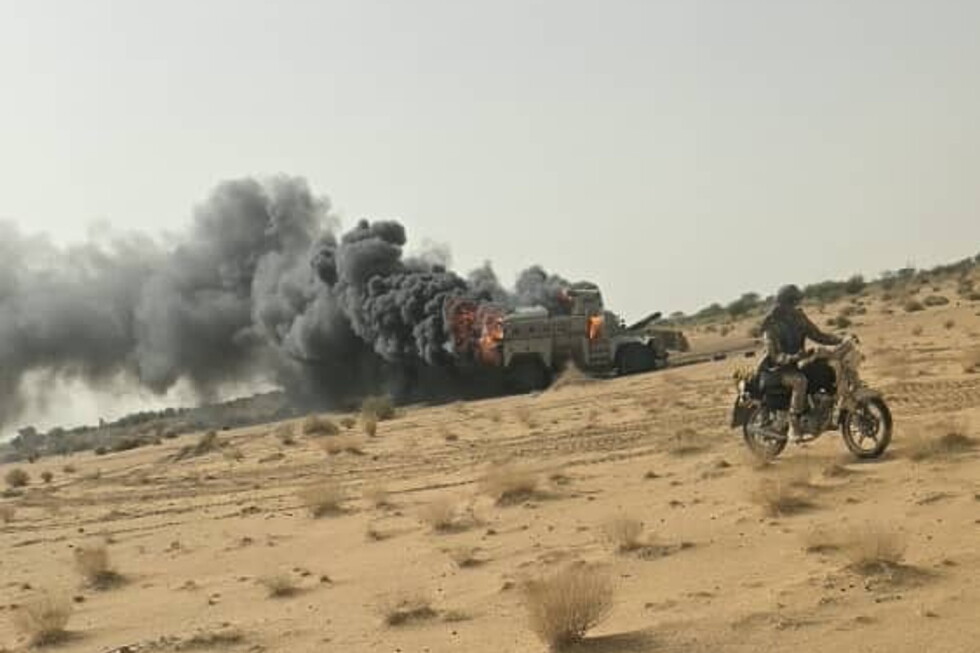
    The crisis stems directly from a blockade of major supply routes into Bamako announced earlier this month by Jama’at Nusrat al-Islam wal-Muslimin (JNIM), the main al-Qaida-linked militant group operating in the Sahel. The fighters have systematically targeted and burned convoys of commercial trucks carrying goods and fuel heading toward the capital, choking off the steady flow of supplies the landlocked nation depends on. Unlike many neighboring coastal countries, Mali has no direct access to international seaports, so nearly all essential goods, from fuel to livestock, are trucked in from neighbors including Senegal and Ivory Coast.

    Analysts note the blockade is a deliberate strategic move: militants aim to cripple the national economy to erode public trust in the ruling military junta, which seized power in a 2020 coup. The blockade is not entirely sealed — insurgents avoid maintaining permanent roadblocks for fear of retaliation from Malian government forces, allowing small volumes of goods to trickle into the city. This limited flow has so far prevented a total breakdown of food access, but it has been enough to send prices of key goods including meat soaring and create widespread fuel shortages, forcing residents to queue for hours at the handful of gas stations still open.

    This is not a sudden disruption. JNIM has already enforced a stifling blockade on oil imports into the country since September 2025, laying the groundwork for the current crisis ahead of the major holiday. For ordinary Bamako residents, the impact hits closest to home during Eid al-Adha, where the sacrifice of a sheep is a centuries-old central tradition.

    Mountaga Touré, a 38-year-old local teacher, told reporters he visited multiple livestock markets across the city before abandoning his plan to purchase a sheep for his family. Since the blockade took effect, prices have jumped by nearly 50%: a small sheep that previously cost roughly $177 now sells for $266 or more, out of his budget. To adapt, many families in Bamako’s neighborhoods have begun pooling funds to buy cows instead of the traditional individual sheep, a last-minute adjustment to ensure they can still have meat for the holiday.

    The current blockade follows a sweeping wave of coordinated attacks across Mali carried out by separatist and jihadi forces last month — the largest large-scale offensive the country has seen in more than 10 years of ongoing insurgency. Mali has been grappling with overlapping crises for over a decade: a separatist rebellion in the northern regions, paired with expanding insurgencies led by militants affiliated with both al-Qaida and the Islamic State group. After the 2020 military coup, the ruling junta cut ties with Western security partners and turned to Russia for military support against the insurgency. But analysts confirm that security conditions across the country have deteriorated sharply in recent months, with a record high number of militant attacks recorded. Both government forces and Russian mercenary groups have also faced accusations of extrajudicial killings of civilian residents suspected of collaborating with insurgents.

    At present, the Malian army, backed by Russian Africa Corps mercenaries, has attempted to circumvent the blockade by providing armed escorts for supply convoys heading to Bamako’s markets. Military officials regularly announce strikes on militant-held positions to clear routes. But residents and traders say these efforts have not been enough to restore steady, adequate supply to the capital.

    Amadou Cissé, a 45-year-old livestock trader who has specialized in supplying Eid sheep for Bamako markets for years, explained that under normal circumstances he would bring up to 200 sheep to the capital for the holiday (known locally as Tabaski) each year. This year, he has only managed to transport 50, because limited space on army-escorted convoys restricts how much livestock he can move. Most of his ordered sheep remain stranded in Diema, a major livestock producing town 215 miles west of Bamako. “I was told more escorted convoys would be organized, but so far none have left Diema, so I doubt the sheep will arrive before the holiday,” Cissé said.

    Drissa Traoré, another Bamako-based sheep seller with more than a decade of experience, confirmed that overall supply has dropped by 50% compared to typical Eid seasons. “This year, we have barely half the number of sheep we usually have during Tabaski,” he said.

    Beyond disrupting holiday meals, the insecurity has upended long-held holiday travel traditions. Sidi Diarra, an employee at a major Bamako financial institution, typically travels 240 kilometers to the city of Segou each year to celebrate Eid with his parents. This year, he has canceled his plans out of fear of militant attacks along the route. “This year, I am afraid to go because of attacks by extremist groups. It is safer to stay in Bamako,” he said.

  • Ebola-hit DR Congo faces ‘catastrophic collision’ of disease and conflict, WHO warns

    Ebola-hit DR Congo faces ‘catastrophic collision’ of disease and conflict, WHO warns

    The World Health Organization’s director-general Dr. Tedros Adhanom Ghebreyesus has issued a stark warning that persistent armed conflict in the Democratic Republic of the Congo is severely undermining global and local efforts to curb an accelerating Ebola outbreak that has already claimed hundreds of suspected lives. With the epicenter of the current outbreak located in DR Congo’s violence-wracked Ituri Province, Tedros described the crisis as a “catastrophic collision of disease and conflict”, noting that the virus is spreading faster than response teams can contain it.

    In a public post on the social platform X, Tedros emphasized that public health work cannot progress under active combat: “We cannot build community trust or isolate the sick while bombs are falling.” He confirmed that he will travel to DR Congo on Wednesday to lead efforts to scale up response capacity and slow the outbreak’s spread. As of the latest updates, 220 suspected Ebola-related deaths have been recorded since the outbreak was officially declared, with roughly 1,000 people currently exhibiting symptoms consistent with the viral disease. Only 17 of those deaths have been definitively confirmed via laboratory testing, leaving response teams working with incomplete data on the outbreak’s true scope.

    The challenges facing medical teams extend far beyond active fighting. Ituri has been under direct military rule since 2021, when the central government replaced civilian leadership with a military commander in a bid to disarm dozens of active armed groups operating in the region. Chronic poor road infrastructure makes travel across affected areas slow and dangerous, while mass population displacement from conflict has fractured the already fragile local public health system — a strain worsened by recent cuts to international aid funding. Tedros stressed that halting Ebola transmission in the region is entirely dependent on unimpeded, sustained humanitarian access to affected communities. Ongoing clashes have forced tens of thousands of people to flee their homes, pushing many exposed to the virus into overcrowded displacement camps that create ideal conditions for further spread, while cutting off critical routes that medical teams rely on to reach patients. “Frontline workers are risking everything, while attacks on health facilities make tracking cases and their contacts nearly impossible,” he added. He has called on all armed parties and the Congolese government to agree to an immediate ceasefire to grant medical teams safe, unobstructed access to all affected areas.

    Adding another layer of complexity to the response, this outbreak is caused by the rare Bundibugyo strain of Ebola, for which no widely approved vaccines or targeted therapies currently exist. Response teams are currently working against the clock to trace more than 3,600 people who have been identified as close contacts of confirmed or suspected cases, a critical step to stop chains of transmission. While 2,000 testing kits have already been distributed to affected areas, a further 4,000 are scheduled for deployment in the coming days, and experimental treatments including an antibody developed in the United States are expected to be deployed soon.

    The head of Médecins Sans Frontières (Doctors Without Borders) in DR Congo, Ewald Stals, told the BBC that the organization and other aid groups are working to move critical supplies and personnel into the outbreak’s epicenter, but persistent insecurity and inadequate transport links in Ituri have slowed progress dramatically. “Slowly but surely, there is, of course, some activity going on, but overall, we’re still far behind having a control on the situation,” Stals said. “So we still do not have a full picture of what is happening, and that is mainly due to insufficient testing. So we need more testing, we need more diagnosis to make sure that we get a full picture of what is going on — so we do not have that for the moment. And as long as that is the case, we can say that we’re running behind the virus, that the virus is still ahead of us, and that we really have to catch up.” MSF estimates it will take several weeks to put the full infrastructure needed to contain the outbreak in place.

    A small number of cases have already been detected in neighboring Uganda, prompting growing global concern about cross-border spread. Multiple countries have already implemented strict travel restrictions in response to the outbreak: Last week, the United States banned entry for non-citizens who have recently traveled to DR Congo, Uganda, or South Sudan. Canada followed this week with a temporary 90-day entry ban on residents from the three affected countries, while the Bahamas has implemented mandatory quarantine or isolation for foreign nationals arriving from the region.

    International health bodies have begun moving to boost their on-the-ground response capacity. On Wednesday morning, the European Centre for Disease Prevention and Control (ECDC) announced it would increase its in-country presence, deploying additional outbreak experts via the EU Health Task Force to support local and international response efforts. The WHO and partnering organizations have stressed that without an immediate end to hostilities in Ituri, the outbreak will continue to outpace response efforts and could spread beyond DR Congo’s borders.

  • Denmark and former Leicester goalkeeper Kasper Schmeichel retiring because of shoulder injury

    Denmark and former Leicester goalkeeper Kasper Schmeichel retiring because of shoulder injury

    Legendary Danish and Celtic goalkeeper Kasper Schmeichel, who etched his name in soccer history by winning the 2016 Premier League title with Leicester City in one of the most iconic underdog victories in the sport’s modern era, has formally announced his retirement from professional soccer, forced to step away early by a persistent serious shoulder injury.

    Schmeichel broke the news in an exclusive interview with Denmark’s TV2, broadcast on Wednesday. “When my contract with Celtic expires this coming June, my career as an active professional footballer will come to an end,” the 39-year-old said. “I believe this is the right moment to make it public that I have already played my final match at the top professional level.”

    The goalkeeper, who is the son of Manchester United all-time great Peter Schmeichel, has not taken the field since February this year. Back in March, he already shared that he would need to undergo two separate shoulder surgeries, but held out hope that he could recover enough to continue his playing career. Unfortunately, those hopes never came to fruition, leaving Schmeichel to accept that his time competing at the top level is over.

    Throughout a decorated career that spanned clubs including Manchester City, Leeds United, Nice, Anderlecht, Leicester and most recently Celtic, Schmeichel also earned 120 caps for the Danish men’s national team, and represented his country at both the 2018 and 2022 FIFA World Cups. Reflecting on his early exit from the sport, Schmeichel acknowledged, “it’s not how I would have wanted my career to end.”

    Schmeichel’s last appearance in a Denmark national team jersey came in November 2023, during a World Cup qualifying defeat to Scotland. The Danish Football Union (DBU) paid tribute to the goalkeeper on social media platform X, highlighting his 13-year legacy with the national side. “From his debut in Skopje to his World Cup bow against Peru, countless match-winning saves against the world’s top teams, a Euro semifinal run at Wembley and so much more,” the DBU post read. “13 years. 120 matches for the National Team. Thanks for unforgettable moments, Kasper.”

  • 5 villagers missing in a flooded Laos cave for more than a week have been found alive, rescuers say

    5 villagers missing in a flooded Laos cave for more than a week have been found alive, rescuers say

    In a dramatic rescue operation that has drawn international attention, five villagers who were trapped for more than a week inside a flood-swollen cave in central Laos have been located alive, rescue officials confirmed Wednesday. Two other members of the original group of seven remain unaccounted for, with search operations set to continue, according to rescue teams from both Laos and Thailand leading the effort.

    The group first entered the remote cave in Xaisomboun province’s Longcheng district, roughly 120 kilometers north of the Lao capital Vientiane, on May 19. Unforecast heavy rain soon triggered fast-moving flash flooding that rapidly sealed off the cave’s exit, leaving all seven people trapped cut off from the outside world.

    Bounkham Luanglath, a representative of Laos-based non-profit Rescue Volunteer for People, which has collaborated closely with local government authorities throughout the mission, shared the breakthrough news with The Associated Press in an emotional voice message. “I’m still shaking. Our team made it happen,” he said, confirming that five survivors were found safe, while the search for the two remaining missing people continues.

    Footage posted online by one of the participating Thai rescue teams captures the pivotal moment divers emerged from flooded inner passages of the cave and located the stranded group. In the video, the five survivors, each equipped with a personal headlamp, are seen sitting on an elevated rock formation completely surrounded by rising floodwater. Separate clips show rescue personnel both inside the cave system and at the surface celebrating the discovery, cheering, embracing one another and jumping in unrestrained joy.

    The rescue effort has drawn experienced personnel with a history of high-stakes cave rescue operations. Thai rescue workers deployed to the remote site over the weekend, and the team includes veteran divers from multiple countries who took part in the globally renowned 2018 Tham Luang cave rescue, where 12 young soccer players and their coach were successfully extracted after being trapped for more than two weeks in northern Thailand’s flooded cave system.

    Rescuers have repeatedly documented the extreme challenges of the operation via social media. The region is characterized by rugged, remote mountain terrain, and persistent heavy rainfall has slowed progress and complicated access to the cave. To reach the cave entrance, rescue teams must complete a steep 4-kilometer (2.5-mile) hike on foot, and the narrow, rocky opening itself only allows one person to climb through at a time.

    While Lao authorities have not yet released an official explanation for why the group entered the cave, Bounkham told the AP that local residents often enter the site illegally to search for gold, despite repeated official warnings about the extreme flood risks the cave poses during monsoon season.

  • Pilgrims ‘stone the devil’ at hajj gripped by intense heat

    Pilgrims ‘stone the devil’ at hajj gripped by intense heat

    The 2025 Hajj pilgrimage reached its dramatic climax on Wednesday, as more than 1.7 million Muslim worshippers gathered in Saudi Arabia’s Mina Valley to carry out the iconic ‘stoning of the devil’ ritual, confronting both searing desert temperatures and heightened regional geopolitical unrest.

  • Former member of German militant group jailed for armed robberies after decades on the run

    Former member of German militant group jailed for armed robberies after decades on the run

    After more than three decades evading law enforcement and a high-profile trial, a one-time leading member of Germany’s infamous militant Red Army Faction (RAF) has received a 13-year prison sentence for orchestrating and carrying out a series of violent armed robberies spanning 17 years.

    Sixty-seven-year-old Daniela Klette, who spent over 30 years as a fugitive following the disbandment of the RAF, was only apprehended in February 2024 during a raid on a quiet residential apartment in Berlin’s Kreuzberg district. Found living under a false identity using a foreign passport, Klette was quickly transferred to Lower Saxony – the region where the majority of her criminal offenses took place – to face trial later that same year.

    The Red Army Faction, also widely known by its alternate name the Baader-Meinhof Gang, carried out a decades-long campaign of politically motivated violence across West Germany from the early 1970s through the early 1990s, which included bombings, assassinations, and kidnappings. The group formally disbanded in the early 1990s, but Klette and two other former faction members remained at large, turning to a string of armed robberies to fund their life off the grid.

    In a verdict delivered Wednesday at the Verden regional court in Lower Saxony, judges found Klette guilty on multiple charges: aggravated robbery, violations of Germany’s strict weapons laws, and several other related criminal offenses connected to eight separate raids carried out between 1999 and 2016. Klette’s defense team had pushed for a full acquittal during the proceedings, but the prosecution’s evidence linking her to the crime spree proved overwhelming.

    Court documents confirm Klette carried out each robbery alongside two other former RAF affiliates: Burkhard Garweg and Ernst-Volker Staub, both of whom remain at large as of the verdict. The crime spree began in July 1999 in the western German city of Duisburg, when masked attackers rammed an armored cash transport van, threatened security guards with firearms and a grenade launcher, and escaped with an undisclosed large sum of cash. The final recorded robbery took place near Braunschweig in June 2016, when the gang stole nearly €1.4 million (approximately £1.2 million) from another armored van.

    Notably, prosecutors noted during the trial that despite decades on the run, Klette made no deliberate effort to conceal her true identity from acquaintances in her Berlin neighborhood, allowing investigators to eventually track her down after years of cold leads.

  • Philippine bishop and ex-ICC judge lead new inquiry into thousands of Duterte-era killings

    Philippine bishop and ex-ICC judge lead new inquiry into thousands of Duterte-era killings

    MANILA, Philippines — Nearly three years after Rodrigo Duterte stepped down from his six-year presidential term, a new independent fact-finding initiative led by one of the country’s top Roman Catholic leaders is breaking the long-standing silence surrounding the former president’s controversial and deadly anti-narcotics crackdown. On Wednesday, the coalition launched the non-governmental EJK Truth Commission, an independent body tasked with documenting witness testimonies, compiling physical evidence, and formalizing a public record of the thousands of extrajudicial killings tied to the drug war — work that will be made available to domestic and international prosecutors pursuing accountability.

    The crackdown, which Duterte oversaw from 2016 to 2022, left an estimated thousands of mostly low-income suspected drug users and dealers dead, according to human rights monitoring groups. The campaign drew global condemnation from Western governments and human rights organizations over the scale of unlawful killings. Last year, Duterte was taken into custody to face charges of crimes against humanity before the International Criminal Court (ICC) based in The Hague, Netherlands. Ronald dela Rosa, Duterte’s staunch political ally and the former national police chief who first implemented the anti-drug crackdown, is named as a co-perpetrator in the ICC case and has an active arrest warrant against him. Philippine authorities have pledged to execute the warrant and transfer dela Rosa to the global court, but the senator has evaded capture and remains in hiding. Both Duterte and dela Rosa have repeatedly denied authorizing extrajudicial killings, though Duterte openly issued public death threats against drug suspects throughout his presidency.

    To date, human rights groups note that the vast majority of police officers directly implicated in the killings have never faced formal investigation, with only a tiny number ever convicted on charges related to the crackdown. For many victim families, systemic delays and institutional cover-ups have prevented them from accessing justice for years. “This is long overdue,” Cardinal Pablo Virgilio David, the commission’s founder, told reporters during a Manila news conference. David emphasized that the new body is not focused solely on prosecution: it aims to provide closure for victims’ families, offer a pathway to accountability for repentant law enforcement officers, and support national healing. “This is an opportunity for a catharsis … so we can recover our dignity as a country,” David said. “Ultimately, what we aspire for is healing not only for the victims but also our institutions.”

    Heading the commission’s fact-finding work is Raul Pangalangan, a highly respected Philippine legal scholar and former ICC judge. Pangalangan explained that the body’s core mission is to ensure the experiences of victims, survivors and bereaved families are not erased: “It was created to ensure that the stories of victims, survivors and families are heard, verified and preserved.” The commission plans to hold public hearings across the country to collect testimonies, breaking what Pangalangan called a years-long “conspiracy of silence” that allowed the killings to continue without accountability. “These things happened because everybody looked the other way,” he added.

    The commission will share its verified findings with domestic and international justice and human rights bodies, enabling prosecuting authorities to use the evidence to advance cases against implicated officials and law enforcers. David has called on civil society organizations, academic institutions, religious groups and other stakeholders to support the initiative, noting that a large German charitable foundation has already committed funding to support the commission’s work.

    Still, commission members acknowledge the work will face significant barriers, years after most of the killings took place. Raquel Fortun, a forensic pathologist at the state-run University of the Philippines and a commission member, told the Associated Press that many implicated law enforcement officials have actively taken steps to cover up evidence of unlawful killings. She gave the example of 13 exhumed remains of drug suspects, whose original death certificates issued during Duterte’s term listed natural causes such as heart attack and pneumonia as their cause of death. “When I examined the remains, I found that they were hit by gunfire,” Fortun confirmed. That pattern of falsified records, she added, underscores how difficult it will be to reconstruct an accurate account of the drug war’s death toll and responsibility for the killings.

  • Iran says ‘low’ possibility of return to war with US

    Iran says ‘low’ possibility of return to war with US

    Tensions across the Middle East remain at a fever pitch this week, even as a senior Iranian military official has downplayed the risk of a return to open war between Tehran and Washington. The cautious assessment comes just days after fresh cross-border hostilities violated the fragile ceasefire that has held between the two sides since April, raising new fears of a wider regional escalation.

    Mohammad Akbarzadeh, deputy political chief of Iran’s Islamic Revolutionary Guard Corps (IRGC) Navy, told state-owned Tasnim News Agency on Wednesday that the possibility of full-scale conflict with the United States remains low, citing what he described as growing weakness among American forces. “The possibility of war is low because of the enemy’s weakness, the armed forces are lying in wait with full magazines,” Akbarzadeh said. He issued a stark warning to any potential aggressors, adding: “Do not doubt that we will turn the area from Chabahar to Mahshahr into a graveyard for aggressors,” referencing the two coastal cities that bookend Iran’s 1,000-mile southern coastline along the Gulf of Oman and Persian Gulf.

    Akbarzadeh’s comments came one day after Iranian officials accused the U.S. of multiple deliberate violations of the April ceasefire, following the downing of an American drone that entered Iranian airspace near the key Strait of Hormuz and anti-aircraft fire directed at a U.S. F-35 fighter jet. Hours before those Iranian defensive actions, U.S. Central Command (CENTCOM) spokesperson Captain Tim Hawkins confirmed that American forces had carried out new self-defense strikes against targets in southern Iran. “US forces conducted self-defence strikes in southern Iran today to protect our troops from threats posed by Iranian forces,” Hawkins said, confirming that the strikes targeted Iranian missile launch sites and boats suspected of attempting to lay naval mines, offering few additional details.

    The Iranian foreign ministry issued a formal condemnation of the strikes, noting that the “US terrorist army, continuing its illegal and unjustified actions since the ceasefire… has, in the past 48 hours, committed a gross violation of the ceasefire in the Hormozgan region.” The statement added that Tehran “will not leave any evil unanswered and will not hesitate to defend the Iranian nation,” without specifying what form retaliation would take.

    Peace talks between Washington and Tehran have been ongoing for weeks, with Pakistan leading third-party mediation efforts to end the regional war that erupted in late February, when U.S. and Israeli forces launched opening strikes against Iranian targets across the Middle East. The conflict quickly spread across multiple fronts, upended global energy markets, and pushed the region to the brink of a catastrophic regional war. As of this week, both sides remain deadlocked on core sticking points, including control of the Strait of Hormuz – the world’s most critical chokepoint for global oil and liquified natural gas shipments – and the future of Iran’s nuclear program. Neither side has shown willingness to compromise on these core issues, despite the fact that the conflict has failed to produce a clear winner for either camp. After Iran blockaded the Strait of Hormuz in retaliation for the opening strikes, the U.S. responded with its own counter-blockade of major Iranian export ports. Tehran has also announced plans to impose new “navigational fees” on commercial shipping passing through the waterway, a move that has already rattled energy markets.

    U.S. Secretary of State Marco Rubio maintained on Tuesday that a final peace deal remains achievable, repeating Washington’s demand that the Strait of Hormuz must be reopened to full commercial navigation “one way or the other.” Iranian officials confirmed this week that they are working to finalize a 14-point framework for a peace agreement, and Iranian President Masoud Pezeshkian told Qatari ruler Sheikh Tamim bin Hamad Al Thani in a Tuesday phone call that Tehran remains “ready to reach a respectful framework to end the war,” according to Iranian state broadcaster IRIB. A top Iranian negotiating delegation returned from a two-day exploratory visit to Qatar on Tuesday, signaling continued behind-the-scenes progress toward a potential agreement.

    In a written statement marking the start of the Eid al-Adha holiday, Iran’s supreme leader Ayatollah Mojtaba Khamenei argued that U.S. influence across the Middle East is steadily eroding. He warned regional countries against hosting American military bases that can be used to launch attacks on Iranian targets, saying: “the United States, in addition to no longer having any safe haven in the region for aggression and the establishment of military bases, is moving further and further away from its former position with each passing day.”

    The spillover of the wider conflict has continued to escalate in southern Lebanon, where a separate ceasefire between Israel and Iran-aligned militant group Hezbollah has failed to stop regular deadly violence. On Tuesday, Israeli air and ground strikes killed 31 people across southern Lebanon, including at least four children, according to Lebanon’s health ministry. Israeli Prime Minister Benjamin Netanyahu vowed Monday to “crush” Hezbollah, and a senior Israeli military official confirmed to AFP on Wednesday that Israeli forces are expanding ground operations deeper into Lebanese territory, far from the shared border. Iran has made it a core demand of any U.S.-Iran peace deal that any final accord must also cover the Lebanese front, a condition Israel has so far rejected.

    Global financial markets reacted with cautious optimism to ongoing diplomatic efforts this week, with major stock indexes ending the trading day mixed amid hopes that a final agreement can be reached to de-escalate the crisis.