作者: admin

  • Trump hails Paxton win in Texas Senate runoff

    Trump hails Paxton win in Texas Senate runoff

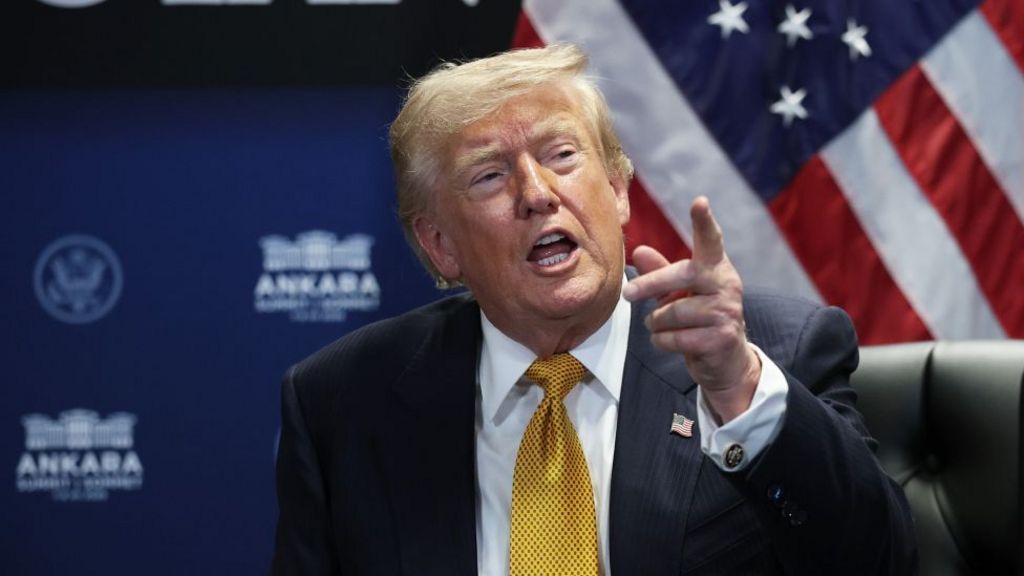
    In a defining shakeup of Texas Republican politics, scandal-plagued Attorney General Ken Paxton secured a lopsided victory over four-term incumbent Senator John Cornyn in this week’s Senate primary runoff, a win that former President Donald Trump quickly celebrated as a major validation of his enduring influence over the GOP.

    Official vote tallies show Paxton claimed more than 63% of the vote, flipping a long-held Republican Senate seat away from the party’s establishment wing and handing Trump one of his most high-profile wins of the 2024 primary season. Paxton will now face Democratic state representative James Talarico in the November general election.

    Cornyn, a well-connected institutional conservative who has represented Texas in the Senate since 2002 and previously served as Republican whip, entered the race as the clear favorite of the party’s Washington and donor establishment. But Trump’s late-game endorsement reshaped the contest overnight, turning Paxton from an underdog into a dominant frontrunner. Cornyn becomes the latest incumbent Republican to fall after falling out of alignment with Trump, joining a growing list of ousted lawmakers on the former president’s primary-season revenge tour.

    On his Truth Social platform Wednesday morning, Trump congratulated Paxton on what he called a “tremendous win,” predicting Paxton would become “a fantastic, common sense Senator, one who is respected by all.” Turning his attention to the general election, Trump launched a blistering attack on Talarico, calling him “may be the worst TEXAS candidate I have ever seen” over his liberal policy positions, and pledged to hold “nice, big, beautiful rallies” to support Paxton in the coming months.

    At his victory party on Tuesday night, Paxton made clear who he credited for his upset win, emphasizing that Trump stood by him when elite Washington Republicans pushed for his abandonment. “When everyone in Washington told him to abandon me and abandon the people of Texas, he didn’t listen,” Paxton said, calling Trump’s endorsement “the most powerful force in politics.”

    Paxton’s political career has been marred by years of legal, ethical, and personal controversy: he was impeached by the Republican-controlled Texas House in 2023 over allegations of bribery and public misconduct, and ultimately acquitted by the Texas Senate, while he has also navigated a high-profile messy divorce. Paxton has repeatedly framed all allegations against him as politically motivated smears.

    The result of the Texas runoff lays bare a growing, intractable divide for the Republican Party heading into the 2024 general election: while Trump’s endorsement can all but guarantee victory in Republican primaries, his preference for hardline, pro-MAGA candidates has left many party strategists concerned that those nominees will struggle to win in the general election, even in solidly red states.

    Texas has not voted for a Democratic presidential candidate since 1976, and Trump carried the state by nearly 14 points in 2024, meaning Republicans start the general election as clear favorites. But national Democrats see Paxton’s nomination as a unique opportunity. They view Paxton’s long history of scandal as a vulnerability that could help them pull off a historic statewide upset, and Talarico has already raised massive campaign funds for his bid. Talarico has centered his campaign on arguing that both Paxton and the traditional Republican establishment represent a broken political system rigged in favor of wealthy special interests.

    For Senate Republican leadership, Paxton’s victory has deepened existing anxiety. Many top Senate GOP officials had privately pushed Trump to back Cornyn, and now fear the party will be forced to divert millions of dollars in campaign funds to defend a seat that was expected to be easily held. Senate Majority Leader John Thune warned last week that Trump’s pattern of challenging sitting Republican incumbents could have long-term consequences, noting that these interventions could make advancing the party’s shared agenda “more complicated.”

    That tension has already spilled over into Capitol Hill, where a growing number of Senate Republicans have broken with Trump in recent weeks over issues including Iran war powers and his proposed White House ballroom renovation project.

    For Trump, however, the Texas win is just the latest milestone in his primary-season campaign to purge the GOP of any lawmakers who have crossed him. Prior to Cornyn’s defeat, Trump’s endorsements helped oust Louisiana Senator Bill Cassidy, who voted to impeach Trump after the 2021 Capitol riot, Kentucky Congressman Thomas Massie, who supported releasing the full Epstein files, and multiple Indiana state lawmakers who resisted his demands for congressional redistricting.

    In his concession speech Tuesday night, Cornyn struck a measured tone, quoting 2 Timothy 4:7: “I fought the good fight, I finished the race, and I’ve kept the faith.” Shortly after, Talarico, his general election opponent, posted a message on X thanking Cornyn for his decades of public service. “We don’t agree on everything, but we both still believe in public service,” Talarico wrote. “To Senator Cornyn’s supporters: you have a place in our campaign.”

  • Housing Minister Clare O’Neil to announce $40m for prefab ‘kit’ homes

    Housing Minister Clare O’Neil to announce $40m for prefab ‘kit’ homes

    Australia’s Albanese government is stepping up its response to the national housing crisis with a fresh $39.3 million investment in cutting-edge construction innovation, launching the new initiative just weeks after triggering intense political debate with a controversial overhaul of property investor tax rules. Housing Minister Clare O’Neil is set to unveil the funding package during a high-profile address to Canberra’s National Press Club on Thursday, marking a strategic shift in the government’s ongoing campaign to expand housing supply and ease affordability pressures that have gripped communities across the country.

    Until this announcement, the federal government’s response to the housing shortage has centered on traditional supply-boosting measures, including expanding access to skilled trades to speed up project completion. But with construction costs continuing to climb steadily, the new funding will be directed toward scaling up an innovative open-source ‘kit of parts’ housing system developed by Australia’s Building 4.0 Cooperative Research Centre.

    The allocated funding will enable state and territory governments to trial the new construction model through targeted, locally tailored housing projects that align with regional needs and geographic conditions. Eligible activities under the program include pilot project development, custom design work, technical support for construction teams, worker training, and expansion of domestic supply chains to support widespread adoption of the model.

    ‘If we want housing to be more affordable, we need to find smarter ways to build more homes,’ O’Neil said in prepared comments ahead of the announcement. ‘Today’s announcement is about backing new building methods that can speed up construction and lower costs.’

    Unlike proprietary modular construction systems owned exclusively by single companies, the open-source kit of parts model relies on standardized, pre-manufactured building components produced off-site that are assembled on location. All components are built to shared, universal standards, allowing multiple different manufacturers to produce compatible parts that work seamlessly together. The government estimates this approach will cut down on project delays, reduce construction waste, and drive down overall building costs.

    ‘Most homes use the same basic components – walls, windows, roofs, bathrooms, kitchens,’ O’Neil explained. ‘So instead of designing everything from scratch every single time, we can standardise some parts of the process and make construction more efficient. That means building homes faster, reducing waste, lowering costs, and getting more people into homes sooner. When parts are designed to work together efficiently, you can build things faster, cheaper and more reliably.’

    Professor Mathew Aitchison, chief executive officer of Building 4.0 CRC, welcomed the investment, noting his organization was eager to partner with federal, state and local governments as well as private industry to roll out the new system nationwide. ‘This is about improving the system that delivers housing, making it more efficient, more consistent and better able to scale over time,’ Aitchison said.

    The new construction investment comes amid a rapidly escalating political battle over federal housing policy, sparked earlier this month when the Albanese government backtracked on a pre-election promise to roll out major changes to capital gains tax (CGT) and negative gearing for property investors. The reforms are designed to address systemic housing inequality by cooling investor demand for existing housing stock, but they have drawn fierce criticism from opposition parties and industry groups.

    As part of its broader National Housing Accord, the government has committed to delivering 1.2 million new homes across Australia by mid-2029, including thousands of new affordable and social housing units funded through the Housing Australia Future Fund. To date, however, the government has fallen well short of its interim construction targets, creating a key political vulnerability ahead of future elections.

    For its part, the opposition Liberal-National Coalition has put forward its own housing policy platform, promising to tie annual migration intake levels to annual housing completion rates and cut bureaucratic red tape that slows down new construction projects. The Coalition is also adjusting its policy approach to counter rising electoral competition from right-wing populist party One Nation, which has centered its recent campaigning on housing affordability and migration levels.

  • Ghana welcomes Pope’s apology over Catholic Church’s role in slavery

    Ghana welcomes Pope’s apology over Catholic Church’s role in slavery

    In a landmark address that intersects global reckoning with historical injustice and modern ethical discourse, Pope Leo XIV has issued the Catholic Church’s clearest ever apology for its centuries-long complicity in the transatlantic slave trade, labeling the Church’s role a “deep, open wound in Christian memory”.

    The historic apology was included in *Magnifica Humanitas* (“Magnificent Humanity”), the Pope’s first encyclical — a formal teaching document addressed to global Catholic bishops that also carries wide-ranging messages for the international community — released on Monday. In addition to confronting the Church’s historical sins, the encyclical also explores pressing contemporary ethical risks tied to artificial intelligence development.

    In the text, the Pope offered a unreserved plea for pardon on behalf of the entire Catholic Church, writing that “it is impossible not to feel deep sorrow when contemplating the immense suffering and humiliation endured by so many” stolen from their African homelands. He openly acknowledged that for generations, Church leaders bowed to the demands of colonial rulers, creating formal regulations that legitimized systems of racialized subjugation, including the enslavement of non-Christian communities. He further confirmed that medieval ecclesiastical institutions themselves owned enslaved people, a long-unacknowledged chapter of Church history.

    Ghana, the West African nation that was a central trafficking hub during the 16th to 19th century transatlantic slave trade, has welcomed the apology as an extraordinary act of moral courage. Historical records estimate that between 12 and 15 million enslaved Africans were forcibly shipped across the Atlantic to the Americas during this era, with roughly 2 million dying in brutal conditions on the crossing. Many of these captives were held in stone forts along Ghana’s coast, structures that still stand today as haunting memorials to the atrocity.

    For decades, Ghana has led global calls for formal apologies and reparations from Western powers and institutions for their roles in the slave trade and colonial exploitation. In a formal statement released late Tuesday, the Ghanaian government framed the Pope’s acknowledgment as a critical milestone on the path to collective healing, intergenerational reconciliation, and the building of a more just global society. “This apology reinforces the growing global understanding that confronting historical injustices demands truth-telling and moral responsibility as essential foundations for justice and reconciliation,” the statement read.

    The apology comes as the global movement for reparations gains new institutional momentum. In March of this year, Ghana spearheaded a successful United Nations resolution, backed by the African Union and led by Ghanaian President John Mahama, that formally classifies the transatlantic enslavement of African people as “the gravest crime against humanity” in modern history. The resolution lays the groundwork for advancing reparations claims and addressing the enduring harms of slavery, from systemic racial inequality to persistent global discrimination.

    This latest development follows Pope Leo XIV’s first papal visit to Africa in April, an 11-day tour that took him to four African nations. During the trip, the pontiff delivered sharp criticisms of foreign actors that continue to extract Africa’s natural resources for private profit, earning widespread praise across the continent for his forthright stance.

    Ghanaian officials noted that the apology arrives at a pivotal moment, as the global community engages in deeper collective reflection on the ongoing harms of slavery and colonialism. In June, Ghana will host an international conference to outline next steps for the reparations movement, following the adoption of the UN resolution. The gathering will bring together activists, government officials, and global stakeholders to advance work on healing and redress.

  • Bolivian Congress allows deployment of troops to quell protests

    Bolivian Congress allows deployment of troops to quell protests

    Nearly four weeks of mass road blockades and widespread demonstrations across Bolivia have pushed the country’s Congress to approve a controversial bill expanding the president’s authority to declare national states of emergency and deploy military forces to put down public protests. The legislative vote, which passed Bolivia’s Chamber of Deputies by a comfortable two-thirds majority on Tuesday, reverses a 2020 regulation that only allowed military deployment for crowd control when police forces were proven to be overwhelmed by civil unrest. The unrest currently roiling the Andean nation began in late April, initially sparked by a proposed land reform package from current centre-right President Rodrigo Paz.

    Small-scale Bolivian farmers raised early alarm over the legislation, arguing it would clear the way for large agricultural landowners to acquire small holding properties at an accelerated pace. Though the Paz administration insisted that any future land transactions would remain strictly voluntary, major farm advocacy groups rejected the assurance and moved to block the country’s key highway arteries, kicking off the wave of nationwide protest. Paz eventually pulled the controversial land reform bill completely, but the movement had already snowballed, drawing in multiple sectors of Bolivian society with separate grievances against the sitting government.

    Transport workers and commercial drivers joined the demonstrations shortly after, decrying poor fuel quality that emerged after the administration eliminated long-standing national fuel subsidies. The subsidy cut initially created widespread fuel shortages, and enabled unregulated fuel vendors to sell adulterated product that has caused permanent damage to countless vehicle engines. Protesters’ road blockades have only worsened these supply gaps, creating a self-reinforcing cycle of scarcity and unrest that has cut off access to basic goods including potable water, fuel, and critical medications in multiple hard-hit regions. Last week, residents of the capital city of La Paz organized a large-scale ‘march in defense of democracy’ aimed at ending the blockades that have left the capital grappling with severe, ongoing shortages.

    Additional anger has been stoked by Paz’s plan to revise the 2009 Bolivian constitution, which was enacted during the tenure of left-wing former president Evo Morales. Paz, who ran for office on a platform of opening key Bolivian economic sectors to expanded private investment, has faced fierce pushback from Morales’ supporters, who warn the proposed constitutional changes will erode state control over the country’s most valuable strategic industries. Morales, who led Bolivia from 2006 to 2019, remains a deeply influential political force across the country, particularly among Indigenous communities that make up a large share of the protest movement.

    The Paz administration has directly accused Morales of orchestrating the ongoing unrest to distract public attention from an arrest warrant issued against him on May 11. A Bolivian judge held the former president in contempt of court after he failed to appear for a hearing over charges of statutory rape and human trafficking; prosecutors allege Morales impregnated a 15-year-old minor in 2015 and transported her across international borders. Morales has repeatedly dismissed the allegations as a politically motivated vendetta orchestrated by the country’s new right-wing leadership, and his supporters have threatened to shut down all national activity if he is taken into custody.

    In a public statement Monday, President Paz reaffirmed his preference for negotiated dialogue over what he called ‘armed confrontation’ even as mounting political pressure pushes his administration to move quickly to end the unrest. Supporters of the new emergency powers bill argue the 2020 restriction on military deployment improperly limited the sitting president’s constitutional authority, and that violent protest groups should not be allowed to dictate policy to a democratically elected government. But opposition lawmaker Sonia Siñani, who voted against the legislation, warned the new law will only escalate existing social tensions, comparing the move to ‘throwing fuel onto the flames.’

    Paz has already attempted a series of conciliatory measures to de-escalate the crisis, including a full cabinet reshuffle, cutting his own salary and the pay of all his cabinet ministers in half, and announcing the formation of a new negotiation council to engage with marginalized social sectors that feel disenfranchised under his administration. To date, none of these efforts have succeeded in ending the nationwide unrest, leaving the country in a stalemate as the expanded emergency powers open a new, more volatile chapter in the ongoing political crisis.

  • Five people found alive after week trapped in flooded Laos cave

    Five people found alive after week trapped in flooded Laos cave

    A dramatic week-long rescue operation in central Laos has delivered a partial miracle, as rescuers have pulled five trapped villagers alive from a deep, waterlogged cave system, while search efforts continue for two remaining missing group members. The incident unfolded last Wednesday, when seven villagers from Xaysomboun Province ventured deep into the cave to hunt for gold deposits and wild game. Unforeseen heavy rain triggered sudden landslides that sealed off the cave’s entrance, cutting off the group’s escape route and leaving them stranded deep underground.

    Teams of experienced rescuers from Laos and neighboring Thailand quickly launched a high-stakes recovery mission, navigating extremely challenging conditions to reach the stranded group. The complex cave network is not only hundreds of meters deep but also notoriously narrow, with some internal chambers measuring barely 50 centimeters (20 inches) across. Footage released by the rescue teams shows skilled cave divers inching on their hands and knees through murky, almost fully submerged passageways thick with mud.

    In a hopeful update shared on social media, the Laotian rescue nonprofit Rescue Volunteer for People confirmed that five of the seven trapped villagers have been found alive and in stable condition. The discovery was made at 16:30 local time (09:30 GMT), according to Thai rescue team member Kengkach Bangkawong, who posted the update to Facebook. Kengkach is no stranger to high-profile cave rescue operations: he was among the first responders who pulled 12 young football players and their coach to safety in the iconic 2018 Tham Luang cave rescue in Chiang Rai, Thailand, where the group was trapped for two weeks in flooded underground chambers. That mission drew global headlines, mobilized more than 10,000 international experts, and has since been depicted in multiple major films and documentaries, including *Thirteen Lives* and *The Rescue*.

    Bounkham Luanglath, a representative from Rescue Volunteer for People, told the Associated Press that even amid the partial success of the operation, search efforts for the two missing villagers would not be halted. In an emotional voice message to reporters, he reflected on the grueling work of the past week, saying, “I’m still shaking. Our team made it happen.” Rescuers have warned that narrow passages and lingering floodwaters will continue to complicate the search for the remaining missing villagers as they press forward with the operation.

  • Hungary’s parliament votes to remain a member of the International Criminal Court

    Hungary’s parliament votes to remain a member of the International Criminal Court

    In a landmark legislative vote that marks a sharp shift in Hungary’s international legal commitments, the country’s national parliament approved a bill on Wednesday to cancel the previous administration’s planned withdrawal from the International Criminal Court (ICC), cementing Hungary’s continued membership in the world’s only permanent tribunal for prosecuting war crimes, genocide, and crimes against humanity.

    The reversal comes eight months after former Prime Minister Viktor Orbán’s right-wing government announced Hungary would exit the ICC, a move that came immediately on the heels of a state visit to Budapest by Israeli Prime Minister Benjamin Netanyahu. The visit sparked global condemnation because the ICC had already issued an arrest warrant for Netanyahu over allegations of war crimes tied to Israel’s military campaign in the Gaza Strip, and Orbán’s government refused to execute the warrant, a requirement for all ICC member states. Orbán at the time defended his decision by claiming the ICC had devolved into a partisan “political court”, drawing sharp rebuke from the court and other global intergovernmental bodies. Hungary’s withdrawal had been scheduled to formally take effect on June 2 of this year.

    The legislation reversing the exit was introduced just two days before the vote by current Prime Minister Péter Magyar, who took office after Orbán’s government lost recent parliamentary elections. In the text of the bill, Magyar’s administration emphasized that upholding global peace and defending universal human rights requires that perpetrators of the world’s most serious atrocities be held accountable before a legitimate international judicial body. “To this end, it is necessary to maintain Hungary’s participation in the Statute of the International Criminal Court,” the bill reads.

    The final vote split largely along party lines: 133 legislators from Magyar’s ruling Tisza Party supported the bill, while 37 lawmakers voted against the measure and five abstained from the vote. The ICC’s governing body, the Assembly of States Parties, had publicly signaled its support for the reversal ahead of the vote, releasing a pre-ballot statement Monday that offered early congratulations to the new Hungarian government for the decision to stay in the court. The group reiterated that Hungary’s continued membership strengthens the global framework for accountability for mass atrocities.

    Notably, this isn’t the first time the ICC has clashed with Hungary over the Netanyahu visit: last year, the court’s judges officially ruled that Hungary had violated its binding legal obligations by failing to detain the Israeli prime minister during his trip. In a July 2024 ruling, a judicial panel found that “failure to arrest suspects severely undermines the court’s ability to carry out its mandate.”

    Hungary has deep historical ties to the court: it was one of the founding members of the ICC, and Orbán himself personally signed the court’s founding treaty, the Rome Statute, back in 1999 when he first held the office of prime minister. If the withdrawal had moved forward, Hungary would have become only the third sovereign state to formally leave the ICC, following the exits of Burundi and the Philippines, and would have been the sole member of the 27-nation European Union not party to the court’s founding treaty. Reporting for this article was contributed by Quell from The Hague, Netherlands.

  • Climbers meet in Nepal to discuss the challenges of scaling Mount Everest

    Climbers meet in Nepal to discuss the challenges of scaling Mount Everest

    Hundreds of mountaineering professionals, climbing enthusiasts and government representatives convened in Kathmandu, Nepal this Wednesday for the first-ever Everest Summiteers Summit, a landmark gathering focused on tackling the growing set of threats facing the world’s highest peak as climbing booms and global warming reshapes its terrain. The convening comes amid what experts and local officials describe as the most crowded spring climbing season in Everest’s recorded history, with hundreds of climbers and their supporting Sherpa guides queuing to reach the 8,849-meter summit in just the first few weeks of the season.

    This year, Nepal’s Department of Tourism issued a historic 494 climbing permits to foreign mountaineers, and preliminary estimates indicate that more than 900 people have already reached the summit — a new all-time high for the annual spring climbing window. Official final figures will be released after the season concludes later this month, but the unprecedented volume of climbers has already sparked urgent calls for reform from seasoned mountaineers who have spent decades on the mountain.

    Kami Rita Sherpa, the Sherpa guide who just set a new global record for the most Everest summits with 32 successful ascents, used the summit to push for immediate government action to cap permit numbers. “Nepal should only allow no more than 250 climber permits issued for the Nepal-facing side of the mountain,” he told attendees. “A hard limit on numbers would be the best step forward to protect everyone on the mountain.”

    Overcrowding is not a new issue, but viral images from recent climbing seasons have laid bare the severity of the problem: queues of hundreds of climbers clipped to fixed ropes, stuck in hours-long “traffic jams” waiting for their turn to reach the summit, a scenario that dramatically increases the risk of exhaustion, frostbite and fatal accidents at extreme altitude.

    Beyond crowd-related safety risks, delegates also focused on the persistent challenge of waste management on the 29,032-foot peak. During the current season alone, roughly 3,000 people — climbers, guides, support workers and porters — are operating across Everest’s base camps and climbing routes. While Nepal has enforced strict regulations requiring climbers to carry out all of their waste under penalty of losing their $4,000 garbage deposit, tons of discarded equipment, food packaging and human waste still remain on the mountain’s slopes each season after climbing teams pack up their camps.

    Renowned Chinese climber He Jing emphasized that preserving the Himalayas’ fragile ecosystem must remain a core priority for the global climbing community. “We should carry all our rubbish off the mountain, and we all have a responsibility to protect our Himalayas,” she said during the summit’s panel discussion.

    Delegates also addressed another gap in current regulation: the lack of required experience for aspiring Everest climbers. Currently, any applicant can secure a permit by paying the $11,000 government fee, regardless of their prior high-altitude climbing experience. Many seasoned climbers say the rise of social media has fueled a boom in inexperienced climbers who underestimate the extreme danger of an Everest expedition.

    Nathaniel Douglas, a seasoned climber from Seattle, who spoke to the Associated Press on the sidelines of the conference, noted that many first-time aspirants develop unrealistic expectations from curated social media content. “They really don’t understand what mountaineering actually demands, what it truly takes to summit Mount Everest and get back down safely,” he explained. In response to this gap, Nepal’s government is currently drafting new regulations that will require all permit applicants to document prior high-altitude climbing experience before being approved.

    The final major risk highlighted by attendees is the growing instability of the mountain caused by rising global temperatures. British mountaineer Adriana Brownlee, the youngest woman to successfully summit all 14 of the world’s 8,000-meter peaks, explained that warmer temperatures are accelerating melt in glacial features like the Khumbu Icefall, a notoriously dangerous section of the popular southern route to Everest’s summit.

    “Every year, the Khumbu Icefall grows more unstable because of global warming,” Brownlee said. “Meltwater under the ice is moving faster, which makes seracs — massive ice blocks — far more likely to collapse as the underlying structure shifts.” Last month, just before the start of the main climbing window, a massive unstable serac hanging directly over the route just above base camp forced officials to delay all climbs through the icefall for more than a week, a clear warning of the growing risks posed by a changing climate.

  • A bitter Eid al-Adha in Mali’s capital as al-Qaida-linked blockade sends sheep prices soaring

    A bitter Eid al-Adha in Mali’s capital as al-Qaida-linked blockade sends sheep prices soaring

    As millions of Muslims across the globe gear up for the annual Eid al-Adha festival of sacrifice, the holy occasion is tinged with heartbreak and hardship in Bamako, the capital of conflict-stricken Mali. A months-long blockade enforced by al-Qaida-affarmed insurgents has sent livestock prices skyrocketing, pushing the holiday’s central religious ritual — slaughtering an animal and distributing its meat to low-income communities — out of reach for countless local families.

    The crisis stems directly from a blockade of major supply routes into Bamako announced earlier this month by Jama’at Nusrat al-Islam wal-Muslimin (JNIM), the main al-Qaida-linked militant group operating in the Sahel. The fighters have systematically targeted and burned convoys of commercial trucks carrying goods and fuel heading toward the capital, choking off the steady flow of supplies the landlocked nation depends on. Unlike many neighboring coastal countries, Mali has no direct access to international seaports, so nearly all essential goods, from fuel to livestock, are trucked in from neighbors including Senegal and Ivory Coast.

    Analysts note the blockade is a deliberate strategic move: militants aim to cripple the national economy to erode public trust in the ruling military junta, which seized power in a 2020 coup. The blockade is not entirely sealed — insurgents avoid maintaining permanent roadblocks for fear of retaliation from Malian government forces, allowing small volumes of goods to trickle into the city. This limited flow has so far prevented a total breakdown of food access, but it has been enough to send prices of key goods including meat soaring and create widespread fuel shortages, forcing residents to queue for hours at the handful of gas stations still open.

    This is not a sudden disruption. JNIM has already enforced a stifling blockade on oil imports into the country since September 2025, laying the groundwork for the current crisis ahead of the major holiday. For ordinary Bamako residents, the impact hits closest to home during Eid al-Adha, where the sacrifice of a sheep is a centuries-old central tradition.

    Mountaga Touré, a 38-year-old local teacher, told reporters he visited multiple livestock markets across the city before abandoning his plan to purchase a sheep for his family. Since the blockade took effect, prices have jumped by nearly 50%: a small sheep that previously cost roughly $177 now sells for $266 or more, out of his budget. To adapt, many families in Bamako’s neighborhoods have begun pooling funds to buy cows instead of the traditional individual sheep, a last-minute adjustment to ensure they can still have meat for the holiday.

    The current blockade follows a sweeping wave of coordinated attacks across Mali carried out by separatist and jihadi forces last month — the largest large-scale offensive the country has seen in more than 10 years of ongoing insurgency. Mali has been grappling with overlapping crises for over a decade: a separatist rebellion in the northern regions, paired with expanding insurgencies led by militants affiliated with both al-Qaida and the Islamic State group. After the 2020 military coup, the ruling junta cut ties with Western security partners and turned to Russia for military support against the insurgency. But analysts confirm that security conditions across the country have deteriorated sharply in recent months, with a record high number of militant attacks recorded. Both government forces and Russian mercenary groups have also faced accusations of extrajudicial killings of civilian residents suspected of collaborating with insurgents.

    At present, the Malian army, backed by Russian Africa Corps mercenaries, has attempted to circumvent the blockade by providing armed escorts for supply convoys heading to Bamako’s markets. Military officials regularly announce strikes on militant-held positions to clear routes. But residents and traders say these efforts have not been enough to restore steady, adequate supply to the capital.

    Amadou Cissé, a 45-year-old livestock trader who has specialized in supplying Eid sheep for Bamako markets for years, explained that under normal circumstances he would bring up to 200 sheep to the capital for the holiday (known locally as Tabaski) each year. This year, he has only managed to transport 50, because limited space on army-escorted convoys restricts how much livestock he can move. Most of his ordered sheep remain stranded in Diema, a major livestock producing town 215 miles west of Bamako. “I was told more escorted convoys would be organized, but so far none have left Diema, so I doubt the sheep will arrive before the holiday,” Cissé said.

    Drissa Traoré, another Bamako-based sheep seller with more than a decade of experience, confirmed that overall supply has dropped by 50% compared to typical Eid seasons. “This year, we have barely half the number of sheep we usually have during Tabaski,” he said.

    Beyond disrupting holiday meals, the insecurity has upended long-held holiday travel traditions. Sidi Diarra, an employee at a major Bamako financial institution, typically travels 240 kilometers to the city of Segou each year to celebrate Eid with his parents. This year, he has canceled his plans out of fear of militant attacks along the route. “This year, I am afraid to go because of attacks by extremist groups. It is safer to stay in Bamako,” he said.

  • Ebola-hit DR Congo faces ‘catastrophic collision’ of disease and conflict, WHO warns

    Ebola-hit DR Congo faces ‘catastrophic collision’ of disease and conflict, WHO warns

    The World Health Organization’s director-general Dr. Tedros Adhanom Ghebreyesus has issued a stark warning that persistent armed conflict in the Democratic Republic of the Congo is severely undermining global and local efforts to curb an accelerating Ebola outbreak that has already claimed hundreds of suspected lives. With the epicenter of the current outbreak located in DR Congo’s violence-wracked Ituri Province, Tedros described the crisis as a “catastrophic collision of disease and conflict”, noting that the virus is spreading faster than response teams can contain it.

    In a public post on the social platform X, Tedros emphasized that public health work cannot progress under active combat: “We cannot build community trust or isolate the sick while bombs are falling.” He confirmed that he will travel to DR Congo on Wednesday to lead efforts to scale up response capacity and slow the outbreak’s spread. As of the latest updates, 220 suspected Ebola-related deaths have been recorded since the outbreak was officially declared, with roughly 1,000 people currently exhibiting symptoms consistent with the viral disease. Only 17 of those deaths have been definitively confirmed via laboratory testing, leaving response teams working with incomplete data on the outbreak’s true scope.

    The challenges facing medical teams extend far beyond active fighting. Ituri has been under direct military rule since 2021, when the central government replaced civilian leadership with a military commander in a bid to disarm dozens of active armed groups operating in the region. Chronic poor road infrastructure makes travel across affected areas slow and dangerous, while mass population displacement from conflict has fractured the already fragile local public health system — a strain worsened by recent cuts to international aid funding. Tedros stressed that halting Ebola transmission in the region is entirely dependent on unimpeded, sustained humanitarian access to affected communities. Ongoing clashes have forced tens of thousands of people to flee their homes, pushing many exposed to the virus into overcrowded displacement camps that create ideal conditions for further spread, while cutting off critical routes that medical teams rely on to reach patients. “Frontline workers are risking everything, while attacks on health facilities make tracking cases and their contacts nearly impossible,” he added. He has called on all armed parties and the Congolese government to agree to an immediate ceasefire to grant medical teams safe, unobstructed access to all affected areas.

    Adding another layer of complexity to the response, this outbreak is caused by the rare Bundibugyo strain of Ebola, for which no widely approved vaccines or targeted therapies currently exist. Response teams are currently working against the clock to trace more than 3,600 people who have been identified as close contacts of confirmed or suspected cases, a critical step to stop chains of transmission. While 2,000 testing kits have already been distributed to affected areas, a further 4,000 are scheduled for deployment in the coming days, and experimental treatments including an antibody developed in the United States are expected to be deployed soon.

    The head of Médecins Sans Frontières (Doctors Without Borders) in DR Congo, Ewald Stals, told the BBC that the organization and other aid groups are working to move critical supplies and personnel into the outbreak’s epicenter, but persistent insecurity and inadequate transport links in Ituri have slowed progress dramatically. “Slowly but surely, there is, of course, some activity going on, but overall, we’re still far behind having a control on the situation,” Stals said. “So we still do not have a full picture of what is happening, and that is mainly due to insufficient testing. So we need more testing, we need more diagnosis to make sure that we get a full picture of what is going on — so we do not have that for the moment. And as long as that is the case, we can say that we’re running behind the virus, that the virus is still ahead of us, and that we really have to catch up.” MSF estimates it will take several weeks to put the full infrastructure needed to contain the outbreak in place.

    A small number of cases have already been detected in neighboring Uganda, prompting growing global concern about cross-border spread. Multiple countries have already implemented strict travel restrictions in response to the outbreak: Last week, the United States banned entry for non-citizens who have recently traveled to DR Congo, Uganda, or South Sudan. Canada followed this week with a temporary 90-day entry ban on residents from the three affected countries, while the Bahamas has implemented mandatory quarantine or isolation for foreign nationals arriving from the region.

    International health bodies have begun moving to boost their on-the-ground response capacity. On Wednesday morning, the European Centre for Disease Prevention and Control (ECDC) announced it would increase its in-country presence, deploying additional outbreak experts via the EU Health Task Force to support local and international response efforts. The WHO and partnering organizations have stressed that without an immediate end to hostilities in Ituri, the outbreak will continue to outpace response efforts and could spread beyond DR Congo’s borders.

  • Denmark and former Leicester goalkeeper Kasper Schmeichel retiring because of shoulder injury

    Denmark and former Leicester goalkeeper Kasper Schmeichel retiring because of shoulder injury

    Legendary Danish and Celtic goalkeeper Kasper Schmeichel, who etched his name in soccer history by winning the 2016 Premier League title with Leicester City in one of the most iconic underdog victories in the sport’s modern era, has formally announced his retirement from professional soccer, forced to step away early by a persistent serious shoulder injury.

    Schmeichel broke the news in an exclusive interview with Denmark’s TV2, broadcast on Wednesday. “When my contract with Celtic expires this coming June, my career as an active professional footballer will come to an end,” the 39-year-old said. “I believe this is the right moment to make it public that I have already played my final match at the top professional level.”

    The goalkeeper, who is the son of Manchester United all-time great Peter Schmeichel, has not taken the field since February this year. Back in March, he already shared that he would need to undergo two separate shoulder surgeries, but held out hope that he could recover enough to continue his playing career. Unfortunately, those hopes never came to fruition, leaving Schmeichel to accept that his time competing at the top level is over.

    Throughout a decorated career that spanned clubs including Manchester City, Leeds United, Nice, Anderlecht, Leicester and most recently Celtic, Schmeichel also earned 120 caps for the Danish men’s national team, and represented his country at both the 2018 and 2022 FIFA World Cups. Reflecting on his early exit from the sport, Schmeichel acknowledged, “it’s not how I would have wanted my career to end.”

    Schmeichel’s last appearance in a Denmark national team jersey came in November 2023, during a World Cup qualifying defeat to Scotland. The Danish Football Union (DBU) paid tribute to the goalkeeper on social media platform X, highlighting his 13-year legacy with the national side. “From his debut in Skopje to his World Cup bow against Peru, countless match-winning saves against the world’s top teams, a Euro semifinal run at Wembley and so much more,” the DBU post read. “13 years. 120 matches for the National Team. Thanks for unforgettable moments, Kasper.”