作者: admin

  • South Korean ex-president Yoon’s wife sentenced to 20 months in prison for bribery

    South Korean ex-president Yoon’s wife sentenced to 20 months in prison for bribery

    In a landmark judicial ruling that has captured national attention, Kim Keon-hee, spouse of impeached former South Korean President Yoon Suk-yeol, has been sentenced to 20 months imprisonment for corruption offenses. The Seoul Central District Court delivered the verdict on Wednesday, finding the former first lady guilty of exploiting her official position for personal enrichment.

    The court mandated both incarceration and financial penalties, ordering confiscation of 12.81 million won (approximately $9,010 USD) acquired through illicit means. Presiding judges determined that Kim had accepted bribes from Unification Church representatives during 2022 in exchange for providing preferential treatment to the religious organization.

    However, the judiciary cleared Kim of several other serious allegations. The court returned not-guilty verdicts regarding capital markets act violations and political funds act infractions. Prosecutors’ claims of stock price manipulation involvement were rejected, with judges noting insufficient evidence to establish complicity despite acknowledging her awareness of the market interference activities.

    The case involved multiple layers of alleged misconduct. Prosecutors had contended that Kim collaborated with her husband to illegally obtain public opinion polling data valued at 270 million won ahead of the presidential election. Additional charges included attempting to influence party politics by orchestrating mass enrollment of Unification Church members in the People Power Party.

    This conviction marks a historic moment in South Korean judicial history, as Kim becomes the first spouse of a former president to undergo trial while in detention. She has remained incarcerated since August 2025 following her indictment, representing a dramatic fall from grace for the former presidential family.
  • KT UniExpo returns with 10th edition as trusted education gateway

    KT UniExpo returns with 10th edition as trusted education gateway

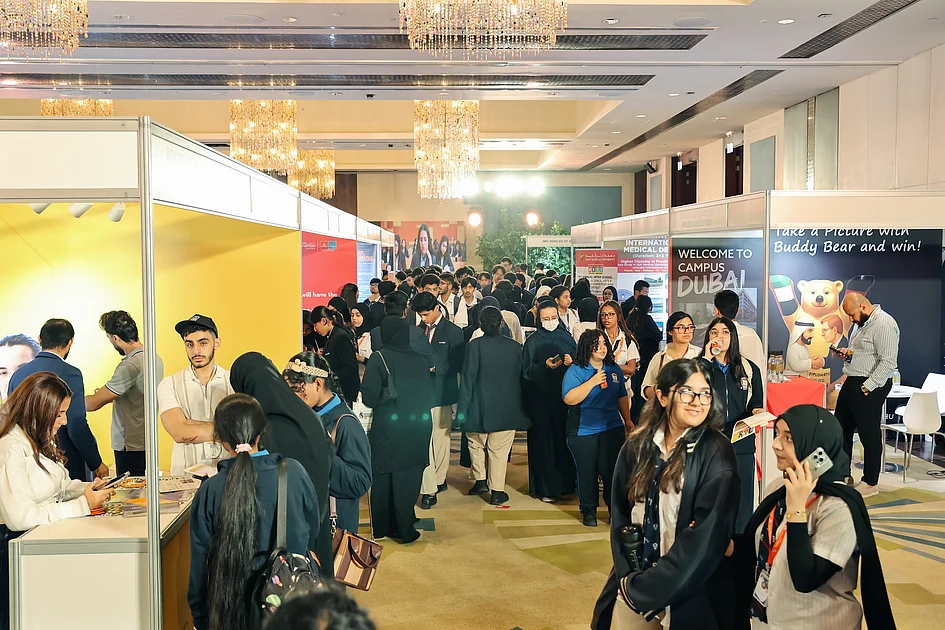
    Dubai prepares to host the prestigious KT UniExpo for its milestone 10th edition on April 29-30, 2026, at The H Hotel. This landmark event celebrates ten years of serving as the UAE’s premier higher education and career guidance platform, connecting students and parents with leading international universities during critical decision-making phases.

    Organized by KT Events, the exhibition emerges as an essential resource amid evolving discussions about future skills, global mobility, and career preparedness. The 2026 edition will feature over 35 universities and educational institutions from across the globe, including representation from the UAE, United Kingdom, United States, Canada, India, Australia, and various European nations.

    The expo’s comprehensive programme showcase spans cutting-edge disciplines including artificial intelligence, data science, aviation engineering, business management, finance, medical sciences, healthcare studies, media communications, and design innovation. Each participating institution will present curricula specifically designed to align with both emerging industry trends and established professional pathways.

    Beyond traditional university displays, KT UniExpo functions as a practical decision-making forum where attendees can engage in personalized consultations with admissions specialists, financial aid advisors, and career guidance professionals. Students and parents will gain direct access to crucial information regarding admission requirements, scholarship opportunities, visa procedures, and how academic selections translate into tangible career prospects.

    The event holds particular significance for secondary school students contemplating undergraduate education and parents seeking reliable information amidst an increasingly complex global education landscape. With free admission and operational hours from 8:00 AM to 5:00 PM across both days, advance registration through www.ktuniexpo.com is recommended to ensure optimal participation experience.

  • The politician whose death leaves a vacuum in India’s richest state

    The politician whose death leaves a vacuum in India’s richest state

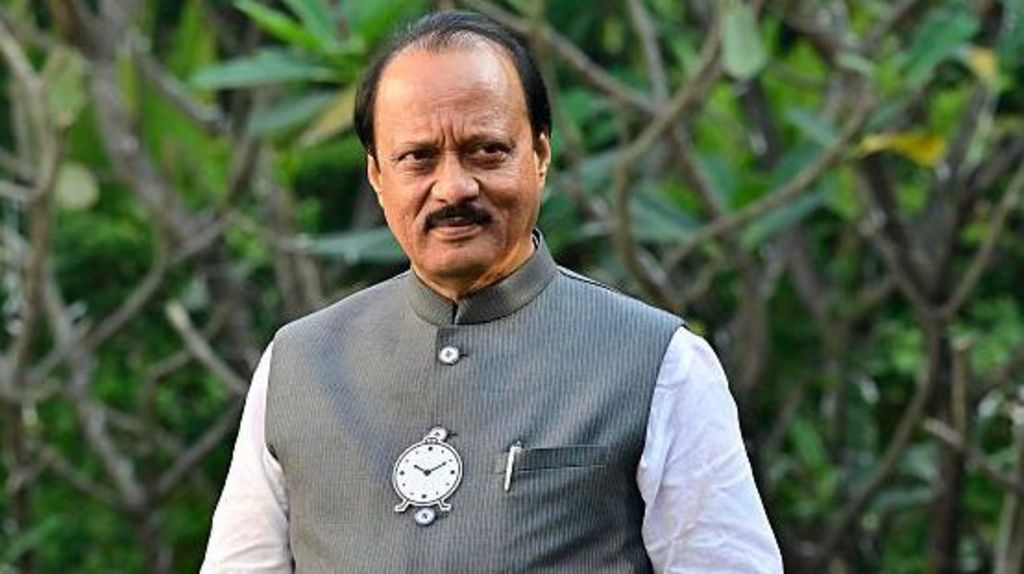
    Maharashtra’s political sphere faces profound uncertainty following the tragic demise of Deputy Chief Minister Ajit Pawar, who perished in a plane crash on Wednesday alongside four other individuals. The incident has created a significant power vacuum in India’s wealthiest state, where Pawar had established himself as a formidable political operator.

    For decades, Pawar navigated Maharashtra’s notoriously complex political environment—a constantly shifting landscape of alliances, regional loyalties, and intense rivalries. His approach combined pragmatic decision-making with shrewd political instincts, enabling his rapid ascent through the ranks of the Nationalist Congress Party (NCP), founded by his uncle Sharad Pawar.

    The relationship between uncle and nephew defined much of Ajit Pawar’s political journey. While Sharad Pawar embodied traditional, strategic authority with his measured tones and coalition-building expertise, Ajit developed a distinct political identity focused on regional governance and control of local networks. His blunt, practical style and mercurial personality garnered both devoted followers and vocal critics.

    Their political differences culminated in dramatic public ruptures, first in 2019 when Ajit briefly aligned with the rival Bharatiya Janata Party (BJP) to claim the deputy chief minister position—a move that collapsed within days due to his uncle’s intervention. The final break occurred in 2023 when Ajit formally split from his uncle’s NCP, joined a BJP-led coalition, and successfully claimed the party’s name and electoral symbol for his faction.

    This schism transformed Maharashtra’s political dynamics, dividing the once-unified Pawar political dynasty into competing camps. Recent speculation about possible reconciliation between the factions has been rendered moot by Ajit Pawar’s sudden death. Critical questions now emerge regarding the stability of the alliances he built and whether his political successors—potentially including his cousin Supriya Sule (Sharad Pawar’s daughter), his wife, or son—can maintain cohesion among his supporters.

    Pawar’s legacy remains deeply complex: to admirers, he represented political adaptability and courage; to critics, he exemplified opportunistic power maneuvering. His passing underscores how personal ambitions and familial relationships can dramatically shape political outcomes in unexpected ways.

  • US YouTube star IShowSpeed to get Ghanaian passport as Africa tour ends

    US YouTube star IShowSpeed to get Ghanaian passport as Africa tour ends

    In a significant cultural and diplomatic move, Ghana has officially approved Ghanaian citizenship for global YouTube sensation IShowSpeed following his transformative 28-nation tour across Africa. The 21-year-old content creator, born Darren Watkins Jr., received this honor during the final leg of his “Speed Does Africa” expedition, which concluded earlier this week.

    Ghana’s Foreign Minister Samuel Okudzeto Ablakwa personally announced the decision via social media, revealing that the passport approval came after “confirmation of the irrefutable ties of IShowSpeed to Ghana.” During an emotional live stream from Ghana, the influencer disclosed that his mother hails from the West African nation, creating an immediate familial connection that resonated deeply with both officials and citizens.

    The groundbreaking Africa tour, which amassed millions of views worldwide, has been widely praised for challenging continental stereotypes and showcasing diverse African cultures. IShowSpeed’s journey included remarkable experiences from racing cheetahs to participating in traditional naming ceremonies. In Ghana’s eastern region, he underwent a ceremonial naming ritual where he was honored with the traditional name Barima Kofi Akuffo while adorned in prestigious kente cloth.

    While many Ghanaians celebrated the decision as a smart diplomatic move to engage the global diaspora, some critics expressed concerns about potential devaluation of citizenship privileges. The controversy reflects ongoing debates about celebrity diplomacy and national identity in the digital age.

    This development aligns with Ghana’s broader strategy to strengthen connections with the African diaspora worldwide. In 2024, the nation extended citizenship offers to over 500 diaspora members, predominantly African-Americans including music legend Stevie Wonder.

    IShowSpeed, recently named Rolling Stone’s “most influential creator of 2025” and boasting a net worth estimated at $20 million by Forbes, has now surpassed 50 million YouTube subscribers—a milestone significantly boosted by his African content. His journey represents a new era of digital diplomacy where online influencers bridge cultural divides and reshape international perceptions through authentic engagement.

  • Life in Wadi Shaam: A journey through Ras Al Khaimah’s mountain villages

    Life in Wadi Shaam: A journey through Ras Al Khaimah’s mountain villages

    Nestled within the formidable peaks of Ras Al Khaimah, the villages of Wadi Shaam stand as living monuments to an era defined by communal resilience and profound connection to the natural world. Through the recollections of native elder Saeed Abdullah Al-Zahouri, 60, we gain unprecedented insight into a vanishing way of life that thrived on collective resourcefulness and intergenerational wisdom.

    These remote settlements, including the modest Ahbabbt area with its ten households and the historic Al-Ghashbah with structures predating the 1940s, exemplified self-sufficient existence. Families cultivated wheat, raised livestock, and constructed dwellings from indigenous materials—mountain gravel, wood, and a specialized clay known as Al-Jass. Their architectural ingenuity manifested in Bayt Al-Qofl (houses of locks), designed with layered roofs of wood and Al-Sakhbar plants to withstand extreme weather.

    Survival hinged on sophisticated water management systems. Communities excavated reservoirs, lining them with kiln-baked clay discs and connecting them via intricate channel networks called Al-Maseelah to harvest rainwater. Filter basins purified runoff, providing safe water for consumption and agriculture despite the arid environment.

    Seasonal migration shaped annual rhythms. During scorching summers, families journeyed for days to cooler regions like Al-Arshan or Fujairah, transporting supplies on donkey and camel caravans. Winters brought communal gatherings in mountain caves, where elders shared stories while baking traditional bread in stone ovens—a testament to enduring social bonds.

    The 1970s marked a transformational period following the UAE’s formation. Under Sheikh Zayed’s visionary leadership, mountain families transitioned to planned communities with modern amenities while preserving cultural traditions. This carefully managed evolution allowed Wadi Shaam’s residents to embrace progress without sacrificing the heritage that defined their identity for generations.

  • “It’s ‘Operation Don’t Come Last’ at the Olympics”

    “It’s ‘Operation Don’t Come Last’ at the Olympics”

    North Yorkshire athlete Axel Brown is preparing for his second and final Olympic appearance as pilot of the Trinidad and Tobago bobsleigh team at the upcoming Milano Cortina 2026 Winter Games. The 33-year-old from Harrogate, who previously competed for the Caribbean nation at Beijing 2022, will steer the sled at speeds approaching 100mph (160km/h) in what he confirms will be his Olympic swan song.

    Brown’s unconventional journey to winter sports began twelve years ago when, after being released from an American football team just before the Sochi 2014 Olympics, he discovered bobsleigh through television coverage. “You don’t grow up in Harrogate thinking you’re going to be an Olympic bobsleigher,” Brown reflects on his unexpected career path.

    After seven years competing for Great Britain, Brown made the strategic decision in 2021 to represent his mother’s native Trinidad and Tobago. As pilot, his responsibilities extend beyond mere participation. “I steer the sled to ensure we’re efficient, smooth and don’t crash – because that’s a very real part of the sport,” he explains of the technically demanding role.

    The Harrogate athlete acknowledges the psychological dimensions of the sport, noting that even at slower courses reaching 70mph (113km/h), bobsleigh requires “a healthy level of fear.” He maintains that complacency could be dangerous, stating: “If there’s a day when I was completely not scared of bobsleigh, that’s probably the day to walk away.”

    Brown’s previous Olympic performance saw him finish 28th out of 30 teams in the two-man event at Beijing 2022, ahead of Jamaica and Brazil. However, he considers qualification for Milano Cortina 2026 his true “gold medal” moment, achieved under significantly more challenging circumstances. With reduced nation spots and requiring top-17 global ranking, Brown describes the qualification process as “right at the limit of what was possible.”

    For his final Games, Brown embraces modest ambitions under the banner “Operation Don’t Come Last,” while anticipating the emotional significance of competing with family present after COVID restrictions prevented their attendance in Beijing. Beyond his athletic career, the self-described non-thrill-seeker plans to convert a barn for residential purposes with his partner, embracing a quieter life after retirement from breakneck speeds.

  • Plane crashes with Maharashtra Deputy CM Ajit Pawar onboard, 6 feared dead

    Plane crashes with Maharashtra Deputy CM Ajit Pawar onboard, 6 feared dead

    A tragic aviation incident has shaken India’s political landscape after a aircraft carrying Maharashtra Deputy Chief Minister Ajit Pawar crashed on Wednesday morning. The disaster, which occurred around 8:41 AM local time on January 28, 2026, is believed to have claimed the lives of all six individuals aboard according to preliminary reports.

    The aircraft, whose specific make and model remain under investigation, was en route to an undisclosed destination when it went down under circumstances that aviation authorities have yet to fully determine. Emergency response teams were immediately dispatched to the crash site, though the severity of the impact suggests minimal chances of survival for those on board.

    Ajit Pawar, a prominent political figure and key leader within the Nationalist Congress Party, held significant influence in Maharashtra state politics. His potential demise creates immediate political ramifications for the state’s governing coalition and raises questions about succession within both the administration and his political party.

    The crash has prompted an urgent investigation by India’s Directorate General of Civil Aviation, with officials working to establish both the cause of the accident and the complete list of casualties. Aviation experts are examining multiple potential factors including weather conditions, mechanical failure, and human error.

    This incident marks one of the most significant political tragedies in recent Indian history, drawing national attention and condolences from across the political spectrum. The government has announced heightened security protocols for officials traveling by air while the investigation continues.

  • Plane carrying Maharashtra Deputy CM Ajit Pawar crashes, ‘no survivors’ yet authority says

    Plane carrying Maharashtra Deputy CM Ajit Pawar crashes, ‘no survivors’ yet authority says

    A private aircraft carrying Ajit Pawar, the Deputy Chief Minister of Maharashtra, crashed under tragic circumstances on January 28th in the Baramati region of western India. Aviation authorities confirmed the politician was traveling with four other individuals—two additional personnel and two crew members—aboard the ill-fated flight.

    According to an official statement released by India’s Directorate General of Civil Aviation (DGCA), preliminary assessments indicate no survivors from the catastrophic incident. The aircraft was reported to have been completely engulfed in flames upon impact in Pune district, with emergency response teams immediately deploying to the scene.

    Rescue operations continue intensively as firefighting crews work to extinguish the remaining blaze at the crash site. The DGCA has initiated a comprehensive investigation to determine the precise cause of the accident, though adverse weather conditions or technical malfunctions remain speculative at this early stage.

    The incident has sent shockwaves through India’s political establishment, particularly in Maharashtra state where Pawar served as a prominent political figure and key government official. The veteran politician held significant influence in regional politics and was actively involved in state governance matters at the time of the tragedy.

    Aviation safety experts emphasize that this accident represents one of the most serious incidents involving high-ranking Indian officials in recent years. The international community has begun expressing condolences while awaiting further developments in the investigation.

  • Why China views the UK visit as part of something bigger

    Why China views the UK visit as part of something bigger

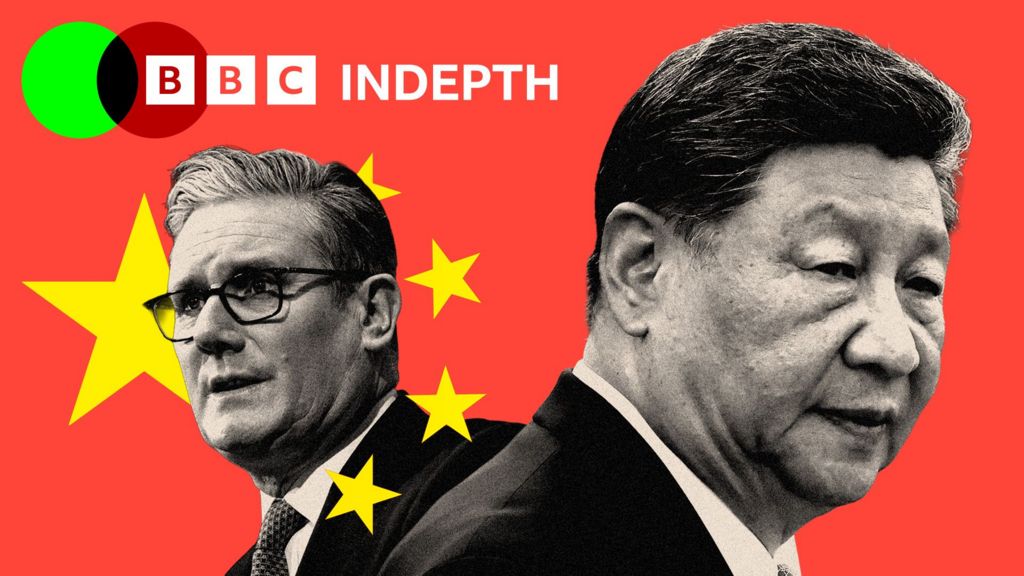
    Despite Beijing’s harsh winter conditions, the Chinese capital has become an unexpected hub of diplomatic activity, welcoming a succession of Western leaders seeking to reestablish ties with the world’s second-largest economy. The most notable among these visitors is British Prime Minister Sir Keir Starmer, marking the first UK leadership visit to China in eight years.

    This diplomatic flurry comes after China secured approval for a massive new embassy in London, a precondition Beijing officials explicitly tied to announcing Starmer’s visit. The UK delegation arrives with substantial economic ambitions, hoping to secure dozens of new trade agreements to bolster Britain’s economy amid ongoing domestic challenges.

    Dr. Yu Jie, Senior Research Fellow at Chatham House, notes that even establishing a reasonable trading relationship would constitute significant progress given current circumstances. The visit represents part of China’s broader charm offensive, positioning itself as a stable, predictable alternative to the United States in global partnerships.

    This strategy appeared successful with Canadian Prime Minister Mark Carney, who recently announced a “new strategic partnership with China” during his Beijing visit. However, such overtures risk provoking Washington’s ire, as demonstrated by President Trump’s threat to impose 100% tariffs on Canada should it proceed with Chinese trade deals.

    Starmer has attempted to navigate these geopolitical tensions by declaring Britain would not choose between the US and China. Analysts suggest Beijing remains realistic about its limited ability to fracture the special relationship between Washington and London.

    The current diplomatic engagement marks a notable shift from what Prime Minister Starmer himself termed an “ice age” in UK-China relations. While a return to the “golden era” symbolized by the 2015 meeting between Xi Jinping and David Cameron remains improbable, experts view these developments as the beginning of a cautious thaw.

    Beyond high-level politics, people-to-people connections endure. The story of Bowei Wang exemplifies lasting cultural ties—after studying in Scotland during warmer diplomatic times, he now imports Glasgow-brewed ale to his Beijing pub near Tiananmen Square, creating a cross-cultural experience complete with British historical imagery.

    China’s economic leverage provides substantial negotiating power, controlling approximately one-third of global goods manufacturing, over 90% of rare earth mineral processing, and 60-80% of renewable energy components. This dominance has enabled Beijing to employ trade measures against countries that displeased it, as experienced by Australia, Canada, Japan, and South Korea in recent years.

    Business leaders like Tom Simpson of the China Britain Business Council emphasize the visit’s importance, noting China’s position as Britain’s third-largest trading partner with £45 billion in annual exports. However, Chinese analysts express concerns about Starmer’s inconsistent follow-through on engagement promises and Britain’s domestic political stability.

    The diplomatic movement has practical implications for ordinary citizens. British tour operators in China hope successful negotiations might lead to visa-free travel for UK passport holders, mirroring arrangements Beijing has already extended to 70 other countries.

    As Western leaders brave Beijing’s winter chill, they calculate that reengagement with China—despite its complexities and risks—represents a necessary strategic calculation in an increasingly multipolar world.

  • Sarah Mullally confirmed as archbishop of Canterbury, first woman to lead the Church of England

    Sarah Mullally confirmed as archbishop of Canterbury, first woman to lead the Church of England

    In a groundbreaking development for religious leadership, Sarah Mullally was formally confirmed as Archbishop of Canterbury on Wednesday, shattering centuries of tradition by becoming the first woman to lead the Church of England. The 63-year-old former cancer nurse turned cleric assumed her responsibilities during a legal ceremony presided over by judges, finalizing an appointment initially announced nearly four months prior.

    This confirmation service represents a significant evolution for the Church of England, which only began ordaining female priests in 1994 and consecrated its first female bishop in 2015. The church’s progressive stance on gender leadership stands in stark contrast to the Roman Catholic Church, which maintains prohibitions against women serving as priests, let alone global spiritual leaders.

    While the worldwide Anglican Communion lacks a formal head structure, the Archbishop of Canterbury traditionally serves as its spiritual leader across 165 countries encompassing approximately 100 million members. Mullally’s appointment has been hailed as a monumental statement regarding women’s position in religious society, though it simultaneously threatens to exacerbate existing divisions within the global communion.

    The new archbishop faces immediate challenges, including deepening rifts over gender equality and LGBTQ treatment policies. Conservative factions within Anglicanism, notably the Gafcon organization representing traditionalist members, have condemned Mullally’s appointment as divisive. Rwandan Archbishop Laurent Mbanda, chairman of Gafcon’s council of senior bishops, specifically criticized Mullally’s support for blessing same-sex marriages, asserting she “cannot provide leadership to the Anglican Communion” due to these progressive positions.

    Additionally, Mullally must address ongoing sexual abuse scandals that have plagued the church for over a decade, particularly following predecessor Justin Welby’s resignation after criticism for failing to report abuse allegations to authorities.

    The appointment process involved nomination by a 17-member commission of clerics and lay people, with final confirmation granted by King Charles III in his capacity as the church’s Supreme Governor. Mullally’s installation will culminate on March 25 at Canterbury Cathedral, where she will be formally installed as bishop of the diocese of Canterbury, marking the commencement of her public-facing ministry.