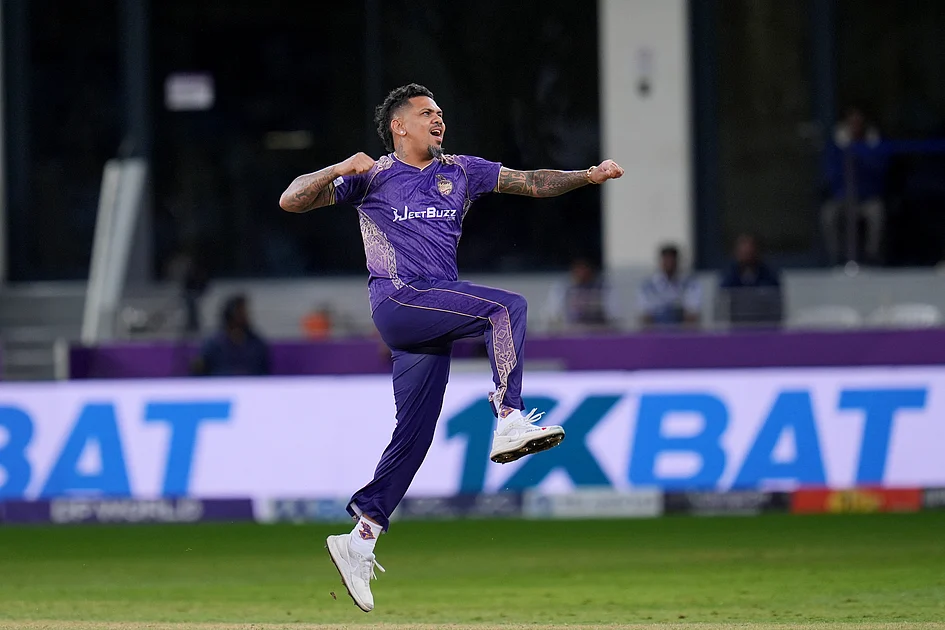
In a gripping display of cricketing prowess, South Africa tightened its grip on the first Test against India, reducing the hosts to 102-4 by the end of the morning session on Day 3. India, trailing by a daunting 387 runs, faced a series of setbacks as South Africa’s bowlers delivered a masterclass in precision and strategy. The Proteas, who had earlier amassed a formidable 489 in their first innings, are eyeing their first Test series victory on Indian soil since 2000-01. The day began with India resuming at six without loss, but the opening partnership of Yashasvi Jaiswal and Lokesh Rahul was soon dismantled. Rahul fell to Keshav Maharaj after scoring 22 runs, while Jaiswal, who had crafted a resilient 58, was dismissed by Simon Harmer. Harmer, who finished with figures of 2-39, also accounted for Sai Sudharsan, who struggled against spin. Dhruv Jurel’s brief stay at the crease ended in a duck, leaving India reeling at 102-4. Stand-in skipper Rishabh Pant and Ravindra Jadeja remained unbeaten at the interval, but the task ahead remains monumental. South Africa’s dominance was further underscored by Senuran Muthusamy’s maiden century on Day 2, which laid the foundation for their commanding total. As the match progresses, India faces an uphill battle to salvage the Test, while South Africa inches closer to a historic series win.
作者: admin
-

Optimism ahead of pope’s visit to Turkey for reopening of Istanbul’s Greek Orthodox seminary
As Pope Leo XIV prepares for his inaugural international visit to Turkey, there is growing optimism about the potential reopening of the Halki Theological School, a Greek Orthodox seminary that has been closed since 1971. Located on Heybeliada Island near Istanbul, the seminary has long been a symbol of Orthodox heritage and a focal point in the struggle for religious freedoms in Turkey. The school, which trained generations of Greek Orthodox patriarchs and clergy, including Ecumenical Patriarch Bartholomew I, was shuttered under laws restricting private higher education. Despite legal reforms allowing private universities to flourish, the seminary has remained closed, despite repeated appeals from international religious leaders and human rights advocates. The momentum for reopening the seminary gained traction after Turkish President Recep Tayyip Erdogan discussed the issue with U.S. President Donald Trump in September, expressing willingness to ‘do our part’ regarding its reopening. Erdogan had previously linked the move to reciprocal measures from Greece to improve the rights of Muslims there. Renovation work is already underway at the seminary, with completed clergy quarters and classrooms standing ready to welcome students. During his visit to Turkey, starting on November 27, Pope Leo XIV is scheduled to meet Erdogan and join Ecumenical Patriarch Bartholomew in commemorating the 1,700th anniversary of the Council of Nicaea, a key event in Christian history. Archbishop Elpidophoros, head of the Greek Orthodox Archdiocese of America, expressed optimism about the seminary’s reopening, stating that a committee of representatives from the Greek Orthodox Patriarchate and the Turkish government has begun discussions. He emphasized that keeping the school closed is a ‘political and diplomatic anachronism’ that hinders Turkey’s progress. The fate of the seminary is seen as a test of Turkey’s treatment of religious minorities, including its Christian population, which is estimated at 200,000 to 370,000 out of nearly 86 million. While Turkey’s Constitution guarantees freedom of religion, only Armenians, Greeks, and Jews are allowed to operate places of worship and schools, leaving other Christian groups without formal recognition. The reopening of the seminary could serve as a significant step toward improving religious freedoms and fostering cultural development and affinity between Greece and Turkey.
-

US set to label Maduro-tied Cartel de los Soles as a terror organization. It’s not a cartel per se
The Trump administration is intensifying its campaign against Venezuelan President Nicolás Maduro by designating the Cartel de los Soles as a foreign terrorist organization. This move, set to be announced on Monday, marks a significant escalation in the U.S. government’s efforts to combat drug trafficking into the United States. U.S. Secretary of State Marco Rubio recently accused the Cartel de los Soles, also known as the Cartel of the Suns, of being responsible for terrorist violence in the Western Hemisphere.
The designation comes as President Trump weighs potential military action against Venezuela, a possibility he has not ruled out despite suggesting the potential for talks with Maduro. The U.S. has already deployed a substantial military presence in the Caribbean Sea, targeting boats suspected of drug trafficking and resulting in over 80 deaths.
The term Cartel de los Soles originated in the 1990s to describe high-ranking Venezuelan military officers involved in drug trafficking. Over time, its use expanded to include police and government officials engaged in illegal activities such as mining and fuel trafficking. The name refers to the sun-shaped epaulettes worn by senior military officers.
In 2020, the U.S. Justice Department indicted Maduro and his inner circle on narcoterrorism charges, elevating the term to describe a Maduro-led drug-trafficking organization. However, experts like Adam Isaacson of the Washington Office on Latin America argue that the Cartel de los Soles is not a formal group with a hierarchy or regular meetings.
The Trump administration’s decision to label the cartel as a foreign terrorist organization is unprecedented, as the designation has traditionally been reserved for groups like ISIS or al-Qaeda. Earlier this year, the administration applied the label to eight Latin American criminal organizations involved in drug trafficking and migrant smuggling.
Critics, including Maduro, view the U.S. military buildup as an attempt to end the ruling party’s 26-year hold on power. Meanwhile, Venezuela’s U.S.-backed political opposition has renewed its efforts to remove Maduro from office.
U.S. Defense Secretary Pete Hegseth stated that the designation would provide new options for dealing with Maduro but did not specify what those options entail. Trump administration officials have indicated that Maduro’s continued rule is unsustainable, and Trump has reportedly been pleased with the impact of recent military strikes.
Maduro has denied the allegations, claiming the U.S. is fabricating a drug-trafficking narrative to force him out of power. The U.S. Treasury Department imposed sanctions on the Cartel de los Soles in July, accusing Maduro and his allies of using government resources to facilitate drug trafficking. The U.S. Justice Department has also doubled the reward for information leading to Maduro’s arrest to $50 million.
-

Suicide bombers strike security force headquarters in northwestern Pakistan, killing 3 officers
In a tragic incident on Monday morning, two suicide bombers targeted the headquarters of a security force in Peshawar, the capital of Khyber Pakhtunkhwa province in northwestern Pakistan. The attack resulted in the deaths of at least three officers and left five others injured, according to police and rescue officials. Peshawar Police Chief Saeed Ahmad detailed that one assailant detonated explosives at the main gate of the Federal Constabulary’s provincial headquarters, while the second bomber was neutralized by security personnel near the parking area. Ahmad emphasized that a swift response by the forces prevented a potentially larger catastrophe, as a significant number of officers were gathered on the open ground for morning parade drills. No group has yet claimed responsibility for the attack, though the Pakistani Taliban, or Tehrik-e-Taliban Pakistan (TTP), has been implicated in similar past incidents. This latest assault follows a suicide bombing outside a court in Islamabad less than two weeks ago, which claimed 12 lives. The surge in militant activities has exacerbated tensions between Pakistan and Afghanistan’s Taliban government, with Islamabad accusing Kabul of allowing cross-border attacks. Despite Afghanistan’s denial, bilateral relations remain strained, particularly after recent drone strikes and subsequent ceasefire brokered by Qatar. Pakistan has intensified its operations against the TTP, targeting insurgents near the Afghan border.
-

Australian judge rules synagogue arsonist was motivated by mental illness, not antisemitism
In a recent court ruling, an Australian magistrate determined that a man who set fire to a Melbourne synagogue was driven by mental illness rather than antisemitic motives. Angelo Loras, 35, pleaded guilty to arson and recklessly endangering lives after he ignited the front door of the East Melbourne Synagogue on July 4. Approximately 20 worshippers were inside sharing a Shabbat meal at the time, but no injuries were reported. Magistrate Malcolm Thomas stated that Loras, who suffers from schizophrenia, acted under the influence of a delusion exacerbated by his failure to take prescribed medication. This ruling comes amid a surge in antisemitic and Islamophobic incidents across Australia since the onset of the Israel-Hamas conflict in 2023. Initially, government leaders, including Prime Minister Anthony Albanese, suspected the attack was a hate crime. However, the court concluded that Loras’s actions were not motivated by prejudice. Loras was sentenced to four months’ imprisonment, which was less than the time he had already spent in custody. He was also ordered to continue medical treatment for schizophrenia for 20 months and perform unpaid community service. The magistrate advised the synagogue against seeking restitution for the $35,000 in damages, citing Loras’s prolonged homelessness and lack of prior criminal record. This incident was one of three suspected antisemitic acts in Melbourne during the same weekend, including harassment at an Israeli-owned restaurant and vandalism at a local business.
-

Premier League: Eze treble fuels Arsenal’s derby rout of Tottenham
In a thrilling North London derby, Arsenal’s Eberechi Eze delivered a masterclass performance, scoring a hat-trick to secure a commanding 4-1 victory over Tottenham Hotspur. The win extends Arsenal’s lead at the top of the Premier League table to six points, solidifying their title aspirations. The match, held at the Emirates Stadium, saw Arsenal dominate from the outset, with Leandro Trossard opening the scoring in the first half. Eze, who joined Arsenal in the summer after rejecting Tottenham’s advances, added two more goals before the break, showcasing his exceptional skill and composure. Tottenham’s Richarlison managed a spectacular long-range goal in the second half, but it was merely a consolation as Eze completed his treble with a clinical finish. This victory marks Arsenal’s biggest win over Tottenham since 2012 and extends their unbeaten run in all competitions to 15 games. The defeat raises questions about Tottenham’s tactical approach under manager Thomas Frank, whose conservative style failed to contain Arsenal’s attacking prowess. With crucial fixtures ahead, including a Champions League clash against Bayern Munich, Arsenal’s form suggests they are serious contenders for their first Premier League title since 2004.
-

‘Can’t afford lost wages’: India’s voter roll revision is worrying migrant workers
In the Rangpuri Pahari slum of Delhi, a wave of unease has swept through the community of migrant workers. These individuals, who have long lived on the margins of society, are now confronted with the daunting prospect of making unexpected and costly trips back to their hometowns to ensure their names remain on India’s electoral rolls. This follows the initiation of the Special Intensive Revision (SIR) by India’s Election Commission on November 4, a nationwide effort to update voter lists across 12 states and federally administered regions, encompassing nearly 510 million voters. The SIR aims to eliminate ineligible voters and include those who are eligible, but for many migrant workers, this process poses significant challenges. Anjali Mondol, a domestic worker, expressed her concerns about the financial strain and potential job loss associated with taking unplanned leave. Similar worries were voiced by Subhashri Doloi, who fears depleting her savings meant for voting in the upcoming elections. The SIR also raises fears about access to welfare schemes and, for those from West Bengal, the added anxiety of proving citizenship amidst ongoing crackdowns on alleged illegal immigrants from Bangladesh. While the Election Commission has introduced online verification to ease the process, many workers remain unfamiliar with or wary of this option. The physical forms can be filled by family members, but the lack of awareness and the tight deadlines exacerbate the stress. Rajesh Kumar, a trade unionist, has called for more awareness campaigns and help desks in major cities to assist migrant workers. Despite these challenges, some, like Ramdhin Prajapati, view the SIR as a necessary one-time effort. However, for workers from West Bengal, where elections are imminent, the time constraints are particularly pressing. The situation underscores the broader issues faced by India’s migrant population, who navigate the complexities of electoral participation while grappling with job insecurity and financial instability.
-

Philippine president says 7 suspects in corruption scandal have been detained, others being sought
In a significant move to address widespread public outrage, Philippine President Ferdinand Marcos Jr. announced the detention of seven suspects linked to a major corruption scandal involving flood control projects. Speaking on Monday, Marcos revealed that additional suspects are being pursued, including powerful members of Congress implicated in the brazen anomalies. The scandal has exposed substandard or non-existent flood control initiatives in the poverty-stricken Southeast Asian nation, which is highly vulnerable to deadly floods and extreme weather. The Sandiganbayan, a special anti-corruption court, has already indicted over a dozen suspects, including former House of Representatives member Zaldy Co and government public works engineers. This marks the first wave of what is expected to be dozens of criminal graft and corruption lawsuits, with Marcos vowing to bring implicated senators, House members, and wealthy construction company owners to justice by Christmas. The initial case involves irregularities in a 289 million peso ($4.8 million) river dike project in Oriental Mindoro province, undertaken by Sunwest Corp., a construction firm allegedly owned by Co’s family. One suspect was arrested, while six others surrendered over the weekend. Marcos urged remaining suspects to surrender, emphasizing that the crackdown will continue relentlessly. Interior Secretary Jonvic Remulla warned that authorities will pursue suspects globally, with three individuals expected to surrender at Philippine embassies in the United States, New Zealand, and Jordan. The scandal has sparked massive protests, fueled by revelations of kickbacks, lavish lifestyles, and luxury assets among the accused. An upcoming demonstration on November 30, backed by the Roman Catholic Church, underscores the public’s frustration. Among those implicated is Rep. Martin Romualdez, the president’s cousin and key ally, who has denied involvement but stepped down as House Speaker. Former Senate President Chiz Escudero has also been accused of pocketing kickbacks, though he denies wrongdoing. Marcos’s aides defended him, noting he first raised concerns about the irregularities in his July state of the nation address. Investigations now span over 9,855 flood control projects worth 545 billion pesos ($9 billion) since Marcos took office in mid-2022, with officials estimating up to 118.5 billion pesos ($2 billion) lost to corruption since 2023. The probe may extend to projects undertaken during the tenure of Marcos’s predecessor, Rodrigo Duterte.
-

Takeoff of China’s flying taxis hits turbulence
In the bustling innovation zones of Guangzhou and Shenzhen, China’s technological prowess is taking to the skies. EHang, a leading flying taxi manufacturer, recently showcased its unmanned, oval-shaped craft hovering over a riverside area, resembling a scene straight out of a sci-fi movie. Meanwhile, in Shenzhen, food-delivery drones have become a daily convenience and a tourist attraction, despite their higher costs. Polish tourist Karolina Trzciańska marveled at the novelty of receiving her bubble tea via drone, calling it a ‘super fun’ experience.
-

Israeli military says killed Hezbollah chief of staff in Beirut strike
In a significant escalation of tensions, the Israeli military announced the successful elimination of Hezbollah’s chief of general staff, Haitham Ali Tabatabai, in a targeted strike on a residential building in Beirut. The operation, conducted on Sunday, November 23, 2025, occurred despite an ongoing ceasefire. According to the Israeli military’s official statement, the strike was aimed at neutralizing a high-ranking terrorist figure, marking a bold move in the region’s volatile security landscape. The Lebanese health ministry reported that the attack resulted in at least five fatalities and 28 injuries, underscoring the human cost of the operation. This incident has raised concerns about the potential for renewed hostilities between Israel and Hezbollah, a powerful Lebanese militant group. The strike in Beirut, a city already grappling with political and economic instability, has further heightened tensions in the Middle East. Analysts suggest that this targeted killing could have far-reaching implications for regional security and diplomatic relations, particularly in the context of the fragile ceasefire. The international community is closely monitoring the situation, with calls for restraint and de-escalation from various global leaders. The incident also highlights the ongoing complexities of the Israel-Lebanon conflict, which has seen periodic flare-ups despite attempts at peacekeeping and mediation.