作者: admin

  • Travel surge signals ‘strong start’ for  tourism

    Travel surge signals ‘strong start’ for tourism

    China’s tourism industry has launched into 2026 with exceptional momentum, demonstrating robust consumer activity through record-breaking New Year holiday bookings that signal a vibrant recovery for the sector.

    The three-day holiday period spanning Thursday to Saturday has emerged as a critical indicator of consumer sentiment following December’s Central Economic Work Conference, which emphasized domestic demand expansion as a key priority for the year ahead.

    Domestic tourism has spearheaded this remarkable rebound. Leading online travel platforms reported unprecedented growth, with Meituan Travel documenting a nearly fivefold surge in bookings compared to the previous year. Competitor Tongcheng Travel observed booking momentum accelerating throughout December, recording an average 30 percent year-on-year increase for flight and hotel products. The holiday’s opening day alone witnessed domestic hotel bookings skyrocketing over threefold year-on-year, fueled by converging demand for seasonal travel, family reunions, and celebratory gatherings.

    Travel patterns revealed a distinctive ‘north-south exchange’ phenomenon, with ice-and-snow destinations in Northeast China attracting winter sports enthusiasts while southern havens like Hainan drew visitors seeking warmer climates and shopping experiences. Data indicated Heilongjiang and Hainan ranked as each other’s primary sources of tourist departures on Thursday.

    Cultural and entertainment events significantly influenced travel decisions, with New Year’s Eve celebrations, fireworks displays, music festivals, and performances driving both local excursions and short-distance trips. Tongcheng reported doubled year-on-year ticket sales for holiday performances, while Guangzhou and Shenzhen hosted over 100 major concerts and sporting events, some selling out two weeks in advance and consequently boosting hotel demand.

    Professor Wu Liyun from Beijing International Studies University’s China Academy of Culture and Tourism Industry noted: ‘Travelers increasingly prioritize emotional tourism, seeking cultural resonance and ceremonial significance. Activities like museum visits, concerts, and New Year countdowns now rival traditional sightseeing in popularity.’

    The outbound market has accelerated its recovery pace, with Beijing-based Utour Group reporting approximately 90 percent of its holiday products sold out. Demand for Australia and New Zealand packages surged 310 percent year-on-year, while European travel increased 178 percent. Premium customized tours to the Middle East rose 60 percent.

    Corporate travel has shown tentative signs of recovery, with Utour noting a 40 percent month-on-month increase in team-building package inquiries—interpreted by industry experts as companies preparing for productive operations ahead.

    While acknowledging the sector’s ‘strong start,’ Professor Wu emphasized the industry’s transition from volume-focused to quality-driven growth: ‘Service quality and brand reputation will become decisive competitive factors,’ she stated, advocating for consumer-centric evaluation systems to enforce elevated standards.

    China’s inbound tourism continues its robust recovery, supported by relaxed visa requirements and enhanced tax refund policies. The consolidated visa-free transit policy implemented December 17, 2024—now offering a unified 240-hour stay—has already driven a 60.8 percent surge in foreign arrivals under the transit scheme, according to National Immigration Administration data.

  • Indonesia’s new penal code takes effect, marking historic break with colonial law

    Indonesia’s new penal code takes effect, marking historic break with colonial law

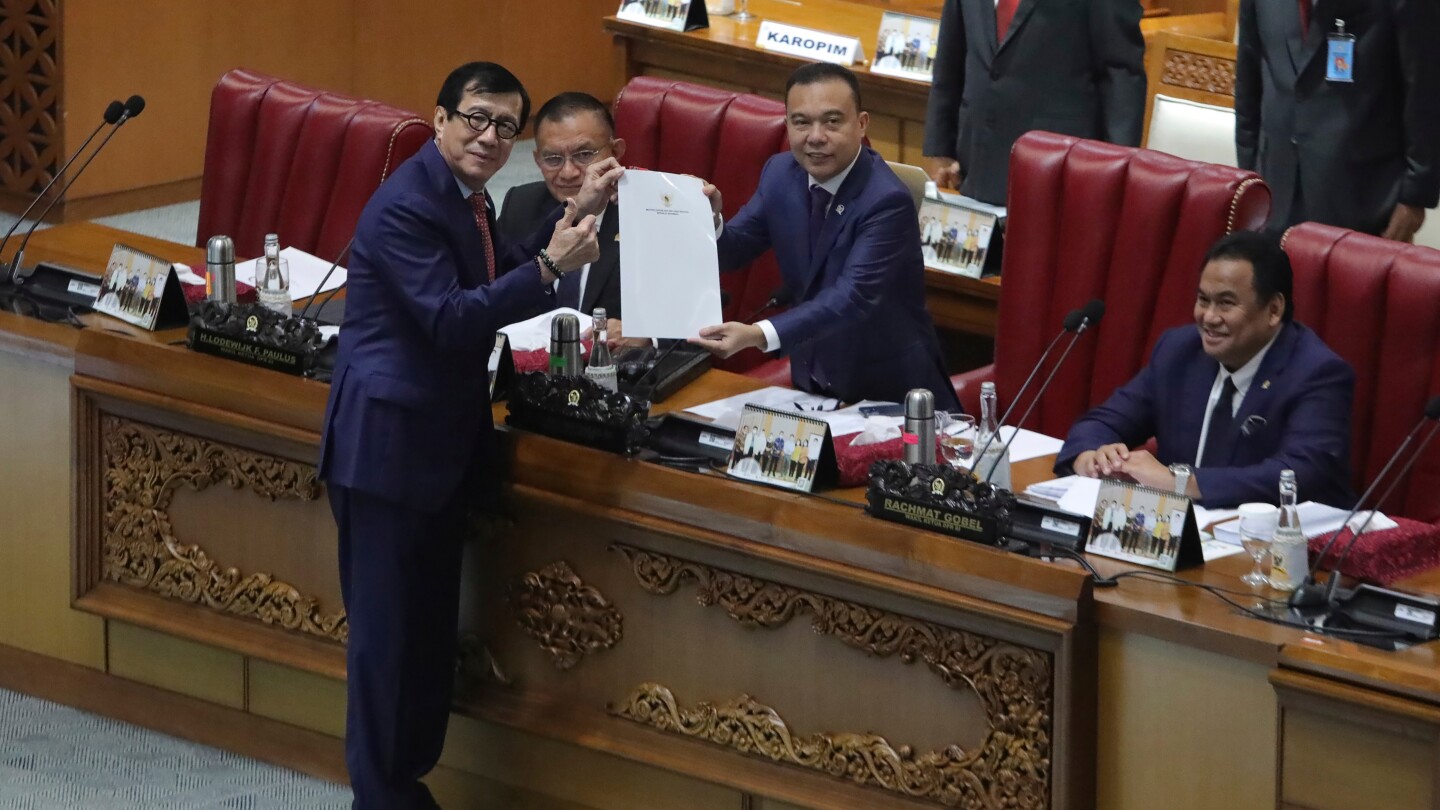
    JAKARTA, Indonesia — Indonesia has initiated enforcement of its groundbreaking penal code, effectively terminating the application of Dutch colonial-era criminal legislation that had governed the nation for over eight decades. This transformative legal overhaul represents one of the most substantial judicial reforms since the country’s independence proclamation in 1945.

    The newly implemented Indonesian Penal Code (KUHP), spanning 345 pages, received parliamentary approval in December 2022 following extensive deliberation. The legislation addresses the long-standing incongruence between colonial legal structures and contemporary Indonesian social values, though its development faced repeated delays due to complex negotiations balancing human rights considerations, religious principles, and cultural traditions.

    Among the most contentious provisions are those criminalizing extramarital sexual relations, punishable by up to one-year imprisonment, and cohabitation between unmarried partners, carrying a six-month sentence. Enforcement requires formal complaints from immediate family members, a mechanism government officials assert will prevent arbitrary implementation against foreign visitors.

    The code reinstates lèse-majesté statutes prohibiting insults against the president, vice president, and state institutions, with violations carrying potential three-year prison terms. Deputy Minister of Law Edward Hiariej emphasized that official guidelines distinguish between permissible criticism and criminal defamation, though human rights organizations remain unconvinced.

    Notably absent from the final legislation is a previously contemplated ban on homosexual relations, representing a significant victory for LGBTQ advocacy groups. The code maintains capital punishment while introducing innovative probationary measures that could commute death sentences after ten years based on demonstrable rehabilitation.

    Legal scholars identify a philosophical shift in sentencing approaches, expanding non-custodial alternatives including community service and supervisory measures. The Institute for Criminal Justice Reform acknowledges these provisions may alleviate systemic prison overcrowding while promoting restorative justice principles.

    Government officials, including Coordinating Minister for Law Yusril Ihza Mahendra, characterize the implementation as historic, marking Indonesia’s judicial emancipation from colonial legacy and the establishment of a legal system reflecting indigenous cultural values.

  • Congratulations extended to Swiss president

    Congratulations extended to Swiss president

    Chinese President Xi Jinping has formally extended congratulations to Guy Parmelin following his assumption of the Swiss Confederation presidency, emphasizing the robust trajectory of Sino-Swiss diplomatic relations. In his Thursday message, President Xi referenced his landmark 2017 state visit to Switzerland, during which both nations initiated a joint feasibility study for upgrading their existing Free Trade Agreement. Xi specifically acknowledged Parmelin’s instrumental role in advancing these negotiation processes.

    The communication notably addressed contemporary global economic challenges, with Xi observing that amid rising unilateralism and protectionism worldwide, the mutual commitment between China and Switzerland to free trade principles serves as a stabilizing force for international development and prosperity.

    This diplomatic exchange coincides with significant anniversaries: 2026 marks both the tenth anniversary of the China-Switzerland innovative strategic partnership and the commencement of China’s 15th Five-Year Plan (2026-2030), which President Xi identified as presenting substantial opportunities for enhanced innovative collaboration between the two nations.

    Reaffirming China’s dedication to strengthening bilateral ties, Xi expressed his willingness to collaborate with President Parmelin to expand mutually beneficial cooperation frameworks, elevate bilateral relations to unprecedented levels, and generate increased benefits for both populations.

    Guy Parmelin, aged 66, assumed the Swiss presidency following his December 10th parliamentary election, where he secured 203 votes out of 228 cast ballots. His political credentials include leadership of Switzerland’s Federal Department of Economic Affairs, Education and Research since 2019, service as 2025 Vice-President of the Swiss Confederation, and a previous presidential term in 2021.

    The Swiss presidential selection process involves annual election by parliament from among the seven Federal Council members, resulting in a one-year term where the president serves as primus inter pares while maintaining regular ministerial duties.

  • Venus Williams, 45, gets Australian Open wildcard

    Venus Williams, 45, gets Australian Open wildcard

    Tennis legend Venus Williams has achieved a remarkable milestone by securing the final women’s wildcard entry for the upcoming Australian Open, making her the oldest female player to compete in the tournament’s main draw at 45 years old. The seven-time Grand Slam champion, who first appeared at Melbourne Park in 1998, will surpass the previous record held by Japan’s Kimiko Date, who competed at age 44 in 2015.

    Williams expressed gratitude for the opportunity, stating: ‘I’m thankful for the chance to return to a venue that has played such a significant role throughout my professional journey.’ The American athlete, who reached the Australian Open finals in 2003 and 2017 but fell to her sister Serena on both occasions, last competed at the event in 2021, where she was eliminated in the second round by Italy’s Sara Errani.

    In preparation for the Grand Slam event commencing January 18th, Williams has also accepted a wildcard invitation to the Hobart International warm-up tournament starting January 12th, where she will be joined by British tennis star Emma Raducanu. This marks Williams’ first international competition outside the United States since 2023.

    The former world number one recently demonstrated her enduring competitive spirit at the 2025 US Open, where she became the third-oldest woman to participate in the tournament during the Open era. Despite a valiant effort, she suffered a first-round defeat against Czech player Karolina Muchova with scores of 6-3, 2-6, 6-1.

  • Xi’s message for New Year widely lauded

    Xi’s message for New Year widely lauded

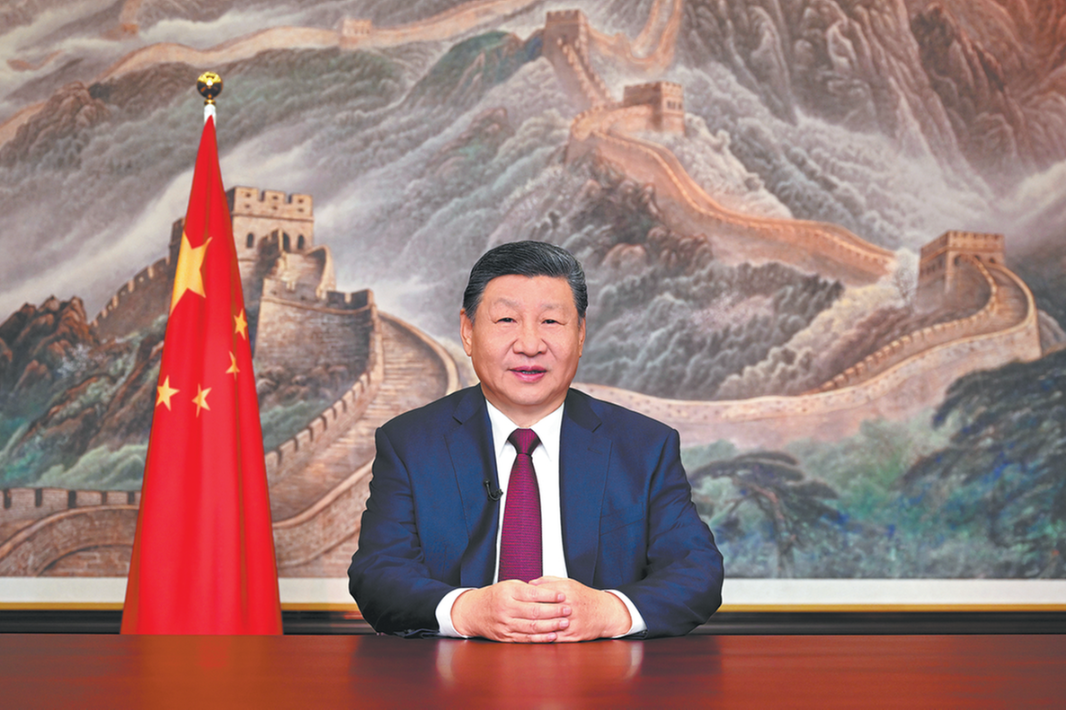
    International scholars and policy experts have universally praised Chinese President Xi Jinping’s 2026 New Year message, characterizing it as a stabilizing voice of optimism amid global complexities. The address, delivered Wednesday evening through China Media Group and digital platforms, outlined China’s tangible progress throughout 2025 while mapping strategic priorities for the forthcoming 15th Five-Year Plan period (2026-2030).

    President Xi emphasized that successful ventures originate from meticulous planning, underscoring the necessity of concrete efforts to advance high-quality development, deepen comprehensive reform and opening-up, and ensure widespread prosperity. The speech highlighted continuity in China’s development approach while addressing contemporary global challenges.

    Jack Perry, Chairman of the London-based 48 Group promoting equitable trade relations, noted China’s consistent and confident approach to its next developmental phase. “China is not attempting to change direction abruptly. It is building carefully on what has already been achieved,” Perry observed, adding that clarity of direction represents China’s distinctive advantage in an increasingly fragmented global landscape.

    Academic experts highlighted the speech’s nuanced balance between continuity and adaptation. Tom Harper, University of East London lecturer specializing in China’s international relations, noted the address reflects China’s focus on qualitative rather than quantitative growth metrics. Meanwhile, Karori Singh, former director of the University of Rajasthan’s South Asia Studies Centre, emphasized how President Xi acknowledged achievements while outlining strategies to address forthcoming challenges.

    The address reinforced China’s commitment to global engagement, with President Xi affirming that China “continued to embrace the world with open arms” and remains positioned “on the right side of history.” Georgetown University’s Jack Midgley interpreted the message as projecting a positive vision for China’s future within a peaceful global framework.

    Kuwaiti media commentator Charbel Barakat, head of international news at Al Jarida newspaper, emphasized China’s role as a stabilizing force through its development model. “By offering technology, investment and knowhow without political conditions, China is injecting new momentum into global growth and industrialization efforts in developing nations,” Barakat stated, noting that China’s commitment to multilateralism and win-win cooperation provides developing nations with an alternative to coercive international approaches.

  • Australia’s Northern Territory considers passing assisted dying laws for second time in 31 years

    Australia’s Northern Territory considers passing assisted dying laws for second time in 31 years

    Australia’s Northern Territory, which pioneered the world’s first voluntary euthanasia legislation in 1995 only to have it overturned by federal parliament, is now positioned to become the final Australian jurisdiction to enact assisted dying laws. The territorial government announced Friday its commitment to draft new legislation by mid-2026, marking a historic reversal after nearly three decades of prohibition.

    The territory’s groundbreaking 1995 laws—which allowed four terminally ill patients to end their lives legally—were nullified by the Australian Parliament in 1997. This federal ban persisted until 2022, when legislation was amended to permit both the Northern Territory and Australian Capital Territory to legislate on assisted dying. The ACT subsequently passed its laws in 2024.

    Northern Territory Attorney-General Marie-Clare Boothby emphasized the complexity of the undertaking, stating: “Legislating for the rights of the terminally ill is one of the most sensitive and complex reforms any government can undertake. We’re taking the time to get this right through careful consultation rather than rushing the process.”

    The unique demographic landscape of the Northern Territory presents significant implementation challenges. With just 260,000 residents scattered across an area nearly the size of France, the territory contains Australia’s highest proportion of Indigenous citizens—over 25% of the population compared to 3.8% nationally.

    These demographic realities complicate the legislative process. Indigenous communities hold diverse perspectives on assisted dying, ranging from deep suspicion of medical systems to advocacy for culturally safeguarded access. Legislative Assembly Speaker Robyn Lambley expressed concerns about implementation, noting: “Establishing adequate education about assisted dying laws for Indigenous people, many of whom don’t speak English as a first language, is probably unrealistic. Aboriginal people have reluctance around accessing health services for anything.”

    The government has committed to a conscience vote for lawmakers and will develop comprehensive public education campaigns addressing misinformation, particularly in remote and Indigenous communities, as recommended by a September 2025 parliamentary committee report.

  • Watch: Moment 400-pound runaway prop injures Disney employee

    Watch: Moment 400-pound runaway prop injures Disney employee

    A dramatic workplace incident unfolded during a live performance at a Disney theme park when a massive 400-pound prop malfunctioned, resulting in injury to a park employee. The accident occurred during a meticulously choreographed recreation of a famous scene from the Indiana Jones film franchise, a popular attraction that regularly draws large crowds.

    Eyewitness footage captured the moment the oversized prop, which was supposed to follow a controlled path, broke free from its intended trajectory. The runaway equipment then struck a cast member who was performing their duties nearby. Park safety protocols were immediately activated as the show was halted and emergency responders rushed to assist the injured employee.

    The incident has sparked serious conversations about entertainment industry safety standards, particularly regarding heavy props used in live performances. While theme park attractions are designed with multiple safety systems, this event demonstrates how unpredictable elements can create hazardous situations even in highly controlled environments.

    Disney officials have confirmed they are conducting a thorough investigation into the mechanical failure and reviewing all safety procedures for the attraction. The company has emphasized its commitment to employee safety while also maintaining the magical experience guests expect. The injured cast member received immediate medical attention, though their current condition has not been publicly disclosed due to privacy concerns.

  • World rings in 2026 with fireworks

    World rings in 2026 with fireworks

    The world transitioned into 2026 with a symphony of celebrations spanning continents, blending traditional festivities with somber reflections on recent tragedies. From the Pacific islands to major global capitals, diverse cultures marked the occasion with unique customs while maintaining heightened security awareness.

    The first moments of 2026 emerged in the Pacific, with Kiritimati (Christmas Island), Tonga, and New Zealand leading the global countdown. Australia’s Sydney Harbour erupted in a spectacular pyrotechnic display featuring 40,000 effects spanning seven kilometers, including an innovative waterfall effect from the Harbour Bridge. The celebration occurred under reinforced security following December’s tragic attack that claimed 15 lives at a Jewish event, with organizers holding a minute’s silence at 11 PM to honor the victims.

    In Seoul, thousands gathered at the Bosingak bell pavilion where a bronze bell resonated 33 times at midnight—a Buddhist tradition symbolizing the 33 heavens and believed to usher in peace and prosperity. Rio de Janeiro’s Copacabana Beach hosted its renowned ‘Reveillon’ celebration with organizers attempting to surpass their 2024 Guinness World Record for the largest New Year’s Eve gathering.

    New York’s Times Square witnessed revelers enduring subzero temperatures to watch the traditional descent of the 5,600-kilogram ball, which subsequently rose again illuminated in red, white, and blue to commemorate America’s upcoming 250th anniversary. In a historic transition, Zohran Mamdani was sworn in as mayor in a decommissioned subway station shortly after midnight.

    European celebrations adopted quieter approaches, with Greece and Cyprus implementing low-noise pyrotechnics to create more inclusive environments for children and pets. However, the festive atmosphere was marred by tragedy in Crans-Montana, Switzerland, where a bar fire in the early hours claimed dozens of lives and injured approximately 100 people. Swiss authorities confirmed the ongoing identification process while declining to provide specific casualty figures during their preliminary assessment.

  • Rough year for UN amid wars, calls for reform

    Rough year for UN amid wars, calls for reform

    The United Nations navigated a profoundly challenging period throughout 2025, grappling with escalating international conflicts, deepening geopolitical fractures, and intensifying demands for structural reform. The organization’s headquarters in New York became a focal point for global tensions as multiple crises tested the multilateral system’s resilience and effectiveness.

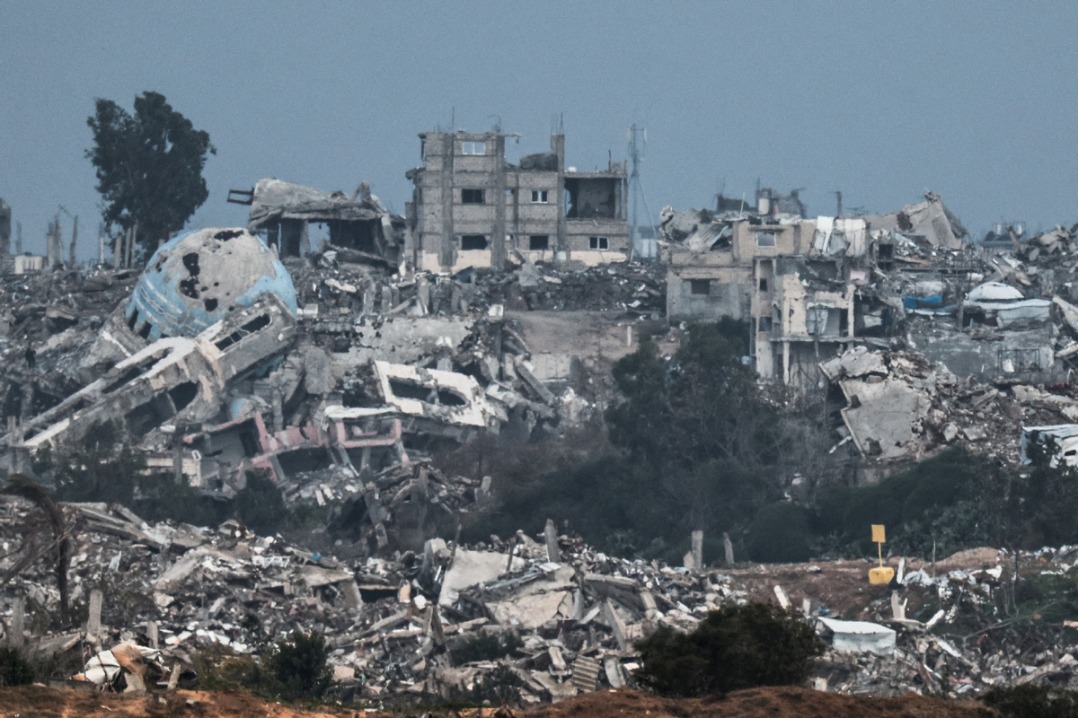
    The Palestinian situation emerged as a dominant concern, culminating in the 80th UN General Assembly’s September adoption of the ‘New York Declaration’ supporting a two-state solution. With 142 nations endorsing the measure, the resolution demanded an immediate ceasefire, prisoner releases, and establishment of a sovereign Palestinian state. This diplomatic momentum continued as numerous countries including Belgium, Canada and the United Kingdom formally recognized Palestinian statehood, bringing total recognition to over 80% of UN member states by late September.

    November witnessed a significant breakthrough when the Security Council finally passed a US-proposed ceasefire plan for Gaza after two years of stalled negotiations. The resolution authorized an International Stabilization Force to support reconstruction and governance efforts in the region, marking a departure from previous US vetoes that had blocked similar measures.

    China’s permanent representative Fu Cong emphasized the urgency of the humanitarian crisis, stating ‘Gaza is already facing famine, with disease spreading rapidly.’ He challenged the US to ‘face up to its responsibilities’ and support the Council’s effectiveness rather than undermining UN authority.

    The organization faced additional strains as former US President Donald Trump delivered an extended critique during the General Assembly, lambasting the UN’s infrastructure and decision-making processes while accusing the body of funding migration that threatened Western nations. These remarks coincided with reduced US financial contributions that exacerbated the UN’s ongoing liquidity crisis.

    Structural reform gained prominence through the newly established Group of Friends of Global Governance, comprising 43 founding members. The coalition advocated for a ‘stronger, more efficient and more inclusive UN’ through the UN80 Initiative, reflecting widespread member state expectations for reinforced multilateralism and improved global governance.

    China consistently emphasized that meaningful reform must enhance developing nations’ representation and reflect contemporary geopolitical realities. Fu Cong articulated this position, stressing the need to ‘advance the democratization of international relations’ while opposing ‘unilateralism, hegemonism and power politics.’

    The reform debate intensified when China opposed Japan’s Security Council permanent membership aspirations, citing Prime Minister Sanae Takaichi’s November remarks characterizing a ‘Taiwan contingency’ as a ‘survival-threatening situation’ for Japan. China submitted formal objections to UN Secretary-General Antonio Guterres, reaffirming Taiwan as an internal matter.

    As the year concluded amidst persistent conflicts, Guterres issued a sobering New Year’s message for 2026, urging world leaders to ‘choose people and planet over pain’ while acknowledging that ‘chaos and uncertainty surround us’ at a critical global crossroads.

  • Dozens missing after boat carrying 200 migrants sinks off Gambia

    Dozens missing after boat carrying 200 migrants sinks off Gambia

    A vessel carrying approximately 200 migrants en route to Europe met with tragedy off the coast of The Gambia, resulting in at least seven confirmed fatalities and numerous individuals missing, according to official statements from the country’s defense ministry.

    The maritime disaster occurred around midnight on Wednesday near Jinack village in the North Bank Region. The ill-fated boat, which was attempting the perilous Atlantic crossing to Spain’s Canary Islands, subsequently overturned and was discovered stranded on a sandbank.

    Search and rescue operations led by The Gambian Navy have successfully recovered 96 survivors thus far, with emergency crews continuing their efforts to locate additional passengers. Ten of those rescued are reported to be in critical condition and receiving urgent medical treatment.

    Authorities indicate that several victims are not Gambian nationals, with identification procedures currently underway to establish their nationalities. The rescue mission has deployed multiple naval vessels alongside assistance from local fishing boats.

    This tragic incident highlights the increasingly common yet extremely dangerous migration route across the Atlantic Ocean that African migrants undertake in attempts to reach European shores. Official statistics reveal that nearly 47,000 individuals reached the Canary Islands in 2024 alone, while Spanish non-governmental organization Caminando Fronteras estimates that over 9,000 migrants have perished attempting this journey.

    The Gambia has emerged as one of the primary transit points for migrants embarking on hazardous sea and land journeys to Europe. In response to growing migration pressures, the European Union has recently established agreements with several North African nations aimed at reducing irregular migration patterns.