作者: admin

  • Guinea’s junta leader is confirmed president-elect after first vote since a 2021 coup

    Guinea’s junta leader is confirmed president-elect after first vote since a 2021 coup

    CONAKRY, Guinea — Guinea’s Supreme Court has officially validated the presidential election victory of General Mamadi Doumbouya, formally transitioning the military junta leader into a democratically elected head of state. The court’s Sunday ruling confirmed Doumbouya’s overwhelming mandate, with official results showing he secured 86.7% of votes cast in the December 28 election—the nation’s first presidential contest since the 2021 coup.

    The judicial endorsement comes despite earlier challenges from opposition candidate Yero Baldé, who had alleged electoral manipulation before unexpectedly withdrawing his petition just prior to the court’s decision. Baldé finished as runner-up with 6.59% of the vote.

    In a nationally televised address following the verdict, President Doumbouya struck a conciliatory tone, declaring: “Today, there are neither winners nor losers. There is only one Guinea, united and indivisible.” He called upon citizens to collaborate in building “a new Guinea, a Guinea of peace, justice, shared prosperity, and fully assumed political and economic sovereignty.”

    The electoral process occurred under a newly implemented constitution that notably eliminated previous restrictions prohibiting military leaders from seeking presidential office while simultaneously extending the presidential term from five to seven years.

    Political analysts note that Doumbouya faced minimal opposition during the campaign, with critics alleging his administration has systematically suppressed political dissent since seizing power in 2021. N’Faly Guilavogui, a Guinean political analyst, observed that the weakened opposition landscape focused attention exclusively on Doumbouya as “the only key figure capable of ensuring the continuity of the state.”

    The newly confirmed president inherits significant economic challenges despite Guinea’s substantial mineral wealth. As the world’s largest exporter of bauxite—a crucial component in aluminum production—the nation paradoxically struggles with pervasive poverty. World Food Program data indicates over half of Guinea’s 15 million citizens experience record levels of food insecurity and economic hardship.

    Among the junta’s most significant economic initiatives is the Simandou iron ore project, representing the world’s largest untapped deposit of its kind. The mining venture, 75% Chinese-owned, commenced operations in December following decades of developmental delays, potentially offering future economic revitalization.

  • US capture of Maduro divides a changed region, thrilling Trump’s allies and threatening his foes

    US capture of Maduro divides a changed region, thrilling Trump’s allies and threatening his foes

    WASHINGTON — The capture of Venezuelan leader Nicolás Maduro has unveiled a radical transformation in U.S. foreign policy toward Latin America, with President Donald Trump declaring unprecedented American dominance in the Western Hemisphere. The operation, which culminated in Maduro’s perp-walk through DEA headquarters, represents the most aggressive application of what Trump now terms the ‘Donroe Doctrine’—a modern interpretation of the Monroe Doctrine emphasizing overt interventionism.

    This doctrine has been implemented through multifaceted strategies including naval blockades against Venezuelan oil, military strikes against alleged drug traffickers, election meddling in Honduras and Argentina, and extensive use of tariffs and sanctions. The administration’s stated objectives include combating drug trafficking, halting immigration, securing strategic natural resources, and countering Russian and Chinese influence.

    The policy has sharply divided Latin American leaders along ideological lines. Right-wing presidents including Argentina’s Javier Milei, Ecuador’s Daniel Noboa, and Chile’s José Antonio Kast hailed Maduro’s capture as a victory for democracy and regional security. Conversely, left-wing leaders—Brazil’s Lula da Silva, Mexico’s Claudia Sheinbaum, Chile’s Gabriel Boric, and Colombia’s Gustavo Petro—condemned the action as dangerous bullying that violates international law and sovereignty.

    Historical parallels to early 20th-century U.S. interventions have emerged, recalling periods when American troops occupied Central American nations to protect corporate interests and supported repressive military dictatorships during the Cold War. The operation has sparked street protests and uneasy reactions even among some U.S. allies, with El Salvador’s Nayib Bukele remaining uncharacteristically quiet.

    The administration’s broader strategy appears focused on assembling a coalition of ideologically aligned governments across Latin America, leveraging the recent rise of Trump-like leaders who oppose immigration, prioritize security, and reject globalization. Trump explicitly warned uncooperative leaders, suggesting Cuba’s government ‘looks ready to fall,’ criticizing Mexico’s cartel policies, and personally attacking Colombia’s president.

  • Finland’s battle against fake news starts in preschool classrooms

    Finland’s battle against fake news starts in preschool classrooms

    In Finland’s educational institutions, a sophisticated defense against disinformation begins at the preschool level and continues throughout a student’s academic journey. This Nordic nation has systematically integrated media literacy into its national curriculum for decades, creating what experts describe as a robust societal immune system against propaganda and false narratives.

    The comprehensive program, which starts with children as young as three, has gained renewed significance following Russia’s intensified disinformation campaigns across Europe after its full-scale invasion of Ukraine. Finland’s strategic position sharing an 1,340-kilometer border with Russia and its recent NATO accession have made media literacy training a national security priority.

    At Tapanila Primary School north of Helsinki, educator Ville Vanhanen demonstrates the program’s evolution. His fourth-grade students now learn to identify AI-generated content alongside traditional media analysis. ‘We’ve been studying how to recognize if a picture or video is made by AI,’ explains Vanhanen, who serves as both teacher and vice principal. ‘AI literacy is quickly becoming a vital skill.’

    Finland’s approach extends beyond classroom walls. The country’s media organizations participate through initiatives like annual ‘Newspaper Week’ and the recent distribution of the ‘ABC Book of Media Literacy’ to every 15-year-old entering upper secondary school. Helsingin Sanomat managing editor Jussi Pullinen emphasizes: ‘It’s crucial to be seen as a source of verified, trustworthy information produced transparently by identifiable journalists.’

    The program’s effectiveness is reflected in Finland’s consistent top rankings on the European Media Literacy Index. Since the 1990s, media literacy has been woven into the educational fabric so thoroughly that it has become cultural competence for the nation’s 5.6 million citizens.

    Education Minister Anders Adlercreutz acknowledges the unanticipated challenges: ‘We didn’t envision being bombarded with disinformation that challenges our institutions and democracy itself.’

    As AI technology advances rapidly, Finnish educators and hybrid threat experts are racing to develop new detection methodologies. Martha Turnbull of the European Centre of Excellence for Countering Hybrid Threats warns: ‘As we move toward agentic AI, distinguishing reality from fabrication will become significantly more difficult. Our educational systems must evolve faster than the threats they combat.’

  • Online lover willed $2.5 million by Australian man doesn’t exist, court rules

    Online lover willed $2.5 million by Australian man doesn’t exist, court rules

    In an extraordinary ruling that exposes the perils of digital deception, the Supreme Court of Victoria has determined that a purported online romantic partner set to inherit a multi-million dollar estate was, in fact, a complete fabrication. The case emerged from the 2022 passing of William Southey, whose will designated a man named Kyle Stuart Jackson as both the executor and primary beneficiary of his substantial $2.5 million estate. Judicial investigations, however, conclusively proved that no such person exists. Associate Justice Caroline Goulden delivered the landmark judgment last month, stating that the identity of ‘Kyle Stuart Jackson’ was a fictional construct used by an unknown party or parties to engage with the deceased. The court heard that Mr. Southey, after the death of his long-term partner Phillip Seymour in 2017, pursued several successive online relationships. His final connection was with the entity known as ‘Jackson,’ whom he never met in person but nonetheless intended to marry. Following Southey’s death, an individual claiming to be Jackson initially contacted lawyers to renounce the inheritance, stating, ‘I don’t want it, I don’t deserve it.’ Months later, the same correspondent reversed their position, requesting a 15% share of the estate while sentimentally describing their ‘special’ relationship with Southey. Suspicion arose when the claimant repeatedly refused video calls. A submitted passport photo was later exposed as fraudulent, and a provided address in Pennsylvania was verified by locals to have no resident by that name. The engagement of a U.S.-based private investigator confirmed the ultimate revelation: there was no official record of Kyle Stuart Jackson’s birth or existence. Justice Goulden ruled that the intended beneficiary was a phantom, rendering the bequest void. Consequently, the entirety of Mr. Southey’s estate will now be distributed to his ex-wife, with whom he maintained a close friendship following their divorce in 1989 after a 13-year marriage.

  • ‘Not about condoms’: Chinese shrug off contraceptive tax

    ‘Not about condoms’: Chinese shrug off contraceptive tax

    In a controversial policy shift, China has eliminated tax exemptions for contraceptives, imposing a 13% value-added tax on products including condoms effective January 1st. The move represents Beijing’s latest attempt to reverse the nation’s persistently declining birth rates amid growing concerns about demographic collapse.

    While childcare and marriage brokerage services retain their tax-exempt status, the contraception taxation policy has drawn widespread skepticism from both citizens and demographic experts. Multiple Beijing residents interviewed expressed doubt that increased contraceptive costs would meaningfully influence family planning decisions, citing far more substantial barriers to childrearing.

    ‘The overwhelming pressures confronting China’s youth—from employment instability to daily living expenses—bear absolutely no connection to condom pricing,’ remarked Jessica, a thirty-something resident who requested anonymity. She highlighted deepening class divisions and widespread future uncertainty as primary factors discouraging family formation.

    Demographic data underscores the urgency: China’s population has declined for three consecutive years, with UN projections suggesting a potential plummet to 633 million by 2100 from the current 1.4 billion. President Xi Jinping’s administration has pledged to tackle these demographic challenges, including through December policy meetings that advocated ‘positive views on marriage and childbearing.’

    However, Associate Professor Alfred Wu of Singapore’s Lee Kuan Yew School of Public Policy notes that the contraceptive tax is negligible compared to China’s extraordinarily high childrearing costs. ‘Couples aren’t debating contraceptive affordability—they’re questioning whether they can financially support a child altogether amid economic volatility,’ Wu explained.

    Structural obstacles include a weakened job market, prohibitively expensive housing, intense work culture, and persistent workplace discrimination against women. These concrete economic realities, according to those affected, render the contraceptive tax largely irrelevant to demographic goals.

    As 19-year-old student Ms. Du summarized, genuine change requires systemic reforms: ‘Unless smaller enterprises guarantee fundamental benefits like marriage and maternity leave, convincing young couples to pursue parenthood will remain profoundly challenging.’

  • ‘That sucks’: Pittsburgh steals playoff spot after Ravens miss a field goal that would’ve won them the division

    ‘That sucks’: Pittsburgh steals playoff spot after Ravens miss a field goal that would’ve won them the division

    The National Football League’s regular season concluded with one of the most heart-stopping finales in recent memory, as a missed field goal determined playoff destinies in brutal fashion. Pittsburgh Steelers secured the AFC North division championship and a postseason berth after Baltimore Ravens rookie kicker Tyler Loop failed to convert a 44-yard field goal attempt as time expired.

    The match between these historic rivals delivered unprecedented drama during Monday’s final round (Australian time), with the winner claiming both the division title and home-field advantage for the playoff’s opening week. Pittsburgh ultimately emerged victorious with a 26-24 scoreline, capping their campaign at 10-7 and setting up a home game against the Houston Texans.

    The fourth quarter featured an explosive exchange of four touchdowns between the bitter adversaries. Steelers kicker Chris Boswell—previously perfect throughout the season—missed a critical extra point that would have provided a three-point cushion with merely one minute remaining. Baltimore superstar quarterback Lamar Jackson then engineered a clutch 26-yard completion to Isaiah Likely on fourth down, positioning the Ravens for what appeared to be a game-winning field goal.

    However, Loop’s kick veered wide immediately upon contact, devastating the rookie and handing Pittsburgh their first division crown since 2020. The outcome also extends the career of 42-year-old Steelers quarterback Aaron Rodgers, who acknowledged the emotional rollercoaster during post-game comments: “That sucks, that’s the worst part of this game. I’d rather have the ball in my hand. It’s been pretty emotional. I’m thankful for these guys, and I’m excited to go to the playoffs for the first time in a long while.”

    In related NFC South developments, the Atlanta Falcons dismissed head coach Raheem Morris and general manager Terry Fontenot despite finishing with four consecutive victories. Owner Arthur Blank stated that although both individuals represented organizational values well, the results failed to meet expectations. The Falcons’ final victory over New Orleans ironically enabled Carolina to claim the division title despite losing to Tampa Bay, with all three teams finishing at 8-9 records.

  • That’s some pricey fish: A glimpse into Japan’s New Year’s tuna auction

    That’s some pricey fish: A glimpse into Japan’s New Year’s tuna auction

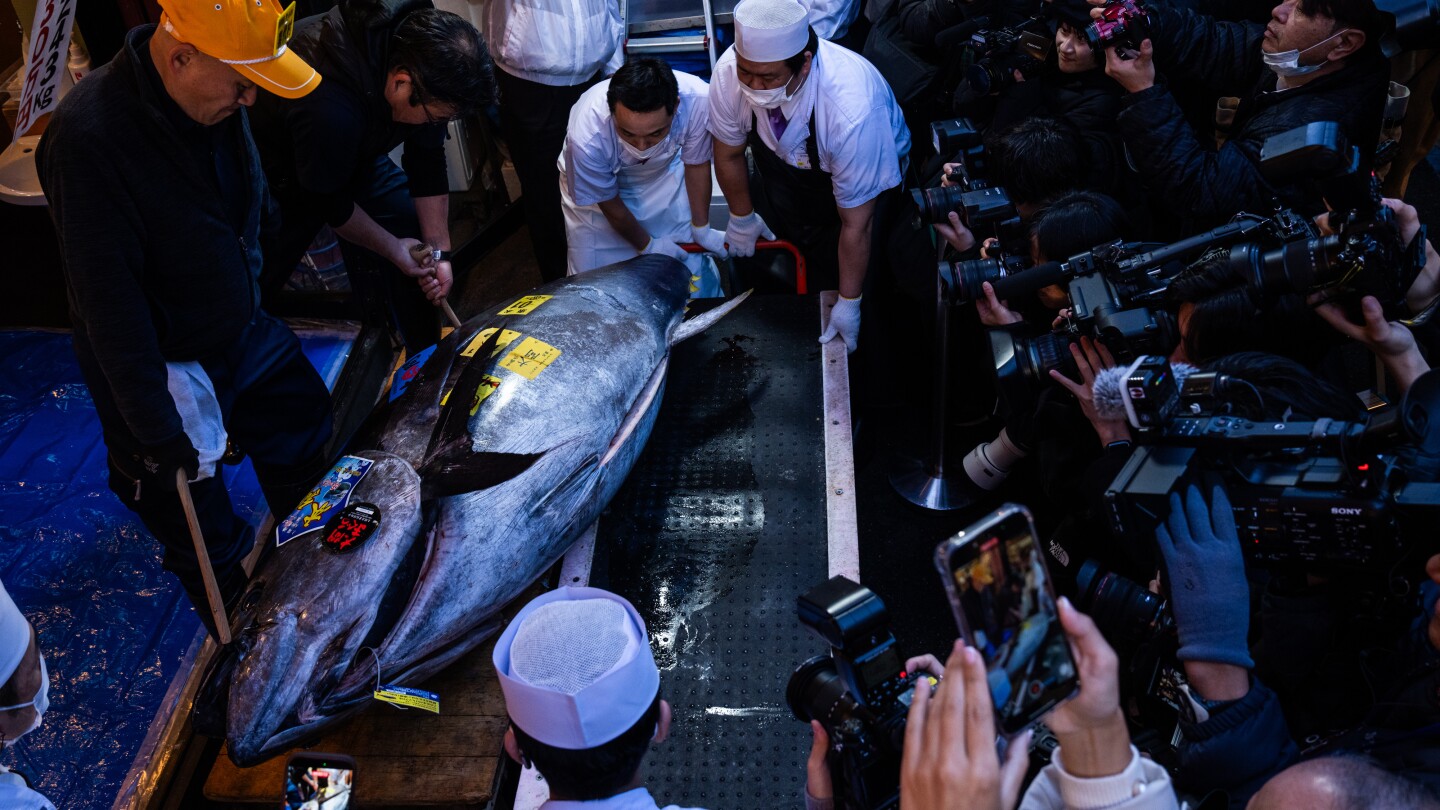
    TOKYO — The predawn hours at Tokyo’s Toyosu fish market witnessed an extraordinary spectacle on Monday as a colossal bluefin tuna weighing 535 pounds (243 kilograms) commanded a historic $3.2 million (510 million yen) at the annual New Year’s auction. This unprecedented transaction shattered previous records, establishing a new pinnacle in the luxury seafood market.

    The prized specimen, harvested from the waters off Oma in northern Japan—a region renowned for producing supreme-quality tuna—was secured by Kiyomura Corp., led by owner Kiyoshi Kimura, who operates the acclaimed Sushi Zanmai restaurant chain. While hundreds of tuna are typically auctioned daily at the market, the celebratory nature of the New Year event and the exceptional quality of Oma tuna drive prices to significantly elevated levels.

    Associated Press photographer Louise Delmotte documented the event, capturing images of bidders navigating through rows of massive tuna during the traditional auction. The acquisition of such a premium catch symbolizes both status and commitment to culinary excellence within Japan’s competitive sushi industry, where premium ingredients command premium prices.

  • Driving instructors teach students to dodge danger on Zimbabwe roads

    Driving instructors teach students to dodge danger on Zimbabwe roads

    HARARE, Zimbabwe — Sixteen years ago, Tafara Muvhevhi’s driving instruction focused on technical precision and exam preparation. Today, the Zimbabwean instructor prioritizes a more fundamental objective: keeping his students alive on some of the world’s most dangerous roads.

    Zimbabwe faces a severe road safety crisis, with crashes occurring every 15 minutes and claiming approximately five lives daily while injuring 38 others, according to national traffic authorities. Road accidents rank among the country’s leading causes of death, with fatality rates among Africa’s worst.

    The transformation from Zimbabwe’s once-orderly road system to its current state of traffic chaos traces back to the 2000s. Economic decline crippled road maintenance, informal public transportation expanded rapidly, and enforcement mechanisms weakened significantly. Despite recent repair initiatives and policing efforts, dangerous driving practices remain deeply embedded in the transportation culture.

    Muvhevhi describes the contemporary challenges: “Other drivers display no patience with learners—they honk aggressively, execute illegal overtakes, and create immense pressure. Our students must adapt to this environment while navigating streets where both motorists and pedestrians routinely disregard regulations.”

    For novice drivers like 19-year-old accounting student Winfrida Chipashu, Harare’s roads present greater intimidation than complex financial calculations. “Accounting follows established concepts,” Chipashu explains. “Driving here feels like navigating a jungle where others don’t follow rules.”

    National statistics reveal that human error causes 94% of accidents in this nation of 15 million. Cellphone distractions among drivers and pedestrians contribute to approximately 10% of fatalities, according to Munesu Munodawafa, head of Zimbabwe’s Traffic Safety Council, who describes these figures as “frightening” and “alarming.”

    This crisis reflects broader continental trends. Africa experiences approximately 300,000 road deaths annually—about one-quarter of global fatalities—despite accounting for only 3% of the world’s vehicle population. The continent’s fatality rate of 26.6 deaths per 100,000 people significantly exceeds the global average of 18.

    The World Health Organization attributes Africa’s rising traffic deaths—which increased 17% between 2010-2021—to inadequate safety laws, insufficient enforcement, reckless driving, and rapid urbanization. Vehicle registrations nearly tripled between 2013-2021, fueled by imported used vehicles and surging motorcycle numbers. Vulnerable road users including pedestrians, cyclists, and motorcycle riders comprise half of all fatalities.

    Zimbabwean authorities are implementing countermeasures including police body cameras, breathalyzers, and proposed licensing reforms featuring penalty points and enhanced training programs. As Police spokesperson Paul Nyathi emphasizes: “Drivers are licensed to practice road safety and safeguard lives—not to become killers.”

    For instructors like Muvhevhi, the pedagogical philosophy has fundamentally shifted: “We no longer teach merely for license acquisition. We teach survival strategies despite other road users’ dangerous behaviors.”

  • North Korea tests hypersonic missiles, says nuclear forces ready for war

    North Korea tests hypersonic missiles, says nuclear forces ready for war

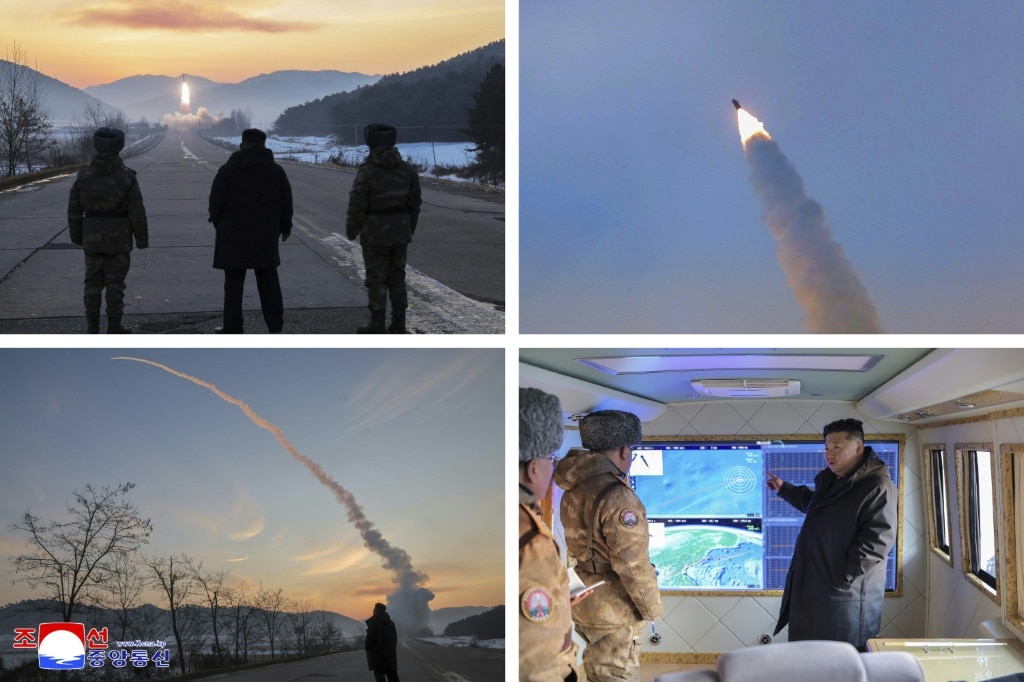
    In a significant escalation of military posturing, North Korean leader Kim Jong Un has personally supervised the test-firing of advanced hypersonic missiles, state media confirmed Monday. The demonstration comes amid growing regional tensions and follows recent U.S. military operations against Venezuela, which Pyongyang has characterized as evidence of American aggression.

    The Korean Central News Agency (KCNA) reported that Kim emphasized the test underscored the ‘readiness of the DPRK’s nuclear forces’ for actual combat scenarios. ‘Important achievements have been made in putting our nuclear forces on a practical basis and preparing them for real warfare,’ Kim stated during the inspection of the launch exercise near Pyongyang.

    Photographs released by state media depicted Kim observing the early morning missile launch while accompanied by senior military officials. The North Korean leader explicitly connected the test’s timing to what he termed ‘recent geopolitical crisis and complicated international events’—an apparent reference to Washington’s capture of Venezuelan President Nicolas Maduro.

    South Korean and Japanese defense authorities detected the launch of two ballistic missiles on Sunday, marking North Korea’s first weapons test of the year. The incident occurred just hours before South Korean leader Lee Jae Myung departed for Beijing, where he hopes to leverage China’s influence over Pyongyang to improve inter-Korean relations.

    Military analysts interpret the hypersonic missile test as both a technological demonstration and political statement. Hong Min, an analyst at the Korea Institute for National Unification, noted that the launch signals Pyongyang’s possession of advanced war deterrent capabilities that other nations targeted by Washington, like Venezuela, lack.

    Hypersonic weapons represent a significant advancement in missile technology, capable of traveling at speeds exceeding Mach 5 while maintaining maneuverability during flight. These characteristics make them substantially more difficult to track and intercept compared to conventional ballistic missiles. North Korea initially tested its hypersonic weapon system in October, joining a small group of nations including Russia and Iran that have deployed such advanced systems in recent conflicts.

  • Cricket Australia boss hits out at ‘archaic’ bad light rules

    Cricket Australia boss hits out at ‘archaic’ bad light rules

    Cricket Australia Chief Executive Todd Greenberg has launched a vehement critique against what he describes as ‘archaic’ bad light regulations following significant play disruptions during the fifth Ashes Test in Sydney. The controversial incident occurred when nearly a third of the opening day’s play was abandoned due to fading light conditions, gentle precipitation, and lightning safety protocols, despite the presence of approximately 50,000 spectators at Sydney Cricket Ground and millions watching globally.

    The match was suspended just 15 minutes before the scheduled tea break on Sunday, with officials ultimately calling stumps a full hour ahead of schedule at 5:00 PM, resulting in the complete cancellation of the entire third session. Greenberg expressed particular frustration during a SEN radio interview, emphasizing the sport’s need to adapt to modern expectations while utilizing available technology and infrastructure.

    Current International Cricket Council regulations mandate that play cannot resume if umpires determine light conditions to be ‘dangerous or unreasonable,’ with additional restrictions requiring a minimum 30-minute delay following lightning detection in the vicinity. These protocols drew confusion from spectators as play remained suspended despite improving weather conditions.

    While acknowledging he lacks immediate solutions, Greenberg emphasized cricket’s position in the entertainment industry and the necessity for progressive thinking regarding traditional rules. His comments found support from former England captain Michael Vaughan, who simultaneously criticized the divergent approaches between Test cricket and limited-overs formats, noting that T20 matches frequently continue under similar conditions that halt Test matches.

    Both executives called for a fundamental shift in mindset among cricket’s governing bodies and match officials to prioritize fan experience and match continuity through more flexible implementation of weather-related regulations.