作者: admin

  • Nestle issues global recall of some baby formula products over toxin fears

    Nestle issues global recall of some baby formula products over toxin fears

    In a significant product safety move, multinational food conglomerate Nestlé has announced a worldwide voluntary recall of multiple infant formula brands following the potential detection of cereulide toxin. This hazardous substance, produced by specific strains of Bacillus cereus bacteria, can induce acute food poisoning symptoms including severe nausea, vomiting, and abdominal cramps upon consumption.

    The comprehensive recall affects specific batch numbers across Nestlé’s SMA infant formula and follow-on formula products distributed globally. The company has confirmed impacted products reached markets throughout Europe, including France, Germany, Austria, Denmark, Italy, and Sweden, with varying product names such as Guigoz and Nidal in France, and Beba and Alfamino in Germany.

    Nestlé emphasized that this precautionary measure follows internal quality control checks that identified potential contamination in ingredients supplied by a third-party provider. Crucially, the company stated no illness cases have been formally reported in connection with the affected batches to date.

    “The safety and wellbeing of babies remains our absolute priority,” a Nestlé representative stated. “We extend our sincere apologies for any concern or inconvenience caused to parents, caregivers, and customers worldwide.”

    The Food Standards Agency (FSA) has issued complementary guidance, warning that cereulide toxin cannot be neutralized through conventional preparation methods including boiling water or standard cooking procedures. Jane Rawling, Head of Incidents at the FSA, advised consumers to immediately discontinue use of the identified products and seek medical consultation if concerned about potential health impacts.

    Nestlé has established refund protocols for affected customers and maintains that all non-recalled products and batches remain safe for consumption. Consumers can verify batch numbers through Nestlé’s regional websites or national food safety portals, with identification codes typically located on container bases or packaging surfaces.
  • Battle of the Sexes ‘brought eyes on tennis’

    Battle of the Sexes ‘brought eyes on tennis’

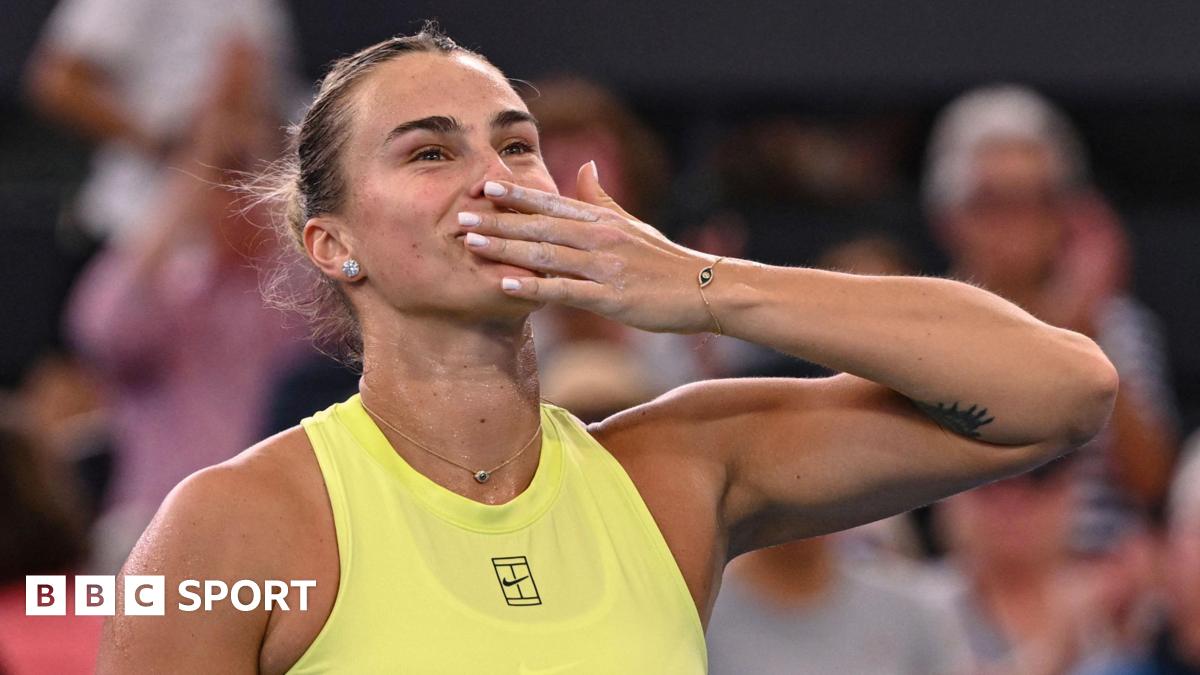
    In a commanding start to her 2026 season, reigning world number one Aryna Sabalenka delivered a stunning 6-0, 6-1 victory over Spain’s Cristina Bucsa at the Brisbane International. The match, which concluded in just 47 minutes, showcased the Belarusian’s formidable form as she begins her title defense campaign.

    The four-time major champion addressed recent controversy surrounding her December exhibition match against Australian Nick Kyrgios, dubbed the ‘Battle of the Sexes.’ Despite falling 6-3, 6-3 to Kyrgios in the much-publicized Dubai event, Sabalenka emphasized its training benefits. “When you play against a guy, the intensity is completely different,” she explained. “Especially with Nick, who drop-shots every other shot, you move tremendously. It provided excellent fitness preparation.”

    The exhibition faced significant criticism from within the tennis community, including Wimbledon champion Iga Swiatek, who questioned its social significance compared to the historic 1973 Billie Jean King vs. Bobby Riggs matchup. Sabalenka countered these critiques, stating: “It brought so many eyes on tennis. It wasn’t about proving something, but demonstrating that tennis can be truly spectacular. The exhibition was fun and presented a great challenge.”

    In other tournament developments, British number four Katie Boulter commenced her season with a 6-3, 6-3 victory over Ukraine’s Yuliia Starodubtseva at Auckland’s ASB Classic. Playing her first match since October under new coach Michael Joyce, the wildcard recipient now faces top seed Elina Svitolina. Boulter, having fallen outside the top 100, remains the third alternate for the Australian Open and may require qualification matches if insufficient withdrawals occur.

    Compatriot Sonay Kartal also advanced in Auckland with a hard-fought 6-1, 6-7 (4-7), 6-3 victory against Indonesia’s Janice Tjen. The world number 68, who reached Wimbledon’s last 16 in 2025, will meet Germany’s Ella Seidel in the second round.

    Sabalenka progresses to the Brisbane International third round where she will face Romania’s Sorana Cirstea, building momentum toward the Australian Open commencing January 18.

  • Uganda’s statement at a UN Security Council meeting on Venezuela

    Uganda’s statement at a UN Security Council meeting on Venezuela

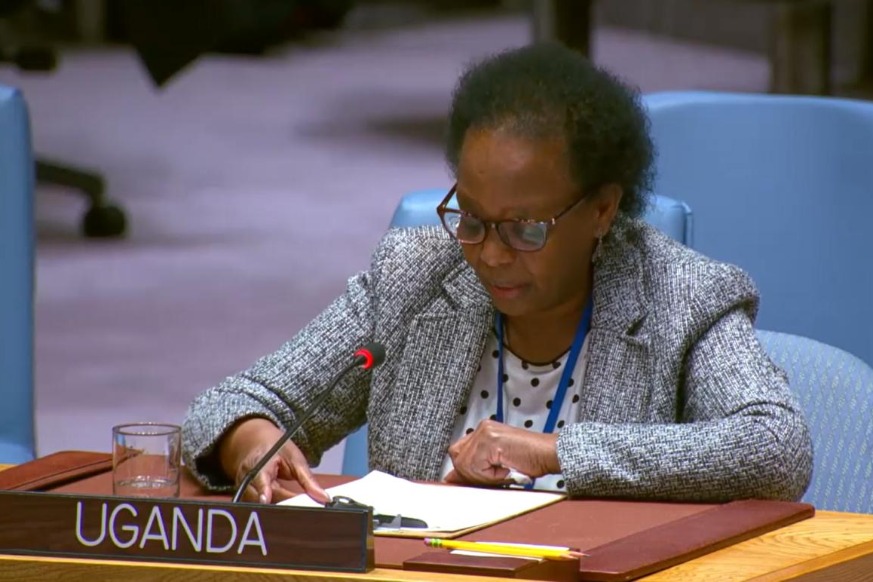
    In a powerful address to the United Nations Security Council, Uganda’s representative delivered a stern condemnation on behalf of the 121-member Non-Aligned Movement against United States military operations in Venezuela. The emergency session, convened on Monday in New York, witnessed a forceful denunciation of what was characterized as unlawful aggression against the South American nation.

    The statement, presented by the Ugandan delegation speaking for the movement’s Coordinating Bureau, explicitly condemned armed attacks initiated by the United States against both civilian and military targets in Caracas and multiple Venezuelan cities beginning January 3, 2026. The representative emphasized that these actions represented a flagrant violation of the United Nations Charter and established international law principles.

    The address framed the military intervention as an act of war that fundamentally undermines regional and global stability while directly threatening the right to life of the Venezuelan population. The movement’s position maintained that military solutions cannot serve as legitimate mechanisms for resolving disputes among members of the international community.

    Expressing full solidarity with the Venezuelan government and its citizens, the Non-Aligned Movement reinforced its foundational commitment to national sovereignty and territorial integrity—core principles that unite its diverse membership. The intervention highlighted growing concerns among developing nations about the erosion of international legal frameworks governing interstate relations and the use of force.

  • China’s UN envoy: US violates UN Charter

    China’s UN envoy: US violates UN Charter

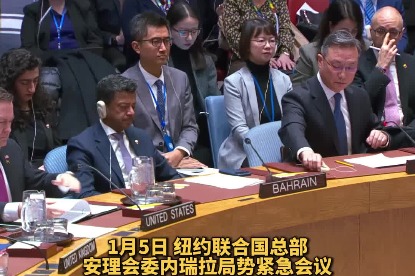
    In a forceful address to the United Nations Security Council, Chinese Ambassador Sun Lei delivered a stern condemnation of United States operations in Venezuela during an emergency session convened on January 5th. The diplomatic confrontation centered on allegations that Washington has committed serious breaches of international law through its interventionist policies in the South American nation.

    Ambassador Sun characterized American activities as ‘wantonly violating Venezuela’s sovereignty’ and constituting a flagrant disregard for the foundational principles of the UN Charter. The Chinese representative articulated a position of firm solidarity with the Venezuelan government’s right to maintain territorial integrity and political independence without external interference.

    The emergency meeting, called to address escalating tensions in the Latin American region, became a platform for China to articulate its vision of international relations based on mutual respect and non-intervention. Ambassador Sun emphasized Beijing’s commitment to collaborative diplomacy, stating China’s readiness to ‘work with regional countries and the international community to maintain peace and stability in Latin America and the Caribbean.’

    This diplomatic exchange occurs against the backdrop of increasing great power competition within multilateral institutions. China’s vocal defense of Venezuela’s sovereignty aligns with its broader foreign policy approach that prioritizes state sovereignty and non-interference in domestic affairs. The statement also reinforces China’s growing diplomatic engagement in Latin America, where it has developed significant economic and political ties over the past decade.

    The emergency session highlighted continuing divisions within the Security Council regarding appropriate responses to political crises, with China positioning itself as a defender of established international legal frameworks against what it perceives as Western overreach.

  • Maduro appears in New York court after US operation in Venezuela

    Maduro appears in New York court after US operation in Venezuela

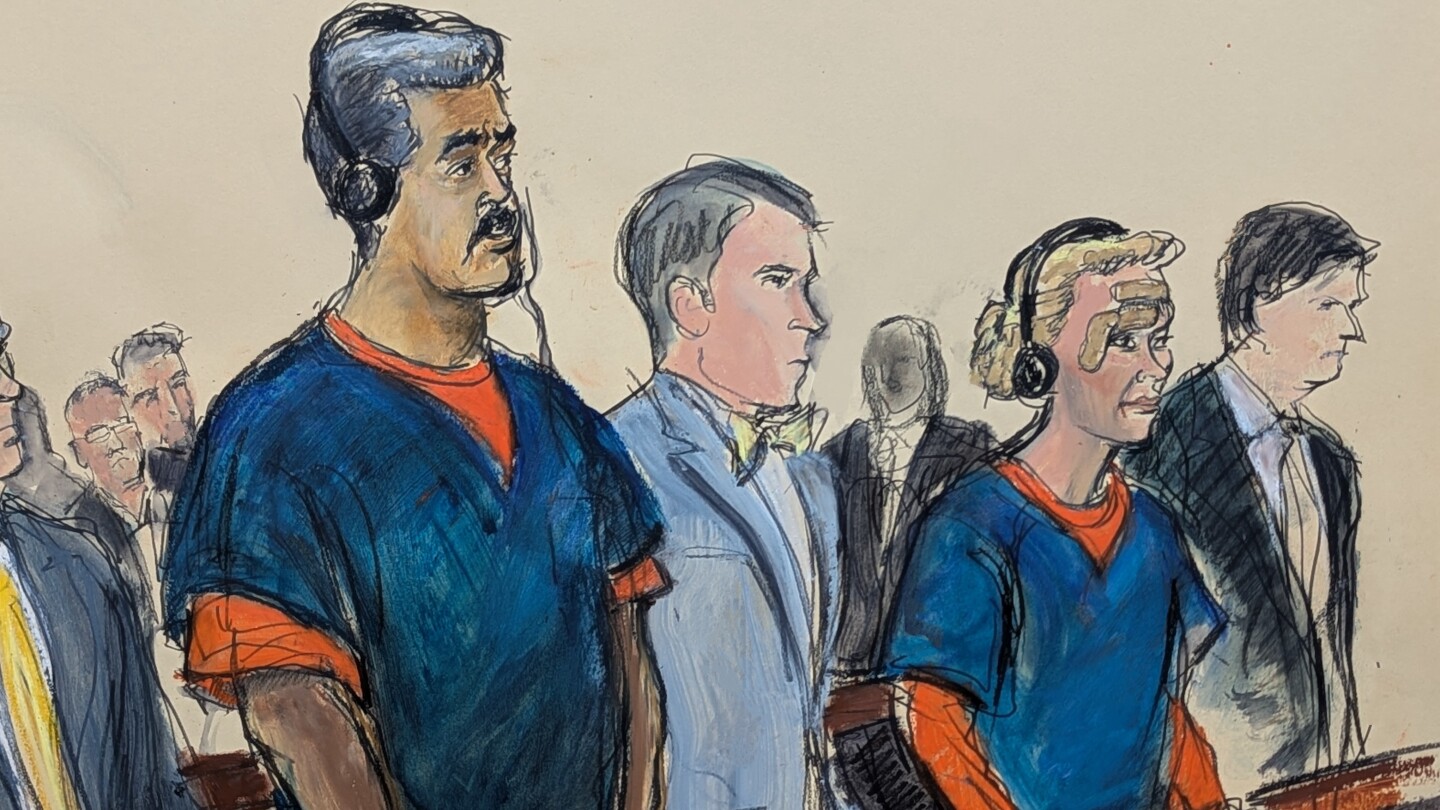
    Venezuelan President Nicolás Maduro and First Lady Cilia Flores made their initial court appearance at a federal courthouse in New York City on Monday, marking their first public appearance since being forcibly removed from their Caracas residence during a nighttime operation conducted by United States forces.

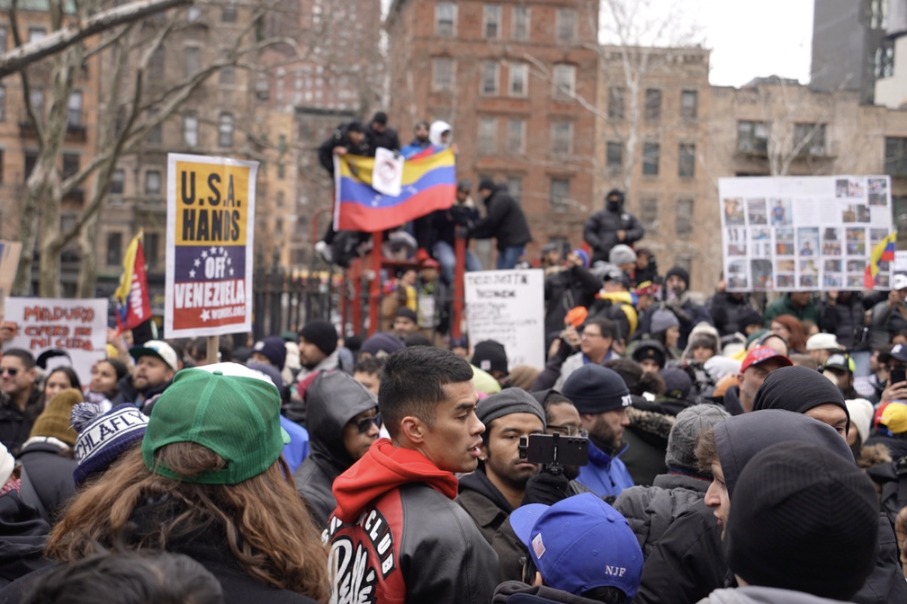
    The hearing proceeded amid significant public demonstrations outside the Manhattan courthouse, where substantial crowds gathered to protest what many characterized as an unlawful international intervention. Protesters carried signs with messages including “USA hands off Venezuela,” “No US war on Venezuela,” “US hands off Venezuela oil,” and demands for Maduro’s immediate release.

    This judicial proceeding follows what US President Donald Trump previously described as a “large-scale strike” operation that resulted in the capture and transportation of the Venezuelan leadership. The couple was subsequently detained at the Metropolitan Detention Center in Brooklyn pending judicial proceedings.

    Among the protesters was Rae Lee, an American citizen who had stationed herself outside the courthouse since 9 am—three hours prior to Maduro’s scheduled arraignment. Lee, who recently visited Venezuela in December, provided firsthand observations contradicting US media narratives about conditions in the South American nation.

    “The resilience and economic development I witnessed in Venezuela were remarkable,” Lee stated. “Despite consistent US media portrayals of oppression and deterioration, we observed significant housing projects and substantial economic growth. The US government’s primary interest clearly lies in Venezuela’s substantial oil reserves and natural resources, seeking to install a puppet regime that would prioritize American interests over Venezuelan sovereignty.”

    Lee further characterized the operation as “an international crime,” emphasizing that Maduro had been democratically elected twice in processes she described as “more transparent and representative than American elections.” The ongoing case has raised significant questions about international law, sovereignty, and the appropriate limits of cross-border military operations.

  • Trump administration’s capture of Maduro raises unease about the international legal framework

    Trump administration’s capture of Maduro raises unease about the international legal framework

    THE HAGUE, Netherlands (AP) — The fragile architecture of global governance, painstakingly constructed from the ashes of two world wars, now faces unprecedented strain following the military extraction of Venezuelan leader Nicolás Maduro. This operation, characterized by U.S. officials as a “surgical law enforcement operation” against narco-terrorism, has triggered profound concerns about the resurgence of power politics overriding international legal frameworks.

    U.N. Undersecretary-General Rosemary A. DiCarlo urgently addressed the Security Council, emphasizing that international peace hinges on member states’ adherence to the U.N. Charter. The Trump administration justifies its actions under a controversial doctrine designating Venezuelan drug cartels as “unlawful combatants” with whom the U.S. is in an “armed conflict.”

    The operation aligns with Washington’s recently published National Security Strategy prioritizing restoration of “American preeminence in the Western Hemisphere.” This approach has drawn condemnation from global leaders and analysts who fear it establishes dangerous precedents. French Foreign Minister Jean-Noël Barrot warned that violations of the non-use of force principle by Security Council permanent members will have “serious consequences for global security.”

    The geopolitical ramifications extend far beyond Venezuela. Russian Ambassador Vasily Nebenzya condemned the action as a return to “lawlessness,” while analysts note parallels with Russia’s aggression in Ukraine. China criticized the operation as a “blatant use of force against a sovereign state,” though experts suggest Beijing is unlikely to replicate such tactics against Taiwan, preferring gradual pressure campaigns.

    European nations face particular dilemma, balancing traditional alliances with concerns over eroding international norms. The EU statement acknowledged Maduro’s lack of political legitimacy while insisting U.N. Charter principles must be upheld. Meanwhile, Trump’s speculative comments about Greenland’s strategic importance and confrontational stance toward Iran further complicate transatlantic relations.

    Hungarian Prime Minister Viktor Orbán encapsulated the emerging philosophy, dismissing international rules as irrelevant to great powers’ decisions. As nations worldwide assess these developments, the fundamental question remains whether the post-war international order can withstand the accelerating shift toward power-based diplomacy.

  • Guangdong encouraged to lead innovation

    Guangdong encouraged to lead innovation

    During an intensive inspection tour of Guangdong from January 3-5, 2026, Premier Li Qiang delivered a strategic mandate for the southern province to accelerate its innovation-driven development and reinforce its historic role as China’s reform pioneer. The Premier emphasized Guangdong’s critical position within national development strategies, urging provincial leadership to harness its distinctive advantages in technological advancement and open-market policies.

    Premier Li’s itinerary featured multiple innovation hotspots, including the Hetao Shenzhen-Hong Kong Science and Technology Innovation Cooperation Zone, where he stressed enhancing corporate innovation capabilities through improved policy frameworks, financial mechanisms, and talent acquisition. He further examined Shenzhen’s Robot Valley and low-altitude economy infrastructure, advocating for stronger industrial ecosystems and practical application scenarios to accelerate technological iteration.

    The inspection extended to major infrastructure projects, including the Shenzhen-Zhongshan Link, where Li highlighted the necessity of advanced management systems for ensuring operational safety and regional connectivity. In Foshan, the Premier called for accelerated R&D cycles and high-quality production to stimulate demand-supply synergy. At Foshan International Land Port, he emphasized integrating infrastructure ‘hard connectivity’ with regulatory ‘soft connectivity’ to expand digital and green trade initiatives.

    With Guangdong’s GDP having exceeded 14 trillion yuan ($2 trillion) in 2024—maintaining its status as China’s economic powerhouse—the province is now positioned to drive the nation’s 15th Five-Year Plan (2026-2030) through strategic innovation partnerships and deepened reform policies.

  • Astronauts complete first cave training

    Astronauts complete first cave training

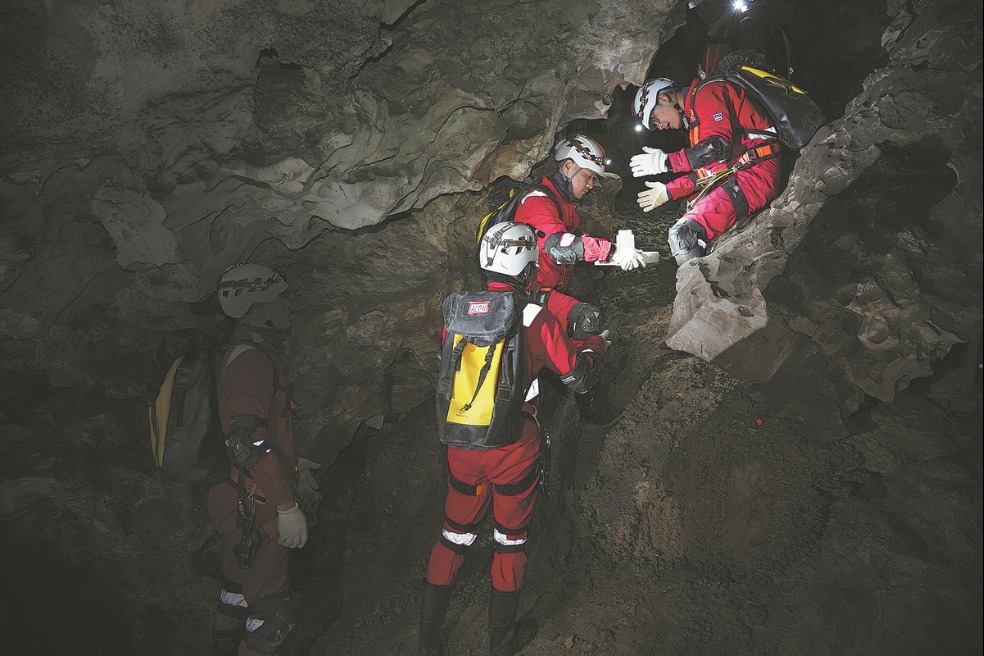
    In a groundbreaking initiative for space preparedness, China has successfully concluded its inaugural cave survival training program for astronauts in Chongqing’s Wulong district. The month-long intensive exercise, organized by the Astronaut Center of China, involved twenty-eight participants facing extreme subterranean conditions to simulate the challenges of deep space exploration.

    The astronauts endured six days and five nights in natural caves with temperatures averaging 8°C and humidity reaching 99%. The training regimen included navigating narrow passages, cliff rappelling, environmental monitoring, cave mapping, and simulated communications with mission control. Beyond physical endurance, the program specifically addressed psychological challenges including sensory deprivation, darkness adaptation, and isolation management.

    According to project leader Wu Bin, the training aimed to enhance multiple critical competencies: “This comprehensive program tested risk response capabilities, self-reliance, teamwork, emergency decision-making, and overall operational readiness in extreme environments.”

    Psychological resilience emerged as a central focus, with astronaut instructor Jiang Yuan emphasizing that “caves represent typical examples of extreme confinement and isolation, providing valuable scientific insights for supporting astronauts’ mental health during prolonged space missions.”

    Veteran astronaut Ye Guangfu, who previously participated in similar European Space Agency training, noted the program’s significance for future long-duration space station operations and crewed lunar exploration. Participants reported the experience effectively simulated the loneliness and unknowns of deep-space exploration while strengthening emergency response capabilities and team cohesion.

    The China Manned Space Agency confirms these rigorous training programs will continue for both new recruits and experienced astronauts, reflecting China’s systematic approach to preparing spacefarers for unpredictable scenarios and potential emergency landings in hostile terrestrial environments.

  • US scholar: United States violating UN Charter

    US scholar: United States violating UN Charter

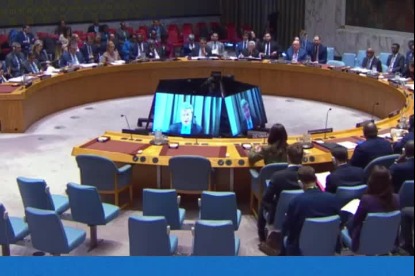
    In a striking address to the United Nations Security Council, renowned economist Jeffrey Sachs delivered a forceful condemnation of United States foreign policy during an emergency session concerning Venezuela. The Columbia University professor and president of the UN Sustainable Development Solutions Network asserted that Washington stands in serious breach of fundamental international law principles.

    Sachs presented a comprehensive critique of decades-long American foreign policy approaches, characterizing them as systematically employing military force, covert operations, and political manipulation to achieve regime change objectives. These practices, he argued, represent direct violations of the United Nations Charter that governs international conduct among sovereign states.

    During his briefing, the sustainable development expert called for immediate cessation of all illegal military actions and threats against Venezuela, emphasizing that such conduct undermines global governance structures. Sachs’s testimony before the Security Council marks a significant moment of scholarly criticism regarding interventionist policies from within the halls of international diplomacy.

    The emergency meeting provided a platform for examining the broader implications of power projection in international relations, with Sachs’s analysis extending beyond the immediate Venezuela situation to address systemic patterns in great power behavior. His remarks highlighted the tension between unilateral actions and multilateral governance frameworks established in the post-World War II international order.

  • Central African Republic President Touadéra wins third term

    Central African Republic President Touadéra wins third term

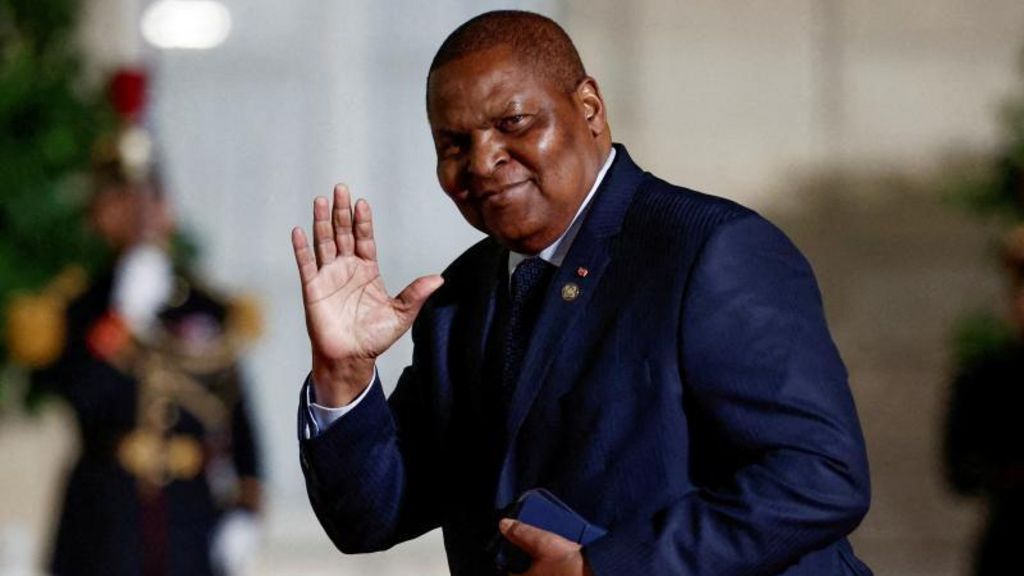
    Provisional election results confirm Central African Republic President Faustin-Archange Touadéra has secured a decisive third term with approximately 76% of the vote. The 68-year-old former mathematics professor achieved this overwhelming majority following a widespread opposition boycott of the December 28 general election.

    The election occurred against a backdrop of significant political controversy, particularly regarding constitutional amendments in 2023 that eliminated presidential term limits. The main opposition coalition, known as BRDC, refused to participate in the electoral process, citing fundamental concerns about fairness and transparency.

    Touadéra’s principal challengers, former prime ministers Anicet-Georges Dologuélé (15%) and Henri-Marie Dondra (3%), have both demanded the annulment of election results. They allege systematic electoral manipulation and widespread irregularities, with Dologuélé characterizing the process as “a methodical attempt to manipulate” the outcome.

    The government has categorically denied these allegations. The Constitutional Court must rule on any formal challenges by January 20 before certifying final results.

    Touadéra’s campaign emphasized his security record in the chronically unstable nation. Since rebels seized power in 2013, the government has enlisted Russian mercenaries and Rwandan soldiers to maintain stability. This security partnership has drawn international attention, with analysts suggesting Touadéra’s victory may strengthen Russia’s strategic interests in accessing the country’s substantial mineral resources, including diamonds and uranium.

    Despite being one of Africa’s most resource-rich nations, CAR remains among its poorest, with approximately half the population dependent on humanitarian assistance according to UN estimates. The 2019 peace agreement between the government and armed groups initially reduced tensions, though six groups subsequently withdrew from the arrangement.

    International observers noted the election was largely peaceful despite logistical challenges including delayed polling materials and issues with voter registration affecting over 2.4 million registered voters.