作者: admin

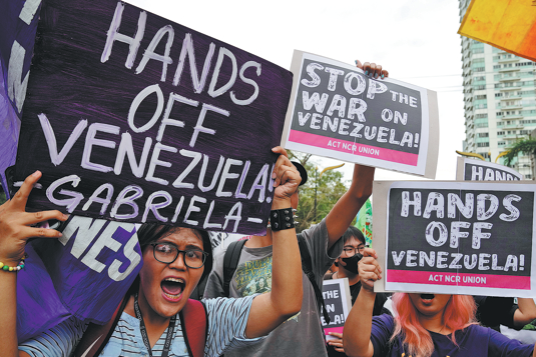
  • Military strike, capture of Maduro condemned

    Military strike, capture of Maduro condemned

    A sweeping wave of condemnation has emerged across the Asia-Pacific region following the United States’ unprecedented military operation that resulted in the capture of Venezuelan President Nicolás Maduro and First Lady Cilia Flores. The controversial action, characterized by regional leaders as a flagrant violation of international sovereignty, has triggered profound concerns about global stability and the erosion of established international norms.

    Malaysian Prime Minister Anwar Ibrahim articulated the region’s apprehension through a formal statement on social media platform X, emphasizing that the extraordinary military intervention represents a clear breach of international law and constitutes unlawful force against a sovereign nation. The Prime Minister demanded the immediate release of the detained Venezuelan leaders, cautioning that externally imposed leadership changes historically yield detrimental consequences.

    The Democratic People’s Republic of Korea issued particularly stern criticism, with its Foreign Ministry spokesperson condemning Washington’s “wild violation of Venezuelan sovereignty” as evidence of American “rogue and brutal nature.” This sentiment found resonance in Tehran, where Iranian authorities characterized the operation as a military attack requiring explicit condemnation from the United Nations and all law-abiding nations.

    Southeast Asian responses reflected measured diplomatic concern coupled with firm principles. Singapore’s Foreign Ministry, while noting no immediate citizen involvement, expressed grave apprehension about the intervention and reaffirmed its consistent opposition to actions contravening international law. Indonesian officials warned of establishing a “dangerous precedent in international relations” that could undermine regional stability and diplomatic principles.

    The Philippines Department of Foreign Affairs acknowledged monitoring the evolving situation’s impact on regional peace and rules-based international order. Thailand joined the chorus of nations urging peaceful conflict resolution through UN Charter frameworks and international law.

    Pacific nations including Australia and New Zealand echoed calls for diplomatic solutions, with Australian Prime Minister Anthony Albanese emphasizing dialogue to secure regional stability and prevent escalation. New Zealand’s Foreign Minister Winston Peters advised citizens against travel to Venezuela while expecting all parties to adhere to international legal standards.

    International law expert Professor Arie Afriansyah of the University of Indonesia noted potential American accountability under international law, while pragmatically questioning which nation would initiate proceedings and through which forum, given likely US veto power at the UN Security Council.

  • Tourists, athletes, sculptors flock to Harbin’s famed ice and snow festival

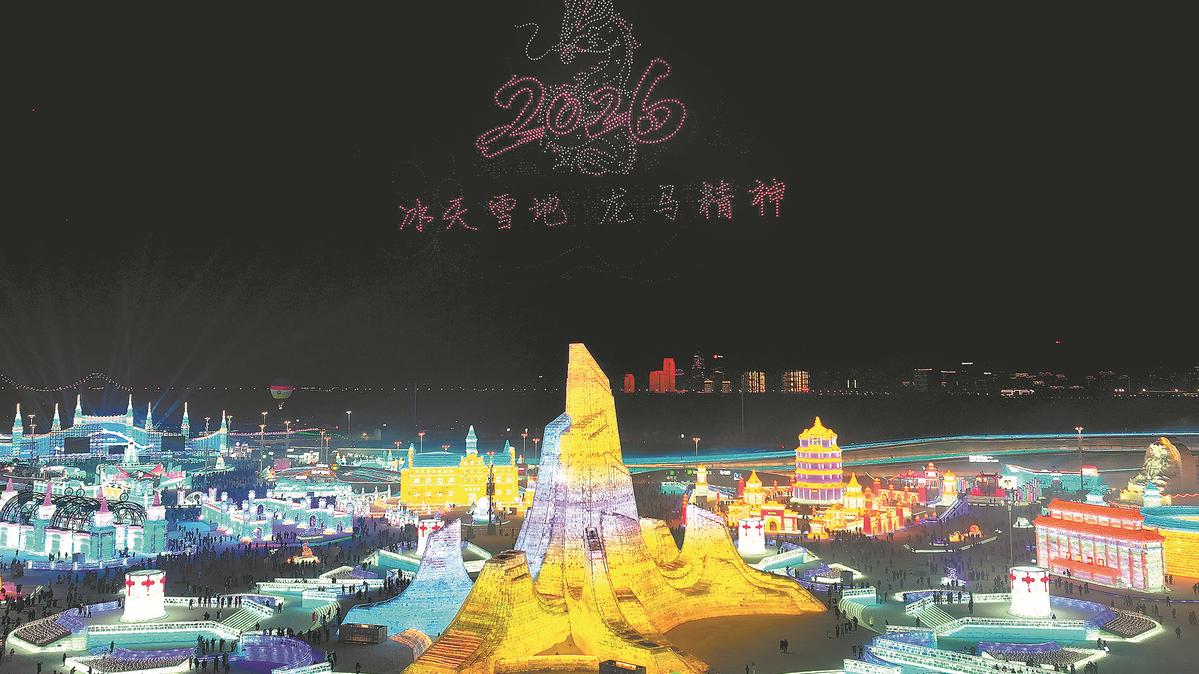
    Tourists, athletes, sculptors flock to Harbin’s famed ice and snow festival

    The 42nd Harbin International Ice and Snow Festival commenced with breathtaking pyrotechnics and illuminations along the Songhua River banks on Monday evening, marking the spectacular inauguration of Northeast China’s premier winter extravaganza. This legendary celebration, originating as a modest ice lantern exhibition in 1985, has evolved into one of the globe’s four major ice and snow festivals, standing alongside Japan’s Sapporo Snow Festival, Canada’s Quebec Winter Carnival, and Norway’s Oslo Holmenkollen Ski Festival.

    The festival serves as Harbin’s signature winter attraction and primary driver for seasonal tourism, extending through February to coincide with traditional Chinese holidays including Spring Festival and Lantern Festival. Organizers have unveiled ten premium ice and snow tourism itineraries alongside scheduling more than 200 cultural, athletic, and economic activities throughout the duration.

    Central to the festivities is the Harbin Ice and Snow World, a sprawling 1.2-million-square-meter theme park operating for its 27th consecutive season. The expanded facility utilizes over 400,000 cubic meters of frozen resources, representing a 20% increase from previous installations. As daylight fades, cutting-edge 3D projection mapping and augmented reality technologies transform crystalline structures into a chromatic wonderland, creating an ethereal ice palace atmosphere.

    Visitors can experience diverse winter activities including traditional ice fishing, cross-country skiing, snow soccer, and an unprecedented 521-meter ice slide—the longest such attraction ever constructed at the venue. Meanwhile, the 38th Sun Island International Snow Sculpture Art Expo showcases approximately 260 sculptural groups carved from 120,000 cubic meters of snow, featuring highlights like the 23.8-meter ‘Mr Snowman’ and charming panda sculptures.

    International participants including Spanish sculptor Albert Marcet have returned for competitive events, with Marcet’s team aiming to surpass their previous special prize achievement in the 28th China Harbin International Snow Sculpture Competition. ‘The ice and snow park left a strong impression on me,’ Marcet remarked after the opening ceremony.

    The festival’s core programming includes five major events such as the Asian speed skating super endurance race, attracting nearly 2,000 domestic and international athletes, and the national public snow soccer challenge featuring regional rivalries. Preliminary data indicates robust attendance, with Harbin welcoming 1.4 million visitors on New Year’s holiday’s first day—an 11.4% year-over-year increase.

    Tourists like Ru Xiaoqi from Nanjing reported advanced planning was necessary to secure access to popular attractions and accommodations. ‘The whole city demonstrates exceptional hospitality through bilingual signage and complimentary hot water services,’ Ru noted. ‘The attention to detail vastly exceeds expectations, making the experience thoroughly worthwhile.’

  • Pope Leo XIV closes 2025 Holy Year with critique of consumerism and xenophobia

    Pope Leo XIV closes 2025 Holy Year with critique of consumerism and xenophobia

    VATICAN CITY — In a ceremony rich with symbolism, Pope Leo XIV formally concluded the Vatican’s 2025 Holy Year on Tuesday, delivering a powerful homily that criticized contemporary consumerist culture and anti-immigrant attitudes. The event marked the culmination of an extraordinary Jubilee that witnessed approximately 33 million pilgrims journey to Rome and featured the unprecedented transition between two pontiffs—the late Pope Francis and his successor.

    Kneeling in prayer on the stone floor at the threshold of St. Peter’s Holy Door before sealing it shut, Pope Leo completed a rare historical parallel: only once before, in 1700, has a Holy Year been opened by one pope and closed by another. This Jubilee had commenced under a frail Pope Francis in December 2024, continued through his funeral and the subsequent conclave, and concluded under new leadership a year later.

    With the ceremonial closure accomplished, Pope Leo immediately signaled the beginning of his substantive pontificate by summoning cardinals worldwide for a two-day Vatican meeting starting Wednesday. The agenda prominently features discussions on church governance and liturgical matters, particularly addressing divisions within the 1.4-billion-member Catholic Church regarding the traditional Latin Mass.

    In his Epiphany homily, Pope Leo challenged Christians to reflect on biblical teachings of hospitality, asking: ‘Has the Jubilee taught us to flee from this type of efficiency that reduces everything to a product and human beings to consumers? After this year, will we be better able to recognize a pilgrim in the visitor, a seeker in the stranger, a neighbor in the foreigner?’

    The Vatican reported substantial participation with over 33 million pilgrims, though organizers acknowledged this figure represents a rough estimate potentially including duplicate counts. The Holy Year tradition, dating to 1300, brings faithful to Rome seeking indulgences while providing the city opportunities for major infrastructure projects. For the 2025 Jubilee, Rome utilized approximately €4 billion in public funds to complete long-delayed modernization efforts, including a significant pedestrian piazza linking St. Peter’s Square to Castel St. Angelo.

    Pope Leo has already announced the next Jubilee will occur in 2033, commemorating the traditional year of Christ’s death and resurrection.

  • China-made Into the Mortal World debuts in theaters in Vietnam

    China-made Into the Mortal World debuts in theaters in Vietnam

    Vietnamese theaters have welcomed the premiere of ‘Into the Mortal World’ (Luofanchen), a Chinese animated feature film that represents the first mainland Chinese cinematic release in Vietnam since 2019. The film’s debut signals a significant resurgence of Chinese cultural exports in Southeast Asian markets.

    Produced by Guangzhou-based Winsing Animation, the film draws inspiration from the ancient Chinese legend of the cowherd and the weaver girl (Niulang and Zhinyu). The narrative follows the extraordinary adventures of their descendants, siblings Jinfeng and Yulu, as they embark on a mission to recover the 28 constellations and safeguard the mortal realm.

    The film’s strategic release during Vietnam’s peak holiday season ensures widespread distribution across more than 300 screens nationwide. This extensive theatrical presence reflects both the recovering Southeast Asian film market and growing distributor confidence in Chinese cinematic products.

    Market analysis reveals consistent growth patterns across Southeast Asia, with annual box office revenues expanding at 5-6%. Vietnam’s film market alone achieved a record-breaking $185 million in total revenue during 2024, earning recognition from international media outlet Deadline as one of Asia’s most rapidly developing cinema markets.

    According to Gu Yanmei, Vice-President of Winsing Animation, the film’s successful Vietnamese debut stems from multiple factors: ‘Our production standards match international excellence, featuring over 2,000 specialized effects shots developed across five years of meticulous production. In an era of escalating audience expectations for audiovisual experiences, this technical proficiency serves as a primary attraction for young cinema-goers.’

    Cultural affinity between China and Vietnam provides another significant advantage. The foundational mythology of the cowherd and weaver girl remains familiar to Vietnamese audiences, naturally reducing cultural barriers to comprehension. Winsing Animation further enhanced accessibility through comprehensive localization efforts, including Vietnamese dubbing and collaborative marketing strategies developed with local partners.

    Prior to its Vietnamese premiere, ‘Into the Mortal World’ achieved international distribution across more than 40 countries and regions, including Russia, Singapore, Australia, and Thailand. The film has also received recognition at prestigious international events, including Japan’s Niigata International Animation Film Festival and Italy’s Fanhua Chinese Film Festival.

  • Indian gang rape survivor back home after a week in hospital

    Indian gang rape survivor back home after a week in hospital

    A 26-year-old mother of two has been discharged from a Faridabad hospital following a brutal gang rape that has ignited fresh outrage across India. The assault occurred in the early hours of December 30th when the victim, awaiting transport after visiting a friend, was offered a lift by two men in an ambulance.

    According to her sister’s account, the men drove the woman to a secluded area where they perpetrated the assault before throwing her from the moving vehicle. She was discovered hours later with severe head trauma, facial injuries, and multiple fractures, and was admitted to the hospital around 5:30 AM.

    Law enforcement officials report that a swift investigation led to the arrest of two suspects and the impounding of the ambulance used in the crime. Senior police official Mukesh Kumar stated that authorities are awaiting judicial approval for an identification parade, wherein the survivor will be asked to identify the perpetrators from a lineup.

    The case has drawn immediate parallels to the notorious 2012 Delhi bus gang rape, a landmark event that triggered mass protests and resulted in stricter anti-rape legislation, including capital punishment for the most heinous offenses. Despite these legal reforms, official data reveals a persistent crisis: nearly 30,000 rapes were reported in 2023 alone, alongside thousands of attempted assaults and hundreds of child rape cases.

    Shalini Chopra, a social worker and opposition politician who met with the survivor, confirmed the woman is ‘better but still in pain’ as she begins her recovery. The incident has intensified scrutiny on India’s ongoing struggle with sexual violence, highlighting the gap between legislative action and on-the-ground realities for women’s safety.

  • Rosenior says has ‘agreed verbally’ to become Chelsea manager

    Rosenior says has ‘agreed verbally’ to become Chelsea manager

    In a surprising development within English football’s managerial landscape, Liam Rosenior has publicly confirmed reaching a verbal agreement to assume managerial duties at Premier League powerhouse Chelsea FC. The 41-year-old made the announcement during a press conference at his current club, French Ligue 1 side Strasbourg, stating the prestigious appointment represents “an opportunity I cannot turn down.”

    Rosenior emerges as the unexpected frontrunner to succeed recently dismissed Enzo Maresca, who was relieved of his position last Thursday. The managerial connection between the clubs appears facilitated by their shared ownership under the BlueCo consortium, which controls both Chelsea and Strasbourg. This relationship likely accelerated the negotiation process despite Rosenior’s limited top-flight managerial experience.

    Should the appointment be formally confirmed, Rosenior would become Chelsea’s fourth permanent manager since BlueCo acquired the club in 2022. The former Hull City manager lacks Premier League coaching credentials but brings recent Championship experience and a successful stint with Strasbourg, where he guided the team to a respectable seventh-place finish in the 2023-24 Ligue 1 season.

    Rosenior emphasized his emotional connection to Strasbourg during the announcement, explaining his decision to break the news personally to honor his relationship with the club and its supporters. Chelsea management conducted formal discussions with Rosenior in London on Monday, though the club has yet to issue an official confirmation regarding the appointment.

    The prospective move marks a dramatic career elevation for Rosenior, whose previous managerial experience includes an interim role at Derby County and an assistant position under Wayne Rooney before his 18-month tenure at Hull City ended in dismissal. His transition to Chelsea would place him under intense media scrutiny at one of England’s most high-profile football institutions.

  • Collectors line up for Year of the Horse stamps

    Collectors line up for Year of the Horse stamps

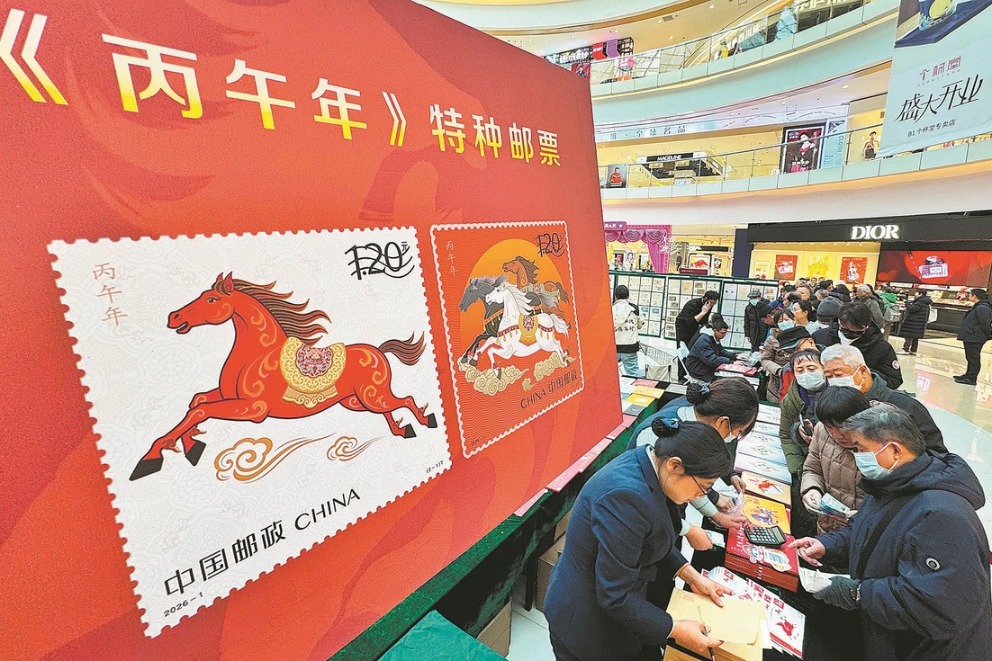
    A remarkable scene unfolded across Chinese cities as collectors braved winter temperatures to secure newly released Year of the Horse zodiac stamps. China Post officially launched the commemorative collection on Monday, triggering an enthusiastic response from philatelic enthusiasts nationwide.

    In Beijing, dedicated collectors began forming queues outside post offices as early as Sunday afternoon. By 8 AM on launch day, sidewalks were lined with enthusiasts spanning generations—from veteran stamp aficionados to younger collectors wrapped in heavy winter coats, all anticipating the special release.

    The 2026 stamp collection carries particular cultural significance following UNESCO’s 2024 recognition of Spring Festival traditions as Intangible Cultural Heritage. This designation has amplified public engagement with traditional customs and symbolic celebrations.

    The two-stamp set, with a combined face value of 2.40 yuan ($0.34), features distinct artistic interpretations. The first design portrays a vibrant red horse traversing cloud formations, symbolizing sustained economic and social development while reflecting national aspirations outlined in the 15th Five-Year Plan (2026-30). The complementary stamp depicts three horses galloping in unison amid auspicious patterns, representing collective effort and national unity in advancing socialist modernization and comprehensive rejuvenation.

    Within Chinese cultural context, the horse embodies potent symbolism—representing vitality, perseverance, and achievement. The creature is frequently associated with the popular idiom “Ma Dao Cheng Gong,” conveying the notion of immediate success upon its arrival. Historically valued for transportation and economic contributions, horses remain among the most favored zodiac signs, perceived as heralds of energy and progress.

    China Post’s zodiac stamp series, initiated in 1980, consistently generates substantial collector interest. The 2026 edition marks a procedural innovation through a dual-track selection process incorporating public submissions alongside expert and popular voting—a first in the program’s history.

    Liu Aili, Chairman of China Post Group, emphasized that “this represents not merely a design breakthrough but a vivid practice of sharing cultural development with the people.” This sentiment resonated with public participants, including one Beijing collector who reported involvement in the voting process three months prior: “Witnessing the stamps I helped select finally reach public sale makes this collection profoundly meaningful to me.”

    The issuance includes 26.68 million basic stamp sets alongside specialized formats and collectible booklets. A collaborative souvenir sheet featuring designs from mainland China, Hong Kong, and Macao postal departments debuted simultaneously. The stamps will remain available for six months through designated postal outlets and digital platforms including China Post’s official application and WeChat stores.

  • New shuttle bus eases access to medical hub

    New shuttle bus eases access to medical hub

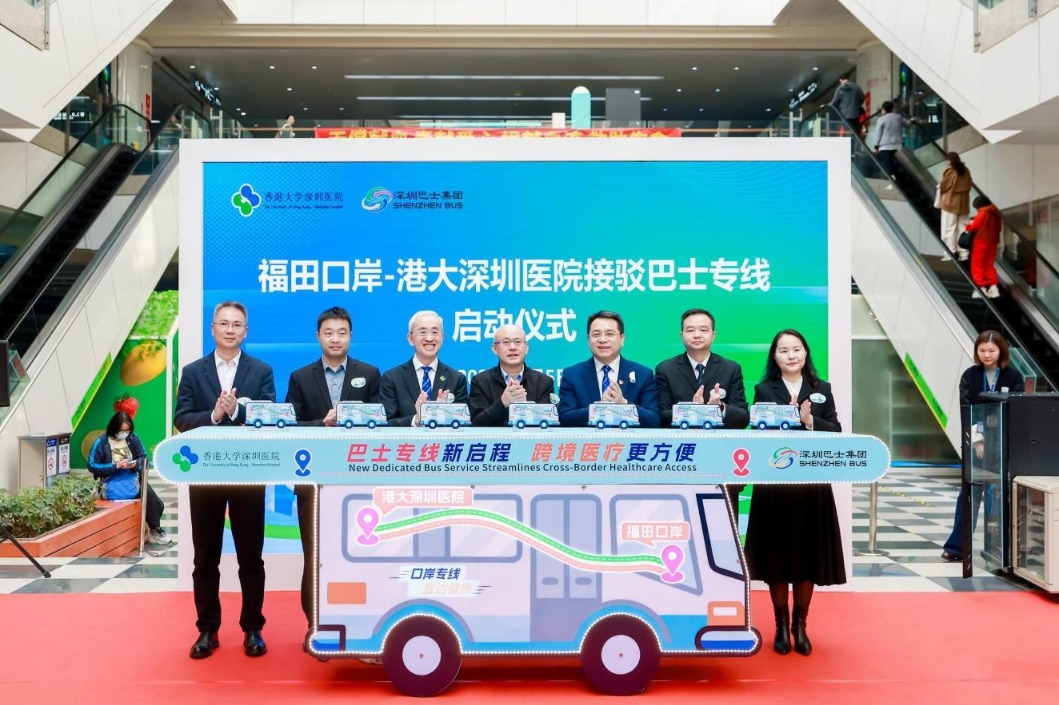
    A new direct shuttle bus service connecting Futian Port and the University of Hong Kong-Shenzhen Hospital commenced operations on Monday, marking a significant advancement in cross-boundary medical integration between Hong Kong and mainland China. The transportation initiative addresses critical last-mile connectivity challenges for patients seeking specialized healthcare services at the pioneering medical institution.

    The shuttle service will operate on a three-month trial basis, offering affordable transit at just 2 yuan ($0.28) per ride with complimentary service for seniors aged 60 and above. Operating daily from 8 am to 6 pm, the buses depart every 30 minutes with an approximate travel time of 30 minutes between destinations. Multiple payment options including cash and transportation cards ensure accessibility for all passengers.

    Kenneth Cheung Man-chee, Chief Executive of HKU-Shenzhen Hospital, emphasized the institution’s role as a testing ground for cross-boundary medical cooperation. ‘We are systematically reducing barriers to medical integration through enhanced connectivity in medical talent, pharmaceuticals, equipment, payment systems, emergency transfers, and information sharing,’ Cheung stated.

    The transportation solution arrives amid rapidly growing demand for northbound medical care among Hong Kong residents. Patient testimonials highlight the service’s practical benefits: Hong Kong resident Mr. Ho noted that while taxi fares between the port and hospital typically range from 20-40 yuan, and metro travel requires two transfers, the direct bus offers both affordability and convenience—particularly crucial for chronic disease patients requiring frequent visits.

    Mainland patient Brian Zhong, who accompanies his mother monthly for osteoporosis treatment, highlighted additional advantages: ‘This streamlined connection enables mainland patients to conveniently continue to Hong Kong for family visits or tourism after medical appointments,’ reflecting the service’s role in deepening people-to-people exchanges.

    The hospital serves as a critical access point for medications approved in Hong Kong but not yet available on the mainland. As the pilot institution for multiple cross-boundary healthcare initiatives, it has facilitated the cross-boundary use of Hong Kong-approved drugs and medical devices, plus healthcare voucher programs for Hong Kong seniors—recording 140,000 voucher transactions by the end of 2025.

    Statistical evidence confirms the growing trend: over 22% of the hospital’s outpatients are Hong Kong residents, with University of Hong Kong research from August 2025 showing a dramatic increase in border-crossing medical visits. While only 5.9% of Hong Kong residents sought medical care on the mainland before 2011, this figure surged to 60% between 2019 and 2023. The drug and medical device program has now expanded to 71 medical institutions across Guangdong province.

  • Hong Kong-Zhuhai-Macao Bridge handles over 100m passenger trips since opening in 2018

    Hong Kong-Zhuhai-Macao Bridge handles over 100m passenger trips since opening in 2018

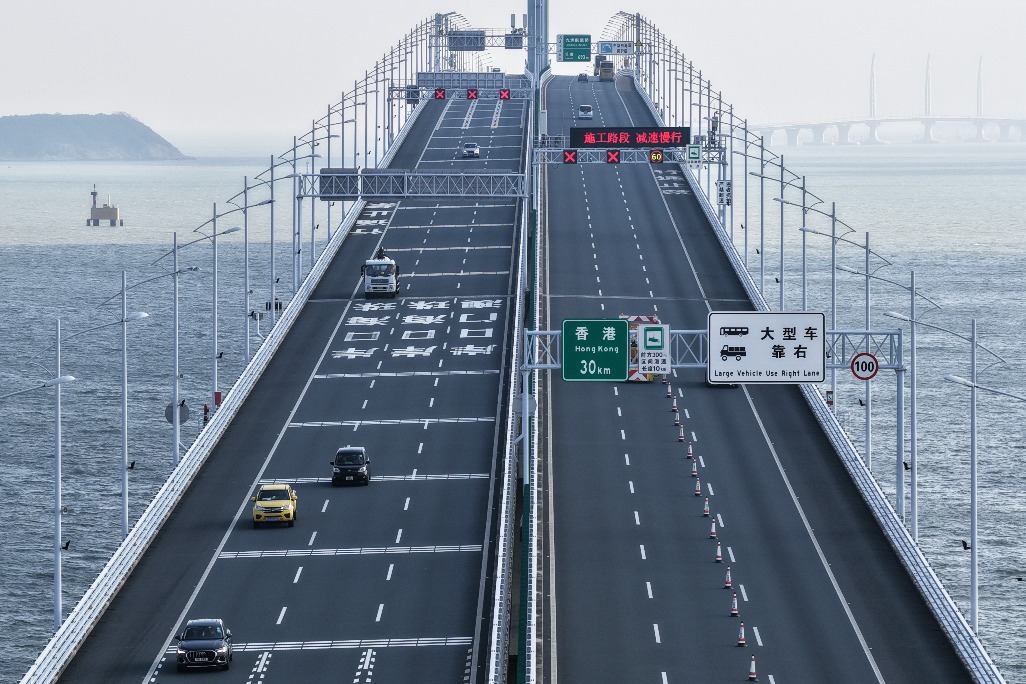
    The Hong Kong-Zhuhai-Macao Bridge has achieved a remarkable transportation milestone, processing over 100 million passenger journeys since its inauguration in October 2018. This engineering marvel, spanning the Pearl River Delta, has transformed regional connectivity between China’s special administrative regions and mainland territory.

    According to official data released from Zhuhai land port authorities, the bridge has maintained consistent traffic growth despite global travel disruptions during the pandemic years. The infrastructure project represents one of China’s most ambitious cross-sea transportation initiatives, featuring a series of underwater tunnels and artificial islands that withstand challenging maritime conditions.

    The bridge’s strategic design incorporates both road and customs facilities that streamline border procedures while maintaining security protocols. Its six-lane highway and dual-direction traffic flow have significantly reduced travel time between Hong Kong and Zhuhai from approximately four hours to just 45 minutes.

    Transportation experts highlight the bridge’s role in facilitating economic integration within the Greater Bay Area, which encompasses eleven major cities including Guangzhou, Shenzhen, and Macao. The structure has not only improved passenger mobility but also enhanced cargo transportation efficiency, with commercial vehicle traffic showing steady increase alongside passenger volume.

    Environmental considerations were incorporated throughout the bridge’s construction, including dolphin protection measures and sustainable construction practices. The project has become a case study in large-scale infrastructure development balancing ecological concerns with transportation needs.

    As regional tourism and business exchanges continue to recover post-pandemic, the bridge is expected to serve as critical infrastructure supporting the Pearl River Delta’s economic development strategy through 2030 and beyond.

  • Yangtze belt sees GDP, green growth

    Yangtze belt sees GDP, green growth

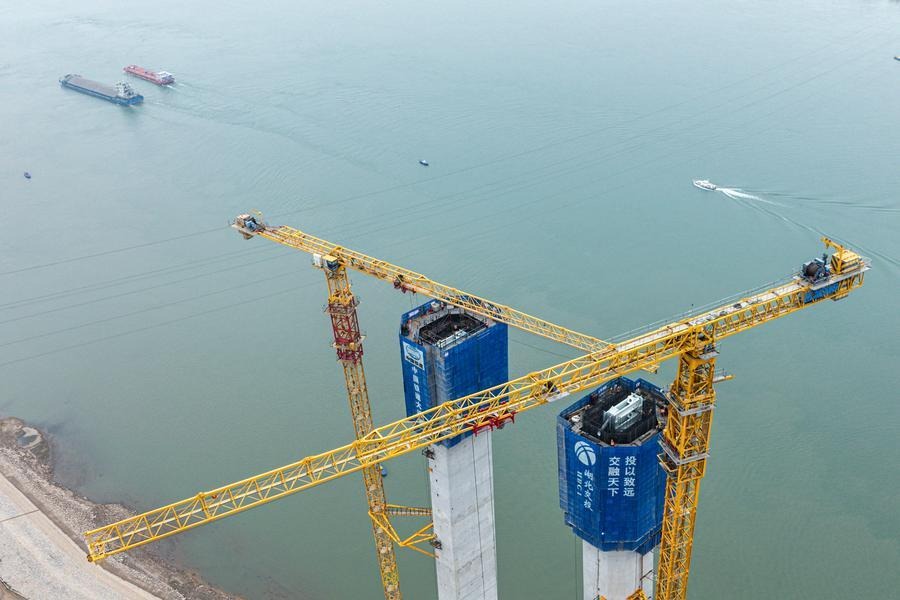
    China’s Yangtze River Economic Belt has demonstrated remarkable progress in balancing economic expansion with environmental restoration over the past decade, according to senior government officials. The region has achieved a dual triumph of economic advancement and ecological rehabilitation, with water quality standards showing dramatic improvement alongside substantial GDP growth.

    At a State Council Information Office briefing commemorating the 10th anniversary of President Xi Jinping’s pivotal symposium on Yangtze development, National Development and Reform Commission Deputy Director Wang Changlin revealed striking statistics. The proportion of river sections achieving ‘fairly good’ or superior water quality ratings surged from 67% in 2015 to an impressive 96.5% by 2025, while the region’s economic output more than doubled during the same period.

    The economic significance of the Yangtze belt within China’s national framework has substantially increased, with its contribution to the national GDP expanding from 42.2% to 47.3% over the ten-year span. This growth occurred alongside the implementation of President Xi’s directive prioritizing ecological restoration over large-scale development, establishing environmental protection as the region’s guiding principle.

    Significant environmental milestones include the virtual elimination of black and odorous water bodies in prefecture-level cities along the Yangtze, achieved through comprehensive pollution control measures targeting industrial, agricultural, and shipping sources. The mainstream Yangtze has been transformed from containing Grade V quality sections to maintaining consistent Grade II standards throughout its entire course.

    Biodiversity conservation has shown particularly encouraging results since the implementation of a comprehensive 10-year fishing ban effective January 1, 2021. Monitoring data from 2021-2024 documented 344 indigenous fish species in the Yangtze basin, representing an increase of 36 species compared to pre-ban levels.

    Despite these achievements, challenges persist. Jiang Kaiyong, Director of the Yangtze Basin Fishery Supervision Administration, noted that 99 historically recorded fish species remain undetected, with flagship species like the Chinese sturgeon continuing to face critical endangerment. Occasional illegal fishing incidents further complicate conservation efforts.

    The Ministry of Agriculture and Rural Affairs has committed to strengthening interdepartmental cooperation with local authorities to enhance law enforcement coordination and improve biodiversity conservation capabilities, ensuring the continued protection of the Yangtze’s ecological resources while supporting high-quality regional development.