作者: admin

  • ‘Spectacle of empire’: US has no day-after plan for Venezuela, experts say

    ‘Spectacle of empire’: US has no day-after plan for Venezuela, experts say

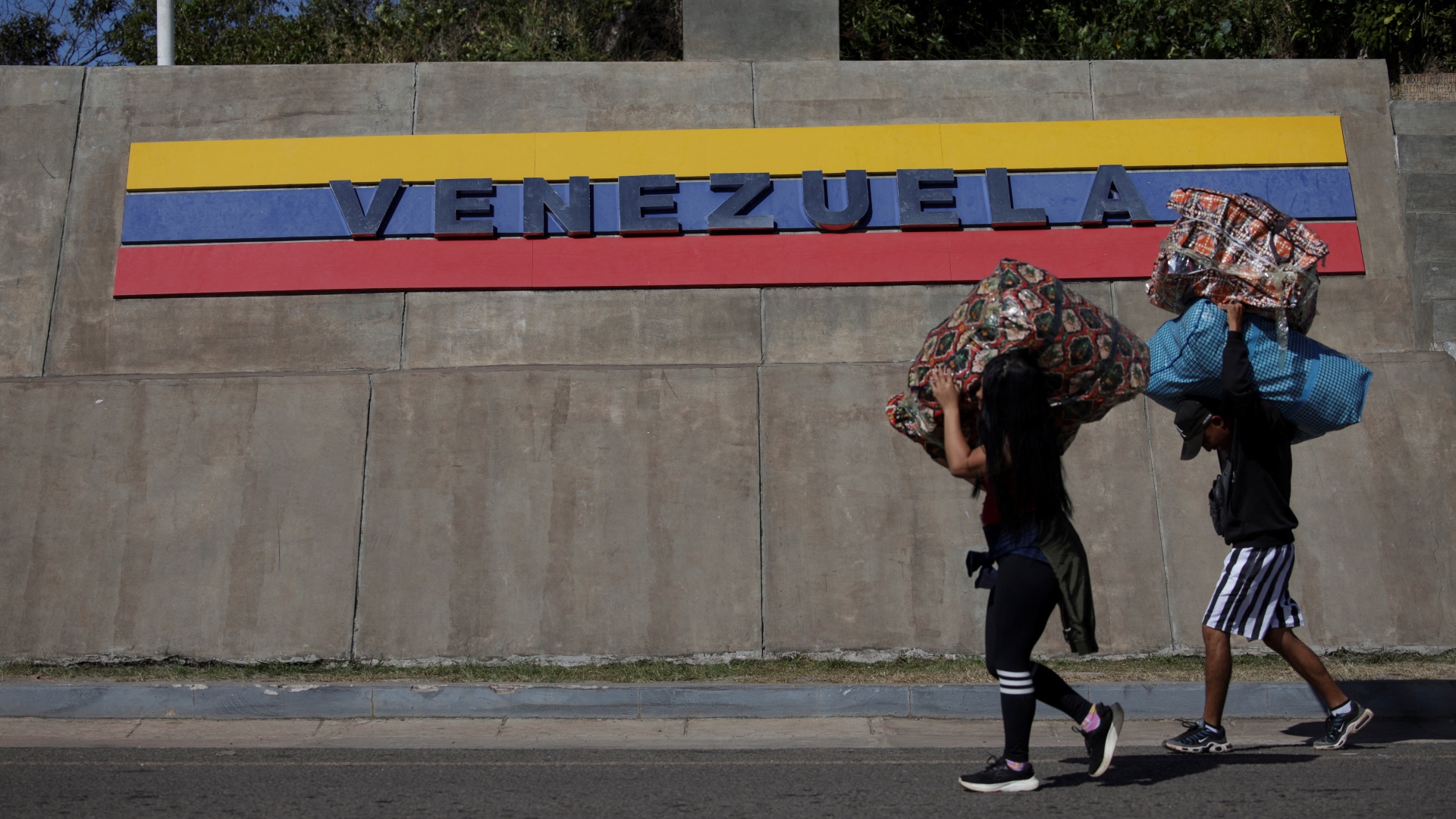
    A panel of foreign policy experts convened by the Quincy Institute for Responsible Statecraft has sharply criticized the Trump administration’s military operation in Venezuela, characterizing it as a poorly conceived spectacle that violates international norms without strategic justification.

    According to University of Chicago political science professor John Mearsheimer, the abduction of Venezuelan President Nicolás Maduro constitutes a violation of international law that makes no strategic sense for the United States. ‘Venezuela posed no threat to the US,’ Mearsheimer stated, noting that if narcotics were the genuine concern, Mexico would represent a more logical target.

    The operation, conducted by US special forces with aerial support that reportedly killed approximately 80 security forces and civilians, has left the administration embroiled in precisely the type of nation-building exercise that President Trump previously pledged to avoid. Maduro and his wife now face trial in New York City, where he has pleaded not guilty to all charges.

    Curt Mills of The American Conservative suggested President Trump appears ‘addicted to these sort of special operations as a way of looking like a wartime commander in chief’ without calculated risks. Meanwhile, Pomona College Professor Miguel Tinker Salas described the operation as ‘performative’ and emblematic of ‘the spectacle of empire,’ noting the apparent absence of any coherent plan for Venezuela’s future governance.

    The administration has assigned Secretary of State Marco Rubio, a long-time advocate for regime change in Venezuela and Cuba, to oversee Venezuela’s administration. Surprisingly, Trump has sidelined opposition leader Maria Corina Machado, suggesting she lacks sufficient institutional support. Interim leadership has been assumed by Delcy Rodríguez, Maduro’s former vice president, who has adopted a conciliatory stance toward US cooperation.

    Experts raised multiple concerns about the operation’s broader implications. Despite Trump’s transparent interest in Venezuela’s oil reserves—the world’s largest—Mills questioned the economic rationale, noting current low oil prices and the absence of extraction plans. Geopolitically, Mearsheimer warned the intervention represents ‘manna from heaven’ for China and Russia, as US resources become diverted from Asian priorities to Western hemisphere nation-building.

    The panel further expressed alarm about deteriorating relations with European allies, particularly given Trump’s simultaneous threats to forcibly acquire Greenland from Denmark. The experts noted Europe’s ‘dramatic’ silence on Venezuela, potentially reflecting fears about abandoned Ukrainian support or retaliatory tariffs.

    Mearsheimer concluded with a stark assessment: ‘Watching the Trump administration in action, I think that they are a rogue operation. They’ve turned the United States into a rogue state.’

  • Bethell stands tall as England 174-3 in final Test, nine behind

    Bethell stands tall as England 174-3 in final Test, nine behind

    Emerging batsman Jacob Bethell delivered a commanding performance, remaining unbeaten on 79 runs as England reached 174-3 at tea on day four of the final Ashes Test at Sydney Cricket Ground. The tourists now trail Australia by just nine runs, with Harry Brook providing support at 24 not out. The 22-year-old Bethell is now poised to pursue his maiden Test century in the final session.

    Australia had earlier been dismissed for 567 in their first innings, building a substantial lead of 183 runs thanks to impressive centuries from Travis Head (163) and captain Steve Smith (138). England’s response faced early adversity when captain Ben Stokes exited the field with a suspected groin injury while bowling during the morning session, casting doubt on his batting availability.

    The English innings began shakily as Mitchell Starc claimed his 29th wicket of the series, trapping Zak Crawley lbw for just one run in the opening over. Ben Duckett contributed 42 runs before chopping on against Michael Neser, while veteran batsman Joe Root, fresh from his first-innings 160, fell cheaply for six runs to Scott Boland’s persistent bowling.

    Despite these setbacks, Bethell displayed remarkable composure at the crease, reaching his fourth Test half-century with a boundary off Starc. His partnership with Brook has provided England with hope of securing a consolation victory after Australia had already retained the Ashes with a 3-1 series lead.

    Earlier in the day, Australia’s innings concluded with Beau Webster remaining unbeaten on 71, while Josh Tongue (3-97) and Brydon Carse (3-130) were the most successful English bowlers.

  • Ex-CIA agent convicted of spying for Soviets dies in prison

    Ex-CIA agent convicted of spying for Soviets dies in prison

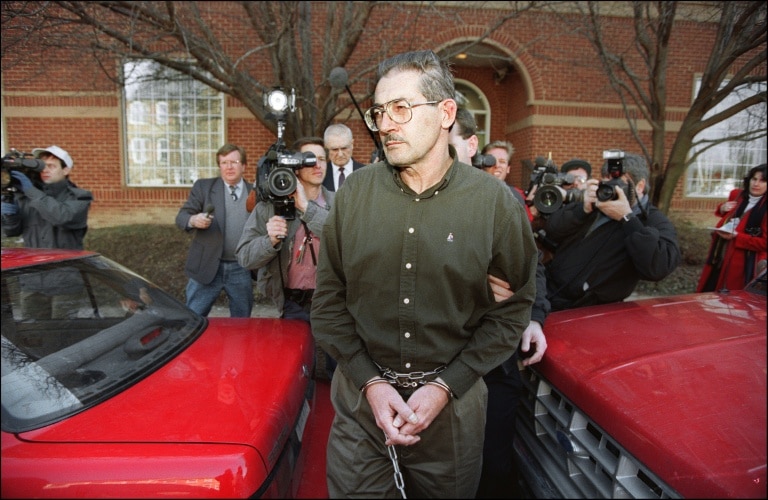
    Aldrich Hazen Ames, the former Central Intelligence Agency officer whose espionage for the Soviet Union stands as one of the most damaging breaches in American intelligence history, has died in federal custody at age 84. The Bureau of Prisons confirmed his death on Monday while serving a life sentence without parole.

    Ames leveraged his 31-year tenure as a counterintelligence analyst to compromise U.S. operations from 1985 to 1993, systematically betraying national secrets in exchange for over $2.5 million from Soviet and later Russian intelligence services. His disclosures led directly to the execution of at least a dozen U.S. assets operating within Soviet territory.

    Operating from his strategically sensitive position as head of the CIA’s Soviet branch, Ames provided Moscow with comprehensive intelligence, including the identities of double agents and highly classified operational details. The magnitude of his betrayal became apparent through his family’s conspicuously lavish lifestyle—maintaining Swiss bank accounts, purchasing luxury vehicles like a Jaguar, and accruing $50,000 in annual credit card expenditures.

    The exposure of Ames in 1994 triggered seismic repercussions across diplomatic and intelligence spheres. His actions deliberately misinformed three presidential administrations—Reagan, George H.W. Bush, and Clinton—regarding Soviet military capabilities through fabricated intelligence assessments. The subsequent investigation compelled the resignation of then-CIA Director James Woolsey and initiated sweeping institutional reforms under successor John Deutch.

    International relations deteriorated rapidly as the White House expelled Russian diplomat Aleksander Lysenko for alleged involvement, while Moscow dismissed the incident as American emotionalism. The Ames case remains a paradigm of Cold War espionage, alongside historical precedents like the Rosenbergs’ atomic secrets transmission and John Walker’s naval intelligence deciphering operations.

  • Multiple people hospitalised after semi-trailer crashes into six cars near Wollongong

    Multiple people hospitalised after semi-trailer crashes into six cars near Wollongong

    A severe multi-vehicle accident involving a semi-trailer and six passenger cars occurred on Picton Road at Cataract, approximately 20 kilometers north of Wollongong, at midday on Wednesday. The collision resulted in thirteen individuals sustaining injuries, with four requiring immediate hospital transport for advanced medical treatment.

    Emergency response teams, including NSW Ambulance paramedics, rapidly deployed to the scene to provide critical care. The most seriously injured victim, a man in his 30s, sustained significant pelvic, chest, and arm injuries. Due to the severity of his condition, he was airlifted to Liverpool Hospital where he remains in serious condition.

    Three additional patients were transported via road ambulance to Wollongong Hospital, all reported to be in stable condition. Medical personnel treated the remaining nine injured parties at the scene without requiring immediate hospital admission.

    Transport NSW has implemented a full road closure of Picton Road in both directions between Macarthur Drive and the M1 Princes Motorway (Mount Ousley Road) to facilitate emergency operations and subsequent police investigation. Authorities have advised motorists to seek alternative routes and allow for substantial additional travel time if already in the vicinity.

    The official Live Traffic NSW Twitter account confirmed the ongoing closure, emphasizing that police investigations are expected to continue for an extended period. The incident has significantly disrupted traffic flow along this major transportation corridor connecting Sydney and Wollongong, with commuters urged to monitor real-time traffic updates for the latest developments.

  • Global shares trade mixed after Wall Street hits records on tech gains

    Global shares trade mixed after Wall Street hits records on tech gains

    Global financial markets exhibited divergent trends on Wednesday as investor sentiment wavered following recent record-breaking rallies on Wall Street. The mixed performance reflected growing concerns over geopolitical developments and potential shifts in monetary policy.

    European markets opened with varied results: France’s CAC 40 declined 0.3% to 8,213.78 while Germany’s DAX advanced 0.4% to 24,993.97. Britain’s FTSE 100 retreated 0.6% to 10,067.95. U.S. futures indicated a cautious opening with Dow Jones contracts edging up 0.1% while S&P 500 futures dipped slightly.

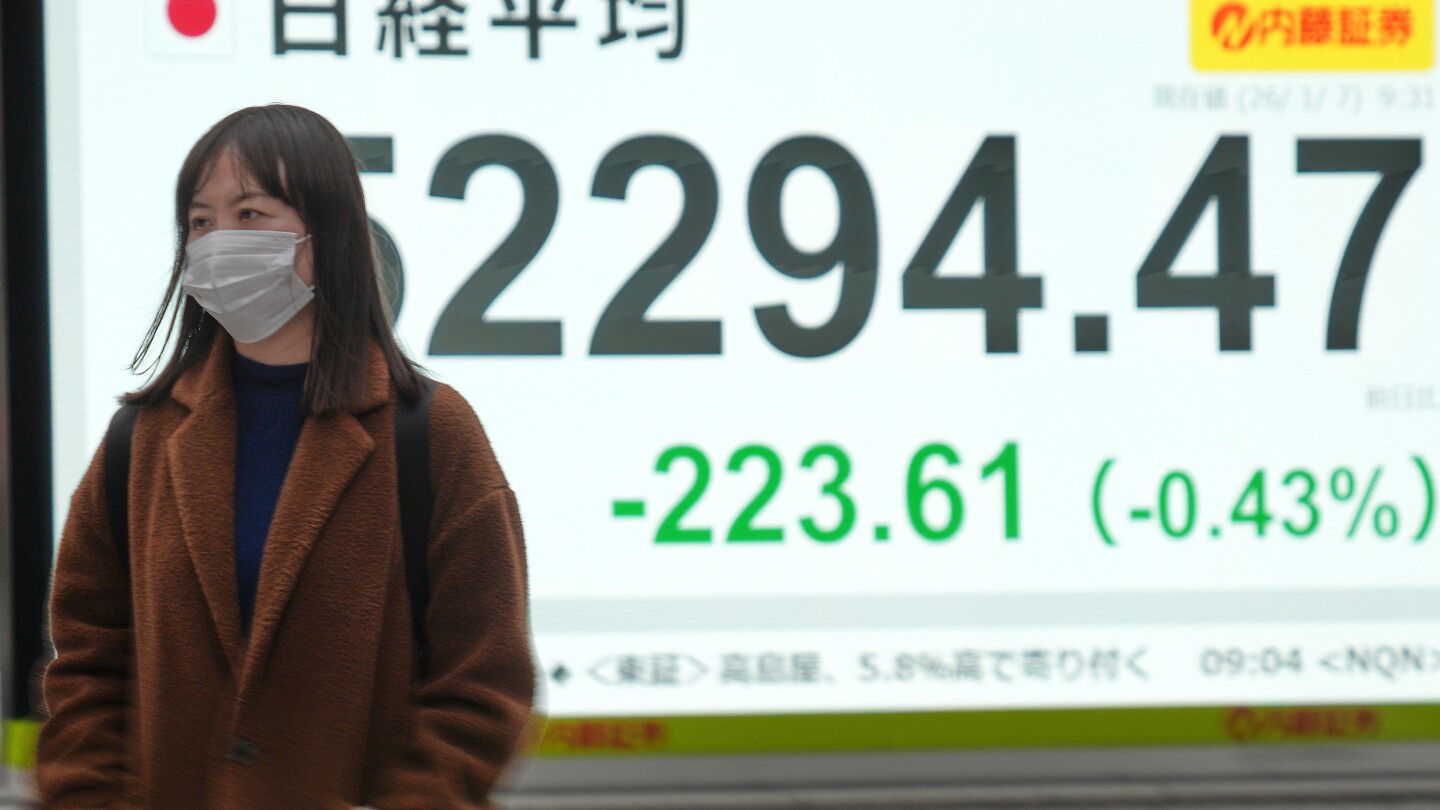
    Asian markets demonstrated particular volatility. Japan’s Nikkei 225 dropped 1.1% to 51,961.98, retreating from its recent record high. The decline coincided with heightened Sino-Japanese tensions following China’s implementation of military-related export restrictions against Japan. This development comes amid deteriorating relations between the two nations after Japanese Prime Minister Sanae Takaichi suggested potential military involvement regarding Taiwan in early November, prompting recent Chinese military exercises around the self-ruled island.

    Other Asian markets showed more positive momentum: South Korea’s Kospi gained 0.6% to 4,551.06, while Australia’s S&P/ASX 200 rose 0.2% to 8,695.60. Hong Kong’s Hang Seng declined 0.9% to 26,458.95, and Shanghai Composite remained nearly flat with a marginal gain.

    Market analysts identified multiple pressure points affecting global sentiment. Mizuho Bank’s Tan Boon Heng highlighted deepening global uncertainty, particularly referencing the capture of Venezuelan President Nicolás Maduro by U.S. forces. Meanwhile, technology stocks showed signs of fatigue after their remarkable three-year rally, with Swissquote senior analyst Ipek Ozkardeskaya noting weakening tech appetite in Asian markets and diminishing euphoria despite positive developments.

    Investor attention now turns to upcoming U.S. employment data, which the Federal Reserve will scrutinize ahead of its late January meeting. After implementing three benchmark rate cuts in late 2025, the central bank is expected to maintain current interest rates.

    Commodity markets saw downward pressure with benchmark U.S. crude falling 65 cents to $56.48 per barrel and Brent crude declining 47 cents to $60.23. Currency markets showed minimal movement as the U.S. dollar slightly weakened against the yen to 156.55, while the euro edged down to $1.1684. Precious metals also retreated with gold falling 0.5% and silver dropping 2.3%.

  • Vietnamese caught in Japan’s illegal worker crackdown

    Vietnamese caught in Japan’s illegal worker crackdown

    Japan faces a complex immigration dilemma as it intensifies enforcement against undocumented foreign workers while simultaneously grappling with severe labor shortages exacerbated by its rapidly aging population and record-low birth rates. The situation particularly affects Vietnamese nationals, who constitute nearly half of Japan’s 450,000 technical interns and represent the largest segment of the country’s 2.3-million foreign workforce.

    The Technical Intern Training Program (TITP), originally designed to transfer skills to workers from developing nations, has drawn criticism for creating vulnerable labor conditions that sometimes lead to visa overstays. Many participants arrive burdened by substantial recruitment debts—often exceeding $7,500—compelling some to continue working illegally after their visas expire rather than return to limited opportunities in Vietnam.

    Prime Minister Sanae Takaichi has pledged stricter visa management amid growing public resentment toward foreign workers, despite statistics showing non-Japanese commit only 5.5% of penal code offenses. Vietnamese nationals accounted for over 30% of foreign arrests in 2024 (excluding permanent residents), primarily for theft-related crimes—a figure partially explained by their dramatically increased presence, which has grown ninefold over the past decade.

    Support organizations reveal that challenging working conditions, including substandard housing, low wages, and occasional sexual harassment, drive approximately 6,500 trainees annually to abandon their designated workplaces. Some enter underground employment networks through Facebook communities known as ‘Bodoi’ (vernacular for ‘soldiers’), while others risk involvement in illicit activities.

    Japan plans to replace TITP with a new system in 2027 featuring enhanced job flexibility but stricter language requirements. However, experts note Japan’s attractiveness is diminishing due to the yen’s weakness reducing remittance value and increasing competition from South Korea’s labor market. Associate Professor Jotaro Kato of Meiji Gakuin University observes that the program now attracts Vietnamese applicants ‘with less motivation and educational qualifications than before.’

    Despite challenges, community advocates emphasize that technical interns make significant contributions to Japanese society. Vietnamese nun Thich Tam Tri, who operates a shelter north of Tokyo, acknowledges that while some workers make poor choices, ‘one bad headline can easily prejudice Japanese people against them,’ referencing a recent murder case involving a Vietnamese trainee that has intensified negative perceptions.

  • NSW Labor MP Anthony D’Adam accuses Israel of sureviling Australians, ‘foreign interference’

    NSW Labor MP Anthony D’Adam accuses Israel of sureviling Australians, ‘foreign interference’

    A New South Wales Labor parliamentarian has formally accused the Israeli government of potentially engaging in foreign interference activities on Australian soil. Anthony D’Adam, a member of the NSW Legislative Council, raised these concerns after discovering his inclusion in a controversial dossier compiled by Israel’s Ministry of Diaspora Affairs in September.

    The document, which purports to track ‘anti-Semitism and anti-Zionism’ within Australia, identified D’Adam as ‘an advocate of Palestinian rights’ within the Labor Party and referenced his parliamentary statements characterizing Israel’s war for independence as containing ‘acts of terrorism.’ In a January 5 correspondence to Home Affairs Minister Tony Burke, D’Adam urged an official investigation into whether the dossier’s creation and distribution might constitute foreign interference under Australian law.

    The situation has created diplomatic ripples as Israeli Minister for Diaspora Affairs Amichai Chikli has maintained an active presence in Australia following the Bondi Beach terror attack. Last week, Chikli sent his own letter to Minister Burke criticizing the Australian government’s response to security matters while offering counter-terrorism training for Australian police forces.

    The controversial dossier designates NSW, Victoria, and Queensland as primary hotspots for alleged anti-Semitic content, with Canberra reporting the highest per capita incidence. It further identifies several pro-Palestine organizations including the Palestine Action Group, BDS Australia, and Students for Palestine USYD as ‘anti-Semitic/anti-Israel generators and influencers.’ Multiple politicians across party lines were named, including Senators Fatima Payman and Mehreen Faruqi, alongside Lidia Thorpe and Adam Bandt.

    D’Adam vehemently denies any anti-Semitic rhetoric, asserting the document deliberately conflates legitimate criticism of Israeli policies with religious prejudice. ‘The dossier does not provide any examples of anti-Semitism or criticism of Jewish people generally based on racial, ethnic, or religious identity,’ he stated in his letter.

    The controversy emerges against a backdrop of internal Labor Party tensions regarding Palestinian solidarity. D’Adam previously claimed he was silenced during party conference debates on Palestine and faced significant backlash after criticizing Premier Chris Minns’ handling of related issues, including the Sydney Harbour Bridge protest. While Minns acknowledged ‘tough debates’ occur within party rooms, he denied allegations of bullying behavior.

    Minister Burke’s office confirmed that correspondence containing allegations of unlawful conduct would be forwarded to appropriate agencies per standard procedure. The Israeli government has yet to provide official comment on these allegations.

  • Chris Mason: Greenland and Ukraine point to Trump’s head-spinning unpredictability

    Chris Mason: Greenland and Ukraine point to Trump’s head-spinning unpredictability

    Europe finds itself navigating two simultaneous diplomatic challenges with the United States, testing the continent’s ability to anchor Washington to its strategic priorities amid profound policy unpredictability from the Trump administration.

    The dual focus on Ukraine’s security and Greenland’s sovereignty emerges against a backdrop of growing skepticism in Washington about Europe’s geopolitical significance and defense commitments. These parallel developments illustrate what European officials describe as the ‘mesmerizing unpredictability’ of President Trump’s foreign policy approach.

    This week revealed particularly contradictory signals. Seven European leaders, including Britain’s Sir Keir Starmer, issued a joint statement diplomatically but firmly rejecting U.S. interest in Greenland as “absurd and counterproductive.” Their message emphasized that Greenland’s future belongs solely to its people, marking a rare unified European front against American ambitions.

    Simultaneously, European diplomats express cautious optimism about securing American commitment to Ukraine’s long-term security. The unprecedented presence of Trump envoys Steve Witkoff and Jared Kushner at Paris meetings of the ‘Coalition of the Willing’ signaled potential Washington alignment with European peace efforts.

    The emerging framework envisions a “US-led ceasefire monitoring and verification mechanism” leveraging advanced American intelligence, surveillance, and reconnaissance capabilities—including drones and satellites. This represents a significant evolution from Washington’s previous resistance to formal security guarantees for Kyiv.

    However, substantial uncertainties remain. Critical questions persist about Ukraine’s willingness to compromise on territory and the feasibility of securing sustainable peace. For European nations, including the UK, the commitment implies potential ground troop deployments raising questions about duration, public support, and defense budget implications.

    Whitehall sources characterize these developments as defining Europe’s security architecture for decades ahead, transcending current political leadership. As one official noted: “A secure Ukraine is a secure Europe and a secure Europe is a secure UK.”

    The fundamental question European capitals now confront is whether Trump’s unconventional approach represents a temporary deviation or a permanent transformation of transatlantic relations—with implications reaching far beyond this week’s headlines on Greenland and Ukraine.

  • Gen Z revolters are angry at the government they installed after Nepal’s protests

    Gen Z revolters are angry at the government they installed after Nepal’s protests

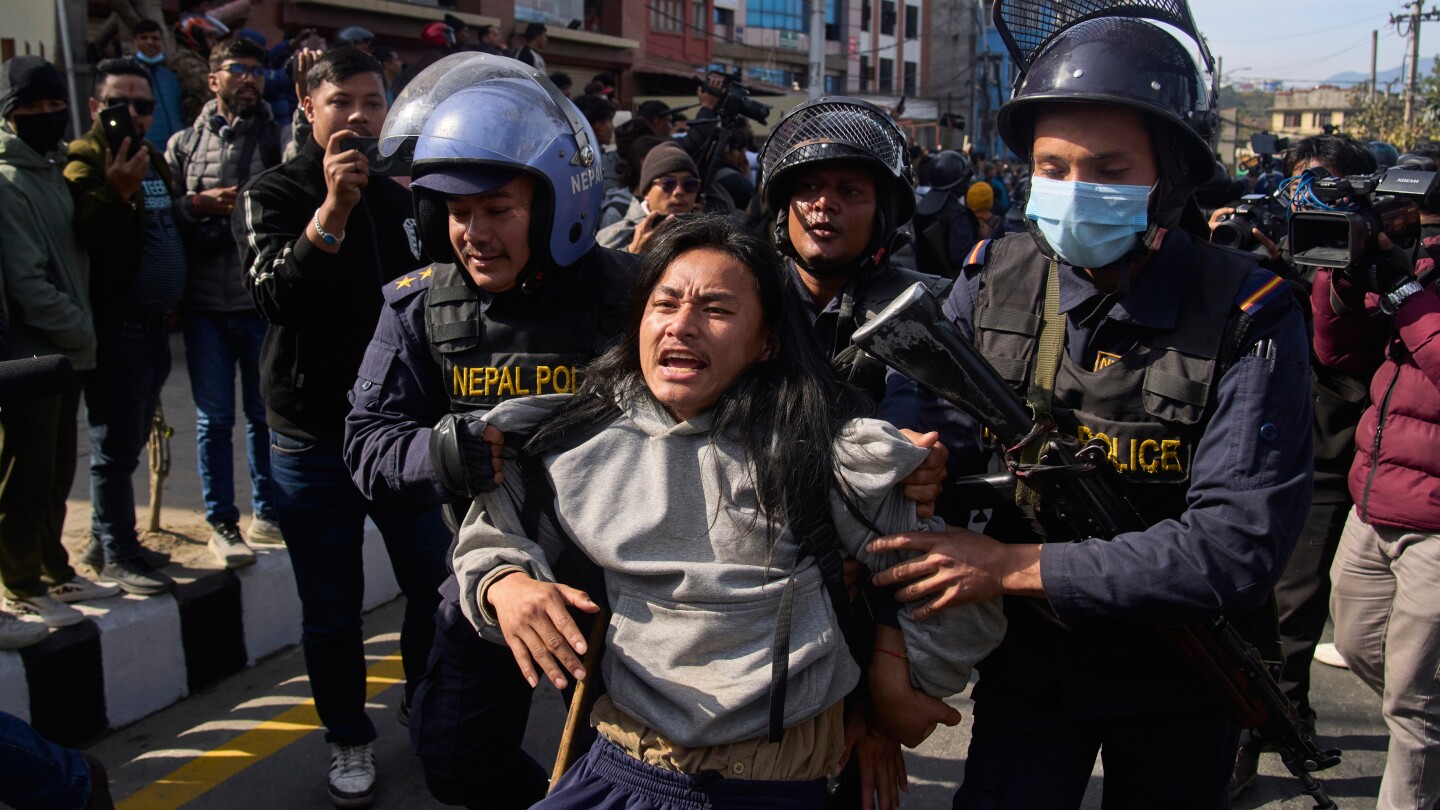
    KATHMANDU, Nepal — What began as a day of promise for 22-year-old Mukesh Awasti transformed into permanent sacrifice when he joined Nepal’s youth uprising against systemic corruption. Instead of boarding a flight to Australia to pursue civil engineering studies last September, Awasti now lies in a Kathmandu hospital bed, his leg amputated after being shot by security forces during violent demonstrations.

    The September protests, spearheaded by Nepal’s ‘Gen Z’ activists, resulted in 76 fatalities and over 2,300 injuries before achieving their immediate objective: the appointment of Sushila Karki as Nepal’s first female prime minister on September 12. The retired Supreme Court justice pledged to conduct fresh parliamentary elections by March and address systemic corruption.

    Three months later, mounting disillusionment grips the protest movement as the interim government faces criticism for failing to deliver meaningful reforms. Dozens of demonstrators, including those injured in September’s clashes, have returned to the streets expressing frustration over unfulfilled promises.

    “I regret my decision to participate because the new government we brought to power has achieved nothing,” Awasti stated from his hospital bed. “Corruption continues unchecked, and those responsible for opening fire on demonstrators remain free.”

    The government’s anti-corruption agency has filed just one significant case that excludes key political figures. Politicians accused of corruption are preparing to contest upcoming elections, with no legal action taken against former leaders in power during September’s violence.

    Suman Bohara, who walks with crutches due to a shattered right foot, articulated the collective frustration: “We returned to the streets because the government failed its promises. Many families lost loved ones, many were injured, but what has the government done? Nothing.”

    The original protests erupted on September 8 against widespread corruption, limited opportunities, unemployment, and poor governance—triggered initially by a social media ban. Demonstrators broke through police barricades attempting to enter parliament, meeting lethal force from security personnel. The movement rapidly spread nationwide, with angry mobs burning government offices and politicians’ homes, forcing leaders to flee via military helicopters.

    Analysts note the movement’s lack of clarity continues to hinder progress. Abeeral Thapa, principal of Polygon College of Journalism and Mass Communications in Kathmandu, observed: “The confusion stems from unclear demands among Gen Z groups. The protests began targeting corruption and social media restrictions but ultimately collapsed the government—like hunting deer but killing a tiger.”

    Divergent demands now emerge from various youth factions: some seek direct prime ministerial elections and constitutional overhaul, others demand immediate corruption prosecutions, while some support March elections to bring reform-minded lawmakers. The interim government’s limited mandate—primarily to conduct elections—restricts its ability to address all protester demands.

    Prime Minister Karki maintains her administration will deliver March 5 elections: “The world anticipates peaceful transition through elections. Our preparations are nearly complete, and security conditions have significantly improved.”

    Yet skepticism persists regarding whether elections will occur and whether they can address the systemic issues that sparked September’s uprising, leaving Nepal’s political future uncertain and its youth activists confronting the gap between revolutionary aspirations and political reality.

  • Reality TV star Brynne Edelsten charged with drug trafficking after police raid

    Reality TV star Brynne Edelsten charged with drug trafficking after police raid

    Melbourne socialite and television personality Brynne Edelsten has secured her release on bail amid serious drug trafficking allegations, with her mother providing a $5,000 guarantee. The 42-year-old former reality star appeared before Melbourne Magistrates’ Court on Wednesday as authorities proceed with multiple controlled substance charges.

    The case stems from a December 29 police raid on her Fitzroy residence, where investigators allegedly discovered a commercial quantity of methylamphetamine alongside other prohibited substances. Court documents reveal nine separate charges including drug possession, trafficking methylamphetamine, and possession of schedule 4 poisons without authorization.

    According to evidence presented to Magistrate Brett Sonnet, the search uncovered significant quantities of ketamine and 1.4-Butanediol in addition to various anabolic steroids including testosterone, nandrolone phenylpropionate, and trenbolone vials.

    Defense attorney Marco Man facilitated the bail arrangement requiring Edelsten to surrender her passport to authorities and maintain regular reporting obligations at a police station three times weekly while awaiting trial. The American-born celebrity, who gained fame through appearances on ‘Dancing with the Stars’ and ‘SAS Australia’ following her high-profile marriage to late billionaire Geoffrey Edelsten, declined to comment outside the courtroom.

    The case has been adjourned until April for further proceedings, with Edelsten maintaining her right to silence regarding the allegations against her.