作者: admin

  • Brown University gunman recorded videos saying attack was planned for months

    Brown University gunman recorded videos saying attack was planned for months

    Federal investigators have released disturbing confessional-style videos revealing that a gunman meticulously planned his deadly shooting spree across multiple universities over several months. Claudio Manuel Neves Valente, 48, documented his preparations in Portuguese before executing attacks that claimed three lives and injured nine others.

    According to translated transcripts released by the U.S. Attorney’s Office for the District of Massachusetts, Valente stated he spent ‘six semesters’ planning the December 13th assault at Brown University in Providence, Rhode Island. The attack resulted in the deaths of two students—19-year-old Ella Cook and 18-year-old Mukhammad Aziz Umurzokov—and left nine others wounded.

    Two days following the campus shooting, Valente traveled to Massachusetts where he fatally shot MIT professor Nuno Loureiro at his residence near Boston. Investigators confirmed both men had attended the same university in Portugal and were believed to be acquainted, though no specific motive for targeting either institution was provided in the recordings.

    The footage, discovered in a New Hampshire storage unit alongside Valente’s body on December 18th following a multi-state manhunt, shows the gunman expressing zero remorse for his actions. Instead, he blamed his unarmed victims for their own deaths and complained about a self-inflicted injury sustained during the professor’s shooting when a bullet casing struck his eye.

    Despite his violent actions, Valente denied having mental illness or anti-American sentiments in his recordings, calling his decision to immigrate to the United States a ‘mistake’ while asserting he held ‘no hatred towards America.’

    The prolonged investigation and delayed suspect identification drew significant criticism, though prosecutors have confirmed there is no ongoing threat to public safety while the investigation continues.

  • How people in Harbin, world’s biggest really cold city, kept warm

    How people in Harbin, world’s biggest really cold city, kept warm

    In the extreme cold of Harbin, Northeast China, where winter temperatures regularly plummet to -30°C, traditional heating methods developed over millennia are now capturing academic attention for their sustainable potential. Unlike modern central heating systems that consume massive energy, these ancient approaches demonstrate remarkable efficiency through intelligent design rather than increased energy consumption.

    The kang, a heated platform-bed constructed from earth bricks, represents one of humanity’s most enduring heating innovations. Functioning as an integrated architectural element rather than mere furniture, this thick raised slab connects directly to the family cooking stove. When meals are prepared, hot air circulates through subterranean passages, warming the entire mass of compacted earth that then radiates heat throughout the night.

    What makes this 2,000-year-old technology particularly relevant today is its targeted heating approach. Instead of warming entire rooms, the kang focuses thermal energy precisely where people need it most. The system requires no pumps, radiators, or fossil fuel consumption beyond what’s already used for cooking. Hundreds of kilograms of earth act as natural thermal batteries, slowly releasing stored heat over many hours.

    Similar principles appear throughout East Asian heating traditions. Korea’s ondol system channels warm air beneath thick floors, while Japan’s kotatsu uses a low table with an under-mounted heater beneath heavy blankets to warm occupants’ legs. These systems all share a common philosophy: maximize personal comfort while minimizing energy waste.

    Even Europe once employed comparable approaches before the widespread adoption of energy-intensive central heating. Ancient Roman hypocausts circulated hot air under floors, medieval households used heavy tapestries as insulation, and various cultures employed heated rugs and enclosed sleeping areas.

    The contemporary relevance of these traditional systems becomes increasingly urgent as millions of Europeans struggle with soaring energy costs and inadequate heating. Modern solutions like heat pumps and renewable energy work best when integrated with highly efficient buildings that require less energy overall. The kang demonstrates that true comfort emerges from intelligent design rather than excessive energy consumption—a lesson that could guide sustainable architecture toward more resilient heating solutions.

  • 55 Cuban, Venezuelan troops killed during US capture of Maduro: official tolls

    55 Cuban, Venezuelan troops killed during US capture of Maduro: official tolls

    A military operation conducted by United States forces in Caracas has resulted in the deaths of fifty-five Cuban and Venezuelan military personnel, according to official statements released by both nations. The incident occurred during a nighttime assault on January 3rd that led to the capture of Venezuelan leader Nicolás Maduro from his residence.

    Venezuelan Defense Minister Vladimir Padrino López characterized the operation as a brutal engagement, stating that Maduro’s presidential guard was largely eliminated ‘in cold blood’ by American troops who initiated bombardment in the capital city. The minister’s comments, delivered on Sunday, described the operation as disproportionate in its use of force.

    Cuba subsequently released the identities of thirty-two deceased military members, including three high-ranking officers from the country’s interior ministry. Simultaneously, Venezuela published an online memorial honoring twenty-three fallen personnel, among them five admirals from its naval forces.

    The longstanding military cooperation between Cuba and Venezuela, maintained despite consistent pressure from Washington, represents a strategic alliance that has persisted through both the Chavez and Maduro administrations. This partnership extends beyond defense to include collaborative efforts in public health and educational exchanges, forming a cornerstone of leftist governance in the region.

    The operation marks a significant escalation in international tensions regarding Venezuela’s political leadership, which has faced sustained opposition from Western governments questioning the legitimacy of Maduro’s presidency since his controversial 2018 re-election.

  • Maduro copied my dance, but Melania hates it, says Trump

    Maduro copied my dance, but Melania hates it, says Trump

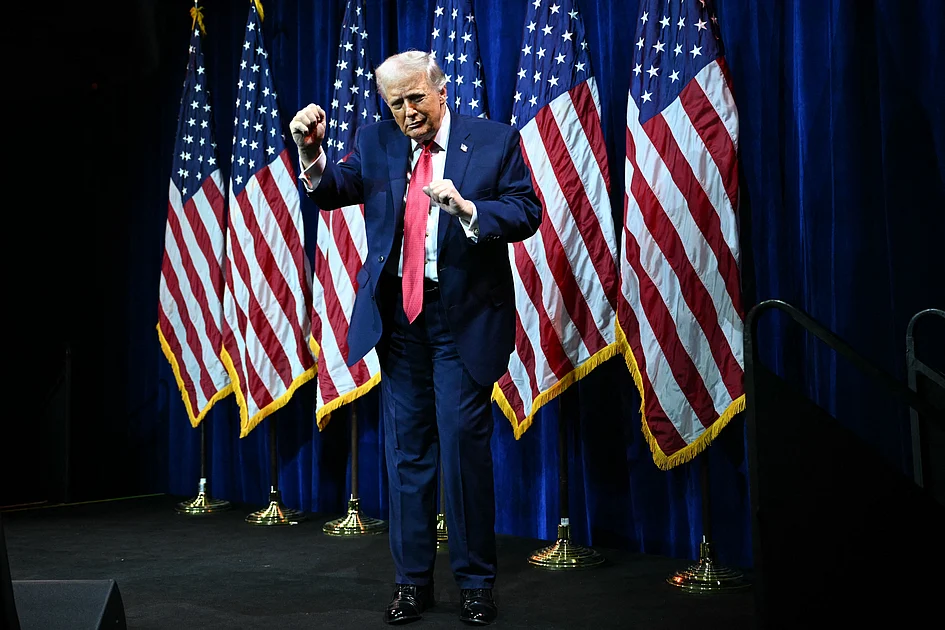
    In a wide-ranging address to Republican lawmakers at the Trump-Kennedy Center in Washington, President Donald Trump celebrated the capture of Venezuelan leader Nicolas Maduro while offering unexpected commentary on presidential dance aesthetics. The speech, delivered on the fifth anniversary of the U.S. Capitol attack, primarily served as a campaign launch for the crucial 2026 midterm elections.

    Trump accused the captured Venezuelan president of attempting to imitate his signature rally dance moves, referencing Maduro’s recent public appearances where he danced to a techno remix of his ‘No War, Yes Peace’ mantra as U.S. forces gathered in the Caribbean late last year. While acknowledging the ‘brilliant’ special forces operation that captured Maduro and his wife on Saturday, Trump provided no additional details about his previously stated plans for U.S. management of Venezuela’s oil resources.

    The president diverted from foreign policy matters to demonstrate an exaggerated imitation of a transgender weightlifter while discussing his administration’s ban on transgender women in women’s sports. This performance prompted him to reveal First Lady Melania Trump’s disapproval of both his dance moves and physical comedy routines, which she deemed ‘so unpresidential.’

    Trump framed the upcoming midterms as critical to preventing another impeachment attempt, referencing his second impeachment following the January 6 Capitol riot. He pardoned nearly 1,600 rioters on his first day back in office on January 20, 2025. Despite claiming strong economic performance, Trump expressed frustration with public concerns about affordability of basic goods, telling lawmakers: ‘I wish you could explain to me what the hell’s going on with the mind of the public. Because we have the right policy.’

  • Fletcher asked for Ferguson’s advice before taking Man Utd interim role

    Fletcher asked for Ferguson’s advice before taking Man Utd interim role

    In a revealing press conference on Tuesday, newly appointed Manchester United interim manager Darren Fletcher disclosed he consulted legendary former boss Sir Alex Ferguson before accepting the caretaker position. The former United midfielder steps into the role following the abrupt dismissal of Ruben Amorim on Monday, after the Portuguese manager’s turbulent 14-month tenure culminated in public criticism of the club’s hierarchy.

    Fletcher, who moves up from his position as under-18s coach to lead the team against Burnley on Wednesday, emphasized the significance of seeking Ferguson’s guidance. ‘I’ve spoken with Sir Alex,’ Fletcher told reporters. ‘I don’t make major decisions without consulting him—this has been my practice throughout my career at and beyond Manchester United. He was actually among the first to call, and obtaining his blessing was paramount given the respect he deserves.’

    The interim manager described how Ferguson reinforced his own philosophy: ‘He echoed my longstanding belief that as a club employee, your fundamental duty is to always act in Manchester United’s best interests. Hearing him affirm this principle that guides my daily approach was profoundly comforting.’

    Fletcher becomes the sixth caretaker manager since Ferguson’s celebrated retirement in 2013, which marked the end of United’s most recent Premier League title victory and the beginning of prolonged institutional instability. The club has yet to communicate with Amorim since his departure, while speculation mounts about Fletcher’s potential successors until season’s end, with former manager Ole Gunnar Solskjaer and ex-Middlesbrough boss Michael Carrick reportedly under consideration.

    Addressing the intense scrutiny from club legends like Gary Neville, Roy Keane, and Paul Scholes—which often appeared to unsettle Amorim—Fletcher asserted that embracing such criticism comes with leading ‘the biggest club in the world.’ He noted: ‘You cannot ask these passionate individuals to temper their opinions. They have earned the right to voice their perspectives, and their insights are valuable.’

  • ‘Simple’ goodbye to Bardot lined up in Saint-Tropez

    ‘Simple’ goodbye to Bardot lined up in Saint-Tropez

    The French coastal town of Saint-Tropez prepares for a subdued farewell to cinema icon Brigitte Bardot on Wednesday, with funeral arrangements reflecting both her passionate animal advocacy and controversial political leanings. The ceremony at Notre-Dame de l’Assomption church will proceed without presidential attendance but with confirmed participation from far-right leader Marine Le Pen.

    Organizers from the Brigitte Bardot Foundation have emphasized the deliberately modest nature of the proceedings, describing the event as intentionally “no frills” in accordance with the late actress’s wishes. Foundation spokesman Bruno Jacquelin noted the ceremony would feature “some surprises” while remaining fundamentally simple, mirroring Bardot’s authentic character.

    The cinematic revolutionary who passed away aged 91 on December 28th will be memorialized through public screens broadcasting the funeral to admirers braving winter temperatures. Bardot’s death concludes a remarkable transformation from international sex symbol to reclusive activist, having abandoned her film career in the early 1970s to dedicate herself entirely to animal rights.

    The ceremony occurs against a complex backdrop of polarized public perception. While universally acknowledged as a cinematic pioneer who embodied 1960s sexual liberation through films like “And God Created Woman,” Bardot’s later years were marred by multiple convictions for hate speech targeting Muslim communities. This ideological positioning has resulted in notably restrained responses from left-wing figures, with Green Party lawmaker Sandrine Rousseau questioning the ethical consistency of championing animal welfare while expressing anti-immigrant sentiments.

    Family dynamics add further nuance to the proceedings. Bardot’s only child, Nicolas-Jacques Charrier—with whom she reconciled in her final years after decades of estrangement—remains unconfirmed as an attendee. The actress had previously characterized pregnancy as carrying a “tumour” and motherhood as “misery” in her memoirs. Meanwhile, her 87-year-old sister Mijanou, residing in Los Angeles, has expressed emotional tribute through social media, hoping Bardot finds comfort in reunion with departed pets in the afterlife.

    The burial ultimately occurs at the seaside cemetery despite Bardot’s 2018 expressed wish for interment in her home garden alongside beloved animals, a preference she stated to avoid a “crowd of idiots” disturbing her family’s existing graves.

  • Oman establishes global financial centre to drive economic diversification

    Oman establishes global financial centre to drive economic diversification

    In a landmark decision aimed at reshaping its economic landscape, the Sultanate of Oman has received cabinet approval for the creation of the Oman Global Financial Centre. This strategic initiative represents a comprehensive effort to diversify the nation’s economy beyond hydrocarbon dependencies while enhancing the financial sector’s contribution to gross domestic product.

    The newly established center will operate with complete legislative, administrative, and regulatory independence, creating a specialized environment tailored for international financial institutions. The framework will accommodate both conventional and Islamic banking operations, insurance services, and complementary financial support sectors. This autonomous status enables the center to develop a legal and judicial system aligned with global financial standards while maintaining operational flexibility.

    Sultan bin Salim Al Habsi, Oman’s Minister of Finance and Chairman of the Financial and Economic Committee, emphasized the center’s role within the nation’s broader economic vision. The institution will function as a catalyst for investment management, corporate establishment, and international business partnerships through streamlined capital movement procedures and financial innovation support mechanisms.

    The initiative leverages Oman’s established political stability and growing network of international economic partnerships to attract foreign capital. Additional benefits include knowledge transfer opportunities and the creation of high-value employment positions within the financial services sector, addressing both economic diversification and workforce development objectives simultaneously.

  • Trump says Republicans must win 2026 midterms or else he’ll be impeached by Democrats

    Trump says Republicans must win 2026 midterms or else he’ll be impeached by Democrats

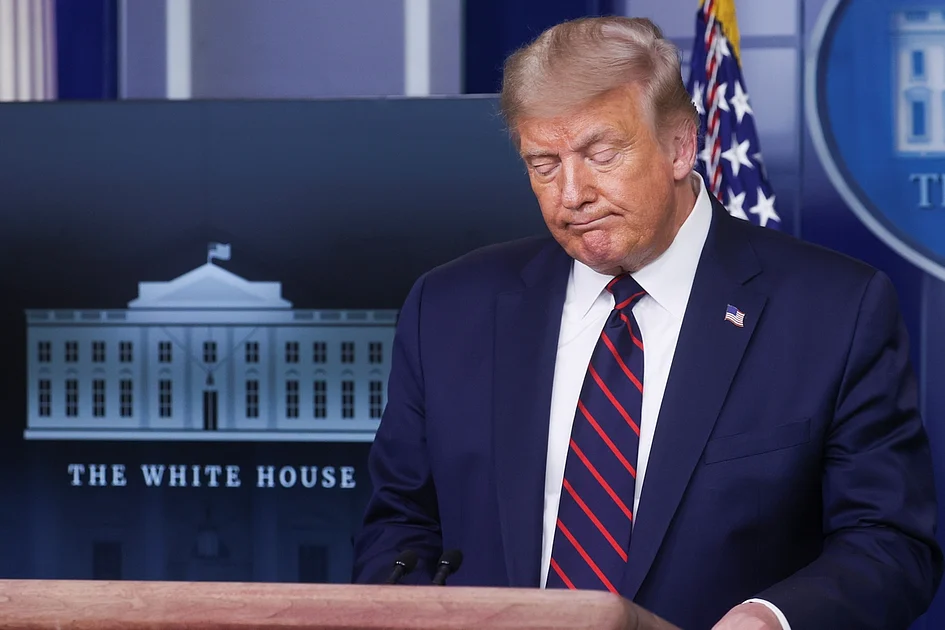
    Former President Donald Trump issued a stark warning to Republican lawmakers on Tuesday, asserting that Democratic forces would move to impeach him should the GOP fail to secure victory in the upcoming 2026 midterm elections. Speaking at a private gathering for House Republicans in Washington, Trump framed the November contests as a critical juncture for his political future and policy objectives.

    “The imperative is clear—we must prevail in the midterms,” Trump declared during the retreat. “A defeat would provide the opposition with sufficient pretext to initiate impeachment proceedings against me.”

    The midterm elections, scheduled for November 2026, will determine the complete composition of the House of Representatives and one-third of Senate seats. These outcomes will fundamentally shape the balance of power in Congress and directly influence the viability of Trump’s political agenda during his potential second term.

    Trump’s remarks underscore the heightened political tensions surrounding the upcoming electoral battle, which both parties view as potentially one of the most consequential midterm elections in recent history. The former president’s statement reflects growing concerns within Republican circles about maintaining congressional majorities amid challenging political headwinds.

    Political analysts note that Trump’s warning serves multiple purposes: motivating the Republican base, consolidating support among party legislators, and framing the election as a referendum on his presidency rather than merely a conventional midterm contest. This strategic positioning comes as both parties prepare for what is expected to be an intensely fought electoral campaign with significant implications for the nation’s political trajectory.

  • An Indian state wants to tackle hate speech with a law – can it work?

    An Indian state wants to tackle hate speech with a law – can it work?

    The southern Indian state of Karnataka has embarked on a groundbreaking legislative initiative to combat the escalating problem of hate speech and communal violence. The Karnataka Hate Speech and Hate Crimes (Prevention) Bill, 2025, represents one of the most comprehensive attempts by any Indian state to address what authorities describe as a dangerous surge in targeted verbal attacks against minorities.

    Legislative Framework and Provisions:
    The proposed legislation, which awaits the governor’s approval to become law, establishes strict parameters for identifying and prosecuting hate speech. It defines hate speech as any expression—whether verbal, printed, televised, or circulated through social media—that targets individuals or groups based on religious, caste, or other identity markers. Notably, the bill categorizes hate speech itself as a criminal offense, regardless of whether it directly incites violence.

    The bill grants state authorities unprecedented powers, including the authority to mandate social media platforms to remove content deemed as hate speech—a power previously reserved for the federal government. Penalties include non-bailable imprisonment ranging from one to seven years and substantial fines of up to 50,000 rupees ($550), with enhanced punishments for repeat offenders.

    Political Divisions and Constitutional Concerns:
    The legislation has exposed deep political fractures. The ruling Congress party in Karnataka argues the measure is necessary to address a 74% increase in hate speech incidents recorded during the 2024 national elections, particularly targeting Muslim communities. State Home Minister G Parameshwara contends the bill closes critical loopholes in existing laws.

    However, the national ruling BJP party, which serves as the opposition in Karnataka, has vehemently opposed the legislation, warning it threatens constitutional free speech protections. Opposition leader R Ashoka alleges the law could be weaponized to silence government critics and imprison political opponents and journalists.

    Legal experts express concerns about the bill’s potential for misuse. Supreme Court lawyer Sanjay Hegde notes the subjective nature of hate speech determinations, stating that “one party’s hate speech is another man’s political propaganda.” Legal scholars highlight the bill’s expansion beyond existing federal provisions that criminalize speech promoting religious enmity or deliberately offending religious sentiments.

    Implementation Challenges and Safeguards:
    A significant debate centers on the blurred distinction between hate speech and hate crimes within the legislation. Siddharth Narrain, assistant professor at National Law School of India University, notes that while hate speech should be prosecuted for its potential to incite violence, the current wording treats communication itself as a criminal act even without subsequent violence.

    Critics point to a 2015 Supreme Court ruling requiring speech-related laws to be precisely defined to avoid creating a “chilling effect” on free expression. Social activist Girish Bhardwaj argues the bill gives excessive discretion to police and administrative officials in determining what constitutes hate speech, potentially leading to conflicts of interest when governments face criticism.

    State officials counter that the legislation includes safeguards against abuse of power. A senior Karnataka government official, speaking anonymously, stated that the bill removes the requirement for government permission to file chargesheets, instead requiring police to approach courts directly and face consequences for improper enforcement.

    The legislation has already inspired similar initiatives, with the Congress-led government in Telangana announcing plans to introduce comparable hate speech legislation. The outcome in Karnataka may well set a precedent for how India balances free speech protections with the urgent need to address communal violence and targeted harassment.

  • As China sharpens Pacific kill chain US revives island airfields

    As China sharpens Pacific kill chain US revives island airfields

    The United States is undertaking a massive military engineering project across the Pacific theater, revitalizing World War II-era airfields in a strategic effort to counter China’s growing missile capabilities. This initiative, driven by the Air Force’s Agile Combat Employment (ACE) doctrine, seeks to disperse American airpower across numerous remote locations including Tinian, Guam, Palau, Micronesia, the Philippines, and Alaska.

    The strategic motivation stems from Pentagon assessments that China’s expanding ballistic missile arsenal could overwhelm critical US bases in Guam and Okinawa during the initial phases of a Taiwan conflict. By creating multiple operational airfields with pre-positioned fuel, munitions, and repair equipment, US planners aim to complicate Chinese targeting calculations and maintain combat operations even after initial attacks.

    However, military analysts express concerns about the viability of this dispersal strategy. China has tripled its intelligence, surveillance, and reconnaissance (ISR) satellite constellation since 2018, now operating over 359 dedicated ISR satellites. This network, combined with over-the-horizon radar capable of detecting aircraft up to 3,000 kilometers away, provides China with unprecedented tracking capabilities across the Pacific.

    Simulations from the Center for Strategic and International Studies indicate devastating potential losses: approximately 300-500 US aircraft could be destroyed within the first weeks of conflict, with 90% of these losses occurring on the ground before aircraft can disperse. Chinese strikes could render Japanese airbases inoperable for up to 12 days and eliminate aerial refueling capabilities for over a month, potentially granting China a critical window of air superiority.

    Concurrently, China has been expanding its presence in Oceania through port and airfield investments in Solomon Islands, Fiji, and Samoa, enhancing its military reach and monitoring capabilities. The US response includes strengthening compacts of free association with Micronesia, Palau, and the Marshall Islands, securing exclusive basing rights across vast Pacific territories.

    The ultimate success of the ACE strategy may depend less on technical agility and more on political access, ability to disrupt Chinese ISR networks, and sustained operations across an increasingly contested battlespace.