作者: admin

  • Japan nuclear agency worker loses phone with confidential data in China

    Japan nuclear agency worker loses phone with confidential data in China

    A significant security breach has occurred within Japan’s Nuclear Regulation Authority (NRA) after an employee lost a government-issued smartphone containing highly sensitive information during a personal visit to China. The incident took place on November 3rd when the official misplaced the device while undergoing security screening at Shanghai Airport.

    The missing phone stored confidential contact details of personnel directly involved in Japan’s nuclear security operations, including those responsible for protecting nuclear materials against potential threats such as theft and terrorism. Despite realizing the device was missing three days later and conducting searches with airport authorities, the phone remains unrecovered.

    This security lapse comes at a particularly sensitive time for Japan’s energy sector as the country attempts to revitalize its atomic energy program, which has remained largely dormant since the 2011 Fukushima nuclear disaster. The NRA itself was established following that catastrophe to oversee nuclear safety standards and reactor restarts.

    In response to the incident, the NRA has formally reported the breach to Japan’s Personal Information Protection Commission and implemented stricter protocols prohibiting employees from bringing work phones overseas. The agency cannot confirm whether the sensitive data has been compromised, but the potential implications for national security are considerable.

    This event marks the latest in a series of security failures within Japan’s nuclear establishment. Previous incidents include the mishandling of confidential documents at the Kashiwazaki-Kariwa Nuclear Power Plant—the world’s largest nuclear facility—and recent revelations that Chubu Electric Power may have used selectively chosen data during safety assessments. The NRA has consequently suspended its review process for Chubu’s reactor restart applications due to what officials have termed ‘fabrication of critical inspection data.’

  • Polished inbound tourism sector sparkles brightly again

    Polished inbound tourism sector sparkles brightly again

    China’s inbound tourism sector is experiencing a remarkable resurgence in 2025, driven by comprehensive policy reforms and technological innovations that are reshaping the travel experience for international visitors. The industry’s revitalization represents a significant economic recovery story, combining streamlined entry procedures with enhanced digital infrastructure to create a more accessible and appealing destination for global travelers.

    The transformation is particularly evident in Shanxi province, where Singapore-based travel expert Jiang Huijun recently conducted a scouting mission. As president of Jun-Air Travel, Jiang discovered what she describes as ‘sleeping cultural gems’ including the ancient Yingxian Wooden Pagoda, Yungang Grottoes with their 50,000 Buddhist statues, and the breathtaking Xuankong Hanging Temple. ‘One glance, and you understand you’re witnessing a masterpiece of human ingenuity,’ she remarked about the wooden pagoda, highlighting how China’s cultural treasures are captivating a new generation of experience-seeking travelers.

    Policy changes have been instrumental in this tourism renaissance. China expanded its visa-free access to 48 countries in 2025, adding major tourist sources including Brazil, Argentina, Saudi Arabia, and Russia. The visa-free policy extension through December 2026 provides long-term certainty for both travelers and tour operators. Additionally, mutual visa-exemption agreements now exist with 29 countries, including recent additions Malaysia and Uzbekistan.

    Digital accessibility has undergone revolutionary improvements. The development of specialized platforms like UnionPay’s Nihao China app and Travelsky Mobile Technology’s HiChina platform has created English-friendly ecosystems for payments, transportation, ticketing, and translation services. China Eastern Airlines has further enhanced convenience with integrated air-rail booking services, allowing seamless combination of flight and high-speed train tickets.

    The civil aviation sector has achieved substantial recovery, with international passenger flights reaching over 7,000 weekly—approximately 93% of pre-pandemic levels and representing a 20% year-on-year increase. The expanded network now connects to 83 countries, with new routes to Argentina, Morocco, Seychelles, Vanuatu, and Malta, while explorations continue for services to Iceland, Chile, and Eastern European nations.

    Shopping patterns among international visitors have evolved significantly, reflecting changing perceptions of Chinese products. While traditional souvenirs remain popular, tourists are increasingly purchasing high-tech items including drones, Xiaomi phones, and Huawei gadgets. The enhanced instant tax refund service has contributed to this shift, with Hainan’s upgraded offshore duty-free policy generating measurable gains—international shopper traffic increased 3-5% following its November implementation.

    Iconic destinations have embraced technological innovation to enhance visitor experiences. The Badaling section of the Great Wall reported inbound visitor numbers surpassing 500,000 in 2025—a 33.29% year-on-year increase and a decade high. The site has transformed into what deputy general manager Yue Junfang calls ‘a living cultural salon,’ offering dawn and night tourism experiences alongside NFC smart tickets, AI guides, augmented reality interactivity, and immersive role-playing activities.

    Emerging attractions like Pop Land theme park in Beijing demonstrate China’s growing soft power appeal, with over half of visitors coming from non-family groups and international travelers comprising a significant portion. The park’s success with original Chinese IPs like the Labubu doll illustrates the cross-generational and cross-border attraction of contemporary Chinese creativity.

    Despite these positive developments, industry professionals identify challenges that require attention. A shortage of skilled, multilingual tour guides represents what China International Travel Service assistant general manager Wang Bo describes as ‘a generational gap in our talent pipeline.’ The industry is addressing this through training initiatives and competitions aimed at attracting younger professionals who can articulate China’s cultural depth to international audiences.

    As Jiang Huijun prepares marketing campaigns to introduce Singaporean travelers to Shanxi’s cultural treasures, she emphasizes the importance of creating cohesive travel experiences and year-round promotion. ‘China has become the top destination for many Singaporeans,’ she notes, particularly citing growing interest among younger generations. Her mission encapsulates the sector’s broader transformation: encouraging repeat visitors to see China anew while inspiring first-time travelers to begin their journey of discovery.


  • Bethell slams maiden century to leave final Ashes Test on knife edge

    Bethell slams maiden century to leave final Ashes Test on knife edge

    The fifth and decisive Ashes Test hangs in a delicate balance after a sensational maiden century from England’s Jacob Bethell dramatically shifted momentum on day four at the Sydney Cricket Ground. The 22-year-old batting prodigy delivered a flawless, unbeaten 142 to guide England to 302-8 by stumps, establishing a precarious 119-run lead.

    Bethell’s heroic performance rescued England from early disaster after Mitchell Starc’s trademark first-over breakthrough dismissed Zak Crawley for just one run. The tourists’ position further deteriorated when veteran batsman Joe Root, fresh from his first-innings 160, fell cheaply for six runs to Scott Boland’s relentless attack.

    Displaying remarkable composure, Bethell reached his century in style off 162 balls, emphatically celebrating with a cracking boundary through midwicket. His achievement marked not only his first Test hundred but his maiden century in red-ball cricket, surpassing his previous best of 96 against New Zealand.

    The match then witnessed another dramatic twist as part-time off-spinner Beau Webster, primarily known as a seaming all-rounder, claimed three crucial wickets in quick succession. Webster removed Harry Brook for 42 and Will Jacks for a golden duck within three deliveries, finishing with impressive figures of 3-51.

    England’s troubles compounded with a calamitous run-out of Jamie Smith (24) and the early departure of Ben Stokes, who managed only five balls after appearing to injure his groin while bowling earlier in the day.

    The day’s events followed Australia’s commanding first-innings total of 567, built upon Travis Head’s 163 and captain Steve Smith’s 138—his 13th Ashes century, surpassing all players except the legendary Don Bradman. Webster remained unbeaten on 71 in Australia’s innings, with Josh Tongue claiming 3-97 and Brydon Carse 3-130 for England.

    With Australia leading the series 3-1 and having already retained the Ashes, England seeks a morale-boosting victory following their win in the previous Melbourne Test, setting the stage for a thrilling final day’s play.

  • UN members denounce US attack

    UN members denounce US attack

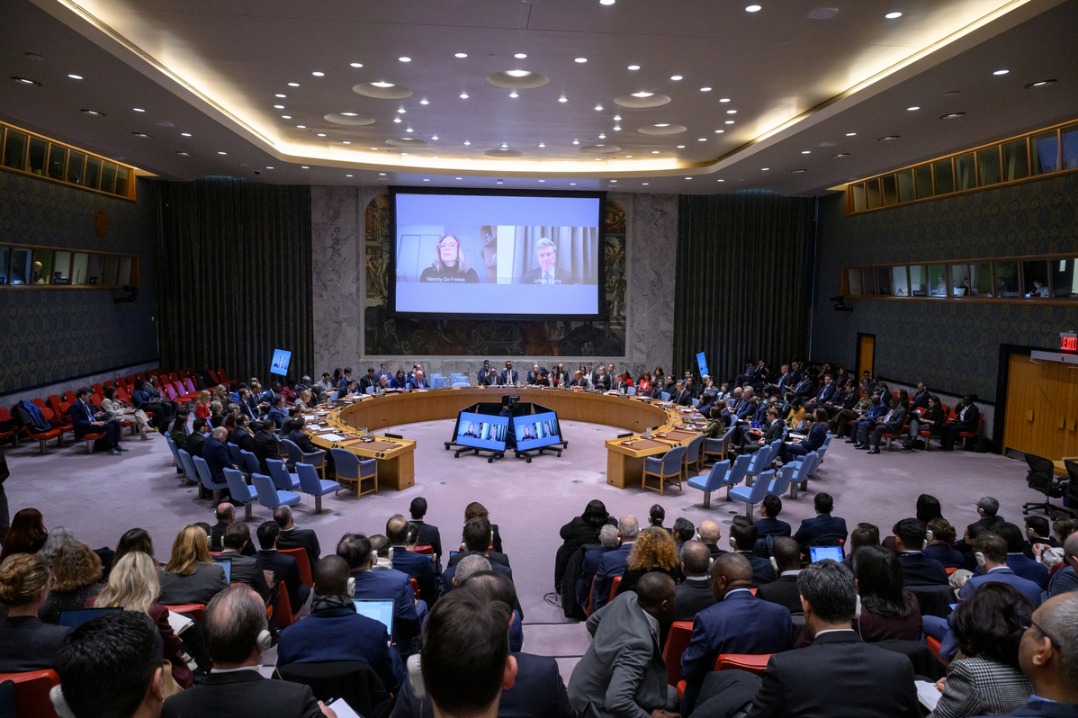
    The United Nations Security Council convened its inaugural 2026 session amidst unprecedented diplomatic turmoil, as numerous member states delivered scathing condemnations of the United States’ military operation in Venezuela. The emergency meeting witnessed a remarkable display of international unity against what multiple diplomats characterized as a flagrant violation of established international law and the UN Charter.

    China’s Deputy Permanent Representative to the UN, Sun Lei, articulated the position of many nations when he denounced the American strike as “unilateral, illegal and bullying acts” that represented a dangerous escalation in hemispheric relations. The Chinese diplomat emphasized that Washington had effectively “placed its own power above multilateralism and military actions above diplomatic efforts,” creating grave implications for regional stability throughout Latin America and the Caribbean.

    The controversy stems from Saturday’s large-scale US military operation that resulted in the capture and extradition of Venezuelan President Nicolas Maduro, who subsequently appeared in a New York federal court facing narco-terrorism charges. While US representatives defended the action as a “surgical law enforcement operation,” the overwhelming majority of Security Council members rejected this characterization.

    Russia’s UN Ambassador Vassily Nebenzia joined China in demanding Maduro’s immediate release, labeling the American intervention a “crime cynically perpetrated” that signaled a return to an era of “lawlessness.” This perspective found support across geographical blocs, with representatives from Mexico, Chile, Spain, Brazil, South Africa, Pakistan, and the A3 group (Democratic Republic of Congo, Somalia, and Liberia) all expressing variations of the same fundamental objection: that democracy cannot be imposed through military coercion.

    Notably, US economist Jeffrey Sachs provided expert testimony condemning the operation as violating Article 2, Section 4 of the UN Charter. Sachs contextualized the intervention within a historical pattern of American “covert regime change” operations, citing documentation of approximately 70 such operations between 1947 and 1989 alone.

    The emergency session revealed a stark division between the United States and its few supporters—including Argentina, which framed the operation as anti-narco-terrorism enforcement—versus the majority of international community that viewed the action as establishing a dangerous precedent for unilateral military interventions against sovereign nations.

  • Record commodity prices lift Australian sharemarket

    Record commodity prices lift Australian sharemarket

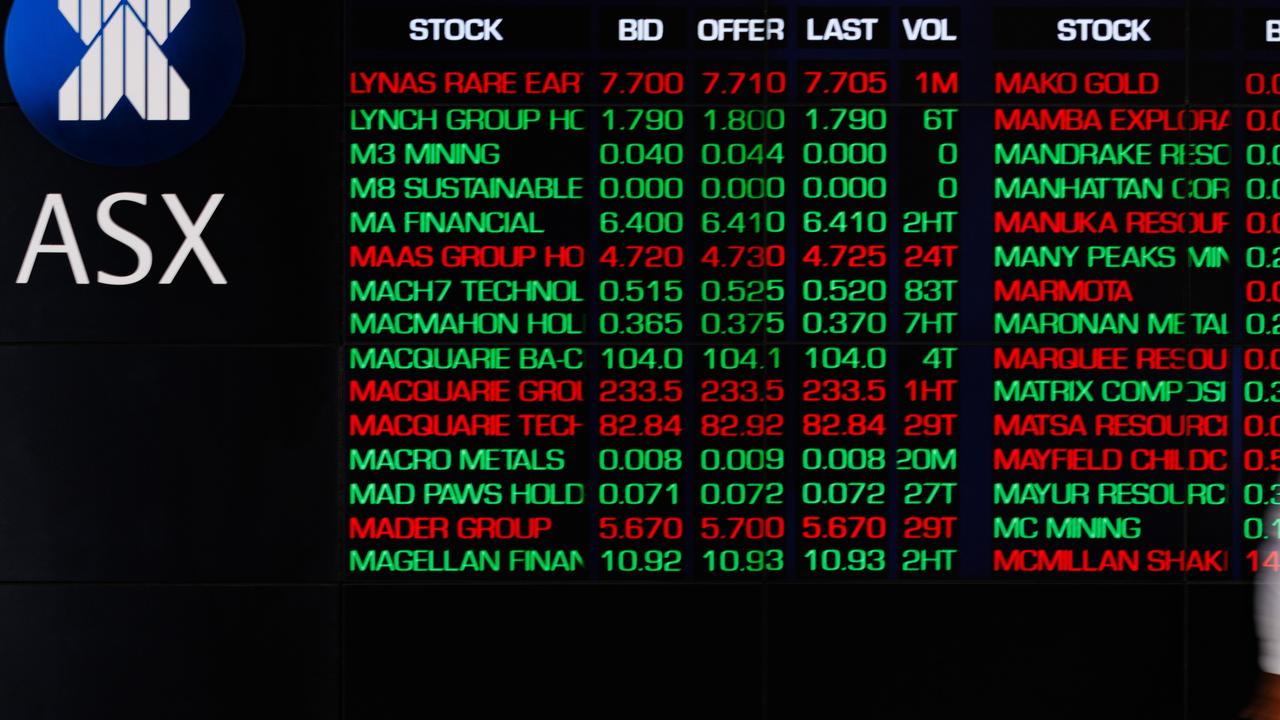
    Australia’s equity markets closed higher on Wednesday, propelled by a dual catalyst of record-breaking commodity prices and a more favorable than anticipated inflation report. The benchmark S&P/ASX 200 index advanced by 12.80 points, a gain of 0.15 percent, to settle at 8695.60. The broader S&P/ASX All Ordinaries index also climbed, adding 21.10 points, or 0.23 percent, to finish the session at 9018 points.

    The day’s rally was largely sector-driven, with eight out of eleven industry sectors finishing in positive territory. The materials sector emerged as a primary engine of growth, fueled by historic surges in key commodity markets. Copper prices on the London Metal Exchange shattered records, escalating by 1.8 percent to surpass $US13,300 per tonne. Concurrently, nickel reached a significant 15-month peak, trading above $US18,000 per tonne. This bullish sentiment propelled major mining giants; BHP Group ascended 1.02 percent to $47.70, and Rio Tinto gained 1.62 percent, closing at $154.73.

    Gold miners also experienced substantial upward momentum as the precious metal’s price, a traditional safe-haven asset, breached $US4,495 per ounce. Leading the charge, Newmont Corporation’s stock jumped 2.75 percent to $158.50. Evolution Mining and Northern Star Resources followed suit, rising 1.33 percent and 0.83 percent, respectively.

    These gains, however, were partially offset by notable declines in the energy and financial sectors. Energy stocks led the market’s losses as Brent crude oil prices dipped one percent to $US60.22 a barrel. Woodside Energy shares fell 2.81 percent, while Santos and Ampol declined 2.95 percent and 2.34 percent, respectively. The ‘Big Four’ banks also exerted downward pressure on the index. This sell-off was triggered by shifting market expectations regarding interest rates, following the latest inflation data.

    The Australian Bureau of Statistics reported that the nation’s headline annual inflation rate moderated to 3.4 percent for the year to November, down from 3.8 percent. More critically, the trimmed mean inflation rate—a key measure closely watched by the Reserve Bank of Australia (RBA) as it excludes volatile items—eased to 3.2 percent from 3.3 percent. AMP Deputy Chief Economist Diana Mousina attributed this cooling to aggressive discounting during Black Friday sales, particularly in footwear, accessories, and furniture. She noted that the RBA’s upcoming February meeting remains a ‘live’ event, with the decision on a potential rate hike being too close to call.

    In corporate developments, Lynas Rare Earths witnessed a spectacular surge of 14.52 percent following news of China’s ban on rare earth shipments. Respiratory imaging firm 4DMedical also saw its shares soar nearly 12 percent after announcing a new commercial agreement with UC San Diego Health.

  • Rare Iron Age war trumpet and boar standard found

    Rare Iron Age war trumpet and boar standard found

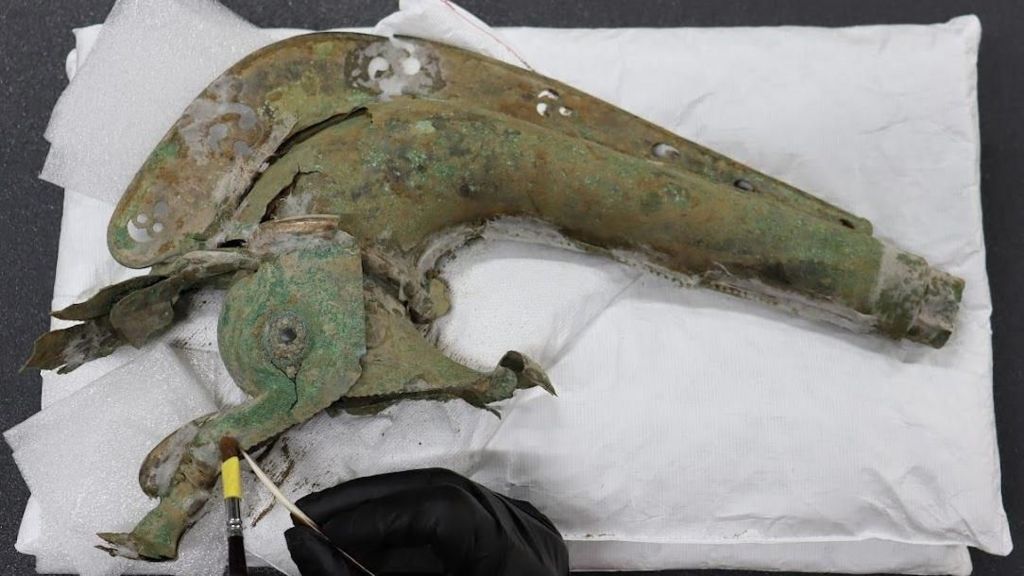
    Archaeologists have unearthed what they describe as a “once-in-a-lifetime discovery” in a Norfolk field near Thetford—an extraordinary Iron Age hoard containing two of Britain’s rarest archaeological artifacts found together for the first time. The excavation team from Pre-Construct Archaeology made the groundbreaking discovery during routine work on a construction site last year, uncovering Europe’s most complete carnyx (a ceremonial war trumpet) and Britain’s first-ever boar’s head flag standard.

    The carnyx represents an unprecedented find with its pipe, mouthpiece, and bell all remarkably intact after approximately 2,000 years underground. Crafted from extremely thin sheets of metal that have become exceptionally brittle over centuries, the instrument has been preserved with what conservator Jonathan Carr describes as “a wonderful little eye, which is a remarkable survivor.” This specimen joins only two other carnyces previously discovered in Britain.

    Equally significant is the boar’s head standard, created from sheet bronze and serving as a military rallying point during battle. The boar held profound symbolic meaning for Iron Age warriors, representing ferocity and strength in combat. Dr. Fraser Hunter, Iron Age and Roman curator at National Museums Scotland, emphasized that “the full research and conservation of these incredibly fragile remains will reshape our view of sound and music in the Iron Age.

    The hoard, dating between 50 BC and AD 50, additionally contained five shield bosses and an iron object of unknown origin. Its connection to the Iceni tribe—the Celtic community famously led by Queen Boudica in her rebellion against Roman occupation—adds historical significance to the discovery. Carnyces were particularly feared by Roman forces, who frequently depicted them as war trophies in their art.

    Following meticulous excavation, the artifacts were carefully lifted from the earth in a soil block and underwent advanced scanning to determine their precise positioning before conservation began. The discovery has been reported to the coroner for a treasure inquest, with Historic England coordinating research efforts alongside Norfolk Museums Service and the National Museum of Scotland. The find will be featured on BBC Two’s Digging for Britain, offering the public an unprecedented glimpse into Iron Age warfare and ceremonial practices.

  • ‘Dark days’: Storm provide Eli Katoa update following encouraging training scenes

    ‘Dark days’: Storm provide Eli Katoa update following encouraging training scenes

    Melbourne Storm officials have provided a significant update regarding injured forward Eli Katoa’s rehabilitation journey after the player was observed participating in limited training activities this week. The club’s director of football, Frank Ponissi, has tempered expectations despite encouraging social media footage showing Katoa engaging in ball work, running exercises, and stationary cycling.

    Katoa’s medical situation stems from a traumatic incident during Tonga’s Test match against New Zealand in November 2025, where the elite edge forward sustained three separate head impacts within a devastating 90-minute window. The severity of his injuries culminated in seizure activity on the bench, necessitating emergency neurosurgery to alleviate intracranial pressure followed by a two-week hospitalization in Auckland.

    The Storm organization had previously announced on November 18, 2025, that Katoa would be unavailable for the entire 2026 season due to the nature of his injuries. While his recent appearance at training has generated optimism among supporters, club management emphasizes that his rehabilitation remains in early stages with numerous medical milestones yet to be achieved.

    Ponissi highlighted the psychological benefits of Katoa’s gradual reintegration into team environments, noting that being around teammates has significantly improved the player’s mental wellbeing following what he described as ‘some dark days’ during recovery. The club has implemented a strictly regulated training regimen specifically tailored to Katoa’s current capabilities, prioritizing long-term health outcomes over competitive timelines.

    Medical professionals maintain their original assessment regarding competitive readiness, but the organization remains committed to supporting Katoa’s holistic recovery through controlled involvement with team activities. This approach balances physical rehabilitation with crucial psychological support mechanisms during what Ponissi characterized as ‘a long, long journey’ ahead for the celebrated Dally M Second-Rower of the Year.

  • Bondi hero Gefen Bitton who tried to stop gunman during terror attack given Australian residency while recovering in hospital

    Bondi hero Gefen Bitton who tried to stop gunman during terror attack given Australian residency while recovering in hospital

    In a powerful recognition of extraordinary courage, Israeli national Gefen Bitton has been granted permanent residency in Australia as he continues to recover from severe injuries sustained during December’s Bondi Beach terror attack. Bitton, who confronted armed assailants alongside fellow hero Ahmed Al-Ahmed, remains hospitalized with multiple gunshot wounds sustained during his selfless intervention.

    The horrific incident unfolded on December 14th when Sajid Akram, 50, and his son Naveed, 24, allegedly opened fire on members of the Jewish community gathered for Chanukah by the Sea celebrations. The attack resulted in 15 fatalities, including 10-year-old Matilda, and left dozens injured amidst chaotic scenes as hundreds attempted to flee the violence.

    Despite having initially reached safety, Bitton made the conscious decision to return toward the gunfire when he identified the ongoing threat. Surveillance footage captured his courageous advance alongside Al-Ahmed, who ultimately disarmed one of the attackers. During this confrontation, Bitton sustained three gunshot wounds at close range, including facial injuries that required immediate surgical intervention.

    The residency grant, reported by multiple outlets though not officially confirmed by the Department of Home Affairs, ensures Bitton will have access to Australia’s Medicare system and can permanently reside and work in the country. This administrative recognition coincides with substantial public support demonstrated through a GoFundMe campaign organized by friend Cayli Barr, which has raised over $724,000 for Bitton’s medical expenses and rehabilitation.

    Currently in intensive care, Bitton shows daily incremental improvements according to medical staff and loved ones. His actions have been characterized by friends as reflecting deeply ingrained values of selflessness and protection of others, with Barr noting that he ‘ran into the face of danger like only a hero does’ despite being an unarmed civilian.

    The alleged perpetrators faced immediate consequences following the attack, with Sajid Akram fatally shot by police response teams and Naveed Akram currently detained at Goulburn Supermax prison facing 50 criminal charges including 15 counts of murder.

  • Trump weighs options to acquire Greenland including use of US military: White House

    Trump weighs options to acquire Greenland including use of US military: White House

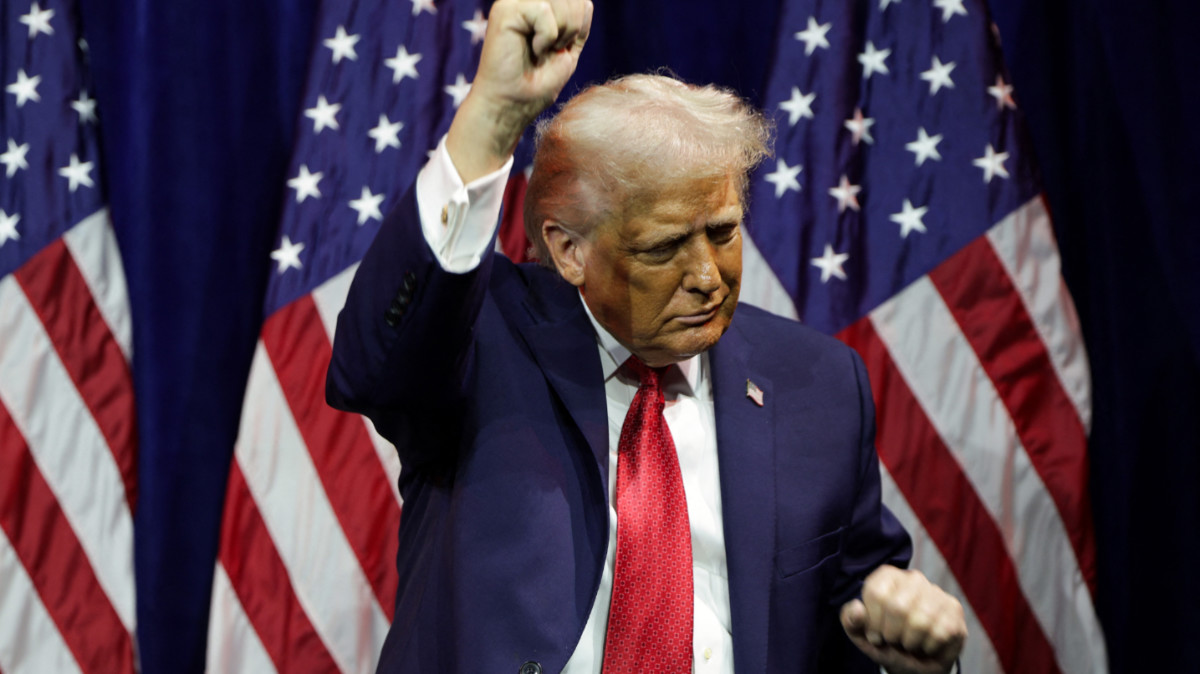
    The White House has officially acknowledged that the Trump administration is conducting a comprehensive assessment of potential mechanisms to acquire Greenland from Denmark, with Press Secretary Karoline Leavitt confirming the evaluation includes the possible utilization of U.S. military resources. This unprecedented territorial consideration represents one of the most unconventional geopolitical maneuvers in recent American foreign policy.

    The strategic evaluation, which Leavitt described as encompassing “a range of options,” signals a serious governmental exploration rather than mere speculative discussion. The inclusion of military considerations within this assessment framework suggests the administration views Greenland’s acquisition as a matter of national security significance, potentially relating to its strategic Arctic positioning and abundant natural resources.

    This development emerges against the backdrop of increasing global competition for influence in the Arctic region, where melting ice caps are opening new shipping routes and access to previously inaccessible mineral deposits. Greenland’s geographical location offers substantial strategic advantages for whichever nation controls its territory, particularly as Arctic resources become increasingly viable for extraction.

    The confirmation from the White House press secretary elevates what might otherwise be considered diplomatic speculation to the level of formal policy consideration, indicating the administration’s serious commitment to exploring all avenues for expanding U.S. territorial holdings through unconventional means.

  • Trump’s Venezuela oil gambit depends on a ‘swashbuckling’ attitude the market lacks

    Trump’s Venezuela oil gambit depends on a ‘swashbuckling’ attitude the market lacks

    The geopolitical strategy currently being deployed by the Trump administration toward Venezuela reflects a distinct fusion of two pivotal historical moments that transformed global oil markets: the dissolution of the Soviet Union in the 1990s and the U.S. invasion of Iraq in 2003. President Trump’s approach to seizing control of Venezuela’s substantial oil reserves demonstrates an attempt to synthesize elements from both eras while crafting a new foreign policy doctrine.

    Historical analysis reveals that following the Soviet collapse, American energy corporations, speculators, and diplomats aggressively pursued oil wealth in newly independent Caspian states like Kazakhstan and Azerbaijan. These nations, governed by former communist insiders, offered favorable terms to Western companies. The Trump administration appears to envision a similar scenario in Venezuela, proposing that U.S. energy firms would invest billions to rehabilitate the country’s crippled oil infrastructure while generating substantial profits.

    However, energy experts and industry analysts express significant skepticism about this strategy. Steve LeVine, author of ‘The Oil and the Glory,’ notes that major petroleum companies show little enthusiasm for returning to the high-risk adventurism that characterized the post-Soviet era. Despite Venezuela possessing the world’s largest proven oil reserves, the complex political reality presents formidable obstacles unlike the relatively welcoming environment that followed the Soviet disintegration.

    The administration’s plan reportedly involves collaborating with remnants of President Maduro’s government, particularly Vice President Delcy Rodríguez, to maintain stability and resume oil production. This approach notably diverges from the Iraq model where the U.S. dismantled the existing power structure through de-Baathification, which resulted in prolonged instability.

    Technical challenges further complicate Venezuela’s oil potential. The country’s heavy crude requires expensive, labor-intensive extraction and specialized refining capacity—contrasting sharply with Iraq’s light, easily accessible oil. Venezuela’s production has plummeted from approximately 3 million barrels daily in the late 1990s to just 800,000 barrels currently, following decades of underinvestment, mismanagement, and sanctions.

    Financial analysts estimate that revitalizing Venezuela’s oil sector would require approximately $100 billion in investments—a substantial commitment at a time of conservative oil demand projections and low global prices. The emergence of U.S. shale production has additionally reduced the imperative for American companies to pursue risky international ventures, as domestic opportunities offer more stable returns with fewer geopolitical complications.

    Market realities further undermine the strategy’s viability. With OPEC members increasing production and global markets well-supplied, the necessity for massive Venezuelan output remains questionable. Industry experts suggest that rather than dramatically boosting production, the administration’s primary objective may be establishing control over Venezuela’s resources as a strategic asset, with modest production increases representing a more plausible outcome.