作者: admin

  • Switzerland mourns Crans-Montana fire tragedy

    Switzerland mourns Crans-Montana fire tragedy

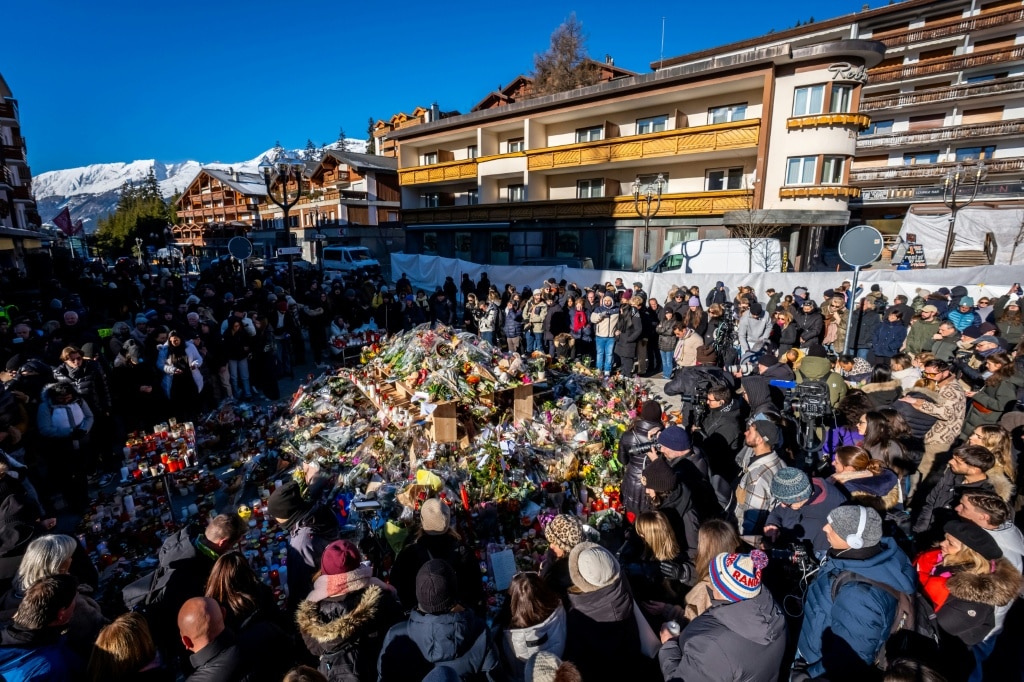
    The Swiss nation stands united in grief as it commemorates a national day of mourning for the 40 lives lost in the devastating New Year’s Eve fire at the Le Constellation nightclub in Crans-Montana. The Alpine country will observe a minute of silence at 2:00 PM local time (1300 GMT) on Friday, followed by a nationwide chorus of church bells, in solidarity with the victims’ families and the 116 injured survivors.

    President Guy Parmelin has characterized the tragedy as among the worst in Switzerland’s history. A memorial ceremony will be held in Martigny, approximately 50 kilometers from the disaster site, with live broadcasts to screens throughout the snowbound resort town. International dignitaries from France, Italy, Belgium, Luxembourg, Serbia, and the European Union will join Swiss officials in paying respects to victims representing 19 different nationalities.

    The tragedy has revealed alarming safety oversights, with authorities acknowledging no fire inspections had occurred at the establishment since 2019. Prosecutors indicate the blaze originated when champagne bottles equipped with sparklers ignited highly flammable soundproofing foam on the ceiling, potentially causing a flashover that trapped numerous young patrons. Disturbing footage has emerged showing desperate escape attempts through broken windows.

    Half of those killed were minors under 18, some as young as 14. Of the injured, 83 remain hospitalized with severe burns requiring specialized care across Switzerland and abroad. The bar owners, Jacques and Jessica Moretti, face charges of negligent manslaughter, bodily harm, and arson. While not detained, they have pledged full cooperation with investigators amid questions about safety standards and the presence of numerous minors at the event.

    Compounding the tragedy, evidence suggests awareness of the fire risk existed years prior. A 2019 video released by Swiss broadcaster RTS shows a staff member warning about the dangerous foam during similar celebrations, indicating what legal representatives for affected families call ‘staggering’ prior knowledge of the hazard.

  • How Oman went from mediator to silent Saudi partner in Yemen fight

    How Oman went from mediator to silent Saudi partner in Yemen fight

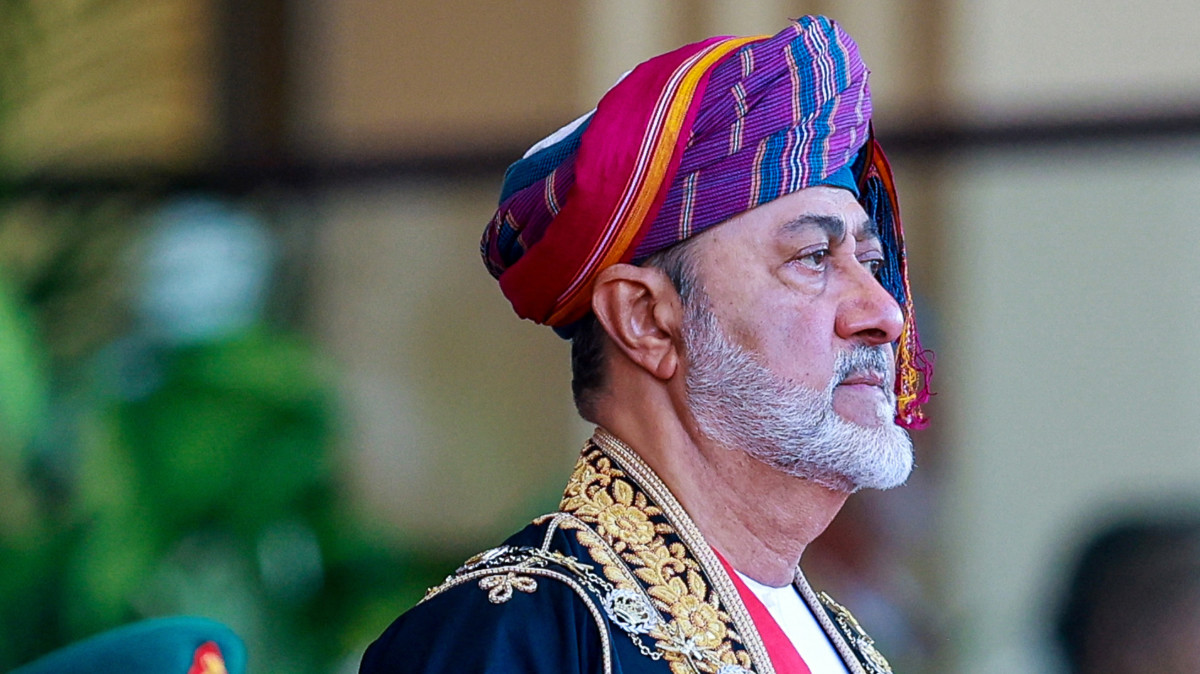
    In a significant departure from its traditionally neutral foreign policy, Oman has engaged in covert military cooperation with Saudi Arabia to counter UAE-backed separatist advances in Yemen’s strategic al-Mahra region, according to diplomatic sources and regional analysts.

  • Record low birthrate, slowing migration to stall Australia’s population growth as country nears 28 million

    Record low birthrate, slowing migration to stall Australia’s population growth as country nears 28 million

    Australia stands poised to achieve a significant demographic landmark by mid-2024, with official projections indicating the national population will exceed 28 million for the first time. This development emerges against a backdrop of concerning demographic trends, including record-low birth rates and substantially reduced migration levels.

    The Centre for Population’s latest data reveals Australia’s growth rate has declined to 1.3 percent, marking the slowest pace in the nation’s modern history. This represents a notable decrease from the previous year’s 1.5 percent growth rate. The demographic slowdown stems from two primary factors: a dramatic reduction in net overseas migration and a continuing decline in fertility rates.

    Migration patterns have shifted significantly since the post-pandemic reopening, with net overseas migration projected to fall to approximately 260,000 by 2026—less than half the arrivals recorded during the 2022-2023 financial year. This substantial decrease primarily results from fewer temporary migrants entering on student and visitor visas. Nick Latimer, Executive Director of the Centre for Population, acknowledged the ongoing challenges in migration forecasting following the COVID-19 pandemic, noting that ‘significant uncertainty remains’ despite some aspects returning to conventional patterns.

    Concurrently, Australia’s fertility rate continues its downward trajectory, expected to reach a historic low of 1.42 children per woman—well below the replacement rate of 2.1 that has remained unattained for nearly five decades. Treasurer Jim Chalmers recognized this trend as part of a broader international pattern, while highlighting government initiatives designed to support families, including enhancements to early education systems and expanded paid parental leave provisions.

    Regional variations in population growth present another dimension to Australia’s demographic landscape. Western Australia anticipates the highest growth rate at 1.8 percent, while Tasmania projects minimal growth at just 0.1 percent. Major urban centers Sydney and Melbourne are both forecast to reach 8 million residents by 2050.

    Offsetting these demographic challenges, Australians are experiencing increased life expectancy, with women projected to live until 87.1 years and men until 83.4 years by 2035-2036. This aging population presents both budgetary pressures and unique advantages. Treasurer Chalmers identified population aging as one of five major forces reshaping Australia’s economy, noting increased demand for healthcare and aged care services while emphasizing that Australia’s working-age population will continue growing even as 80 percent of OECD countries face declines by the mid-2060s.

  • US Senate advances measure to curb Trump’s war-making powers on Venezuela

    US Senate advances measure to curb Trump’s war-making powers on Venezuela

    In a significant bipartisan move, the U.S. Senate advanced a measure on Thursday to curtail President Donald Trump’s autonomous war-making powers concerning Venezuela. The procedural vote passed 52-47, with five Republican senators breaking ranks to support the Democratic-led initiative.

    The resolution, championed by Democratic Senator Tim Kaine and Libertarian Republican Rand Paul, invokes the 1973 War Powers Act. This legislative maneuver enables any senator to propose the withdrawal of U.S. armed forces from conflicts lacking explicit congressional authorization. The move comes amid heightened tensions following recent U.S. military operations in Venezuela that resulted in approximately 80 casualties and the controversial abduction of President Nicolas Maduro.

    Senator Kaine articulated the resolution’s urgency in a social media statement: ‘For God’s sake, let’s not let Trump wage war all over the world without us.’ His sentiment reflects growing congressional concern over executive overreach in military matters, particularly since the post-9/11 era enabled presidents to conduct strikes from Somalia to Pakistan without formal war declarations.

    The vote revealed remarkable political dynamics, with traditionally pro-Trump Republicans like Josh Hawley supporting the measure. Hawley justified his vote constitutionally, stating that future military deployment to Venezuela would require congressional approval. This defiance prompted immediate retaliation from Trump, who threatened electoral opposition against the dissenting Republicans through his TruthSocial platform.

    The advocacy group Demand Progress hailed the development as ‘a rare ray of good news for the nation and our Constitution,’ emphasizing public opposition to unauthorized military engagements. The resolution now moves toward an official Senate vote next week, after which it would face the Republican-controlled House. This action follows last year’s failed attempt by Kaine to restrict U.S. strikes in the Caribbean, which resulted over 100 fatalities despite unsubstantiated White House claims about drug trafficking.

  • Candace Owens Australian tour promoter liquidated as fans wait over a year for refunds

    Candace Owens Australian tour promoter liquidated as fans wait over a year for refunds

    Australian consumers who purchased tickets for conservative commentator Candace Owens’ canceled tour now face near-certain financial losses following the formal liquidation of the promoting company. Rocksman, the Australian-based promoter responsible for organizing Owens’ scheduled 2024 speaking engagements across Australia and New Zealand, has ceased operations after entering insolvency proceedings in December.

    The financial collapse stems directly from Immigration Minister Tony Burke’s decision to deny Owens entry to Australia weeks before her planned appearances. Government officials expressed concerns that the controversial commentator’s presence could potentially incite public discord. Owens’ subsequent legal challenge ultimately failed when Australia’s High Court upheld the ministerial ruling in October 2024.

    Rocksman’s financial situation deteriorated rapidly following the visa denial. Company representatives acknowledged that significant upfront investments had been made with revenue contingent upon the events actually occurring. Combined with existing tax liabilities, the cancellation created insurmountable financial pressure that forced the company into liquidation.

    Corporate filings reveal Rocksman owes $68,395.54 to the Australian Taxation Office while possessing minimal recoverable assets beyond a bank account of undisclosed value. David Sampson, the appointed liquidator from BPS Resolved, has explicitly warned ticket holders that recouping their investments appears highly improbable given the company’s financial position.

    Consumer protection agencies across New South Wales, Queensland and New Zealand have reported numerous complaints from disappointed fans who purchased tickets starting at $95. Despite previous assurances that refunds would be processed by November’s end, no repayments have materialized for most purchasers.

    Minister Burke defended the visa decision this week, suggesting Owens should have delayed ticket sales or implemented more robust refund policies. The Immigration Minister remarked that Owens had ‘treated her own supporters with contempt’ through the handling of the canceled events.

  • Asian shares rise and US futures are flat after modest Wall Street moves

    Asian shares rise and US futures are flat after modest Wall Street moves

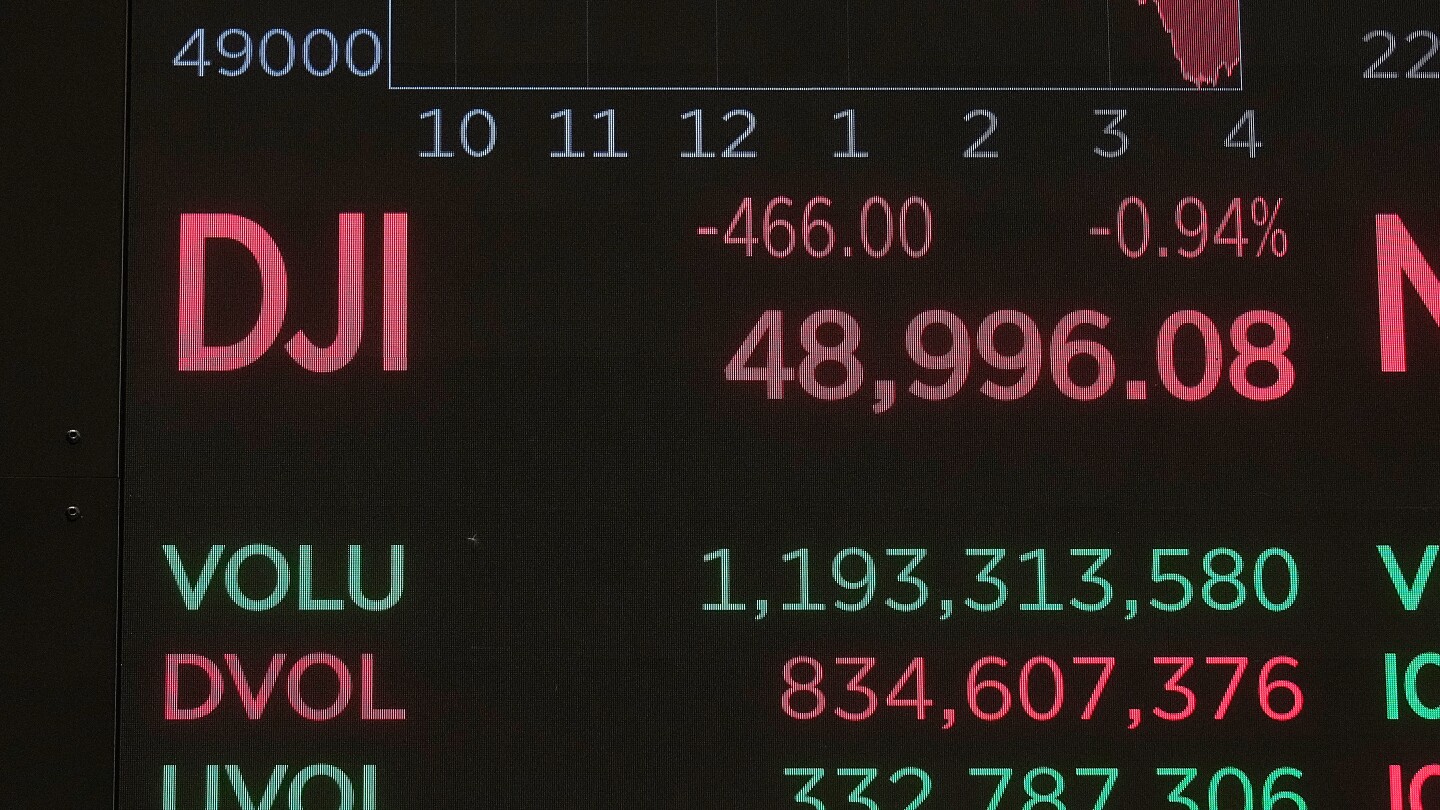
    Asian equity markets demonstrated broad-based gains on Friday, propelled by a confluence of factors including robust corporate earnings and anticipatory sentiment surrounding U.S. policy developments. The trading session reflected a cautiously optimistic regional outlook, diverging from the previous day’s mixed performance on Wall Street.

    Japan’s Nikkei 225 index emerged as a standout performer, advancing 1.1% to close at 51,692.70. This surge was significantly driven by exceptional results from Fast Retailing, the parent company of global apparel brand Uniqlo. The retailer’s shares skyrocketed over 7% following the announcement of a remarkable 34% year-on-year increase in quarterly operating profit, prompting an upward revision of their full-year financial forecasts.

    Chinese markets posted modest gains with the Hang Seng Index in Hong Kong edging up 0.1% to 26,158.21, while the Shanghai Composite rose 0.3% to 4,095.33. This upward momentum coincided with the release of official data indicating China’s inflation rate accelerated in December at its fastest pace in nearly three years, signaling strengthening domestic demand that typically exerts upward pressure on consumer prices.

    In a notable market debut, Chinese artificial intelligence firm MiniMax experienced a spectacular initial public offering on the Hong Kong Stock Exchange, with shares surging more than 50% during early trading sessions, highlighting robust investor appetite for technology innovations.

    Meanwhile, Australia’s S&P/ASX 200 bucked the regional trend, dipping marginally by less than 0.1% to 8,715.60. This slight decline was largely attributed to a significant 6% drop in Rio Tinto shares following the mining giant’s confirmation of preliminary merger discussions with Glencore. A potential consolidation between these industry behemoths could potentially create the world’s largest mining conglomerate.

    Other regional indices including South Korea’s Kospi and Taiwan’s Taiex posted gains of 0.7% and 0.3% respectively, contributing to the overall positive Asian market performance.

    Market participants maintained heightened attention toward impending U.S. economic indicators, particularly the Labor Department’s December jobs report scheduled for release. Additionally, investors awaited a potential Supreme Court ruling on former President Trump’s proposed ‘Liberation Day’ tariffs, which could substantially influence market sentiment.

    The previous trading session on Wall Street witnessed significant rallies within the defense sector following statements from former President Trump advocating for increased military spending, potentially reaching $1.5 trillion by 2027. Major defense contractors including L3Harris Technologies, Lockheed Martin, and Northrop Grumman recorded substantial gains of 5.2%, 4.3%, and 2.4% respectively.

    In commodity markets, oil prices experienced upward movement amid ongoing supply concerns following geopolitical developments in Venezuela. Benchmark U.S. crude rose by 35 cents to $58.11 per barrel, while international standard Brent crude gained 38 cents to $62.37. These price increases occurred against a backdrop of continued U.S. efforts to assert control over Venezuela’s substantial oil resources, including recent seizures of tankers attempting to evade sanctions.

    Currency markets saw the U.S. dollar strengthen against the Japanese yen, rising to 157.27 yen, while the euro experienced a slight decline against the dollar to $1.1656.

  • Russia bombards Kyiv after rejecting peacekeeping plan

    Russia bombards Kyiv after rejecting peacekeeping plan

    In a significant escalation of hostilities, Russian forces launched a massive aerial bombardment against Ukraine’s capital city of Kyiv early Friday, resulting in multiple casualties and widespread destruction. The assault, which involved drone strikes and missile attacks, killed at least four civilians and injured 19 others according to Mayor Vitali Klitschko, who described the offensive as a ‘massive enemy missile attack’ that left several neighborhoods without power.

    The intensified military action follows Moscow’s categorical rejection of a Western-backed security agreement proposed during the Paris Summit earlier this week. Russian foreign ministry spokeswoman Maria Zakharova explicitly warned that any Western troops stationed in Ukraine would be considered ‘legitimate military targets,’ characterizing the coalition between Ukraine and its allies as an ‘axis of war.’

    Simultaneously, Russian forces continued their advance in eastern regions, claiming capture of additional territory in the Dnipropetrovsk area. The conflict reached new technological thresholds with reports of hypersonic ballistic missiles traveling at approximately 13,000 kilometers per hour striking infrastructure near the Polish border, though authorities confirmed radiation levels remained normal despite concerns about weapon types.

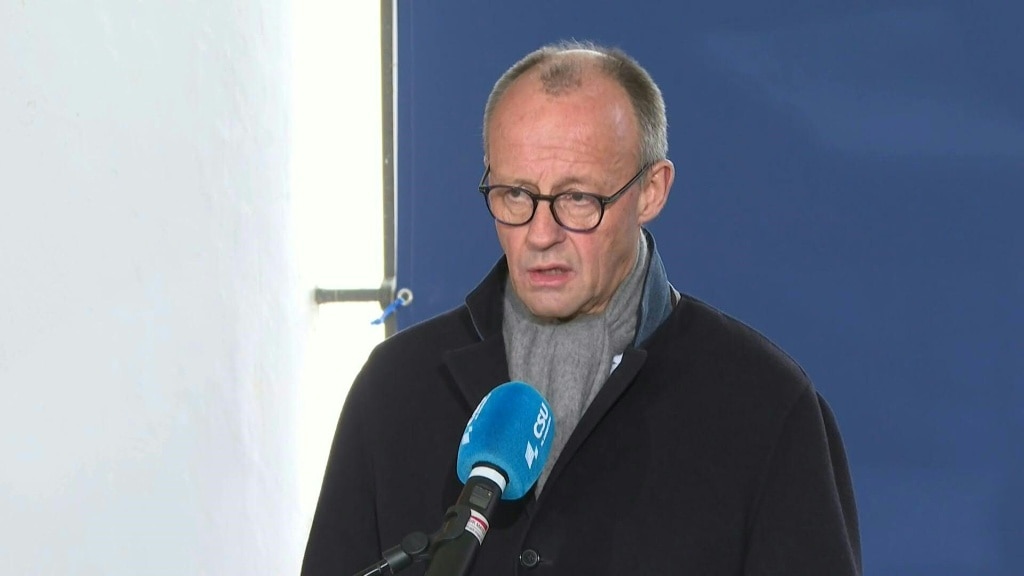
    As diplomatic efforts stall, German Chancellor Friedrich Merz acknowledged that a ceasefire agreement remains ‘quite far’ from realization due to Russia’s uncompromising position on territorial demands, including full control of the Donbas region. The ongoing assaults have created a national emergency with hundreds of thousands of households facing energy shortages during winter conditions, particularly in the Dnipropetrovsk and Zaporizhzhia regions where critical infrastructure has been systematically targeted.

  • One dead, 38 missing after massive landfill collapses in Philippines

    One dead, 38 missing after massive landfill collapses in Philippines

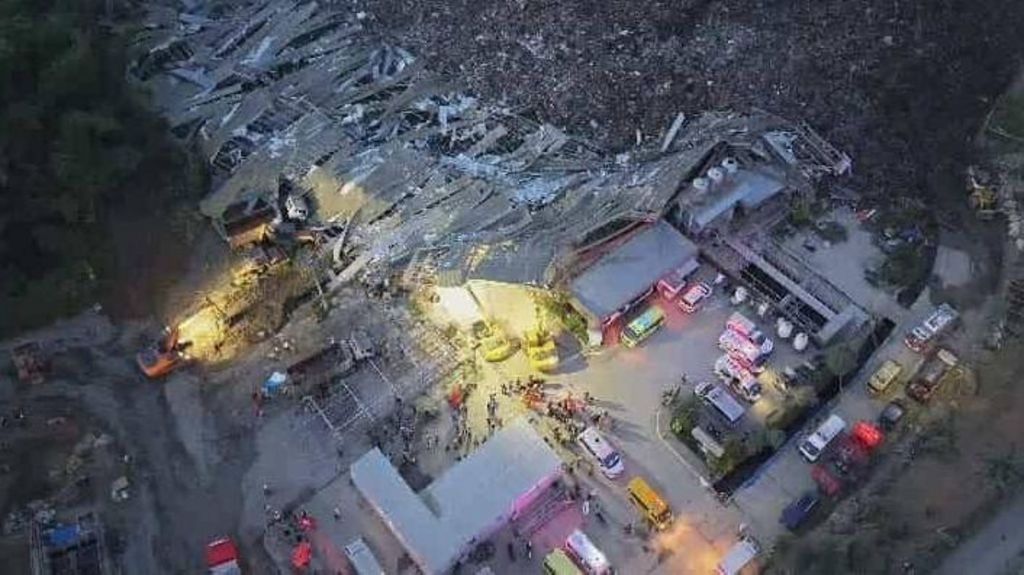
    Emergency response teams are engaged in a critical search operation following a catastrophic garbage landslide at a Philippine landfill that has left dozens missing and claimed at least one life. The incident occurred Thursday at the privately-operated Binaliw Landfill in Cebu City, where a massive section of waste suddenly gave way, burying workers beneath tons of debris.

    Authorities confirmed the death of a 22-year-old woman while 12 injured sanitation workers were successfully extracted from the rubble and hospitalized. Thirty-eight individuals remain unaccounted for as rescue efforts intensify, with approximately 300 personnel from multiple government agencies and civilian groups deployed to the scene. Heavy machinery including excavators, alongside ambulances and fire trucks, are visible throughout the operational area.

    Cebu City Councillor Joel Garganera pointed to fundamental flaws in waste management practices as the likely cause, revealing to local publication The Freeman that operators had been engaged in dangerous soil mining operations. “They’ve been cutting into the mountain, mining the soil, and then piling garbage to form another mountain of waste,” Garganera stated, adding that the facility had degenerated from a sanitary landfill into “an open dumpsite.”

    The 10-hectare (25-acre) Binaliw facility serves as a crucial waste management site for Cebu, the primary trading hub and transportation gateway for the Visayas region in the central Philippines. Such landfills represent common infrastructure across major Philippine urban centers, though questions about operational safety standards have emerged following this tragedy.

    Cebu Mayor Nestor Archival confirmed via social media that all response teams “remain fully engaged in search and retrieval efforts” as the operation enters its most critical phase. While the exact trigger mechanism for the collapse remains under investigation, the incident has highlighted persistent challenges in waste management infrastructure across rapidly developing urban centers in the Philippines.

  • ‘I feel that now’: Coco Gauff reveals key mindset change in ominous warning to her rivals

    ‘I feel that now’: Coco Gauff reveals key mindset change in ominous warning to her rivals

    World No. 4 tennis prodigy Coco Gauff is approaching the Australian Open with a formidable new asset: supreme self-assurance. The 21-year-old American sensation has declared her current training sessions to be the finest of her career, instilling in her the conviction that she can triumph over any opponent on the global stage—a sentiment she admits was absent just twelve months ago.

    Gauff’s revelation comes amid a mixed campaign with Team USA at the United Cup in Sydney, where they have advanced to the semi-finals with a chance to defend their title. Fresh off a decisive straight-sets victory over Greece’s Maria Sakkari, which countered a surprising loss in her previous match, Gauff is sharpening her skills for the first Grand Slam of the year.

    Reflecting on her evolution, Gauff emphasized her personal growth and adaptive mindset. Following an intense practice session at Ken Rosewall Arena, she explained, ‘I approach each year differently because I’m growing as a person. I learn from the previous year and try to adjust, but the core principle now is trusting the process and the work I’ve put in.’

    This renewed mentality marks a significant shift from 2023, a season of contrasts that included a spectacular French Open victory but also early exits at Wimbledon and the US Open. Now, with a refined perspective and powerful game, Gauff aims to set a dominant tone for her entire season starting with the United Cup finals and extending into the Australian Open, where she is projected to be a top contender.

  • Filipino Catholics express outrage over corruption scandal during massive religious procession

    Filipino Catholics express outrage over corruption scandal during massive religious procession

    MANILA, Philippines — A sea of predominantly barefoot Catholic devotees engulfed the streets of Manila on Friday during the annual procession of the revered Jesus the Nazarene statue, transforming one of Asia’s most significant religious gatherings into a platform for expressing public fury over an extensive corruption scandal involving influential lawmakers.

    The centuries-old wooden effigy, ceremoniously placed upon a four-wheel carriage after a midnight mass attended by tens of thousands at a seaside park, embarked on its traditional 6-kilometer journey through Manila’s congested thoroughfares. Manila Mayor Isko Moreno projected participation would reach millions throughout the day and night, creating both a spiritual spectacle and a formidable security challenge for authorities.

    Security forces deployed approximately 15,000 police officers supplemented by intelligence personnel to maintain order. Stringent measures included firearms and alcohol prohibitions, drone and backpack bans, and cellular signal jamming along the procession route. Medical teams from government and Red Cross agencies established first-aid stations throughout the area.

    This year’s event coincided with escalating public anger regarding a corruption scandal that emerged last year, implicating numerous House and Senate members accused of receiving substantial kickbacks from construction firms. The scheme involved thousands of substandard or entirely fictitious flood control projects in a nation notoriously vulnerable to catastrophic flooding.

    As devotees clad in maroon shirts jostled to touch the statue—believed to possess healing properties and the power to grant better health, employment, and prosperity—many incorporated political chants into their prayers. The rhythmic cry of “jail them now!” echoed through crowds, referencing President Ferdinand Marcos Jr.’s unfulfilled promise to incarcerate corrupt legislators by last Christmas.

    Bishop Rufino Sescon utilized his homily at Rizal Park to deliver a scathing critique of officials implicated in televised congressional hearings who have resisted resignation despite overwhelming public outrage. “Enough is enough. Have mercy on the people. Have some shame. Step down voluntarily in the name of mercy and love,” he declared.

    Sixty-two-year-old devotee Venus Lopez, carrying a replica statue, articulated similar sentiments: “I hope those corrupt government officials will go away. They don’t deserve to be seated in power.”

    The historical statue, adorned with thorns and bearing a cross, arrived in Manila via Spanish galleon from Mexico in 1606. Its survival of shipboard fires, earthquakes, and World War II bombings has fostered beliefs in its mystical resilience. The event exemplifies the distinctive Filipino Catholicism that blends orthodox tradition with folk superstitions, including the annual Good Friday practice of voluntary crucifixions.