作者: admin

  • Senate votes to curb president’s military action

    Senate votes to curb president’s military action

    In a significant bipartisan move, the US Senate has initiated proceedings to restrict presidential war powers following a controversial military operation in Venezuela. The procedural vote passed 52-47 on Thursday, with five Republican senators crossing party lines to support the measure championed by Democratic Senator Tim Kaine of Virginia.

    The resolution sets the stage for substantive debate next week that could compel President Donald Trump to seek congressional authorization for any sustained military engagement in Venezuela. The legislative action comes in direct response to last weekend’s unauthorized strike targeting Venezuelan President Nicolás Maduro, which Trump ordered without consulting Congress.

    Senator Kaine condemned the operation as “profoundly disrespectful to US troops, deeply unpopular, suspiciously secretive and likely corrupt” during floor debates. He emphasized constitutional requirements that mandate congressional approval for military actions, declaring the Venezuela intervention “clearly illegal.”

    Trump responded fiercely on his Truth Social platform, denouncing the Republican defectors and asserting that the vote “greatly hampers American self-defense and national security.” In a revealing interview with The New York Times, the president claimed his authority as commander-in-chief is limited only by his “own morality,” dismissing the relevance of international law.

    The Venezuela operation has sparked widespread domestic criticism beyond congressional chambers. Tom Watkins, a Michigan-based policy consultant, described the strike as fundamentally concerning “regime change, power, money, oil” rather than the officially stated objective of combating drug trafficking. Protesters across American cities have condemned the violation of Venezuelan sovereignty using taxpayer funds.

    Meanwhile, the White House has attempted to leverage the situation positively, claiming credit for Venezuela’s subsequent release of political prisoners. Deputy Press Secretary Anna Kelly framed this development as evidence of Trump “using maximum leverage to do right by the American and Venezuelan people.” Venezuelan officials meanwhile maintained their country remains unsubjugated to US pressure.

    The Senate’s war powers debate represents a constitutional confrontation that could redefine executive authority in military matters regardless of eventual passage.


  • Nevada eyes Chinese tech to diversify economy

    Nevada eyes Chinese tech to diversify economy

    In a strategic shift to redefine its economic identity beyond gaming and tourism, the state of Nevada is actively pursuing Chinese technology firms as cornerstone partners for its diversification agenda. The announcement came from Lieutenant Governor Stavros Anthony during the 2026 Consumer Electronics Show (CES) in Las Vegas, where he emphasized the state’s commitment to building a resilient, future-proof economy.

    Anthony articulated Nevada’s ambition to shed its singular association with casinos and entertainment, envisioning instead a hub for high-tech manufacturing, advanced logistics, healthcare innovation, and data center operations. This long-standing diversification effort has positioned Nevada as an attractive destination for global enterprises, with Chinese companies representing a significant focus due to their technological prowess.

    Chinese participation at CES 2026 demonstrated particular strength across transformative sectors including robotics, intelligent automotive systems, next-generation Mini LED and rollable OLED displays, AI integration, smart home ecosystems, and clean energy solutions—all areas aligning with Nevada’s developmental priorities.

    Notably, Nevada’s arid environment has accelerated its focus on sustainable technologies, making water conservation and energy efficiency critical components of its economic strategy. The state specifically welcomes Chinese investment in renewable energy and water-efficient development projects that support sustainable growth objectives.

    The historical context of Chinese contribution to Nevada’s development through mining and railroad construction establishes a foundation for contemporary economic partnerships. Currently, Nevada maintains substantial trade relations with China, serving as a major importer of Chinese electronics, machinery, and furniture products.

    Despite broader US-China trade tensions, Anthony reaffirmed Nevada’s openness to constructive economic collaboration, stating the state remains committed to global partnerships that deliver mutual economic benefits and technological advancement.

  • US children’s choir brings message of hope and unity

    US children’s choir brings message of hope and unity

    Amid Beijing’s winter chill, an American children’s choir delivered a powerful message of cross-cultural unity through music during their third consecutive New Year performance tour across China. The One Voice Children choir, comprising performers aged 5-18 from Utah, created warm connections with Chinese audiences through heartfelt performances that transcended language barriers.

    The ensemble’s journey included performances in multiple Chinese cities including Shanghai, Hangzhou, Shenzhen, and Guangzhou, with a special outreach performance at Peking Union Medical College Hospital on December 31. The hospital visit continued their tradition of using music to create a humane medical environment, building on their previous engagement there in January 2025.

    Fourteen-year-old Bruce, one of the youngest first-time visitors, shared how he joined the choir by following his sister’s example. ‘She joined first, and it just looked cool,’ he recalled. His participation led to the extraordinary opportunity to perform thousands of miles from home, including Chinese pop songs like ‘Wish’ that reflect intergenerational hopes and dreams.

    The choir’s original composition ‘We Are Together’ became an emotional highlight of their performances, with audiences spontaneously mouthing lyrics and capturing moments on their phones. The song’s message—’We are friends forever. Nothing can break the bond of you and me’—resonated deeply with listeners.

    For 11-year-old Abby, who has studied Chinese since first grade, performing in China represented the perfect fusion of her linguistic and musical passions. ‘It’s really fun, and we get to sing—one of my favorite things—to inspire people in the world through music,’ she explained, noting the extensive preparation involved in perfecting Chinese songs for local audiences.

    Sixteen-year-old Ainsley described her first China trip as both a musical milestone and cultural revelation. ‘America and China are so different, but when it comes down to it, we’re all people, and we’re all dealing with the same things,’ she observed. She hoped audiences felt the genuine affection behind their performances, adding ‘I want people to know that they are so incredibly loved.’

    Choir director Masa Fukuda emphasized music’s unique ability to bridge cultural divides. ‘Obviously, we speak different languages, and sometimes it’s hard to communicate. But with the power of music, being a universal language, it really transcends all cultural differences and breaks down walls,’ he stated. Fukuda highlighted the magical power of music to unite people and the overwhelming kindness the choir consistently receives from Chinese hosts.

    The nonprofit organization, which first gained international recognition during the 2002 Winter Olympics in Salt Lake City, has evolved into a significant cultural exchange initiative. Their annual China tours combine stage performances with community outreach, allowing young performers to convey messages of hope, care, and cultural understanding through tangible human connections.

    Looking forward, the choir hopes to collaborate with Chinese ensembles and continue building lasting relationships. Their current tour theme ‘Wish’ embodies their aspiration for genuine understanding and enduring friendships between the two cultures.

  • Experts see pragmatism in Canada policy

    Experts see pragmatism in Canada policy

    In a significant diplomatic shift, Canada is actively pursuing a recalibration of its relationship with China as global trade dynamics undergo substantial transformation. This strategic pivot comes amid growing uncertainty surrounding US trade policy, compelling Ottawa to diversify its international economic partnerships.

    Jeff Mahon, former deputy director of the China division at Global Affairs Canada, observed that both nations have demonstrated genuine willingness to transcend recent challenges and forge improved long-term relations. Since the October leaders’ meeting in South Korea, bilateral engagement has intensified, featuring substantive exchanges between China’s international trade negotiators and their Canadian counterparts.

    Mahon emphasized that these high-level interactions signal both governments’ diligent efforts to establish fresh consensus. “Such diplomatic movements indicate the parties are cautiously exploring terrain for pragmatic cooperation,” he noted, adding that future collaboration demands a nuanced approach acknowledging domestic economic sensitivities on both sides.

    China currently stands as a crucial trade partner for Canada, though Mahon advocates for more creative thinking about complementary strengths. He proposed opening Canadian investment channels for Chinese companies to leverage their capabilities for local market benefits, suggesting such moves would strengthen supply chain connections and create mutually advantageous outcomes.

    Beyond commercial interests, Mahon highlighted potential cooperation in energy and climate initiatives. Canadian liquefied natural gas exports could contribute to emissions reduction in China, while Chinese renewable energy firms might participate in developing green supply chains across Canada. Additionally, Canadian agricultural exports already support China’s food security, with potential expansion through joint ventures in food processing research.

    The human dimension remains equally vital, with Mahon stressing that people-to-people exchanges serve as fundamental pillars in rebuilding bilateral trust. “Governments construct the bridge, but it is the people and businesses who ultimately utilize it,” he remarked.

    This diplomatic reassessment aligns with Prime Minister Mark Carney’s recent acknowledgment that Canada has placed “too many eggs in the American basket,” necessitating diversified economic relationships including with China and India. Carney’s scheduled January 13-17 visit to China—the first by a Canadian prime minister since 2017—further underscores this strategic reorientation.

    According to Jiang Wenran, founding director of the University of Alberta’s China Institute, China’s structural importance in Canada’s external economic relations has become undeniable. He revealed that Canada’s trade with China alone equals its total trade with the European Union or all other Asia-Pacific nations combined.

    Jiang characterized the Carney government’s outreach as recognition of economic reality, particularly noting the prime minister’s emphasis on predictable, rules-based trade requiring engagement with “the Asia-Pacific’s largest economy.” He urged immediate resolution of ongoing trade disputes, specifically addressing “mutually destructive tariffs on electric vehicles and agricultural goods.”

    The expert recommended transitioning from confrontation to selective cooperation on shared challenges including energy trade, manufacturing, climate change, and Arctic governance. As global economic fragmentation accelerates, 2026 emerges as a decisive year for Canada-China relations, with both nations seeking stable footing in an increasingly unpredictable international landscape.

  • Salute to everyday heroes

    Salute to everyday heroes

    Across China, ordinary citizens are demonstrating extraordinary contributions to cultural preservation, environmental sustainability, and community welfare, earning recognition as everyday heroes in their respective fields.

    In Hunan Province, students have pioneered an innovative approach to both environmental conservation and cultural heritage by crafting traditional Chinese opera headpieces entirely from recycled materials. This creative initiative not only reduces waste but also introduces younger generations to the intricate art forms of Chinese opera, ensuring their preservation for years to come.

    Meanwhile, in Xizang Autonomous Region, a nursing home organized special celebrations for elderly residents on the anniversary of a significant earthquake, demonstrating community resilience and respect for senior citizens. The event highlighted China’s growing emphasis on elderly care and social support systems in remote regions.

    Historical preservation efforts gained momentum with the reopening of a century-old tunnel named after Taiwan’s first governor. This restoration project has revived historical memories and connections between mainland China and Taiwan, serving as both a tourist attraction and educational site.

    In Chongqing, an innovative urban transformation project has converted a former air-raid shelter into a thriving bookstore, now recognized as a tourism touchstone. This adaptive reuse of historical infrastructure demonstrates how cities can creatively repurpose spaces while honoring their historical significance.

    Additional initiatives include a Chinese couple’s remarkable project of transforming 100,000 photographs of the Great Wall into a dedicated museum, beating the drum of heritage preservation through visual documentation. These collective efforts across various provinces showcase how individual citizens are actively participating in cultural preservation, environmental sustainability, and community building throughout China.

  • Filipino rescuers detect ‘signs of life’ in garbage avalanche that killed 4 and left dozens missing

    Filipino rescuers detect ‘signs of life’ in garbage avalanche that killed 4 and left dozens missing

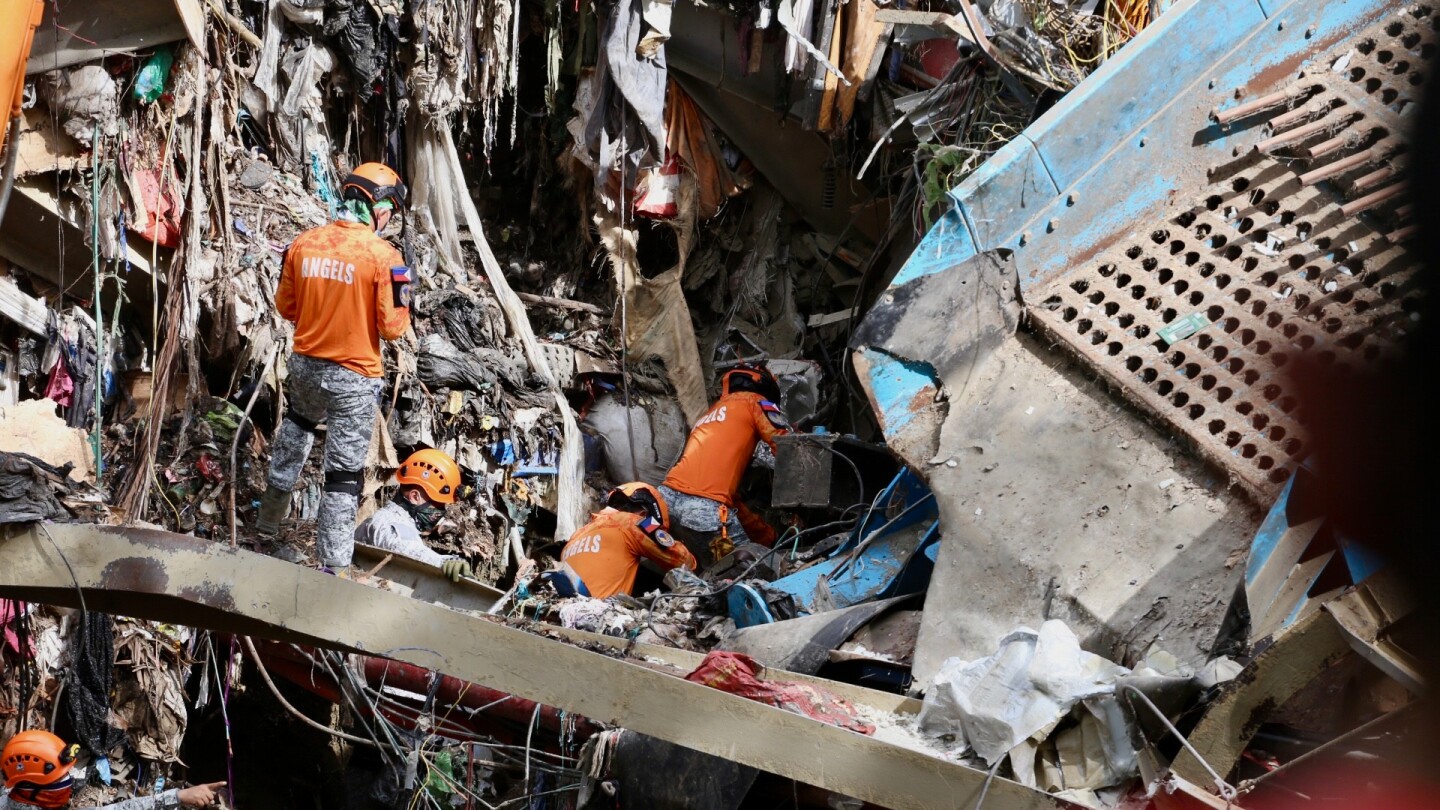
    CEBU CITY, Philippines — Search and rescue teams have detected signs of life within the rubble of a catastrophic garbage avalanche that engulfed a waste management facility in central Philippines, offering hope amid a devastating incident that has claimed at least four lives and left dozens missing.

    The tragedy occurred Thursday at the Binaliw village landfill in Cebu City when a massive wall of refuse collapsed without warning, burying low-lying structures under tons of debris. Despite favorable weather conditions, the sudden collapse trapped numerous workers beneath twisted metal roofing, iron supports, and highly combustible waste materials.

    Authorities confirmed Saturday that twelve workers have been successfully extracted with various injuries while emergency crews continue their painstaking search for more than thirty missing individuals. Cebu City Mayor Nestor Archival announced that specialized equipment, including a 50-ton crane accompanied by police escort, is being deployed to assist in the delicate excavation process.

    ‘Safety protocols have been intensified due to multiple hazards including structural instability and acetylene exposure risks,’ Mayor Archival stated. ‘We’ve established controlled access points to protect responders while maintaining search operations in areas where life signs have been detected.’

    Victims identified so far include both facility staff and office workers from the 110-employee complex. The death toll rose from two to four between Friday and Saturday, though official numbers of missing persons remain fluid as rescue efforts continue.

    Survivor Jaylord Antigua, 31, described the terrifying moment of collapse to Associated Press reporters. ‘The garbage wall descended without any warning despite clear weather,’ recounted Antigua, who escaped with minor bruises after crawling through darkness toward a light source. ‘I moved quickly, fearing subsequent landslides—it was profoundly traumatic. This feels like a second life.’

    The incident raises serious concerns about waste management infrastructure throughout the Philippines, where landfills and open dumpsites have historically posed significant public health and safety risks, particularly to adjacent impoverished communities where residents often scavenge for recyclables and food remnants.

    This tragedy echoes a similar 2000 disaster in Quezon City where a garbage mound collapse during stormy conditions resulted in over 200 fatalities and prompted nationwide reforms in waste management policy. Mayor Archival acknowledged that preparations are underway to address impending garbage collection challenges resulting from the facility’s closure.

  • Swiss search souls and question government after ski resort fire

    Swiss search souls and question government after ski resort fire

    The devastating New Year’s Eve blaze at Le Constellation bar in Crans-Montana has ignited a profound national reckoning about Switzerland’s cherished decentralized governance model. With 40 young lives lost and 116 severely injured, the Alpine nation confronts uncomfortable questions about accountability in its famously devolved political system.

    Switzerland’s governance structure empowers local communities through part-time elected officials who oversee everything from education to fire safety inspections. This system, long celebrated for ensuring grassroots accountability, now faces scrutiny after Crans-Montana’s Mayor Nicolas Feraud disclosed the tragic venue hadn’t undergone mandatory fire safety checks since 2019. Shockingly, only 40 of 128 local establishments received inspections in 2025.

    The revelation triggered national fury, particularly as Crans-Montana and neighboring Zermatt rank among Switzerland’s wealthiest resorts. Mayor Feraud’s explanation—claiming insufficient inspectors—rang hollow for citizens who expect operational excellence from their institutions. Swiss journalists pressed aggressively about potential conflicts of interest in a system where inspectors often know establishment owners personally.

    This tragedy transcends typical administrative failure. Survivors’ accounts reveal deep trauma—brothers escaping separately while believing the other had perished. Their mother’s public plea for ‘complete, transparent answers’ encapsulates national sentiment.

    The crisis echoes previous Swiss institutional failures—Swissair’s 2001 collapse and UBS’s 2008 bailout—but with greater moral gravity. Unlike financial mismanagement, this represents catastrophic human cost. Valais President Matthias Reynard pledged a ‘strict and independent’ investigation near tears at Friday’s memorial service, while national President Guy Parmelin promised justice ‘without delay and without leniency.’

    Legal actions are mounting, with attorney Romain Jourdan preparing cases against Crans-Montana’s council to ensure ‘such a tragedy never happens again.’ Broader systemic reforms are emerging, including proposals to transfer inspection authority from municipalities to canton level.

    Paradoxically, the emergency response highlighted Swiss excellence—firefighters, paramedics, and helicopters arrived within minutes. Yet this efficiency magnifies the tragedy: world-class emergency services cannot compensate for neglected preventive measures.

    The Swiss now question whether their decentralized model can meet 21st-century safety demands when part-time officials oversee complex regulatory frameworks. As the nation mourns, it confronts whether local accountability requires stronger oversight mechanisms to prevent future tragedies.

  • Greenlanders fear for future as island embroiled in geopolitical storm

    Greenlanders fear for future as island embroiled in geopolitical storm

    The geopolitical spotlight intensifies on Greenland as US Secretary of State Marco Rubio prepares for critical talks with Danish and Greenlandic officials regarding the territory’s future. This diplomatic engagement follows President Donald Trump’s expressed interest in acquiring the semi-autonomous Danish territory for national security purposes, causing considerable unease among Greenland’s 57,000 predominantly Inuit residents.

    Despite Greenland’s serene Arctic landscape of ice-capped mountains and glittering fjords, the capital city of Nuuk reveals underlying tensions. Residents express profound concern about potential US intervention, with one pensioner emphatically stating that the American flag must never fly over Greenland. Many citizens, still grappling with the trauma of Danish colonization, now fear forced assimilation into American sovereignty.

    Pilu Chemnitz, a local pottery-maker, encapsulates the prevailing sentiment: “We have always lived a quiet and peaceful life here. We just want to be left alone.” This desire for autonomy extends beyond resisting US acquisition—85% of Greenlanders oppose American takeover—to include growing aspirations for complete independence from Denmark, despite appreciating Danish subsidies that support their welfare state.

    Parliament member Pipaluk Lynge-Rasmussen of the pro-independence Inuit Ataqatigiit party emphasizes the importance of Greenlanders determining their own destiny. She criticizes global powers, including Denmark, for discussing Greenland’s fate without meaningful engagement with its people. Surprisingly, she attributes more responsibility to Denmark than to Trump for overlooking Greenlandic interests, noting that Greenland and the Faroe Islands have historically been treated as “second-class citizens” within the Danish Kingdom.

    The US strategic interest stems from multiple factors: perceived national security concerns regarding Russian and Chinese activities in the Arctic, desire for Greenland’s untapped natural resources including rare earth minerals, and Trump’s proclaimed objective to dominate the Americas. Geographically, Greenland belongs to North America, lying closer to New York than to Copenhagen by approximately 1,000 miles.

    Current US-Denmark agreements already permit extensive American military presence in Greenland, though the US substantially reduced its forces from Cold War peaks of 10,000 personnel to approximately 200 today. The Trump administration proposes enhancing military infrastructure through its “Golden Dome” missile defense system and potentially establishing surveillance capabilities in the GIUK Gap (Greenland-Iceland-UK passage).

    Opposition MP Pele Broberg advocates for pragmatic engagement: “We are not for sale—but we are open for business.” He highlights the economic paradox of importing goods from Denmark 4,000km away rather than from closer North American sources.

    The situation reflects broader Arctic tensions, with Russia and China expanding military cooperation and developing new shipping routes through melting ice passages. NATO allies, including the UK under Prime Minister Keir Starmer, seek to reassure Washington of their commitment to regional security while attempting to dissuade unilateral action.

    The upcoming negotiations will test whether diplomatic solutions can prevail over military posturing, with Greenlanders hoping to leverage international attention to advance their priorities rather than become victims of great power competition.

  • How the US could take over Greenland and the potential challenges

    How the US could take over Greenland and the potential challenges

    The Trump administration’s unprecedented pursuit of acquiring Greenland has triggered a significant diplomatic confrontation with Denmark and raised profound questions about NATO’s future stability. Despite Greenland’s status as a semi-autonomous Danish territory and NATO ally, President Trump has openly declared his intention to obtain control of the strategically valuable Arctic island “whether they like it or not.”

    High-level discussions between American, Danish, and Greenlandic officials have revealed the administration is evaluating multiple approaches to secure control, including potential military action. This aggressive posture has drawn sharp condemnation from Danish Prime Minister Mette Frederiksen, who warned that any forced takeover would effectively terminate the NATO alliance.

    Strategic analysts identify several potential acquisition methods under consideration. While military conquest remains theoretically possible given the vast disparity between American and Danish military capabilities, most experts consider this option highly improbable due to its catastrophic diplomatic consequences. Alternatively, the administration could pursue enhanced bilateral agreements similar to the Compact of Free Association arrangements with Pacific island nations, granting Washington security veto power and military basing rights in exchange for economic assistance and security guarantees.

    Arctic security specialists challenge the administration’s stated justification for acquisition—countering Russian and Chinese influence—noting that existing defense agreements already provide substantial American military presence. The Thule Air Base (Pituffik Space Base) in northwestern Greenland already serves critical missile detection and space surveillance functions for both U.S. and NATO operations.

    Greenlandic politicians have unanimously rejected assimilation into the United States, emphasizing their preference for increased autonomy rather than changed sovereignty. Demographic and linguistic barriers would complicate any influence operations, while the financial burden of replicating Denmark’s comprehensive welfare system for Greenland’s population would represent a massive ongoing expenditure.

    Experts suggest the most plausible resolution involves modernizing existing defense agreements rather than pursuing territorial acquisition. However, some analysts speculate that the Greenland discussion may serve as a deliberate distraction from domestic political challenges rather than a genuine policy objective, given the president’s pattern of reviving the topic during contentious periods.

  • North Korea vows response as it accuses the South of flying drones across the border

    North Korea vows response as it accuses the South of flying drones across the border

    North Korea’s military has issued a stern warning to South Korea, accusing its southern neighbor of conducting unauthorized drone surveillance missions across their shared border. The General Staff of the Korean People’s Army released an official statement through state media channels, alleging that South Korean drones equipped with dual-camera systems had infiltrated North Korean airspace on multiple occasions in recent weeks.

    The North Korean military claims it deployed specialized electronic warfare systems to neutralize what it described as ‘undisguised provocative acts.’ According to their account, one drone was intercepted on Sunday near a border town, while another was allegedly forced to crash on September 27 after electronic countermeasures were applied. Both devices were said to contain captured footage of strategic locations within North Korean territory.

    South Korea’s Defense Ministry has categorically denied these allegations, stating that no military drones were operational during the specified timeframes. Ministry official Kim Hong-Cheol confirmed that authorities would investigate whether civilian-operated drones might be involved, while reaffirming Seoul’s commitment to peaceful confidence-building measures.

    This incident occurs against the backdrop of deteriorating inter-Korean relations. Since the collapse of denuclearization talks between North Korea and the United States in 2019, Pyongyang has increasingly focused on weapons development while adopting a hostile ‘two-state’ policy toward South Korea. Despite President Lee Jae Myung’s efforts to revive diplomatic channels since taking office in June—including recent appeals to Chinese President Xi Jinping for mediation—North Korea has consistently rebuffed overtures from Seoul.

    Drone incursions have emerged as a persistent flashpoint in the delicate relationship between the two Koreas. Both nations have previously accused each other of unauthorized aerial surveillance operations, with notable incidents occurring in October 2024 and December 2022. While these previous confrontations resulted in heightened rhetoric without major escalation, the current allegations threaten to further undermine already strained relations on the Korean Peninsula.