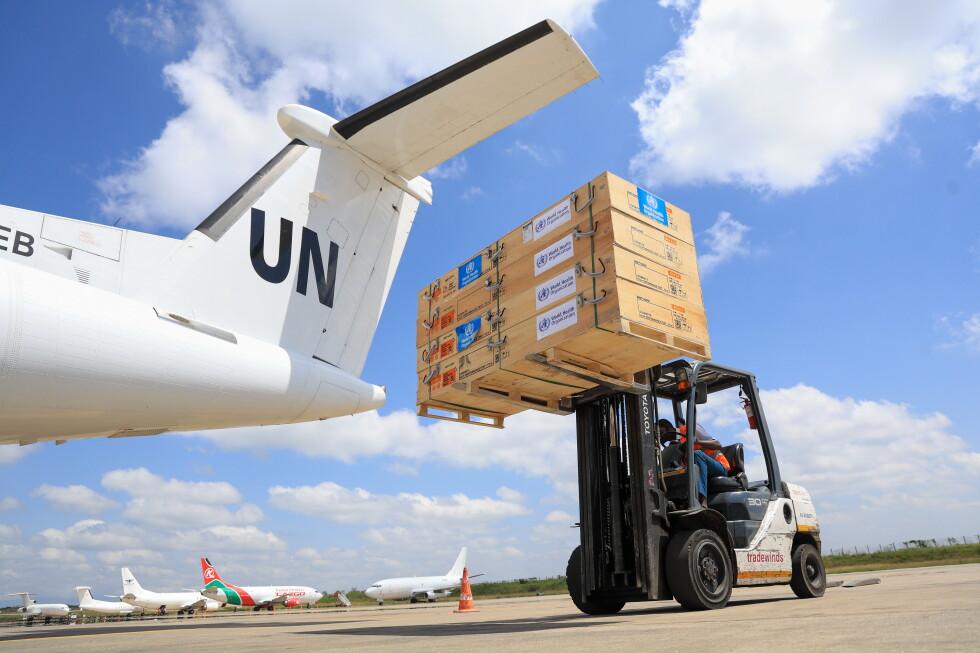
NAIROBI, Kenya — A landmark ruling from Kenya’s High Court on Friday has paused Washington’s controversial proposal to build a dedicated quarantine facility for U.S. citizens exposed to the rare Bundibugyo Ebola strain spreading in the Democratic Republic of the Congo, capping off days of fierce public pushback from local medical workers, legal groups and activists.
The U.S. plan, first revealed by an anonymous administration official earlier this week, would route any American exposed to Ebola while working or traveling in the outbreak region to this new Kenyan facility, rather than repatriating them back to the United States for monitoring and care. Key details of the project remain undisclosed as of Friday: the proposed site for the facility within Kenya has not been released, and it remains unclear whether the Kenyan government had formally approved the plan prior to the court’s suspension.
Top Kenyan officials have only acknowledged that preliminary talks with U.S. counterparts regarding Ebola preparedness support have taken place, declining to comment directly on the quarantine facility proposal. In a recent public statement, U.S. Secretary of State Marco Rubio confirmed that the U.S. government has committed $13.5 million in funding to boost Kenya’s domestic Ebola preparedness capacity.
The High Court’s ruling puts all negotiations and procedural steps for the facility on hold until Tuesday, when the court will hear formal petitions challenging the project brought by two independent legal organizations: the Katiba Institute, a non-profit group dedicated to defending Kenya’s constitution, and the Kenya Law Society. The Kenya Law Society has called on the court to invalidate any existing agreements between the two nations for the project, arguing that the proposal poses severe unaddressed public health risks and was advanced without any meaningful public input.
The group further argued that Kenya currently lacks the specialized high-containment infrastructure required to operate a safe Ebola quarantine facility, which would leave local communities exposed to catastrophic avoidable harm.
Local medical professionals have joined the opposition in force. The Kenya Medical Practitioners, Pharmacists and Dentists Union issued a 48-hour strike notice on Thursday, warning that industrial action would begin immediately if the government moved forward with the deal. Union leaders condemned the plan, arguing that the U.S.’s refusal to accept exposed citizens on its own soil makes Kenya a dumping ground for high-biosecurity risks.
“As the vanguard of Kenya’s healthcare system, we are utterly disgusted by the government’s apparent willingness to trade national biosecurity and the lives of its citizens for foreign aid,” union chairperson Davji Atellah said in a public statement.
The pushback comes amid a growing, underreported public health crisis in northeastern Democratic Republic of the Congo, where frontline health workers have been struggling for months to contain an outbreak of the Bundibugyo virus, a rare member of the Ebola family that has no approved vaccine or specific treatment.
Congolese authorities declared the outbreak on May 15, and have since recorded more than 1,000 suspected cases, with at least 220 confirmed deaths. But public health experts from the World Health Organization warn that the virus spread undetected for weeks before the outbreak was declared, meaning the actual number of infections and fatalities is far higher than official counts. The outbreak has already spilled across the border into neighboring Uganda, where seven confirmed cases and one death have been reported to date.