作者: admin

  • Starmer says ‘good progress’ on tariffs and visa-free travel in China talks

    Starmer says ‘good progress’ on tariffs and visa-free travel in China talks

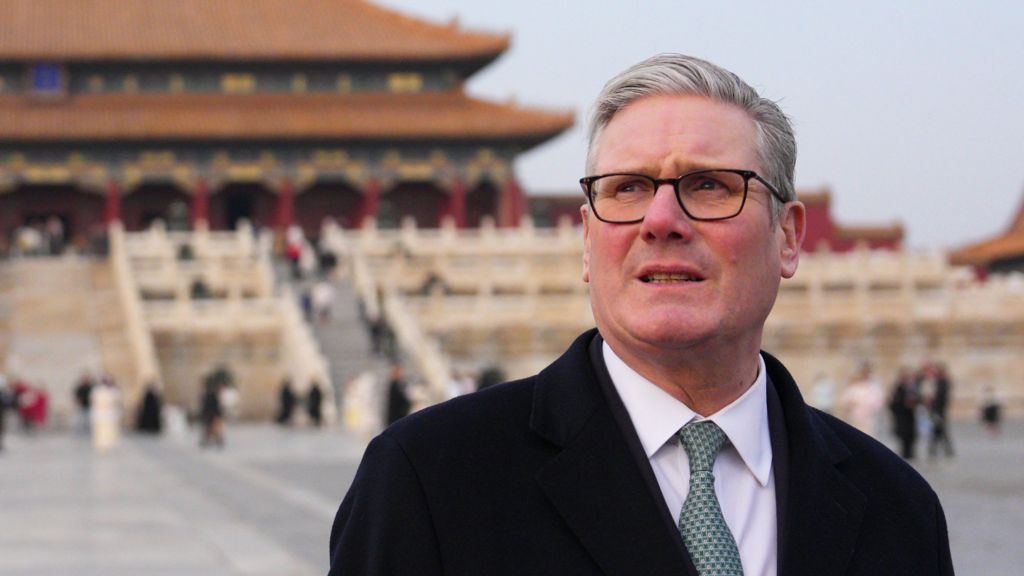
    In a landmark diplomatic engagement, British Prime Minister Sir Keir Starmer concluded a historically significant meeting with Chinese President Xi Jinping at Beijing’s Great Hall of the People, marking the first UK prime ministerial visit to China in eight years. The extensive 80-minute dialogue yielded substantial progress on multiple fronts while addressing contentious bilateral issues.

    The summit produced concrete agreements including reduced tariffs for British whisky exports, potential visa-free travel arrangements for UK citizens, and enhanced cooperation on combating irregular migration. A particularly significant outcome involves joint UK-China law enforcement efforts to disrupt criminal networks supplying small boat engines used for Channel crossings, with over 60% of these engines previously identified as Chinese-manufactured.

    President Xi characterized the relationship as having endured ‘necessary twists and turns’ while emphasizing the imperative of dialogue in today’s ‘turbulent and fluid’ global landscape. He acknowledged previous Labour governments’ contributions to Sino-British relations and invoked Chinese philosophical wisdom, urging both leaders to ‘range far your eye over long distances’ in pursuing mutually beneficial cooperation.

    The Prime Minister accompanied his diplomatic mission with a symbolic gesture—presenting President Xi with a football from the recent Premier League clash between Manchester United and Arsenal, reflecting their respective club allegiances while demonstrating cultural diplomacy.

    Despite these developments, the visit occurs amid heightened geopolitical tensions and domestic criticism. Opposition leaders have questioned the timing and substance of the engagement, with Conservative leader Kemi Badenoch advocating for alignment with nations sharing Britain’s strategic interests rather than those perceived as undermining Western economies.
  • Beijing on alert as Nipah virus spreads in India

    Beijing on alert as Nipah virus spreads in India

    Chinese health authorities have activated comprehensive monitoring protocols in response to the Nipah virus outbreak detected in India’s West Bengal region, while confirming zero domestic infections to date. The National Disease Control and Prevention Administration reported Tuesday that risk assessment measures have been intensified despite the relatively low probability of cross-border transmission.

    The Nipah virus, identified initially in Malaysia during the 1990s, represents a severe zoonotic pathogen with documented fatality rates ranging from 40% to 75% according to World Health Organization data. Transmission occurs primarily through fruit bats (the natural reservoir), pigs, and direct human-to-human contact. Clinical manifestations include high fever, respiratory distress, neurological complications, and potentially fatal encephalitis. No approved vaccines or specific antiviral treatments currently exist, with medical management limited to supportive care.

    Chinese health officials emphasized the virus’s limited environmental persistence, noting that “the risk of public exposure remains low” due to the pathogen’s vulnerability outside host organisms. Nevertheless, the administration has strengthened border surveillance capabilities, enhanced laboratory testing preparedness, and maintained strategic stockpiles of Nipah-specific nucleic acid detection kits across all provincial-level disease control centers.

    Notably, Chinese researchers have identified a promising therapeutic candidate—a repurposed COVID-19 antiviral demonstrating significant efficacy against Nipah in preliminary studies. This orally administered medication could potentially address the current treatment gap if clinical validation proves successful.

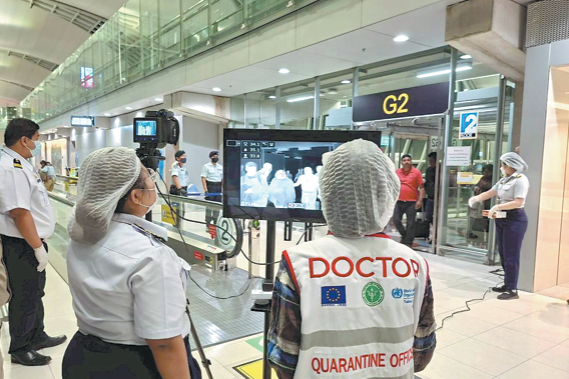
    Neighboring Asian nations have implemented coordinated response measures. Thailand’s Civil Aviation Authority instituted mandatory health screenings for travelers arriving from West Bengal, while Myanmar heightened monitoring protocols due to its substantial fruit bat populations and shared borders with affected regions. Indian health authorities confirmed successful containment of the outbreak, with all 196 identified contacts testing negative following two confirmed cases.

    The global health community continues to monitor the situation, balancing vigilance against unnecessary alarm given the outbreak’s current geographical limitation and contained status.

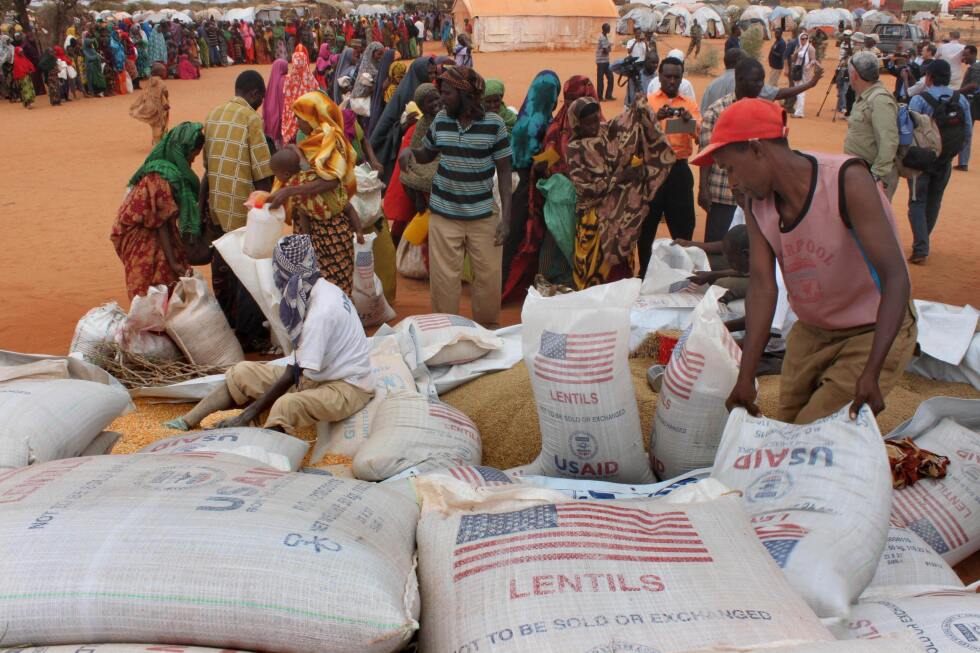
  • US says aid will resume while Somali officials deny causing disruption leading to suspension

    US says aid will resume while Somali officials deny causing disruption leading to suspension

    NAIROBI, Kenya — The United States announced Wednesday the reinstatement of humanitarian assistance to Somalia’s federal government, following a temporary suspension triggered by allegations of aid operations disruption at Mogadishu’s primary port. The decision comes after American officials asserted that Somali authorities had acknowledged responsibility for incidents that compromised World Food Program (WFP) operations earlier this month.

    Despite Washington’s declaration that Somalia accepted accountability for the disturbance that led to halted aid distributions, the Somali government had not publicly confirmed this acknowledgment by Wednesday evening. Government officials remained silent when approached by The Associated Press for commentary on the development.

    The State Department’s Office of the Under Secretary for Foreign Assistance communicated through social media platform X that the United States would recommence WFP food distribution while maintaining a cautious approach toward broader assistance programs in the Horn of Africa nation. The statement emphasized the administration’s strict policy against “waste, theft, or diversion of U.S. resources.”

    The initial suspension on January 7 stemmed from claims that Somali officials demolished a U.S.-funded WFP warehouse and confiscated 75 metric tons of specialized nutritional supplies destined for malnourished children and pregnant women. While WFP confirmed the warehouse demolition, they later reported successful retrieval of the seized provisions without elaborating on recovery details.

    Somalia’s Foreign Ministry had previously rejected U.S. allegations, maintaining that port expansion activities did not compromise humanitarian aid custody or distribution mechanisms. The resumption timing for full aid deliveries remains uncertain, with WFP representatives not immediately responding to operational inquiries.

    This diplomatic episode occurs against the backdrop of heightened U.S. scrutiny toward Somali refugee and migrant communities, including fraud investigations involving childcare centers in Minnesota and intensified immigration restrictions affecting Somali nationals seeking U.S. entry or residency.

    Somalia continues to grapple with extreme poverty, prolonged civil unrest, and recurring natural disasters that have created one of the world’s most severe humanitarian crises, making international aid crucial for population survival.

  • International team gets close look at China’s grassroots policing

    International team gets close look at China’s grassroots policing

    FUJIAN, CHINA – An international delegation comprising police liaisons from 11 nations and international organization representatives recently concluded an immersive four-day inspection of China’s grassroots law enforcement systems in Fujian province. Organized by China’s Ministry of Public Security from January 12-15, the program offered unprecedented access to policing operations across multiple cities, challenging conventional perceptions of law enforcement institutions.

    The delegation’s itinerary included detailed examinations of police facilities in Fuzhou, Quanzhou, and Zhangzhou, where participants observed firsthand the integration of administrative services, technological innovation, and cultural sensitivity within local precincts. Brazilian Federal Police liaison officer Antonio de Padua Vieira Cavalcanti expressed surprise at the welcoming atmosphere within Chinese police stations, noting the stark contrast to more institutional environments in Brazil. “It is a very warm space where people can go to find services,” Cavalcanti remarked.

    A significant focus was placed on the renowned Zhangzhou 110 model, a rapid-response unit that has gained national recognition for its community-oriented approach. Philippine embassy police attache Marcy Salting praised the unit’s compassionate methodology, stating: “It really shows how compassionate you are. I really salute all of you, and I would say that I learned a lot from it.”

    The tour also highlighted China’s specialized environmental policing initiatives, with delegates visiting Luojiang district’s dedicated natural resources protection station. Jason Beatty, an attache with the United States Fish and Wildlife Service, acknowledged China’s progressive approach to ecological enforcement, particularly noting efforts in tiger conservation and mangrove restoration. “A renewed focus on environmental policing is vital for human survival,” Beatty emphasized, stressing the importance of international cooperation in preserving ecosystems.

    Technological advancements formed another critical component of the demonstration, with China’s “AI Plus” initiative and big data systems for combating property crimes drawing particular interest. Sener Mavzer, counselor for security cooperation with the Turkish Gendarmerie, noted China’s impressive pace of advancement in crime prevention technology, expressing eagerness to learn from these systems.

    The program concluded with strengthened commitments to international collaboration, particularly in addressing transnational crimes and environmental offenses. German Federal Police attache Stefan Korting emphasized that understanding China’s policing history and specific systems through visits to police museums was key to building “a good future” of cooperative law enforcement.

  • Ultra-strong magnet sets world record

    Ultra-strong magnet sets world record

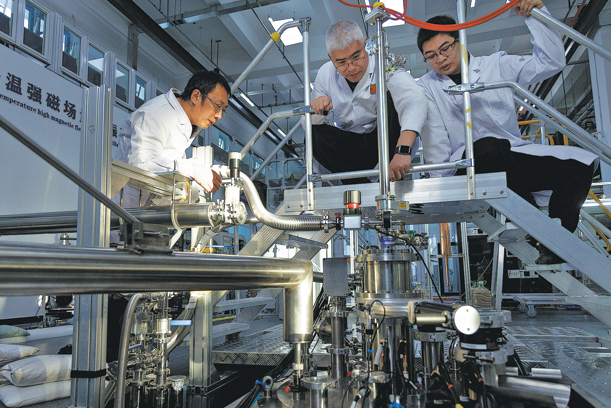
    Chinese scientists have achieved a monumental breakthrough in magnetic field technology by creating the world’s most powerful all-superconducting user magnet, registering an unprecedented central magnetic field strength of 35.6 tesla. This extraordinary achievement, accomplished at the Synergetic Extreme Condition User Facility in Beijing’s Huairou district, represents a magnetic force exceeding 700,000 times that of Earth’s natural magnetic field.

    The newly developed magnet stands as the globe’s sole superconducting apparatus capable of generating ultra-strong magnetic fields beyond 30 tesla specifically designed for scientific experimentation. This technological marvel distinguishes itself through its open-access architecture, enabling both domestic and international research teams to conduct cutting-edge material investigations under extreme experimental conditions.

    Superconducting magnet technology offers revolutionary advantages including zero electrical resistance, exceptional operational stability, and significantly reduced energy consumption when maintained at cryogenic temperatures. These characteristics make such instruments vital for advanced scientific infrastructure, medical imaging applications, and national defense technologies.

    The record-breaking performance was realized while maintaining a substantial 35-millimeter bore diameter, achieved through groundbreaking innovations in core technologies. The Institute of Electrical Engineering at the Chinese Academy of Sciences spearheaded revolutionary advances in magnet design and construction methodologies, while their counterparts at the CAS Institute of Physics conquered challenges related to precision measurement and system integration under extreme environmental conditions.

    According to CAS academician Wang Qiuliang, the current bore dimensions adequately accommodate most experimental requirements including nuclear magnetic resonance studies, specific heat measurements, and electrical resistance assessments. Research initiatives are already underway to expand the magnet’s bore diameter to support an even broader spectrum of measurement techniques.

    Professor Luo Jianlin from the Institute of Physics emphasized the significant operational cost advantages of all-superconducting magnets compared to conventional resistive magnets, noting that superconductors eliminate energy loss through their zero resistance properties. Future development plans target surpassing 40 tesla magnetic field strength while enhancing the refrigeration capacity of liquid helium systems to reduce long-term maintenance costs for ultra-low temperature environments.

  • Senegal boss Thiaw banned after Afcon final chaos

    Senegal boss Thiaw banned after Afcon final chaos

    The Confederation of African Football (CAF) has imposed severe disciplinary measures following the tumultuous conclusion to the 2025 Africa Cup of Nations final between Senegal and Morocco. Senegal’s head coach Pape Thiaw faces a five-match suspension and a substantial $100,000 fine for what governing bodies have deemed “unsporting conduct” and actions “bringing the game into disrepute.”

    The championship match in Rabat, ultimately secured by Senegal 1-0 in extra time, descended into chaos during stoppage time when Thiaw instructed his players to leave the field. This unprecedented move came in protest of a penalty awarded to Morocco, shortly after officials had disallowed a Senegalese goal for a foul on Moroccan captain Achraf Hakimi.

    The 17-minute interruption threatened to overshadow the sporting spectacle before Senegal forward Sadio Mane successfully persuaded his teammates to resume play. The dramatic conclusion saw Moroccan midfielder Brahim Diaz’s ‘Panenka’ penalty saved by goalkeeper Edouard Mendy, immediately followed by the final whistle that sent the match into extra time, where Pape Gueye secured victory for Senegal.

    Additional sanctions have been levied against multiple players from both finalists. Senegal forwards Iliman Ndiaye and Ismaila Sarr received two-match bans for misconduct toward match officials, while Morocco’s Ismael Saibari was handed a three-game suspension. Defender Achraf Hakimi received a two-match ban, with one game suspended for twelve months. The Senegal Football Federation also faces a significant $615,000 fine.

    These suspensions will apply exclusively to CAF-sanctioned matches, ensuring neither team’s preparation for the 2026 FIFA World Cup in North America will be affected by these disciplinary actions.

  • China issues 73 life bans, punishes top football clubs for match-fixing

    China issues 73 life bans, punishes top football clubs for match-fixing

    In an unprecedented disciplinary action, Chinese football authorities have imposed lifetime bans on 73 individuals while penalizing 13 top-tier professional clubs for widespread corruption and match-fixing offenses. The Chinese Football Association (CFA) announced these sweeping sanctions on Thursday following a comprehensive systematic review of the sport’s integrity issues.

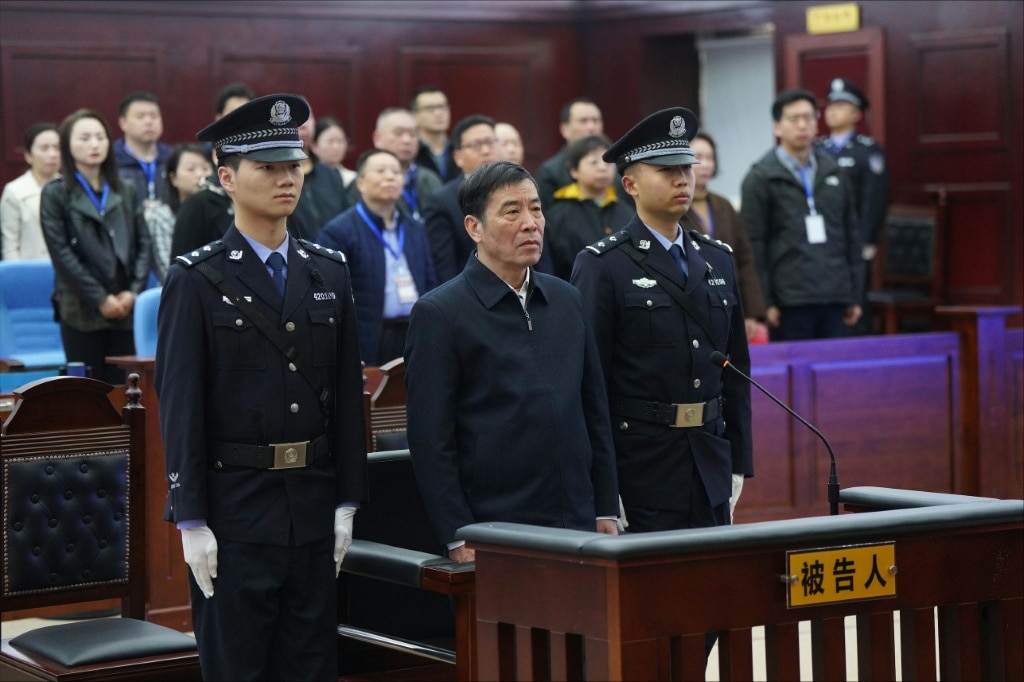
    The banned individuals include former national team head coach Li Tie, who is currently serving a 20-year prison sentence for bribery convictions handed down in December 2024. Also among the banned is Chen Xuyuan, the former CFA chairman imprisoned for life after accepting approximately $11 million in bribes.

    Competitive consequences will immediately affect the upcoming Chinese Super League (CSL) season, with nine of the sixteen teams starting the 2026 campaign with negative point deductions. Tianjin Jinmen Tiger and Shanghai Shenhua, last season’s runners-up, face the most severe penalties with 10-point deductions and fines of one million yuan ($144,000). Defending champions Shanghai Port and Beijing Guoan received five-point deductions and 400,000-yuan fines.

    The CFA stated these measures are necessary ‘to enforce industry discipline, purify the football environment, and maintain fair competition’ without specifying the exact timing or mechanics of the match-fixing incidents. The punishments were determined based on ‘the amount, circumstances, nature, and social impact of the improper transactions involved.’

    This crackdown occurs against a backdrop of financial instability within Chinese football, highlighted by the recent collapse of Guangzhou FC, the most successful club in CSL history, which folded in 2025 due to unresolved debts. The sport’s corruption crisis stands in stark contrast to President Xi Jinping’s expressed aspirations for China to eventually host and win the FIFA World Cup, ambitions that remain distant as the national team failed to qualify for the 2026 tournament.

  • Australian astronomers discover potentially habitable ‘Earth-like’ planet 150 light years away

    Australian astronomers discover potentially habitable ‘Earth-like’ planet 150 light years away

    An international research team spearheaded by Australian astronomers has announced the identification of a promising Earth-sized exoplanet candidate located approximately 150 light-years from our solar system. The discovery, detailed in a recent publication in The Astrophysical Journal Letters, marks a significant milestone in the ongoing search for habitable worlds beyond our own.

    Designated as candidate HD 137010 b, this celestial body exhibits remarkable similarities to Earth in both physical dimensions and orbital characteristics. It completes a revolution around its host star, which closely resembles our Sun, every 355 days—just 10 days shy of an Earth year. Despite occupying an orbital distance comparable to Earth’s position relative to the Sun, the exoplanet receives approximately 70% less stellar radiation, resulting in considerably cooler surface conditions.

    The research collaboration, led by Dr. Alexander Venner from the University of Southern Queensland, utilized observational data from NASA’s extended Kepler K2 mission conducted in 2017. While initial findings position HD 137010 b near the outer boundary of its star’s habitable zone—where liquid water could theoretically exist—preliminary temperature estimates suggest surface conditions may plummet to approximately -70°C in certain regions, creating a climate more analogous to Mars than Earth.

    Dr. Chelsea Huang, a co-researcher from the University of Southern Queensland, characterized the discovery as ‘genuinely thrilling’ in statements to the ABC, emphasizing that while this isn’t Earth’s identical twin, it represents meaningful progress toward that ultimate astronomical goal. The scientific team currently estimates a 50% probability that the candidate planet might support habitable conditions.

    As the celestial body has only been observed transiting its star on a single occasion, researchers have classified it as a ‘planet candidate’ pending verification through subsequent observational campaigns. The relative brightness of the host star enables comprehensive follow-up studies that could confirm the planet’s status and further elucidate its atmospheric properties and potential for hosting life.

  • ‘Extraordinary’ Williams refuses to rule out return

    ‘Extraordinary’ Williams refuses to rule out return

    Tennis legend Serena Williams has ignited widespread speculation about a potential return to professional competition after offering deliberately ambiguous responses during a national television appearance. The 44-year-old, who formally retired following the 2022 US Open, remains officially registered in the International Tennis Integrity Agency’s (ITIA) drug testing pool—a mandatory requirement for competitive eligibility.

    When directly questioned on NBC’s Today Show about a comeback, Williams artfully deflected. “I don’t know, I’m just going to see what happens,” she stated. After host Savannah Guthrie characterized this as a “maybe,” Williams intriguingly countered with “It’s not a maybe,” without providing further clarification. Regarding her testing pool status—a six-month prerequisite for returning athletes—Williams remarked, “I don’t know if I was out. Listen, I can’t discuss this.”

    The tennis world has responded with enthusiastic anticipation. Current world number one Aryna Sabalenka, speaking after her Australian Open semifinal victory, expressed support: “If she wants to come back, that’s her decision. It’s going to be fun to see her back on tour. She’s got the personality, and she’s a fun one.” Elina Svitolina, another top competitor, emphasized Williams’ inspirational legacy, noting a return would be “amazing for the sport.”

    Industry analysts suggest several motivating factors, including the potential for one final doubles campaign with her sister Venus Williams, who continues to compete at age 45. The Williams sisters last competed together at the 2022 US Open, creating sentimental appeal for another partnership. Former British number one Annabel Croft speculated on BBC Radio 5 Live that Venus’ potential retirement plans might influence Serena’s decision.

    While Williams currently identifies as a “stay-at-home mum and housewife” on official forms, her maintained presence in the testing pool since October 2025 and deliberately non-committal public statements have created compelling uncertainty about her future in the sport she dominated for decades.

  • South Africa drops ‘Melania’ just ahead of release

    South Africa drops ‘Melania’ just ahead of release

    Major South African cinema chains have made a last-minute decision to cancel the theatrical release of a documentary focusing on U.S. First Lady Melania Trump. The film, titled ‘Melania,’ was scheduled for international debut on January 30 but has been unexpectedly withdrawn from South African screens.

    Both Nu Metro and Ster Kinekor, the country’s leading theater chains, removed all listings for the documentary from their websites on Thursday, just one day before its planned release. The sudden cancellation was initiated by the local distributor Filmfinity, which holds the regional rights to the film.

    Thobashan Govindarajulu, Filmfinity’s Head of Marketing, cited ‘the current climate’ as the reason for pulling the documentary, though no specific details were provided regarding what this climate entails. Representatives from Nu Metro confirmed to AFP that they had complied with Filmfinity’s request to withdraw the film, stating ‘The rights sit with Filmfinity, and it’s at their request that we are not releasing it.’

    The decision comes against a backdrop of increasingly strained relations between the South African government and the Trump administration. President Donald Trump has repeatedly made controversial statements regarding South Africa’s domestic policies, including unfounded claims about ‘genocide’ against white Afrikaans farmers, whom he has invited to seek refuge in the United States. These diplomatic tensions appear to have influenced the commercial decision regarding the First Lady’s documentary, though no official connection has been confirmed.