作者: admin

  • Gold demand hits record high on Trump policy doubts: industry

    Gold demand hits record high on Trump policy doubts: industry

    Global gold demand reached unprecedented heights in 2025, propelled by profound investor anxiety surrounding the economic policies of U.S. President Donald Trump. According to the World Gold Council’s (WGC) annual report released Thursday, demand for the precious metal surpassed 5,000 tonnes, with its total value skyrocketing to $555 billion—a staggering 45 percent annual increase.

    The primary catalyst for this historic surge has been market uncertainty. WGC analyst Krishan Gopaul identified geopolitical apprehensions, particularly regarding the new Trump administration’s unpredictable actions, as a key driver. The year was defined by a sweeping tariff offensive against major U.S. trading partners like China, the European Union, and India, which destabilized long-established global free trade principles.

    Compounding these concerns, President Trump’s public critiques of U.S. monetary policy ignited fears over the Federal Reserve’s independence and contributed to a weakening U.S. dollar. In response, investors and central banks worldwide aggressively turned to gold as a premier safe-haven asset. While the volume of central bank purchases saw a slight dip from the previous year, their total value climbed by 13 percent. Gold now constitutes over 20 percent of central bank reserves, a proportion not witnessed since the early 1990s.

    Enthusiasm for gold-backed exchange-traded funds (ETFs) further amplified demand. Gopaul noted that these financial instruments have democratized access to gold, allowing investors to acquire it as easily as company stock. This collective movement culminated in gold prices nearing a historic $5,600 per troy ounce. Liam Fitzpatrick, head of metals and mining research at Deutsche Bank, attributed a fresh price surge this week to a combination of safe-haven demand, escalating geopolitical tensions, and a strategic shift by investors from traditional currencies and bonds into tangible hard assets.

  • Gulf Crypto 2.0: How the GCC is shaping the future of digital asset regulation

    Gulf Crypto 2.0: How the GCC is shaping the future of digital asset regulation

    The Gulf Cooperation Council (GCC) is fundamentally transforming its approach to digital assets, evolving from speculative trading environments toward sophisticated regulatory frameworks designed for institutional capital. This strategic pivot positions the region as a global leader in crypto governance rather than merely a market for retail trading activity.

    Regional transaction data underscores this transformation’s timing. According to Chainalysis, Middle East and North Africa crypto flows achieved unprecedented monthly volumes in late 2024, exceeding $60 billion in December alone. This substantial activity compelled GCC nations to choose between tolerating unregulated growth or establishing professionalized markets—with the UAE and Bahrain leading the professionalization charge.

    Dubai’s Virtual Assets Regulatory Authority (VARA) exemplifies this new approach through comprehensive activity-based regulation. Rather than operating as a conventional crypto regulator, VARA functions as a market architect—establishing precise conditions for operational licensing, permitted activities, and firm behavior across supervision and enforcement domains. Two critical innovations distinguish VARA’s framework: comprehensive activity-based regulation matching large financial centers’ supervisory standards, and stringent marketing controls implemented in October 2024 to mitigate consumer risks associated with aggressive promotion.

    Bahrain complements Dubai’s scale with regulatory agility through its Central Bank (CBB) Regulatory Sandbox. This controlled environment enables fintech firms to test innovative solutions with defined oversight, creating a pipeline from experimentation to full licensing. Bahrain’s early adoption of formal crypto regulations in 2019 established the nation as a testbed jurisdiction where new models can be trialed, supervised, and scaled responsibly.

    The GCC’s regulatory advancement extends beyond exchange operations to encompass tokenization infrastructure and stablecoin frameworks. Abu Dhabi Global Market’s Financial Services Regulatory Authority finalized governance for Fiat-Referenced Tokens effective January 2026, while Qatar Financial Centre established legal recognition for digital assets including tokenization protocols and smart contracts in 2024.

    This collective regulatory development transforms the Gulf into what industry observers term a ‘crypto governance laboratory’—multiple jurisdictions developing parallel frameworks with complementary strengths. Dubai emphasizes supervisory depth, Bahrain accelerates controlled innovation, ADGM develops institutional structures, and Qatar codifies tokenization frameworks. Even Oman has moved to formalize supervision through VASP registration requirements.

    The fundamental shift involves recasting digital assets from speculative instruments to regulated financial infrastructure. This institutional framing attracts deeper capital pools—asset managers, corporate treasuries, and family offices—whose risk committees prioritize policy clarity over market excitement. While challenges remain regarding cross-jurisdictional coordination and enforcement consistency, the GCC’s unmistakable direction toward regulated digital asset infrastructure positions the region as a emerging global benchmark for institutional crypto adoption.

  • Flights to northern Ethiopia cancelled as fears mount of renewed conflict

    Flights to northern Ethiopia cancelled as fears mount of renewed conflict

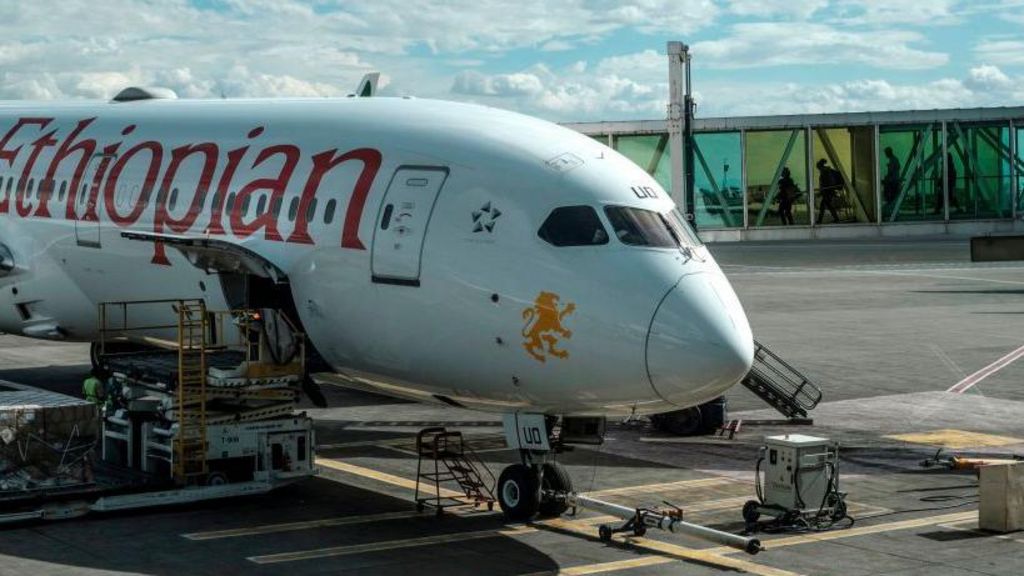
    Ethiopian Airlines has abruptly suspended all passenger flights between Addis Ababa and cities in the northern Tigray region, citing “unplanned circumstances” in text messages to passengers. The suspension comes amid growing concerns about a potential return to conflict, with reports emerging of military clashes in contested territories.

    Airport staff in Mekelle, Tigray’s main city, confirmed the flight cancellations after receiving instructions not to report for work. The airline and Ethiopian government have remained silent beyond the initial cancellation notice, offering no further explanation for the sudden suspension of air services.

    The development occurs against a backdrop of deteriorating relations between the federal government and the Tigray People’s Liberation Front (TPLF), with the 2022 Pretoria Peace Agreement showing signs of unraveling. Tensions have escalated particularly around disputed territories in western Tigray, where forces from the neighboring Amhara region maintain control over fertile lands claimed by both regions.

    Recent reports indicate clashes between federal forces and Tigrayan fighters in Mai Degusha, a contested area within Tselemti district. Additional military movements have been observed in southern Tigray, raising alarms about potential renewed hostilities.

    The situation is further complicated by the upcoming June elections, from which the TPLF has been excluded following the revocation of its political license. The party, which previously dominated Ethiopian politics for two decades, has experienced internal factionalization, adding complexity to an already volatile political landscape.

    While air travel remains suspended, ground transportation via buses continues to operate between Addis Ababa and Tigray, though these services may face disruptions following the flight suspensions. The African Union, which brokered the original peace agreement, has not yet commented on the latest developments.

    The Tigray conflict, which resulted in an estimated 600,000 fatalities and widespread human rights abuses, had previously displaced approximately one million people from western Tigray. These individuals remain in makeshift camps throughout the region, with their voting status in any potential referendum uncertain.

  • James brought to tears by Cleveland video tribute

    James brought to tears by Cleveland video tribute

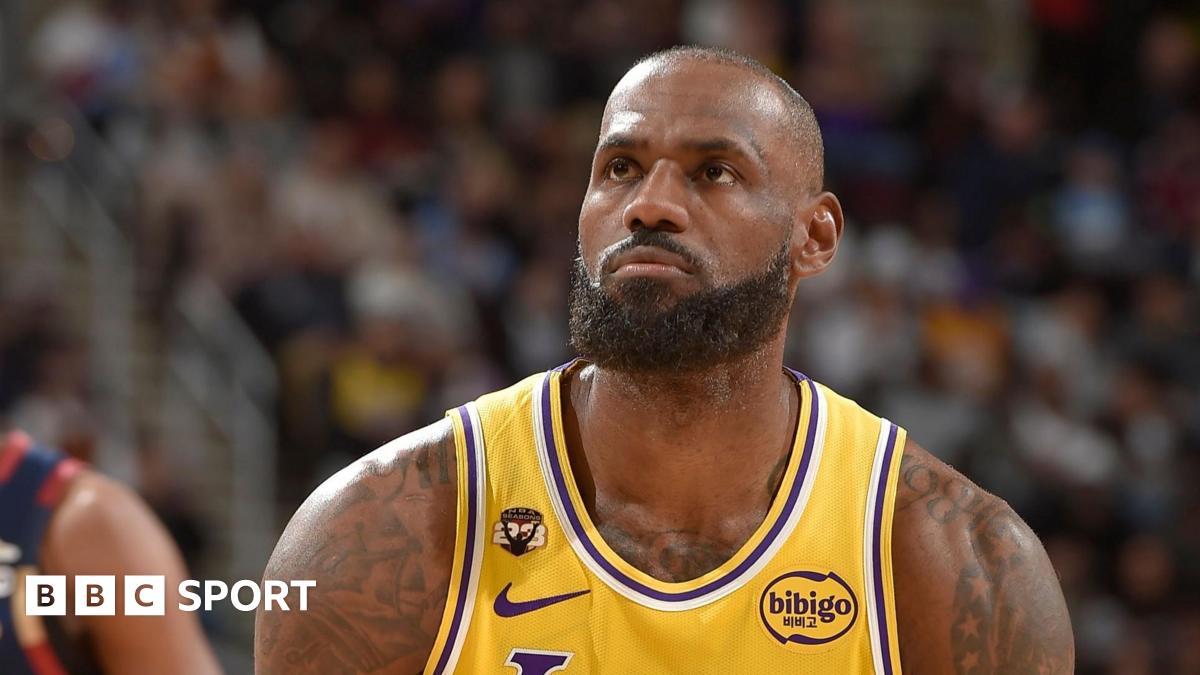
    In a poignant moment that transcended basketball, NBA icon LeBron James was visibly emotional during a heartfelt tribute honoring his legacy in Cleveland. The Los Angeles Lakers superstar returned to his home state arena on Wednesday amid growing speculation that this could mark his final professional appearance in Ohio.

    The emotional pivot occurred during the first-quarter break when the Cavaliers organization screened a highlight reel commemorating James’ legendary performance in Game 5 of the 2007 Eastern Conference finals. The footage showcased his remarkable 48-point game that secured a double-overtime victory, prompting James to cover his face with his jersey and wipe away tears with a tissue.

    Addressing reporters post-game, the 41-year-old athlete reflected: ‘I’m consciously embracing every moment without taking them for granted.’ While remaining noncommittal about his future, James acknowledged the possibility that this season could conclude his unprecedented 23-year career. ‘I haven’t finalized any decisions regarding my future, but it very well could be my final season,’ he stated.

    The four-time NBA champion demonstrated unusual vulnerability, admitting the homecoming ‘definitely affected me emotionally more than previous visits.’ This emotional resonance contrasted sharply with the game’s outcome, where James recorded a season-low 11 points in the Lakers’ 129-99 defeat against his former team.

    James’ historical connection with Cleveland remains deeply significant—he delivered the franchise its inaugural NBA championship in 2016 during his second tenure with the Cavaliers. Despite signing a one-year extension with the Lakers in June, the league’s all-time scoring leader has participated in 28 games this season, overcoming sciatica concerns to become the first player to compete in 23 NBA seasons.

  • Plane crash in Colombia kills 15, including lawmaker

    Plane crash in Colombia kills 15, including lawmaker

    A domestic flight operated by Colombia’s state-owned airline Satena crashed in the mountainous Catatumbo region near the Venezuelan border on Wednesday, resulting in the tragic loss of all fifteen individuals aboard. The aircraft, identified as a Beechcraft 1900 twin-propeller plane, was conducting a scheduled 23-minute hop from Cucuta to Ocana when it vanished from radar contact shortly before its anticipated noon landing.

    Colombian authorities confirmed no survivors from the devastating crash that claimed thirteen passengers and two crew members. The passenger manifest included Representative Diogenes Quintero, a 36-year-old member of Colombia’s chamber of deputies, and Carlos Salcedo, a candidate for upcoming legislative elections. Quintero’s political party memorialized him as a community-focused leader deeply connected to his conflict-ridden home region.

    Search and recovery operations faced extreme challenges due to the treacherous terrain within the Andes’ eastern range, where volatile weather patterns and dense jungle coverage complicate aerial operations. The crash site lies within territories significantly influenced by the National Liberation Army (ELN), Colombia’s largest active guerrilla group, adding security complications to the recovery efforts.

    President Gustavo Petro expressed profound condolences via social media, stating: ‘I deeply regret these deaths. All my solidarity to their families.’ As of initial reports, recovery teams had successfully retrieved seven bodies from the wreckage according to North Santander state governor William Villamizar.

    Aviation authorities have launched a comprehensive investigation to determine the causal factors behind Colombia’s latest aviation tragedy, emphasizing that preliminary findings remain inconclusive regarding technical failures or weather-related circumstances.

  • Canada’s conservative leader faces leadership test – and grapples with widening his appeal

    Canada’s conservative leader faces leadership test – and grapples with widening his appeal

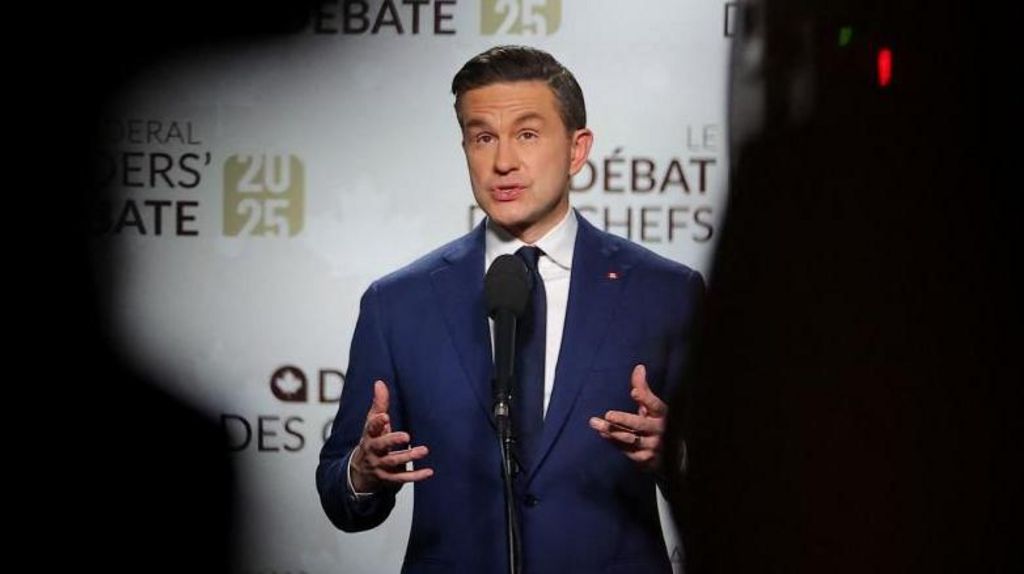
    Conservative Party delegates are preparing for a pivotal leadership review of Pierre Poilievre this Friday in Calgary, following the party’s electoral defeat last April. While internal support appears robust, with expectations of a decisive victory, the leader confronts a profoundly divided Canadian electorate that questions his capacity to govern the nation through uncertain geopolitical times.

    Polling data from Abacus Data reveals a stark contrast in perceptions: while a strong majority of Conservative base voters endorse Poilievre’s leadership—particularly praising his effectiveness in highlighting Liberal government failures on housing affordability and his appeal to younger demographics—over half of the general Canadian public maintains negative views. Critics frequently characterize his political tone as excessively confrontational, creating what pollster David Coletto describes as a “deeply polarised” perception that poses significant electoral challenges.

    The geopolitical landscape presents particular complications. Poilievre has faced persistent scrutiny regarding his approach to U.S. President Donald Trump, who remains deeply unpopular among Canadians. Many view Trump’s tariff policies and references to Canada as a “51st state” as existential threats. Poilievre’s populist style has occasionally drawn comparisons to Trump, further complicating his public appeal.

    Prime Minister Mark Carney’s recent address at the World Economic Forum in Davos highlighted this contrast. Widely praised by international observers for its clear articulation of Canada’s stance toward Trump’s administration, the speech boosted Liberal polling numbers to 47% among decided voters according to Léger’s latest survey. Meanwhile, Conservatives gained two points to reach 38%, indicating solid base support despite the Liberal surge.

    Former communications director Ben Woodfinden acknowledges the need for clearer Conservative positioning on Trump, noting that the next election will likely occur during Trump’s presidency. However, strategists emphasize Poilievre’s success in revitalizing the party and expanding its base to record numbers despite electoral setbacks.

    Recent developments suggest potential tonal shifts. Poilievre offered rare praise for Carney’s Davos speech while criticizing Liberal economic policies, and signaled willingness to collaborate on domestic issues like grocery tax rebates and bail reform. His upcoming address to party delegates will be closely watched for indications of how he plans to bridge the polarization gap and position Conservatives for future electoral success.

  • Tensions remain high between federal and local officials in Minneapolis

    Tensions remain high between federal and local officials in Minneapolis

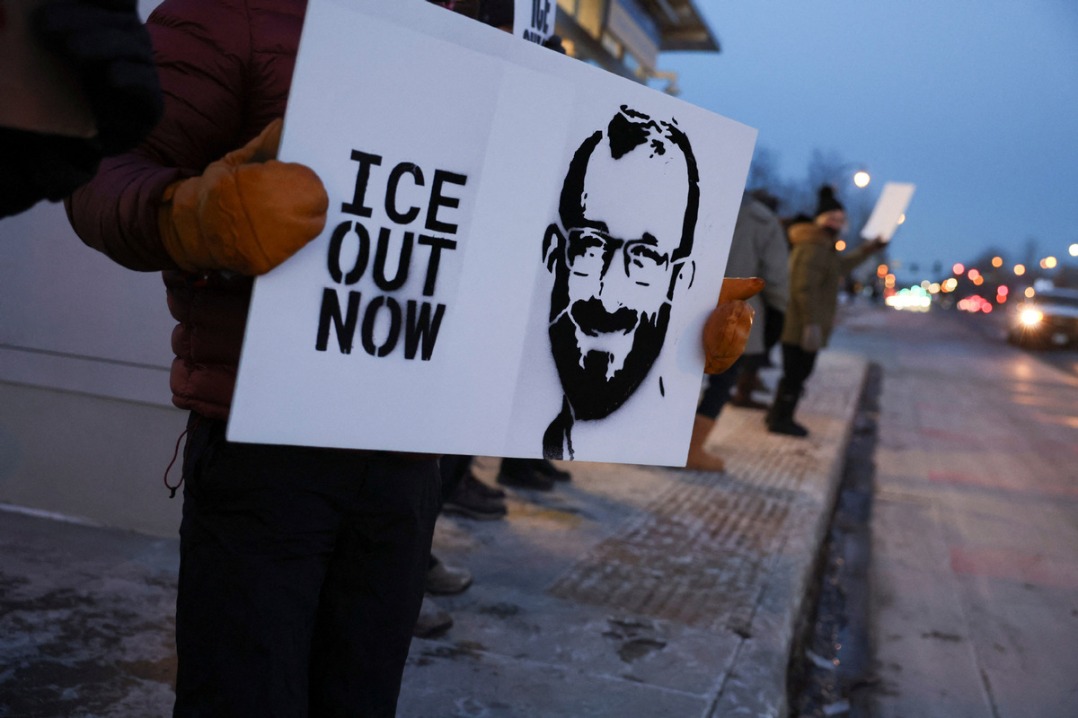
    Minneapolis has become the epicenter of a deepening constitutional crisis as federal authorities and local leadership remain locked in a dangerous standoff over immigration enforcement. The conflict reached a boiling point when President Donald Trump publicly warned Mayor Jacob Frey that he was “playing with fire” for declaring that city police would not enforce federal immigration laws.

    The presidential rebuke came despite earlier administration promises to de-escalate tensions following two fatal shootings involving federal agents. The victims include Alex Pretti, a 37-year-old ICU nurse at a VA hospital, killed during a Department of Homeland Security raid on Saturday. While DHS initially claimed Pretti brandished a weapon, video evidence appears to contradict this narrative.

    This incident follows the January 7th shooting of Renee Good, another case where cellphone footage raised serious questions about the official federal account. In response to the Pretti shooting, two border patrol agents have been placed on administrative leave according to DHS spokesperson Tricia McLaughlin.

    The situation has created an impossible position for local law enforcement. Minneapolis police, already overwhelmed by competing demands from protesters and federal agents both calling 911 for assistance, report plummeting morale as they find themselves caught between powerful political forces. With only 600 city officers attempting to maintain order amid 3,000 federal agents, the department struggles to provide adequate protection for demonstrators.

    Behind the scenes, attempts at reconciliation are underway. President Trump and Minnesota Governor Tim Walz have agreed on “the need for an ongoing dialogue,” while border czar Tom Homan has met with Walz to explore de-escalation strategies. Homan will assume control of operations from Gregory Bovino, whose aggressive tactics drew widespread criticism.

    An administration official indicated this leadership change would signal a shift toward more targeted operations rather than the broad street sweeps previously conducted. However, skepticism remains regarding how substantially tactics will change in a city where regular clashes between federal agents and protesters have become commonplace.

    This confrontation represents the latest manifestation of the ongoing battle between sanctuary jurisdictions and federal immigration authorities, with Trump threatening to cut funding to states that limit cooperation with immigration enforcement.

  • Talks ramp up to avert US government shutdown after Minneapolis shooting

    Talks ramp up to avert US government shutdown after Minneapolis shooting

    Washington D.C. finds itself embroiled in intense budgetary negotiations as lawmakers race against the clock to prevent a potential federal government shutdown. The political standoff centers on Democratic demands for substantial reforms within the Department of Homeland Security (DHS) following the controversial fatal shooting of 37-year-old nurse Alex Pretti by federal immigration agents in Minneapolis.

    Democratic legislators are leveraging their position to withhold support from the comprehensive $1.2 trillion spending package unless significant oversight measures are incorporated. These proposed restrictions would mandate federal agents to obtain warrants before making arrests and establish clearer identification protocols during operations. The White House and Senate Democratic leadership appear to be converging on an agreement that would address these security concerns while avoiding complete governmental paralysis.

    The current strategy under discussion would involve passing five of the six spending bills before Friday’s midnight deadline while granting DHS a temporary funding extension. This approach would provide additional negotiation time for implementing proposed operational changes, including regulations surrounding agents’ use of masks during operations.

    Senate Minority Leader Chuck Schumer has taken a firm stance, declaring, “I will vote no on any legislation that funds ICE until it is reined in and overhauled,” emphasizing that Senate Democrats remain “overwhelmingly united on this issue.” This position has been further reinforced by escalating demands from some Democratic senators calling for DHS Secretary Kristi Noem’s removal and structural changes to both Immigration and Customs Enforcement (ICE) and US Border Patrol.

    Republican Senate Majority Leader John Thune has characterized the ongoing negotiations as “productive,” though Texas Senator John Cornyn has cautioned that “any changes must not come at the expense of shutting down the government.”

    The potential shutdown would not affect the entire federal government, as legislation has already been enacted to fund numerous agencies through September 30, 2026. However, critical departments including Defense, Health and Human Services, Treasury, and the federal court system would face operational disruptions. The Internal Revenue Service would also be impacted, potentially delaying tax processing and refund distributions.

    Essential employees within affected agencies would continue working without pay until funding is restored, mirroring arrangements made during previous shutdowns. The most recent government closure in late 2025 lasted 43 days—the longest in U.S. history—leaving approximately 1.4 million federal employees without compensation and severely disrupting air travel and food assistance programs nationwide.

  • A pre-Olympic treat for the US women’s bobsled and skeleton teams: They got their hair done

    A pre-Olympic treat for the US women’s bobsled and skeleton teams: They got their hair done

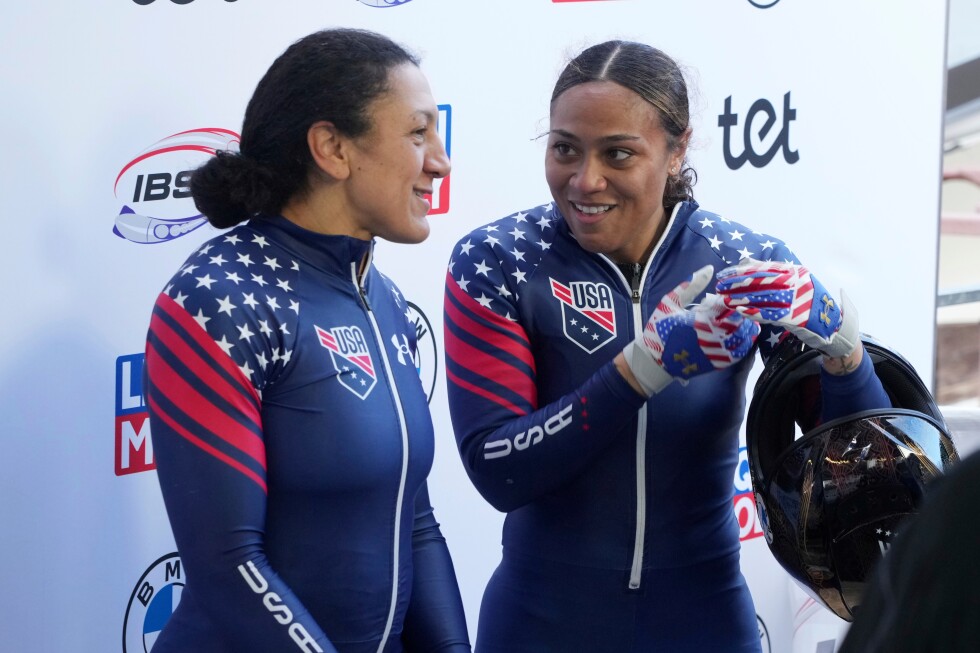
    In an unconventional approach to Olympic preparation, the U.S. women’s bobsled and skeleton team has incorporated professional hairstyling into their final training regimen ahead of the Milan Cortina Games. While typically focused on physical conditioning and strategic planning, the athletes recognized the psychological benefits of self-care during their extended European training camp that began in November.

    Five-time Olympic bobsled medalist Elana Meyers Taylor initiated the unique arrangement, recalling hairstylist Jessica Sinclair from her time in California. Despite never having visited Europe and possessing minimal knowledge of sliding sports, Sinclair immediately accepted the unusual booking request, traveling from California to Austria with her equipment.

    The comprehensive styling services benefited all six U.S. women’s bobsled competitors—Meyers Taylor, Kaillie Humphries Armbruster, Kaysha Love, Azaria Hill, Jasmine Jones, and Jadin O’Brien—along with skeleton athletes Kelly Curtis and Mystique Ro. Treatments ranged from haircuts and trims to conditioning and coloring, with many athletes sharing their transformed looks on social media platforms.

    Meyers Taylor emphasized the psychological significance beyond mere aesthetics: ‘A major part of being a woman isn’t necessarily trying to look good for other people. You want to be able to look in the mirror and say, ‘Hey, I feel good, I look good.’ After months of maintaining fundamentals through winter, this opportunity to feel pretty again makes a substantial difference.’

    The timing proved particularly strategic as athletes prepared for Olympic processing, where official photographs would be taken. Though helmets conceal hairstyles during competition, the mental refresh provided by professional grooming offered valuable psychological preparation for the world’s premier sporting stage.

    Sinclair’s versatility with diverse hair types made her particularly valuable to the team. ‘She can do Black people’s hair, white women’s hair—Jessica is a jack of all trades,’ Meyers Taylor noted. The stylist’s brief European immersion included her first viewing of a sliding track, and she anticipates cheering for her Olympic clients when competition begins next month.

  • Power, pace and financial muscle: How Premier League sides are ruling Europe

    Power, pace and financial muscle: How Premier League sides are ruling Europe

    English football clubs are demonstrating unprecedented supremacy in European competitions, with a remarkable five Premier League teams—Arsenal, Liverpool, Tottenham, Manchester City, and Chelsea—securing direct advancement to the Champions League knockout phase. Newcastle United, while requiring a playoff, has similarly impressed during group stage performances. This collective achievement underscores a significant shift in continental football dynamics, with English sides outperforming their domestic league win percentages on the European stage.

    The foundation of this dominance extends beyond the pitch to substantial economic advantages. Premier League clubs benefit from television rights agreements that far exceed those of other European leagues, creating a formidable financial disparity. Recent data from Deloitte’s Football Money League reveals that nine of the world’s top twenty revenue-generating clubs are English, with five Champions League participants ranking in the top ten. This economic muscle facilitated record-breaking summer transfers exceeding £3 billion—surpassing the combined expenditures of Europe’s other major leagues.

    This financial strength enables Premier League teams to develop exceptionally deep squads capable of thriving within football’s demanding schedule. The physical intensity and technical pace exhibited by English sides have proven particularly challenging for continental opponents. Arsenal’s decisive victory against Inter Milan with a secondary lineup exemplifies the qualitative depth available to Premier League clubs, with Inter’s coach acknowledging superior intensity and technique from the English side.

    Paradoxically, this European success contrasts with inconsistent domestic performances from several clubs, suggesting the Premier League’s internal competition may be even more challenging than continental fixtures. Players note the league’s uniquely physical nature, describing matches as relentless athletic contests where winning individual duels frequently determines outcomes.

    Despite current dominance, historical patterns suggest European powerhouses like Real Madrid, Bayern Munich, and Paris Saint-Germain remain formidable obstacles in later tournament stages. While financial resources and squad depth provide significant advantages, the ultimate test of Premier League supremacy will be whether this group-stage dominance translates into Champions League trophies, of which English clubs have claimed only three in the past thirteen seasons.