作者: admin

  • Heihe ices hub status for cold vehicle testing

    Heihe ices hub status for cold vehicle testing

    The northern Chinese border city of Heihe has solidified its position as the world’s premier destination for cold climate automotive testing, leveraging its uniquely frigid conditions to drive innovation in new energy vehicle technology and aerospace systems. During the recently concluded fifth Heihe Cold Region Automobile Testing Festival, temperatures plunged to -23°C as engineers from leading manufacturers conducted rigorous evaluations on the frozen surfaces of the Heilongjiang River.

    This remote city, where temperatures can reach an astonishing -48°C, now commands an impressive 85% of China’s national market share and 45% of the global market for cold-weather vehicle testing. The 2024-25 testing season attracted 147 companies and research institutions, including industry giants Tesla, BYD, FAW, and SAIC, with more than 4,000 test vehicles evaluated by 5,000 technical personnel.

    The economic impact has been substantial, generating 170 million yuan ($24.4 million) in direct testing fees and approximately 430 million yuan in related service industry revenue encompassing hospitality, tourism, and logistics.

    According to Wang Luyang, an engineer from SAIC-GM-Wuling, “Heihe represents an exceptionally rare testing environment where battery endurance, cold-start performance, and braking systems can be comprehensively evaluated under extreme low-temperature conditions that remain a critical technical challenge for new energy vehicles.”

    The city’s transformation from hosting China’s first frigid condition automobile tests in 1989 to its current status as a global testing hub reflects strategic government planning and substantial infrastructure investment. A landmark 260,000-square-meter all-season low-temperature testing facility, currently in final construction phases, will become the world’s largest facility capable of offseason testing for traditional, new energy, and intelligent connected vehicles.

    Heihe’s testing capabilities have now expanded beyond terrestrial vehicles to include drones and flying cars, capitalizing on the emerging low-altitude economy. The city recently hosted the inaugural test flight of China’s domestically produced C919 commercial aircraft and has established Asia’s largest mobile outdoor icing wind tunnel project in the Wudalianchi scenic area.

    Xu Lei, an expert at the China Automotive Engineering Research Institute, notes that “Heihe has systematically developed a comprehensive cold-region vehicle testing ecosystem encompassing technical standards, service assurance, and industrial extension through sustained government investment and strategic planning.”
  • Zigong lantern festival lights up

    Zigong lantern festival lights up

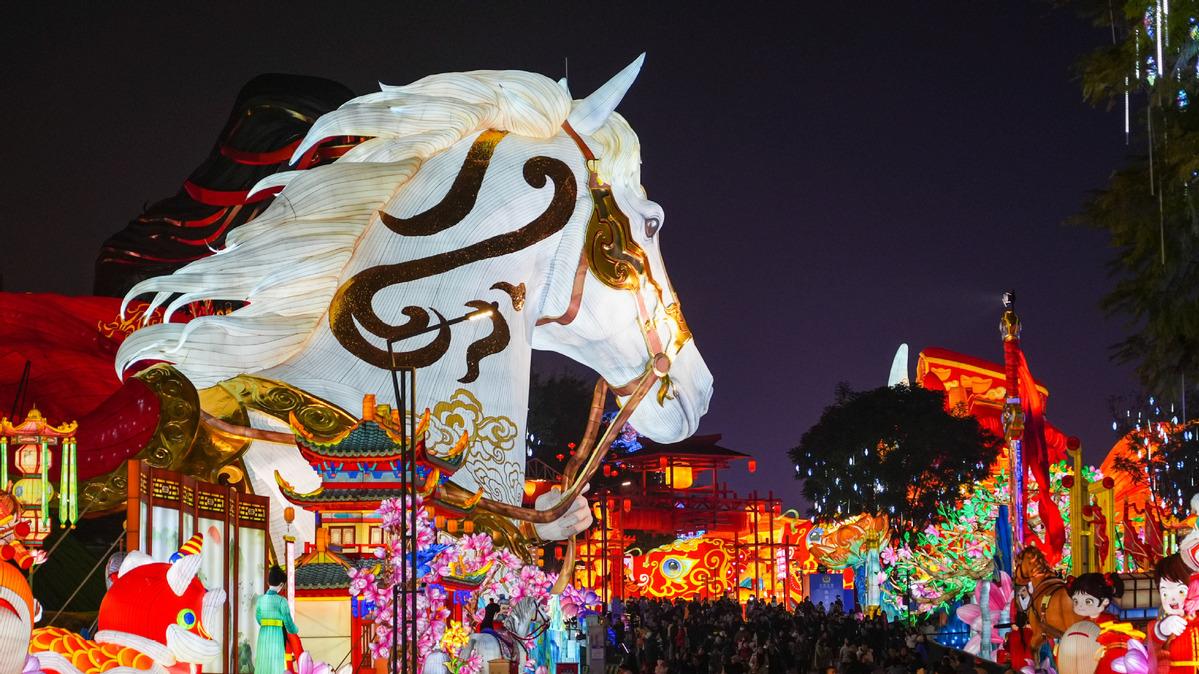
    The 32nd Zigong International Dinosaur Lantern Festival commenced on January 23, 2026, transforming Sichuan province’s historic “salt capital” into a breathtaking panorama of light and innovation. This annual spectacle, renowned for blending ancient Chinese traditions with cutting-edge technology, unveiled its most ambitious installation to date: an awe-inspiring 210-meter-long depiction of the mythical kunpeng creature from Zhuangzi’s philosophical texts.

    Spanning ten meticulously curated thematic zones, the festival showcases eleven monumental lantern sets complemented by over 200 smaller displays. Each installation represents a masterful synthesis of traditional artisan craftsmanship, cultural narrative depth, and sophisticated modern illumination technologies. The kunpeng exhibit particularly captivates visitors with its dynamic representation of the legendary transformation from colossal fish to majestic bird, symbolizing boundless potential and metamorphosis.

    Beyond the Zhuangzi-inspired centerpiece, the festival incorporates interactive light installations, holographic projections, and environmentally sustainable lighting systems that reduce energy consumption by 40% compared to previous editions. Organizers have integrated augmented reality features allowing visitors to access cultural explanations through smartphone interactions with specific displays.

    This year’s event marks a significant evolution from purely traditional lantern exhibitions to immersive technological experiences while maintaining the authentic craftsmanship that earned Zigong its reputation as China’s lantern capital. The festival runs through March and is expected to attract over two million domestic and international visitors, contributing significantly to regional cultural tourism and nighttime economic development.

  • First 3D metal print test held in space

    First 3D metal print test held in space

    China has marked a historic milestone in space technology by successfully executing the first-ever metal 3D printing experiment in orbit. This groundbreaking achievement represents a quantum leap in the nation’s extraterrestrial manufacturing capabilities and positions China at the forefront of space-based industrial technology.

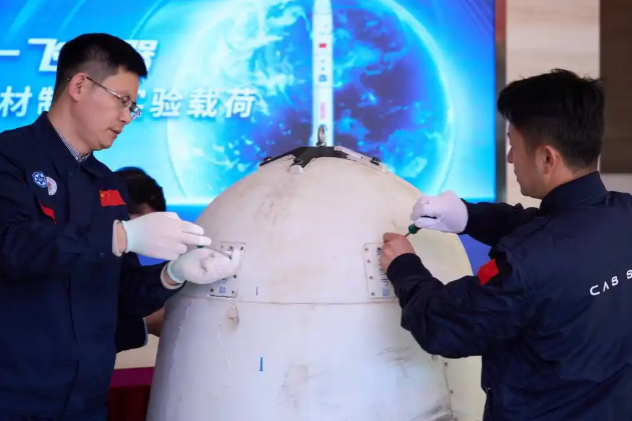
    The pioneering experiment was conducted aboard the Lihong-1 Y1 suborbital vehicle, a commercially developed recoverable spacecraft designed for space tourism operations. Following its successful inaugural test flight from the Jiuquan Satellite Launch Center on January 12th, the spacecraft carried specialized scientific equipment developed by the Institute of Mechanics under the Chinese Academy of Sciences (CAS).

    Upon crossing the Kármán line—the internationally recognized boundary separating Earth’s atmosphere from outer space—at an altitude of approximately 120 kilometers, the payload autonomously fabricated metal components under microgravity conditions. This successful demonstration transitions China’s metal additive manufacturing technology from theoretical ground-based research to practical in-space engineering verification.

    The CAS emphasized the extraordinary complexity of conducting metal additive manufacturing in space, where factors such as microgravity, extreme temperatures, and vacuum conditions present significant engineering challenges. Research teams overcame critical obstacles including stable material transport and formation processes, full-process closed-loop control systems, and ensuring high-reliability coordination between the experimental payload and launch vehicle.

    Following completion of the experiment, the payload capsule successfully returned to Earth via parachute-assisted landing, delivering invaluable firsthand data to scientists. Researchers have obtained crucial information regarding melt pool dynamics, material transport mechanisms, solidification behavior, and the geometric precision and mechanical properties of space-manufactured components.

    The Lihong-1 Y1 vehicle, noted for its cost-effectiveness and operational flexibility, has demonstrated its capability as a reliable platform for space technology verification. This breakthrough is expected to significantly accelerate the development of China’s space manufacturing capabilities and serve as a critical enabler for future orbital infrastructure development, potentially revolutionizing how space missions approach manufacturing, repair, and construction beyond Earth.

  • At least three dead in Greece biscuit factory fire

    At least three dead in Greece biscuit factory fire

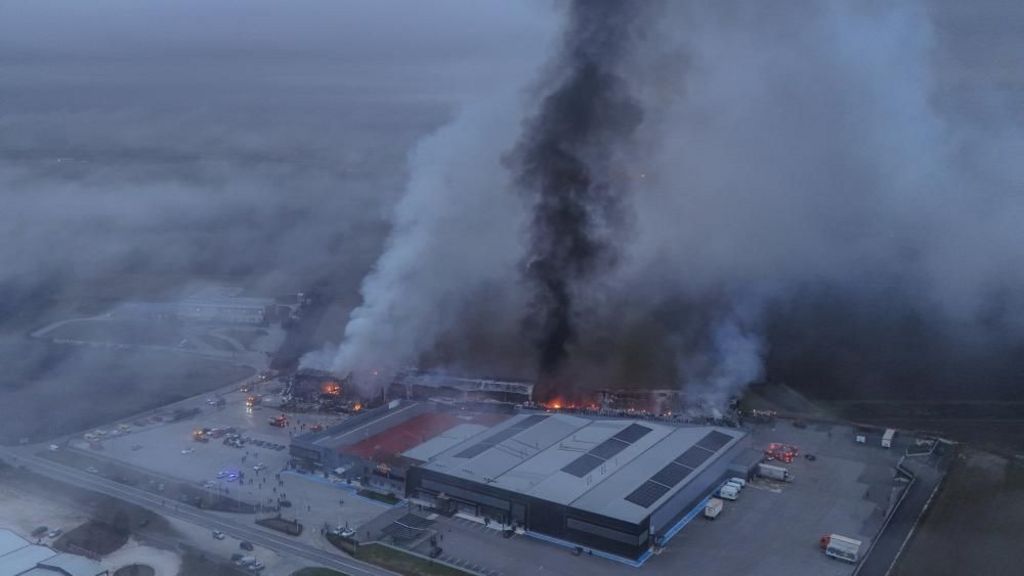
    A devastating industrial fire has resulted in multiple casualties at a food manufacturing facility in central Greece, with rescue operations continuing into Monday. The tragedy unfolded at the Violanta biscuit factory near Trikala during early morning operations when 13 employees were present on site.

    Local authorities confirmed three fatalities with two workers remaining unaccounted for following the intense blaze. Emergency responders successfully evacuated eight staff members from the burning structure before recovering the victims’ remains. Drone surveillance footage captured massive plumes of dark smoke engulfing the industrial area, illustrating the severity of the incident.

    Witnesses reported hearing a substantial explosion preceding the rapid spread of the fire, though official investigators have not yet determined the exact ignition source. The Greek fire service deployed substantial resources to combat the flames, including 40 specialized firefighters and 13 emergency vehicles.

    Health Minister Adonis Georgiadis provided preliminary medical assessments, indicating six factory employees and one firefighter required hospitalization. All were reported in stable condition, primarily undergoing treatment for smoke inhalation and related respiratory complications. The minister emphasized that despite the traumatic event, the injured were expected to make full recoveries.

    The Violanta factory, known for biscuit production, sustained significant structural damage as firefighting teams worked to fully extinguish remaining hot spots. An official investigation has been launched to examine safety protocols and determine liability for one of Greece’s most serious industrial accidents in recent years.

  • How a purge of China’s military leadership could impact the army and the future of Taiwan

    How a purge of China’s military leadership could impact the army and the future of Taiwan

    BEIJING — In an unprecedented restructuring of China’s military leadership, President Xi Jinping has initiated one of the most significant purges in the history of the People’s Liberation Army. The Chinese Defense Ministry confirmed over the weekend that authorities are investigating two senior generals for suspected serious violations of discipline and law, effectively dismantling the leadership structure of the nation’s top military body.

    The investigation targets General Zhang Youxia, the senior vice chairman of the Central Military Commission, and General Liu Zhenli, who previously oversaw the military’s Joint Staff Department. This dramatic development leaves only one of the six positions on the powerful commission filled, with President Xi maintaining his role as chairman.

    Analysts characterize this move as part of President Xi’s broader anti-corruption campaign that has disciplined over 200,000 officials since he assumed power in 2012. The military purge represents a strategic effort to reform the armed forces and ensure absolute loyalty to China’s leadership. This follows the October expulsion of another vice chair, He Weidong, who was subsequently replaced by Zhang Shengmin—now the sole remaining commission member besides Xi.

    The specific allegations against the generals remain undisclosed, though official statements emphasize China’s commitment to rooting out corruption. An editorial in the People’s Liberation Army Daily described the investigations as demonstrating the nation’s determination to maintain military discipline, though it provided no concrete details about the nature of the violations.

    International experts suggest these developments could have significant implications for China’s strategic posture, particularly regarding Taiwan. While some analysts believe the leadership turmoil might temporarily weaken China’s military readiness, others argue that long-term benefits could include a more loyal and capable command structure. The timing of these changes raises questions about potential impacts on cross-strait relations, especially given recent increased military exercises around Taiwan.

    The future composition of the Central Military Commission remains uncertain, with five positions now vacant. It is unclear whether replacements will be appointed immediately or whether President Xi will wait until the 2027 Communist Party Congress when new Central Committee appointments typically occur.

  • Israel agrees to ‘limited reopening’ of Rafah crossing, Netanyahu’s office says

    Israel agrees to ‘limited reopening’ of Rafah crossing, Netanyahu’s office says

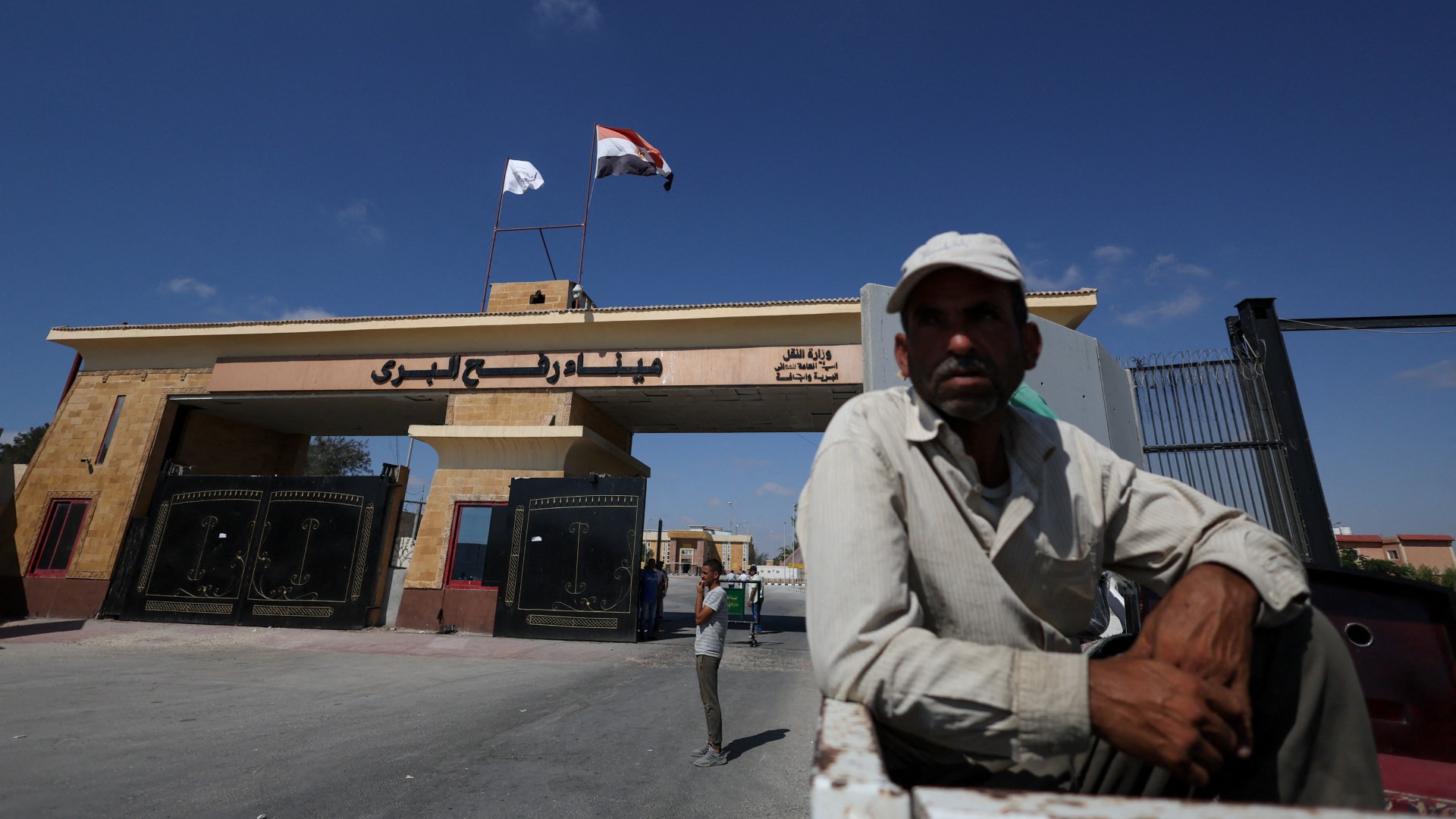
    In a significant diplomatic development, the Israeli government has consented to a conditional reopening of the Rafah border crossing between Gaza and Egypt. Prime Minister Benjamin Netanyahu’s office announced the decision on Monday after high-level discussions with US envoys in Jerusalem.

    The arrangement, formulated under President Trump’s 20-point peace framework, permits exclusively pedestrian transit through the critical passage. All movement will be subject to comprehensive Israeli inspection protocols. This partial reopening represents a carefully negotiated compromise after extensive dialogue between Israeli officials and US representatives Jared Kushner and Steve Witkoff.

    Israel has established explicit conditions for the crossing’s operational status, demanding the complete return of all living captives alongside a verifiable, maximum effort by Hamas to locate and repatriate deceased captives’ remains. This stance initially included the specific requirement to recover the body of Israeli citizen Ran Gvili before permitting any border access, a position reportedly softened following American diplomatic intervention.

    The Rafah crossing holds immense strategic and humanitarian importance as Gaza’s primary gateway for aid delivery and civilian passage. Its closure since Israel’s imposition of a blockade in 2007 has drawn consistent criticism from the United Nations and international humanitarian organizations, which have persistently advocated for its reopening to alleviate the region’s humanitarian challenges.

    The current agreement, originating from the October 10 ceasefire negotiations brokered by the Trump administration, marks a tentative step toward normalized transit while maintaining Israel’s security requirements. The development illustrates the continuing complexity of Middle Eastern diplomacy and the ongoing international efforts to balance security concerns with humanitarian needs in the region.

  • 18 dead, 24 missing after ferry sinks in S. Philippines

    18 dead, 24 missing after ferry sinks in S. Philippines

    A major maritime tragedy struck the southern Philippines on Monday as the inter-island ferry M/V Trisha Kerstin 3 sank in the Sulu Sea, resulting in 18 confirmed fatalities and 24 individuals remaining missing. The incident occurred in the early hours near Baluk-Baluk Island off Basilan province, prompting an extensive search and rescue operation by Philippine authorities.

    According to the Philippine Coast Guard (PCG), the vessel was transporting 332 passengers and 27 crew members from Zamboanga City to Jolo Island in Sulu province when it submerged before 2:00 AM local time. Rescue teams have successfully recovered 317 survivors from the waters, with ongoing efforts to locate the missing persons.

    PCG Commandant Admiral Ronnie Gil Gavan confirmed the ferry had departed Zamboanga City port at approximately 9:20 PM on Sunday evening. Addressing concerns about potential overloading, Admiral Gavan stated that the vessel operated within its authorized capacity of 350 passengers, with the actual passenger count verified at 332 individuals at departure.

    The exact cause of the sinking remains undetermined as maritime investigators examine multiple factors that could have contributed to the disaster. The incident highlights the persistent challenges facing maritime safety in the Philippine archipelago, where inter-island transportation remains vital yet occasionally vulnerable to accidents.

    The Philippine Coast Guard has deployed additional assets to the search area, coordinating with local authorities to expand the rescue operation despite challenging maritime conditions in the region.

  • Laba porridge heralds festive celebrations

    Laba porridge heralds festive celebrations

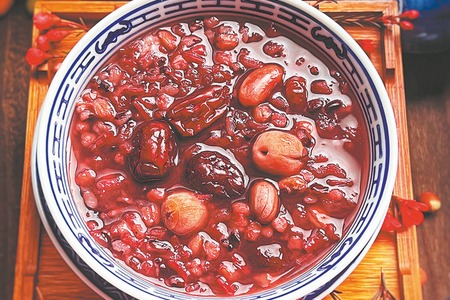
    As winter’s chill embraces Beijing, the aromatic steam of laba porridge rises from ancient temples, signaling the official commencement of Chinese New Year festivities. This Monday, marking the eighth day of the twelfth lunar month, communities across China will participate in the centuries-old tradition that blends culinary artistry with cultural significance.

    The term ‘laba’ itself derives from Chinese lunar calendar terminology, with ‘la’ denoting the twelfth month and ‘ba’ representing the number eight. This symbolic porridge, typically crafted from at least eight ingredients including glutinous rice and red beans, transcends mere culinary practice to embody a cultural countdown to new beginnings.

    Historical temples including Yonghegong (Lama Temple), Guanghua, and Tanzhe become epicenters of this tradition, distributing steaming bowls to thousands of visitors despite the winter cold. The ritual represents one of Beijing’s most significant seasonal events, maintaining continuity since the Qing Dynasty (1644-1911) when both royalty and commoners believed consuming temple-prepared porridge ensured future prosperity and peace.

    Imperial archives reveal Emperor Yongzheng’s particular devotion to the ceremony, elevating it to a rigorously regulated ritual requiring eight days of preparation. Historical records document astonishing scales of production: single ceremonies utilized over 720 kilograms of primary ingredients, with total ingredient weight reaching 1,000 kilograms and consuming approximately 5,000 kilograms of firewood.

    At Lama Temple, visitors can still witness the massive copper cauldron—crafted by imperial workshops, measuring two meters in diameter and weighing eight metric tons—that once facilitated these grand preparations. During Emperor Qianlong’s reign, the recipe incorporated thirteen premium ingredients including millet, rice, various beans, red dates, chestnuts, almonds, and brown sugar.

    Beyond temple walls, contemporary adaptations thrive. Huguosi Snack, a renowned Beijing eatery, has introduced a modern version featuring over twenty ingredients, receiving praise on social platform Xiaohongshu for its authentic composition and satisfying quality.

    Regional variations showcase China’s culinary diversity: Northern versions favor hearty, thick consistency often accompanied by pickled laba garlic; Jiangnan regions prefer lighter, delicately sweetened interpretations; while Northwestern adaptations incorporate lamb for enhanced warmth. Across all variations, the harmonious blend of grains symbolizes abundance and collective hopes for a prosperous coming year.

  • Caribbean cannabis growers eye budding domestic sales and exports

    Caribbean cannabis growers eye budding domestic sales and exports

    In the fertile countryside of Antigua, master cultivator Michaelus Tracey demonstrates the intricate art of cannabis strain identification through leaf texture and aromatic profiling. At Pineapple Road Farm, nine distinct cannabis varieties flourish under optimal Caribbean conditions—warm temperatures, abundant sunshine, and high humidity creating ideal cultivation terrain.

    This agricultural precision represents a broader regional transformation. Since Jamaica’s groundbreaking decriminalization of recreational cannabis and medical legalization a decade ago, multiple Caribbean nations including Antigua and Barbuda (2018) have embraced regulatory reform. The region, long associated with cannabis culture, is now emerging as an unexpected leader in medicinal cannabis production and research.

    Professor Rose-Marie Belle Antoine, University of the West Indies campus principal and Caribbean cannabis expert, argues current decriminalization measures remain insufficient. ‘Legalization with regulation is essential,’ she states, noting that historical drug policies previously stifled both industry development and scientific research.

    The Caribbean’s cannabis landscape received significant international impetus from recent U.S. policy shifts. President Trump’s executive order reclassifying cannabis as a lower-risk drug has been hailed as a ‘significant milestone’ by industry leaders like Alexandra Chong, CEO of Jamaica-based Jacana. This federal recalibration may eventually enable Caribbean exports to U.S. markets, though current U.S. import restrictions remain under federal law.

    Despite regulatory advances, challenges persist. High operational costs and medical-only sales restrictions have maintained illegal market dominance. Jacana estimates 90% of Jamaica’s annual 87-ton cannabis consumption flows through illicit channels, with many licensed operators ceasing operations due to regulatory constraints.

    Antigua has implemented innovative solutions including amnesty programs converting illegal growers into legal operators through free educational courses. The island’s Medicinal Cannabis Authority is actively developing export frameworks leveraging the nation’s geographic advantages and existing legal infrastructure.

    The regulatory evolution carries profound social justice implications. In 2018, Antigua’s government formally apologized to Rastafarian communities for historical persecution related to cannabis use, later granting sacramental cultivation rights and initiating criminal record expungement for minor possession offenses.

    As Caribbean nations navigate this complex landscape, industry advocates emphasize the region’s unique competitive advantages—natural growing conditions, traditional knowledge, and evolving regulatory frameworks—positioning the Caribbean as an emerging force in the global medicinal cannabis market.

  • 10 years, 3,000 creatives: The uphill battle for Black talent in Italian fashion

    10 years, 3,000 creatives: The uphill battle for Black talent in Italian fashion

    MILAN — Michelle Francine Ngonmo, a 38-year-old Cameroonian-Italian activist, has emerged as a transformative force in Italy’s fashion landscape, dedicating her career to amplifying African voices and people of color in an industry historically lacking representation. As founder of the Afrofashion Association, Ngonmo has spent the past decade producing runway shows, mentoring emerging talent, and recognizing groundbreaking achievements through her recently established Black Carpet Awards.

    The association’s impact is quantifiable: Ngonmo has collaborated with 3,000 individuals of color, with 92 now established in sustainable creative careers. These numbers simultaneously demonstrate progress and highlight the considerable work remaining in diversifying Italian fashion.

    The movement gained momentum following the Black Lives Matter protests, which exposed the conspicuous absence of people of color in Italy’s prestigious design studios. Ngonmo partnered with designers Stella Jean and Edward Buchanan to launch the ‘We Are Made in Italy’ (WAMI) initiative, demanding concrete action rather than symbolic gestures from fashion houses. This collaboration emerged as several prominent brands faced scandals over racially insensitive designs and campaigns.

    Despite initial industry enthusiasm, attention waned as diversity funding diminished and economic pressures mounted. Ngonmo now strategically focuses on maintaining relationships with committed organizations like the Italian National Fashion Chamber, which continues supporting Black designers during Milan Fashion Week.

    Ghanaian designer Victor Reginald Bob Abbey-Hart exemplifies this progress. After immigrating to Italy nine years ago, he has advanced from showcasing at the Black Carpet Awards to presenting full collections during fashion week, recently debuting his predominantly denim line to a packed audience that included Chamber president Carlo Capasa.

    Both Ngonmo and Abbey-Hart acknowledge persistent challenges. The designer notes that racial bias often disqualifies candidates before interviews even occur, urging the industry to evaluate talent rather than ethnicity. Capasa concedes Italy has considerable work ahead in diversity and inclusion, acknowledging Ngonmo’s instrumental role in helping institutions understand minority communities’ needs from mentorship to education.