作者: admin

  • US’ Greenland push rattles NATO alliance, experts say

    US’ Greenland push rattles NATO alliance, experts say

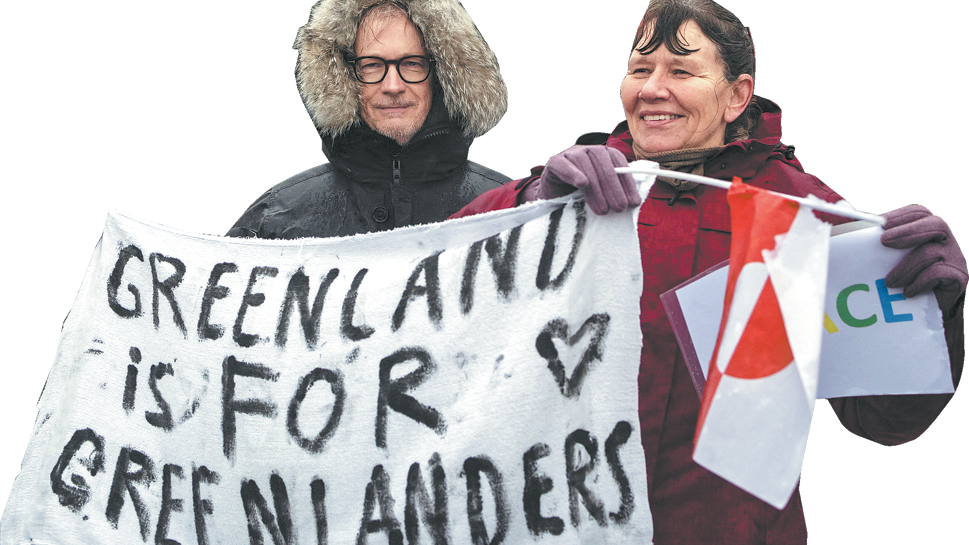
    A diplomatic crisis has erupted within NATO following the United States’ controversial push to acquire Greenland, creating unprecedented tensions among Western allies. The world’s largest island, spanning over 2.16 million square kilometers with a mere 57,000 inhabitants, has become the epicenter of a geopolitical storm that threatens to undermine the foundation of the transatlantic alliance.

    President Donald Trump’s public declaration of interest in bringing the Danish territory under US control, justified as a ‘national security’ measure against perceived Russian and Chinese presence, sent shockwaves through European capitals. The situation escalated when Trump announced following his meeting with NATO Secretary-General Mark Rutte in Davos that he had established the ‘framework of a future deal’ concerning Greenland and the broader Arctic region.

    European leaders responded with alarm and firm resistance. Danish Prime Minister Mette Frederiksen asserted unwavering commitment to sovereignty, stating, ‘We can negotiate on everything political; security, investments, economy. But we cannot negotiate on our sovereignty.’ The crisis prompted an emergency EU summit in Brussels where foreign policy chief Kaja Kallas acknowledged that ‘trans-Atlantic relations have definitely taken a big blow over the last week.’

    Security experts warned of potentially devastating consequences. Professor Michael A. Allen of Boise State University cautioned that ‘if gained through coercion, the impact would have been devastating for the United States and the rest of the world,’ potentially causing the collapse of NATO itself. The alliance, formed in 1949 to provide collective security, faced its most serious internal crisis in decades.

    The tension temporarily eased when Trump withdrew threats of imposing punitive tariffs—initially set at 10% escalating to 25%—against eight European nations that opposed the Greenland initiative. However, the episode has fundamentally altered dynamics within the alliance, with leaders including French President Emmanuel Macron and British Prime Minister Keir Starmer demonstrating unusually direct criticism of US actions.

    China’s Foreign Ministry spokesperson Guo Jiakun dismissed Trump’s security concerns as ‘baseless,’ reaffirming China’s commitment to UN Charter principles in international relations. The Greenland controversy has exposed deepening fractures within NATO and raised questions about the future of US leadership in the alliance amid shifting global power dynamics.


  • Happy Laba Festival!

    Happy Laba Festival!

    Across China, communities are embracing the warmth of tradition as they celebrate the annual Laba Festival, a time-honored cultural event marking the eighth day of the twelfth lunar month. This year’s celebrations feature diverse activities that blend ancient customs with contemporary expressions of Chinese heritage.

    Various regions have organized distinctive events to commemorate the festival. Shanghai is hosting an aromatic agarwood exhibition that transforms museum spaces into sensory experiences, while Shenyang’s winter exposition showcases intricate intangible cultural heritage pieces. In Linyi, Langya Ancient City has become a living historical canvas, demonstrating traditional practices to visitors.

    Concurrent with these cultural celebrations, China continues to make significant strides in national development. The People’s Liberation Army Daily has reaffirmed the nation’s determined stance against corruption, alongside newly unveiled regulations governing Party organization elections within the armed forces. These developments highlight the country’s parallel progress in both cultural preservation and institutional strengthening.

    The Laba Festival, traditionally celebrated with the sharing of Laba porridge—a nutritious mixture of grains, nuts, and dried fruits—continues to symbolize community, warmth, and cultural continuity during the coldest period of the year. This festival not only preserves ancient Chinese traditions but also adapts them to modern contexts, creating a bridge between historical practices and contemporary society.

  • Japanese ex-soldier reaches settlements in landmark sex abuse case

    Japanese ex-soldier reaches settlements in landmark sex abuse case

    In a groundbreaking resolution that concludes a highly publicized legal battle, former Japanese Self-Defense Forces soldier Rina Gonoi has reached a comprehensive settlement with the Japanese government and her final remaining defendant. The settlement, announced Monday by Gonoi’s legal representatives, marks the conclusion of her civil lawsuit against five former colleagues and the state.

    Under the terms of the agreement, the Japanese government will pay Gonoi 1.6 million yen (approximately $10,400) in compensation. Notably, the former colleague defendant provided neither financial compensation nor a formal apology as part of the resolution. This development follows Gonoi’s previous settlements with four other defendants earlier in the proceedings.

    The case originated from a 2021 incident where three male colleagues physically restrained Gonoi and pressed their bodies against her in a sexually suggestive manner. When Gonoi reported the assault to her superiors, her complaints were systematically dismissed, prompting her to take unprecedented action.

    In 2022, Gonoi courageously shared her experience through a YouTube video that rapidly gained international attention, amassing over 100,000 signatures on a petition demanding official investigation. Her advocacy triggered a sweeping Defense Ministry probe that uncovered more than 1,000 additional reports of sexual harassment within Japan’s military ranks.

    While a separate 2023 criminal case resulted in convictions for three ex-soldiers, their two-year prison sentences were suspended for four years, meaning they served no actual incarceration time.

    At a Monday press conference, Gonoi reflected on her 4.5-year journey, describing it as “very long and heavy” but expressing no regret for speaking out. The now-26-year-old recently acknowledged on social media that her legal battle had finally concluded, thanking supporters who stood by her throughout the process.

    Gonoi had initially sought 5.5 million yen in damages from the perpetrators for psychological distress and an additional 2 million yen from the state for its failure to prevent the abuse. Her case has become symbolic of Japan’s evolving conversation around sexual violence, joining other high-profile cases that have broken traditional silence on the issue.

  • Pauline Hanson slams ‘un-Australian’ opponents amid surge in poll support

    Pauline Hanson slams ‘un-Australian’ opponents amid surge in poll support

    In a significant shift within Australian politics, One Nation leader Pauline Hanson has capitalized on surging poll numbers to deliver a blistering critique of newly enacted hate speech legislation. The controversial figure, whose party now outperforms the Coalition in primary voting intentions according to recent Newspoll data, addressed enthusiastic supporters during Australia Day rallies where “Pauline 4 PM” signage signaled growing momentum.

    The Brisbane gathering, characterized by its festive atmosphere with music, flags, and widespread cheering, served as the platform for Hanson’s multifaceted address. She launched particularly sharp criticism against Prime Minister Anthony Albanese, whom she labeled “the worst prime minister I have ever seen,” while attributing Australia’s mass migration challenges to his leadership.

    Central to Hanson’s rhetoric was a vehement rejection of recently passed hate speech laws, which she argued could be weaponized to suppress minority parties and stifle crucial debates on immigration and multiculturalism. “We can never give up our freedom of speech,” she declared to applauding supporters. “I will not let them stop me. I will keep going.”

    Despite her inflammatory statements regarding climate change skepticism and calls to wind back environmental policies, Hanson concluded her address with an unexpected plea for national unity. She emphasized that Australia belongs to all who embrace its values, whether native-born or migrant, while maintaining her signature criticism of what she perceives as divisive identity politics.

    The event drew immediate condemnation from Greens Senator Larissa Waters, who attended a nearby Invasion Day protest and accused Hanson of employing racist dog-whistle tactics. Waters challenged Hanson’s populist narrative by highlighting her voting record on affordability issues, claiming the One Nation leader “votes with the one per cent” rather than ordinary Australians.

    Hanson dismissed these criticisms as coming from “un-Australian” opponents filled with hatred, setting the stage for continued ideological clashes as Australia approaches its next federal election.

  • Minneapolis protesters march against ICE as governor urges Trump to remove agents

    Minneapolis protesters march against ICE as governor urges Trump to remove agents

    Minneapolis became the epicenter of a national political firestorm this weekend as protests erupted following the fatal shooting of Alex Pretti, a 37-year-old intensive care nurse, by federal immigration agents. The incident has triggered a severe constitutional crisis, pitting state authorities against federal power and exposing deep divisions within American society.

    Tensions reached a boiling point on Sunday as hundreds of demonstrators braved freezing temperatures in Minneapolis, with parallel protests emerging in New York City, Chicago, Los Angeles, and San Francisco. Armed federal agents deployed tear gas and stun grenades against crowds demanding justice for Pretti and calling for the abolition of Immigration and Customs Enforcement (ICE).

    The confrontation between state and federal authorities intensified dramatically when Minneapolis Police Chief Brian O’Hara revealed to the BBC that state officers were deliberately blocked from accessing the shooting scene by federal agents, despite possessing a valid search warrant. This obstruction has severely hampered ongoing investigations and raised serious questions about accountability and jurisdictional overreach.

    At the political level, Minnesota Governor Tim Walz declared America at an ‘inflection point’ and repeatedly demanded President Trump withdraw federal agents from the city. Conversely, Trump issued counter-demands through Truth Social, insisting that Walz and ‘EVERY Democrat Governor and Mayor’ must ‘formally cooperate with the Trump Administration to enforce our Nation’s Laws.’

    The administration’s characterization of Pretti as a ‘domestic terrorist’ has been vehemently contested by his family, who described these claims as ‘sickening lies’ and ‘reprehensible.’ Court records confirm Pretti had no criminal history beyond minor traffic violations, and local authorities maintain his firearm was legally registered and not being brandished at the time of the shooting.

    Remarkably, the National Rifle Association joined other gun lobby groups in calling for a ‘full investigation,’ breaking with its typical alignment with the Trump administration. Meanwhile, the chief executives of over 60 Minnesota-based corporations, including 3M, Best Buy, Target, and UnitedHealth Group, signed an open letter demanding immediate de-escalation and collaborative solutions between local and federal officials.

    This shooting follows weeks of escalating tensions in Minneapolis and comes just weeks after the ICE-related killing of 37-year-old Renee Good during similar immigration enforcement operations. The situation has created rare bipartisan concern, with Oklahoma Governor Kevin Stitt and Louisiana Senator Bill Cassidy both expressing serious reservations about federal tactics and accountability.

    As Democrats threaten to block government funding packages containing Homeland Security allocations, the nation faces the prospect of another government shutdown while grappling with fundamental questions about immigration enforcement, states’ rights, and the appropriate use of federal power.

  • 2 dead as US hit by historic winter storm

    2 dead as US hit by historic winter storm

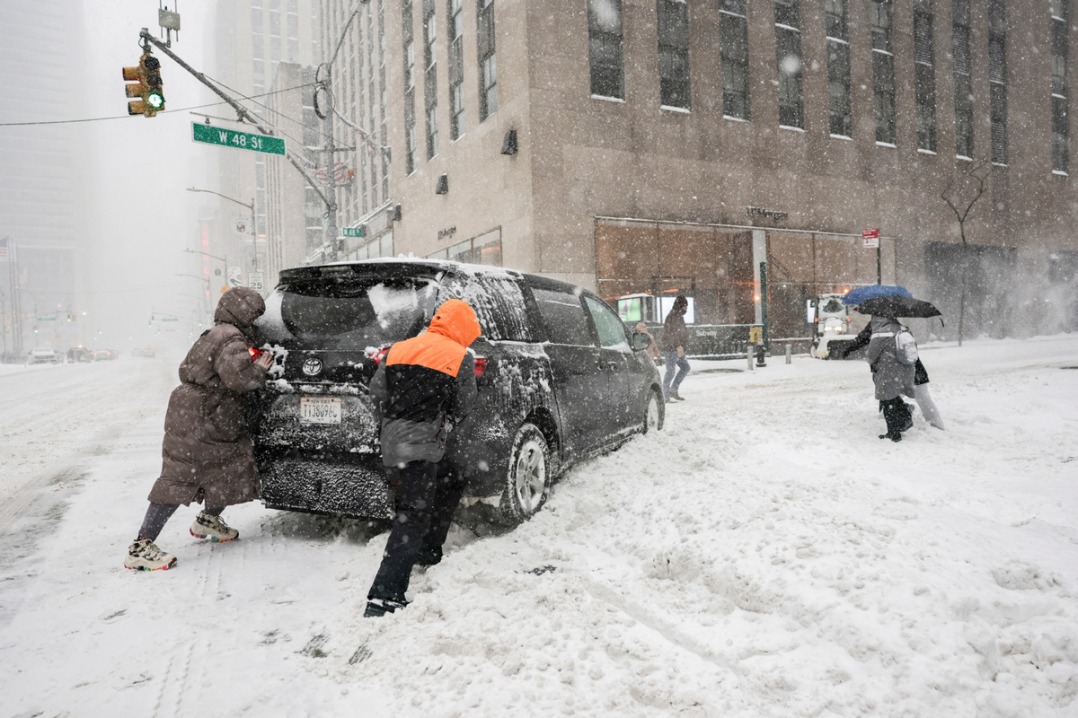
    A catastrophic winter storm of historic proportions has unleashed chaos across the United States, resulting in multiple fatalities and widespread disruption. The massive weather system, stretching an unprecedented 2,300 miles from the Central Plains to the East Coast, has triggered emergency declarations in 21 states and placed nearly 200 million Americans under various winter weather alerts.

    The human toll continues to mount with two confirmed hypothermia fatalities in Louisiana, while New York City authorities are investigating five additional deaths potentially linked to the extreme conditions. Victims were discovered across multiple boroughs including Brooklyn, Manhattan, and Queens as the arctic blast descended upon the Northeast.

    Critical infrastructure has been severely compromised with PowerOutage.com reporting over one million customers without electricity, particularly concentrated in Tennessee, Mississippi, and Louisiana. The transportation network faces parallel disruptions with more than 30,000 flight cancellations and delays nationwide, creating travel chaos during the peak winter period.

    In response to the escalating crisis, President Donald Trump authorized a Presidential Emergency Disaster Declaration for ten severely impacted states on Saturday. The storm system, fueled by an exceptionally cold arctic air mass that initiated on Friday, is projected to maintain its intensity through Monday, prolonging the dangerous conditions across much of the nation.

    Meteorologists note this event has broken records for the simultaneous number of US counties under winter storm warnings, underscoring the unprecedented scale of this weather emergency that continues to challenge emergency response capabilities from local to federal levels.

  • Mark Tully, BBC correspondent known as the ‘voice of India,’ dies at 90

    Mark Tully, BBC correspondent known as the ‘voice of India,’ dies at 90

    NEW DELHI — The world of journalism mourns the loss of Sir Mark Tully, the legendary BBC correspondent whose profound connection to India earned him the revered title ‘voice of the nation.’ The broadcaster confirmed his passing at the age of 90. Tully died on Sunday in a New Delhi hospital following a short illness, concluding a monumental chapter in international reporting.

    Born in Kolkata (then Calcutta) in 1935, Tully’s journalistic journey with the BBC began in 1965. His deep understanding of the subcontinent led to his appointment as the New Delhi correspondent in 1971, a role he masterfully expanded to become the BBC’s Bureau Chief for South Asia for over twenty years.

    Tully’s career was defined by his authoritative coverage of the most pivotal events that shaped modern South Asia. He provided the world with front-line reporting on the 1971 Indo-Pakistani War that resulted in the independence of Bangladesh. His incisive analysis guided global audiences through the complex 1984 Golden Temple siege, the tragic 1991 assassination of Prime Minister Rajiv Gandhi, and the deeply divisive 1992 Babri Masjid demolition that sparked extensive civil unrest across India. His reporting extended beyond India’s borders, delivering crucial dispatches from Pakistan, Bangladesh, and Sri Lanka.

    Indian Prime Minister Narendra Modi led tributes, recognizing Tully as “a towering voice of journalism” whose profound connection to India and its citizens was vividly reflected in his body of work. “His reporting and insights have left an enduring mark on public discourse,” Modi stated in a social media post.

    In recognition of his exceptional contributions to broadcasting and journalism, Britain knighted Tully in 2002. India further honored his dedication by awarding him two of its highest civilian honors—the Padma Shri and the Padma Bhushan—solidifying his unique status as a foreign journalist who became an integral part of the nation’s narrative.

  • He left Myanmar for Michigan. Trump’s travel ban cut off his US college studies midway

    He left Myanmar for Michigan. Trump’s travel ban cut off his US college studies midway

    Patrick Thaw’s academic journey at the University of Michigan came to an abrupt halt when presidential policy left him stranded halfway across the globe. What began as a routine summer internship in Singapore transformed into an educational limbo after former President Donald Trump’s travel ban targeted citizens from 12 nations, including Thaw’s native Myanmar.

    The neuroscience major found himself attending classes via FaceTime while his college friends gathered in Ann Arbor, a cruel irony for someone who had embraced American campus life with exceptional enthusiasm. Thaw had immersed himself in university activities, from biology fraternity events to Alzheimer’s research, becoming known among faculty as an intellectually curious student unafraid of academic risks.

    His situation reflects broader challenges facing international students during the Trump administration’s first year back in office. Visa appointment pauses and enhanced vetting procedures contributed to declining foreign enrollment numbers, particularly affecting students like Thaw who were already deep into their American educational journeys.

    University administrators nationwide have responded with creative solutions, reviving pandemic-era remote learning options and offering placements at international partner institutions. For Thaw, Michigan officials suggested an Australian study abroad program as a temporary measure, though visa complications ultimately made this option unviable.

    The educational disruption represents more than mere inconvenience for Thaw, who viewed American higher education as an escape route from Myanmar’s civil unrest. His childhood memories include taking shifts with his mother to watch for Molotov cocktails igniting bamboo in their front yard and missing algebra exams due to bomb explosions.

    Facing indefinite separation from his academic community, Thaw made the difficult decision to transfer to universities outside the United States. He now holds acceptance letters from institutions in Australia and Canada, with hopes of attending the University of Toronto to maintain proximity to his Michigan friendships.

    His story underscores how geopolitical decisions create ripple effects through academic communities, separating promising students from their chosen educational paths and forcing universities to develop increasingly flexible international policies.

  • Legends of Winter Olympics: heroes of the slopes

    Legends of Winter Olympics: heroes of the slopes

    As the Milan-Cortina Winter Olympics approach their February 6 opening, the spotlight turns to legendary alpine skiers whose Olympic triumphs and personal journeys have shaped winter sports history.

    Toni Sailer, Austria’s ‘Blitz from Kitz’, revolutionized alpine skiing during his brief but spectacular career. At just 20 years old during the first televised Winter Games, Sailer achieved an unprecedented triple victory in slalom, giant slalom, and downhill events. His dominance extended to the combined championship, earning him additional recognition. Though narrowly missing a repeat sweep at the 1958 World Championships, Sailer transitioned to a multifaceted post-athletic career encompassing film work as James Bond’s stunt double, music recording, ski equipment entrepreneurship, and sports administration. His legacy was cemented as Austria’s ‘Sportsman of the Century’ in 1999.

    Jean-Claude Killy mirrored Sailer’s achievement under controversial circumstances during the 1968 Grenoble Olympics. After overcoming health challenges that hampered his 1964 Olympic performance, Killy dominated the World Cup circuit for two consecutive seasons. His Olympic triple crown was secured amid dramatic foggy conditions during the slalom event, where officials disqualified competitors Karl Schranz and Hakon Mjoen for missed gates after reviewing television footage. The French skier’s triumph sparked such public euphoria that authorities required helicopter extraction to escape adoring crowds. Killy later diversified into motor racing, co-chaired the 1992 Albertville Olympics, and joined the International Olympic Committee, though his association with Vladimir Putin later attracted criticism.

    Hermann Maier’s narrative embodies extraordinary resilience. Initially rejected for his small stature, the Austrian developed into a powerfully built competitor through bricklaying work and regional competitions. His Olympic debut featured a spectacular downhill crash that saw him somersault through safety barriers, followed by remarkable super-G and giant slalom victories just days later. After equaling Killy’s World Cup record, Maier survived a motorcycle accident that nearly cost him his leg, missing the 2002 Games but returning to claim additional Olympic medals in 2006.

    Sweden’s Ingemar Stenmark established unparalleled dominance in technical events with a record 86 World Cup victories between 1974-1989. Despite limited Olympic appearances due to eligibility controversies, Stenmark capitalized on his 1980 Lake Placid opportunity with dramatic come-from-behind victories in both giant slalom and slalom events. His sponsorship-related exclusion from the 1984 Sarajevo Games underscored the sport’s transition from amateurism, yet his victory record endured until Mikaela Shiffrin surpassed it in 2023.

  • ‘So little we know’: in submersibles revealing the deep sea

    ‘So little we know’: in submersibles revealing the deep sea

    Beneath the waves off Indonesia’s Sulawesi island, a state-of-the-art submersible descends into the abyss, carrying scientists on a mission to document unknown species and uncover potential medical breakthroughs from the deep. AFP recently joined OceanX’s research expedition aboard the advanced OceanXplorer vessel, funded by billionaire Ray Dalio and his son, which represents a new paradigm in marine exploration.

    The expedition focuses on a previously mapped seamount chain where Indonesian researchers are conducting biodiversity surveys using two specialized submersibles. The Neptune is equipped for scientific collection with hydraulic arms and suction tubes, while the Nadir features high-end cameras for media documentation—reflecting OceanX’s philosophy that compelling imagery makes scientific research more accessible and impactful.

    At 200 meters depth, sunlight vanishes completely, leaving only the submersible’s lights to illuminate the eternal darkness. Researchers like Husna Nugrahapraja of Institut Teknologi Bandung experience both anxiety and wonder during their first descent into this alien environment. The beams reveal ‘marine snow’—continuous showers of organic debris—and extraordinary bioluminescent displays triggered by the vessel’s lights.

    The team encounters fragile comb jellies with pulsating illuminations, translucent siphonophores resembling abstract art, and silver fish no larger than fingernails. On the seafloor, delicate sea stars and fronded soft corals thrive in complete darkness under immense pressure.

    For deeper exploration down to 6,000 meters, OceanX employs a remotely operated vehicle (ROV) controlled from a mission center resembling NASA mission control. Operators in gamer-style chairs maneuver hydraulic arms to collect specimens including a bone-white lobster, horned sea cucumber, and a hermit crab living inside a deceased sea star.

    The expedition operates under strict safety protocols, with submersibles regularly inspected according to industry standards—a pointed contrast to the tragic Titan submersible implosion of 2023. Each dive vehicle carries four days of emergency life support as backup systems.

    Despite technological advances, much of the deep ocean remains unmapped and unexplored. Researchers like crustacean specialist Pipit Pitriana discover potentially new species, including pearl-sized barnacles, highlighting how little humanity knows about deep-sea biodiversity even as threats from plastic pollution, rising temperatures, and acidification intensify.