作者: admin

  • Old-style politics beats youthful ideals in Thai election

    Old-style politics beats youthful ideals in Thai election

    The 2026 Thai general election has revealed a dramatic reversal of fortune for the progressive political movement that achieved unprecedented success in 2023. Chutiphong Pipoppinyo, once part of the ‘orange wave’ that propelled the Move Forward party to electoral prominence, lost his parliamentary seat in Rayong province to established political dynasties, highlighting the enduring power of traditional patronage systems in Thailand’s rural heartlands.

    Rayong, a key component of Thailand’s Eastern Economic Corridor industrial zone, represents the nation’s political dichotomy. While urban areas responded enthusiastically to reformist agendas, rural districts remained firmly under the control of longstanding power structures. The Pitutecha family, which has dominated Rayong politics for decades, exemplifies the ‘Baan Yai’ (big house) system that characterizes provincial governance.

    This political clan maintains influence through extensive networks of local canvassers, business connections, and financial resources that newcomer politicians cannot match. Piya ‘Chang’ Pitutecha, the family patriarch, holds the powerful position of Provincial Administration Organisation head, controlling most government spending in the region.

    Chutiphong’s experience illustrates the challenges facing reform-minded candidates. Despite his commitment to constituency service and problem-solving, he encountered resistance from established networks that expected financial contributions he couldn’t provide. ‘When I tried to address community concerns directly,’ he explained, ‘villagers faced social pressure and criticism for engaging with an outsider.’

    The Pitutecha family adapted their strategy after their 2023 setback, fielding younger, better-educated family members under different party banners. In District 4, 34-year-old Chatchai Pitutecha ran under the Bhumjaithai party, known for its financial resources and success in recruiting traditional power brokers.

    Election results show a stark urban-rural divide. The progressive People’s Party (formerly Move Forward) dominated Bangkok and Chiang Mai, winning every seat in the capital. However, they suffered significant losses in provincial constituencies, where their share of seats dropped by over 20%. The conservative Bhumjaithai party dramatically increased its representation from 71 to an estimated 193 seats in the 500-member parliament.

    Political analyst Olarn Thinbangtieo from Burapha University notes that ‘Baan Yai politics has recovered in eastern Thailand,’ attributing this resilience to centralized governance systems that force villagers to rely on patronage networks for resource access. The progressive movement’s limited social capital in rural areas, combined with voter cynicism following the 2023 constitutional blocks against government formation, contributed to their provincial setbacks.

    The election outcome demonstrates Thailand’s continuing political polarization, with progressive ideas resonating strongly in urban centers while traditional power structures maintain their grip on rural constituencies through established patronage systems.


  • AFL 2026: Collingwood coach Craig McRae on Bobby Hill, Opening Round selections

    AFL 2026: Collingwood coach Craig McRae on Bobby Hill, Opening Round selections

    Collingwood Football Club coach Craig McRae has delivered an encouraging assessment regarding small forward Bobby Hill’s potential return to AFL competition, though no specific timeline has been established for the Norm Smith Medallist’s comeback.

    The dynamic player has been on personal leave intermittently since the middle of the 2025 season and did not resume training with the squad following the Christmas break. Despite this extended absence, McRae maintains regular communication with Hill and expresses confidence in his progressive recovery.

    “Bobby is currently focusing on personal development, and we’re optimistic about his integration into our program in the near future,” McRae stated during an interview with SEN Breakfast. The coach emphasized the club’s balanced approach between emotional support and performance expectations, noting that most of last year was dedicated to providing care and support with minimal performance pressure.

    McRae described the ongoing process as “a delicate balance” between compassion and competitive preparation, acknowledging these elements “sometimes collide” but reaffirming the club’s commitment to both supporting Hill’s wellbeing and preparing him for high-level competition when appropriate.

    In addition to Hill’s situation, McRae addressed injury concerns affecting other key players. Captain Darcy Moore and defender Jeremy Howe are both managing soft-tissue injuries and are unlikely to be available for the Opening Round clash against St Kilda. Their return will be subject to weekly assessment following the season’s commencement.

    The coach indicated both defenders are progressing well but cautioned against rushing their recovery given the recurrent nature of their calf injuries, stating definitively that “they won’t play early in the season.”

  • Prices go up to Rs60,000 as tickets on sale for ICC T20 World Cup final, semi-finals

    Prices go up to Rs60,000 as tickets on sale for ICC T20 World Cup final, semi-finals

    Cricket enthusiasts worldwide are engaged in a digital scramble as tickets for the ICC T20 Men’s World Cup 2026 semi-finals and final officially launched. High demand has already resulted in certain seating categories being completely sold out, with fans queuing online from 7:00 PM IST to secure their passes. The highly anticipated semi-finals are scheduled for March 4th and 5th, culminating in the grand final on March 8th, as the tournament’s Super Eight stage determines the final four contenders.

    Ticket pricing reflects the premium nature of the events, with final match tickets at Ahmedabad’s colossal Narendra Modi Stadium ranging from ₹2,000 to a staggering ₹60,000, contingent on seating category, and are reportedly ‘filling fast.’ A unique ‘floating venue’ system, as outlined by the ICC, adds a layer of strategic intrigue to ticket sales. The location of the first semi-final on March 4th hinges directly on team qualifications, particularly concerning Pakistan. Should Pakistan qualify, the match will be held at Colombo’s R. Premadasa Stadium in Sri Lanka, where tickets start at LKR 1,500. If not, the fixture shifts to Kolkata’s Eden Gardens, with prices between ₹900 and ₹3,000. Tickets for the second semi-final at Mumbai’s Wankhede Stadium on March 5th are listed as ‘coming soon,’ starting at ₹3,000.

    This dynamic venue policy extends to the final. In a significant stipulation, if Pakistan advances to the championship match, it will be hosted in Colombo; otherwise, the final will remain in Ahmedabad. The ICC has assured full refunds for any tickets purchased for a venue that ultimately does not host its designated match due to these conditional changes.

    The tournament’s competitive landscape is intensifying. In Group 1, West Indies and South Africa are leading the Super Eight points table following substantial victories over Zimbabwe and India, respectively. Group 2 sees England at the top after their win against Sri Lanka, while New Zealand and Pakistan shared points after their fixture was interrupted by rain.

  • Bodo/Glimt knock Inter out of Champions League as Newcastle, Atletico reach last 16

    Bodo/Glimt knock Inter out of Champions League as Newcastle, Atletico reach last 16

    In one of the most spectacular Champions League upsets in recent memory, Norwegian champions Bodo/Glimt eliminated last season’s finalists Inter Milan with a stunning 2-1 victory at San Siro on Tuesday. The Arctic Circle club secured their passage to the last 16 with a commanding 5-2 aggregate triumph, defying all expectations against the Serie A leaders.

    The Norwegian outfit, hailing from a town of approximately 50,000 residents north of the Arctic Circle, built upon their impressive 3-1 first-leg victory with a tactical masterclass in Milan. Despite Inter’s dominance in Serie A where they hold a 10-point advantage, the Italian giants were unable to break down Bodo/Glimt’s resilient defense.

    Former AC Milan player Jens Petter Hauge broke the deadlock just before the hour mark, capitalizing on a defensive error from Manuel Akanji. The advantage was doubled when Hakon Evjen found the net, effectively sealing the tie at 5-1 on aggregate. Although Alessandro Bastoni managed a consolation goal for Inter, it proved insufficient to prevent one of Europe’s most remarkable underdog stories from continuing.

    Bodo/Glimt’s achievement marks the first time a Norwegian club has reached the Champions League knockout stages since Rosenborg’s quarter-final appearance in 1997. The club, which has won four Eliteserien titles in the past five years, now awaits Friday’s draw where they will face either Sporting Lisbon or Manchester City.

    Meanwhile, Newcastle United secured their progression with a 3-2 home victory over Qarabag, completing a 9-3 aggregate triumph. Eddie Howe’s side established an early two-goal advantage through Sandro Tonali and Joelinton within the opening six minutes, ensuring six English clubs will feature in the next round.

    Atletico Madrid advanced comfortably with a 4-1 win against Club Brugge at the Metropolitano Stadium, progressing 7-4 on aggregate. Norwegian striker Alexander Sorloth emerged as the standout performer with a spectacular hat-trick, taking his seasonal tally to 15 goals across all competitions.

    Bayer Leverkusen completed the round of 16 qualifiers with a goalless draw against Olympiacos, building on their 2-0 first-leg advantage. The newly crowned German champions now await a formidable challenge against either Arsenal or Bayern Munich.

  • ‘Faux outrage’ and ‘bullies’: MPs clash over Defence fire sale

    ‘Faux outrage’ and ‘bullies’: MPs clash over Defence fire sale

    A heated parliamentary confrontation has unfolded regarding the Australian government’s controversial plan to divest from dozens of military installations across the nation. The conflict emerged during a budget estimates hearing where state and federal officials clashed over the disposal strategy for historically significant defense sites.

    The controversy stems from Deputy Prime Minister Richard Marles’ announcement earlier this year revealing plans to disinvest from 67 military facilities, predominantly located in southeastern Australia. This strategic repositioning initiative, following an independent review of defense assets, aims to redirect infrastructure investments toward northern Australia and AUKUS-related priorities. The extensive sell-off program is projected to generate approximately $1.8 billion in revenue.

    At the heart of the dispute lies Victoria Barracks in Sydney’s Paddington district, a historic military site that has become a flashpoint in the nationwide divestment scheme. NSW Veterans Affairs Minister David Harris revealed that state authorities received no prior consultation regarding the disposal plans, sparking significant concern among local officials and veteran communities.

    The parliamentary session turned confrontational when Nationals MLC Wes Fang, a former Australian Defence Force officer and pilot, aggressively pressed Minister Harris to publicly denounce the sell-off. The exchange grew increasingly tense, with Fang shouting across the committee room and declaring that “issuing a statement is not good enough” while asserting that citizens outside government were prepared to “take up this fight.”

    Minister Harris responded by accusing his counterparts of “faux outrage” and bullying tactics, stating firmly, “I don’t do well for bullies who yell at me. Well, that’s the way you do business. That’s not the way I do business.” The situation escalated to the point where committee chair Jeremy Buckingham of the Legalise Cannabis Party intervened, urging participants to “desist” from interrupting and hectoring each other.

    Opposition to the divestment program extends beyond political chambers, with concerned veterans and heritage advocates circulating petitions to protect historically significant sites. Critics argue that urban military command areas like Victoria Barracks play crucial roles in recruitment and operational effectiveness, warning that their disposal could have detrimental effects on defense capabilities.

    Departmental officials defending the sell-off maintain that maintaining under-utilized or heritage-listed sites imposes substantial financial burdens. They acknowledge that while some property disposals will be “relatively straightforward,” others present more complex challenges. The government has already completed three property sales with six additional transactions currently in progress, including notable facilities in Brisbane, Melbourne, and NSW locations such as Spectacle Island and HMAS Penguin.

  • EU expects US to lower steel, aluminum tariffs within weeks, Bloomberg News says

    EU expects US to lower steel, aluminum tariffs within weeks, Bloomberg News says

    European Union authorities anticipate the United States will substantially reduce tariffs on manufactured goods containing steel and aluminum within coming weeks, according to a Bloomberg News report citing informed sources. This potential policy shift would mark a significant de-escalation in transatlantic trade tensions that have persisted since the previous administration’s imposition of protective metal tariffs.

    The reported arrangement, however, maintains existing levies on commodity-grade forms of both metals, indicating a targeted approach rather than comprehensive tariff elimination. This development emerges amid heightened uncertainty in broader trade negotiations following a recent US Supreme Court decision that constrained presidential authority to implement sweeping emergency tariffs.

    The judicial ruling, which limited the administration’s capacity to invoke national emergency powers for imposing reciprocal tariffs, has complicated prospects for a comprehensive US-EU trade agreement. While EU officials express optimism about the potential tariff modifications, Reuters has noted its inability to independently verify the Bloomberg report’s claims.

    This anticipated policy adjustment represents a potential breakthrough in one of the most persistent trade disputes between the transatlantic partners. The partial nature of the expected tariff relief suggests a compromise solution that addresses specific industry concerns while maintaining protective measures for raw metal production.

  • Who is Abigail Spanberger, the Democrat set to give State of the Union response

    Who is Abigail Spanberger, the Democrat set to give State of the Union response

    In a significant political move, Virginia Governor Abigail Spanberger has been selected to deliver the Democratic Party’s official response following President Donald Trump’s upcoming State of the Union address. The historic designation marks Spanberger as the first female governor in Virginia’s history to assume this traditionally opposition-party role.

    The rebuttal ceremony, established in 1966, will unfold Tuesday evening immediately after President Trump concludes his first address since returning to the White House. The selection of Governor Spanberger represents a strategic choice by Democratic leadership, highlighting a rising political figure with a distinctive background that includes both congressional service and prior experience as a CIA operations officer.

    Spanberger characterized the current national climate as “a defining moment in our nation’s history,” citing concerns about economic pressures, community instability, and widespread public anxiety. The 46-year-old governor emphasized her commitment to presenting Americans with a vision of governance focused on delivering tangible results rather than political rhetoric.

    Democratic leaders enthusiastically endorsed Spanberger’s selection, noting her electoral success in flipping a Republican congressional seat in 2018 and her subsequent gubernatorial victory with 57.6% of the vote in last November’s election. House Minority Leader Hakeem Jeffries contrasted Spanberger’s approach with Trump’s anticipated messaging, stating she represents accountability versus deflection, and substantive governance versus blame-shifting.

    The political calculus behind choosing Spanberger involves minimal risk for Democrats, as Virginia’s unique single-term limit for governors means she cannot seek reelection, insulating her from immediate electoral consequences. Complementing the English-language response, California Senator Alex Padilla will deliver a Spanish-language version, underscoring the party’s outreach to diverse constituencies.

    This dual-response approach highlights Democratic strategy heading into the next election cycle, emphasizing pragmatic leadership and contrasting governance philosophies with the current administration.

  • US threatens Anthropic with deadline in dispute on AI safeguards

    US threatens Anthropic with deadline in dispute on AI safeguards

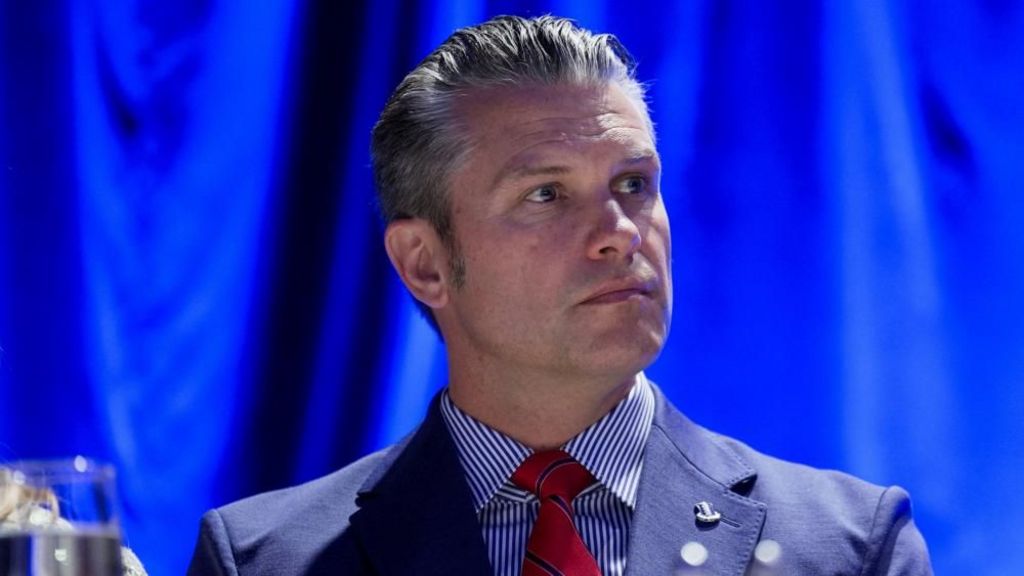
    A significant confrontation has emerged between the U.S. Department of Defense and artificial intelligence company Anthropic over military applications of AI technology. Defense Secretary Pete Hegseth has issued an ultimatum to the AI firm, threatening removal from defense supply chains if it refuses to allow unrestricted military use of its technology.

    The tension escalated during a Tuesday meeting at the Pentagon between Secretary Hegseth and Anthropic CEO Dario Amodei. While described as cordial by sources familiar with the discussion, the meeting revealed fundamental disagreements about ethical boundaries in military AI applications. Anthropic has established clear limitations, particularly regarding autonomous weapon systems and mass surveillance operations.

    Anthropic stated: ‘We continued good-faith conversations about our usage policy to ensure Anthropic can continue to support the government’s national security mission in line with what our models can reliably and responsibly do.’

    The Defense Department’s position maintains that Anthropic should not have authority over how its technology is utilized once provided to military agencies. A senior Pentagon official indicated that failure to comply by Friday evening could trigger invocation of the Defense Production Act, potentially forcing Anthropic executives to permit unlimited Pentagon usage on national security grounds.

    This conflict represents a broader ethical debate within the AI industry regarding military partnerships. Anthropic, creator of the Claude AI chatbot, has consistently positioned itself as more safety-oriented than competitors. The company regularly publishes safety reports and has acknowledged previous weaponization of its technology by malicious actors.

    The current dispute follows revelations that Anthropic’s technology was used through contractor Palantir in the operation leading to former Venezuelan President Nicolás Maduro’s capture. As one of four AI companies awarded Pentagon contracts last summer—alongside Google, OpenAI, and xAI—Anthropic was previously the first tech company approved for classified military networks.

    Industry observers note the situation reflects a fundamental breach of trust between the parties. Emelia Probasco, Senior Fellow at Georgetown University’s Center for Security and Emerging Technology, emphasized: ‘They need to get to a resolution. We should be giving the people we ask to serve every possible advantage.’

    The outcome of this standoff could establish important precedents for how AI companies balance ethical principles with national security requirements and government partnerships.

  • Discord delays age verification plans after user outcry

    Discord delays age verification plans after user outcry

    Discord has announced a significant delay to its controversial age verification initiative, postponing the global rollout from March to the latter half of 2024. The decision comes after widespread user backlash against the platform’s proposed verification methods, which initially required facial recognition or government ID scans.

    Chief Technology Officer Stanislav Vishnevskiy acknowledged the community’s concerns in a recent blog post, stating that the company failed to adequately communicate its intentions and operational processes. “We knew this rollout was going to be controversial,” Vishnevskiy wrote. “In hindsight, we should have provided more detail about our intentions and how the process works.”

    The platform is now developing alternative verification options that avoid biometric or identification document requirements. One method under consideration involves credit card verification, though specific implementation details remain undisclosed.

    Discord’s move toward age verification stems from increasing regulatory pressure across multiple jurisdictions. The platform is aligning with anticipated regulations in the UK, Australia, EU, Brazil, and various US states regarding youth access to social media. Despite these compliance needs, Discord emphasizes that less than 10% of its 200 million monthly users will eventually require age verification due to an existing internal “age determination” system.

    This existing system analyzes account longevity, payment methods, server participation, and activity patterns without examining message content or conversations. Users who do require verification would face restricted access to age-sensitive content and default safety settings until completing the process.

    The delay follows several security incidents that eroded user trust. In October 2023, approximately 70,000 user identification photos were potentially compromised through a cyber attack on a previous verification partner. More recently, researchers discovered that Persona, another verification partner, had left thousands of files exposed on the open internet.

    Discord has committed to publishing its age determination methodology before implementing any global verification system and assures users that no verification images will be stored. The platform’s growing teenage user base, which expanded significantly during the pandemic, remains a key focus for these safety measures.

  • Over a thousand UK councillors sign pledge to uphold Palestinian rights

    Over a thousand UK councillors sign pledge to uphold Palestinian rights

    A significant political movement is emerging across British local governments as over a thousand councillors have formally committed to opposing Israeli policies in Palestinian territories. The pledge, which promises to uphold Palestinian rights and prevent council complicity in violations of international law, has drawn support from across the political spectrum despite condemnation from Israeli officials.

    The breakdown of signatories reveals substantial cross-party participation: 383 Green Party councillors, 359 from Labour, 111 Liberal Democrats, and 41 from the Scottish National Party. The movement also includes eight from Your Party, five Conservatives, and numerous independents, demonstrating widespread grassroots support beyond traditional party lines.

    Organized by the Palestine Solidarity Campaign with support from several Palestinian advocacy groups including the Palestinian Youth Movement Britain and The Muslim Vote, the initiative has been denounced by the Israeli embassy as “disgraceful effort at intimidation.”

    The pledge emerges against a backdrop of increasing tension between local councils and national government guidance. In January, Communities Secretary Steve Reed warned Labour-administered councils they could face legal consequences for boycotting Israeli businesses, referencing 2016 government prohibitions on procurement boycotts.

    Despite these warnings, multiple local authorities have recently taken action. Oxford City Council endorsed the BDS movement citing International Court of Justice rulings, while Cumberland Council committed to divest from companies supplying weapons to Israel. Newcastle Council initiated reviews of financial ties with companies allegedly complicit in “genocide and/or illegal occupation,” and pension funds in Islington, Lewisham, Wandsworth and Caerphilly have excluded companies on UN lists of businesses operating in occupied territories.

    Labour MP Richard Burgon noted that many Labour councillors signed specifically to distinguish themselves from their party’s national leadership position. Hackney Green councillor Zoe Garbett emphasized the importance of ethical investments and representing constituent demands to end conflicts in Gaza and worldwide.